

If your once-great sleeper has suddenly turned into a bedtime negotiator, a 4 a.m. alarm clock, or a toddler who screams the second you leave the room, you’re not imagining things — and you’re definitely not doing anything wrong. Welcome to the 18 Month Sleep Regression, one of the more challenging stretches in early toddlerhood and a type of sleep regression that can catch even experienced parents off guard.

The good news? The 18 Month Sleep Regression is temporary, predictable, and linked to clear developmental changes. Once you understand what’s driving this sleep regression, the sleepless nights can start to feel a lot less mysterious — and a lot more manageable.
What Exactly Is the 18 Month Sleep Regression?
At its core, the 18 Month Sleep Regression is a stretch of disrupted sleep in a toddler who was previously sleeping well. This type of sleep regression can show up as more frequent night wakings, a sudden refusal to go down at bedtime, or naps that get shorter or disappear altogether.
Here’s the reframe that helps most parents: pediatricians don’t view this as your child “losing” their sleep skills. Instead, sleep regression is often discussed as a temporary disruption that can occur alongside important developmental changes in your toddler’s brain and body. Sleep regressions tend to cluster around major leaps in growth, which is exactly why they can feel so disruptive — a lot is happening at once.
While it’s called the “18-month” regression, that’s more of a label than a hard rule. In reality, this developmental window can stretch anywhere from 14 to 21 months, so if your child hits this wall at 19, 20, or even 21 months, you’re still within the range commonly associated with this sleep regression. As for how long it lasts, expect some variation depending on who you ask: many sleep specialists point to a one- to two-week window, while some clinical sources suggest the rougher patches can linger for two to six weeks before things settle.
Why Is This Happening? The Developmental Triggers
This regression rarely has a single cause — it’s usually a pile-up of developmental milestones hitting all at once.
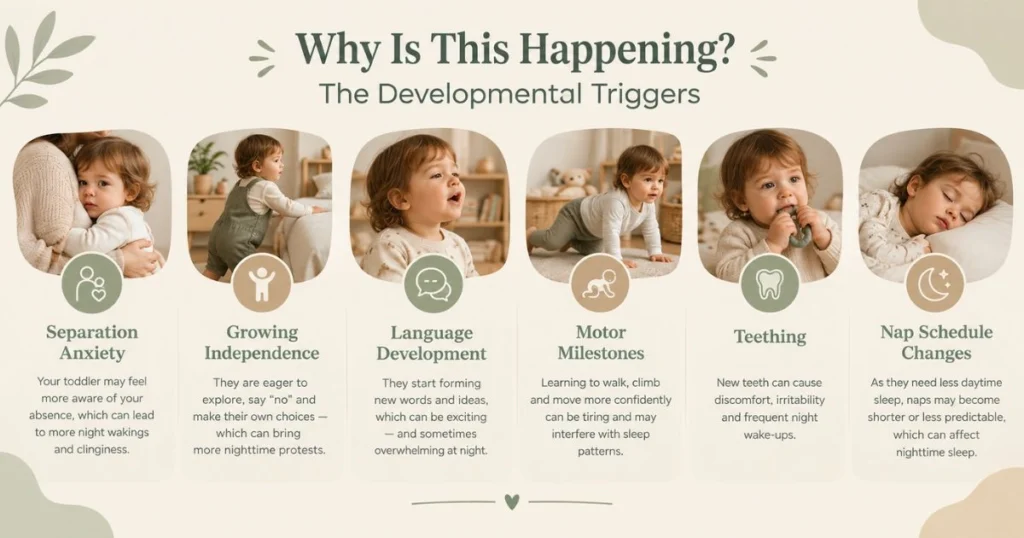
Separation anxiety hits a peak. Somewhere around this age, toddlers become acutely aware that when you walk out of the room, you’re actually gone. That awareness can turn a once-easy bedtime into a clingy, tearful standoff.
Independence is exploding. Your toddler is starting to grasp cause and effect in a whole new way, including the empowering (and exhausting) realization that they have a say in what happens next — including whether they feel like sleeping.
Language is taking off. Toddlers at this stage are absorbing new words at a rapid clip, and their brains keep working on that material long after the lights go out. Don’t be surprised if you hear babbling, word repetition, or little practice sessions coming from the crib.
Big motor milestones are underway. Walking confidently, running, and even attempting daring crib escapes are all part of this window — and that kind of physical momentum doesn’t just switch off at bedtime.
Teething strikes again. First molars tend to erupt around this time, and molar pain is notoriously deep and uncomfortable — made worse the moment your toddler lies flat.
The nap schedule is shifting. Many toddlers are right in the middle of dropping from two naps down to one, and that transition alone can throw off sleep timing for weeks.
Recognizing the Signs
The regression tends to look different from one toddler to the next, but a few patterns show up again and again:
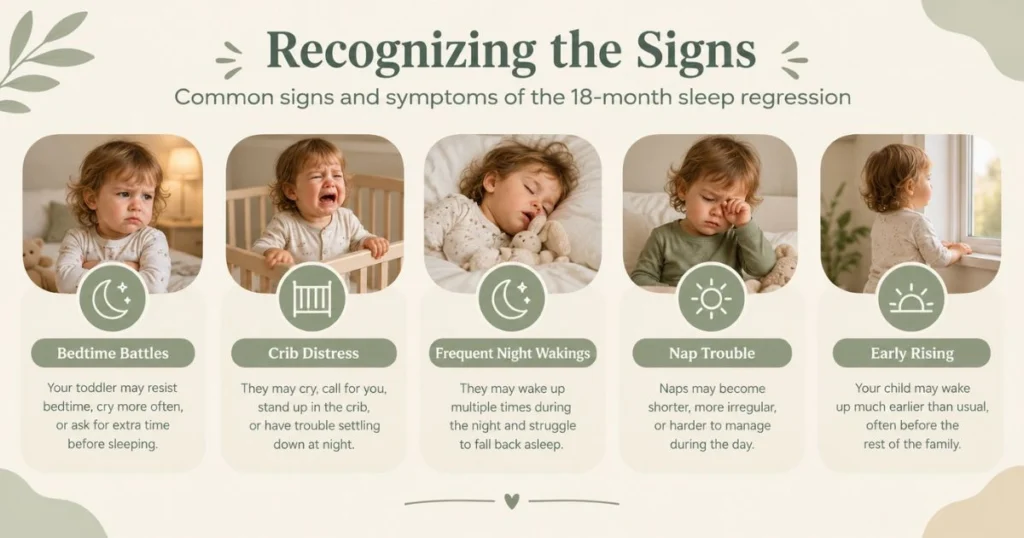
- Bedtime battles. Stalling tactics, tantrums, or a 30- to 60-minute struggle just to fall asleep.
- Crib distress. Crying, clinging to the crib rails, or standing and bouncing instead of settling down.
- Frequent wake-ups. Rousing one, two, or several times a night, often inconsolable.
- Nap trouble. Naps that shrink to short catnaps, or disappear entirely for a stretch.
- Early rising. Waking well before 6 a.m., wide awake and ready to start the day.
- Rockier days. More clinginess, shorter fuses, and meltdowns that come out of nowhere — all classic signs of accumulated sleep debt.
Getting the Schedule Right
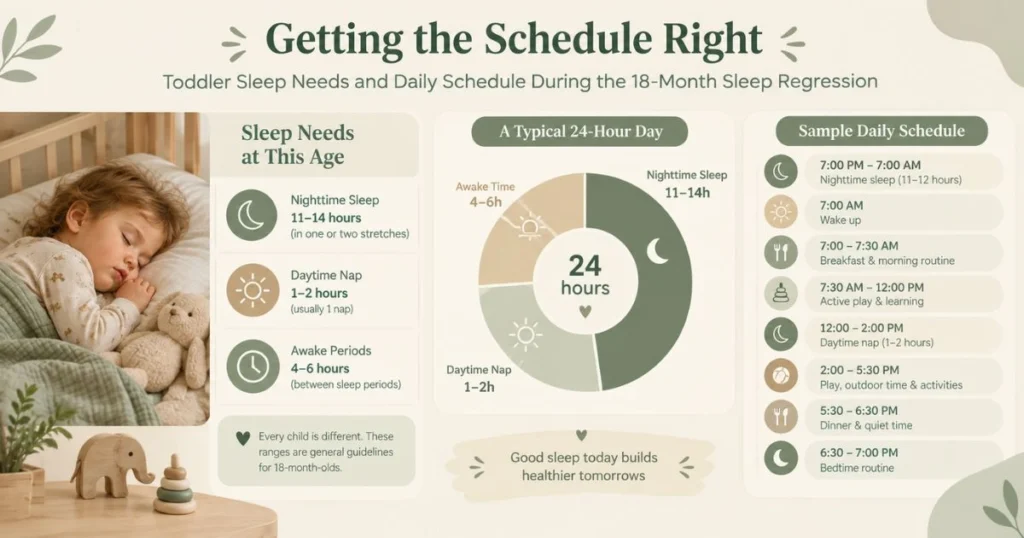
One of the most effective things you can do during this phase is protect your toddler’s overall sleep architecture, even while individual naps or nights go sideways.
Most toddlers this age still need somewhere between 11 and 14 hours of total sleep across a 24-hour day — typically 10 to 12 hours overnight, plus 1 to 3 hours during the day. Wake windows matter too: aim for roughly 5 to 6 hours of awake time before the afternoon nap, and another 4 to 5 hours between waking from that nap and bedtime.
If naps run long, gently cap them by waking your toddler by 3:00 p.m. (3:30 at the absolute latest) so it doesn’t push bedtime past 7:00–8:00 p.m. On days when a nap gets skipped or cut short, move bedtime 30 to 60 minutes earlier than usual — this heads off the overtired spiral before it starts.
It also helps to know the difference between an overtired toddler and an undertired one, since the fixes look almost opposite:
- Overtired toddlers are hard to soothe, tend to melt down dramatically, and often take only short catnaps before becoming fussy again.
- Undertired toddlers, by contrast, seem bright-eyed and cheerful after a nap but simply take a long time to wind down at night.
Building a Bedtime Routine That Actually Works
Try the “4 B’s.” A simple, repeatable 20- to 30-minute sequence — Bath, Brush, Book, Bed — gives your toddler’s brain a predictable runway into sleep.
Offer small doses of control. Since independence is such a driving force right now, hand your toddler two limited choices they can actually manage: which pajamas to wear, which book to read, or who tucks them in. It’s a small thing, but it can defuse a surprising amount of resistance.
Bring in a comfort object. A lovey or small stuffed animal can give your toddler something to hold onto — literally — when you’re not in the room, which supports both independence and a sense of security.
Recap the day. Before you say goodnight, walk your toddler through what happened that day, step by step. This “story of the day” approach helps busy little brains process everything before they’re expected to power down.
Use visual cues. An okay-to-wake clock that changes color is a simple, effective way to show your toddler exactly when it’s still sleep time and when it’s okay to get up — no verbal negotiation required.

Handling the Hard Nights
When the crying starts and the checks feel endless, a few strategies can make a real difference during an 18 Month Sleep Regression:
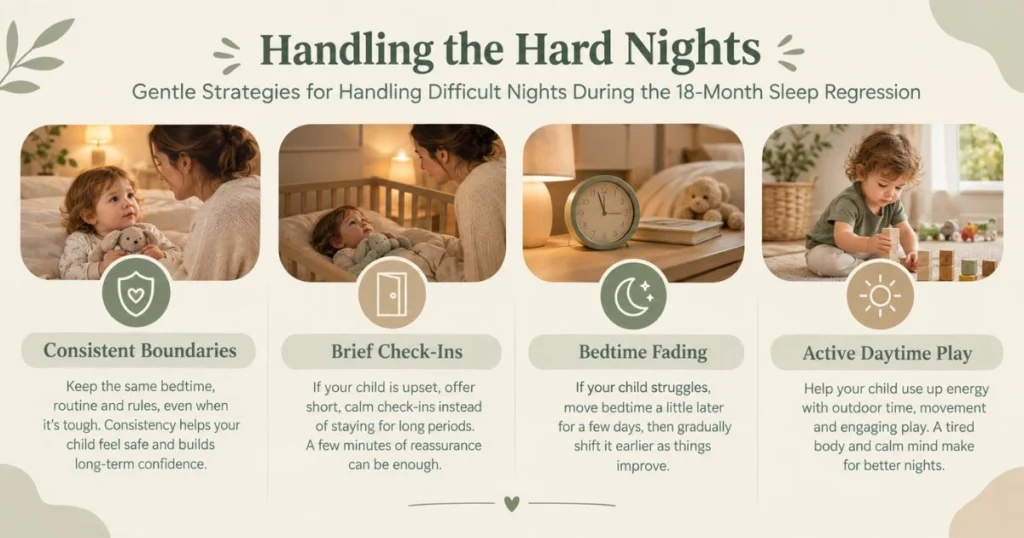
- Hold your boundaries, gently. Acknowledge what your toddler wants, but avoid introducing new habits (like extra rocking or lying down with them) that you won’t want to maintain long after this sleep regression passes.
- Try graduated check-ins. Popping in briefly at increasing intervals — say, 5, 10, 15, then 20 minutes — lets your toddler know you’re nearby without picking them up or fully re-engaging.
- Consider bedtime fading. If bedtime has become a battle during this sleep regression, temporarily shift it later to match when your toddler is naturally sleepy, then walk it back by about 15 minutes every few days.
- Burn off energy during the day. Active play — think obstacle courses, family walks, or an impromptu living-room dance party — helps toddlers work through the physical restlessness tied to new motor skills.
- Address teething pain directly. If molars seem to be the culprit, check with your pediatrician about age-appropriate options for nighttime comfort.
When to Loop in Your Pediatrician
Most sleep regressions resolve on their own with time and consistency, but certain signs during an 18 Month Sleep Regression are worth a call to your child’s doctor:
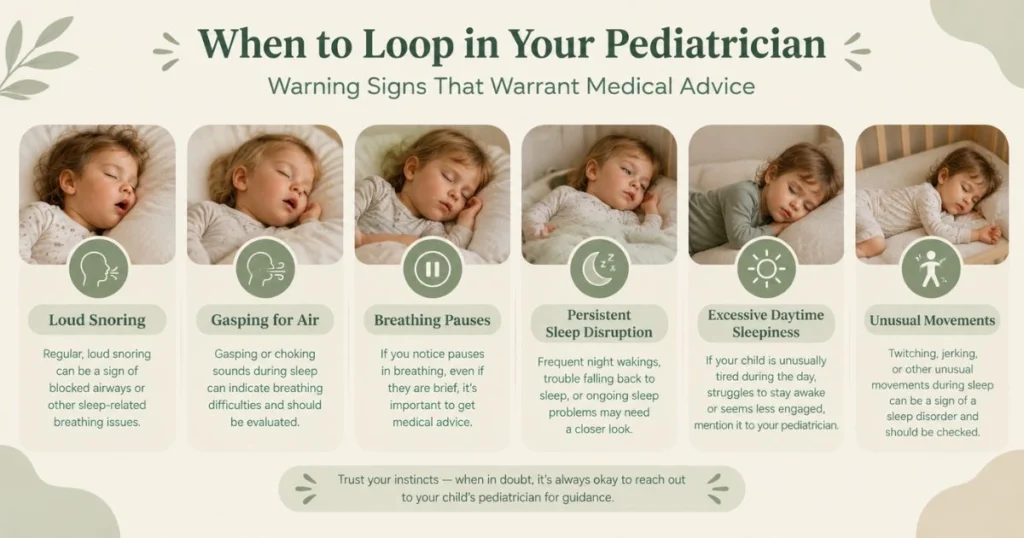
- Loud snoring, gasping, or noticeable pauses in breathing during sleep, which can point to obstructive sleep apnea.
- Sleep disruption that continues well past six weeks despite a steady routine — this may warrant an evaluation for Behavioral Insomnia of Childhood.
- Excessive daytime sleepiness or unusual involuntary movements during sleep.
- Exhaustion severe enough to compromise your own safety or wellbeing as a parent.
The Bottom Line
The 18 Month Sleep Regression is exhausting, but it’s also a temporary period of disrupted sleep that can happen while your toddler’s brain and body are going through major developmental changes. Language, mobility, independence, and emotional awareness are all leaping forward at once — sleep just happens to be the collateral damage.

Stay consistent, protect the schedule where you can, and remember: this sleep regression has an expiration date, even when it doesn’t feel like it at 3 a.m.