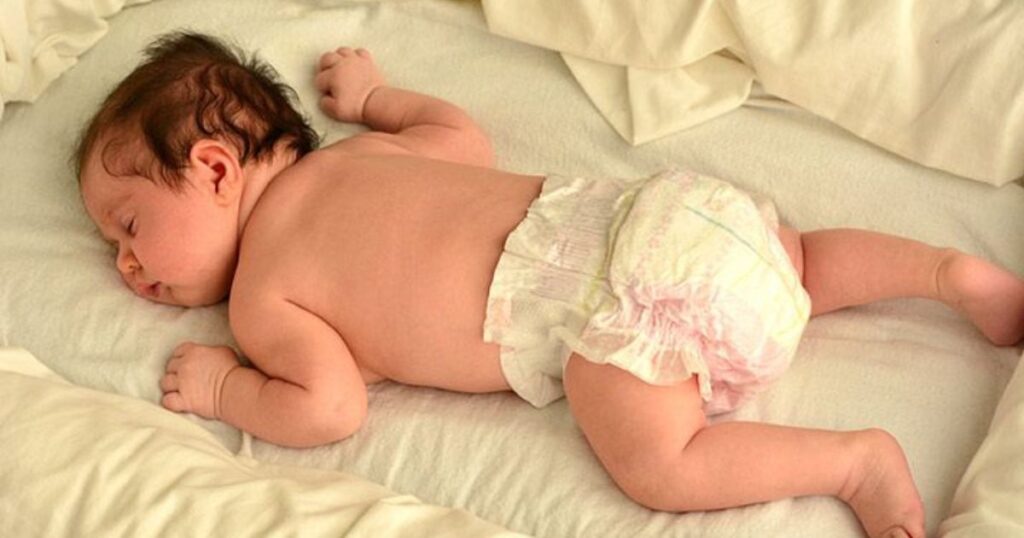

Figuring out your baby’s naps can feel like solving a new puzzle every few weeks. Just when you think you’ve found a routine that works, your baby starts taking shorter naps, fighting sleep, or suddenly needing a different number of naps.
That’s normal.
A Baby Nap Schedule changes significantly during the first year because your baby’s sleep needs, wake windows, and ability to stay awake gradually develop. A newborn may sleep several times throughout the day, while an older baby may take only two naps.
Instead of trying to force your baby into a rigid clock-based routine, you can use age-appropriate sleep ranges, wake windows, and sleepy cues to create a Baby Nap Schedule that works for your baby. This flexible approach can help you adjust naps as your baby’s sleep needs change.
If you want a broader look at sleep patterns throughout infancy, see our Baby Sleep Schedule by Age guide.

Baby Nap Schedule at a Glance
The number of naps your baby needs depends largely on age and individual sleep needs.
| Age | Typical naps per day | Approximate daytime sleep |
| Newborn | 4–6+ | 4–7 hours |
| 2–3 months | 4–5 | 3–5 hours |
| 4–5 months | 3–4 | 3–4 hours |
| 6–8 months | 2–3 | 2–3.5 hours |
| 9–12 months | 2–3 | 2–3 hours |
| Around 12 months | 1–2 | 1.5–3 hours |
These are broad ranges, not targets that your baby has to hit every day.
Some babies naturally take longer naps, while others sleep in shorter bursts. What matters is your baby’s total sleep, behavior, growth, and overall pattern.

How Many Naps Does a Baby Need?
Figuring out your baby’s naps can feel like solving a new puzzle every few weeks. Just when you think you’ve found a routine that works, your baby starts taking shorter naps, fighting sleep, or suddenly needing a different number of naps.
That’s normal.
A Baby Nap Schedule changes significantly during the first year because your baby’s sleep needs, wake windows, and ability to stay awake gradually develop. A newborn may sleep several times throughout the day, while an older baby may take only two naps.
Instead of trying to force your baby into a rigid clock-based routine, you can use age-appropriate sleep ranges, wake windows, and sleepy cues to create a flexible nap routine that works for your baby. This approach allows you to adjust your baby’s naps as their sleep needs change.
For broader guidance on how much sleep children need at different ages, see the American Academy of Sleep Medicine’s recommended sleep durations.
Baby Nap Schedule by Age
Your baby’s nap needs change throughout the first year. Here’s how the schedule typically develops.
Newborn Nap Schedule

Newborns don’t usually follow a predictable Baby Nap Schedule.
During the first weeks, your baby may sleep, wake to feed, stay awake briefly, and then fall asleep again.
Instead of using strict nap times, focus on:
- Feeding
- Short periods of awake time
- Sleep cues
- A safe sleep environment
- Adequate total sleep
Newborns often take several naps throughout the day, and individual naps may be very different in length.
One nap could last two hours while the next lasts only 30 minutes.
That’s normal for this stage.
For safe sleep guidance, parents can also review the American Academy of Pediatrics’ recommendations for keeping sleeping babies safe.
What a Newborn Day May Look Like
A newborn might have a rhythm such as:
Wake → feed → short awake time → nap → feed → awake time → nap
You don’t need to force this into a fixed timetable.
At this stage, following your baby’s needs is generally more useful than watching the clock.
2–3 Month Nap Schedule
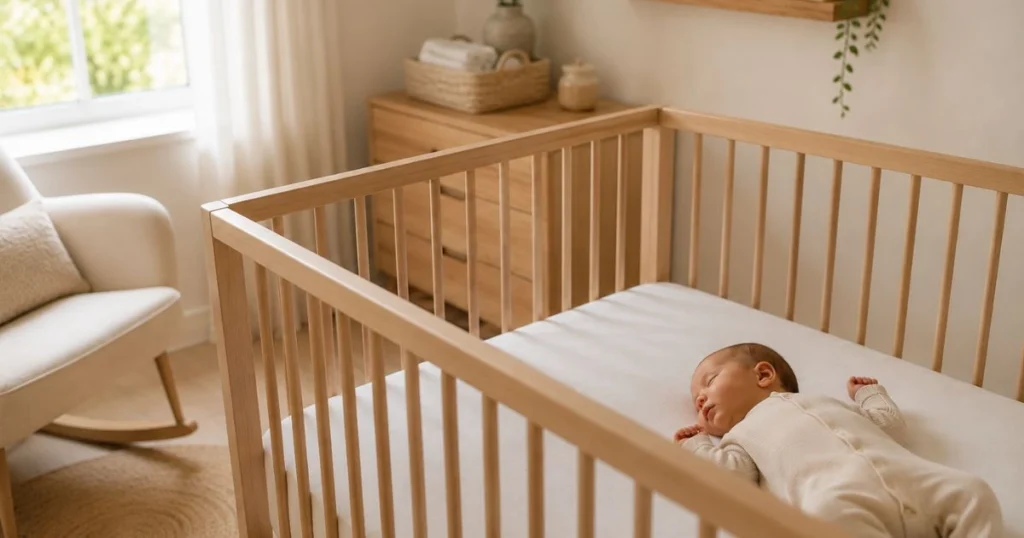
Around 2–3 months, your baby may begin developing a more recognizable daily rhythm.
Many babies still need approximately 4–5 naps per day, although some take more or fewer.
Wake periods remain relatively short, so naps may occur frequently.
A sample day could look like:
| Time | Activity |
| 7:00 AM | Wake |
| 8:30 AM | Nap |
| 10:30 AM | Nap |
| 12:30 PM | Nap |
| 3:00 PM | Nap |
| 5:00 PM | Short nap |
| Evening | Bedtime routine |
Don’t worry if your baby’s actual schedule looks completely different.
At this age, nap timing can change from one day to the next.
4–5 Month Nap Schedule

Around 4–5 months, many babies begin moving toward 3–4 naps per day.
This is also a period when sleep patterns can change significantly.
Your baby may suddenly start:
- Taking shorter naps
- Waking after one sleep cycle
- Fighting naps
- Needing help settling
- Becoming more predictable about nap timing
A sample four-nap schedule might look like:
| Time | Sleep |
| 7:00 AM | Wake |
| 8:30 AM | Nap |
| 11:00 AM | Nap |
| 1:30 PM | Nap |
| 4:30 PM | Short nap |
| 7:30 PM | Bedtime |
The final nap may be short. Its purpose can simply be to help your baby reach bedtime without becoming overtired.
6–8 Month Nap Schedule

Between 6 and 8 months, many babies settle into 2–3 naps per day.
A common pattern is:
- Morning nap
- Afternoon nap
- Optional short late-afternoon nap
As your baby becomes capable of staying awake longer, the third nap often becomes less necessary.
Sample 3-Nap Schedule
| Time | Sleep |
| 7:00 AM | Wake |
| 9:00 AM | Nap |
| 12:30 PM | Nap |
| 4:00 PM | Short nap |
| 7:00 PM | Bedtime |
Sample 2-Nap Schedule
| Time | Sleep |
| 7:00 AM | Wake |
| 9:30 AM | Nap |
| 2:00 PM | Nap |
| 7:00 PM | Bedtime |
Some 6-month-olds will still need three naps, while some older babies are already comfortable with two.
Don’t rush the transition simply because another baby the same age has dropped a nap.
9–12 Month Nap Schedule
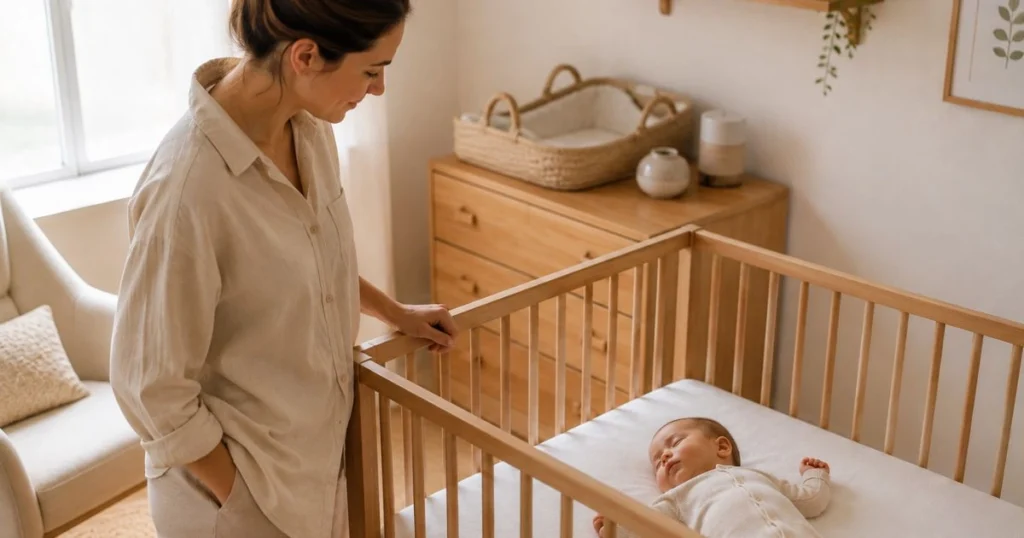
Most babies in this age range are taking two naps per day.
A typical rhythm might be:
Morning wake → morning nap → afternoon nap → bedtime
For example:
| Time | Sleep |
| 7:00 AM | Wake |
| 9:45 AM | Morning nap |
| 2:00 PM | Afternoon nap |
| 7:00 PM | Bedtime |
The exact times depend on when your baby wakes and how long each nap lasts.
By this stage, naps often become more predictable, although developmental changes can still temporarily disrupt sleep.
What About 12 Months?
Around the first birthday, some children continue taking two naps while others begin showing signs that they are ready for one. At this stage, a Baby Nap Schedule can become more individual as sleep needs and wake windows change.
If you’re specifically looking for a complete daily routine for a 12-month-old, see our 1 Year Old Sleep Schedule.
How Long Should Baby Naps Be?
Nap length varies significantly between babies, so your Baby Nap Schedule may look different from another baby’s routine.
A newborn may sleep for several hours during the day, while an older baby might take two naps lasting around an hour or more.
You don’t need every nap to have the same duration.
For example, an older baby might have:
- 45-minute morning nap
- 90-minute afternoon nap
Another baby might have:
- 90-minute morning nap
- 60-minute afternoon nap
Both patterns can work.
The more important question is whether your baby is getting enough overall sleep and whether naps are supporting rather than disrupting nighttime sleep.
Baby Nap Length by Age
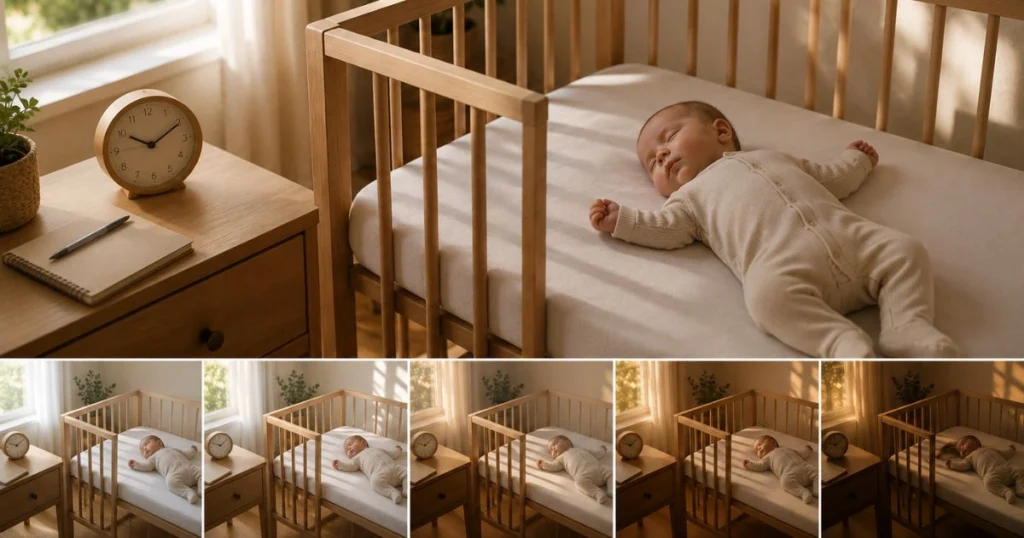
As babies mature, daytime sleep generally becomes more consolidated.
A broad pattern looks like this:
Newborn: frequent, variable naps
3–4 months: several naps with increasing predictability
5–6 months: usually 3–4 naps
6–8 months: often 2–3 naps
9–12 months: commonly 2 naps
Around 12+ months: gradually moving toward 1–2 naps
Remember that these are developmental patterns, not deadlines.
What Are Wake Windows?

A wake window is the approximate amount of time your baby can comfortably stay awake between sleep periods. Understanding wake windows can help you create a Baby Nap Schedule that matches your baby’s changing sleep needs.
Wake windows generally become longer as your baby grows.
For example:
- A newborn may only tolerate a short period of awake time.
- A 4-month-old can usually stay awake longer.
- A 6–8-month-old typically needs longer stretches between naps.
- An older baby may comfortably stay awake for several hours.
Wake windows can help you decide when to offer a nap, but they shouldn’t replace your baby’s sleepy cues.
Understanding wake windows can help you create a Baby Nap Schedule that matches your baby’s changing sleep needs. For a more detailed breakdown by age, see our Baby Wake Windows by Age guide.
How to Tell If Your Baby Is Tired?

Your baby may give you clues that it’s time for sleep.
Common sleepy cues include:
- Yawning
- Eye rubbing
- Looking away
- Becoming quieter
- Losing interest in toys
- Fussiness
- Clinginess
- Slower movements
- Staring into space
Some babies become more active when tired instead of appearing sleepy.
That’s why it’s useful to combine sleepy cues with the amount of time your baby has already been awake.
What If Your Baby Takes Short Naps?
Short naps are one of the most common nap concerns for parents.
A short nap might mean your baby wakes after one sleep cycle and doesn’t immediately connect another cycle.
This can happen for many reasons.
Your baby may:
- Be developmentally unable to connect sleep cycles consistently
- Not be tired enough
- Be overtired
- Be hungry
- Have an uncomfortable sleep environment
- Be experiencing developmental changes
- Have an inconsistent nap routine
One short nap isn’t necessarily a problem.
Look at the pattern over several days.
If your baby is happy, sleeping well at night, and getting adequate overall sleep, a short nap may simply be normal for your child.
Why Is My Baby Fighting Naps?

Nap resistance can happen at almost any age.
Your baby may fight a nap because the timing isn’t right, but there are other possibilities too.
Common reasons include:
- The wake window is too short.
- The wake window is too long.
- Your baby is overtired.
- Your baby is undertired.
- The environment is stimulating.
- Your baby is going through a developmental change.
- Your baby is becoming more aware of what’s happening around them.
- A nap transition is approaching.
Before changing the entire schedule, try making one small adjustment at a time.
How Do You Know When Your Baby Is Ready to Drop a Nap?
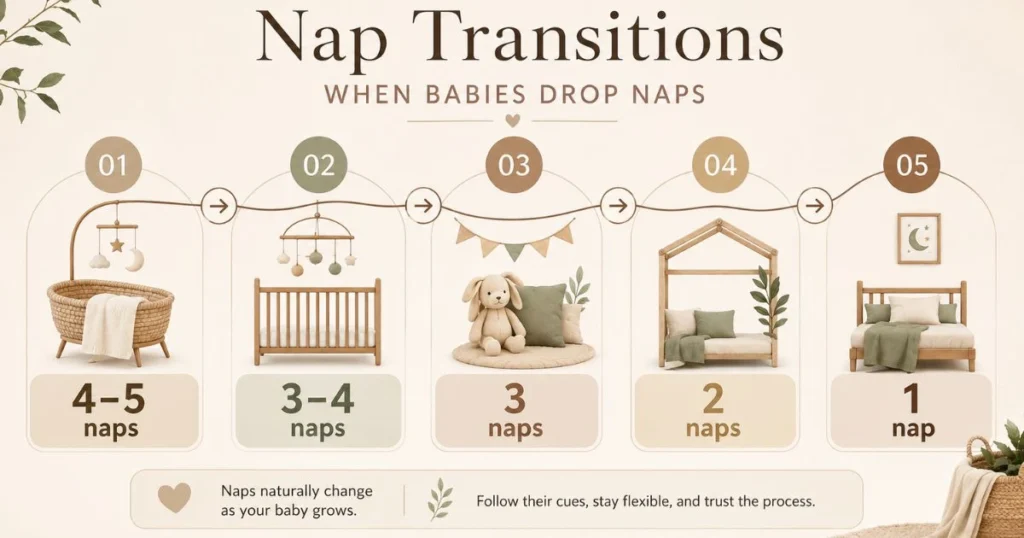
Nap transitions happen gradually, and changes to your Baby Nap Schedule should usually be based on consistent patterns rather than a few difficult days.
Your baby may be ready to drop a nap when they consistently:
- Refuse the same nap
- Take a long time to fall asleep for that nap
- Sleep well when that nap is skipped
- Stay comfortably awake for a longer period
- Continue sleeping well at night
- Have another nap that becomes longer
The key word is consistently.
One or two days of refusing a nap doesn’t necessarily mean your baby is ready to drop it.
Illness, teething, travel, developmental milestones, and changes in routine can all temporarily affect naps and make your baby’s Baby Nap Schedule seem different for a few days.
When Do Babies Go From 3 Naps to 2?
Many babies transition from three naps to two somewhere around the second half of the first year. As your baby’s sleep needs change, you may notice that their Baby Nap Schedule starts shifting as well.
You may find that your baby starts resisting the late-afternoon nap.
Your baby might:
- Refuse the third nap
- Take longer to fall asleep
- Have a very short third nap
- Start bedtime later
- Sleep well without the third nap
When this happens consistently, you can gradually stretch the earlier wake windows and allow the first two naps to become the main daytime sleep periods.
When Do Babies Transition From 2 Naps to 1?
The transition from two naps to one generally happens later than the 3-to-2 transition.
Some children start showing signs around their first birthday, while others may not be ready until later in toddlerhood.
Don’t eliminate the second nap simply because your child has turned one.
Instead, look for a consistent pattern of resistance and the ability to comfortably stay awake until around midday.
If you’re dealing specifically with this transition, your 1 Year Old Sleep Schedule article can provide a more age-specific approach.
How to Create a Baby Nap Routine

A nap routine doesn’t have to mean putting your baby to sleep at exactly the same time every day.
Instead, create a predictable sequence.
For example:
Diaper change → sleep sack → curtains closed → short book → cuddle → sleep
Repeating the same steps gives your baby signals that sleep is approaching.
Keep the routine shorter than bedtime. Even five to fifteen minutes can be enough.
Should Baby Nap at the Same Time Every Day?
A consistent rhythm can be helpful, but flexibility is normal when creating a Baby Nap Schedule.
You can use approximate nap times based on your baby’s wake-up time.
For example, if your baby usually wakes at 7:00 AM, the first nap may happen around the same part of the morning.
But if your baby wakes at 6:30 AM one day and 7:30 AM the next, you don’t need to force the exact same clock time.
Think of your Baby Nap Schedule as a framework rather than a rulebook..
How Naps Affect Nighttime Sleep
Daytime sleep and nighttime sleep are connected, so your Baby Nap Schedule can sometimes affect how easily your baby settles at night.
Too little daytime sleep can sometimes leave a baby overtired, while too much or poorly timed daytime sleep can make bedtime more difficult.
However, don’t assume that every nighttime waking is caused by naps.
Sleep can also be affected by:
- Development
- Feeding
- Illness
- Teething
- Separation anxiety
- Sleep associations
- The sleep environment
- Normal changes in infant sleep
Look at the entire sleep pattern before making major changes to your Baby Nap Schedule.
What Should You Do When a Nap Is Missed?
A missed nap doesn’t mean the entire day is ruined. If your Baby Nap Schedule gets disrupted, you can make small adjustments based on your baby’s needs.
If your baby refuses a nap, you can:
- Try again after a short period.
- Offer a quiet rest period.
- Move the next sleep earlier if necessary.
- Use an earlier bedtime.
The best response depends on your baby’s age and how much sleep they’ve already had.
Trying to force a missed nap for an extended period can sometimes make everyone more frustrated.
Baby Nap Schedule for Daycare
YYour baby’s daycare schedule may not match your ideal Baby Nap Schedule at home.
That’s okay.
Rather than trying to make every nap identical, focus on maintaining the general structure.
You can ask the caregiver:
- What time does my baby usually nap?
- How long do naps typically last?
- Does my baby fall asleep independently?
- Is the afternoon nap consistent?
- Does my baby seem overtired by pickup time?
On days when your baby sleeps less at daycare, an earlier bedtime may help compensate.
What If Your Baby’s Nap Schedule Changes Every Day?
Some flexibility is expected.
Your baby isn’t a machine, and sleep needs can vary from one day to another.
You may have:
A long-nap day
Followed by:
A short-nap day
Followed by:
A two-nap day
The important thing is the overall pattern you notice over time.
Instead of trying to make every day identical, maintain a few consistent anchors:
- Morning wake-up
- Approximate nap periods
- Bedtime routine
- Nighttime sleep environment
A Simple Way to Adjust Your Baby’s Nap Schedule
When naps stop working, avoid changing everything at once. Instead, look at whether your Baby Nap Schedule is matching your baby’s current sleep needs.
Start with one question:
Is my baby undertired or overtired when I offer the nap?
If your baby happily plays in the crib for a long time before falling asleep, they may not have enough sleep pressure yet.
If your baby is crying, rubbing their eyes, and becoming extremely upset before falling asleep, they may have stayed awake too long.
Make a small adjustment to the wake period and observe what happens over the next few days.
This approach is usually more useful than constantly moving nap times around.
Baby Nap Schedule FAQs
How many naps should a 3-month-old take?
Many 3-month-olds take around four or five naps, although individual babies may take more or fewer. At this age, a Baby Nap Schedule is often flexible because your baby’s sleep patterns and wake windows are still developing.
How many naps should a 6-month-old take?
Many 6-month-olds take three naps, while some are beginning to move toward two. At this stage, your Baby Nap Schedule may gradually change as your baby’s wake windows become longer and their daytime sleep becomes more consolidated.
How many naps should a 9-month-old take?
Most 9-month-olds take two naps per day, although individual sleep needs vary. A consistent Baby Nap Schedule can help provide a predictable rhythm while still allowing flexibility for your baby’s individual needs.
How many naps should a 1-year-old take?
A 12-month-old may still take two naps or may be beginning the transition to one. Let your baby’s readiness guide the transition rather than relying on age alone when adjusting their Baby Nap Schedule.
How long should a baby nap?
Nap length varies by age and individual sleep needs. A single short nap isn’t necessarily a problem if your baby gets enough total sleep and is otherwise doing well.
Is a 30-minute nap enough?
Sometimes. A 30-minute nap may be perfectly normal, particularly if your baby gets adequate sleep across the rest of the day and night.
Should I wake my baby from a nap?
Not always. If your baby’s naps aren’t interfering with nighttime sleep, there’s often no need to wake them simply because they have slept longer than expected. A flexible Baby Nap Schedule can allow for occasional longer naps when your baby needs extra daytime sleep.
If a long or late nap consistently makes bedtime difficult, you may need to adjust the schedule.
Why does my baby wake after 30 minutes?
Your baby may be waking after one sleep cycle because of developmental factors, an unsuitable Baby Nap Schedule, hunger, discomfort, environmental distractions, or difficulty connecting sleep cycles.
Look for patterns rather than assuming that every short nap requires intervention.
The Bottom Line
A good Baby Nap Schedule isn’t about forcing your baby to sleep at exact times.
It’s about understanding how sleep needs change with age and creating a flexible rhythm around your baby’s natural development.
Newborns usually need frequent sleep opportunities. As your baby grows, naps gradually consolidate from several daytime sleeps into three, then two, and eventually one.
Use age as a starting point, but pay attention to your baby’s sleepy cues, wake windows, nap quality, nighttime sleep, and behavior.
And remember: a nap transition is a process, not a deadline.
If your baby’s schedule changes from one day to the next, that doesn’t necessarily mean you’re doing anything wrong.next, that doesn’t necessarily mean you’re doing anything wrong. Sleep develops gradually, and your baby’s needs will continue changing as they grow.