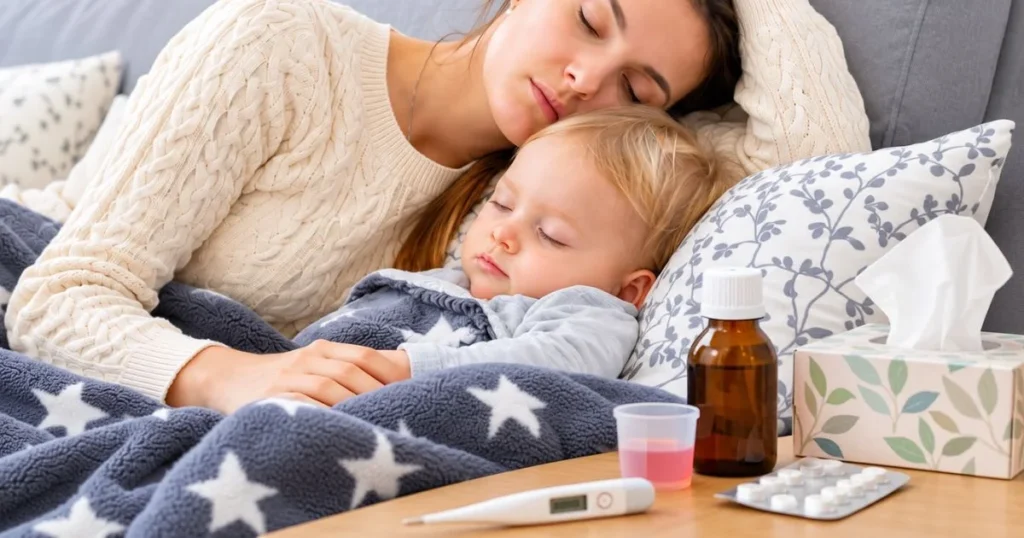
Few things make you worry faster than noticing that your baby feels warmer than usual. Maybe your little one is fussier, feeding less, or sleeping more than normal. You reach for a thermometer, but when you see the number, you may not know whether to call the doctor, give medicine, or simply keep an eye on your baby.
Understanding baby fever can help you make those decisions with greater confidence. Fever is usually a sign that your baby’s immune system is responding to an infection. Although many childhood fevers are caused by common illnesses, your baby’s age, temperature, and other symptoms determine how seriously you should take them.
In this guide, you’ll learn what counts as a fever, how to measure your baby’s temperature, what to expect at different ages, and how to provide safe care. Most importantly, you’ll discover which warning signs mean your baby needs medical attention.
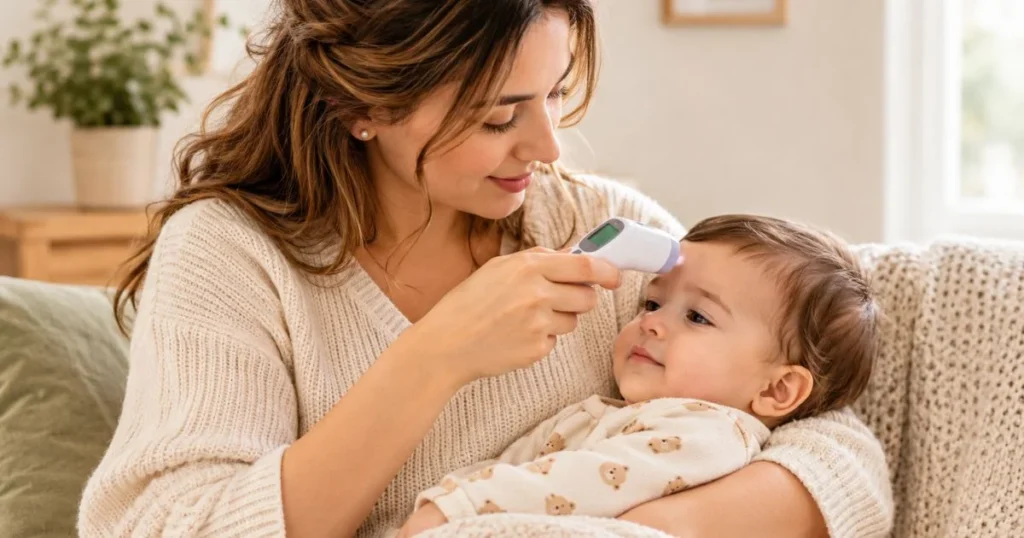
What Is Baby Fever and What Temperature Is Considered High?
A fever is an increase in body temperature that commonly occurs when the immune system responds to an infection. Rather than being an illness itself, baby fever is a symptom that tells you something may be happening inside your little one’s body.
When your baby encounters a virus or bacteria, the brain’s temperature-regulating system can raise the body’s temperature. This response helps activate immune defenses, including white blood cells, that work to fight the infection.
What Temperature Counts as a Fever in Babies?
A rectal temperatA temperature of 100.4°F (38°C) or higher is generally considered a fever in infants. This is an important threshold to understand when monitoring baby fever, especially during the first three months of life.
This threshold is particularly important because newborns and young infants can develop serious infections without showing obvious symptoms.
Remember these basic points:
- A temperature below 100.4°F (38°C) is generally below the usual fever threshold when measured rectally.
- A rectal temperature of 100.4°F (38°C) or higher indicates a fever.
- Your baby’s temperature may vary depending on the time of day, activity, and measurement method.
- A baby can have a significant illness even without an extremely high temperature.
The number on the thermometer matters, but it should never be the only thing you consider. Your baby’s breathing, feeding, alertness, and overall behavior are equally important.
Normal Baby Temperature vs. Fever
Normal body temperature varies slightly from one baby to another. It may also change throughout the day, with readings often higher in the late afternoon and evening.
| Temperature | General interpretation |
| Below 100.4°F (38°C) | Below the usual fever threshold |
| 100.4°F (38°C) or higher | Fever when measured rectally |
These values are reference points rather than a complete diagnostic guide. Different measurement methods can produce different readings, so always consider how you checked your baby’s temperature.
Why Does Baby Temperature Change Throughout the Day?
You may nYou may notice that your baby’s temperature is slightly higher in the evening than in the morning. This is usually part of the body’s natural daily temperature rhythm and does not necessarily indicate baby fever.
Other factors can also influence a temperature reading, including:
- Warm clothing or heavy blankets.
- A hot room.
- Physical activity or prolonged crying.
- Recent bathing.
- The type of thermometer used.
If your baby feels unusually warm, use a reliable thermometer rather than assuming the temperature is normal because the reading is only slightly elevated.
How to Check Your Baby’s Temperature Correctly
Knowing how to measure your baby’s temperature is one of the most useful skills you can develop as a parent, especially when checking for baby fever. Different thermometers measure temperature in different ways, and some methods are more reliable than others.
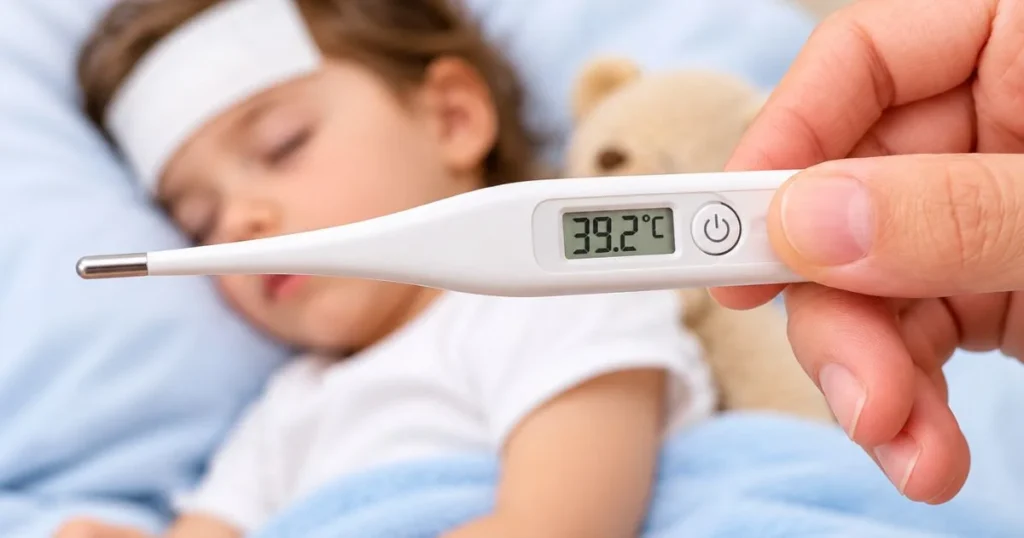
Rectal Temperature: The Most Reliable Method for Young Babies
A digital rectal thermometer generally provides the most accurate temperature measurement for infants, particularly those younger than three monthsIf you need to take a rectal temperature:
- Use a digital thermometer designed for rectal use.
- Follow the manufacturer’s instructions carefully.
- Use an appropriate amount of lubricant if recommended.
- Never force the thermometer or insert it farther than instructed.
- Clean and store the thermometer according to its instructions.
If you are uncomfortable performing a rectal measurement, ask your pediatrician to demonstrate the correct technique.
For a baby under three months, a rectal temperature of 100.4°F (38°C) or higher requires immediate medical evaluation. This is an important safety rule when monitoring baby fever in young infants.
Forehead Thermometers: Are They Accurate?
Temporal artery thermometers measure temperature using the forehead area. They can be convenient for parents, especially when checking for baby fever while your little one is sleeping.
However, accuracy depends on the device, positioning, and instructions. Make sure you use the thermometer exactly as directed.
Forehead temperature strips are different. They measure skin temperature rather than providing a reliable estimate of internal body temperature, so they should not be used to confirm or rule out a fever.
Ear Thermometers: When Can You Use Them?
Ear thermometers measure infrared heat from inside the ear canal and can provide quick readings when used correctly.
They are generally more suitable for babies aged six months and older. Before six months, an infant’s ear canal is small, which can make accurate positioning difficult and affect the reliability of baby fever readings.
Underarm Temperature: What Parents Should Know
Taking your baby’s temperature under the arm is simple and convenient, but it is less accurate than rectal measurement.
An underarm reading may be lower than your baby’s actual core temperature. If your baby feels unwell or you suspect baby fever, ask your healthcare provider whether a more reliable measurement is needed.
Can You Tell If Your Baby Has a Fever by Touching Their Forehead?
Touching your baby’s forehead, neck, or back may help you notice that they feel warmer than usual, but it cannot confirm a fever.
Skin temperature can change with clothing, room temperature, and sweating. A digital thermometer is a much better way to check.
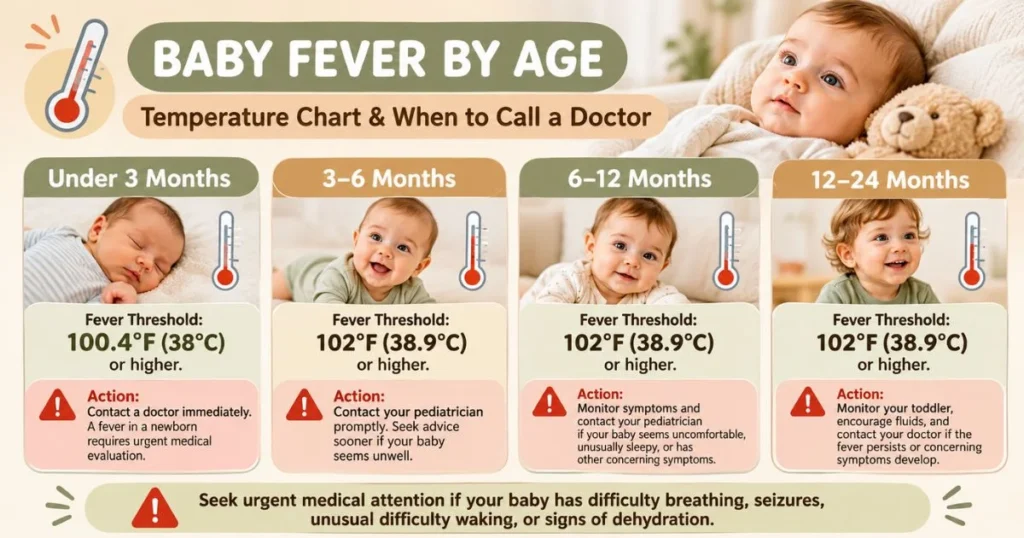
Baby Fever by Age: Temperature Chart and When to Call a Doctor
Your baby’s age is one of the most important factors when deciding what to do about a fever. An elevated temperature in a newborn needs a different response from a fever in an older baby or toddler.
Baby Fever Under 3 Months (Newborns)
If youIf your baby is younger than three months and has a rectal temperature of 100.4°F (38°C) or higher, seek immediate medical evaluation. This is one of the most important safety rules every parent should know about baby fever.
Do not wait to see whether the temperature goes down. Do not delay care to try fever medicine, and do not assume your newborn is fine simply because they are feeding or sleeping normally.
Young infants have developing immune systems and may not show the usual signs of infection.
Watch for additional symptoms such as:
- Poor feeding or refusing feeds.
- Unusual sleepiness or difficulty waking.
- Weak or unusual crying.
- Breathing difficulties.
- Changes in skin color.
- Unusual irritability.
- Fewer wet diapers.
Even if none of these symptoms are present, a documented fever at this age needs prompt medical attention.
Baby Fever Between 3 and 6 Months
As your baby gets older, their immune system continues developing, but baby fever still deserves careful attention.
The American Academy of Pediatrics advises contacting your pediatrician when a baby between three and six months has a temperature of 101°F (38.3°C) or higher.
The NHS uses a threshold of 102.2°F (39°C) for urgent medical advice in this age group.
These are different national guidelines, not interchangeable rules. Follow the recommendations of your baby’s healthcare provider and seek help sooner if your little one appears unwell.
Pay attention to:
- Reduced feeding.
- Unusual crying or irritability.
- Vomiting or diarrhea.
- Fewer wet diapers.
- Changes in breathing.
- Unusual sleepiness.
Baby Fever Between 6 and 12 Months
Fever becomes more common as babies encounter different viruAs babies grow, their immune systems become more developed, helping them respond to common viruses and infections. However, baby fever can still occur alongside symptoms such as a runny nose, cough, diarrhea, or other signs of illness.
When assessing your baby, consider:
- Are they drinking breast milk or formula?
- Are they producing their usual number of wet diapers?
- Can they be comforted?
- Are they alert and responsive when awake?
- Is their breathing comfortable?
The AAP advises contacting a pediatrician for a baby older than six months with a temperature of 103°F (39.4°C) or higher.
However, you should not wait for this temperature if your baby has difficulty breathing, appears seriously ill, or shows other warning signs.
Fever in Toddlers Between 12 and 24 Months
Toddlers may develop fevers from common viral infections, ear infections, urinary tract infections, and otAs toddlers grow, they become better at communicating discomfort, but baby fever and other illnesses still require your attention.
At this age, your child may be able to show you that something hurts, but they still depend on you to recognize changes in their health.
Watch for:
- Refusing food or drinks.
- Unusual tiredness.
- Persistent crying.
- Reduced urination.
- Vomiting or diarrhea.
- Pain or discomfort.
- Symptoms that become worse rather than better.
According to AAP guidance, you should contact your child’s doctor if a fever lasts more than 24 hours in a child younger than two years.
Baby Fever by Age: Quick Reference Chart
| Age | Temperature or concern | Recommended action |
| Under 3 months | 100.4°F (38°C) or higher rectally | Immediate medical evaluation |
| 3–6 months | 101°F (38.3°C) or higher | Contact pediatrician according to AAP guidance |
| 6–12 months | 103°F (39.4°C) or higher | Contact pediatrician |
| 12–24 months | Fever lasting over 24 hours | Contact pediatrician |
This table summarizes AAP guidance and is not a substitute for an individual medical assessment. Serious symptoms require urgent attention at any age, regardless of the temperature.
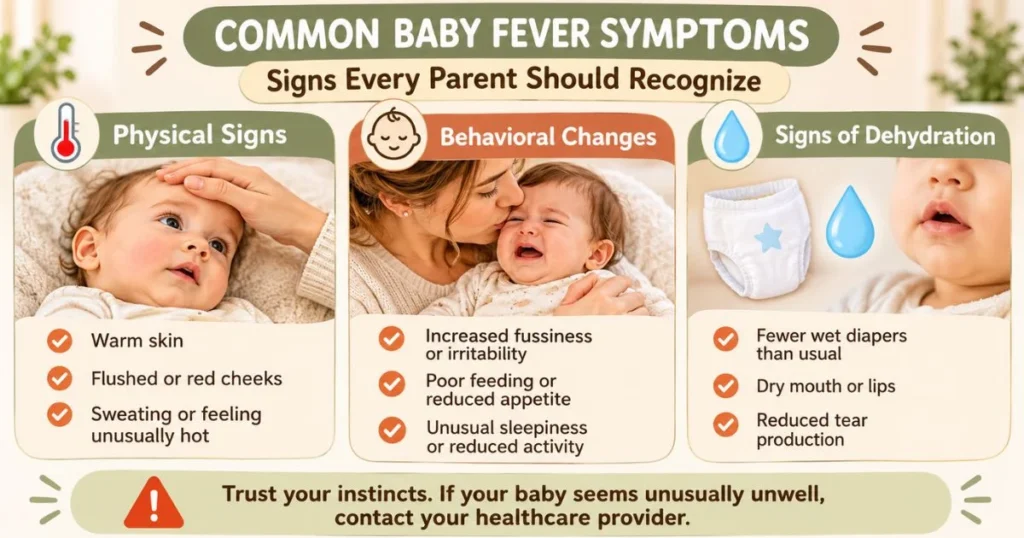
Common Baby Fever Symptoms Parents Should Recognize
Fever does not look exactly the same in every baby. Some little ones become noticeably fussy, while others simply sleep more or lose interest in feeding.
Physical Signs of Baby Fever
Common physical symptoms include:
- Warmer skin, especially around the back and chest.
- Flushed cheeks.
- Sweating.
- Chills or shivering.
- Faster heartbeat.
- Reduced appetite.
- Unusual tiredness.
Your baby may also have symptoms related to the underlying infection, such as coughing, sneezing, a runny nose, vomiting, or diarrhea.
Behavioral Changes When Your Baby Has a Fever
Sometimes, changes in behavior aBehavioral changes are sometimes easier to notice than physical symptoms when your baby is unwell.
You may find that your baby:
- Cries more frequently.
- Wants to be held constantly.
- Has difficulty settling.
- Sleeps longer than usual.
- Shows less interest in toys.
- Refuses breast milk or formula.
These changes can sometimes accompany baby fever, but a change in behavior does not automatically mean something serious is happening. However, unusual weakness, difficulty waking, or poor responsiveness should never be ignored.
Signs of Dehydration in a Baby With Fever
Fever can increasFever can increase your baby’s fluid loss, particularly when accompanied by sweating, vomiting, or diarrhea. This makes hydration especially important when managing baby fever.
Look for these signs:
- Fewer wet diapers than usual.
- Dry mouth or tongue.
- Fewer tears when crying.
- Sunken eyes.
- A sunken soft spot.
- Unusual sleepiness.
If your baby has signs of dehydration, contact a healthcare professional promptly. Severe dehydration or difficulty waking requires emergency assessment.
What Causes Baby Fever?
Understanding possible causes can help you recognize what might be happening, although only a healthcare professional can diagnose the underlying illness.
Viral Infections: Common Causes
Viruses are among the most frequent causes of fever in babies.
Common examples include:
- Common cold: May cause a runny nose, sneezing, coughing, and mild fever.
- Influenza: Can cause fever, cough, tiredness, and reduced appetite.
- RSV: May cause cold-like symptoms and, in some babies, breathing difficulties.
- Roseola: Often causes several days of fever followed by a rash as the fever settles.
- Gastrointestinal viruses: May cause fever, vomiting, and diarrhea.
Most viral infections improve with time and supportive care, but young infants may need medical evaluation to rule out more serious conditions.
Bacterial Infections That Can Cause Fever
Bacterial infections are less common than viral illnesses, but they can sometimes cause baby fever and require prompt medical treatment.
Possible causes include:
- Urinary tract infections (UTIs).
- Ear infections.
- Pneumonia.
- Bloodstream infections.
- Meningitis.
A urinary tract infection can sometimes cause fever without obvious urinary symptoms. This is one reason your pediatrician may recommend a urine test when your baby has an unexplained fever.
Can Vaccinations Cause Baby Fever?
Yes. Some babies develop a mild baby fever after receiving certain vaccinations.
This is a possible immune response and may occur alongside temporary soreness, swelling, fussiness, or reduced appetite.
The timing and duration depend on the vaccine, so there is no single schedule that applies to every immunization.
If your baby develops a fever after vaccination, follow your healthcare provider’s advice. Never automatically assume that a fever in a young infant is caused by a recent vaccine.
Can Teething Cause a True Fever?
Teething can make your baby uncomfortable. You may notice drooling, swollen gums, chewing, and increased fussiness.
However, teething does not adequately explain a true fever of 100.4°F (38°C) or higher.
If your baby has a documented fever, consider the possibility of an infection rather than automatically blaming new teeth.
Can Overdressing or Hot Weather Raise Your Baby’s Temperature?
Yes, excessive clothing and hot environments can contribute to overheating and may make your baby’s temperature rise.
Remove unnecessary layers and move your baby to a comfortably cool environment. If you suspect baby fever, use a reliable thermometer to check their temperature rather than relying on touch alone.
However, heatstroke is a medical emergency. If your baby has been exposed to extreme heat and becomes unusually sleepy, confused, difficult to wake, or develops abnormal breathing, seek emergency help immediately.
How to Treat Baby Fever Safely at Home
If your baby is old enough for home monitoring and does not have symptoms requiring urgent medical care, you can take several steps to improve their comfort.
Remember that home care does not replace medical assessment when your baby’s age or symptoms indicate a need for professional attention.
Keep Your Baby Hydrated With Breast Milk or Formula
Fluids are parKeeping your baby hydrated is particularly important when managing baby fever, as illness can increase fluid loss.
You can:
- Continue breastfeeding frequently.
- Offer formula at regular intervals.
- Try smaller, more frequent feeds if your baby is struggling with larger amounts.
- Monitor wet diapers.
- Follow your pediatrician’s advice if your baby has vomiting or diarrhea.
For babies younger than six months, breast milk or infant formula should remain their main source of fluids. Do not give plain water unless your healthcare professional specifically recommends it.
For older babies, offer appropriate fluids according to their age and usual feeding routine.
Dress Your Baby in Lightweight Clothing
Your baby does not need several layers of clothing when experiencing baby fever or fighting an infection.
Instead:
- Choose comfortable, lightweight clothing.
- Avoid heavy blankets.
- Keep the bedroom at a comfortable temperature.
- Do not deliberately wrap your baby to make them sweat.
If your baby is shivering, use a light blanket for comfort rather than allowing them to become cold.
Let Your Baby Rest and Recover
Your baby may need more sleep than usual while recovering from baby fever.
Allow extra rest, offer cuddles, and keep activities calm. You do not need to force your baby to play or follow their usual routine.
Continue checking that your baby is breathing comfortably and responding normally when awake.
Should You Give Your Baby a Bath to Reduce Fever?
Cold baths, ice baths, and alcohol rubs are not safe treatments for baby fever.
Routine sponging is also generally not recommended because it can cause shivering and discomfort.
A comfortable bath is fine if your baby enjoys it, but you should not use bathing to force their temperature down.
How Often Should You Monitor Your Baby’s Temperature?
There is no single checking schedule suitable for every baby. Monitor your child’s condition and follow your pediatrician’s recommendations.
Keep track of:
| What to monitor | What you should observe |
| Temperature | Reading, time, and measurement method |
| Feeding | Normal or reduced intake |
| Wet diapers | Changes in frequency |
| Breathing | Comfortable or unusually difficult breathing |
| Behavior | Alertness and responsiveness |
| Other symptoms | Cough, rash, vomiting, or diarrhea |
Keeping a simple record can help you explain your baby’s symptoms clearly when speaking with a healthcare professional.
Baby Fever Medicine: Tylenol, Motrin, and Safe Dosage
Fever medication may help your baby feel more comfortable when experiencing baby fever, but it does not treat the infection causing the fever.
You do not necessarily need to bring every fever down to a normal temperature. Your baby’s comfort and overall condition are more important.
Acetaminophen (Tylenol) for Baby Fever
Tylenol is a brand name for acetaminophen, a medicine commonly used to relieve pain and fever.
Before giving it:
- Check your baby’s age and weight.
- Confirm the medicine’s concentration.
- Use the correct measuring syringe.
- Follow your pediatrician’s instructions.
- Avoid giving multiple products containing acetaminophen.
The AAP recommends contacting your pediatrician before giving acetaminophen to children younger than two years.
Never give fever medication to a baby under three months as a substitute for immediate evaluation of a documented fever.
Ibuprofen (Motrin or Advil) for Baby Fever
Ibuprofen is another medicine used to relieve pain and reduce baby fever.
However, it is generally not recommended for babies younger than six months unless specifically directed by a healthcare professional.
It may also be unsuitable for a child who is dehydrated or has certain medical conditions.
Always check the product instructions and consult your pediatrician if you are unsure.
Can You Alternate Tylenol and Motrin?
Some parents consider alternating acetaminophen and ibuprofen when a fever returns.
However, doing this without professional guidance can make it easier to give the wrong medicine or repeat a dose too soon.
Do not routinely combine or alternate these medicines unless your healthcare professional provides a clear plan.
Why Should Babies Never Be Given Aspirin?
Aspirin should not be given to children or teenagers unless specifically prescribed by a healthcare professional.
Its use during certain viral illnesses has been associated with Reye’s syndrome, a rare but serious condition affecting the liver and brain.
How Is Baby Fever Medicine Dosage Calculated?
The correct dose depends on your baby’s weight and the concentration of the specific product.
For safe administration:
- Check the active ingredient.
- Read the concentration on the bottle.
- Confirm the appropriate dose with your pediatrician or pharmacist.
- Use the supplied oral syringe.
- Record the time and amount given.
Never estimate a dose using a household teaspoon or use an adult medicine without medical instructions.
| Medicine | Active ingredient | Important precaution |
| Tylenol | Acetaminophen | Ask your pediatrician for guidance, especially under age 2 |
| Motrin or Advil | Ibuprofen | Generally avoid under 6 months unless directed |
| Aspirin | Acetylsalicylic acid | Avoid in children unless specifically prescribed |
When to Worry About Baby Fever: Emergency Warning Signs
Although many childhood fevers are associated with common infections, certain symptoms require immediate attention.
Do not wait for your baby’s temperature to reach a particular number if they appear seriously ill.
Signs That Require Emergency Medical Attention
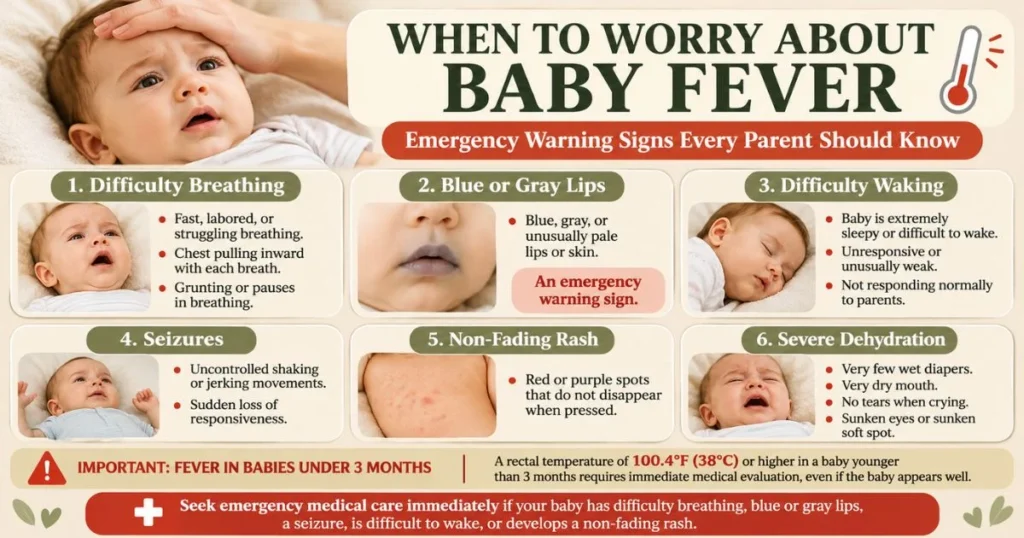
Seek emergency medical help if your baby has:
- Difficulty breathing, grunting, or struggling for air.
- Blue, gray, or unusually pale lips or skin.
- Extreme lethargy or difficulty waking.
- Unresponsiveness or unusual limpness.
- A stiff neck.
- A purple or red rash that does not fade when pressed.
- A seizure.
- Severe dehydration.
- A bulging soft spot accompanied by other concerning symptoms.
A fever of 100.4°F (38°C) or higher in a baby younger than three months also requires immediate medical evaluation.
When Should You Call Your Pediatrician?
Contact your baby’s doctor if you notice:
- Fever in a baby aged three to six months reaching the relevant age-based threshold.
- Fever lasting more than 24 hours in a child younger than two years.
- Poor feeding or significantly fewer wet diapers.
- Persistent vomiting.
- Unusual irritability.
- A new rash.
- Symptoms that are getting worse.
- A fever that repeatedly returns without an obvious explanation.
If your instincts tell you that something is not right, it is reasonable to seek medical advice even when your baby does not have every warning sign.
What Is a Febrile Seizure?
A febrile seizure is a seizure associated with a fever, usually occurring in young children between approximately six months and five years.
During an episode, your child may:
- Become stiff.
- Shake or jerk uncontrollably.
- Lose awareness.
- Roll their eyes.
- Become sleepy afterward.
Although many febrile seizures do not cause lasting problems, they can be frightening to witness.
What Should You Do During a Febrile Seizure?
- Place your child on their side on a safe, flat surface.
- Move nearby objects that could cause injury.
- Do not hold down their arms or legs.
- Never put anything inside their mouth.
- Note when the seizure starts.
- Call emergency services for a first seizure, breathing difficulties, or a seizure lasting five minutes or longer.
Never try to give oral medication or water during a seizure.
How Long Does Baby Fever Usually Last?
Many childhood fevers improve within one to four days, although the duration depends on the infection.
The number of days alone cannot tell you whether your baby is recovering safely. You should also look at feeding, hydration, breathing, and behavior.
How Long Do Viral Fevers Last in Babies?
Many viral infections cause fever for a few days.
Your baby may continue to have a runny nose or cough after the temperature returns to normal. This does not necessarily mean the infection is getting worse.
However, persistent fever or worsening symptoms should be discussed with your pediatrician.
Why Does Baby Fever Keep Coming Back?
A fever may rise and fall throughout the day. It may also return when the effect of fever medication wears off.
This does not automatically mean the infection is becoming more serious.
However, a fever that continues, returns after the child has improved, or comes with new symptoms deserves medical attention.
What If Your Baby Has a Fever Without Other Symptoms?
Sometimes fever is the first noticeable sign of an infection.
A urinary tract infection is one possible cause, particularly when there is no obvious cough, runny nose, or other respiratory symptom.
Your pediatrician may recommend an examination or urine testing to identify the cause.
Remember that unexplained fever in a young infant should never be ignored.
Baby Fever at Night: What Should Parents Do?
A nighttime fever can feel particularly stressful. Your baby may wake up crying, feel warmer than usual, or have difficulty settling.
Why Does Baby Fever Seem Higher at Night?
Body temperature naturally tends to rise later in the day.
When your baby is already unwell, this normal fluctuation can make the fever seem more noticeable in the evening.
A higher nighttime reading does not automatically mean the illness is becoming more serious. Always consider the actual temperature and your baby’s overall condition.
Should You Wake a Sleeping Baby to Check Their Temperature?
You do not necessarily need to wake an otherwise comfortable sleeping baby repeatedly just to check their temperature.
However, you should continue observing their breathing, skin color, and responsiveness.
If your baby is difficult to wake, breathing abnormally, or showing other emergency symptoms, seek immediate help.
Do not allow sleep to delay medical evaluation when a baby under three months has a documented fever.
Can Your Baby Sleep Safely With a Fever?
Yes, a baby who is otherwise suitable for home care can generally sleep while recovering from a fever.
Keep these safety reminders in mind:
- Use appropriate sleep clothing.
- Avoid heavy blankets and overheating.
- Follow safe sleep recommendations.
- Keep the sleep surface firm and clear.
- Monitor your baby’s condition.
Rest is helpful, but safe sleep and appropriate medical care remain essential.
Common Mistakes Parents Should Avoid When Their Baby Has a Fever
When your baby is unwell, it is easy to feel pressured to do something immediately. However, some common responses can make your baby more uncomfortable or delay necessary care.
Here are mistakes worth avoiding:
- Relying only on touch: Always use a suitable thermometer to confirm a suspected fever.
- Ignoring newborn fever: A temperature of 100.4°F (38°C) or higher in a baby under three months requires immediate evaluation.
- Giving medication without checking the dose: Always confirm the correct product, concentration, and amount.
- Using adult medication: Adult medicines are not automatically safe for babies.
- Alternating medicines without guidance: This increases the risk of dosing mistakes.
- Using cold baths or alcohol rubs: These methods can cause discomfort and may be harmful.
- Overdressing your baby: Heavy layers can contribute to overheating.
- Blaming every fever on teething: A true fever needs an appropriate explanation.
- Ignoring dehydration: Reduced wet diapers and poor feeding deserve attention.
- Waiting despite warning signs: Breathing difficulties, seizures, and reduced responsiveness require urgent action.
The goal is not to make every temperature reading normal. It is to keep your baby comfortable, recognize changes early, and obtain medical care when needed.
Frequently Asked Questions About Baby Fever
What Temperature Is Considered a Fever in a Baby?
A rectal temperature of 100.4°F (38°C) or higher is generally considered a fever in babies. The measurement method matters, and a different reading may require interpretation by a healthcare professional.
Is 100.4°F a Fever in a Newborn?
Yes. A rectal temperature of 100.4°F (38°C) or higher in a baby younger than three months requires immediate medical evaluation, even if your newborn appears comfortable.
What Temperature Is Dangerous for a Baby?
There is no single temperature that determines danger for every age. A fever of 100.4°F (38°C) in a baby under three months requires immediate evaluation. At any age, serious symptoms such as difficulty breathing, seizures, or unresponsiveness require emergency care.
Should I Worry About a 102°F Fever in My Baby?
It depends on your baby’s age and symptoms. A 102°F reading in a newborn is especially concerning and requires medical evaluation if confirmed rectally. In older babies, consider feeding, hydration, alertness, and other symptoms, and contact your pediatrician for guidance.
Can Teething Cause Baby Fever?
Teething can cause drooling, sore gums, and fussiness, but it does not adequately explain a true fever of 100.4°F (38°C) or higher. Consider other possible causes when your baby has a documented fever.
How Can I Reduce Baby Fever Naturally?
Focus on comfort rather than trying to force the temperature down. Continue breastfeeding or formula feeding, use lightweight clothing, maintain a comfortable room temperature, and allow your baby to rest. Avoid ice baths and alcohol rubs.
Should I Let My Baby Sleep With a Fever?
Yes, babies who are suitable for home care can generally sleep with a fever. Maintain safe sleep practices and monitor their condition. However, never delay medical evaluation for a young infant with a documented fever.
How Often Should I Check My Baby’s Temperature?
Check when your baby feels unusually warm or appears unwell, and follow your pediatrician’s advice about further monitoring. Record the readings and measurement method so you can identify changes.
Can a Baby Have a Fever Without Other Symptoms?
Yes. Some infections initially cause fever without obvious additional symptoms. Urinary tract infections are one possible cause, so unexplained fever may require medical evaluation.
How Long Does Baby Fever Usually Last?
Many childhood fevers improve within one to four days. The duration depends on the underlying illness. Contact your pediatrician if your baby is getting worse or the fever lasts longer than recommended for their age.
Can Baby Fever Return After Tylenol?
Yes. Tylenol may temporarily reduce your baby’s temperature and relieve discomfort, but it does not treat the underlying infection. The fever can return as the medicine wears off.
When Should I Take My Baby to the ER for a Fever?
Seek emergency care if your baby has difficulty breathing, a seizure, blue or gray lips, severe lethargy, unresponsiveness, or a non-fading purple rash. A baby under three months with a rectal temperature of 100.4°F (38°C) or higher also needs immediate medical evaluation.
Conclusion: Understanding Baby Fever Helps You Care With Confidence
Seeing your baby unwell is never easy, especially when you are unsure whether a temperature is something to monitor or a reason to seek medical attention.
Understanding baby fever starts with three important things: your baby’s age, the temperature reading, and how your little one is behaving. A fever in a newborn requires a different response from one in an older toddler, and warning signs should always be taken seriously.
Keep your baby hydrated, offer comfort, monitor feeding and wet diapers, and use medication only according to appropriate medical guidance. Most importantly, remember that you do not have to figure everything out alone.
If your baby has a fever and something doesn’t feel right, contact your pediatrician. When it comes to your little one’s health, asking for help is always worthwhile.
At Parenting Whisper, we believe parents deserve reliable information and support without judgment. Save this guide for reference, share it with another parent, and remember that seeking medical advice when you’re concerned is a sign of care, not overreaction.
Medical disclaimer: This article is for educational purposes only and does not replace professional medical advice, diagnosis, or treatment. Fever in babies younger than three months requires immediate medical evaluation. Always consult your child’s healthcare professional about symptoms, medication, and treatment decisions.