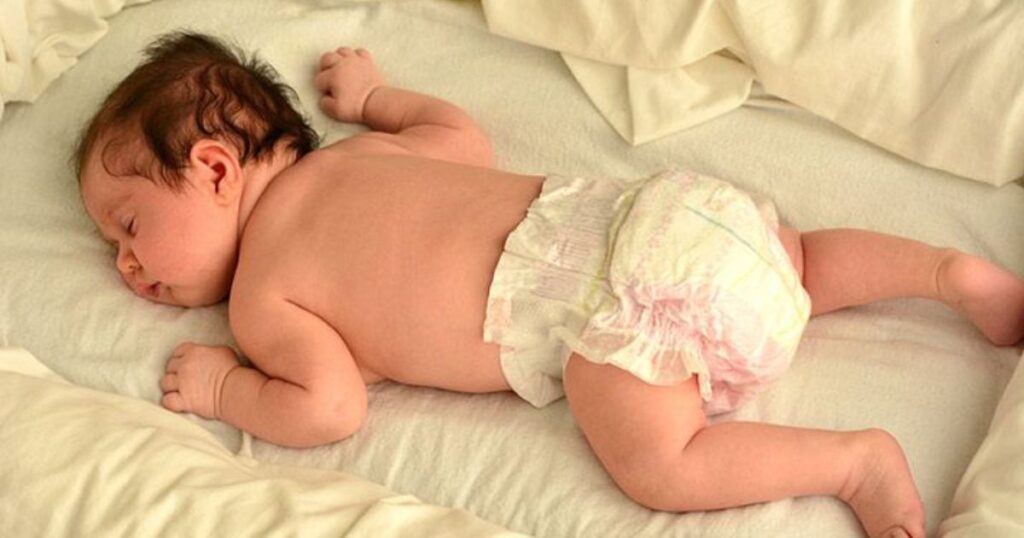
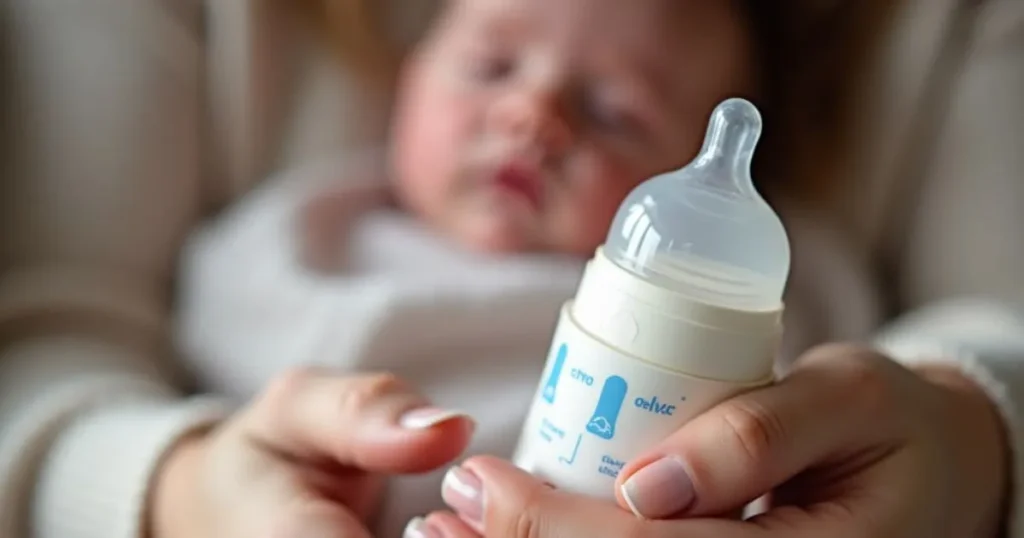
Dream feeding is a late-evening feeding offered while your baby is still sleepy, usually before you go to bed. The idea is to give your baby another opportunity to feed before the longest stretch of nighttime sleep.
Some parents try dream feeding because they hope it will help their baby sleep for a longer first stretch at night. It can work well for some families, while other babies may wake up anyway or become more alert after the feed.
In this guide, you’ll learn what dream feeding is, how dream feeding works, how to offer a late-evening feeding safely, when to try it, how to create a suitable schedule, and when to stop.
Dream feeding is not a guarantee that your baby will sleep through the night. Babies have different feeding and sleep needs, and especially during the newborn period, regular feeding remains important. Follow your baby’s hunger and fullness cues, and talk with your baby’s doctor if you have questions about nighttime feeding or your baby’s growth.
What Is a Dream Feed?

A dream feed is a feeding offered to a baby while they are still sleepy, usually later in the evening before the parent goes to bed.
The term dream feeding describes offering milk without fully waking the baby. A parent gently picks up their little one, offers a breast or bottle, and then returns them to their sleep space.
The goal is to give the baby another opportunity to feed before the parent goes to sleep, with the hope of extending the first stretch of nighttime sleep.
However, this approach does not guarantee longer sleep. Some babies settle easily afterward, while others wake fully, take only a small amount, or continue waking at their usual times.
Think of it as an optional strategy that some families find useful—not a requirement for healthy infant sleep.
How Does Dream Feeding Work?

Dream feeding usually takes place after your baby has gone to bed but before you go to sleep.
For example, your baby might go to bed at 7:00 PM, and you might offer a dream feed around 10:00 or 10:30 PM.
The idea is simple:
- Your baby goes to sleep at their usual bedtime.
- You wait until later in the evening.
- You gently pick up your sleepy baby.
- You offer a breast or bottle.
- You keep the environment calm and quiet.
- You return your baby to their safe sleep space afterward.
Some babies feed without becoming fully awake. Others wake up during the process. Both responses are normal.
The purpose is not to force a sleeping baby to eat. If your baby shows signs of being full, refuses the feed, or becomes very upset, you do not need to force the feeding.
Does a Dream Feed Help Babies Sleep Longer?

Dream feeding may help some babies sleep for a longer first stretch, but it does not work for every baby.
Some parents find that dream feeding helps their baby settle again and delays the next waking. Other babies wake at the same time regardless of whether they have a late-evening feed.
Your baby’s sleep can also be affected by hunger, development, illness, teething, changes in routine, and other factors.
If dream feeding consistently makes your baby more awake or unsettled, there is no reason to continue it simply because other parents find it helpful.
The goal is not to make your baby sleep through the night at a particular age. The goal is to find a nighttime routine that works for your baby and your family.
Your baby’s bedtime is also part of their overall sleep routine, so understanding a baby sleep schedule by age can help you see how nighttime sleep fits into the bigger picture.
When Can You Start a Dream Feed?

There is no single age when every baby should start dream feeding.
Parents sometimes consider trying dream feeding during the early months when their baby has a predictable bedtime and is still waking for nighttime feeds. However, newborns often need frequent feeding, and their feeding needs can change quickly.
For a newborn or young infant, do not use dream feeding to deliberately stretch the time between necessary feeds. If your baby has been advised to wake for feeds because of prematurity, poor weight gain, jaundice, illness, or another medical reason, follow your healthcare professional’s feeding plan instead.
As your baby grows, you can discuss changes to nighttime feeding with your pediatrician, particularly if you are considering intentionally reducing or removing a feed.
Every baby is different. Rather than choosing an age to start dream feeding based only on a chart, consider your baby’s feeding needs, growth, development, and normal sleep pattern.
Newborns commonly need frequent feeds, and feeding patterns change as babies grow. The CDC guidance on infant feeding provides more information about how often babies may need to feed.
What Is the Best Time for a Dream Feed?

There is no universal best time for a dream feed.
Many parents try a dream feed before their own bedtime, often a few hours after their baby’s bedtime. The exact timing depends on your baby’s normal bedtime, feeding pattern, and your family’s routine.
For example, if your baby goes to sleep at 7:00 PM and you usually go to bed around 10:00 PM, you might try offering the feed around 9:30–10:30 PM.
The goal is to choose a time that fits naturally into your routine rather than waking your baby repeatedly to follow a strict schedule.
If your baby is hungry earlier, follow their cues rather than waiting for a planned dream-feed time.
Dream Feed Schedule: Example Times by Bedtime
There is no single dream feed schedule that works for every baby. The following examples can help you understand how some parents might fit a dream feed into their evening routine.
| Baby’s Bedtime | Example Dream Feed Window |
| 6:30 PM | 9:00–10:00 PM |
| 7:00 PM | 9:30–10:30 PM |
| 7:30 PM | 10:00–11:00 PM |
| 8:00 PM | 10:30–11:30 PM |
| 8:30 PM | 11:00 PM–12:00 AM |
These are examples rather than strict recommendations. A dream feed can be adjusted around your baby’s normal feeding pattern and your own bedtime.
If your baby shows signs of hunger before the planned time, respond to those cues rather than waiting for the schedule.
How to Dream Feed Your Baby

If you want to try a dream feed, keep the process calm and simple. The goal is to offer a normal feeding without turning it into a full wake-up.
1. Prepare the Room
Keep the lights dim and the environment quiet. Have everything you need ready before picking up your baby.
2. Pick Up Your Baby Gently
Move slowly and avoid unnecessary stimulation. Your baby may remain sleepy, but it is also normal if they become more alert.
3. Offer the Breast or Bottle
Offer the feeding normally. If your baby is hungry, they may begin sucking even while still drowsy.
For bottle feeding, hold your baby and keep the bottle positioned appropriately rather than propping it. Watch your baby’s cues and stop when they show signs of fullness.
4. Keep the Feeding Calm
Avoid bright lights, playing, talking, or other activities that may fully wake your baby.
5. Burp If Needed
Some babies need to burp after feeding, while others may not. Follow what normally works for your baby.
6. Keep the Transition Calm
Once the feeding is finished, avoid unnecessary stimulation. Give your baby a moment to settle if needed.
7. Return Your Baby to a Safe Sleep Space
Place your baby on their back in their own firm, flat sleep space, such as a crib, bassinet, portable crib, or play yard that meets current safety standards.
If your baby wakes completely, that’s okay. Dream feeding does not need to stay “dreamy” to be a normal nighttime feeding. Your baby can be fully awake during dream feeding as long as you continue to follow safe sleep practices.
Your baby’s daytime sleep and wake windows by age can also influence how easily they settle at bedtime and how their nighttime sleep develops.
How to Dream Feed Safely
Dream feeding should never involve compromising safe sleep.
The American Academy of Pediatrics recommends placing babies on their backs for sleep on a firm, flat, non-inclined sleep surface designed for infant sleep. The sleep area should be free of loose bedding, pillows, stuffed toys, and other soft objects.
During dream feeding:
- Stay awake while feeding your baby.
- Avoid feeding on a couch or soft armchair, where accidentally falling asleep can be dangerous.
- Do not prop a bottle or leave a bottle in your baby’s mouth.
- When dream feeding is finished, return your baby to their own safe sleep space.
- If you accidentally fall asleep while feeding, move your baby to their crib, bassinet, or other appropriate sleep surface as soon as you wake up.
The AAP specifically advises parents to avoid falling asleep with a baby on a couch or armchair and recommends returning the baby to their own sleep space after feeding.
If your baby has special feeding or medical needs, ask your pediatrician whether dream feeding is appropriate.
What If My Baby Wakes During a Dream Feed?
Some babieSome babies stay sleepy during dream feeding. Others wake up completely.
If your baby wakes:
- Keep the room dark and quiet.
- Avoid playing or unnecessary interaction.
- Finish the feeding if your baby is hungry.
- Follow your normal bedtime routine if your baby needs help settling.
- Return your baby to their safe sleep space when dream feeding is finished.
If your baby consistently becomes fully awake and difficult to settle after dream feeding, the strategy may simply not suit your baby.
You can stop trying dream feeding and return to your usual nighttime routine.
What If My Baby Refuses the Dream Feed?
Your baby does not have to accept a dream feed.
If your baby turns away, closes their mouth, stops sucking, becomes upset, or otherwise shows signs of being full, do not force the feeding.
Some babies simply do not need an additional feed at that time. Others may prefer to wake naturally when they are hungry.
Instead of trying repeatedly to make a dream feed work, pay attention to your baby’s normal feeding pattern and hunger and fullness cues.
Rather than forcing a feed, parents can pay attention to baby hunger and fullness cues.
Dream Feed vs. Regular Night Feeding
A dream feed and a regular night feeding are not exactly the same.
| Dream Feed | Regular Night Feeding | |
| When does it happen? | Usually planned for later in the evening | Usually happens when the baby wakes or shows a need to feed |
| Is it planned? | Usually yes | Usually not |
| Is baby fully awake? | May remain sleepy or may wake | Usually more awake |
| Main purpose | Offer an additional feeding before the parent’s bedtime | Respond to the baby’s hunger or feeding needs |
| Does every baby need one? | No | Feeding needs vary by baby |
| Can it guarantee longer sleep? | No | No |
| What should parents follow? | Baby’s cues and individual needs | Baby’s hunger/fullness cues and healthcare guidance when needed |
The biggest difference is that a dream feed is usually planned by the parent, while a regular night feeding generally happens in response to the baby’s hunger or feeding needs.
Neither approach guarantees that a baby will sleep through the night.
When Should You Drop a Dream Feed?

There is no single age when every baby should stop a dream feed.
Instead, consider whether the feeding is still useful for your baby and your family.
You might consider dropping the dream feed if:
- Your baby consistently refuses or takes very little during the feed.
- The feed no longer seems to change your baby’s nighttime sleep.
- Your baby becomes fully awake and difficult to settle afterward.
- Your baby naturally begins sleeping through that part of the night without the feed.
- Your baby’s feeding pattern has changed as they have grown.
- You and your baby are ready to try a simpler bedtime routine.
For younger babies, especially newborns, nighttime feeding can still be an important part of meeting their nutritional needs. Do not remove a medically recommended feeding simply because your baby has reached a certain age.
If you are unsure whether your baby still needs a nighttime feed, ask your pediatrician, particularly if you have concerns about growth, feeding, or milk intake.
How to Stop a Dream Feed
If you decide that your baby no longer needs or benefits from a dream feed, you can try gradually removing it from the routine.
One approach is to reduce the amount of time spent breastfeeding or gradually reduce the amount offered by bottle, depending on how your baby is fed. You can also move the feeding earlier or simply stop offering it and see how your baby responds.
Give your baby a few nights to adjust rather than judging the change after one night.
If your baby begins waking because they are genuinely hungry, consider whether the feeding is still needed rather than continuing to reduce it automatically.
For babies with specific feeding requirements or concerns about growth, discuss changes to nighttime feeds with your pediatrician or another qualified healthcare professional.
Dream Feed FAQs
What Is a Dream Feed?
A dream feed is a late-evening feeding offered while a baby is still sleepy, usually before the parent goes to bed. Some parents try it in the hope of extending the baby’s first stretch of nighttime sleep.
What Does Dream Feeding Mean?
Dream feeding means offering a breast or bottle to a sleepy baby without intentionally turning the feeding into a full wake-up. The baby may remain sleepy or may wake during the feeding.
How Do You Dream Feed a Baby?
Keep the room calm and dim, pick up your baby gently, offer the breast or bottle normally, and follow your baby’s hunger and fullness cues. After the feeding, return your baby to their own safe sleep space.
What Is the Best Time for a Dream Feed?
There is no single best time. Many parents try a dream feed before their own bedtime, often a few hours after the baby’s bedtime. The appropriate timing depends on the baby’s normal routine and feeding pattern.
Can You Dream Feed a Newborn?
A newborn may feed while sleepy, but newborns commonly need frequent feeds. A dream feed should not be used to intentionally delay a needed feeding.
If your newborn has been advised to wake for feeds or has special medical or nutritional needs, follow your healthcare professional’s instructions.
Does Dream Feeding Help Babies Sleep Longer?
It may help some babies have a longer first stretch of sleep, but it does not work for every baby and does not guarantee that a baby will sleep through the night.
If your baby’s sleep suddenly changes around four months, the 4-month sleep regression may also be affecting nighttime waking.
Can You Dream Feed a Breastfed Baby?
Yes, some breastfeeding parents choose to try a dream feed. Offer the breast normally and follow your baby’s feeding cues rather than trying to make the baby take a specific amount.
Can You Dream Feed a Bottle-Fed Baby?
Yes. If you use a bottle, hold your baby during the feeding, avoid propping the bottle, and stop when your baby shows signs of fullness.
Never put your baby to sleep with a bottle in their mouth.
What If My Baby Wakes During a Dream Feed?
Keep the room quiet and the lights low. If your baby wakes fully, finish the feeding if they are hungry and follow your normal settling routine.
If dream feeding repeatedly makes your baby more awake, you may decide that it is not useful for your family.
What If My Baby Refuses the Dream Feed?
You do not need to force the feeding. Some babies simply are not hungry at that time.
Watch for hunger and fullness cues and continue with your normal nighttime routine.
When Should You Drop a Dream Feed?
There is no universal age.
You might consider dropping it when your baby consistently refuses it, takes very little, no longer seems to benefit from it, or naturally begins sleeping through that part of the night.
For babies with specific feeding needs, ask your pediatrician before reducing a nighttime feed.
As your baby grows, their overall sleep needs change, so a baby sleep schedule by age can provide useful context when reviewing their routine.
How Do You Stop a Dream Feed?
You can gradually reduce the feeding or stop offering it and observe how your baby responds.
Give your baby time to adjust, and reconsider the change if your baby is waking because they are genuinely hungry.
Is Dream Feeding Safe?
Dream feeding can be incorporated into a nighttime routine, but safe sleep practices still apply.
Keep yourself awake during the feeding and return your baby to their own firm, flat sleep surface on their back after feeding.
Avoid falling asleep with your baby on a couch or armchair.
Safe sleep is important at every stage, so you can also learn more about when babies can sleep on their stomach and current safe-sleep recommendations.
The American Academy of Pediatrics recommends placing babies on their backs for sleep on a firm, flat, non-inclined sleep surface. You can read the AAP safe sleep recommendations for more details.
The AAP also provides safe sleep guidance for sleep-deprived parents, including advice about avoiding accidentally falling asleep while feeding on a couch or armchair.
Final Thoughts

Dream feeding can be a useful nighttime strategy for some families, but it is not necessary for every baby and it does not guarantee longer sleep.
If you decide to try it, keep the feeding calm, follow your baby’s hunger and fullness cues, and prioritize safe sleep every time.
If your baby refuses the feed, becomes fully awake, or does not seem to benefit from it, you can stop. As your baby’s feeding and sleep needs change, you can also reconsider whether a dream feed still makes sense for your family.
When you have concerns about your baby’s feeding, growth, or nighttime feeding needs, speak with your pediatrician or another qualified healthcare professional.