Potty training can feel like a big step for both you and your toddler. You might imagine that introducing a little potty and encouraging a few bathroom visits will be enough. But when your toddler refuses to sit, has accidents, or becomes upset whenever you mention the bathroom, the process can feel much harder than expected.
Perhaps you’ve already tried a few approaches without seeing the progress you hoped for. One day, your toddler may happily use the potty, only to refuse it the next morning. You might even wonder whether you’re starting too early or making mistakes.
Take a breath. You’re not alone.
Learning to use the toilet takes time, practice, and patience. Your toddler is developing several new skills at once, including recognizing body signals, communicating their needs, and managing clothing. With a comfortable setup, a predictable routine, and gentle encouragement, you can make potty training easier for both of you.
Here are 15 practical potty training tips to help you get started, handle common challenges, and support your toddler’s growing independence.
Best Amazon Picks :
- Potty Training Toilet for Toddlers, 2-in-1 Potty Training seat, Anti-Slip
- Potty Training Seat, Toddler Toilet Seat for Kids Boys Girls, 2 in1 Potty Training Toilet with Step Stool, 6 Adjustable Height, Splash Guard, Stable Triangular Anti-Slip Design(Grey)
- COOSEYA Toilet Seat, Potty Training Seat for Toddler, Upgraded 2-in-1 Potty Toilet Training for Boys and Girls, Waterproof Cushioned Mat with Non-Slip Step Stool
- Potty Training Seat, Upgrade 2 in 1 Potty Training Toilet for Toddler, Toddler Toilet Seat for Boys Girls with Support Bar, Anti-Slip Pad and Step Stool (Pink)
- MooMoo Baby Potty Training Pants Cotton Training Underwear for Boy and Girl
Understand When Your Toddler Is Ready for Potty Training
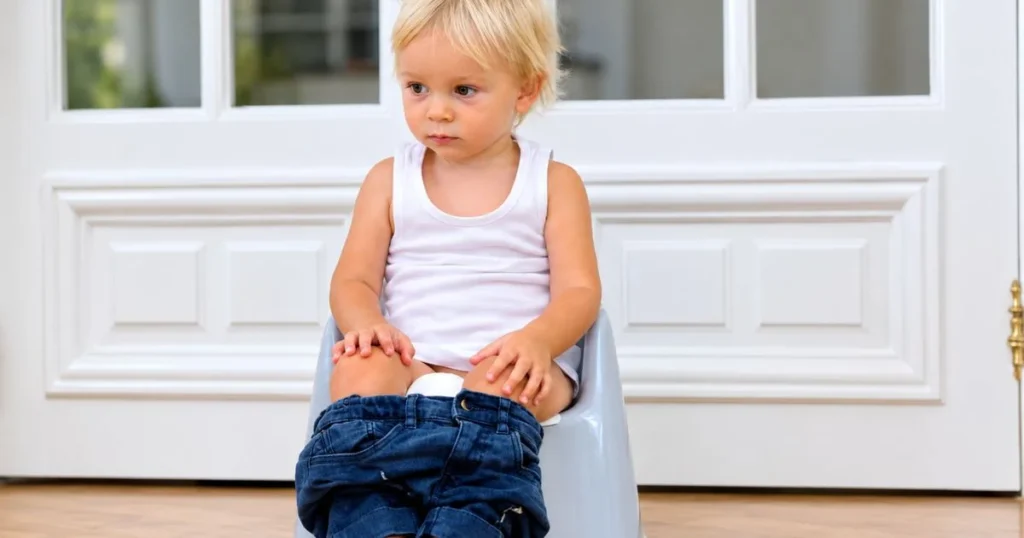
Before you begin, consider whether your toddler is showing signs of readiness. Although many children start learning toilet skills between 18 months and 2½ years, there is no single perfect age for every child.
Some toddlers show interest early, while others need more time to develop the physical, emotional, and communication skills involved.
Physical signs of potty training readiness
Your toddler may be getting ready if they:
- Stay dry for longer periods during the day.
- Have somewhat predictable bowel movements.
- Can walk to the potty and sit down.
- Can pull their pants up and down with some assistance.
- Show awareness when their diaper is wet or dirty.
- Begin recognizing the feeling of needing to pee or poop.
Emotional and behavioral signs
You may also notice that your toddler:
- Shows curiosity about the toilet.
- Watches family members use the bathroom.
- Wants to wear underwear.
- Understands simple instructions.
- Communicates their needs through words, gestures, or facial expressions.
- Shows interest in doing everyday tasks independently.
Here is a quick overview:
| Readiness sign | What you might notice |
| Physical awareness | Notices when their diaper is wet or dirty |
| Bladder control | Stays dry for longer periods |
| Communication | Uses words or gestures to express bathroom needs |
| Interest | Shows curiosity about the potty |
| Motor skills | Can walk to the potty and sit down |
| Independence | Tries to manage clothing |
Your toddler does not need to demonstrate every sign before you introduce the potty. You can begin by making it familiar and explaining what it is used for.
The American Academy of Pediatrics (AAP) explains that successful toilet learning involves coordinating physical awareness, understanding, communication, and the ability to act on the urge to go.
If your toddler seems frightened, uncomfortable, or completely uninterested, give them more time rather than turning the experience into a struggle.
Set Realistic Expectations Before Starting Potty Training
One of the most helpful things you can do is let go of the idea that potty training should happen within a few days.
Every toddler learns differently. Some children quickly understand what the potty is for but need more time to recognize when they need to use it. Others can communicate their needs but still struggle to manage their clothing or reach the bathroom in time.
Remember these important points:
- Accidents are a normal part of learning.
- Your toddler may need reminders for several weeks or longer.
- Progress may not happen every day.
- Daytime and nighttime dryness are different skills.
- Your child may need additional help during stressful changes.
- Comparing your toddler with another child rarely helps.
Understand the different stages of toilet learning
| Stage | What your toddler is learning |
| Getting familiar | Understanding what the potty is for |
| Practicing | Sitting on the potty and following simple steps |
| Recognizing signals | Noticing the need to pee or poop |
| Building independence | Communicating needs and reaching the potty |
| Developing consistency | Using the potty with fewer reminders |
| Nighttime dryness | Staying dry during sleep, which develops separately |
Don’t expect your toddler to move through these stages in a straight line. They may become confident with daytime potty visits while continuing to need diapers or nighttime training pants during sleep.
The NHS explains that nighttime dryness usually develops naturally after daytime toilet skills and is not something you need to force.
Choose the Right Potty Training Equipment
You don’t need an entire collection of expensive products to start potty training. A few comfortable, practical items are usually enough.
The most important thing is making sure your toddler feels secure when using the potty.
Potty chair or toilet seat adapter: Which is better?
You can choose between two common options.
Standalone potty chair
A potty chair sits directly on the floor and is designed for young children.
Advantages include:
- Your toddler can sit down without climbing onto a large toilet.
- Their feet can rest on the floor.
- It can be moved to a convenient location.
- Some children find it less intimidating.
Toilet seat adapter
A child-sized toilet seat fits over your regular toilet.
Advantages include:
- Your toddler becomes familiar with using the family toilet.
- You don’t need to empty a separate potty.
- It can make the transition to public toilets easier.
If you choose a toilet seat adapter, provide a sturdy step stool so your toddler can climb safely and rest their feet comfortably while sitting.
Prepare essential potty training supplies
| Item | Why you may need it |
| Potty chair or toilet adapter | Provides a comfortable place to use the toilet |
| Step stool | Supports safe positioning |
| Easy-to-remove pants | Makes bathroom visits quicker |
| Underwear or training pants | Helps with daytime toilet learning |
| Toilet paper and wipes | Supports cleaning |
| Spare clothes | Helps manage accidents |
| Wet bag | Stores soiled clothes when going out |
You can also keep a few potty-themed books nearby to make the experience more familiar.
Avoid buying unnecessary equipment before you know what your toddler finds comfortable. A simple potty, suitable clothing, and a consistent routine are often enough to begin.
Prepare Your Toddler Before Introducing the Potty
A gradual introduction can make the transition feel less surprising.
Rather than expecting your toddler to start using the potty right away, allow them time to become familiar with it and learn how it works.
Try these simple ideas:
- Place the potty somewhere your toddler can see it.
- Explain that it is used for pee and poop.
- “Let me know when you feel like you need to use the potty.”
- Encourage them to sit on it with their clothes on if they want.
- Read a potty training story together.
- Use a doll or stuffed animal to demonstrate the routine.
You might enjoy books such as Potty by Leslie Patricelli or A Potty for Me! by Karen Katz.
You can also introduce simple phrases:
- “This is your potty.”
- “We use the potty to pee and poop.”
- “Would you like to try sitting?”
- “You can tell me when you need to go.”
Avoid long explanations. Simple, familiar words are easier for toddlers to understand and remember.
The NHS recommends using books, toys, and everyday bathroom routines to help children become familiar with potty training.
Create a Consistent but Flexible Potty Training Routine
Having a consistent daily schedule helps your toddler recognize the times when it’s appropriate to use the potty.
However, consistency does not mean taking your child to the bathroom every hour regardless of whether they need to go.
Start by offering opportunities at natural transition points.
When should you offer potty visits?
You can try encouraging your toddler to use the potty:
- After waking up in the morning.
- After breakfast or other meals.
- Before leaving the house.
- After waking from a nap.
- Before bedtime.
- When you notice signs that they need to go.
Example of a daily potty training routine
| Time | Suggested activity |
| Morning | Offer the potty after waking up |
| After breakfast | Give your toddler an opportunity to sit |
| Before going outside | Try a bathroom visit |
| After lunch | Offer another potty opportunity |
| After a nap | Encourage a potty visit |
| Before bedtime | Include the potty in the evening routine |
This is only an example. Adjust it to your toddler’s eating, sleeping, and bathroom patterns.
Should you use a potty training timer?
A timer can help some toddlers and caregivers remember bathroom opportunities, particularly when the child becomes distracted during play.
If you decide to use one:
- Keep reminders simple and predictable.
- Let your toddler help press the timer.
- Offer the potty without forcing them to sit.
- Adjust reminders according to your child’s progress.
- Stop using the timer if it creates frustration.
Your goal is to help your toddler gradually recognize their own body signals, not to make them dependent on an alarm.
Keep potty visits brief and relaxed. If your toddler doesn’t need to go, allow them to get up and try again later.
Encourage Independence With Simple Self-Help Skills
Learning to use the potty goes beyond simply knowing where to pee and poop. Your toddler is also learning how to manage several small tasks independently.
Breaking the process down into smaller steps can help your toddler learn each skill gradually.
Encourage your toddler to:
- Walk to the bathroom.
- Pull their pants down.
- Sit comfortably on the potty.
- Tell you when they need help.
- Pull their pants back up.
- Flush when they feel comfortable.
- Wash their hands afterward.
Don’t expect your toddler to manage everything independently from the beginning.
For example, you might help them with their clothing while allowing them to sit on the potty themselves. As they become more confident, gradually let them take on additional steps.
You can also offer simple choices:
- “Would you like to pull your pants down yourself?”
- “Do you want to use your potty or the big toilet?”
- “Would you like to wash your hands?”
These small opportunities help your toddler feel involved rather than controlled.
Use Positive Reinforcement to Build Confidence
Your reaction can make a big difference in how your toddler feels about potty training.
When children feel encouraged rather than criticized, they can approach new skills with greater confidence.
You don’t need elaborate rewards. Simple praise, a smile, a high-five, or a hug can make your toddler feel proud.
Celebrate effort, not only successful potty visits
Praise your toddler when they:
- Tell you they need to pee.
- Agree to sit on the potty.
- Try to pull their pants down.
- Remember to wash their hands.
- Tell you when their diaper is wet.
- Successfully use the potty.
Even when nothing happens, you can acknowledge their effort.
Choose supportive words
| Instead of saying | Try saying |
| “Why didn’t you use the potty?” | “Next time, we can try together.” |
| “You’re too big for diapers!” | “You’re learning a new skill.” |
| “That’s a bad accident.” | “Let’s get you cleaned up.” |
| “You must sit until you pee.” | “Would you like to try?” |
| “You should know better.” | “It’s okay. We can practice again.” |
Avoid punishment, embarrassment, or making your toddler feel ashamed of accidents.
The AAP recommends using positive language and following your child’s cues. It also cautions against turning toilet learning into a power struggle.
Your toddler needs to feel that the bathroom is a safe place to learn, not somewhere they go because they are afraid of disappointing you.
Teach Your Toddler to Recognize When It’s Time to Use the Potty
Some toddlers don’t immediately understand the connection between feeling pressure in their bladder or bowel and going to the bathroom.
Learning to recognize these signals takes practice.
You might notice your toddler:
- Squats or bends forward.
- Becomes unusually quiet or still.
- Hides behind furniture.
- Fidgets or crosses their legs.
- Holds their diaper or genital area.
- Shows facial expressions that suggest they need to poop.
These behaviors can give you clues that your child may need the potty.
Teach simple bathroom words
Use the same words consistently so your toddler can understand and communicate their needs.
For example:
- “Pee.”
- “Poop.”
- “Potty.”
- “Wet.”
- “Dry.”
- “Bathroom time.”
If your toddler uses gestures instead of words, respond to those gestures as well.
When you notice a possible bathroom signal, gently say, “It looks like you might need the potty. Would you like to try?”
Avoid asking the same question repeatedly throughout the day. Too many reminders can interrupt play and make bathroom visits feel stressful.
Over time, your toddler can begin connecting their body’s signals with the bathroom routine.
Make Potty Training Fun With Books, Games, and Visual Aids
A little creativity can make potty training feel less intimidating.
You don’t need complicated activities. Choose simple ideas that help your toddler understand the process.
Here are five ways to make learning more enjoyable:
- Read potty training books: Choose a short story about a child learning to use the toilet.
- Practice with a stuffed animal: Show your toddler how their favorite toy sits on a pretend potty.
- Choose underwear together: Let your child pick a favorite color or character.
- Use a simple sticker chart: Celebrate trying or completing a bathroom step if your toddler enjoys stickers.
- Sing a short bathroom song: A familiar song can make the routine more relaxed.
Try a visual potty training sequence
A simple picture schedule can help your toddler remember the order of bathroom activities.
For example:
- Go to the bathroom.
- Pull pants down.
- Sit on the potty.
- Pee or poop if needed.
- Wipe with assistance.
- Pull pants up.
- Flush when comfortable.
- Wash hands.
You can use photographs, drawings, or picture cards.
Keep the sequence somewhere visible and refer to it when needed. Don’t expect your toddler to remember every step immediately.
Prepare for Potty Training Accidents at Home and Outside
Accidents are part of learning. Even when your toddler starts using the potty regularly, they may occasionally forget to go or wait too long.
Your response matters more than the accident itself.
How to handle accidents calmly
When an accident happens:
- Stay calm and avoid showing disappointment.
- Reassure your toddler that accidents happen.
- Help them change into clean clothes.
- Explain that they can try the potty next time.
- Return to your usual routine.
You can say, “Your pants are wet. Let’s get you changed. Next time, we can try the potty.”
If accidents happen frequently, look for patterns. Perhaps your toddler is too busy playing, has difficulty removing their clothes, or needs more bathroom opportunities at certain times.
What should you pack when going out?
Leaving home doesn’t mean you have to stop practicing potty training.
Prepare a small bag containing:
- Two complete changes of clothes.
- Spare underwear.
- A wet bag for soiled clothing.
- Tissues or wipes.
- A portable potty or toilet seat if needed.
- A washable absorbent car seat liner if appropriate.
Before leaving, offer your toddler the opportunity to use the potty. When you arrive somewhere unfamiliar, show them where the bathroom is.
If an accident happens outside, respond just as calmly as you would at home.
Work With Daycare Providers and Other Caregivers
Potty training can become confusing when your toddler follows one routine at home and a completely different routine at daycare.
Working together helps your child understand what to expect in different environments.
Talk with preschool teachers, babysitters, and other caregivers about:
- The words you use for pee, poop, and potty.
- When your toddler usually needs bathroom visits.
- How your child communicates their needs.
- Whether they prefer a potty chair or toilet seat.
- How to respond to accidents.
- Any fears or difficulties you have noticed.
You can also share a simple bathroom routine so everyone follows similar steps.
For example, if you encourage your toddler to use the potty after meals, ask caregivers whether they can offer a similar opportunity.
Remember that consistency doesn’t mean every adult must do everything in exactly the same way. It means your toddler receives calm, understandable, and supportive guidance.
The NHS specifically recommends working with nursery staff and childminders to maintain a consistent approach.
What to Do When Your Toddler Refuses to Use the Potty
Potty refusal can be frustrating, particularly when you feel that your toddler is physically ready.
However, refusing to sit doesn’t necessarily mean your child is being difficult on purpose.
They may feel uncomfortable, frightened, distracted, or overwhelmed by the change.
Try these strategies:
- Check whether the potty is comfortable and stable.
- Let your toddler choose between the potty and a toilet seat.
- Allow them to sit briefly without expecting anything.
- Offer choices instead of giving repeated instructions.
- Read a story together to make the bathroom feel familiar.
- Avoid forcing or physically holding your child on the potty.
If your toddler becomes upset every time you mention the bathroom, take a step back.
You can continue talking positively about the potty without expecting them to use it immediately.
If resistance persists, consider pausing formal potty training and trying again when your toddler feels more comfortable.
Understand Constipation and Poop Withholding During Potty Training
Some toddlers become comfortable peeing in the potty but refuse to poop.
This can happen for several reasons. Your child might feel frightened by the sensation, dislike sitting on the toilet, or remember a previous painful bowel movement.
Constipation can make the situation worse.
When passing hard stools hurts, your toddler may begin holding poop in to avoid discomfort. This can create a cycle in which stool becomes harder and bowel movements become increasingly painful.
Signs your toddler may be constipated
| Sign | What you might notice |
| Hard stools | Dry, firm, or pellet-like poop |
| Painful bowel movements | Crying or straining |
| Stool withholding | Hiding, stiffening, or crossing legs |
| Infrequent stools | Fewer bowel movements than usual |
| Abdominal discomfort | Stomach pain or reduced appetite |
How can you support healthy bowel habits?
You can help by:
- Offering a balanced diet with age-appropriate fiber-rich foods.
- Encouraging adequate fluids.
- Including fruits, vegetables, beans, and whole grains in meals.
- Supporting regular, relaxed bathroom opportunities.
- Making sure your toddler’s feet are supported when sitting.
- Avoiding pressure or punishment around bowel movements.
Here are some examples of fiber-rich foods:
| Food | How you can serve it |
| Pears | Soft slices or mashed pear |
| Prunes | Mashed or finely chopped |
| Oatmeal | Soft cooked oatmeal |
| Peas | Well-cooked and mashed if needed |
| Beans | Soft cooked beans, mashed or lightly crushed |
| Vegetables | Soft cooked carrots, broccoli, or other suitable vegetables |
Adapt textures and serving sizes to your toddler’s chewing and swallowing abilities.
The NHS explains that constipation is common during potty training and that painful bowel movements can make children afraid to poop.
If your toddler has persistent constipation, hard stools, or painful bowel movements, speak with your pediatrician. Diet changes alone may not be enough, and some children need medical treatment.
Understand Potty Training Regression and How to Respond
You may feel excited when your toddler starts using the potty consistently, only to notice accidents returning a few weeks later.
This is sometimes called potty training regression.
It can happen when something changes in your toddler’s life or when they are dealing with discomfort or stress.
Common triggers include:
| Possible trigger | How you can help |
| New sibling | Offer reassurance and individual attention |
| Moving home | Re-establish familiar bathroom routines |
| Starting daycare | Coordinate with caregivers |
| Illness | Prioritize comfort and recovery |
| Family changes | Keep routines as predictable as possible |
| Constipation | Seek appropriate medical guidance |
What should you do when regression happens?
Start by returning to the basics.
- Offer familiar potty opportunities.
- Use the same encouraging words.
- Avoid criticizing accidents.
- Check whether constipation or discomfort may be involved.
- Reduce unnecessary pressure.
- Give your toddler extra reassurance.
You don’t need to treat regression as a complete loss of progress.
Your toddler may simply need more support while adjusting to a change.
If accidents suddenly become frequent after a period of reliable toilet use, or are accompanied by pain or other symptoms, discuss the change with your pediatrician.
Know When to Take a Break or Ask Your Pediatrician for Help
Sometimes, continuing potty training isn’t the most helpful choice.
If your toddler becomes increasingly distressed, refuses every bathroom visit, or starts withholding bowel movements, a break may help reduce pressure.
When should you pause potty training?
Consider taking a break if:
- Your toddler cries or becomes very upset during bathroom visits.
- Every attempt turns into a power struggle.
- Your child consistently refuses to sit.
- Major family changes make routines difficult.
- You suspect constipation or another source of discomfort.
During a break, you can continue introducing positive ideas about the potty without expecting immediate progress.
When should you contact your pediatrician?
Not every potty training difficulty is simply a behavioral issue.
Speak with your child’s healthcare professional if you notice:
- Persistent constipation or painful bowel movements.
- Blood in the stool or urine.
- Pain or crying during urination.
- Unusual changes in urination.
- Recurrent urinary symptoms.
- Persistent stool withholding.
- Significant abdominal discomfort.
Don’t assume that pain or blood is a normal part of potty training. These symptoms deserve medical attention.
Your pediatrician can help identify possible causes and suggest an approach that suits your child’s needs.
Frequently Asked Questions About Potty Training
1. How Can I Make Potty Training Easier for My Toddler?
Start with a comfortable potty, a simple daily routine, and positive encouragement. Allow your toddler to become familiar with the bathroom, recognize body signals, and practice at their own pace. Respond calmly to accidents and avoid turning potty visits into a struggle.
2. What Is the Best Age to Start Potty Training?
There is no perfect age for every child. Many children begin developing toilet learning skills between 18 months and 2½ years, but readiness varies. Consider your toddler’s physical development, communication, interest, and willingness rather than relying on age alone.
3. How Often Should I Take My Toddler to the Potty?
Offer regular opportunities after waking, meals, naps, and before bedtime. You can also encourage a bathroom visit when you notice signs that your toddler needs to go. Keep visits relaxed and adjust the routine according to your child’s needs.
4. How Long Does Potty Training Usually Take?
Potty training can take different amounts of time depending on your toddler’s development, readiness, and comfort. Some children learn certain skills quickly, while others need more practice. Daytime toilet learning and nighttime dryness may also develop at different stages.
5. Should I Use a Timer During Potty Training?
A timer can help some toddlers remember bathroom visits, especially when they become distracted by play. However, it isn’t necessary for every child. Use gentle reminders if they help, and adjust or stop them if they create frustration.
6. What Should I Do If My Toddler Refuses to Use the Potty?
Stay calm and try to understand why your toddler is resisting. Check whether the potty feels comfortable, offer simple choices, and avoid forcing them to sit. If the refusal continues, consider taking a break before trying again.
7. Is It Normal for Toddlers to Have Accidents During Potty Training?
Yes. Accidents are a normal part of learning because toddlers are still developing awareness of their bladder and bowel signals. Help your child get cleaned up, offer reassurance, and continue practicing without punishment or criticism.
8. Should I Use Pull-Ups or Underwear During Potty Training?
The best choice depends on your approach and your toddler’s needs. Some families use underwear during daytime practice and training pants for outings or sleep. Follow a consistent plan and choose clothing that helps your child recognize when they are wet.
9. How Do I Encourage My Toddler to Poop in the Potty?
Make sure your toddler feels comfortable and has proper foot support. Offer relaxed opportunities after meals, use encouraging language, and avoid pressure. If your child has hard stools, pain, or withholding behavior, speak with your pediatrician about possible constipation.
10. When Should I Take a Break From Potty Training?
Consider pausing if your toddler becomes very distressed, consistently refuses the potty, or experiences frequent power struggles. A break can give your child time to feel comfortable again. You can gradually reintroduce the routine when circumstances improve.
11. Is Nighttime Potty Training Different From Daytime Training?
Yes. Nighttime dryness develops differently and often takes longer than daytime toilet learning. Continue using diapers or nighttime training pants if needed, and offer the potty before bed and after waking. Avoid pressuring your toddler to stay dry overnight.
Conclusion: Every Small Step Counts
Potty training doesn’t have to be a race, and your toddler doesn’t need to master everything overnight.
Some days will bring exciting progress, while others may involve accidents, resistance, or frustration. What matters most is creating an environment where your child feels safe, supported, and encouraged to learn.
Keep your expectations realistic, celebrate small achievements, and remember that every toddler develops at their own pace. A consistent routine, comfortable bathroom setup, and patient encouragement can make the experience easier for both of you.
And if things aren’t going as planned, taking a step back doesn’t mean you’ve failed. Sometimes, giving your toddler more time is exactly what they need.
Let’s talk, parents! What has been your biggest challenge with potty training? Have you discovered a routine or strategy that made things easier? Share your experience in the comments. Your advice might help another parent feel less alone.
Medical and Parenting References
For further guidance on toilet learning, readiness, constipation, and positive encouragement, consult these trusted resources:
- American Academy of Pediatrics (HealthyChildren.org): Potty Training
- American Academy of Pediatrics: Potty Training Readiness: Thinking, Language & Developmental Milestones
- NHS: Potty Training Your Child
- NHS: Constipation in Children
- Mayo Clinic: Potty Training: How to Get the Job Done
This article provides general educational information and does not replace individualized medical advice from your child’s healthcare professional.