If you have ever spent twenty minutes rocking your baby, only to put them down and watch them happily stare at the ceiling, you are not alone. Then there are the days when you wait a little longer, thinking your baby needs more awake time, and suddenly that cheerful face turns into a tired, crying mess.
Baby sleep can feel like a guessing game. Baby Wake Windows can give you a helpful starting point. They offer a rough idea of how long your baby may comfortably stay awake before needing sleep again. Understanding Baby Wake Windows can help you decide when to start a nap, recognize when bedtime is getting closer, and understand why your baby’s sleep needs change so much during the first two years.
There is one important thing to remember: wake windows are not strict rules. Every baby has different sleep needs, temperament, and daily rhythms. Even your own baby may need slightly different amounts of awake time from one day to the next.
Think of a wake window as a helpful guide—not a countdown timer.
What Are Baby Wake Windows?
A baby wake window is the amount of time your baby stays awake between sleep periods. In simple terms, it starts when your baby wakes up and ends when they fall asleep again.
During that time, your baby may:
- Feed
- Have a diaper change
- Play
- Practice new skills
- Enjoy tummy time
- Look at books
- Cuddle with you
- Get ready for the next nap or bedtime
Newborn wake windows can be surprisingly short. As your baby grows, those periods of alertness gradually become longer.
Wake Windows vs. Sleep Schedules
These terms are related, but they are not the same.
| Term | What it means |
| Wake window | The amount of time your baby stays awake between sleeps |
| Nap | A period of daytime sleep |
| Bedtime | The beginning of the main nighttime sleep period |
| Sleep schedule | The overall pattern of naps, bedtime and wake-up |
| Sleep cues | Behaviors that may show your baby is becoming tired |
A schedule tells you when you might offer sleep. A wake window helps you understand how long your baby has been awake. Sleep cues give you another clue about whether your baby is actually ready.
Are Wake Windows the Same for Every Baby?
No.
One baby may comfortably stay awake toward the longer end of the usual range, while another may need sleep much sooner. Even your own baby’s Baby Wake Windows can change from day to day depending on the previous nap, illness, developmental milestones, stimulation, and nighttime sleep.
Age-based Baby Wake Windows can give you a useful starting point, but every baby is different and may not follow exactly the same pattern each day. That is why it helps to consider both the clock and your baby’s behavior when deciding when it is time to sleep.
Baby Wake Windows by Age Chart: 0–24 Months
The following chart gives you a practical starting point. These are approximate ranges, not medical requirements or exact targets.
| Age | Typical Wake Window* | General Sleep Pattern |
| 0–1 month | 30–60 minutes | Frequent, irregular sleep |
| 1–3 months | 1–2 hours | Several naps |
| 3–4 months | 1.25–2.5 hours | Multiple naps |
| 4–5 months | About 1.5–2.5 hours | Several naps |
| 5–7 months | 2–4 hours | Often 3 naps |
| 7–10 months | 2.5–4.5 hours | Usually 2–3 naps |
| 10–12 months | 3–6 hours | Usually 2 naps |
| 12–18 months | Gradually longer | Transition toward 1 nap |
| 18–24 months | Longer toddler wake periods | Usually 1 nap |
Wake-window ranges vary by child. The published Cleveland Clinic ranges include 30–60 minutes from birth to 1 month, 1–2 hours from 1–3 months, 1.25–2.5 hours from 3–4 months, 2–4 hours from 5–7 months, 2.5–4.5 hours from 7–10 months, and 3–6 hours from 10–12 months.
Remember: Wake Windows Are Ranges, Not Deadlines
If a Baby Wake Windows chart suggests a two-hour window, you do not have to keep your baby awake until exactly 120 minutes. If your little one begins showing clear signs of tiredness after 1 hour and 45 minutes, it may be better to start the wind-down routine then.
On the other hand, if your baby reaches the suggested Baby Wake Windows range but remains cheerful, alert, and interested in playing, look at the bigger picture rather than forcing a nap.
The goal is not to make your baby follow a chart perfectly. Use the chart as a guide to better understand your baby’s individual sleep needs.
Newborn Wake Windows: 0–3 Months

Newborn sleep can feel completely different from the sleep of an older baby.
Your newborn may wake to feed, spend a little time looking around, have a diaper change and then be ready for another sleep. There may be very little predictability—and that is normal.
0–1 Month Wake Windows
During the first month, wake windows are often very short. Cleveland Clinic lists approximately 30–60 minutes as a general range.
Your newborn’s wake period may include:
- Feeding
- Burping
- Diapering
- A little cuddling
- Brief tummy time when appropriate
- Looking at your face
- Returning to sleep
Do not worry if your newborn does not follow a neat daytime schedule. Feeding and sleep needs are still changing rapidly.
1–2 Month Wake Windows
As your baby becomes more alert, you may notice longer periods of eye contact and interaction.
You can use this time for simple activities such as:
- Talking to your baby
- Singing
- Looking at high-contrast images
- Gentle tummy time
- Cuddling
- Walking around the room together
You do not need to fill every minute with stimulation.
2–3 Month Wake Windows
By this stage, many babies can tolerate longer periods of wakefulness. Cleveland Clinic gives a general range of 1–2 hours for babies from 1 to 3 months.
Still, your baby’s individual pattern matters more than hitting an exact number.
Newborn Sleep Cues to Watch For
Your newborn may show subtle signs before becoming upset.
Look for:
- Looking away
- Yawning
- Becoming quieter
- Staring into space
- Reduced activity
- Less interaction
- Fussiness
- Droopy eyelids
Learning your baby’s personal cues can make the transition to sleep much easier.
Baby Wake Windows at 3–6 Months

This period often brings noticeable changes. Your baby is becoming more social and alert, while their sleep pattern may gradually become easier to predict.
3–4 Month Wake Windows
Cleveland Clinic lists approximately 1.25–2.5 hours for babies around 3–4 months.
Your baby may now have enough awake time for:
- Feeding
- Playing
- Tummy time
- Reading
- Practicing movement
- Social interaction
The end of the wake window may still arrive quickly, especially after a short nap.
4–5 Month Wake Windows
Around this age, some parents notice major changes in sleep. Your baby’s sleep cycles are developing, and naps may become more difficult or shorter. If you’re also noticing more frequent night waking or nap changes, learn more about [4 month sleep regression].
Instead of assuming every sleep problem means your baby needs a longer wake window, look at the entire pattern.
Ask yourself:
- How long was the previous nap?
- How is nighttime sleep going?
- Is your baby showing tired cues?
- Is your baby falling asleep easily?
- Has anything else changed?
5–6 Month Wake Windows
Wake windows commonly continue lengthening during this period. Cleveland Clinic lists approximately 2–4 hours for 5–7 months, although individual babies may fall anywhere within or outside a typical range.
Some babies are beginning to settle into a clearer three-nap pattern.
If you’re also noticing more frequent night waking or nap changes, learn more about [6 month sleep regression].
Baby Wake Windows at 6–9 Months

Your baby’s world is getting much more interesting now.
Rolling, sitting, crawling and exploring can make staying awake more exciting—and sometimes make falling asleep harder.
6–7 Month Wake Windows
Many babies can comfortably stay awake longer than they did a few months earlier.
Your wake window may now include:
- Meals or milk feeds
- Floor play
- Reading
- Movement practice
- Outdoor time
- Social interaction
- A calming wind-down before sleep
Do not confuse a busy wake window with a need to keep your baby constantly entertained. Quiet time matters too.
7–8 Month Wake Windows
Around this age, some babies begin resisting naps because they would rather keep practicing their new skills.
You may notice your baby:
- Crawling instead of sleeping
- Sitting up in the crib
- Pulling to stand
- Becoming distracted during wind-down
- Protesting when you start the nap routine
That does not automatically mean the wake window needs to be dramatically longer.
8–9 Month Wake Windows
Cleveland Clinic gives approximately 2.5–4.5 hours for babies 7–10 months.
Many babies in this period are moving toward a two-nap pattern.
How to Tell If Your Baby Is Ready to Drop to Two Naps
You may notice several signs that your baby’s Baby Wake Windows are lengthening:
The third nap is regularly refused.
The third nap keeps getting pushed later.
Your baby takes a long time to settle for it.
The late nap begins to interfere with bedtime.
Your baby remains happy and content during a longer period of awake time.
Look for these changes consistently rather than changing your baby’s Baby Wake Windows after a single difficult day.
If you’re also noticing more frequent night waking or nap changes, learn more about [8–10 Month Sleep Regression].
Baby Wake Windows at 9–12 Months
By the end of the first year, your baby may be staying awake for much longer stretches.
9–10 Month Wake Windows
Two naps are common at this stage.
A simple rhythm might look like:
Morning wake → Nap 1 → Wake → Nap 2 → Wake → Bedtime
The exact clock times depend on when your baby wakes and how long each nap lasts.
10–11 Month Wake Windows
Cleveland Clinic gives approximately 3–6 hours for babies 10–12 months.
That is a wide range—and that is precisely why you should not treat it as a target every baby must reach.
11–12 Month Wake Windows
Some babies start showing signs that they are ready to move toward one nap. Others still clearly need two.
There’s no need to rush your baby into dropping a nap before they’re ready.
If you’re also noticing more frequent night waking or nap changes, learn more about [12-Month Sleep Regression].
Should a 12-Month-Old Still Take Two Naps?
Possibly.
At 12 months, one child may still need two daily naps, while another may be starting to move toward a one-nap routine. When adjusting Baby Wake Windows, pay attention to your child’s mood, nap quality, bedtime, and total sleep rather than relying on age alone.
Baby Wake Windows at 12–18 Months

Now you are entering the toddler years, when wake windows become much longer.
12–15 Month Wake Windows
YoYour toddler may still need two naps or may be gradually moving toward a single daily nap. During this transition, their Baby Wake Windows can start to change, and you may notice:
A longer period of awake time in the morning
More resistance to the second nap
The afternoon nap shifting later
Bedtime becoming more difficult after a late nap
If your child appears ready for a nap transition, give them time to adjust rather than expecting their new Baby Wake Windows and schedule to settle immediately.
15–18 Month Wake Windows
Many toddlers are moving toward one nap during this stage.
How to Tell If Your Toddler Is Ready to Switch to One Nap
Look for a consistent pattern before making changes to your toddler’s Baby Wake Windows or nap schedule. Signs that your child may be ready for a transition can include:
Repeatedly refusing one of their usual naps.
Taking longer than usual to settle for a nap.
Having a second nap that regularly pushes bedtime too late.
Comfortably staying awake for longer stretches.
Remaining reasonably happy and alert when a nap is skipped.
One difficult nap does not necessarily mean your toddler is ready to drop a nap. Look for these changes happening consistently before adjusting the routine.
Baby Wake Windows at 18–24 Months
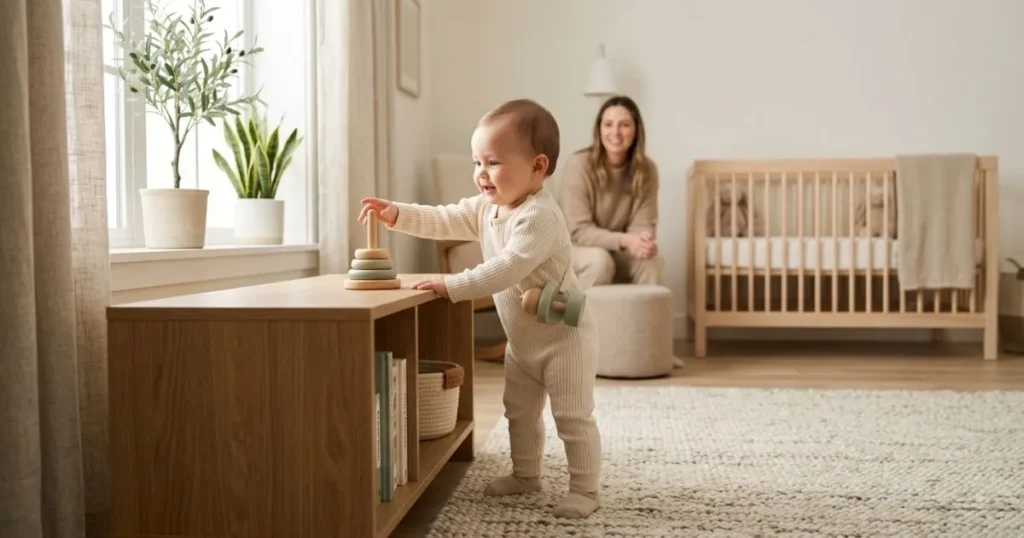
By this point, your child is no longer following newborn-style sleep patterns.
If you’re also noticing more frequent night waking or nap changes, learn more about [18-Month Sleep Regression].
18–21 Month Wake Windows
Most toddlers this age have one main daytime nap.
Their day may look something like:
Wake → Morning activities → Lunch → Nap → Afternoon activities → Dinner → Bedtime
Your toddler may also resist naps occasionally because there is simply too much interesting life happening.
21–24 Month Wake Windows
Wake periods continue to become longer.
You may see:
- One consistent nap
- Longer morning alertness
- Longer afternoon alertness
- More independence
- Stronger opinions about sleep
If you’re also noticing more frequent night waking or nap changes, learn more about [24-Month Sleep Regression].
How Much Sleep Does a Toddler Need?
This is why looking at your child’s overall sleep in 24 hours can be more helpful than trying to achieve a perfect Baby Wake Window every day.
According to recommendations from the American Academy of Sleep Medicine, endorsed by the American Academy of Pediatrics, infants ages 4–12 months generally need 12–16 hours of sleep per 24 hours, including naps. Children ages 1–2 years generally need 11–14 hours, also including naps.
When you use Baby Wake Windows alongside total daily sleep, you can get a clearer picture of your child’s individual sleep needs instead of focusing on one specific wake period.
These ranges are helpful guidelines, but sleep needs can naturally vary from one child to another.
How to Read Your Baby’s Sleepy Cues

The clock is useful, but your baby’s behavior can give you another important piece of information.
Early Sleep Cues
You may notice:
- Looking away
- Less activity
- Quiet behavior
- Reduced eye contact
- Slower movements
- Droopy eyelids
- Staring
Cleveland Clinic notes that common tired signs can include yawning, eye rubbing, increased blinking, staring off and a reduction in activity.
Late Sleep Cues
Once your baby becomes very tired, the signs may become harder to miss:
- Crying
- Strong fussiness
- Irritability
- Rubbing their eyes repeatedly
- Difficulty settling
- Becoming unusually difficult to soothe
Try to notice the earlier signals when possible.
Signs Your Baby May Not Be Tired Enough for a Nap

Sometimes your baby simply isn’t tired enough yet.
Possible clues include:
- Your baby happily plays in the crib.
- Falling asleep takes a long time.
- Your baby consistently refuses a nap.
- Your baby appears alert rather than sleepy.
- Naps are repeatedly very short.
But do not immediately add a large amount of awake time.
Instead, observe the pattern for several days and make a small adjustment if necessary.
Many toddlers are moving toward one nap during this stage. If you’re trying to understand when and how to adjust your child’s daytime sleep, see our guide to the [toddler nap schedule].
Signs Your Baby May Be Too Tired for Sleep
A wake window that stretches beyond what your baby can comfortably handle may be followed by:
- Increased fussiness
- Crying before sleep
- Difficulty settling
- Short naps
- Trouble transitioning to sleep
- Waking soon after falling asleep
These signs do not prove that your baby is overtired. Hunger, illness, teething, developmental changes, stimulation and other factors can affect sleep too.
How to Adjust Baby Wake Windows Without Stress
If your baby’s current schedule is not working, you do not need to redesign the entire day overnight.
Step 1: Track the Current Pattern
For a few days, write down:
- Morning wake-up
- Nap start
- Nap end
- Bedtime
- Night wakings
- Sleepy cues
Step 2: Look for Patterns
Ask:
- Does my baby fall asleep quickly?
- Are naps consistently short?
- Is bedtime becoming difficult?
- Does my baby seem tired before the current window ends?
- Does my baby seem wide awake when I offer a nap?
Step 3: Make Small Changes
If you decide to adjust the schedule, make gradual changes rather than suddenly adding a long period of awake time.
Step 4: Give the Change Time
One bad nap is not enough information.
Look at several days before deciding whether your adjustment helped.
Why the First and Last Wake Windows Can Be Different
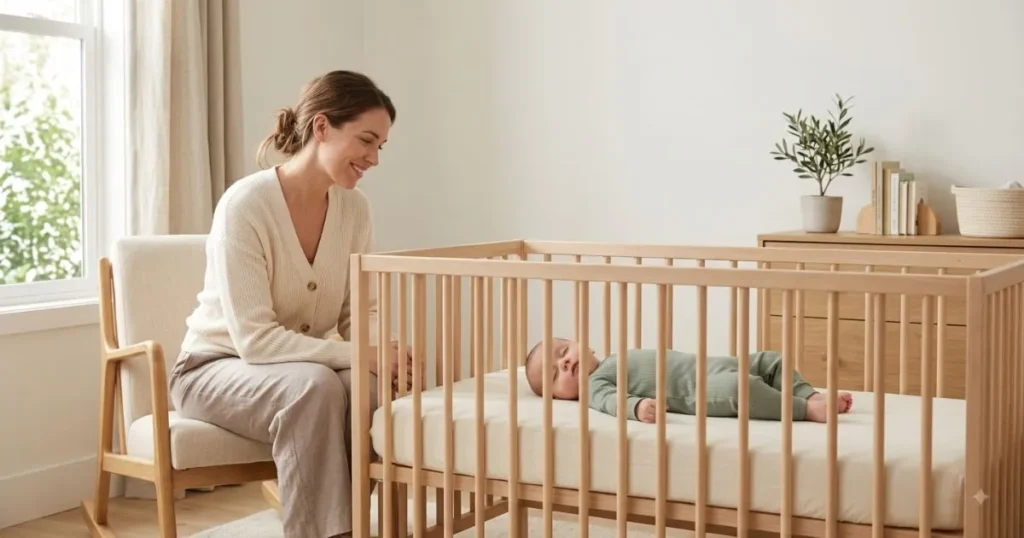
Baby Wake Windows do not have to be exactly the same throughout the day. For example, your baby may follow a pattern like this:
Shorter morning wake window → Nap → Longer wake window → Nap → Longest wake window → Bedtime
This rhythm can naturally change as your baby grows and their sleep needs develop. You may notice that your baby gets tired fairly soon after waking but can comfortably stay awake for a longer period before bedtime.
That is perfectly normal and is very different from trying to keep every Baby Wake Window identical from morning to night.
Baby Wake Windows and Overtiredness
Overtiredness is something parents hear about often, but not every sleep struggle is caused by being overtired.
If your baby has been awake much longer than usual and then has difficulty settling, tiredness may be contributing to the problem. However, Baby Wake Windows are only one piece of the puzzle. Your baby may also be having trouble sleeping because of:
Hunger
Illness
Teething
Developmental changes
Too much stimulation
Separation anxiety
An uncomfortable sleep environment
A disrupted routine
Rather than worrying about whether you missed the perfect Baby Wake Window, take a moment to ask yourself: “What is my baby showing me today?” Their behavior, mood, and sleep patterns can give you more useful information than the clock alone.
Baby Wake Windows During Sleep Regressions
Sleep can become less predictable when your baby is going through a period of rapid development. During these stages, you may notice changes around:
4 months
6 months
8–10 months
12 months
18 months
2 years
A temporary change in sleep does not automatically mean you need to adjust your Baby Wake Windows. Before changing your baby’s schedule, consider what else could be affecting sleep. Is your baby learning a new skill, experiencing separation anxiety, teething, feeling unwell, or getting more or less daytime sleep than usual?
Sometimes, the best approach is to keep your Baby Wake Windows and daily routine fairly consistent while giving your child time to adjust to the developmental change.
Sleep can become less predictable when your baby is going through a period of rapid development. If you’re unsure whether the changes you’re seeing are related to development or separation anxiety, read our guide to [sleep regression vs separation anxiety].
Sample Baby Wake Window Schedules

The following examples are illustrations, not prescriptions. Your baby’s actual wake-up and nap times may look different.
Sample 3-Month Schedule
| Time | Activity |
| 7:00 AM | Wake |
| 8:15 AM | Nap |
| 9:30 AM | Wake |
| 10:45 AM | Nap |
| 12:00 PM | Wake |
| Afternoon | Additional naps as needed |
| Evening | Wind-down routine |
| Night | Bedtime |
Sample 6-Month Schedule
| Time | Activity |
| 7:00 AM | Wake |
| 9:00 AM | Nap 1 |
| 12:30 PM | Nap 2 |
| 4:00 PM | Short third nap if needed |
| 7:00 PM | Bedtime |
Sample 9-Month Schedule
| Time | Activity |
| 7:00 AM | Wake |
| 9:45 AM | Nap 1 |
| 2:00 PM | Nap 2 |
| 7:00 PM | Bedtime |
Sample 12-Month Schedule
A child still taking two naps might follow a pattern such as:
7:00 AM wake → Morning nap → Afternoon nap → 7:00 PM bedtime
A child beginning the one-nap transition might instead have:
7:00 AM wake → Midday nap → 7:00 PM bedtime
Sample 18-Month Schedule
7:00 AM wake → 12:30 PM nap → 7:00 PM bedtime
Sample 24-Month Schedule
7:00 AM wake → 1:00 PM nap → 7:30 PM bedtime
These examples are starting points. Your toddler may naturally need different timing.
Total Sleep Needs by Age
Wake windows are only one part of your child’s sleep picture.
| Age | Recommended Total Sleep in 24 Hours |
| 4–12 months | 12–16 hours, including naps |
| 1–2 years | 11–14 hours, including naps |
These recommendations come from the American Academy of Sleep Medicine and are endorsed by the American Academy of Pediatrics.
Why Total Sleep Matters More Than a Perfect Wake Window
You can have a beautifully timed schedule that still does not suit your child.
What matters is the bigger picture:
- Is your baby getting enough total sleep?
- Are naps reasonably restorative?
- Is your child generally alert and engaged when awake?
- Is nighttime sleep appropriate for their age?
- Are there persistent concerns that deserve medical advice?
Wake windows are a tool—not the entire sleep plan.
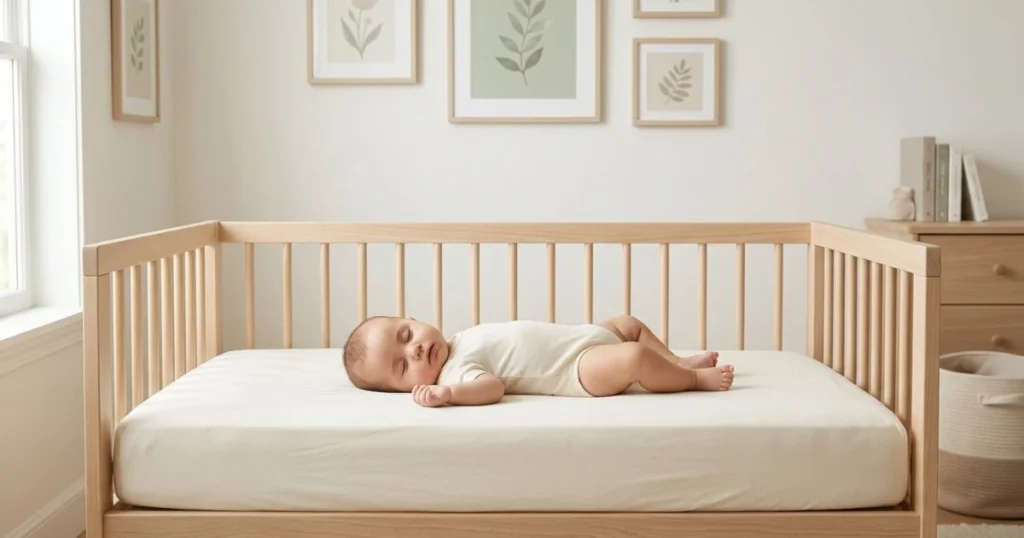
Safe Sleep Still Comes First
No Baby Wake Windows approach should ever come before safe sleep practices.
The American Academy of Pediatrics recommends placing infants on their backs for every sleep and using a firm, flat sleep surface with a fitted sheet. Keep loose blankets, pillows, stuffed toys, bumpers, and other soft items out of your baby’s sleep area.
For naps and nighttime sleep:
Use a crib, bassinet, or portable play yard with a firm, flat mattress and fitted sheet.
Always place your baby on their back to sleep.
Keep pillows, loose bedding, toys, and other soft objects out of the sleep space.
Never use a couch or armchair as your baby’s regular sleep surface.
Keep your baby’s sleep area separate from the adult bed.
Remember: no matter how carefully you plan your Baby Wake Windows, a safe sleep environment should always come first.
Common Baby Wake Window Mistakes
Mistake 1: Following the Wake Window Chart Too Strictly
A chart gives you a range. It does not know your baby.
Mistake 2: Ignoring Sleepy Cues
The clock can say “two hours,” while your baby is clearly tired at 1 hour and 45 minutes.
Pay attention.
Mistake 3: Stretching Wake Windows Too Quickly
If you think your baby needs more awake time, make a modest adjustment rather than suddenly adding an hour.
Mistake 4: Comparing Your Baby With Another Baby
Your friend’s baby may nap perfectly at a certain time while yours does not.
That does not mean either baby is doing something wrong.
Mistake 5: Changing the Schedule After One Bad Nap
Babies have unpredictable days.
Look for patterns rather than reacting to one difficult afternoon.
Mistake 6: Assuming Every Sleep Problem Is a Wake Window Problem
Sometimes sleep problems have nothing to do with timing.
Consider hunger, illness, teething, development, environment and changes in routine.
When to Ask Your Pediatrician About Your Baby’s Sleep?
Baby Wake Windows can be helpful when planning naps and bedtime, but they cannot identify or diagnose an underlying sleep problem.
Consider talking with your child’s pediatrician if sleep difficulties continue, especially if you notice:
Ongoing or significant trouble sleeping
Breathing difficulties during sleep
Frequent or persistent snoring
Pauses in breathing
Unusual sleepiness during the day
Concerns about feeding or growth
A significant change in sleep along with illness or other concerning symptoms
If your baby’s sleep is worrying you, remember that changing Baby Wake Windows is not always the answer. Persistent or unusual symptoms deserve a closer look with your child’s healthcare provider.
The American Academy of Pediatrics’ safe sleep recommendations advise placing babies on their backs on a firm, flat sleep surface and keeping loose bedding and soft objects out of the sleep space.
Frequently Asked Questions About Baby Wake Windows
What are baby wake windows?
Baby wake windows are the periods when your baby is awake between sleep periods. Baby wake windows generally become longer as babies grow, but the ideal duration varies from child to child. You can use age-based ranges as a guide while also watching your baby’s sleepy cues.
What Is a Typical Wake Window for a Newborn?
A newborn’s wake window is usually quite short. Cleveland Clinic gives a general range of about 30–60 minutes from birth to 1 month. Your newborn may spend much of that time feeding, being changed and briefly interacting with you before needing sleep again.
What are normal baby wake windows by age?
Wake windows generally increase with age. A newborn may tolerate less than an hour, while older babies may stay awake for several hours. The exact range depends on your baby’s age and individual needs, so use a chart as a guide rather than a strict schedule.
How long should a 3-month-old stay awake?
A 3-month-old may commonly stay awake for roughly 1–2 hours, although individual babies vary. Cleveland Clinic lists 1–2 hours for babies from 1–3 months and about 1.25–2.5 hours for 3–4 months.
What is a 6-month-old baby’s wake window?
Around 6 months, wake windows are often considerably longer than during the newborn period. Cleveland Clinic gives approximately 2–4 hours for babies 5–7 months, but you should combine that range with your baby’s sleepy cues and overall sleep pattern.
What are baby wake windows at 9 months?
At around 9 months, many babies can remain awake for several hours and commonly follow a two-nap pattern. Cleveland Clinic gives approximately 2.5–4.5 hours for babies 7–10 months.
How long can a 12-month-old stay awake?
A 12-month-old can generally stay awake much longer than a younger baby. Some children may be moving toward longer wake periods and a one-nap transition, while others still need two naps. There is no single wake window that works for every 12-month-old.
What are wake windows for an 18-month-old?
An 18-month-old will typically have much longer periods of wakefulness than an infant and often takes one daytime nap. At this age, your toddler’s overall sleep needs and individual behavior are more useful than trying to follow an exact wake-window number.
What are wake windows for a 2-year-old?
A 2-year-old generally follows a toddler schedule with one daytime nap and long periods of wakefulness. Children ages 1–2 years are recommended to get 11–14 hours of total sleep in 24 hours, including naps.
Should I follow baby wake windows or sleepy cues?
Use both as your guide. The Baby Wake Windows range gives you an idea of when sleep may be approaching, while your baby’s sleepy cues show you what they need in that moment.
If the clock suggests that your baby should be tired but they are still happy, alert, and playing, you do not necessarily need to force a nap. On the other hand, if your baby starts showing clear signs of tiredness before the expected window ends, you can begin the wind-down routine a little earlier.
Think of Baby Wake Windows as a helpful guide, not a strict deadline.
Can a wake window be too long?
Yes. If your baby often becomes very fussy, has trouble settling, or finds it difficult to fall asleep after being awake for an unusually long time, their Baby Wake Window may be longer than they can comfortably manage.
However, these behaviors can have other explanations too. Before changing your Baby Wake Windows, consider the bigger picture, including hunger, illness, teething, stimulation, and changes in your baby’s routine.
Can a wake window be too short?
Yes. If your baby consistently skips a nap, stays cheerful and playful when you put them down, or takes a long time to settle, their Baby Wake Window may not be long enough to build sufficient sleep pressure.
Still, one challenging nap does not necessarily mean you need to change the schedule. Look for the same pattern over several days before adjusting your Baby Wake Windows.
Conclusion: Finding a Sleep Rhythm That Works for Your Baby

Understanding Baby Wake Windows by Age can make your child’s changing sleep patterns feel much easier to navigate.
This guide gives you a practical starting point for the first two years, from the short awake periods of newborns to the longer stretches your toddler can comfortably manage. But remember, the chart is a guide—not a rulebook. Your baby’s individual needs come first.
Use the clock to spot patterns, but pay close attention to your baby’s expressions, movements, mood, and behavior. Notice how easily they settle and how they act during awake time. If something isn’t working, try making small adjustments to their Baby Wake Windows rather than completely changing the day’s routine.
And remember, healthy sleep does not have to look perfect every day.
Some days will be easy, while others may feel unpredictable. One nap might happen right on schedule, while another starts a few minutes later—or doesn’t happen at all. That’s a normal part of life with a growing child.
The goal isn’t to create a perfect schedule. It’s to understand your child well enough to recognize when they need rest and give them a safe, supportive opportunity to sleep.
Save this Baby Wake Windows chart for those moments when you’re wondering, “Is my baby tired, or are they simply not ready for sleep yet?” And share this guide with another parent navigating their baby’s changing sleep needs.