

Welcoming a baby can bring changes to nearly every aspect of your life. Your sleep, relationships, routines, body, and sense of identity may all feel different at once.
You may also be surprised by how difficult you feel inside.
Maybe you’re crying more than usual. Maybe you’re constantly worried that something will go wrong. Perhaps you feel numb, irritable, guilty, or strangely disconnected from your baby. You might even wonder why you’re struggling when you thought you were supposed to feel happy.
These feelings don’t make you a bad parent.
Postpartum depression is a genuine mental health condition that can be treated effectively. If you’re experiencing symptoms, finding the right professional support can be an important step toward feeling more like yourself again. The Centers for Disease Control and Prevention (CDC) recommends talking with a healthcare provider if you think you may have postpartum depression and asking for a referral to a mental health professional.
Finding therapists for postpartum depression can feel overwhelming, especially when you’re already exhausted. You may not know which type of professional to choose, where to search, or what questions to ask.
This guide walks you through those decisions so you can take the next step with more confidence.

Postpartum Depression vs. the Baby Blues
Before searching for therapists for postpartum depression, it helps to understand what you’re experiencing.
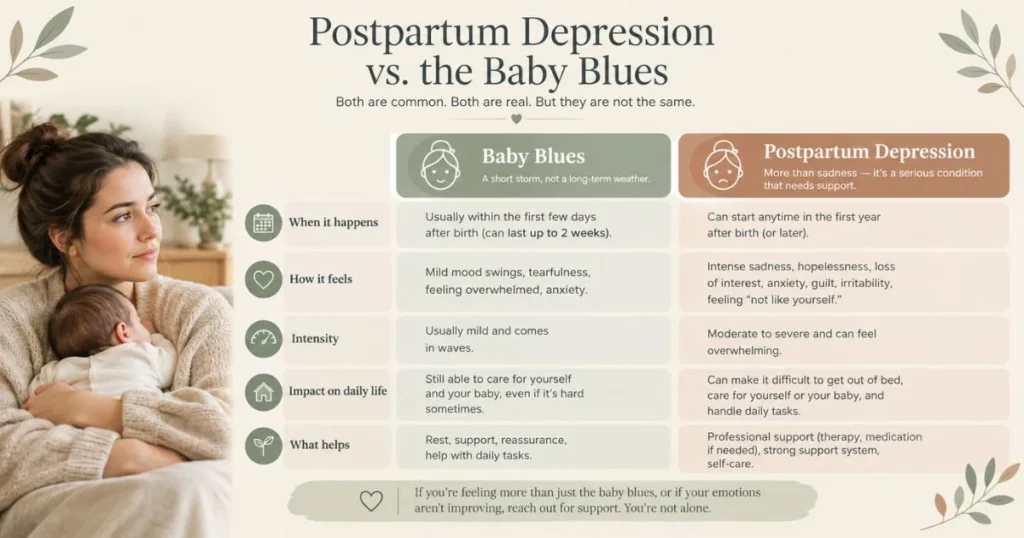
The “baby blues” are common after childbirth. During the first few days after your baby arrives, you may feel tearful, anxious, overwhelmed, irritable, or more emotional than usual. These feelings generally ease within a few days to about two weeks.
Postpartum depression is different because its symptoms are often more intense, last longer, and interfere with your daily activities or ability to enjoy life. Symptoms may begin days or even months after your baby is born, making it important to recognize when you may need professional support.
| Baby Blues | Postpartum Depression |
| Usually begins shortly after birth | Can develop after birth and may appear later |
| Mood changes are usually temporary | Symptoms can persist and interfere with daily life |
| Often improves within about 2 weeks | May require professional treatment |
| You may feel tearful, tired, or overwhelmed | You may experience persistent sadness, anxiety, hopelessness, guilt, or detachment |
| Support and reassurance may be enough | Therapy, medication, or a combination may be recommended |
Common Symptoms of Postpartum Depression
Postpartum depression can affect each person differently.
You might experience:
- Persistent sadness or emptiness
- Frequent crying
- Loss of interest in things you normally enjoy
- Intense guilt or feelings of worthlessness
- Irritability or anger
- Excessive worry or anxiety
- Difficulty concentrating
- Severe fatigue
- Changes in appetite
- Sleep problems that go beyond normal newborn disruption
- Feeling disconnected from your baby
- Pulling away from family or friends
- Feeling unable to cope with everyday responsibilities
- Thoughts of hurting yourself or your baby
According to the CDC, postpartum depression may cause episodes of crying, feelings of anger or irritability, a sense of disconnection from your baby, and doubts about your ability to care for your child.
If several of these symptoms sound familiar, you don’t have to diagnose yourself. A healthcare or mental health professional can help you understand what’s happening.
When Is It Time to See a Therapist for Postpartum Depression?
You can seek professional help before your struggles become overwhelming.
Consider contacting a therapist when your symptoms persist, feel increasingly difficult to cope with, or begin affecting your relationships, everyday responsibilities, or ability to look after yourself.
Signs It’s Time to Reach Out
ConsiConsider reaching out to a healthcare professional if you experience any of the following:
- You feel sad, empty, or hopeless on most days.
- Anxiety occupies much of your day.
- Activities you once enjoyed no longer bring you pleasure.
- You feel disconnected from your baby or loved ones.
- Everyday tasks have become difficult to manage.
- Tension with your partner is increasing.
- You feel overwhelmed even when others offer support.
- Your sleeping or eating patterns have changed noticeably.
- You experience upsetting or frightening thoughts.
- Your symptoms show little or no improvement.
You don’t need to wait until your routine postpartum checkup to seek help. The CDC recommends getting treatment as soon as possible if you think you may have postpartum depression. Connecting with therapists for postpartum depression can be one way to begin receiving the support you need.
Seeking help early may make the process feel less overwhelming. Rather than trying to address everything at once, start by sharing your experiences with one trusted healthcare professional who can help you explore the next steps.
What Type of Therapist Treats Postpartum Depression?
As you search for therapists for postpartum depression, you’ll come across several types of mental health professionals.
Their titles can be confusing, and licensing requirements vary by location. What matters most is choosing a professional who is appropriately licensed or credentialed where they practice and has relevant experience supporting people with postpartum depression.
Perinatal Mental Health Specialists
A therapist who specializes in perinatal mental health focuses on emotional and psychological concerns during pregnancy and the postpartum period. When looking for therapists for postpartum depression, this specialization can help you find someone who understands the unique challenges of becoming a parent.
Depending on their training and experience, they may work with:
- Postpartum depression
- Postpartum anxiety
- Birth trauma
- Pregnancy loss
- Difficult birth experiences
- Parenting adjustment
- Relationship changes
- Intrusive thoughts
- Emotional challenges related to pregnancy or new parenthood
Specialized experience can be especially helpful when your symptoms are connected to pregnancy, birth, breastfeeding, parenting, or the transition into parenthood. A professional with this background may be better equipped to help you explore these experiences and find an approach to care that meets your needs.
Psychologists
Psychologists are trained in psychological assessment and psychotherapy. Many treat depression and anxiety, and some have additional experience in perinatal mental health. When searching for therapists for postpartum depression, look for a psychologist who understands the emotional challenges that can arise during pregnancy and after childbirth.
You can ask about their specific experience treating postpartum depression rather than assuming that every psychologist specializes in it.
Licensed Clinical Social Workers
A licensed clinical social worker may provide psychotherapy for depression, anxiety, adjustment difficulties, and relationship concerns. When exploring therapists for postpartum depression, you may find that a clinical social worker offers support tailored to your emotional needs and daily challenges.
Social workers may also help you connect with community services and practical resources, which can be especially valuable when you’re adjusting to life with a new baby.
Licensed Professional Counselors
Licensed professional counselors can provide therapy for a range of emotional and mental health concerns, depending on their qualifications and local licensing requirements. Some may be suitable therapists for postpartum depression, particularly if they have experience supporting parents during pregnancy and after childbirth.
When contacting a counselor, ask whether they regularly treat postpartum depression or work with perinatal mental health concerns to help determine whether their experience matches your needs.
Psychiatrists
Psychiatrists are medical doctors with advanced training in mental health. They can evaluate mental health concerns, make diagnoses, and recommend medication when appropriate. Although some also provide talk therapy, many focus primarily on psychiatric evaluations and medication management.
When exploring therapists for postpartum depression, you may also consider a psychiatrist if your symptoms are severe, you’ve taken psychiatric medication before, or a healthcare professional believes medication could help. Depending on your needs, a psychiatrist may work alongside a therapist to support your recovery.
Couples and Family Therapists
Postpartum depression can affect more than your emotional well-being. It may also influence communication, intimacy, parenting responsibilities, and your relationships with loved ones.
If relationship difficulties are a significant part of what you’re experiencing, a couples or family therapist may be helpful alongside therapists for postpartum depression who provide individual support. This approach can help you and your loved ones work through challenges and build healthier ways to communicate during the transition to parenthood.
Which Professional Should You Choose?
There isn’t one type of professional who is automatically best for every parent.
| Professional | Common Role | Provides Therapy? | Can Prescribe Medication?* |
| Psychologist | Assessment and psychotherapy | Yes | Usually no |
| Clinical social worker | Psychotherapy and support | Yes | Usually no |
| Professional counselor | Psychotherapy | Yes | Usually no |
| Psychiatrist | Psychiatric evaluation and medication management | Sometimes | Yes |
| Couples/family therapist | Relationship and family therapy | Yes | Usually no |
The ability to prescribe medication varies by location and depends on a professional’s credentials and legal scope of practice. If you’re comparing therapists for postpartum depression, it’s worth understanding what services each professional can provide and whether medication management may be part of your care.
For many parents, the most important questions aren’t simply, “What’s their professional title?” but rather, “Do they have experience treating postpartum depression, and do I feel comfortable working with them?”
How to Find Therapists for Postpartum Depression
Once you have a better understanding of the support you need, you can begin searching for therapists for postpartum depression through several resources to find a professional who fits your needs and preferences.
Start With Your Healthcare Provider
Your OB-GYN, midwife, primary care provider, or another healthcare professional may be able to recommend therapists for postpartum depression who have experience supporting new parents.
Your baby’s pediatrician may also know about local maternal mental health services and referral options.
The American Psychological Association recommends asking an OB-GYN, pediatrician, midwife, internist, or another healthcare provider for a referral when looking for a psychologist or other licensed mental health professional.
You can keep the conversation simple:
“I’ve been struggling emotionally since having my baby, and I think I may need professional support. Can you recommend someone who treats postpartum depression?”
You don’t need to explain everything perfectly to ask for help. Sharing how you’ve been feeling is a meaningful first step toward finding the right support.
Search for Perinatal Mental Health Specialists
Using targeted keywords in an online search can help you find therapists for postpartum depression who offer the support you need.
Try searching for:
- “therapists for postpartum depression”
- “postpartum depression therapist”
- “perinatal mental health therapist”
- “postpartum therapist”
- “maternal mental health therapist”
- “postpartum anxiety therapist”
- “postpartum therapist near me”
When you find a therapist who seems like a good fit, check their professional credentials, licensing status, and areas of specialization before scheduling an appointment. Look for experience treating postpartum depression or other perinatal mental health concerns so you can make a more informed choice.
Check Your Insurance
If you have health insurance, check your mental health benefits before booking an appointment with therapists for postpartum depression. Understanding your coverage in advance can help you compare providers and avoid unexpected costs.
Find out:
- Which therapists are in-network
- Whether you have a deductible
- Your copay or coinsurance
- Whether out-of-network care is covered
- Whether teletherapy is covered
- Whether there are visit limits or prior authorization requirements
If a therapist is outside your network but otherwise seems like a good fit, ask about their fees or whether they offer a sliding scale based on your income. This may help you find care that better fits your budget.
Use Professional Directories
Professional directories can help you narrow your search for therapists for postpartum depression by location, specialty, insurance coverage, and treatment approach.
The American Psychological Association notes that professional directories and local psychological associations can help people find qualified mental health providers.
Rather than choosing someone based only on a profile photo or a long list of specialties, look for clear evidence that they work with postpartum depression or other perinatal mental health concerns. Check their credentials, experience, and treatment approach to help determine whether they’re a good fit for your needs.
Consider Online Therapy
Online therapy can be a convenient option when you’re caring for a newborn and searching for therapists for postpartum depression.
You don’t have to arrange transportation, find parking, or leave home for every appointment. Teletherapy may also give you access to a specialist who isn’t located nearby.
Before scheduling, check:
- Where the therapist is licensed to practice
- Whether they offer secure telehealth sessions
- Whether your insurance covers online appointments
- Whether the appointment format works for your needs
- What steps to take if you need urgent support between sessions
Online therapy isn’t the right choice for every situation, particularly when someone needs immediate emergency care. If you’re in crisis or feel unable to keep yourself or your baby safe, seek urgent medical or emergency support rather than waiting for a virtual appointment.
How to Choose the Right Postpartum Depression Therapist
Finding several therapists for postpartum depression is only the first step. Next, you’ll want to compare your options and choose a professional whose experience, approach, and communication style feel right for you.
Look for Relevant Experience
When comparing therapists for postpartum depression, ask whether they regularly treat concerns such as:
- Postpartum depression
- Postpartum anxiety
- Depression
- Anxiety
- Birth-related trauma
- Parenting transitions
- Relationship changes after having a baby
A therapist doesn’t need to specialize exclusively in postpartum mental health, but relevant experience can make a difference. Look for someone who understands the challenges of pregnancy, childbirth, and adjusting to life with a new baby and can tailor their approach to your individual needs.
Check Credentials and Licensing
Before starting therapy, check that the provider has the required license or professional credentials for the area where they practice. When choosing therapists for postpartum depression, make sure their qualifications meet local requirements and that their experience aligns with your needs.
If a therapist lists a specialized certification, ask what training it represents and how it relates to the care you’re seeking.
Professional credentials are essential, but they’re only one part of the decision. You should also consider the therapist’s experience, communication style, treatment approach, and how comfortable you feel working with them.
Consider Their Treatment Approach
When comparing therapists for postpartum depression, ask what type of therapy they use and how they typically approach treatment.
Two methods you may encounter are cognitive behavioral therapy (CBT) and interpersonal psychotherapy (IPT). Both are used to address mental health concerns, although the most appropriate approach depends on your symptoms and individual needs.
You don’t need to become an expert in every therapy model before booking an appointment. A good therapist should be able to explain their approach in clear, understandable language and help you decide whether it feels right for you.
Pay Attention to Therapeutic Fit
Your comfort matters when choosing therapists for postpartum depression.
The American Psychological Association emphasizes that personal comfort and rapport are important when selecting a psychologist.
After speaking with a therapist, ask yourself:
- Did I feel listened to?
- Did I feel respected?
- Could I talk openly?
- Did they take my concerns seriously?
- Did they explain things clearly?
- Did I feel judged?
- Would I feel comfortable discussing difficult thoughts with this person?
Building trust may take more than one session, but from the beginning, you should feel that your feelings and concerns are respected. You deserve a supportive environment where you can speak honestly about your experiences without fear of judgment.
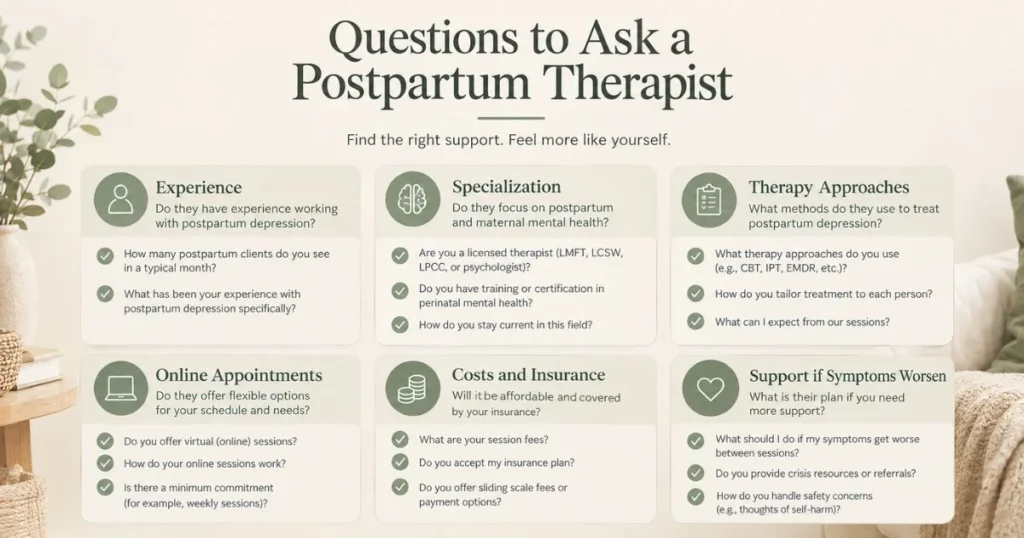
Questions to Ask Therapists for Postpartum Depression
You can save this list before contacting a therapist.
Before Your First Appointment
Ask:
- Do you have experience treating postpartum depression?
- Do you specialize in perinatal mental health?
- What types of therapy do you use?
- Do you also treat postpartum anxiety?
- How often would we typically meet?
- Do you offer online appointments?
- Do you accept my insurance?
- What happens during the first appointment?
- How do you monitor whether treatment is helping?
- What should I do if my symptoms become significantly worse?
You don’t have to ask all ten questions in one phone call.
If making a phone call feels difficult, write down the questions first. You can also send a short email if the therapist accepts inquiries that way.
What Types of Therapy Can Help With Postpartum Depression?
Therapy isn’t a one-size-fits-all treatment. When working with therapists for postpartum depression, the most suitable approach may vary depending on your symptoms, individual needs, and personal circumstances. A qualified therapist can help you explore your options and develop a treatment plan that fits your situation.
Cognitive Behavioral Therapy
Cognitive behavioral therapy (CBT) focuses on the connections between your thoughts, emotions, and behaviors. Some therapists for postpartum depression use CBT to help you recognize unhelpful thought patterns and develop healthier ways to respond to difficult feelings.
Your therapist may help you recognize thoughts such as:
- “I’m a terrible mother.”
- “I should be able to handle this.”
- “Everyone else is coping better than I am.”
- “Something must be wrong with me.”
The goal isn’t to force positive thinking or dismiss your struggles. Instead, CBT can help you examine whether a thought is accurate, recognize patterns that make things harder, and develop more helpful ways to respond.
CBT is an established psychological approach used to treat depression, and research supports psychotherapy as an effective treatment option for postpartum depression.
Interpersonal Therapy
Interpersonal psychotherapy (IPT) focuses on relationships, communication, and major life transitions. Some therapists for postpartum depression use IPT to help parents navigate the emotional and interpersonal changes that can follow childbirth.
This approach may be particularly relevant after having a baby because parenthood can affect:
- Your relationship with your partner
- Your parenting responsibilities
- Your social life
- Your expectations of yourself
- Your relationships with family members
- Your sense of identity
IPT has also been studied specifically as a treatment for postpartum depression, making it an option you can discuss with a qualified mental health professional.
Trauma-Informed Therapy
If your pregnancy or birth involved trauma, complications, loss, or a frightening experience, consider asking therapists for postpartum depression whether they have experience providing trauma-informed care.
A therapist with relevant experience can help you explore the emotional impact of what happened while taking your current safety, symptoms, and personal goals into account. You can also ask how they approach trauma-related concerns so you know what to expect from treatment.
When Medication May Also Be Part of Treatment
Some people benefit from psychotherapy alone, while others may need medication, a combination of treatments, or a different level of mental health care. Therapists for postpartum depression can help you explore appropriate therapy options, while your healthcare provider can assess your overall needs and discuss additional treatment if necessary.
Your treatment plan should reflect your symptoms, medical history, and individual circumstances.
If you’re breastfeeding, let your healthcare provider know. The CDC notes that people with postpartum depression can often continue breastfeeding while receiving treatment. A healthcare professional can help you consider medication options based on your individual situation.
Never start, stop, or change psychiatric medication on your own. Always discuss medication decisions with a qualified healthcare professional.
What Happens During Therapy for Postpartum Depression?
Knowing what to expect can make your first appointment feel less intimidating.
Your First Appointment
During your first appointment, therapists for postpartum depression may ask about:
- Your current symptoms
- When your symptoms started
- Your pregnancy and birth experiences
- Your sleep
- Your appetite
- Your relationships
- Your support system
- Previous mental health concerns
- Your ability to manage daily activities
- Any thoughts about self-harm or harming someone else
Some questions may feel personal, but they help your therapist understand what you’re experiencing and determine what level of support may be appropriate.
Questions about safety are especially important when you’re experiencing depression. Answer as honestly as you feel able to, and remember that the purpose is to help you receive appropriate care, not to judge you.
Follow-Up Sessions
As you continue working with therapists for postpartum depression, your sessions may focus on:
- Understanding your emotional triggers
- Recognizing unhelpful thought patterns
- Managing anxiety
- Improving communication
- Processing difficult experiences
- Strengthening coping skills
- Setting realistic expectations
- Building a stronger support system
Your therapist should also check in with you regularly to review your progress, address any concerns, and discuss how well your treatment is working. If something isn’t helping, you can talk about adjusting your approach to better meet your needs.
How Progress Is Monitored
Improvement doesn’t always mean suddenly feeling happy. When working with therapists for postpartum depression, you may notice smaller changes before experiencing more significant improvements.
You might begin to notice that:
- You’re crying less often.
- You can manage a difficult moment without feeling completely overwhelmed.
- You ask for help instead of trying to handle everything alone.
- You begin enjoying small parts of your day again.
- You feel more connected to the people around you.
- Negative thoughts don’t feel quite as powerful.
Progress can be gradual, and having a difficult day doesn’t mean therapy has failed. Recovery looks different for everyone, so give yourself time to recognize the changes you’re making.
What If Your First Therapist Doesn’t Feel Like the Right Match?
Even when a therapist has the right qualifications and experience, you may discover that their approach or personality doesn’t suit your needs.
That can happen, and it doesn’t mean you’ve done anything wrong or that therapy won’t help. Finding the right professional may take time, and you’re allowed to explore other options.
Signs You May Need a Different Therapist
Improvement doesn’t always mean suddenly feeling happy. When working with therapists for postpartum depression, you may notice smaller changes before experiencing more significant improvements.
You might begin to notice that:
- You’re crying less often.
- You can manage a difficult moment without feeling completely overwhelmed.
- You ask for help instead of trying to handle everything alone.
- You begin enjoying small parts of your day again.
- You feel more connected to the people around you.
- Negative thoughts don’t feel quite as powerful.
Progress can be gradual, and having a difficult day doesn’t mean therapy has failed. Recovery looks different for everyone, so give yourself time to recognize the changes you’re making.
What If Your First Therapist Doesn’t Feel Like the Right Match?
Even when a therapist has the right qualifications and experience, you may discover that their approach or personality doesn’t suit your needs.
That can happen, and it doesn’t mean you’ve done anything wrong or that therapy won’t help. Finding the right professional may take time, and you’re allowed to explore other options.
It’s Okay to Try Another Provider
Changing therapists isn’t a failure. Finding the right therapists for postpartum depression may take time, and it’s okay to explore other options if your first choice doesn’t feel right.
You can appreciate a therapist’s qualifications and experience while still deciding that someone else would be a better fit for your needs.
You don’t have to continue working with the first therapist you contact if they aren’t meeting your needs. What matters most is finding appropriate, supportive care that helps you work toward recovery.
What If You Can’t Afford a Therapist?
Cost can be a real barrier when looking for therapists for postpartum depression, especially when you’ve already taken on new expenses after having a baby.
To make care more affordable, ask about:
- Insurance-covered providers
- Sliding-scale fees based on income
- Community mental health services
- Hospital-based programs
- Support groups
- Nonprofit organizations
- Group therapy
- Telehealth options
Your healthcare provider may also know about local resources that aren’t easy to find through a general online search.
Don’t assume you have to pay the full private-practice rate to receive mental health support. Exploring different options may help you find care that fits your needs and budget.
When Postpartum Depression Requires Immediate Help
Professional treatment can help with many postpartum depression concerns, but certain symptoms or situations call for urgent medical attention.
Warning Signs That Require Urgent Care
Seek immediate medical help if you:
- Think you may kill or seriously hurt yourself.
- Think you may hurt your baby or another person.
- Feel unable to keep yourself or your baby safe.
- Experience hallucinations.
- Have severe confusion or paranoia.
- Believe things are happening that others tell you aren’t happening.
- Feel disconnected from reality.
These symptoms may indicate a serious mental health emergency that requires urgent evaluation. Although therapists for postpartum depression can provide ongoing support, emergency symptoms need immediate medical attention.
If there’s an immediate risk to your safety or your baby’s safety, contact emergency services in your area or go to the nearest hospital emergency department. If possible, ask a trusted adult to stay with you and help keep your baby safe while you get medical care.
If you’re in the United States, you can call or text 988 to reach the Suicide & Crisis Lifeline. The CDC also identifies emergency medical care and the National Maternal Mental Health Hotline as U.S. support resources. If you’re elsewhere, contact your local emergency services or seek urgent care at the nearest hospital.
Postpartum Psychosis Is a Medical Emergency
Postpartum psychosis is different from postpartum depression. Although rare, it is a serious mental health emergency that requires immediate medical attention.
Hallucinations, delusions, severe confusion, paranoia, or losing contact with reality are not symptoms to monitor at home while waiting for an appointment with therapists for postpartum depression.
If you experience any of these symptoms, seek emergency medical attention without delay.
Emergency warning: If you think you may hurt yourself, your baby, or someone else, or you’re experiencing hallucinations, severe confusion, paranoia, or a loss of contact with reality, get emergency help now. Don’t wait for your next therapy appointment. If possible, have a trusted adult stay with you and help keep your baby safe while you receive medical care.
Therapists for Postpartum Depression: Frequently Asked Questions
How do I find therapists for postpartum depression?
A good first step toward finding therapists for postpartum depression is to request a referral from your OB-GYN, midwife, primary care doctor, or another trusted healthcare provider. You can also use online directories to search for professionals using terms such as “postpartum depression counselor” or “perinatal mental health professional.”
Before choosing a provider, check their credentials, experience treating postpartum concerns, appointment availability, and insurance acceptance. These details can help you find a qualified professional whose services fit your needs and circumstances.
Which type of therapist is most suitable for treating postpartum depression?
A licensed mental health professional with experience treating postpartum or perinatal mental health concerns can be a good starting point when searching for therapists for postpartum depression. Depending on your needs, this may be a psychologist, clinical social worker, professional counselor, or another qualified therapist.
A psychiatrist may also be appropriate if you need a psychiatric evaluation or medication management. The right professional depends on your symptoms, treatment needs, and personal circumstances.
Can therapy help postpartum depression?
Yes. Psychotherapy is an established treatment option for depression, including postpartum depression. Therapists for postpartum depression can help you explore treatment approaches that suit your needs. The type and intensity of care should depend on your symptoms, personal circumstances, and treatment goals.
Is online therapy effective for postpartum depression?
Online therapy can make it easier to access therapists for postpartum depression, especially when leaving home with a newborn feels difficult. However, whether teletherapy is appropriate for you depends on your individual needs, the therapist’s availability and licensing, and whether you need a higher level of care.
Should I see a psychologist or psychiatrist for postpartum depression?
A psychologist generally focuses on psychological assessment and psychotherapy, while a psychiatrist is a medical doctor who can evaluate psychiatric conditions and prescribe medication. Some people find support through a single type of provider, while others benefit from working with more than one professional.
How much does postpartum depression therapy cost?
There is no single price. Costs vary according to your location, provider, insurance coverage, treatment format, and whether the therapist offers sliding-scale fees. Before booking, ask about the full cost and what your insurance covers.
How long does postpartum depression therapy take?
There is no standard number of sessions that works for everyone. Treatment length depends on the severity and nature of your symptoms, your goals, your response to treatment, and the type of therapy you’re receiving.
What if I don’t like my therapist?
It’s okay to look for another provider. A therapist can be appropriately qualified and still not be the right personal fit for you. In therapy, it’s important to feel understood, valued, and safe enough to share your thoughts and feelings openly.
When Should You Seek Emergency Care Instead of Seeing a Therapist?
Seek immediate emergency medical attention if you believe you may hurt yourself, your baby, or another person, or if you experience hallucinations, delusions, severe confusion, paranoia, or a loss of touch with reality. Do not wait for a routine therapy appointment.
Conclusion: Finding the Right Therapist Is a Step Toward Getting Support

Postpartum depression can make you feel as though you’re supposed to handle everything on your own.
You don’t have to.
Taking one simple step can help you begin finding therapists for postpartum depression and accessing professional support. You can tell your healthcare provider how you’ve been feeling, search for a perinatal mental health specialist, contact a therapist, or ask someone you trust to help you schedule your first appointment.
Give yourself time to find a therapist who suits your needs. Look for someone who is qualified, experienced with postpartum concerns, and able to make you feel heard and respected. If your first therapist isn’t a good match, you can explore other providers until you find someone you’re comfortable working with.
Most importantly, don’t view needing help as a failure.
Postpartum depression is treatable, and seeking professional support is an important step toward protecting your well-being and supporting your family’s needs.
If you’re struggling, choose one small next step today: tell someone you trust, contact your healthcare provider, or reach out to a qualified mental health professional. You deserve support, and you don’t have to navigate this alone.