

Pregnancy prepares you to meet your baby, but it also introduces you to a new version of yourself. Your body changes, your routines shift, and questions that once seemed far away suddenly become part of everyday life. What will birth be like? What do you really need? How will you recover? And what happens when you finally bring your baby home?
Preparing for motherhood is not about having every answer before your baby arrives. It means preparing for the changes ahead, knowing how to find support when you need it, and taking care of yourself while caring for your baby.
This Motherhood Maternity guide takes you through the journey from pregnancy to early motherhood, covering maternity essentials, birth preparation, postpartum recovery, feeding, emotional health, and practical support for your first weeks as a new mom.

What Does Motherhood Maternity Mean?
Motherhood Maternity involves much more than choosing maternity clothes or setting up a nursery. It describes the transition that starts during pregnancy and continues through childbirth, postpartum recovery, and the first months of caring for your baby.
During this time, you may notice changes in:
- Your body and energy levels
- Your emotions and mental well-being
- Your everyday routines
- Your relationships
- Your priorities
- Your responsibilities
- Your sense of identity as a mother
That’s why preparing for motherhood involves more than shopping for baby essentials.
As you explore Motherhood Maternity, remember to plan for your recovery, identify people who can offer support, learn the basics of newborn care, and recognize when physical or emotional concerns require professional guidance.
The World Health Organization highlights the importance of postnatal care that supports both a mother’s physical and mental well-being and her newborn’s health.
Preparing for Motherhood During Pregnancy
Pregnancy gives you an opportunity to get ready, but you don’t have to become an expert before your baby arrives. Motherhood Maternity preparation can take place one step at a time, allowing you to learn and adjust at your own pace.

First Trimester: Adjusting to Pregnancy
In early pregnancy, you may experience fatigue, nausea, breast tenderness, changes in food preferences, and a mix of excitement and uncertainty. As you begin your Motherhood Maternity journey, focus on taking care of your health and adjusting to these changes.
Your priorities during this stage should include:
- Scheduling prenatal appointments
- Discussing your medical history with your healthcare provider
- Reviewing your medications and supplements with your provider
- Learning which pregnancy symptoms are common
- Asking questions whenever something concerns you
- Allowing yourself time to rest
Pregnancy can also bring complicated emotions. You might feel excited about meeting your baby while feeling anxious about becoming a parent.
It’s completely possible to experience both feelings at once.
Second Trimester: Preparing for the Changes Ahead
For many women, the second trimester is a good time to start making practical plans for Motherhood Maternity and the months ahead.
You may begin considering:
- Comfortable maternity clothing
- Your birth preferences
- Essential baby equipment
- Childcare arrangements
- Maternity leave plans
- Feeding options
- People who can support you
- A comfortable place to recover after delivery
This stage is also an opportunity to separate genuine needs from products marketed as pregnancy or baby must-haves. Focus on what will make your pregnancy, birth preparation, and transition into motherhood easier rather than buying everything you see.
Third Trimester: Getting Ready for Birth
As your due date gets closer, Motherhood Maternity preparation becomes more hands-on, helping you get ready for childbirth and life with your newborn.
Use this time to:
- Pack your hospital bag
- Discuss your birth preferences with your healthcare team
- Set up a safe sleeping space for your baby
- Plan transportation for prenatal appointments and delivery
- Gather important documents
- Prepare simple meals in advance
- Arrange support for your first few days at home
- Learn what to expect during postpartum recovery
Creating a birth plan can help you communicate your wishes to your care team, but it’s important to remain flexible. Labor and delivery may unfold differently than you expect. Adapting your plans when medical needs arise is not a failure; it’s part of responding to the circumstances and prioritizing your well-being and your baby’s safety.
Preparing Emotionally for Motherhood
Emotional readiness is an essential part of Motherhood Maternity preparation, although it can receive less attention than practical tasks.
You might wonder whether you’ll be a good mom, how soon you’ll feel connected to your baby, or how you’ll learn to understand and meet your little one’s needs.
You don’t need to find all the answers before your baby arrives.
Instead, try to develop realistic expectations about early motherhood. Newborn care can be exhausting and unpredictable. Feeding may take time to figure out, sleep can become interrupted, and you may need more support than you initially anticipated.
Understanding these possibilities in advance can help you feel more prepared for the transition.
Maternity Essentials for Pregnancy
Maternity essentials do not have to mean an overflowing wardrobe or a long list of expensive products.
The best choices are usually the things that make pregnancy more comfortable and useful during the transition into postpartum life.
Comfortable Maternity Clothing
As your pregnancy progresses, clothing that once felt comfortable may start to feel tight or restrictive. Choosing the right pieces can make Motherhood Maternity more comfortable as your body changes.
Consider adding these items to your wardrobe:
- Stretchy maternity leggings
- Maternity jeans with adjustable waistbands
- Loose-fitting tops
- Comfortable dresses
- Supportive bras
- Soft, comfortable underwear
- Breathable sleepwear
- Comfortable shoes that accommodate changes in your feet
When shopping for maternity clothing, prioritize comfort, stretch, breathable fabrics, and versatile designs you can wear regularly.
You don’t need to replace your entire wardrobe. A few practical, easy-to-mix pieces may serve you well throughout much of your pregnancy.
Choosing Maternity Clothes That Grow With You
Maternity clothing comes in a variety of styles, so you can choose what feels best for you throughout your Motherhood Maternity journey.
Some pants feature panels that cover your belly, while others sit below it. Neither style is necessarily better; the right option depends on your comfort, stage of pregnancy, body shape, and personal preferences.
When choosing maternity clothes, look for:
- Adjustable waistbands
- Soft, comfortable fabrics
- Freedom of movement
- Materials that are easy to wash
- Versatile pieces you can continue wearing during early postpartum recovery
If you intend to breastfeed, consider nursing-friendly tops and bras that can make feeding more convenient after your baby arrives.
Maternity Essentials You Don’t Need to Overbuy
During your Motherhood Maternity journey, advertisements may make it seem like you need a different product for every pregnancy symptom or discomfort.
In reality, you can manage with fewer items than you might expect.
Before making a purchase, consider these questions:
- Will this item make my everyday life easier?
- Will I use it for more than a few weeks?
- Is it essential or simply nice to have?
- Could I borrow it, rent it, or buy it secondhand?
- Is there a simpler, more affordable alternative?
Preparing for your baby doesn’t have to turn into an endless shopping list. Focus on what genuinely meets your needs and helps you feel comfortable.
Preparing for Birth and Maternity Leave
Birth preparation becomes much easier when you separate what you can control from what you cannot.
Creating a Flexible Birth Plan
As part of your Motherhood Maternity preparation, creating a birth plan can help you communicate your preferences and feel more prepared for labor and delivery.
Your plan may cover:
- Your preferred birth location
- Who you would like to accompany you
- Your pain-relief preferences
- Whether you would like to move around during labor, when medically appropriate
- Your feeding preferences
- Your preferences for newborn care
- Any important medical information your care team should know
Think of your birth plan as a way to communicate your wishes rather than a fixed set of instructions. Stay open to adjustments as labor progresses.
Your healthcare team may suggest a different approach depending on your health or your baby’s condition. Knowing that plans can change may help you navigate unexpected decisions with greater confidence.
What to Pack in Your Hospital Bag
As part of your Motherhood Maternity checklist, pack a few essentials to help you feel more comfortable during your hospital stay.
For yourself, consider bringing:
- Comfortable clothing
- Toiletries
- Soft, comfortable underwear
- A phone charger
- A water bottle
- Necessary documents
- Nursing clothes, if you prefer them
For your newborn, follow the instructions provided by your hospital or birth center. Depending on local requirements, you may need baby clothes, diapers, and a suitable car seat for the trip home.
Don’t forget the person accompanying you. Pack snacks, comfortable clothes, and a phone charger to help them stay comfortable during your hospital stay.
Preparing Your Home for the Postpartum Period
You don’t need to have everything in perfect order before welcoming your baby home.
Instead, make the first few weeks easier.
Consider preparing:
- Easy meals
- Clean bedding
- Comfortable places to rest
- Postpartum supplies recommended by your healthcare provider
- Feeding supplies
- A safe sleep space for your baby
- A list of important phone numbers
Most importantly, decide who can help.
What to Expect After Your Baby Arrives
The early days of Motherhood Maternity can feel very different from pregnancy. You may spend most of your time feeding your newborn, changing diapers, soothing your baby, and catching sleep whenever you can.
At the same time, your body is recovering from pregnancy and childbirth and adjusting to its new demands.
Managing newborn care while healing can be physically and emotionally exhausting, especially when you’re still learning your baby’s needs.
Your Body After Birth
Your recovery during Motherhood Maternity depends on your pregnancy, birth experience, and overall health.
After childbirth, you may notice changes such as:
- Vaginal bleeding
- Breast tenderness or other breast changes
- Tiredness
- Hormonal fluctuations
- Abdominal or pelvic discomfort
- Perineal soreness following some vaginal deliveries
- Incision pain after a cesarean birth
- Changes in bowel or bladder habits
The World Health Organization recognizes the first six weeks after delivery as a significant period for maternal and newborn recovery. Postnatal care addresses physical healing, nutrition, breastfeeding, mental well-being, and possible complications.
Remember that you shouldn’t dismiss every uncomfortable symptom as a normal part of new motherhood.
If you experience anything unusual, severe, or worrying, contact your healthcare provider for guidance.
Postpartum Care: Taking Care of Yourself as a New Mom
Once your baby arrives, it can be easy to put yourself last.
Try not to.
Your recovery matters.
Focus on the basics:
- Eat regular meals when you can.
- Keep water nearby.
- Rest whenever possible.
- Take prescribed medications as directed.
- Attend recommended postpartum care.
- Ask for help with household responsibilities.
- Tell someone when you are struggling emotionally.
Postpartum care is not only about checking whether your body is healing. It also includes your emotional well-being.
WHO recommends postnatal care that provides mothers and families with information, reassurance, and support.
Easy Postpartum Meals for New Moms
You do not need elaborate recipes during the early weeks. Meals that are simple, filling, and easy to prepare can be more useful.
| Easy meal | Main ingredients | Simple preparation |
| Overnight oats | Oats, milk or yogurt, banana, berries, nut or seed butter | Mix and refrigerate overnight |
| Egg and avocado toast | Eggs, whole-grain bread, avocado | Prepare the egg and serve over toast |
| Lentil soup | Lentils, carrots, tomatoes, onion, broth | Simmer until the lentils are tender |
| Chicken grain bowl | Cooked chicken, rice or another grain, vegetables | Assemble prepared ingredients in a bowl |
| Yogurt fruit bowl | Greek yogurt, fruit, oats, nuts or seeds | Combine and serve |
These are examples rather than medical prescriptions. Your nutritional needs can vary, particularly if you are breastfeeding or have a medical condition, so discuss specific dietary concerns with your healthcare provider.
Breastfeeding, Formula Feeding, and Newborn Feeding
Feeding can become one of the most emotional parts of early motherhood.
You may have imagined one feeding plan during pregnancy and discover that reality looks different after birth.
That is not a personal failure.
Preparing to Breastfeed
If you intend to breastfeed, learning about the following topics can help you feel more prepared:
- Newborn feeding patterns
- Positioning
- Latch
- Hand expression
- Pumping if needed
- When to seek lactation support
Breastfeeding can take time to learn. Difficulties do not mean you are incapable of feeding your baby.
Formula Feeding
If you use formula, follow the preparation, storage, and feeding instructions provided by your healthcare professional and the formula manufacturer.
If you have questions about how much or how often your newborn should feed, your baby’s healthcare provider can give advice based on your baby’s age, growth, and individual needs.
What If Feeding Doesn’t Go as Planned?
This deserves to be said clearly:
Being a good mother isn’t measured by how you feed your baby.
Some mothers breastfeed exclusively. Some use formula. Some combine both. Some change plans because of health, supply, work, medication, or other circumstances.
What matters is making informed choices and getting appropriate support.
Your Mental Health During Motherhood Maternity
Your emotional health deserves as much attention as your physical recovery.
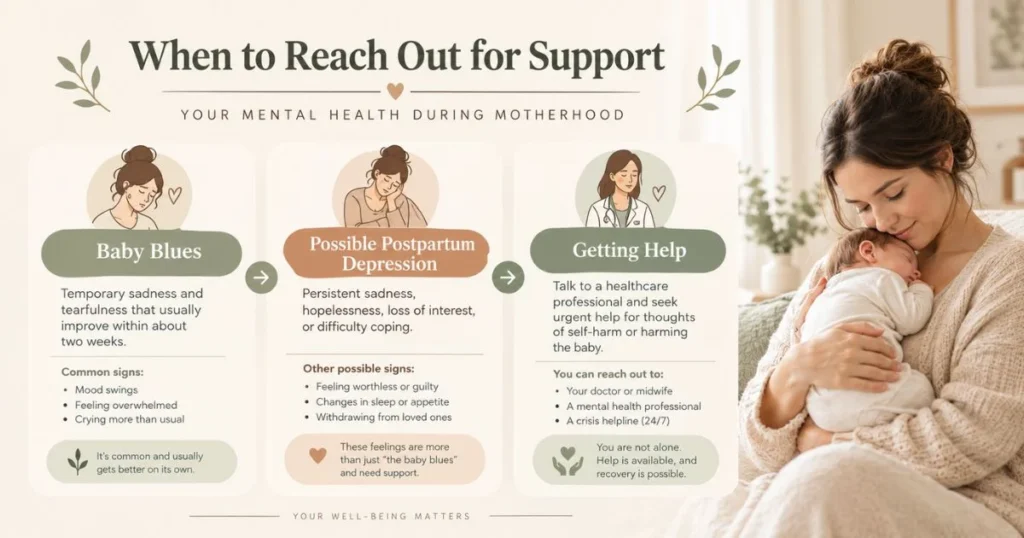
Pregnancy and the first year after birth can involve major emotional changes. Stress, sleep disruption, birth experiences, limited support, financial pressure, relationship difficulties, and other factors can affect how you feel.
WHO notes that mental-health conditions can occur during pregnancy and after birth and that maternal mental health can be integrated into routine health care.
Baby Blues After Birth
Many new mothers experience temporary sadness, tearfulness, irritability, or emotional sensitivity after birth.
These feelings are often called the baby blues and commonly improve within about two weeks.
If the symptoms continue, become more intense, or make it difficult for you to function, don’t simply wait and hope they disappear.
Postpartum Depression
Postpartum depression is more long-lasting than the baby blues and may affect your ability to manage everyday tasks.
Possible symptoms include:
- Persistent sadness
- Feeling hopeless
- Loss of interest or pleasure
- Severe anxiety
- Feeling worthless or guilty
- Difficulty concentrating
- Being unable to fall asleep or stay asleep, even when you have a chance to rest
- Feeling disconnected from your baby
- Difficulty coping with normal daily activities
- Thoughts of harming yourself or your baby
Symptoms can begin during pregnancy or after birth, so you do not have to wait until your baby is born to ask for help.
Treatment is available, and seeking help does not make you a bad mother.
When You Should Ask for Help
Reach out to your healthcare provider if emotional symptoms continue, become more severe, or make it difficult to manage daily activities.
Sharing your feelings with someone you trust can also help you feel less alone.
You deserve support before your struggles become overwhelming.
Important: When to Seek Emergency Help
If you have thoughts of suicide, self-harm, or harming your baby, seek urgent professional help immediately.
Seek immediate medical attention if you experience intense confusion, hallucinations, or other symptoms that interfere with your ability to distinguish reality.
For physical concerns, CDC advises pregnant and postpartum women to seek immediate medical care for urgent maternal warning signs. These can include severe headache, trouble breathing, chest pain, severe abdominal pain, heavy bleeding, fainting, vision changes, or other serious symptoms. Some pregnancy-related complications can occur during pregnancy or during the year after pregnancy.
In an emergency, contact your local emergency services or seek immediate care at the nearest emergency department.
Building Your Support System as a New Mom
You were never meant to handle every part of motherhood alone.
Support may come from your partner, relatives, friends, healthcare providers, community organizations, or other parents.
How Your Partner Can Help
Support does not always mean holding the baby.
Your partner can:
- Prepare meals
- Handle household chores
- Protect your rest
- Attend appointments when possible
- Help with older children
- Listen when you need to talk
- Help you find professional support
Practical help can make a significant difference during a demanding period.
How Family and Friends Can Help
If someone offers help, you do not have to say, “We’re fine,” simply because you don’t know what to ask for.
You can request something specific:
- “Could you bring dinner tomorrow?”
- “Could you help with laundry?”
- “Could you watch the baby while I shower?”
- “Could you pick up groceries?”
- “Could you come with me to my appointment?”
Sometimes, the best way to support a new mom is to give her an hour to rest without worrying about anything else.
Life With Your Newborn
Newborn life is often less predictable than you imagine.
Your baby may wake frequently, feed often, cry without an obvious reason, and need considerable physical contact.
This doesn’t mean you’re doing anything wrong or falling short as a parent.
Understanding Newborn Sleep
Newborns have different sleep rhythms from older infants and toddlers.
Frequent waking is expected because newborns have small stomachs and immature sleep patterns.
Instead of expecting a strict schedule immediately, focus on learning your baby’s cues and following safe-sleep recommendations from your healthcare provider and trusted public-health guidance.
Learning Your Baby’s Cues
Over time, you will begin recognizing patterns.
Your baby may show signs of:
- Hunger
- Tiredness
- Discomfort
- Overstimulation
- The need for closeness
It’s normal to need time to learn what your baby’s cries mean.
You are learning each other.
Bonding With Your Baby

You may not feel an instant, overwhelming connection with your baby right after birth, and that’s okay.
For some mothers, the connection feels instant. For others, it develops gradually through ordinary care.
Feeding, holding, talking, changing diapers, comforting your baby, and responding to your baby’s needs all create opportunities for connection.
Give yourself time.
Motherhood Maternity and Returning to Work
Returning to work can bring relief, sadness, excitement, guilt, or all of these feelings at once.
Before your return, think through:
- Childcare
- Transportation
- Feeding arrangements
- Pumping needs if applicable
- Your work schedule
- Household responsibilities
- Emergency childcare
- Who will care for your baby when plans change
If you are breastfeeding or pumping, research the workplace protections and practical arrangements available where you live.
Because maternity-leave laws vary widely between countries and employers, check your local employment rules rather than relying on a general online checklist.
Self-Care Without the Pressure to Be a Perfect Mom
Self-care after having a baby does not need to look glamorous.
Sometimes it means eating lunch while it is still warm.
Sometimes it means taking a shower.
Sometimes it means asking someone else to hold the baby while you sleep.
You can also:
- Drink enough water
- Step outside for a few minutes
- Call someone you trust
- Keep your medical appointments
- Take prescribed medication
- Rest instead of cleaning
- Say no to unnecessary visitors
- Accept help without apologizing
Taking care of yourself is not taking something away from your baby.
Let Go of the Perfect Motherhood Myth
Social media can make motherhood appear carefully organized: beautiful nursery, perfect meals, sleeping baby, spotless home.
Real motherhood is usually much messier.
Some days, you may feel sure of yourself as a mom; on others, you might doubt your decisions.
That is not evidence that you are failing.
Your baby does not need a perfect mother.
Your baby needs a mother who is supported, responsive, and willing to keep learning.
Motherhood Maternity Checklist for New Moms
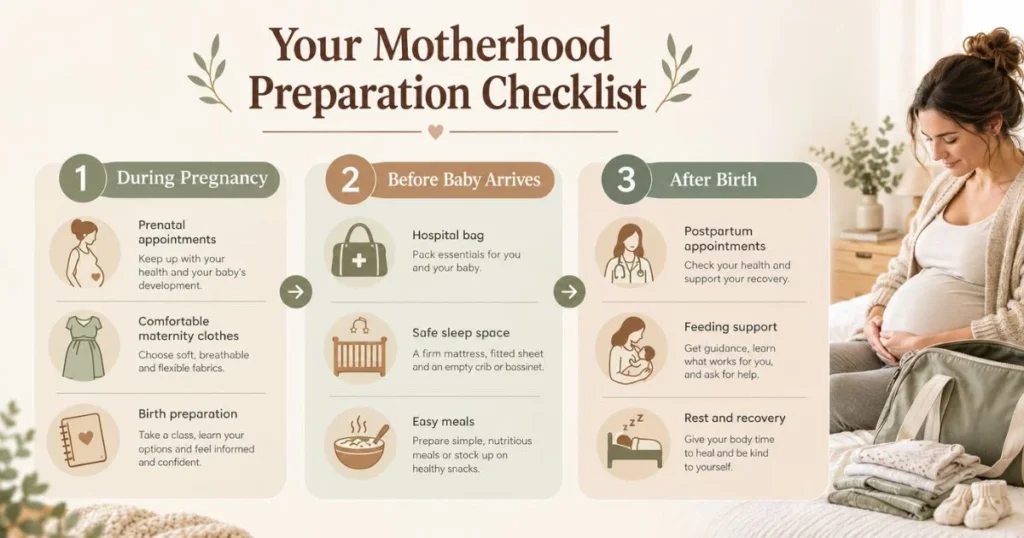
During pregnancy
- Attend prenatal appointments.
- Ask questions about your health and pregnancy.
- Choose comfortable maternity clothing.
- Learn about birth and postpartum recovery.
- Prepare your hospital bag.
- Think about feeding preferences.
- Build a support network.
- Learn when to seek medical advice.
Before your baby arrives
- Prepare a safe sleep space.
- Arrange transportation.
- Organize essential baby supplies.
- Prepare a few easy meals.
- Gather postpartum supplies.
- Discuss household responsibilities with your partner.
- Make a list of healthcare contacts.
After birth
- Attend recommended postpartum appointments.
- Follow your healthcare provider’s recovery instructions.
- Pay attention to your physical and emotional health.
- Get feeding support if needed.
- Accept practical help.
- Learn your baby’s cues.
- Seek professional help if something doesn’t feel right.
WHO’s postnatal guidance emphasizes maternal and newborn assessment, physical recovery, nutrition, breastfeeding support, mental health, and recognition of warning signs as important parts of postnatal care.
Frequently Asked Questions About Motherhood Maternity
What does motherhood maternity mean?
Motherhood maternity describes the broader transition surrounding pregnancy, childbirth, postpartum recovery, and becoming a mother. It includes more than maternity clothing or preparing for your baby’s arrival.
What should you prepare for during motherhood maternity?
You can get ready for prenatal appointments, changes during pregnancy, labor and delivery, recovery after birth, feeding your newborn, emotional adjustments, childcare arrangements, maternity leave, and the support you may need as you settle into life with your baby.
What maternity essentials does a new mom actually need?
Start with comfortable clothing, supportive undergarments, practical postpartum supplies, feeding-related essentials that match your plans, and items that make recovery easier. You do not need every product marketed as a maternity essential.
How can you prepare for motherhood during pregnancy?
Keep up with prenatal appointments, understand what to expect during childbirth and recovery, gather essential supplies, explore feeding options, organize support, and plan for your needs after delivery.
What should you expect after maternity and childbirth?
You may experience physical recovery, fatigue, hormonal changes, frequent newborn care, interrupted sleep, and emotional adjustments. Recovery differs from one mother to another.
How can you care for yourself during the transition to motherhood?
Make time for nourishing meals, hydration, rest, medical checkups, emotional support, and help with everyday tasks. Pay attention to any unusual or worrying symptoms, and contact your healthcare provider when necessary.
Is it normal to feel overwhelmed as a new mom?
Yes. Adjusting to motherhood can be challenging, particularly while recovering from childbirth and learning to care for your newborn.If you experience persistent or severe anxiety, sadness, feelings of hopelessness, or trouble coping with everyday tasks, reach out to a healthcare professional for support.
When should a new mom seek professional help?
Talk to your healthcare provider if physical or emotional symptoms persist, intensify, or make it harder to care for yourself or your little one.
Seek emergency medical attention for serious warning signs, such as heavy bleeding, difficulty breathing, chest pain, fainting, a severe headache, or thoughts of harming yourself or your baby.
Can motherhood maternity include postpartum mental-health support?
Absolutely. Mental health is an important part of maternal care during pregnancy and after birth. If you are struggling emotionally, speaking with your healthcare provider is an appropriate first step.
Conclusion: You Don’t Have to Be Perfectly Prepared for Motherhood
Preparing for motherhood is not about reaching a point where you feel completely ready.
You may still have questions when your baby arrives. You may change your birth preferences, rethink your feeding plans, discover that you need more help than expected, or realize that motherhood feels different from what you imagined.
None of that means you are failing.
Preparing for motherhood means learning how to look after yourself, becoming familiar with newborn care, building a reliable support network, and knowing when to seek professional guidance.
As your baby begins life in a new world, you’re also adjusting to a new chapter of your own.
Give yourself permission to learn slowly. Let other people help you. Take your recovery seriously. Protect your emotional health. And remember that becoming a mother is not something you have to master in one day.
If you’re preparing for motherhood, explore more Parenting Whisper guides on pregnancy, postpartum recovery, breastfeeding, toddler nutrition, sleep, and gentle parenting—and find practical support for each stage of your parenting journey.