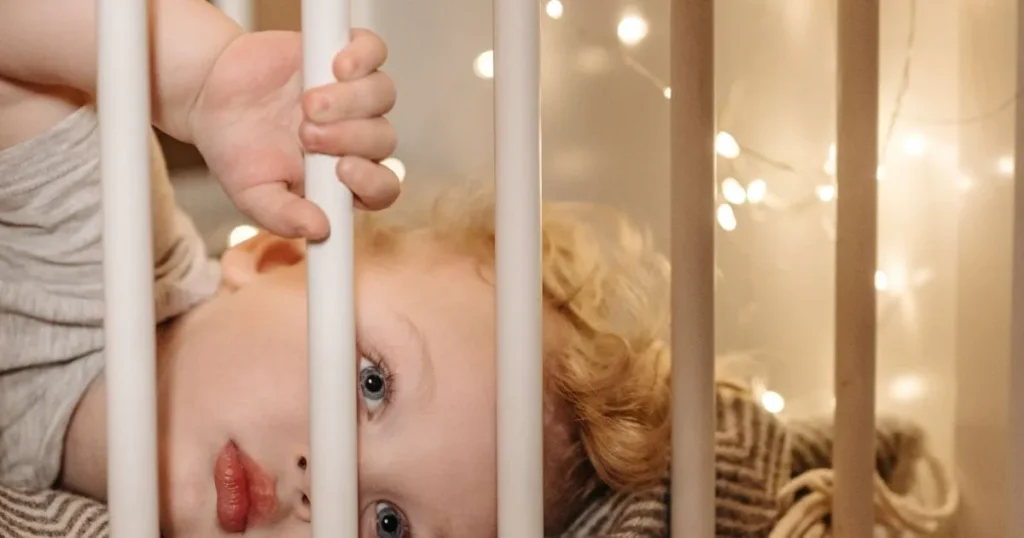
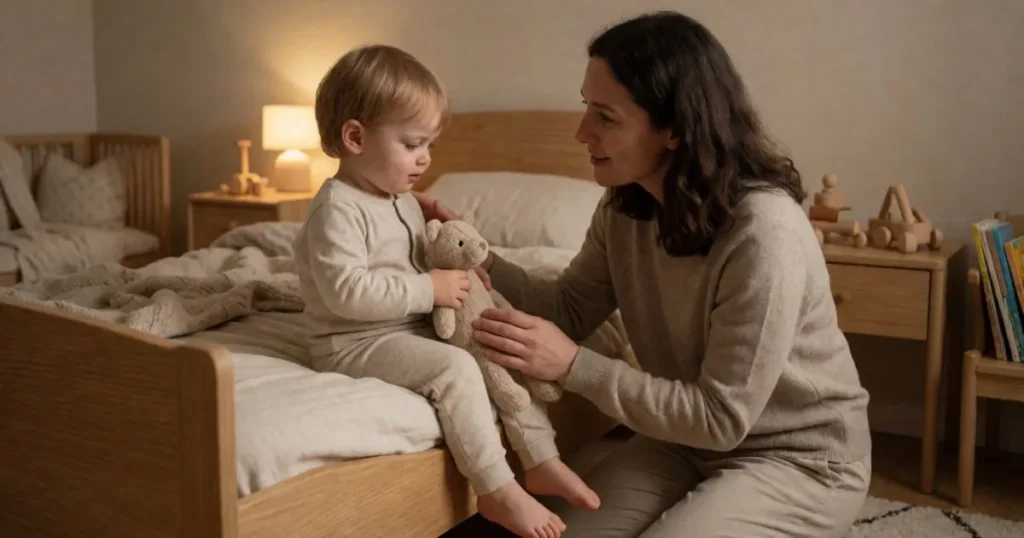
“Bedtime used to take 20 minutes. Now it feels like an hour-long negotiation.”
If your 2-year-old suddenly refuses bedtime, keeps calling your name after lights out, or wakes during the night again, you may be wondering what happened.
Perhaps your toddler used to settle happily after a bedtime story.
Now every evening feels different.
Your child may:
- Ask for one more story.
- Request another drink of water.
- Suddenly need the potty.
- Call you back into the room several times.
- Say they’re scared of the dark.
- Leave their bed again and again.
- Wake during the night looking for reassurance.
If this sounds familiar, you’re not alone.
Many families experience the 2 year sleep regression, a temporary stage when toddlers begin resisting sleep as they develop stronger language skills, bigger imaginations, greater independence, and more confidence in expressing their opinions.
Unlike earlier sleep regressions, this stage isn’t mainly about learning new physical skills.
Instead, it reflects how much your toddler has grown emotionally, socially, and cognitively.
At 2 years old, children understand routines, remember what happened yesterday, anticipate bedtime, and discover that asking for “just one more” sometimes changes what happens next.
At the same time, their imagination is expanding rapidly.
A favorite stuffed animal may suddenly become essential for sleep.
A shadow on the wall may seem frightening.
A perfectly ordinary bedtime can suddenly feel overwhelming to a tired toddler.
The good news is that the 2 year sleep regression is usually temporary.
With consistent routines, gentle boundaries, and plenty of reassurance, most toddlers gradually return to more peaceful bedtimes and restful nights.
In this guide, you’ll learn what causes the 2 year sleep regression, the most common signs to watch for, how long it typically lasts, and practical strategies to help your toddler—and your whole family—sleep better again.
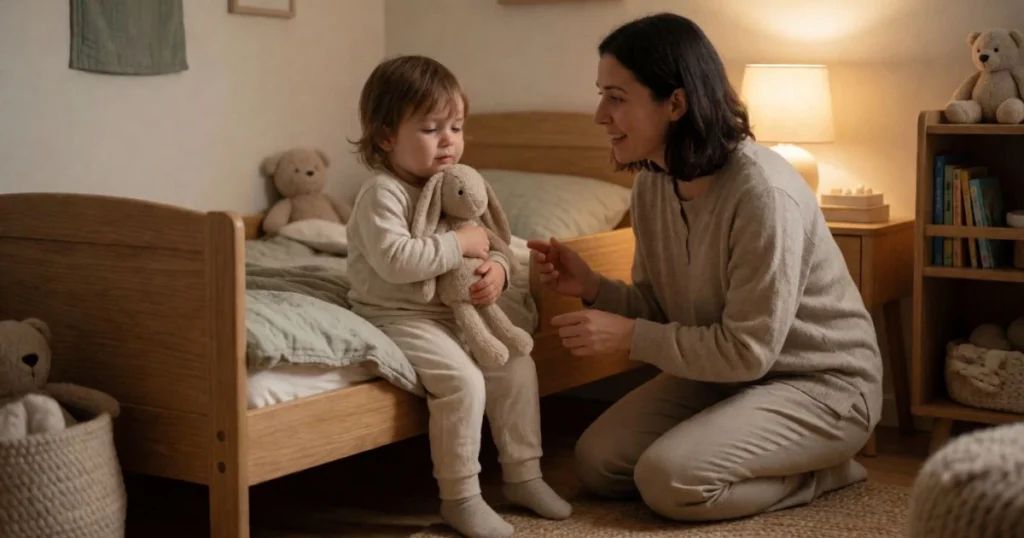
2 Year Sleep Regression at a Glance
If you’re looking for quick answers, this table summarizes the most important facts.
| Question | Quick Answer |
| What is the 2-year sleep regression? | A short-term phase of disrupted sleep that occurs alongside your toddler’s emotional, cognitive, and behavioral development. |
| When does it happen? | Most commonly between 23 and 25 months, although every child develops differently. |
| How long does it last? | Many toddlers improve within 2 to 6 weeks, though some need longer. |
| Common signs | Bedtime battles, bedtime stalling, leaving the bed, night wakings, nap refusal, and fears at bedtime. |
| Main causes | Growing imagination, stronger independence, language development, boundary testing, changing sleep needs, and routine changes. |
| Can you prevent it? | No, but consistent routines and calm responses can make it much easier to manage. |
| Will my toddler sleep well again? | Yes. Most children gradually return to more predictable sleep as they mature and adjust to this developmental stage. |
Although bedtime may feel exhausting right now, these challenges are usually a normal part of your toddler’s development rather than a sign that they’ve forgotten how to sleep.
What Is the 2 Year Sleep Regression?
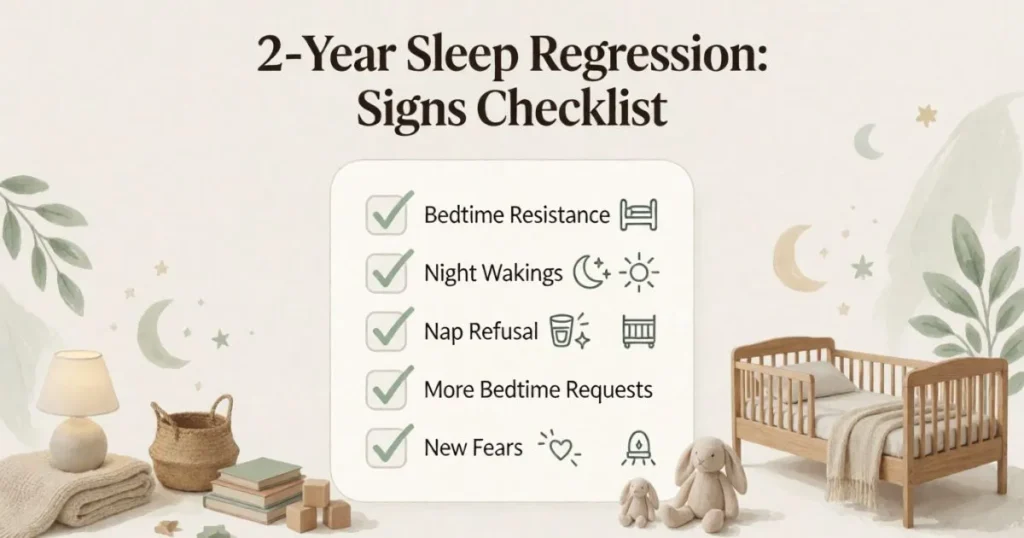
The 2 year sleep regression is a temporary period when your toddler suddenly begins having difficulty falling asleep, staying asleep, or cooperating at bedtime after previously sleeping well. This common toddler sleep regression can feel confusing for parents, especially when a child who once slept peacefully starts experiencing new sleep challenges.
You may notice that your child:
- Refuses to go to bed.
- Leaves their bed repeatedly.
- Wakes more often during the night.
- Resists naps.
- Delays bedtime with endless requests.
- Becomes upset when it’s time to say goodnight.
These changes can create frustrating 2 year old bedtime battles, but they are usually a normal part of toddler development.
While the word “regression” suggests your toddler is moving backward, the opposite is actually happening.
Around 2 years old, children experience remarkable growth in several areas at once. This is why many parents search for information about 2 year old sleep regression when their toddler’s sleep suddenly changes.
Your toddler may be:
- Speaking in short sentences.
- Asking lots of questions.
- Solving simple problems.
- Using pretend play and imagination.
- Understanding routines and expectations.
- Expressing strong preferences and emotions.
- Learning to make independent decisions.
These exciting developmental changes help your child learn about the world, but they can also make sleep temporarily more challenging.
Unlike the 18-month sleep regression, which often centers on emotional regulation and testing boundaries, the 2 year sleep regression is strongly influenced by a rapidly growing imagination, increasing communication skills, and more advanced bedtime delay tactics.
Your toddler isn’t simply avoiding sleep.
They’re learning to think, imagine, negotiate, and express themselves in ways they couldn’t just a few months earlier. Understanding these developmental changes can help you respond calmly and work through this stage of toddler sleep regression with confidence.
When Does the 2 Year Sleep Regression Start?

Despite its name, the 2 year sleep regression doesn’t always begin exactly on your child’s second birthday.
Some toddlers begin showing signs around 23 months, while others don’t experience noticeable changes until 25 months or even slightly later.
Here’s a general guide.
| Age | What You Might Notice |
| 23 Months | More bedtime resistance, stronger independence, occasional bedtime stalling |
| 24 Months | Frequent bedtime negotiations, fears, night wakings, and increased imagination |
| 25 Months | Sleep gradually becomes more predictable as routines and emotional regulation improve |
Every toddler develops at their own pace.
Some children experience only a brief period of disrupted sleep, while others need several weeks before bedtime feels calm again.
Why the 2 Year Sleep Regression Feels Completely Different
Many parents say the 2 year sleep regression feels harder than every previous one.
That’s because your toddler is no longer just developing physically—they’re developing emotionally, socially, and intellectually in ways that directly affect bedtime. This stage of toddler sleep regression can feel especially challenging because your child now has stronger opinions, more communication skills, and a growing desire for independence.
At this age, your child remembers routines, anticipates what comes next, and realizes they can influence what happens. These new skills are a major reason why many families experience 2 year old sleep regression after a period of more predictable sleep.
They may:
- Ask thoughtful questions instead of simply crying.
- Delay bedtime with repeated requests.
- Insist on doing everything themselves.
- Become afraid of the dark or unfamiliar shadows.
- Create imaginary games when they should be sleeping.
- Leave their bed to check whether you’re still nearby.
For parents, this can feel less like a sleep problem and more like 2 year old bedtime battles that happen every evening.
The important thing to remember is that your toddler isn’t trying to make bedtime difficult.
They’re learning independence, testing ideas, exploring emotions, and using their rapidly developing imagination.
Your calm, predictable response helps create the sense of security they need to settle, even when the 2 year sleep regression makes bedtime feel challenging.
Around age two, children experience rapid growth in communication, problem-solving, and social skills. You can learn more about typical 2-year-old developmental milestones from the Centers for Disease Control and Prevention.
What Causes the 2 Year Sleep Regression?
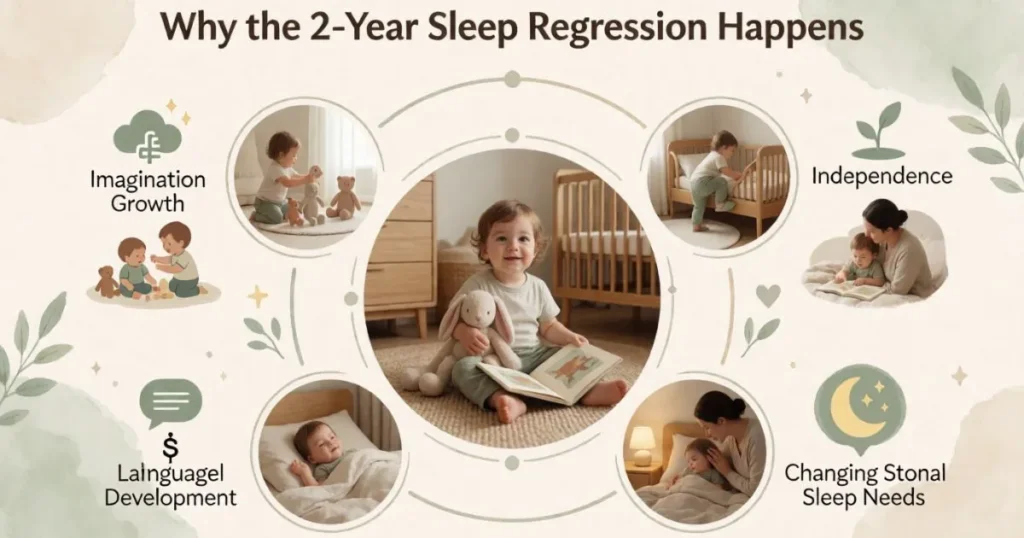
If your toddler suddenly refuses bedtime after months of sleeping well, it’s natural to wonder what changed.
The answer is that the 2-year sleep regression is rarely caused by a single factor.
Instead, it’s usually the result of several important developmental changes happening at the same time.
Around 2 years old, toddlers become more imaginative, communicate more clearly, understand routines, test boundaries, and begin processing bigger emotions than ever before.
These exciting developmental milestones are a healthy part of growing up, but they can temporarily interfere with your toddler’s sleep.
Let’s explore the most common causes.
Growing Imagination
One of the biggest differences between the 2 year sleep regression and earlier sleep regressions is your toddler’s rapidly expanding imagination.
At this age, pretend play becomes much more sophisticated.
Your child may:
- Pretend to cook dinner.
- Talk to stuffed animals.
- Invent imaginary games.
- Create stories while playing.
- Copy everyday situations.
The same imagination that makes playtime exciting can also make bedtime more difficult.
After the lights go out, ordinary objects may suddenly seem unfamiliar.
A shadow on the wall, a hanging jacket, or a strange sound outside may feel much bigger than it really is.
Your toddler isn’t pretending to be scared.
Their imagination is developing faster than their ability to separate fantasy from reality.
Growing Independence
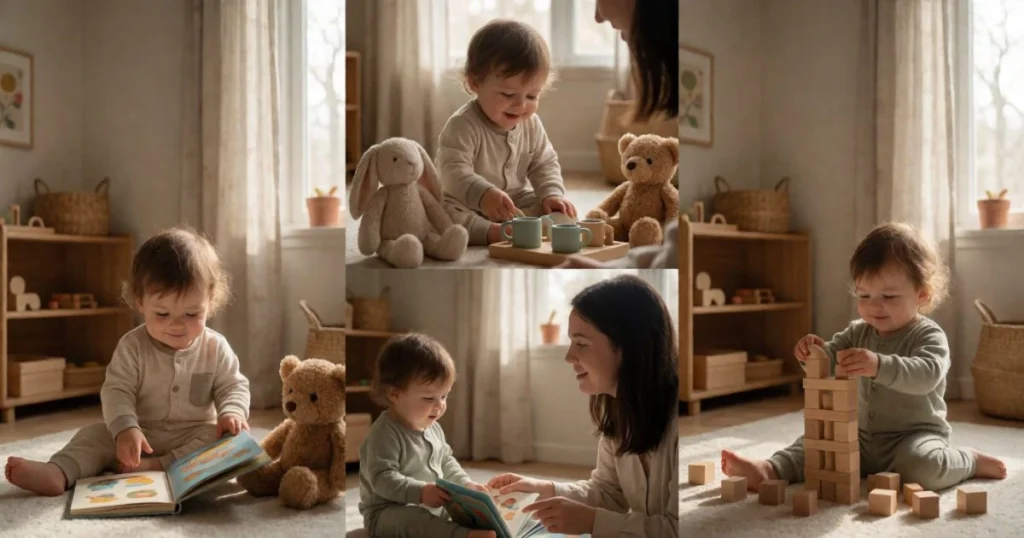
Two-year-olds love doing things for themselves.
You may hear phrases like:
- “I do it!”
- “Me!”
- “No!”
- “My turn!”
Your toddler may insist on:
- Choosing pajamas.
- Climbing into bed independently.
- Turning the bedroom light off.
- Picking bedtime books.
- Holding the toothbrush.
This growing independence is healthy, but it can also lead to bedtime resistance when your child’s wishes don’t match the bedtime routine.
Stronger Language Skills
By the age of two, many toddlers are able to communicate their thoughts and feelings much more clearly. This is one reason why the 2 year sleep regression can look different from earlier sleep changes. Instead of simply crying when they don’t want bedtime, your toddler may now explain exactly what they want.
For example:
- “One more story.”
- “Need water.”
- “Daddy stay.”
- “I’m not sleepy.”
- “Light on.”
These bedtime requests don’t always mean your toddler genuinely needs something. During a 2 year old sleep regression, many children use their growing communication skills, imagination, and problem-solving abilities to delay bedtime and enjoy a little more time with you.
This type of toddler sleep regression can sometimes lead to repeated 2 year old bedtime battles, especially when your child discovers that asking questions or making requests can extend the bedtime routine.
Testing Boundaries
Boundary testing becomes even more noticeable around the second birthday.
Your toddler is learning how rules work.
They may wonder:
- What happens if I leave my bed?
- Will Mommy come back if I call?
- Can I stay up later if I ask politely?
- What if I keep requesting another hug?
This curiosity isn’t manipulation.
It’s part of learning cause and effect.
When bedtime expectations remain calm and consistent, toddlers gradually understand what happens every night and often settle more easily.
Changing Sleep Needs
Around age two, some toddlers begin showing subtle changes in their sleep needs, which can be one reason the 2 year sleep regression feels confusing for parents.
While most 2-year-olds still need one daytime nap, changes during a 2 year old sleep regression may include:
- Taking longer to fall asleep.
- Sleeping for a shorter nap.
- Needing a slight adjustment to bedtime.
- Staying awake talking, singing, or playing before falling asleep.
These changes don’t necessarily mean your toddler is ready to stop napping altogether. Many children going through toddler sleep regression still benefit from a consistent daytime rest, even if their sleep patterns begin to shift.
Dropping naps too early can actually make 2 year old bedtime battles worse by leading to overtiredness, which can make it harder for your toddler to settle down at night.
Routine Changes
Significant changes in your toddler’s life can often affect their sleep at this age.
Common examples include:
- Starting preschool or daycare
- Potty training
- Welcoming a new sibling
- Moving to a new home
- Traveling
- Recovering from illness
- Changes in childcare arrangements
Even exciting changes can temporarily disrupt your toddler’s sense of security, making bedtime more challenging.
Big Emotions and Emotional Growth
At two years old, toddlers experience a much wider range of emotions than they did just a few months earlier.
They may feel:
- Pride
- Excitement
- Frustration
- Disappointment
- Worry
- Fear
However, they still rely on trusted adults to help them manage these feelings.
After a busy or emotional day, your toddler may find it harder to relax at bedtime, leading to resistance or night wakings.
Is It Really the 2 Year Sleep Regression?
Not every sleep problem at age two is caused by a sleep regression.
Sometimes another issue—or a combination of factors—is affecting your toddler’s sleep.
| Possible Cause | Typical Signs | Usually Temporary? |
| 2-Year Sleep Regression | Bedtime stalling, leaving the bed, night wakings, nap resistance | ✅ Yes |
| Nightmares or New Fears | Fear of the dark, scary dreams, needing reassurance | ✅ Yes |
| Teething | Swollen gums, chewing, drooling, fussiness | ✅ Yes |
| Routine Changes | Sleep disruption after travel, preschool, potty training, or family changes | ✅ Yes |
| Illness | Fever, cough, poor appetite, unusual tiredness | ✅ Yes (medical evaluation may be needed) |
Looking at your toddler’s overall behavior, health, and daily routine often provides the clearest picture of what’s affecting sleep.
Key Takeaway
The 2 year sleep regression usually develops from several factors rather than a single cause.
Instead, this stage of toddler sleep regression is often the result of several developmental changes happening at once. Many parents notice 2 year old sleep regression symptoms when their toddler’s emotional growth, communication skills, and independence begin changing rapidly.
During this stage, your toddler may be:
- Developing a vivid imagination.
- Becoming more independent.
- Communicating more clearly.
- Testing boundaries.
- Experiencing bigger emotions.
- Adjusting to changing sleep needs.
- Coping with new routines or life changes.
Although these changes may temporarily lead to more challenging bedtimes and 2 year old bedtime battles, they are also positive signs that your toddler is growing emotionally, mentally, and socially.
With patience, consistency, and realistic expectations, most toddlers gradually move through the 2 year sleep regression and return to more restful sleep.
10 Common Signs of the 2-Year Sleep Regression
The 2 year sleep regression can look very different from the sleep challenges you faced during infancy.
Instead of frequent crying or unpredictable sleep patterns, many parents notice 2 year old bedtime battles becoming a bigger part of their evenings, with bedtime turning into a series of negotiations, repeated requests, and emotional ups and downs.
Unlike earlier sleep changes, this stage of toddler sleep regression is often connected to your child’s growing independence, imagination, and communication skills.
Not every toddler experiences the same symptoms during a 2 year old sleep regression.
Some mainly resist bedtime, while others wake more often during the night or begin refusing naps they once took without a problem.
Recognizing these common signs can help you understand that your toddler’s behavior is often linked to normal development rather than poor sleep habits. The 2 year sleep regression is usually a temporary phase that improves with patience, consistency, and a supportive bedtime routine.
1. Bedtime Suddenly Becomes a Battle
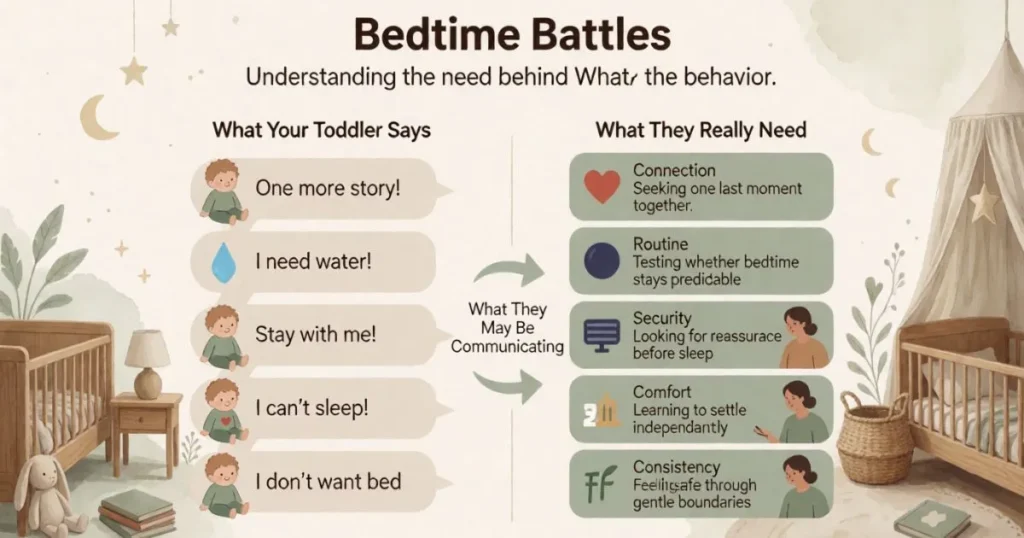
One of the clearest signs of the 2 year sleep regression is that bedtime becomes much harder than it used to be.
Your toddler may:
- Refuse to put on pajamas.
- Run off when it’s time to brush their teeth.
- Cry when you mention bedtime.
- Resist or argue over every part of the bedtime routine.
- Insist they aren’t tired.
This behavior is often a sign of your toddler’s growing independence, not an indication that they don’t need sleep.
2. Endless Bedtime Stalling
Many two-year-olds become experts at delaying bedtime.
Just when it seems the bedtime routine is over, your toddler comes up with one more request.
Common bedtime requests include:
- “One more story.”
- “One more hug.”
- “Water, please.”
- “I need the potty.”
- “I forgot my teddy.”
- “Leave the light on.”
For many toddlers, the biggest sleep challenges begin to improve within about 2 to 6 weeks.
3. Leaving the Bed Repeatedly
If your toddler has moved into a toddler bed, they may begin getting out of bed several times after you’ve said goodnight.
They might:
- Walk into the hallway.
- Follow you to another room.
- Ask another question.
- Request another cuddle.
- Say they can’t sleep.
This behavior often reflects curiosity, independence, and boundary testing rather than an inability to sleep.
4. Waking During the Night Again
Some toddlers who once slept through the night may start waking up again.
Night wakings may happen because of:
- New fears
- Emotional development
- Overtiredness
- Changes in routine
- Temporary sleep disruptions linked to the regression
Many toddlers only need a little reassurance before they can settle back to sleep on their own.
5. Fear of the Dark or Bedtime Fears
Around age two, imagination develops rapidly.
Your toddler may suddenly become afraid of:
- The dark
- Shadows
- Strange noises
- Being alone
- Imaginary creatures
These fears feel very real to your child, even if adults know there’s no danger.
Showing comfort and validating your toddler’s feelings, instead of dismissing them, helps build a sense of safety, support, and emotional security.
6. Refusing Naps
Nap resistance often appears during the 2 year sleep regression.
Your toddler may:
- Say they aren’t tired.
- Talk or sing instead of sleeping.
- Play quietly in bed.
- Skip naps occasionally.
- Take shorter naps than before.
Although sleep needs gradually change during toddlerhood, most 2-year-olds still benefit from one daily nap.
7. Calling for You Repeatedly
Even after you’ve said goodnight and left the room, your toddler may keep calling for you.
They may ask you to:
- Fix a blanket.
- Find a toy.
- Turn on a light.
- Give another kiss.
- Stay for a few more minutes.
These repeated requests often reflect a desire for reassurance and connection rather than a true need.
8. Strong Emotions Before Bed
As bedtime approaches, many toddlers become:
- More emotional
- Easily frustrated
- Clingy
- Silly
- Tearful
Tiredness makes it harder for young children to regulate their emotions, which is why bedtime often becomes the most challenging part of the day.
9. Early Morning Wake-Ups
At this stage, some children begin waking much earlier than their usual morning time.
Early rising may be linked to:
- Overtiredness
- Changes in naps
- Excitement about the day
- Temporary sleep disruption
Keeping a consistent bedtime often helps restore a more predictable wake-up time.
10. Saying “No” to Bedtime
By age two, toddlers understand they can express opinions—and bedtime is often where they practice.
Your child may refuse:
- Pajamas
- Toothbrushing
- Stories
- Turning off the light
- Getting into bed
While these behaviors can feel exhausting, they’re also a normal part of learning independence and decision-making.
Quick Symptom Checklist
Use this simple checklist to determine whether your toddler is showing the typical signs of the 2-year sleep regression.
| Symptom | Common During the 2-Year Sleep Regression? |
| Bedtime battles | ✅ |
| Bedtime stalling | ✅ |
| Leaving the bed | ✅ |
| Night wakings | ✅ |
| Fear of the dark | ✅ |
| Calling for parents repeatedly | ✅ |
| Nap refusal | ✅ |
| Strong emotions before bed | ✅ |
| Early morning waking | ✅ |
| Saying “No” to bedtime | ✅ |
| Fever | ❌ |
| Difficulty breathing | ❌ |
| Persistent vomiting | ❌ |
If your toddler develops a fever, breathing difficulties, severe pain, signs of dehydration, persistent vomiting, unusual drowsiness, or any other concerning symptoms, don’t assume they’re simply going through the 2 year sleep regression. Contact your pediatrician for medical advice.
Could It Be Something Else?
Not every sleep problem that happens around age two is the result of a 2 year sleep regression.
Sometimes several factors overlap, and what looks like 2 year old sleep regression may actually be related to changes happening in your toddler’s daily routine, emotions, or environment.
For example:
- Potty training may temporarily interrupt nighttime sleep.
- A new sibling or starting preschool can make bedtime feel less secure.
- Nightmares or new bedtime fears may lead to more night wakings.
- Giving up naps too early can leave your toddler overtired by the time bedtime arrives.
These challenges can sometimes contribute to toddler sleep regression symptoms or create more frequent 2 year old bedtime battles, even when your child is not experiencing a true sleep regression.
Looking at your child’s overall routine—including naps, physical activity, emotional experiences, and recent life changes—often provides the clearest explanation for changes in sleep.
Key Takeaway
The 2 year sleep regression is about much more than waking during the night.
Many toddlers begin resisting bedtime, delaying sleep with repeated requests, leaving their bed, developing new fears, and expressing strong emotions around bedtime.
Although these changes can feel frustrating, they’re usually temporary signs of healthy emotional, social, and cognitive development.
With consistent routines, loving boundaries, and patience, most toddlers gradually settle into healthier sleep patterns again.
How Long Can the 2 Year Sleep Regression Last?
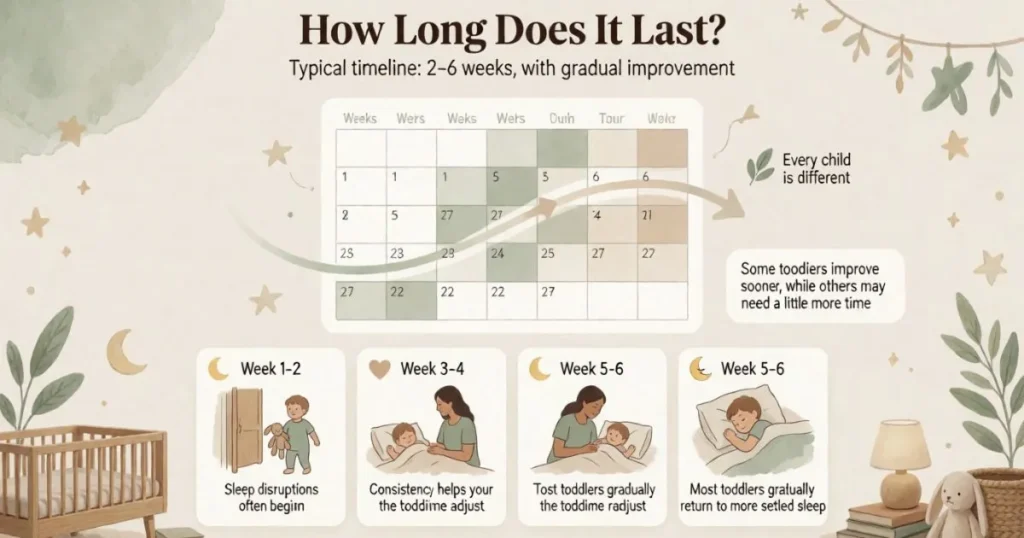
If bedtime has become a nightly struggle, you’re probably wondering how long does 2 year sleep regression last and when things will finally get easier.
The encouraging news is that the 2 year sleep regression is usually temporary.
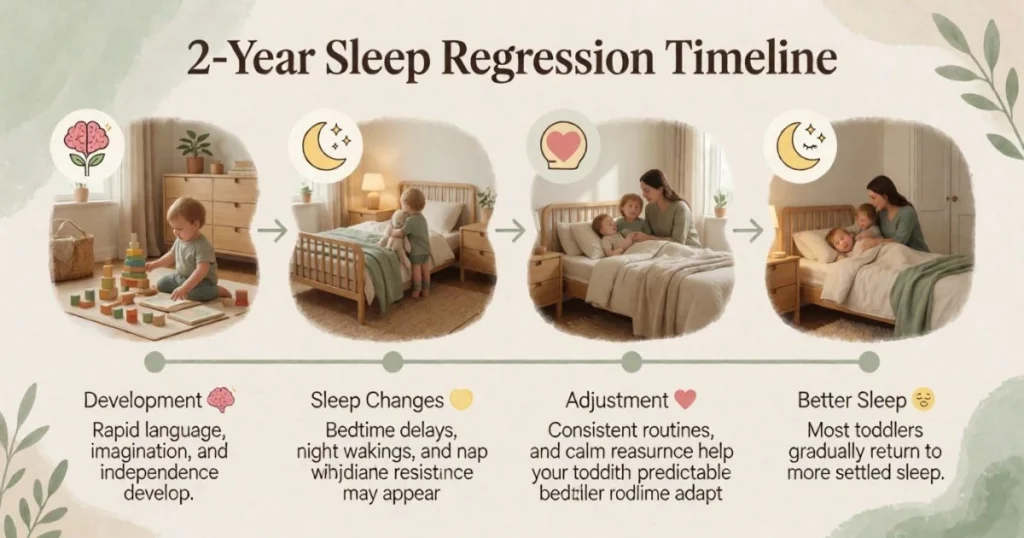
For many toddlers, the biggest sleep challenges begin to improve within about 2 to 6 weeks. As they adjust to new developmental milestones and settle back into familiar routines, bedtime often becomes calmer and more predictable.
This period of 2 year old sleep regression can feel exhausting, but it does not mean your toddler has developed permanent sleep problems. Like other stages of toddler sleep regression, progress often happens gradually.
Unlike earlier sleep regressions, however, improvement isn’t always steady.
Some nights may go smoothly, followed by a few difficult evenings before you notice lasting improvement.
That pattern is completely normal and is a common part of moving through the 2 year sleep regression.
Understanding your toddler’s changing sleep needs can make bedtime challenges easier to manage. The American Academy of Pediatrics explains that sleep requirements change as children grow and develop.
Every Toddler Adjusts at Their Own Pace
No two toddlers experience the 2 year sleep regression in exactly the same way.
Several factors can affect how long it lasts, including:
- Your toddler’s temperament
- Emotional development
- Growing imagination
- Changes in naps
- Daily routines
- Potty training
- Consistency at bedtime
Instead of expecting immediate changes, focus on gradual improvement over several weeks.
Typical Timeline
| Timeline | What You Might Notice |
| Week 1 | Bedtime resistance, bedtime stalling, occasional night wakings |
| Weeks 2–3 | Stronger independence, repeated bedtime requests, emotional ups and downs |
| Weeks 4–6 | Many toddlers begin settling into a more predictable bedtime routine |
| Beyond 6 Weeks | Ongoing sleep difficulties may have another underlying cause and should be discussed with your pediatrician if you’re concerned |
These timeframes are only general guidelines.
Some children adjust to this stage fairly quickly, while others take a little longer before their sleep improves.
Why Sleep Gradually Improves
As your toddler grows more confident with these new emotional and thinking skills, bedtime often becomes calmer and easier to manage.
Over time, they learn to:
- Feel more secure with predictable routines.
- Express feelings using words instead of bedtime protests.
- Understand bedtime expectations.
- Manage short separations with greater confidence.
- Settle to sleep with fewer delays.
Many parents notice that small improvements build gradually into peaceful evenings again.
Why Does My 2 Year Old Suddenly Refuse Bedtime?
This is one of the most common questions parents ask during the 2 year sleep regression.
Your toddler may have followed the bedtime routine happily for months.
Then, almost overnight, everything changes.
Why?
Because your child now understands much more about what bedtime means. During a 2 year old sleep regression, many toddlers become more aware of routines, choices, and the separation that happens when the day comes to an end.
At 2 years old, your toddler knows that bedtime means:
- Playtime is over.
- Parents leave the room.
- They won’t be making choices for a while.
- The excitement of the day has ended.
For many families, this growing awareness can lead to 2 year old bedtime battles, as toddlers try to delay the moment when they have to separate from their parents.
From your toddler’s perspective, staying awake means more opportunities to play, explore, and spend time with you.
That doesn’t mean they don’t need sleep.
It simply means that during this stage of toddler sleep regression, they would rather keep the day going a little longer.
Bedtime Resistance Is Often About Independence
Two-year-olds naturally want more control over their lives.
They may resist bedtime because they want to decide:
- When to go to bed.
- Which pajamas to wear.
- Which book to read.
- Whether the light stays on.
- Who tucks them in.
Offering a few simple choices while keeping the overall routine consistent helps satisfy this growing need for independence.
Bedtime Stalling: Why Your Toddler Keeps Asking for “One More”
If your evenings sound like this…
“One more story.”
“One more drink.”
“One more hug.”
“One more song.”
“One more kiss.”
…you’re not alone.
Bedtime stalling is one of the defining characteristics of the 2-year sleep regression.
These repeated requests usually aren’t about the story, drink, or song itself.
Instead, your toddler has discovered something important:
Every request keeps bedtime from happening for a little longer.
This doesn’t mean your child is trying to manipulate you.
They’re experimenting with communication, cause and effect, and the power of making choices.
Understanding this can help you respond calmly rather than feeling frustrated.
How to Handle Bedtime Stalling Without Creating a Power Struggle
The goal isn’t to eliminate every request.
The goal is to create a predictable routine while responding with empathy and understanding.
Helpful strategies include:
- Decide on the bedtime routine before it begins.
- Tell your toddler what will happen next.
- Offer limited choices early in the routine.
- Stay calm when additional requests begin.
- Respond kindly but consistently after saying goodnight.
For example:
“We’ve already had our two bedtime stories. We’ll read another one tomorrow.”
This approach acknowledges your child’s feelings while keeping a consistent and clear boundary in place.
Is Your Toddler Really Scared, or Simply Stalling at Bedtime?
Sometimes it’s difficult to know whether your toddler is genuinely frightened or simply trying to stay awake longer.
In reality, both situations can happen—and sometimes at the same time.
This comparison may help.
| Signs of Genuine Bedtime Fear | Signs of Bedtime Stalling |
| Appears frightened or tearful | Smiles while asking for another activity |
| Talks about scary shadows or dreams | Repeatedly asks for “one more” item |
| Wants reassurance and comfort | Keeps creating new requests after each one is met |
| Calms with reassurance and a familiar routine | Quickly thinks of another reason to stay awake |
| Fear may continue during the night | Usually ends once asleep |
If your toddler expresses fear, respond with empathy rather than dismissal.
A simple response like:
“I know that shadow looks strange. Let’s look together and see what it really is.”
helps your child feel understood while building confidence.
Nightmares vs. Night Terrors
Parents often confuse these terms and use them as if they mean the same thing, but they actually have different meanings.
Knowing the difference can help you choose the most appropriate response.
| Nightmares | Night Terrors |
| Usually happen later in the night | They typically happen within the first few hours after your child falls asleep. |
| Child often wakes fully | Child often appears asleep |
| Toddler may remember the dream | Usually no memory afterward |
| Comfort usually helps | Comfort may not fully wake the child |
| Child seeks reassurance | Child may cry or scream but remain asleep |
Nightmares become more common as imagination develops around age two.
Night terrors are much less common and can look alarming, but many children return to sleep without remembering the episode.
If nighttime events become frequent, unusually intense, or you’re unsure what’s happening, discuss your concerns with your pediatrician.
Key Takeaway
The 2 year sleep regression usually lasts 2 to 6 weeks, but every toddler adjusts at their own pace.
During this stage, bedtime often becomes difficult because your child is developing stronger communication skills, a vivid imagination, growing independence, and a deeper understanding of routines.
Understanding why your toddler stalls bedtime, expresses new fears, or resists sleep helps you respond with patience instead of frustration.
By combining empathy with clear, consistent boundaries, you’re helping your child develop healthy sleep habits while supporting their emotional growth.
How to Improve Your 2 Year-Old’s Sleep During the 2-Year Sleep Regression
The 2 year sleep regression can be exhausting for parents, especially when bedtime becomes a nightly struggle filled with delays, negotiations, and repeated requests.
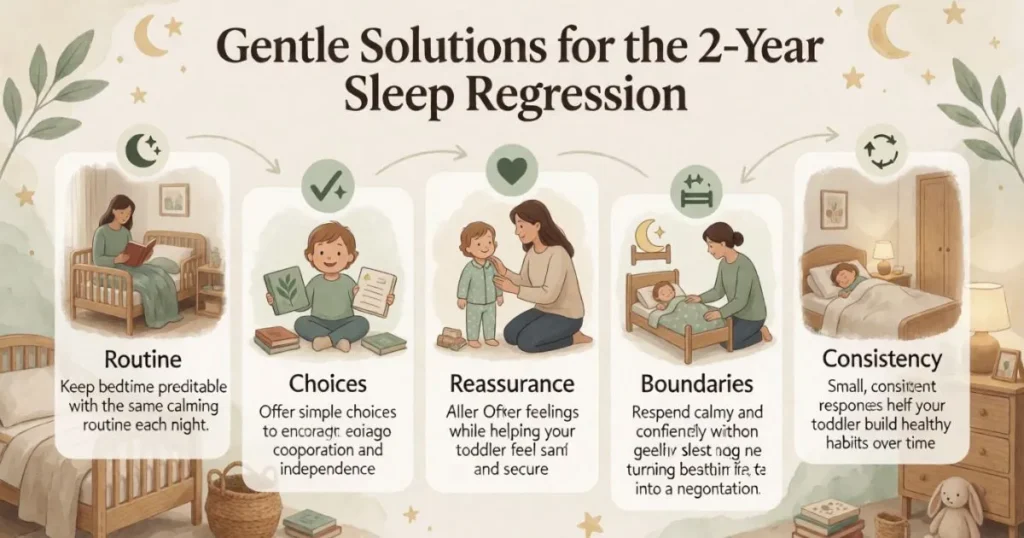
The good news is that you don’t need a perfect bedtime routine or a magic solution to help your child through this stage. During a 2 year old sleep regression, the most effective approach is to create a calm, predictable bedtime environment where your toddler feels safe, supported, and knows what to expect each night.
These gentle strategies can help reduce 2 year old bedtime battles, support healthy sleep habits, and make bedtime smoother for the whole family.
Remember, toddler sleep regression is usually a temporary stage, and consistent, reassuring responses can help your toddler feel secure as they adjust.
Most toddlers still need a combination of nighttime sleep and daytime rest. Following age-appropriate toddler sleep recommendations can help support healthier routines.
1. Keep the Bedtime Routine Consistent Every Night
Two-year-olds feel more confident when they know exactly what will happen next.
A consistent routine helps your toddler transition from a busy day to a restful night.
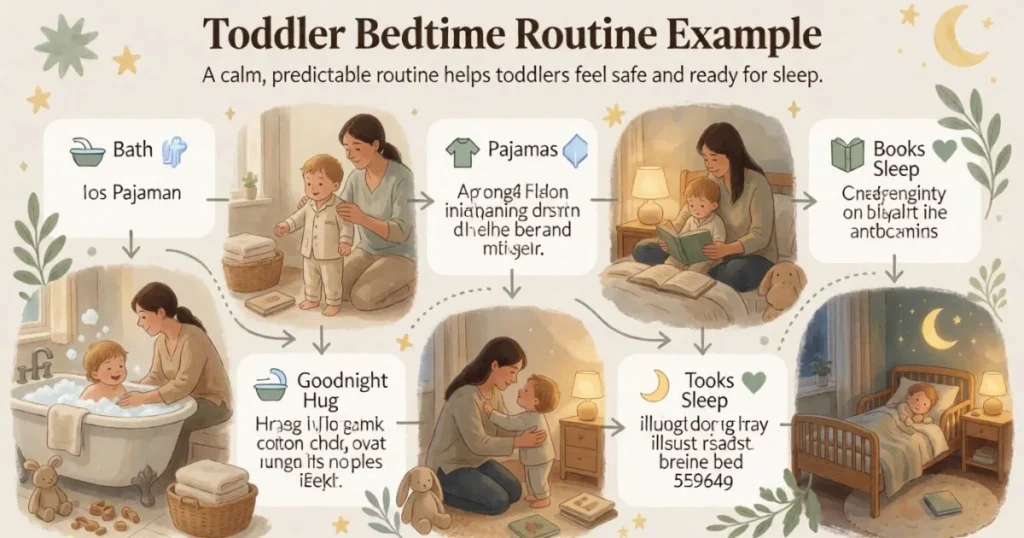
A simple routine might include:
| Step | Activity |
| 1 | Bath or wash-up (optional) |
| 2 | Pajamas and brushing teeth |
| 3 | One last drink of water |
| 4 | Read two bedtime books |
| 5 | Quiet cuddles and a goodnight phrase |
| 6 | Lights out and bedtime |
Try to keep the routine in the same order each evening.
Predictability often helps toddlers feel safe and reduces bedtime resistance.
2. Offer Choices—But Keep the Boundaries
Your toddler wants more independence, but they still need clear limits.
Rather than asking open-ended questions, give your child two appropriate choices to choose from.
For example:
- “Would you like to wear the dinosaur pajamas tonight, or would you prefer the striped pair?”
- “Which story should we read before bed tonight—the one about the bear or the one about the truck?”
- “Which would you like to keep with you at bedtime—Bunny or Teddy?”
Offering simple choices gives your toddler a sense of independence while keeping the bedtime routine on track and consistent.
3. Set Clear Expectations Before Bedtime
Toddlers often handle changes more confidently when they know what to expect next, especially during the 2 year sleep regression when bedtime can suddenly feel more challenging.
Before beginning the bedtime routine, explain it in simple language. A predictable routine can be especially helpful during a 2 year old sleep regression because it gives your toddler a sense of control and security.
For example:
“We’ll brush our teeth, read two books, have one goodnight hug, and then it’s time to sleep.”
Repeating the same expectations every evening helps reduce surprises, limit 2 year old bedtime battles, and make bedtime feel more familiar.
A consistent routine is one of the most effective tools for supporting your child through toddler sleep regression and helping them settle more calmly at night.
4. Don’t Let Bedtime Become a Negotiation
After hearing “one more story” for the fifth time, it can be tempting to give in.
But changing the routine every night can accidentally encourage more bedtime stalling.
Instead:
- Decide how many books you’ll read.
- Offer one last drink before lights out.
- Give hugs and kisses before saying goodnight.
- Calmly stick to the routine once bedtime begins.
Your toddler may protest at first, but consistency helps them learn what to expect.
5. Respond to Fears With Reassurance, Not Dismissal
If your toddler says they’re scared:
- Listen without laughing or dismissing the fear.
- Offer calm reassurance.
- Check the room together if needed.
- Remind them they’re safe.
You might say:
“I know that shadow looks different in the dark. Let’s take a look together. See? It’s just your chair with your jacket hanging on it.”
Acknowledging your child’s feelings builds trust while helping them develop confidence.
6. Encourage Plenty of Active Play During the Day
A busy toddler often sleeps better.
Make time each day for:
- Running
- Climbing safely
- Dancing
- Outdoor play
- Ball games
- Playground visits
Physical activity helps release energy and supports healthy sleep later in the evening.
7. Create a Calm Hour Before Bed
The hour before bedtime should feel very different from the rest of the day.
Instead of exciting activities, choose calming ones such as:
- Reading books
- Drawing
- Building simple puzzles
- Listening to soft music
- Quiet conversation
Reducing stimulation before bed helps your toddler prepare for sleep.
8. Keep Screen Time Away From Bedtime
Bright screens can make it harder for toddlers to relax and fall asleep.
Whenever possible:
- Turn off televisions, tablets, and phones at least one hour before bed.
- Replace screen time with quiet family activities.
- Keep bedrooms screen-free whenever practical.
This simple habit often supports healthier sleep.
9. Use a Comfort Object if Your Toddler Finds It Reassuring
Many two-year-olds sleep better with a familiar comfort object.
Depending on your child’s preferences, this could be:
- A favorite stuffed animal
- A soft blanket
- A small lovey
- A familiar bedtime toy
Having something familiar nearby can provide reassurance during bedtime and night wakings.
10. Stay Calm and Consistent
Your response teaches your toddler valuable lessons about handling emotions and routines.
When bedtime becomes difficult:
- Speak calmly.
- Keep your voice gentle.
- Avoid long discussions.
- Repeat the bedtime routine consistently.
- Expect gradual improvement rather than immediate results.
Your calm presence helps your toddler feel secure, even when they’re struggling with bedtime.
Common Mistakes Parents Make During the 2-Year Sleep Regression
Even with the best intentions, some responses can accidentally make bedtime harder.
Here are some common mistakes parents should try to avoid.
Turning Every Request Into a Negotiation
If bedtime rules change every evening, toddlers quickly learn that asking one more time might change the outcome.
Instead, respond warmly but consistently.
Punishing Bedtime Fears
Fear of the dark or unfamiliar shadows may not make sense to adults, but to your toddler, those fears can feel completely real.
Avoid saying things like:
- “There’s nothing to be scared of.”
- “Stop being silly.”
Instead, acknowledge their feelings and offer reassurance.
Dropping the Nap Too Early
Many parents assume nap refusal means their toddler no longer needs daytime sleep.
However, most 2 year olds still benefit from one daily nap.
Stopping naps too early can leave your toddler overtired, making bedtime more difficult and increasing sleep challenges.
Allowing Too Much Screen Time Before Bed
Exciting shows or games close to bedtime can make it harder for toddlers to settle.
A calm evening routine helps your toddler settle down and promotes better sleep.
Expecting Instant Improvement
The 2-year sleep regression is a natural part of your toddler’s development and won’t disappear overnight.
Focus on consistency and small improvements rather than expecting perfect nights immediately.
Key Takeaway
Helping your toddler through the 2 year sleep regression isn’t about finding the perfect bedtime trick.
It’s about creating a predictable routine, responding to bedtime challenges with patience, and balancing empathy with clear, loving boundaries.
By staying consistent, offering simple choices, encouraging active play, and responding calmly to fears and bedtime stalling, you’re helping your toddler develop healthy sleep habits that can support restful nights well beyond this stage.
Sample 2-Year-Old Sleep Schedule
By 2 years old, most toddlers need 11 to 14 hours of sleep in a 24-hour period, including one daytime nap.
Although every child has different sleep needs, maintaining a predictable daily routine often helps bedtime run more smoothly.
Here’s an example of a schedule that works well for many two-year-olds.
| Time | Activity |
| 7:00 a.m. | Wake up and breakfast |
| 9:30 a.m. | Outdoor play, learning activities, or errands |
| 12:00 p.m. | Lunch |
| 12:30–2:00 p.m. | Afternoon nap |
| 2:30 p.m. | Snack and active play |
| 5:30 p.m. | Dinner |
| 6:45 p.m. | Begin bedtime routine |
| 7:30 p.m. | Bedtime |
Remember that this schedule is only an example.
Some toddlers naturally wake earlier or need slightly more or less daytime sleep. The goal is to create a routine that matches your child’s needs while keeping sleep and wake times reasonably consistent.
Can You Sleep Train During the 2-Year Sleep Regression?
Many parents wonder if it’s too late to teach healthy sleep habits.
The answer is no.
Two-year-olds are capable of learning predictable bedtime routines and independent sleep skills, but they also understand much more than younger children. That means your approach should balance clear expectations with warmth and reassurance.
Before starting any sleep-training method, talk with your pediatrician if you have concerns about your child’s health, development, or sleep patterns.
Regardless of the approach you choose, these habits provide a strong foundation:
- Follow the same bedtime routine each night.
- Try to keep bedtime and wake-up times as consistent as possible each day.
- Set clear expectations before lights out.
- Respond calmly to bedtime protests.
- Avoid changing the routine every evening.
- Praise your toddler for following the bedtime routine, even when they make small improvements or complete just one step successfully.
At this age, sleep training focuses less on teaching your toddler how to sleep and more on establishing consistent routines and predictable bedtime habits.
When Should You Contact Your Pediatrician?
Although the 2 year sleep regression is a normal developmental stage, some sleep problems should be evaluated by a healthcare professional.
Contact your pediatrician if your toddler:
- Snores loudly or regularly pauses in breathing during sleep.
- Has a fever or appears seriously ill.
- Refuses fluids or shows signs of dehydration.
- Experiences persistent pain that affects sleep.
- Has frequent and severe nightmares that cause distress or interfere with their sleep regularly.
- Shows sudden changes in behavior or development that concern you.
- Continues having significant sleep problems for many weeks despite consistent routines.
- Loses skills they had previously mastered or stops reaching expected developmental milestones.
If you’re unsure whether your child’s sleep changes are part of a regression or another medical issue, seeking professional advice is always the safest choice.
Frequently Asked Questions About the 2-Year Sleep Regression
Is the 2-year sleep regression real?
Yes. Many toddlers experience a temporary change in their sleep around their second birthday as they develop new language abilities, a more active imagination, greater independence, and improved emotional regulation. Although not every child goes through a noticeable sleep regression, it is a common and normal part of toddler development.
What Is the Typical Duration of the 2-Year Sleep Regression?
For many toddlers, the most noticeable sleep changes improve within 2 to 6 weeks. However, every child develops at their own pace, and factors such as routine changes, illness, or potty training can influence the timeline.
Why won’t my 2-year-old stay in bed?
Around age two, many toddlers begin testing boundaries and exploring their independence.
Leaving the bed is often a way of seeing what happens next rather than a sign that they don’t need sleep.
Responding calmly and consistently helps reinforce bedtime expectations over time.
Why does bedtime suddenly take so long?
Two-year-olds often discover that asking for another story, another hug, or another drink delays bedtime.
These bedtime stalling tactics are a normal part of learning communication and cause and effect.
A predictable routine with loving, consistent boundaries usually helps shorten bedtime again.
Why Has My Toddler Developed a Fear of the Dark?
As your toddler’s imagination develops, it can inspire creative play while also making things like shadows, unfamiliar sounds, and darkness feel more scary.
Offering reassurance and keeping bedtime calm can help your child feel more secure.
Should my 2-year-old still take a nap?
Yes.
Most 2-year-olds still benefit from one daytime nap.
Although some toddlers resist napping occasionally, dropping naps too early can lead to overtiredness and make bedtime more difficult.
Are nightmares normal at this age?
Yes.
As imagination develops, many toddlers begin having occasional nightmares.
Most children respond well to reassurance, cuddles, and returning to their usual bedtime routine once they feel calm.
Can potty training affect sleep?
Absolutely.
Learning to use the toilet is a major developmental milestone that can temporarily disrupt naps and nighttime sleep.
Keeping bedtime routines consistent while supporting potty training often helps toddlers adjust more smoothly.
Will my toddler sleep well again?
In most cases, yes.
As your toddler becomes more comfortable with new emotions, routines, and developmental skills, sleep usually becomes more predictable again.
Consistency, patience, and realistic expectations can make this transition much easier.
Conclusion
The 2-year sleep regression can be particularly challenging because bedtime often becomes driven by big emotions, a growing imagination, and a strong desire for independence rather than simply feeling sleepy.
Your toddler may delay bedtime with endless requests, develop new fears, test boundaries, or suddenly wake during the night after months of sleeping well.
While these changes can be frustrating, they are usually temporary and reflect healthy growth and development.
Your child is developing new skills every day, learning how to communicate, solve problems, express emotions, and make sense of the world around them.
By responding with calm reassurance, maintaining consistent routines, and setting loving boundaries, you’re helping your toddler build healthy sleep habits while supporting their emotional development.
Better nights won’t happen overnight, but with patience and consistency, most families find that bedtime gradually becomes peaceful again.
Continue Your Sleep Journey
Every stage of childhood brings new milestones—and new sleep challenges. Explore the rest of our complete sleep regression series:
- Sleep Regression Ages: The Complete Guide From 4 Months to 2 Years
- 4-Month Sleep Regression: Signs, Causes, How Long It Lasts & How to Help Your Baby Sleep Again
- 6-Month Sleep Regression: Signs, Causes, How Long It Lasts & How to Help Your Baby Sleep Again
- 8–10 Month Sleep Regression: Signs, Causes, How Long It Lasts & How to Help Your Baby Sleep Again
- 12-Month Sleep Regression: Signs, Causes, How Long It Lasts & How to Help Your Toddler Sleep Better
- 18-Month Sleep Regression: Signs, Causes, How Long It Lasts & Gentle Ways to Help Your Toddler Sleep Better
Understanding what to expect at each stage helps you respond with confidence, support healthy sleep habits, and remember one reassuring truth:
Sleep regressions are temporary, but the love, patience, and consistency you show your child can have a lasting impact on their sense of security and well-being.