
Potty training can be an exciting milestone, but it doesn’t always go as smoothly as you imagine. One day, your little boy may happily sit on the potty, and the next, he may refuse to go, have an accident, or insist on wearing his diaper again. If you’ve been dealing with these ups and downs, you probably wonder whether you’re doing something wrong.
You may also have questions that are specific to raising a boy. Should you teach him to pee sitting down or standing up? How often should you offer the potty? What should you do if he refuses to poop in the toilet?
The good news is that potty training boys doesn’t have to turn into a daily struggle. With preparation, a predictable routine, and plenty of encouragement, you can make potty training boys easier and help your son develop the skills he needs without making him feel pressured.
Every child learns at a different pace. Instead of focusing on how quickly your little boy becomes fully independent, concentrate on helping him feel comfortable, recognize his body’s signals, and build confidence one step at a time.
Here’s how to make the process easier for both of you.
Best Amazon Picks :
- Potty Training Toilet for Toddlers, 2-in-1 Potty Training seat, Anti-Slip
- Potty Training Seat, Toddler Toilet Seat for Kids Boys Girls, 2 in1 Potty Training Toilet with Step Stool, 6 Adjustable Height, Splash Guard, Stable Triangular Anti-Slip Design(Grey)
- COOSEYA Toilet Seat, Potty Training Seat for Toddler, Upgraded 2-in-1 Potty Toilet Training for Boys and Girls, Waterproof Cushioned Mat with Non-Slip Step Stool
- Potty Training Seat, Upgrade 2 in 1 Potty Training Toilet for Toddler, Toddler Toilet Seat for Boys Girls with Support Bar, Anti-Slip Pad and Step Stool (Pink)
- MooMoo Baby Potty Training Pants Cotton Training Underwear for Boy and Girl
When Should You Start Potty Training Boys?
One of the first questions parents ask is when to begin toilet training. You may hear that boys usually take longer than girls, or that your son should be completely ready by a particular birthday.
However, there isn’t one perfect age for every child.
Many children develop the physical, cognitive, and emotional skills needed for toilet training between 18 and 30 months, although some need more time. The American Academy of Pediatrics also emphasizes looking at individual readiness rather than relying on age alone. When it comes to potty training boys, recognizing these readiness signs is more helpful than following a strict age guideline.
Boys may, on average, achieve some toilet-training milestones later than girls, but this doesn’t mean your son will necessarily follow the same pattern.
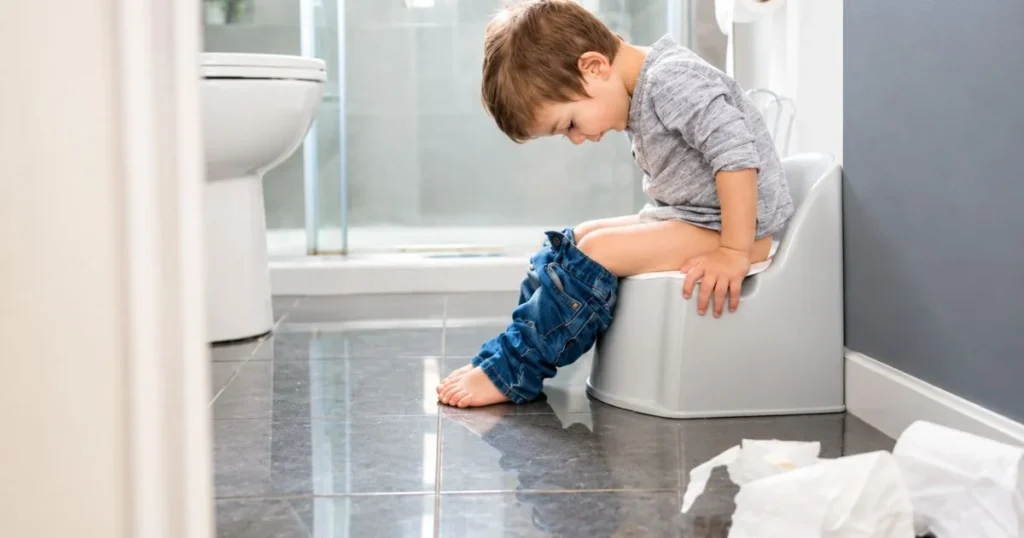
7 Signs Your Boy Is Ready for Potty Training
Before introducing a regular potty routine, look for signs that your child is becoming aware of his bathroom needs. These early signs can help you know when to start potty training boys in a relaxed and supportive way.
Your son may be ready to begin when he:
- Stays dry for longer periods: His diaper remains dry for around two hours or after a nap, suggesting that he has some bladder control.
- Recognizes when he needs to pee or poop: He may pause, hide, squat, or make a particular facial expression before using his diaper.
- Dislikes wet or dirty diapers: He may ask you to change him or show discomfort when his diaper is soiled.
- Follows simple instructions: He understands basic directions such as “Come to the bathroom” or “Pull down your pants.”
- Can manage simple movements: He can walk to the bathroom and may begin pulling his pants up and down with assistance.
- Shows interest in the toilet: He watches family members use the bathroom or asks questions about the potty.
- Communicates his needs: He uses words, gestures, or other signals to tell you when he needs a diaper change or wants to use the toilet.
Your son doesn’t need to show every sign before you introduce the potty. These behaviors simply help you understand whether he’s becoming comfortable with the idea. During potty training boys, paying attention to these signals can help you choose a comfortable time to begin.
When Should You Delay Potty Training?
Sometimes, waiting a little longer is the most helpful decision when it comes to potty training boys.
Consider postponing active training if your family is dealing with:
- Moving to a new home.
- The arrival of a new baby.
- Starting a new daycare or preschool.
- An illness or significant change in routine.
- Emotional distress or strong resistance.
You can still introduce the potty casually during these periods. Just avoid turning it into an expectation that adds more pressure to your child’s day while preparing for potty training boys.
How to Prepare for Potty Training Your Boy
Once your son begins showing readiness signs, prepare the bathroom and gather a few basic supplies for potty training boys.
You don’t need expensive equipment or a complicated training system. A comfortable potty, easy-to-remove clothes, and a little patience are often enough to get started with potty training boys.
Choose the Right Potty Chair or Toilet Seat
You generally have two options when choosing equipment for potty training boys:
- A standalone potty chair: This sits directly on the floor and allows your son to place his feet securely.
- A child-sized toilet seat: This fits over your regular toilet and may be convenient if you want him to learn using the family bathroom from the beginning.
If you choose a regular toilet, provide a stable footstool. Your son’s feet should have support rather than dangling above the floor.
Comfortable positioning is particularly helpful during potty training boys, especially when he needs to poop because it allows him to sit securely and relax.
Choose Comfortable Clothes and Training Underwear
During the early stages of potty training boys, your son will benefit from clothing he can remove easily.
Choose:
- Elastic-waist trousers.
- Loose shorts.
- Comfortable underwear.
- Simple clothing without complicated buttons or belts.
You can introduce regular underwear when your child is ready to begin practicing during the day. Some families prefer thicker cloth training pants to help manage accidents during potty training boys.
Prepare Your Bathroom
Make the bathroom inviting and easy to use during potty training boys.
Keep these items within reach:
- Potty chair or toilet seat.
- Footstool.
- Toilet paper.
- Clean underwear and spare clothes.
- Hand soap and a towel.
You can also place a small basket with your son’s bathroom supplies nearby. This helps him become familiar with the routine and gradually participate in simple tasks as he learns potty training boys.
Introduce the Potty Before Expecting Him to Use It
Don’t make the first potty experience a test when introducing potty training boys.
Let your son explore the potty, sit on it while fully clothed if he prefers, or read a simple potty-training book together.
Explain its purpose using short, familiar words:
- “This is where pee goes.”
- “You can poop in the potty.”
- “Let’s wash our hands when we’re finished.”
You can also demonstrate ordinary bathroom habits when appropriate. The goal is to make the experience familiar before expecting him to use the toilet independently during potty training boys.
Should Boys Pee Sitting Down or Standing Up?
This is one of the most common questions parents have about potty training boys.
Although you may eventually want your son to pee standing up, there’s no need to introduce that skill immediately. During the early stages of potty training boys, sitting down is often a simpler way to begin.
Why Sitting Down Is a Good Starting Point
Teaching your little boy to sit down initially can simplify the learning process during potty training boys.
He only needs to understand one basic position for both urination and bowel movements.
Sitting can also:
- Reduce splashing and bathroom mess.
- Help him focus on learning the potty routine.
- Make it easier to relax when he needs to poop.
- Avoid introducing several new skills at once.
The American Academy of Pediatrics explains that boys can begin by urinating while sitting and learn to stand when they’re more comfortable with toilet training. This makes sitting a practical starting point for potty training boys.
When to Teach Your Boy to Pee Standing Up
You can introduce standing once your son understands how to use the potty and shows interest in trying another position during potty training boys.
Start with a simple demonstration:
- Show him where to stand.
- Encourage him to stand close enough to the toilet.
- Explain how to aim toward the water.
- Allow him to practice without criticizing mistakes.
- Remind him to clean up any splashes.
There’s no need to rush this transition. If sitting works well, let him continue until he’s ready for the next step in potty training boys.
Teach Your Son Proper Bathroom Hygiene
As youAs your boy becomes more independent, introduce the remaining bathroom habits gradually during potty training boys.
Help him learn to:
- Sit comfortably and take his time.
- Wipe himself appropriately with your assistance.
- Pull up his underwear and pants.
- Flush the toilet when appropriate.
- Wash and dry his hands.
You may need to supervise these steps for quite a while. Independence develops through practice, not through expecting your toddler to manage everything immediately as he progresses with potty training boys.
How to Start Potty Training Boys Step by Step
Now that you’ve prepared the bathroom and introduced the potty, you can begin building a simple routine for potty training boys.
You don’t need to follow an intensive three-day program or set a strict schedule. Choose an approach that fits your son’s readiness and your family’s daily life while making potty training boys a comfortable experience.
Step 1: Introduce the Potty Without Pressure
Begin by making the potty part of your son’s everyday environment during potty training boys.
Invite him to sit when he wakes up or after a meal, but don’t force him if he refuses.
You can say:
- “Would you like to try the potty?”
- “Let’s see if you need to pee.”
- “You can sit here if you want.”
If he doesn’t use it, that’s okay. Praise his willingness to try rather than focusing only on whether he produces anything. This positive approach can help make potty training boys less stressful.
Step 2: Establish a Predictable Potty Routine
Young children often respond well to familiar routines.
Rather than asking your son every few minutes whether he needs to pee, offer opportunities at natural points throughout the day.
| Time | Potty opportunity |
| After waking up | Try sitting on the potty |
| After breakfast | Offer a bathroom visit |
| After lunch | Encourage another try |
| After naps | Offer the potty |
| Before leaving home | Visit the bathroom |
| Before bedtime | Make it part of the evening routine |
Watch for signs that your son needs to go, such as becoming unusually quiet, fidgeting, hiding, or suddenly stopping play.
Over time, he’ll begin connecting these body signals with using the toilet.
Step 3: Teach Him the Bathroom Routine
Break the process into small steps instead of giving several instructions at once.
A simple bathroom routine looks like this:
- Walk to the bathroom.
- Pull down pants and underwear.
- Sit comfortably on the potty.
- Try to pee or poop without rushing.
- Wipe with your assistance when needed.
- Pull up underwear and pants.
- Flush the toilet if appropriate.
- Wash and dry hands.
At first, your son may need help with almost every step. That’s normal.
As he becomes more confident, allow him to manage one or two tasks independently before introducing additional responsibilities.
Step 4: Help Him Recognize When He Needs to Go
One of the most important parts of toilet learning is helping your son understand his body’s signals.
Pay attention to behaviors that may indicate he needs the bathroom:
- Holding his penis.
- Crossing his legs.
- Squatting or hiding.
- Becoming restless.
- Stopping suddenly during play.
When you notice these signs, gently guide him toward the potty.
You can also encourage him to use a simple phrase such as “I need to pee” or “Potty, please.”
If your son has limited spoken language, gestures, picture cards, or another communication method can help him express his needs.
Step 5: Introduce Underwear When He Is Ready
Switching from diapers to underwear can help your son understand that he’s learning a new bathroom habit.
Let him choose a few pairs he likes. You might find that his favorite colors or characters make the transition more exciting.
Explain that underwear should stay dry, but reassure him that accidents can happen while he’s learning.
Keep spare clothes nearby, especially during the first days.
Step 6: Encourage Independence Gradually
You don’t need to do everything for your son, but you shouldn’t expect him to manage the entire routine alone either.
Start with simple responsibilities:
- Walking to the bathroom with you.
- Pulling down his pants.
- Sitting on the potty.
- Washing his hands with help.
Give him opportunities to practice these skills without turning every bathroom visit into a lesson.
10 Practical Tips to Make Potty Training Boys Easier and Stress-Free
Even with a good routine, some days will be easier than others. These simple strategies can help you keep the experience positive.
1. Follow Your Son’s Individual Readiness
Don’t compare your little boy with his cousins, siblings, or children at daycare.
If he’s showing interest and understands some of the bathroom routine, encourage him to practice. If he becomes overwhelmed, slow down and give him more time.
2. Keep a Consistent Potty Routine
Predictable bathroom opportunities can help your son understand when to use the potty.
Try connecting bathroom visits to familiar activities, such as waking up, eating, and getting ready for bed.
3. Use Positive Encouragement
Recognize effort rather than expecting perfect results.
You can say:
- “You remembered to tell me!”
- “You did a great job trying.”
- “You’re learning something new.”
Simple encouragement can help your son feel proud of his progress.
4. Make Potty Time Relaxing
A comfortable environment can make a difference, especially if your child feels nervous.
Read a short book together or sing a familiar song while he sits. Keep these moments brief and avoid making him stay on the potty for too long.
5. Let Him Choose His Underwear
Give your son a little control over the process.
Let him choose between two or three pairs of underwear. Small choices can make him feel involved and more willing to participate.
6. Read Potty Training Books Together
Picture books can help your son understand what happens during a bathroom visit.
Choose simple stories that show children using the potty, washing their hands, and learning to manage accidents.
7. Demonstrate Good Bathroom Habits
Children often learn by watching the adults around them.
Show your son how you follow a bathroom routine, explain the steps in simple language, and make handwashing part of the process.
8. Avoid Punishment and Pressure
Never shame your son for wetting his clothes or refusing the potty.
Scolding, threats, and comparisons can make him anxious about using the toilet.
Instead, stay calm and help him understand what to try next time.
9. Celebrate Small Achievements
Your son doesn’t need to pee in the potty every time to make progress.
Celebrate when he:
- Tells you he needs the bathroom.
- Sits on the potty.
- Tries to pee or poop.
- Pulls down his pants.
- Washes his hands.
Praise his effort, even when the result isn’t what you expected.
10. Be Patient and Consistent
Some children make progress quickly, while others need repeated practice.
Try to keep the same supportive approach at home and communicate with other caregivers so your son receives consistent guidance.
Remember that a difficult day doesn’t erase everything he’s learned.
Common Potty Training Problems in Boys and How to Solve Them
Even when your son understands how to use the potty, he may struggle with certain parts of the process during potty training boys. Resistance, accidents, and difficulty using unfamiliar bathrooms are common challenges.
Understanding what’s behind these behaviors can help you choose a more effective response and make potty training boys a smoother experience.
Your Boy Refuses to Sit on the Potty
If your son refuses to sit down during potty training boys, try to understand why he’s uncomfortable.
He may be:
- Afraid of falling into the toilet.
- Uncomfortable with the potty seat.
- Distracted by toys or activities.
- Not emotionally ready to begin.
- Reacting to pressure from previous attempts.
Instead of insisting that he sit, take a step back.
You can try:
- Letting him explore the potty without using it.
- Allowing him to sit fully clothed.
- Offering a choice between a potty chair and a toilet seat.
- Reading a potty book together.
- Giving him time to become comfortable.
If he continues resisting, a short break may be more helpful than repeated attempts. Taking a gentle approach can make potty training boys a more positive experience.
Your Son Keeps Having Accidents
Accidents can happenEven during potty training boys, accidents can happen even when your little boy has started using the potty successfully.
He may become distracted while playing, forget to recognize his body’s signals, or wait too long before asking for help.
To make things easier:
- Keep spare clothes available.
- Offer the potty at predictable times.
- Watch for signs that he needs to go.
- Encourage him to tell you when he feels the urge.
- Respond calmly when his clothes become wet.
Avoid assuming that accidents mean your son isn’t trying. He’s still learning how to recognize and respond to his body’s signals, which is a normal part of potty training boys.
Your Boy Holds His Poop or Refuses to Poop in the Potty
Poop withholding deserves particular attention during potty training boys because it can develop into a cycle of constipation and discomfort.
Your son may avoid pooping because:
- He previously experienced a painful bowel movement.
- He’s afraid of sitting on the toilet.
- He doesn’t want to stop playing.
- He feels uncomfortable using an unfamiliar bathroom.
- He wants to maintain control over his bathroom habits.
When stool remains in the bowel for too long, it can become harder and more difficult to pass. This may make your son even more reluctant to poop.
What can you do?
- Avoid forcing him to sit on the potty.
- Encourage regular, relaxed bathroom opportunities.
- Provide a footstool so his feet are supported.
- Offer water and age-appropriate fiber-rich foods.
- Keep bathroom conversations calm and reassuring.
If your son asks for a diaper when he needs to poop, discuss a temporary transition approach with his pediatrician rather than creating a stressful struggle. Persistent stool withholding or painful bowel movements should be assessed and treated appropriately.
The American Academy of Pediatrics explains that constipation and stool withholding can become closely connected during toilet training. Understanding this connection can help you manage potty training boys with patience and appropriate support.
Your Son Is Afraid of Flushing
Some todSome toddlers become frightened by the loud sound of a flushing toilet, especially in public bathrooms. This can sometimes make potty training boys more challenging.
If this happens, don’t force him to stay near the toilet while it flushes.
Instead:
- Explain what happens when you press the flush button.
- Allow him to leave the bathroom before flushing.
- Let him flush independently when he feels ready.
- Use a quieter bathroom when possible.
For automatic-flush toilets, you can place a small sticky note over the sensor if the facility permits it. This may prevent an unexpected flush while your child is sitting and help make potty training boys a more comfortable experience.
Your Boy Wants His Diaper Back
Your son may suddenly ask for his diaper again, even after making progress with underwear during potty training boys.
This can happen when he feels overwhelmed, becomes uncomfortable with bowel movements, or experiences a change in routine.
Try to understand what is making him uncomfortable instead of treating the request as disobedience.
You can reassure him:
“It’s okay to feel unsure. We’ll keep practicing together.”
If he’s consistently distressed, consider slowing down and discussing the best next step with your pediatrician. A patient approach can help your son regain confidence during potty training boys.
Your Son Uses the Potty at Home but Not Outside
Some children feel comfortable Some boys feel comfortable using their familiar bathroom but become nervous in daycare, public restrooms, or relatives’ homes. This can be another challenge during potty training boys.
Help your son become familiar with different bathrooms gradually.
You can:
- Visit the bathroom together before he needs to go.
- Carry spare underwear and trousers.
- Bring a portable potty seat if helpful.
- Explain that different toilets serve the same purpose.
- Ask daycare caregivers to follow a familiar routine.
With practice, unfamiliar bathrooms can become less intimidating and help your son feel more confident during potty training boys.
How to Handle Potty Training Regression
Regression happens when a child who previously used the potty successfully begins having accidents or refusing the toilet again during potty training boys.
Possible triggers include:
- A new sibling.
- Moving house.
- Starting daycare.
- Illness.
- Constipation.
- Urinary tract infections.
- Changes in sleep or daily routines.
Try returning to the basics. Reassure your son, offer predictable potty opportunities, and avoid making accidents a source of conflict.
If the change is sudden, persistent, or accompanied by physical symptoms, speak with his healthcare professional to rule out an underlying problem. A gentle, patient approach can help you navigate setbacks during potty training boys.
How to Handle Potty Training Accidents Without Stress
Accidents are one of the most frustrating parts of potty training boys, particularly when you feel your son was making good progress.
However, an accident doesn’t mean he has failed.
Your child is still developing the ability to recognize a full bladder, interrupt an activity, reach the bathroom, and manage his clothes during potty training boys.
Why Accidents Are a Normal Part of Learning
Your son may have an accident because:
- He becomes too involved in playing.
- He doesn’t recognize the urge early enough.
- He waits until the last moment.
- He struggles to remove his clothes quickly.
- He’s adjusting to a new bathroom routine.
Occasional accidents may continue even after a child starts using the toilet regularly.
What to Do When Your Boy Has an Accident
When it happens, focus on helping him rather than expressing disappointment.
Follow these simple steps:
- Stay calm and avoid reacting with frustration.
- Help him remove his wet clothes.
- Clean him gently and provide fresh underwear.
- Explain what happened in simple words.
- Remind him that he can try the potty next time.
You can also involve him in simple cleanup tasks, such as placing wet clothes in the laundry basket. Make this part of learning responsibility, never a punishment.
What to Say When Accidents Happen
The words you use can help your son feel safe while learning.
| Situation | Supportive response |
| He pees in his pants | “That’s okay. Let’s get you changed.” |
| He forgets to use the potty | “Next time, you can tell me when you need to go.” |
| He feels embarrassed | “Accidents happen. You’re still learning.” |
| He refuses to try again | “We can try again when you’re ready.” |
| He tells you after an accident | “Thank you for telling me!” |
Avoid phrases such as “You’re too big for diapers” or “Why didn’t you use the potty?” These comments can make your son feel ashamed.
How to Reduce Repeated Accidents
You can make accidents less frequent by paying attention to your son’s daily patterns.
For example:
- Notice how long he usually stays dry.
- Offer the potty before long outings.
- Keep bathroom visits part of familiar daily activities.
- Avoid waiting until he is desperate to go.
- Make sure his clothes are easy to remove.
Most importantly, give him enough time to respond to his body’s signals.
Nighttime Potty Training Boys: When Is Your Son Ready?
Daytime toilet training and nighttime dryness are two different developmental milestones.
Your son may learn to use the potty during the day but continue wetting his diaper or bed while sleeping. This doesn’t mean daytime training has failed.
Nighttime bladder control depends on physical development, including the ability to produce less urine during sleep, bladder capacity, and waking in response to a full bladder.
Why Nighttime Dryness Takes Longer
During sleep, your son may not recognize that his bladder is full or wake up in time to reach the bathroom.
The hormone vasopressin, also called antidiuretic hormone, helps reduce urine production overnight. The body’s nighttime urine regulation and bladder development mature at different rates in different children.
This is why nighttime dryness isn’t simply a skill your son can learn through daytime practice.
Should Your Boy Wear Pull-Ups at Night?
Yes. There’s no need to rush your son into nighttime underwear if he isn’t consistently waking up dry.
Nighttime pull-ups or diapers can help keep him comfortable while his body develops.
You can also use:
- Waterproof mattress protectors.
- Extra pajamas near his bed.
- Easily accessible bathroom lighting.
- A simple bedtime bathroom routine.
Practical Tips for Supporting Nighttime Dryness
Encourage your son to use the potty before going to sleep.
Make sure he gets enough fluids throughout the day, but avoid deliberately restricting water to prevent accidents.
Keep the bathroom easy to reach, and respond calmly if he wakes up wet.
You don’t need to wake him regularly during the night to pee. According to the National Institute of Diabetes and Digestive and Kidney Diseases (NIDDK), routinely waking a child isn’t an effective long-term solution for bedwetting.
Remember that nighttime dryness can take considerably longer than daytime toilet training.
How Long Does It Take to Potty Train a Boy?
One of the most difficult parts of potty training is not knowing how long the process will take.
You may hear about children who learned within a few days, while others need several weeks or months of practice.
Both experiences can be normal.
There is no universal timeline because toilet learning depends on several developmental skills working together.
Why Some Boys Take Longer Than Others
Your son may need more time because of:
- Individual developmental differences.
- Difficulty recognizing bladder or bowel signals.
- Fear of using the toilet.
- Constipation or painful bowel movements.
- Changes in his daily routine.
- Communication difficulties.
- Additional developmental needs.
Instead of measuring success by the number of days, pay attention to the skills your son is developing.
Signs Your Son Is Making Progress
Your little boy may be moving forward when he:
- Recognizes when he needs to pee.
- Tells you after having an accident.
- Asks to use the potty.
- Sits comfortably on the toilet.
- Begins pulling down his pants independently.
- Has fewer daytime accidents.
- Starts following the bathroom routine with less assistance.
Progress doesn’t always happen in a straight line. Your son may have several successful days followed by a difficult one.
That doesn’t mean you need to start over.
Common Mistakes to Avoid When Potty Training Boys
Even with the best intentions, certain habits can make toilet learning more stressful.
Here are some common mistakes to avoid.
- Starting before your son is ready: Introduce the potty gradually and look for signs of developmental readiness.
- Comparing him with other children: Focus on his individual progress rather than someone else’s timeline.
- Forcing him to sit on the potty: Offer opportunities without turning bathroom visits into a power struggle.
- Punishing accidents: Respond calmly and explain what to try next time.
- Expecting him to pee standing up immediately: Let him begin sitting down and introduce standing when he’s comfortable.
- Keeping him on the potty for too long: Give him a short opportunity without making him feel trapped.
- Ignoring constipation: Painful bowel movements can increase fear and stool withholding.
- Expecting nighttime dryness too early: Remember that nighttime bladder control develops separately.
- Changing your approach constantly: Choose a manageable routine and give your son time to become familiar with it.
- Making potty training a daily battle: If the process becomes overwhelming, take a step back and consider whether your son needs more time.
When Should You Talk to a Pediatrician About Potty Training?
Most toilet-training challenges can be managed with patience, preparation, and a consistent routine.
However, some symptoms deserve medical attention rather than being treated as ordinary accidents.
Persistent Constipation or Painful Bowel Movements
Speak with your child’s pediatrician if your son regularly:
- Passes hard or painful stools.
- Avoids pooping because he’s afraid of discomfort.
- Has abdominal pain or bloating.
- Experiences repeated stool withholding.
- Has blood in his stool.
Constipation can affect bladder habits as well as bowel movements, so addressing it is important.
Pain or Burning During Urination
Painful urination isn’t a normal part of potty training.
Contact your child’s healthcare professional if he experiences:
- Burning or pain when peeing.
- Fever.
- Blood in his urine.
- Unusually frequent urination.
- Lower abdominal or back pain.
- Crying during urination.
These symptoms may indicate a urinary tract infection or another medical concern. Seek prompt assessment, particularly if fever accompanies urinary symptoms.
Weak or Unusual Urinary Stream
A weak, interrupted, or dribbling urine stream should be evaluated by a healthcare professional.
Also seek advice if your son strains to urinate or has difficulty emptying his bladder.
Sudden Regression or Other Concerning Symptoms
If your son was previously dry during the day and suddenly begins having frequent accidents, consider whether an illness, constipation, stress, or urinary problem could be contributing.
Seek prompt medical assessment if regression occurs alongside unusual thirst, unexplained weight loss, unusual fatigue, or other concerning symptoms.
Leg weakness or new back pain with bladder changes also requires urgent medical evaluation.
You don’t need to wait until your child reaches a particular age to discuss concerns. Your pediatrician can help determine whether the problem is developmental, behavioral, or medical.
Frequently Asked Questions About Potty Training Boys
What Is the Best Age to Start Potty Training Boys?
There isn’t one perfect age. Many children begin developing toilet-training readiness between 18 and 30 months, but some boys need more time. Look for signs such as longer periods of dryness, awareness of bathroom needs, and the ability to follow simple instructions.
Are Boys Harder to Potty Train Than Girls?
Not necessarily. Some population studies suggest boys may reach certain toilet-training milestones later than girls on average. However, individual readiness, temperament, communication, and developmental differences are more important than gender alone.
Should Boys Pee Sitting Down or Standing Up?
Sitting down is often easier when beginning because your son can use the same position for peeing and pooping. You can introduce standing once he understands the bathroom routine and shows interest.
How Often Should I Take My Toddler Boy to the Potty?
Offer regular opportunities throughout the day, especially after waking, after meals, after naps, and before leaving home. Also watch for signs that he needs to go rather than relying entirely on a fixed schedule.
How Do I Potty Train a Boy Who Refuses to Use the Toilet?
Start by understanding why he refuses. He may feel afraid, uncomfortable, or simply not ready. Introduce the potty gradually, offer choices, and avoid forcing him to sit. If resistance continues, consider taking a short break.
How Long Does Potty Training Boys Usually Take?
The process varies from child to child. Some boys learn daytime toilet habits relatively quickly, while others need weeks or months of practice. Nighttime dryness can take considerably longer.
Should Boys Wear Underwear or Pull-Ups During Potty Training?
Regular underwear can help your son become familiar with staying dry during daytime practice. Cloth training pants are another option. Pull-ups can be useful for sleep and certain situations while your child is still developing nighttime control.
How Do I Teach My Little Boy to Aim When Peeing?
Begin with sitting down. When your son is comfortable standing, show him how to stand close to the toilet and aim toward the water. Keep the instructions simple and allow him to practice without embarrassment.
Is It Normal for a Potty-Trained Boy to Have Accidents?
Yes. Occasional accidents can happen even after a child starts using the toilet regularly. However, frequent or sudden accidents, especially after a long period of dryness, should be discussed with a pediatrician.
Should I Wake My Son Up at Night to Pee?
Routinely waking your son to use the toilet isn’t generally recommended as a long-term solution for bedwetting. Encourage him to use the potty before bedtime and allow nighttime dryness to develop naturally.
What Should I Do If My Son Refuses to Poop in the Potty?
Avoid forcing him or making bowel movements a source of conflict. Check for constipation, encourage comfortable sitting with foot support, and discuss persistent withholding with his pediatrician.
Conclusion: Make Potty Training a Positive Experience for Your Little Boy
Potty training boys doesn’t have to become a stressful experience for you or your little one. With patience, encouragement, and a predictable routine, you can help your son develop the skills and confidence he needs to use the potty independently.
Remember that every child learns at a different pace. Some boys need more time to feel comfortable sitting on the toilet, while others may struggle with accidents or bowel movements before making progress with potty training boys.
Celebrate the little victories, stay calm when accidents happen, and give your son the time and support he needs. You’re not racing against anyone, and small steps are still progress.
At Parenting Whisper, we believe every parent deserves support without judgment, and every child deserves the freedom to grow at their own pace.
What has been the biggest challenge during potty training your little boy? Share your experience in the comments. Your story might help another parent feel less alone.
References and Further Reading
- American Academy of Pediatrics – The Right Age to Potty Train
- American Academy of Pediatrics – Potty Training: 12 Tips to Keep the Process Positive
- American Academy of Pediatrics – Constipation in Children
- American Family Physician – Toilet Training: Common Questions and Answers
- NIDDK – Symptoms and Causes of Bladder Control Problems and Bedwetting in Children
- NIDDK – Treatment of Bladder Control Problems and Bedwetting in Children
- NHS – Potty Training Your Child