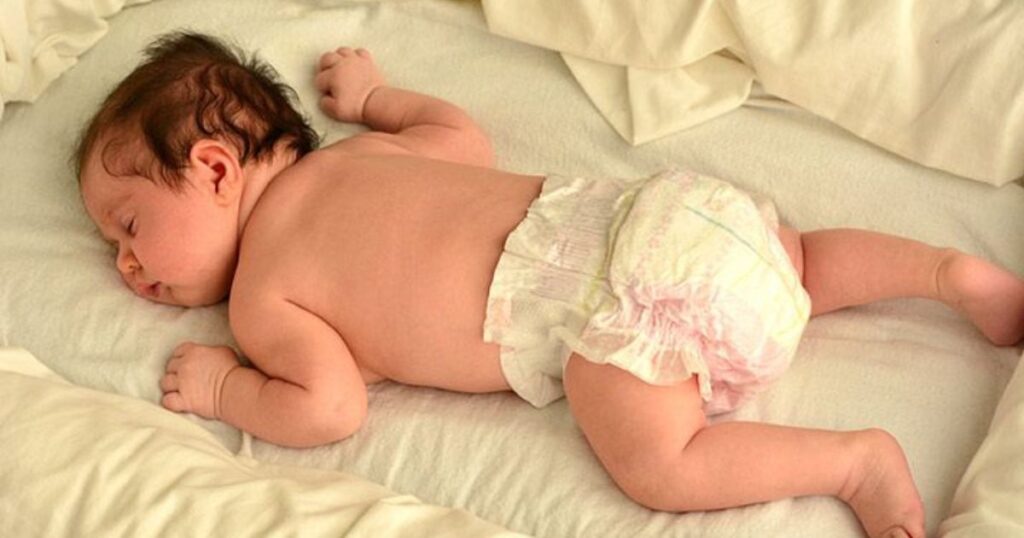

If your baby has just turned 6 months, you may have expected sleep to become easier by now. Instead, you may be watching the clock, wondering whether the next nap should be in 30 minutes or an hour, why yesterday’s schedule worked but today’s doesn’t, or whether your baby is ready to drop a nap.
The good news is that you don’t need a perfect timetable.
At 6 months, your baby is becoming more predictable, but sleep is still influenced by development, feeding, naps, wake windows, and your baby’s individual temperament. The goal of a 6 Month Sleep Schedule is not to make every day identical. Instead, it is to create a flexible rhythm that gives your baby enough sleep while making your days easier to navigate.
A good starting point is the recommended 12–16 hours of total sleep in 24 hours, including naps, for babies between 4 and 12 months. (PubMed Central (PMC))
In this guide, you’ll learn how much sleep your 6-month-old needs, how long wake windows may be, how many naps to expect, what bedtime can look like, and how to adjust your 6 Month Sleep Schedule when your baby’s sleep doesn’t go exactly as planned.

What Does a 6 Month Sleep Schedule Look Like?

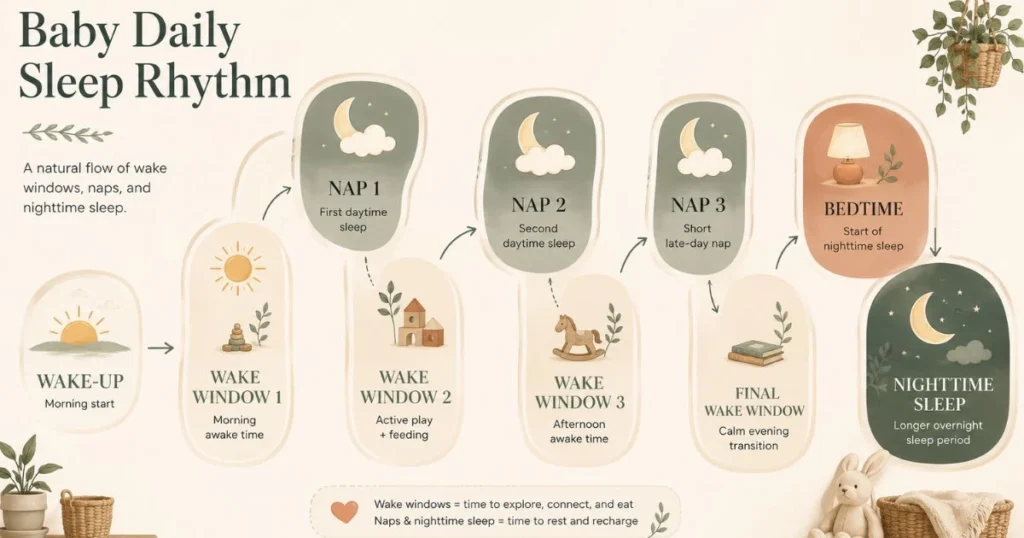
A typical 6 Month Sleep Schedule may include a morning wake-up, two or three daytime naps, and an evening bedtime.
At this age, three naps can still be completely normal. Some babies are starting to handle longer periods of awake time and may begin resisting their third nap, but that doesn’t mean every 6-month-old is ready to switch to two naps.
Here’s an example of how a 6 Month Sleep Schedule with three naps might look:
| Time | Sleep/Routine |
| 7:00 AM | Wake up |
| 9:00 AM | Nap 1 |
| 12:30 PM | Nap 2 |
| 4:00 PM | Nap 3 |
| 7:00 PM | Bedtime |
This is a framework, not a rule.
If your baby wakes at 6:30 AM instead of 7:00, the rest of the day may naturally shift earlier. Likewise, if the first nap lasts only 30 minutes, you may need to adjust the next sleep period rather than sticking rigidly to the original clock time.
Think of the schedule as a map, not a train timetable.
How Much Sleep Does a 6-Month-Old Need?

Before deciding whether your baby’s schedule is working, look at the entire 24-hour period.
The American Academy of Sleep Medicine recommends 12–16 hours of sleep per 24 hours, including naps, for infants from 4 through 12 months. (PubMed Central (PMC))
That doesn’t mean your baby needs exactly the same number of hours every day.
One day might include:
- A longer morning nap
- A short afternoon nap
- Several nighttime wakings
Another day might look completely different.
What matters is the overall pattern.
“If you’re comparing sleep needs across different ages, see our guide to [Baby Sleep Schedule by Age].”
How Much Sleep Should a 6-Month-Old Get at Night?

Many babies at 6 months can sleep for a longer stretch at night, but waking during the night is still normal for some babies.
Your baby may wake due to:
- Hunger
- New developmental milestones
- Teething discomfort
- Illness
- A wet or dirty diaper
- Changes to their usual routine
- Difficulty settling back to sleep between sleep cycles
When following a 6 Month Sleep Schedule, don’t judge your baby’s sleep only by whether they sleep through the entire night. Nighttime waking can still be part of normal infant sleep.
How Much Daytime Sleep Does a 6-Month-Old Need?
Daytime sleep is part of the recommended 24-hour total.
Your baby may take:
- Three naps of varying lengths, or
- Two longer naps as they gradually become ready for a different rhythm.
Instead of worrying about whether every nap lasts a particular number of minutes, look at the combination of daytime sleep + nighttime sleep + your baby’s behavior.
6 Month Wake Windows: How Long Should Your Baby Stay Awake?
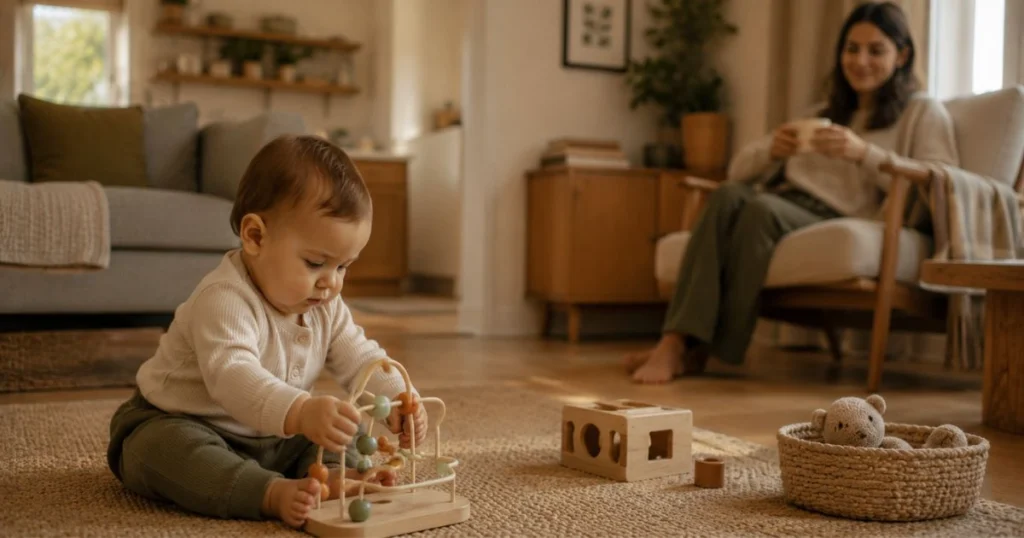
Once you understand total sleep, wake windows become much easier to use.
A wake window is the approximate amount of time your baby remains awake between sleep periods.
For many 6-month-olds, a practical starting range is approximately:
- First wake window: around 2 hours
- Middle wake windows: around 2–2.5 hours
- Final wake window: around 2.5–3 hours
These numbers are commonly used as practical sleep-planning ranges, rather than official medical requirements. Your baby’s cues and response to the schedule should guide your adjustments.
Why Wake Windows Matter More Than a Perfect Clock Schedule
Imagine your baby wakes at 7:00 AM.
You might plan a 9:00 AM nap because the clock says it’s time. But if your baby is already rubbing their eyes, becoming quiet, and losing interest in toys at 8:40, waiting another 20 minutes may not help.
On another day, your baby might still be happily playing at 9:00.
That’s why you can combine:
Clock time + wake window + sleepy cues
rather than relying on any one of them.
How Do You Know If a Wake Window Is Too Short?
Your baby may:
- Happily resist the nap
- Play in the crib
- Take a long time to fall asleep
- Show few signs of tiredness
You may need to give your baby a little more awake time.
How Do You Know If a Wake Window Is Too Long?
Your baby may:
- Become very fussy
- Cry when you try to settle them
- Have difficulty falling asleep
- Take a very short nap
- Seem exhausted rather than calmly sleepy
In that situation, the next sleep period may need to happen sooner.
How Many Naps Should a 6-Month-Old Take?

This is where many parents become confused.
At 6 months, three naps are still common, while some babies are beginning to move toward two.
You don’t need to make the transition simply because your baby reached a particular birthday.
3-Nap Schedule for a 6-Month-Old
A 3-nap day might look like:
- Morning nap
- Midday nap
- Short late-afternoon nap
The third nap is often more of a bridge to bedtime than a long restorative sleep.
For example:
| Sleep Period | Example |
| Nap 1 | 9:00–10:00 AM |
| Nap 2 | 12:30–2:00 PM |
| Nap 3 | 4:00–4:30 PM |
| Bedtime | Around 7:00 PM |
Can a 6-Month-Old Have 2 Naps?
Yes, some babies may gradually move toward a two-nap routine around 6 months, but there is no need to rush the change.
If dropping the third nap leaves your baby very tired or unsettled by bedtime, they may still need that extra sleep period. Keep the 6 Month Sleep Schedule flexible and follow your baby’s sleep cues rather than making the transition based on age alone.
Signs Your Baby May Be Ready to Drop the Third Nap
Look for a consistent pattern, not one difficult day.
Your baby may be ready when:
- The third nap is repeatedly refused.
- Nap 1 and nap 2 are becoming longer and more predictable.
- Your baby comfortably stays awake longer.
- The third nap pushes bedtime too late.
- Your baby remains reasonably content without the late-afternoon nap.
Sample 6 Month Sleep Schedules
Every baby has different sleep needs, so there is no single schedule that works for everyone. These examples show you how the pieces can fit together.
6 Month Sleep Schedule With 3 Naps
| Time | Activity |
| 7:00 AM | Wake |
| 9:00 AM | Nap 1 |
| 12:30 PM | Nap 2 |
| 4:00 PM | Nap 3 |
| 7:00 PM | Bedtime |
This can work well for a baby who still needs three daytime sleep opportunities.
“For a closer look at daytime sleep, see our [Baby Nap Schedule by Age] guide.”

6 Month Sleep Schedule With 2 Naps
| Time | Activity |
| 7:00 AM | Wake |
| 9:30 AM | Nap 1 |
| 1:30 PM | Nap 2 |
| 7:00 PM | Bedtime |
This may suit a baby who can comfortably handle longer wake windows and consistently refuses the third nap.
6 Month Sleep Schedule for an Early Riser
If your baby wakes around 6:00 AM, your day might begin:
| Time | Activity |
| 6:00 AM | Wake |
| 8:00 AM | Nap 1 |
| 11:30 AM | Nap 2 |
| 3:30 PM | Short nap |
| 6:30 PM | Bedtime |
Don’t automatically move every sleep period earlier just because your baby had one early morning. Notice how your baby’s sleep changes over several days.
6 Month Sleep Schedule for a Late Riser
If your baby usually wakes closer to 8:00 AM, you can adjust the nap times to match their natural rhythm.
With a 6 Month Sleep Schedule, there’s no need to force a 7:00 AM wake-up if that timing doesn’t suit your baby’s routine or your family’s daily life.
What Is the Best Bedtime for a 6-Month-Old?

Many babies this age settle well with an evening bedtime, often somewhere around 6:30–8:00 PM.
But bedtime shouldn’t be chosen in isolation.
Consider:
- When your baby woke in the morning
- How long the naps were
- When the final nap ended
- How long your baby has been awake
- Your baby’s sleepy cues
- Your baby’s overall sleep across the day
Is 7 PM a Good Bedtime for a 6-Month-Old?
It can be a good option for some babies.
A 7:00 PM bedtime is simply a helpful starting point, not a fixed rule. As part of your 6 Month Sleep Schedule, you may need to adjust bedtime depending on how the day went.
If your baby had a late afternoon nap, 7:00 PM may be too early. On the other hand, if the last nap was very short and your baby is already tired, an earlier bedtime may be more appropriate.
Signs Bedtime May Be Too Late
You may notice:
- Increasing fussiness
- Difficulty settling
- Crying during the bedtime routine
- Your baby appearing overtired
- A difficult first stretch of nighttime sleep
Signs Bedtime May Be Too Early
Your baby may:
- Happily remain awake after being put down
- Take a long time to fall asleep
- Consistently seem ready to play rather than sleep
Don’t make a major change based on one evening. Look for repeated patterns.
“A predictable evening routine can also make bedtime easier; see our guide to [Baby Bedtime Routine].”
How Long Should a 6-Month-Old Nap?

Nap duration can vary quite a bit from one baby to another and even from one day to the next.
Your 6-month-old might sometimes nap for 90 minutes, while on another day they may wake after just 30 minutes. Both can be normal variations and don’t necessarily mean there is a problem with your 6 Month Sleep Schedule.
What If Your 6-Month-Old Only Takes 30-Minute Naps?
Short naps can be one of the more frustrating parts of caring for a 6-month-old.
Sometimes your baby may wake after one sleep cycle and have difficulty settling back down. If short naps happen often, review a few parts of your 6 Month Sleep Schedule, including:
- Whether the wake window is suitable for your baby
- Whether your baby may have become overtired before the nap
- Whether the sleep space is dark and quiet enough
- Whether you have a consistent pre-nap routine
- Whether your baby has enough time and opportunity to settle again
A single short nap doesn’t necessarily mean that something is wrong. Instead, consider how the nap fits into your baby’s overall 6 Month Sleep Schedule and the amount of sleep they get throughout the day.
What If Your Baby Takes Very Long Naps?
A longer nap isn’t necessarily something you need to shorten.
However, if extended daytime naps consistently make bedtime more difficult, take another look at how sleep is distributed throughout your 6 Month Sleep Schedule. Adjusting the timing or length of daytime sleep may help your baby settle more easily at night.
How to Create a 6 Month Sleep Schedule That Works
Rather than copying another baby’s routine, build your own.
Step 1: Choose a Consistent Morning Start
Your baby’s morning wake-up time can serve as the starting point for the rest of your 6 Month Sleep Schedule.
You don’t need to wake your baby at exactly the same time every morning, but keeping a fairly consistent rhythm can make naps, wake windows, and bedtime easier to plan.
Step 2: Start With Wake Windows
After your baby wakes, consider their typical first wake window.
Then adjust based on how they behave.
“You can also learn more about [Baby Wake Windows by Age] and how they change as your baby grows.”
Step 3: Watch for Sleepy Cues
When following a 6 Month Sleep Schedule, watch for your baby’s early sleepy cues, including:
- Yawning
- Rubbing their eyes
- Staring into space
- Becoming quieter
- Losing interest in toys
- Turning away from stimulation
- Becoming fussy
You may find your baby’s cues easier to recognize when you respond to these early signs instead of waiting until your baby becomes overtired.
Step 4: Adjust the Next Nap According to the Previous One
A 30-minute nap can create a very different afternoon from a 2-hour nap.
Your schedule should respond to what actually happened.
Step 5: Protect Bedtime
The last nap shouldn’t automatically dictate bedtime. Instead, consider when the nap ended and whether your baby needs another appropriate wake period before nighttime sleep.
Step 6: Give Changes Time
Don’t change your entire schedule after one bad nap.
Look for patterns over several days.
6-Month Sleepy Cues vs. Overtiredness
Learning to recognize the difference can make your schedule much easier.
Early Sleepy Cues
Your baby may:
- Slow down during play
- Look away from stimulation
- Become quieter
- Yawn
- Rub their eyes
- Lose interest in toys
These are often easier moments to begin your sleep routine.
Signs Your Baby May Be Overtired
You may see:
- Intense fussiness
- Crying
- Difficulty settling
- Fighting sleep
- Short naps
- Increased irritability
If you repeatedly wait until your baby is exhausted, getting them to sleep can become harder.
6 Month Sleep Schedule and Night Wakings
A good daytime routine can support nighttime sleep, but it doesn’t guarantee that your baby will stop waking.
Night waking can still happen at 6 months.
How Often Is It Normal for a 6-Month-Old to Wake During the Night?
There is no single number that every healthy 6-month-old must meet.
Some babies wake occasionally. Others wake several times.
Night waking can be influenced by:
- Feeding needs
- Development
- Teething
- Illness
- Sleep associations
- Environmental changes
- Daytime sleep
Rather than asking whether your baby wakes “too much,” look at the overall pattern and whether something has changed suddenly.
Why Has My 6-Month-Old Started Waking More Often at Night?
If your baby’s sleep had been improving and suddenly becomes more difficult, think about whether anything has recently changed in your 6 Month Sleep Schedule or daily routine.
Possible reasons include:
- Your baby is working on a new physical or developmental skill.
- Nap times have shifted.
- Teething is causing discomfort.
- Your baby may need more feeding.
- Your baby may be feeling unwell.
- There has been a change in your family’s usual routine.
A temporary sleep disruption doesn’t always mean you need to create a completely new 6 Month Sleep Schedule.
“If your baby’s sleep has suddenly become more difficult, read our detailed guide to [6 Month Sleep Regression].”
6 Month Sleep Regression: Can It Affect Your Baby’s Schedule?
Around 6 months, some parents notice a sudden change in their baby’s sleep and refer to it as a 6 month sleep regression.
Your baby may:
- Wake more frequently during the night
- Resist or refuse naps
- Take shorter daytime naps
- Have more difficulty settling
- Need extra support to fall asleep
Developmental changes can be one reason your baby’s sleep becomes temporarily unsettled.
When sleep suddenly changes, try not to abandon your entire 6 Month Sleep Schedule. Instead, you can:
- Keep your morning wake-up time fairly consistent.
- Continue offering age-appropriate naps.
- Review your baby’s wake windows.
- Maintain a predictable bedtime.
- Give your baby some time to adjust before making another major change.
For a deeper look at the causes, signs, and duration of this stage, your dedicated 6 Month Sleep Regression article can explore the topic in more detail, while this guide focuses on creating a practical 6 Month Sleep Schedule.
A Simple 6 Month Bedtime Routine
A consistent bedtime routine can help your baby understand that it is time to slow down and prepare for nighttime sleep.
You don’t need a complicated routine. A simple sequence can work well:
- Feed your baby.
- Change their diaper.
- Put them in comfortable pajamas or suitable sleepwear.
- Lower the lights.
- Read a short story.
- Sing a gentle song.
- Spend a few quiet moments cuddling.
- Place your baby in their safe sleep space.
The specific activities matter less than keeping the order familiar and consistent. As part of your 6 Month Sleep Schedule, these repeated cues can gradually help your baby transition from active daytime behavior to restful nighttime sleep.
Safe Sleep for a 6-Month-Old
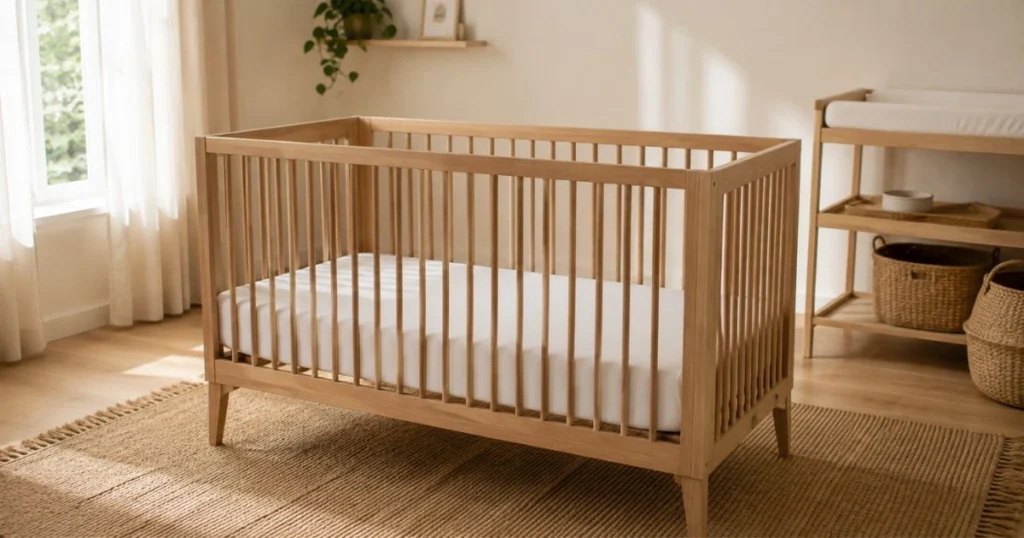
A 6 Month Sleep Schedule can help organize your baby’s day, but safe sleep conditions are just as important as choosing the right nap and bedtime.
The American Academy of Pediatrics recommends placing babies on their backs for every sleep and using a firm, flat, non-inclined sleep surface. Keep the sleep area clear of loose bedding, pillows, stuffed toys, crib bumpers, and other soft items. (American Academy of Pediatrics)
Your baby’s sleep space should include:
- A safe crib, bassinet, or portable play yard designed for infant sleep
- A firm, flat mattress
- A fitted sheet
- No pillows
- No loose blankets
- No stuffed animals
- No crib bumpers
- No inclined sleep products
Following these safe-sleep practices alongside a consistent 6 Month Sleep Schedule can help you create a safer and more comfortable environment for your baby’s naps and nighttime sleep.m with your baby while keeping them in their own sleep space, ideally throughout the first 6 months. (Publications AAP)
“For more guidance, see our complete [Newborn Safe Sleep] guide.”
What About Rolling at 6 Months?
Always put your baby down on their back for every sleep.
If your baby can independently roll from back to stomach and stomach to back, the AAP says you do not need to repeatedly reposition them after they move themselves, provided the sleep environment remains clear. (Publications AAP)
Why Your 6-Month-Old’s Sleep Routine May Not Always Go as Planned
Sometimes you can follow every recommendation and still have a baby who sleeps differently from the schedule you planned.
That’s normal.
Sleep can be affected by:
- Developmental changes
- Teething
- Illness
- Feeding
- Short naps
- Changing wake windows
- Transitioning from three naps toward two
- Travel
- Visitors
- Changes in your family’s routine
- An unfamiliar sleep environment
Your baby’s schedule doesn’t have to resemble another baby’s schedule to be a good one.
10 Common 6 Month Sleep Schedule Mistakes
If your baby’s sleep isn’t going smoothly, check whether you’re making one of these common mistakes:
- Treating the schedule like a strict timetable
- Stretching wake windows too aggressively
- Dropping the third nap too early
- Letting the final nap run too late
- Changing bedtime every night
- Ignoring early sleepy cues
- Expecting every nap to have the same length
- Assuming every night waking means something is wrong
- Comparing your baby with another baby
- Focusing on one nap instead of total 24-hour sleep
A helpful change is to focus less on whether your baby follows the schedule perfectly.
Instead, consider whether your baby’s routine is providing the amount of sleep they need.
How to Troubleshoot Your 6 Month Sleep Schedule
My 6-Month-Old Fights Every Nap
Review the timing first.
Ask yourself:
- Is the wake window too short?
- Is your baby overtired?
- Is the room too stimulating?
- Has the third nap become difficult?
- Is your baby showing sleepy cues before you start the nap?
My Baby Only Sleeps for 30 Minutes
Consider your baby’s overall sleep routine instead of assuming the nap is the main issue.
Check:
- Wake-window timing
- Sleep environment
- Overtiredness
- Whether your baby has an opportunity to resettle
My Baby Takes Forever to Fall Asleep at Bedtime
Look at:
- The final wake window
- The timing of the last nap
- Total daytime sleep
- The bedtime routine
If your baby is consistently wide awake at bedtime, the schedule may need adjusting.
My 6-Month-Old Wakes Every 2 Hours
Frequent nighttime waking isn’t always caused by your 6 Month Sleep Schedule.
Your baby may wake for different reasons, such as hunger, illness, discomfort, developmental changes, or difficulty settling back to sleep.
If frequent waking continues or you’re concerned about your baby’s health, feeding, breathing, or growth, speak with your pediatrician for personalized advice.
My Baby Wakes at 5 AM
Before moving bedtime much earlier, take a closer look at your baby’s overall 6 Month Sleep Schedule, including:
- Total daytime sleep
- The timing of the final nap
- Current bedtime
- The sleep environment
- Your baby’s overall sleep pattern
An occasional 5 AM wake-up is different from a consistent pattern of waking unusually early. Look at what happens over several days before making a major change to the routine.
When to Talk to Your Baby’s Pediatrician About Sleep
Most changes in infant sleep are not necessarily a sign that something is wrong, but certain situations should be discussed with your baby’s pediatrician.
Seek professional advice if sleep concerns occur alongside:
- Difficulty breathing during sleep
- Persistent or loud snoring
- Feeding difficulties
- Concerns about your baby’s growth
- Ongoing or significant discomfort
- Unusual tiredness or lethargy
- A sudden, unexplained change in behavior or overall health
Your pediatrician can help determine whether the sleep changes are part of normal development or whether an underlying medical or developmental issue may be affecting your baby’s 6 Month Sleep Schedule.
6 Month Sleep Schedule FAQs
What Does a Healthy 6-Month Sleep Schedule Look Like?
A healthy 6 Month Sleep Schedule should provide enough total sleep while creating a steady rhythm of morning wake-up time, naps, and bedtime. Many babies still take three naps at this age, while others may gradually begin transitioning to two.
How Many Naps Should a 6-Month-Old Take?
Many 6-month-olds take three naps, while some are beginning to transition toward two. Follow your baby’s consistent sleep patterns rather than dropping a nap solely because of age.
What Are the Best Wake Windows for a 6-Month-Old?
A practical starting point is around 2 hours in the morning, 2–2.5 hours during the day, and up to about 2.5–3 hours before bedtime. These are flexible ranges, not strict medical requirements.
When Is the Right Bedtime for Your 6-Month-Old?
Many babies do well with an evening bedtime, often around 6:30–8:00 PM. The best time depends on your baby’s morning wake-up, naps, final wake window, and overall sleep needs.
How Much Sleep Does a 6-Month-Old Need?
Babies from 4 to 12 months are recommended to get 12–16 hours of sleep per 24 hours, including naps. (PubMed Central (PMC))
Is 3 Naps Too Many for a 6-Month-Old?
No. Three naps can still be appropriate at 6 months. If your baby consistently refuses the third nap and comfortably stays awake longer, you may eventually see signs that a two-nap schedule is becoming more suitable.
Should a 6-Month-Old Sleep Through the Night?
Not necessarily. Night waking can still occur at 6 months. Your baby may wake for feeding, comfort, developmental reasons, or because of discomfort.
Why Has My 6-Month-Old Started Waking Up More During the Night?
A sudden shift in your baby’s sleep may be linked to developmental changes, feeding needs, teething, illness, nap adjustments, or other disruptions. Before changing your entire 6 Month Sleep Schedule, take a step back and consider your baby’s overall sleep pattern.
Is a 30-Minute Nap Enough for a 6-Month-Old?
A 30-minute nap on its own doesn’t necessarily indicate a problem. When evaluating your 6 Month Sleep Schedule, consider your baby’s other naps, nighttime sleep, total sleep over 24 hours, and overall mood instead of focusing on one short nap.
When Should a 6-Month-Old Drop the Third Nap?
There’s no universal date. Look for repeated signs such as consistently refusing the third nap, comfortably handling longer wake periods, and having enough daytime sleep from the first two naps.
“For more guidance on changing nap patterns, see our [Baby Nap Schedule] guide.”
Conclusion: Your 6 Month Sleep Schedule Doesn’t Have to Be Perfect
Creating a 6 month sleep schedule isn’t about getting your baby to sleep at exactly the same times every day.
It’s about finding a rhythm that works.
Your baby may have a wonderful nap day on Monday and a completely unpredictable one on Tuesday. A growth spurt, a new developmental skill, teething, illness, or simply a different mood can change the day.
That’s why the most useful schedule is flexible.
Focus on the bigger picture:
- Aim for 12–16 hours of total sleep in 24 hours, including naps. (PubMed Central (PMC))
- Use wake windows as a guide rather than a rigid rule.
- Watch your baby’s sleepy cues.
- Don’t rush the transition from three naps to two.
- Keep bedtime predictable when possible.
- Prioritize safe sleep every time.
- Look at patterns over several days instead of reacting to one difficult nap.
And most importantly, don’t measure your parenting by whether your baby’s sleep looks perfect on paper.
The best 6 month sleep schedule is the one that gives your baby enough rest and gives you a routine you can realistically live with.
If your baby’s current schedule isn’t working, start with one small adjustment—such as slightly changing a wake window or bedtime—and give your baby time to respond.You can make small changes instead of trying to change the whole schedule at once.