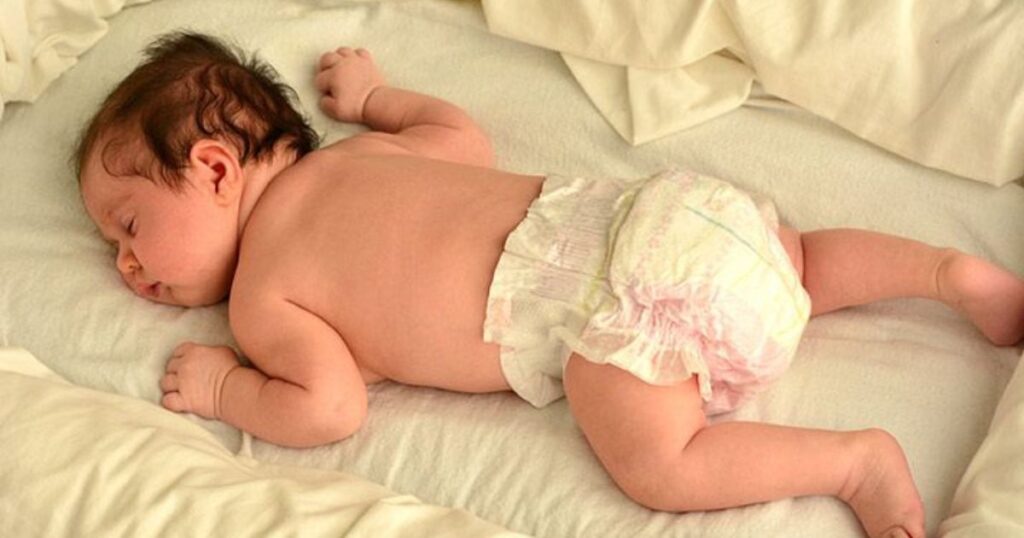

Your baby has reached the one-year mark, and sleep may suddenly feel different. Some 1-year-olds are happily taking two naps, while others are starting to resist the second nap and moving toward one longer midday nap.
At this age, there isn’t one perfect 1 year old sleep schedule that works for every child. Your goal is to create a predictable rhythm that gives your child enough daytime sleep, an age-appropriate bedtime, and plenty of overnight sleep.
The biggest challenge is often knowing whether your 12-month-old is actually ready for one nap or simply going through a temporary period of nap resistance.
If you’re looking for a broader overview of sleep patterns across infancy, see our Baby Sleep Schedule by Age guide.

1 Year Old Sleep Schedule at a Glance
A typical 1-year-old needs around 11–14 hours of total sleep in 24 hours, including nighttime sleep and naps. Understanding these sleep needs can help you create a 1 Year Old Sleep Schedule that supports your child’s overall rest.
Many 12-month-olds still follow a two-nap schedule, while others are beginning the transition to one nap.
| Sleep | Typical amount |
| Total sleep | 11–14 hours |
| Nighttime sleep | Around 10–12 hours |
| Daytime sleep | Around 1.5–3 hours |
| Naps | 1–2 naps |
| Wake windows | Usually around 3–5 hours |
These are general ranges rather than strict rules. Your child’s individual sleep needs, temperament, activity level, and developmental stage all matter.
What Does a 1 Year Old Sleep Schedule Look Like?
At 12 months, your 1 Year Old Sleep Schedule usually revolves around three main parts of the day:
- Morning wake-up
- Daytime naps
- Bedtime
A child who still needs two naps may have a morning nap and an afternoon nap. A child beginning the transition to one nap may gradually move toward a longer midday nap.
Sample 1-Year-Old 2-Nap Schedule
If your child isn’t ready for one nap yet, you could try:
| Time | Activity |
| 7:00 AM | Wake up |
| 10:00 AM | Morning nap |
| 11:00 AM | Wake up |
| 2:30 PM | Afternoon nap |
| 3:30 PM | Wake up |
| 7:30 PM | Bedtime |
This gives your child two daytime sleep opportunities while leaving enough awake time before nighttime sleep as part of a balanced 1 Year Old Sleep Schedule.
You don’t need to follow these exact times. If your child wakes at 6:30 AM, for example, the rest of the schedule can shift earlier to match their natural rhythm.
Sample 1-Year-Old 1-Nap Schedule
If your child is ready to transition to one nap, a schedule might look like:
| Time | Activity |
| 7:00 AM | Wake up |
| 12:00 PM | Nap |
| 2:00 PM | Wake up |
| 7:00 PM | Bedtime |
The transition doesn’t usually happen overnight. Your child may need two naps on some days and one nap on others while adjusting.
How Much Sleep Does a 1-Year-Old Need?

Most children between 1 and 2 years old need approximately 11–14 hours of sleep over a 24-hour period, including naps.
These recommendations are consistent with the American Academy of Sleep Medicine’s recommended sleep duration for children.
For example, your child might sleep:
- 11 hours at night + 2 hours during the day
- 10.5 hours at night + 2.5 hours during the day
- 12 hours at night + 1.5 hours during the day
What matters most is the overall pattern rather than whether your child reaches an exact number every day.
Some toddlers naturally need more sleep, while others function well toward the lower end of the range.
How Many Naps Should a 1-Year-Old Take?

One of the biggest questions parents have at 12 months is whether their child should still be taking two naps.
The answer is: it depends.
Many 12-month-olds are still comfortable with two naps, while others are beginning to resist one of their naps and gradually move toward a single midday nap. Your 1 Year Old Sleep Schedule should reflect your child’s individual sleep needs rather than follow a strict rule.
Being exactly 12 months old doesn’t automatically mean your child should drop to one nap.
If you want to compare nap patterns across different ages, see our Baby Nap Schedule: A Complete Guide by Age.
Signs Your 1-Year-Old May Still Need Two Naps
Your child may not be ready for one nap if their 1 Year Old Sleep Schedule still works well with two daytime sleep periods:
- They become very tired before lunchtime.
- They consistently sleep well during both naps.
- They become extremely cranky when a nap is skipped.
- They struggle to stay awake for a longer morning wake window.
- Dropping the second nap causes bedtime to become extremely difficult.
- Nighttime sleep becomes worse when daytime sleep is reduced.
If your child is sleeping well with two naps, there’s usually no reason to rush the transition. A 1 Year Old Sleep Schedule can continue with two naps until your toddler shows consistent signs of being ready for a change.
Is Your 1-Year-Old Ready for One Nap?
The move from two naps to one often takes place during the second year, but every child reaches this stage at a different time. Your 1 Year Old Sleep Schedule may begin to change as your toddler becomes able to stay awake for longer periods.
Around 12 months, some children may show early signs that their nap needs are changing.
Look for a consistent pattern, rather than reacting to a few difficult nap days.
Your child may be ready to move toward one nap if:
- They regularly refuse the morning nap.
- The first nap lasts long enough to push the second nap too late.
- They can comfortably stay awake until around midday.
- They continue sleeping well at night.
- Their midday nap becomes longer when the morning nap is removed.
- They can handle a longer morning wake period without becoming overtired.
A few days of nap refusal doesn’t necessarily mean your child is ready for the transition. Developmental changes, teething, illness, travel, or changes in routine can temporarily affect naps and make your 1 Year Old Sleep Schedule seem different.
How to Transition From 2 Naps to 1

If your 1-year-old seems ready to move to one nap, make the change gradually rather than changing the entire 1 Year Old Sleep Schedule at once.
Instead of suddenly removing the morning nap, slowly move it later.
For example:
Old schedule:
10:00 AM nap
2:30 PM nap
You could gradually shift the first nap:
10:30 AM → 11:00 AM → 11:30 AM → 12:00 PM
Over time, the morning nap can become a longer midday nap.
During the transition, you may need an earlier bedtime on days when your child’s nap is short. This can help your toddler catch up on missed daytime sleep without becoming overtired.
Remember, a tired toddler doesn’t necessarily need a later bedtime. In some cases, an earlier bedtime can help prevent overtiredness and support a more consistent 1 Year Old Sleep Schedule.
If your child is still struggling with naps during this stage, our Toddler Nap Schedule guide can help you compare different daily nap patterns.
1 Year Old Wake Windows
Wake windows describe the amount of time your child is awake between sleep periods.
At one year old, wake windows are generally much longer than they were during infancy.
A 1-year-old on two naps may tolerate approximately 3–4 hours of awake time between sleeps, while a child moving toward one nap may gradually handle longer stretches of awake time.
For example:
Two-nap day:
7:00 AM wake
10:00 AM nap
2:30 PM nap
7:30 PM bedtime
One-nap day:
7:00 AM wake
12:00 PM nap
7:00 PM bedtime
Use your child’s behavior as a guide rather than treating wake windows as a stopwatch.
For a detailed look at age-based wake windows, see our Baby Wake Windows by Age guide.
Signs Your Child May Be Ready for Sleep
Your child may show sleepy cues such as:
- Yawning
- Rubbing their eyes
- Becoming quieter
- Losing interest in activities
- Increased fussiness
- Wanting to be held
- Staring or zoning out
However, toddlers don’t always show obvious signs of tiredness. Some children may actually become more energetic, playful, or silly when they’re getting tired.
That’s why it’s helpful to consider both your child’s behavior and how long they’ve been awake when planning your 1 Year Old Sleep Schedule.
What Time Should a 1-Year-Old Go to Bed?
Many 1-year-olds do well with a bedtime somewhere around 7:00–8:00 PM, depending on their morning wake-up time and naps.
For example, if your child wakes at 7:00 AM and takes one midday nap, a 7:00 PM bedtime may work well.
If your child wakes at 6:00 AM, bedtime may need to be earlier.
Don’t choose bedtime based only on the clock. Consider:
- Morning wake time
- Nap length
- Time of the last nap
- Your child’s sleep cues
- How easily your child falls asleep
- Nighttime waking
- Early morning waking
A very late bedtime doesn’t necessarily lead to a later morning. In some children, it can contribute to overtiredness and more disrupted sleep.
What Time Should a 1-Year-Old Wake Up?

There is no single correct wake-up time for every toddler.
Many families build their 1 Year Old Sleep Schedule around a morning wake time between approximately 6:00 and 8:00 AM.
The important thing is maintaining a consistent rhythm.
If your child usually wakes at 6:30 AM, you can plan naps and bedtime around that natural wake-up time rather than trying to force a 7:30 AM start to the day.
Why Is My 1-Year-Old Fighting Naps?
Nap resistance is very common around this stage.
Your child is becoming more mobile, curious, and independent. New skills such as walking, climbing, and communicating can make sleep feel less appealing.
Before deciding to drop a nap, consider other possible causes.
Your child may resist a nap because:
- The wake window is too short.
- The wake window is too long.
- The nap is scheduled too late.
- The first nap is pushing the afternoon nap too late.
- Your child is going through a developmental change.
- The sleep environment is distracting.
- Your child needs a more consistent pre-nap routine.
If nap refusal happens only occasionally, there’s usually no need to change the entire 1 Year Old Sleep Schedule.
Why Is My 1-Year-Old Waking at Night?
A 1-year-old may wake during the night for many different reasons.
Common possibilities include:
- Developmental changes
- Separation anxiety
- Teething discomfort
- Illness
- Changes in routine
- An inconsistent 1 Year Old Sleep Schedule
- Too much or too little daytime sleep
- Difficulty settling back to sleep
Before changing the entire routine, look for patterns in your child’s sleep.
If your child suddenly starts waking several times after previously sleeping well, consider whether another part of their routine or environment has recently changed.
Why Is My 1-Year-Old Waking Too Early?
Early morning waking can be frustrating, especially when you’re already tired.
First, look at your child’s entire 24-hour sleep pattern and consider whether the 1 Year Old Sleep Schedule is balanced.
Ask yourself:
- Is bedtime too early?
- Is bedtime too late?
- Is the last nap ending too late?
- Is daytime sleep excessive?
- Is my child going to bed overtired?
- Is the room bright or noisy in the morning?
- Is my child consistently waking at the same time?
Avoid immediately assuming that an early wake-up means your child needs a later bedtime.
The best solution depends on what is causing the early waking and how the rest of your child’s 1 Year Old Sleep Schedule is structured.
What If Your 1-Year-Old Takes a Very Long Nap?
A long nap isn’t automatically a problem.
If your child sleeps well at night, wakes happily, and follows a healthy overall pattern, there’s usually no need to worry about an occasional long nap.
However, if a long afternoon nap consistently causes bedtime to become very late or difficult, you may need to adjust the nap timing within your 1 Year Old Sleep Schedule.
Look at the whole day’s sleep, rather than focusing on one nap.
A Simple 1-Year-Old Bedtime Routine
A predictable bedtime routine can help your child understand that sleep is approaching and make your 1 Year Old Sleep Schedule easier to follow.
You could use a routine such as:
- Dinner
- Quiet play
- Bath or wash-up
- Pajamas
- Brush teeth
- Books
- Cuddles
- Into bed
The routine doesn’t have to be long.
What matters is that it is calm, predictable, and repeated consistently.
Try to avoid turning bedtime into a long negotiation. At this age, your child may already be testing boundaries and expressing strong preferences.
A simple routine gives them predictability while still allowing you to maintain reasonable limits.
For more ideas on creating a predictable bedtime routine, see our Toddler Bedtime Routine guide.
The American Academy of Pediatrics also recommends keeping a regular daily routine and consistent bedtime habits to support healthy sleep.
How to Adjust Your 1-Year-Old’s Sleep Schedule
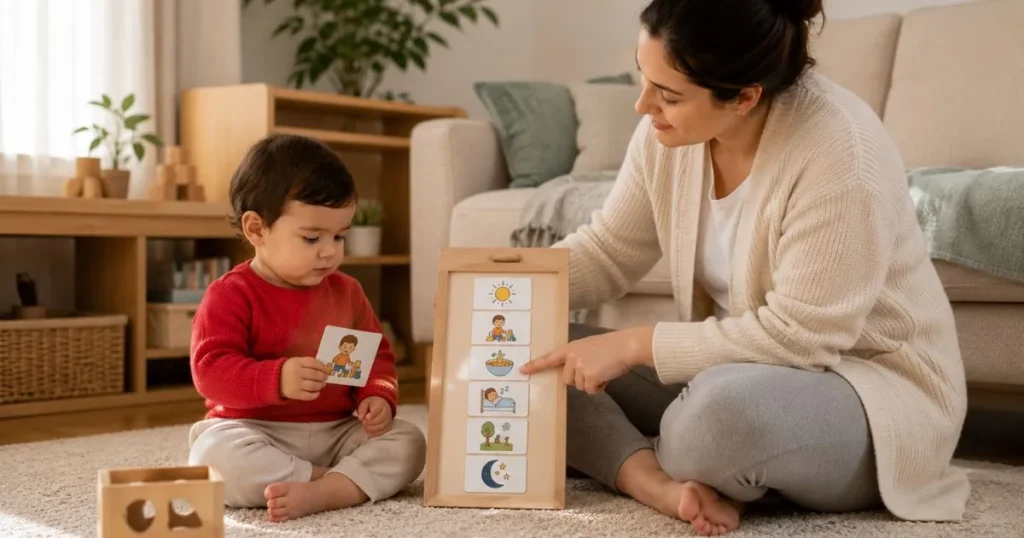
You don’t need to completely rebuild your child’s routine every time sleep changes.
Make small adjustments.
If Your Child Is Refusing the First Nap
Try gradually moving the nap later by 10–15 minutes every few days.
If the Second Nap Is Becoming Difficult
Look at whether the first nap is too long or too late.
If Your Child Is Overtired Before Bed
Consider an earlier bedtime, especially on a short-nap day.
If Bedtime Is Taking Too Long
Check whether your child is getting too much daytime sleep or whether the last wake window is too short.
If Your Child Is Waking Very Early
Look at bedtime, daytime sleep, the sleep environment, and the consistency of the morning routine before making a major change.
1 Year Old Sleep Schedule: 2 Naps vs. 1 Nap
There is no competition between a one-nap and two-nap schedule.
The right schedule is the one that matches your child’s current sleep needs.
| Two-nap schedule | One-nap schedule |
| Better for children still needing substantial daytime sleep | Better for children ready for longer awake periods |
| Morning + afternoon nap | One longer midday nap |
| Shorter wake windows | Longer wake windows |
| Common around 12 months | Often develops later as toddlers mature |
| Bedtime depends on second nap | Bedtime depends heavily on midday nap |
If your 12-month-old is sleeping well on two naps, you don’t need to rush into a one-nap routine simply because they turned one.
What If Your 1-Year-Old’s Schedule Changes Every Day?
Some flexibility is normal, especially when following a 1 Year Old Sleep Schedule.
A toddler’s routine may change because of:
- Daycare
- Family activities
- Travel
- Appointments
- Illness
- Short naps
- Developmental changes
Try to keep the major anchors relatively consistent:
Morning wake → nap → bedtime
You don’t need every sleep period to happen at exactly the same minute.
A predictable rhythm is often more realistic than a rigid schedule for a 1-year-old.
When to Talk to Your Child’s Doctor
If you’re concerned about your child’s sleep, talk with their pediatrician.
It’s especially worth discussing persistent sleep problems, significant snoring or breathing difficulties during sleep, unusual nighttime behaviors, or concerns about your child’s overall development, growth, or daytime functioning.
Sleep needs can vary considerably between children, so your child’s healthcare professional can help you determine whether your 1 Year Old Sleep Schedule needs adjustment or whether a sleep concern requires further evaluation.
1 Year Old Sleep Schedule FAQs
How many hours should a 1-year-old sleep?
Most children from 1 to 2 years old need around 11–14 hours of total sleep in 24 hours, including naps.
Should a 1-year-old take one or two naps?
Either can be appropriate. Many 12-month-olds still take two naps, while some are beginning to transition toward one. Your child’s behavior and sleep pattern are more useful than age alone.
What time should a 1-year-old go to bed?
A bedtime around 7:00–8:00 PM works well for many families, but the ideal time depends on your child’s wake-up time, naps, and individual sleep needs.
How long should a 1-year-old nap?
A 1-year-old may sleep for roughly 1.5–3 hours during the day, divided into one or two naps. Individual needs vary.
When should a 1-year-old transition to one nap?
There is no exact age when every child should transition to one nap. Instead, look for consistent signs that your child can comfortably stay awake until midday and no longer seems to need the morning nap as part of their 1 Year Old Sleep Schedule.
Why is my 1-year-old suddenly waking at night?
Night waking can happen because of developmental changes, separation anxiety, teething, illness, changes in routine, or difficulty settling back to sleep. When adjusting your 1 Year Old Sleep Schedule, look for patterns rather than assuming the schedule is always the cause.
Should I wake my 1-year-old from a nap?
Not necessarily. If naps are supporting good nighttime sleep, there’s often no reason to wake your child. However, if a long or late nap consistently interferes with bedtime, adjusting the nap within your 1 Year Old Sleep Schedule may help.
The Bottom Line
Your 1 Year Old Sleep Schedule doesn’t need to look perfect to support healthy sleep.
At this age, your child may still need two naps, may be beginning the transition to one nap, or may move between the two depending on the day. Instead of following a schedule based purely on age, pay attention to your child’s sleep needs, wake periods, nap quality, and nighttime sleep.
Start with a predictable morning, age-appropriate naps, a calm bedtime routine, and a consistent bedtime. Then make small adjustments to your 1 Year Old Sleep Schedule when your child’s sleep patterns change.
The goal isn’t to create a routine that works perfectly every day. It’s to build a flexible rhythm that helps your 1-year-old get the sleep they need while making your days more predictable.