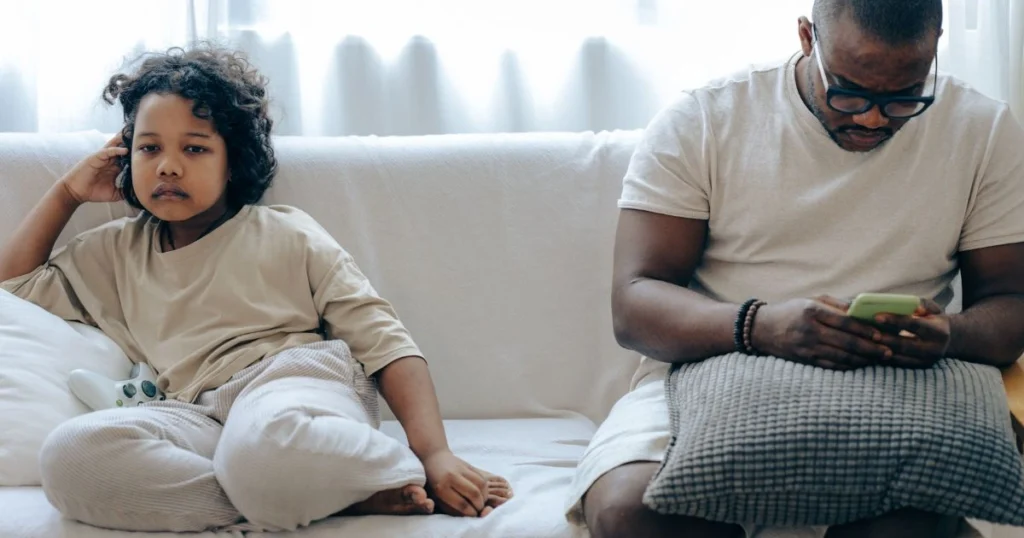
Parenting does not require being available every minute of the day. Every parent gets tired, distracted, overwhelmed, or simply needs time alone. There is an important difference, though, between occasionally being unavailable and consistently being emotionally or practically absent from a child’s life.
Uninvolved parenting describes a pattern in which a parent provides little emotional responsiveness and limited guidance, supervision, or involvement. A child may have food, clothing, and a safe place to sleep while still experiencing a lack of emotional connection, encouragement, boundaries, or age-appropriate support.
This can be difficult to recognize, particularly because uninvolved parenting does not always look dramatic from the outside. There may be no obvious conflict or harsh discipline. Instead, the child may quietly learn that their feelings are not important, their achievements do not need to be noticed, and difficult problems are theirs to solve alone.
Understanding uninvolved parenting is not about labeling parents as “bad.” There are many reasons a parent may become emotionally distant, including exhaustion, depression, financial stress, relationship problems, a lack of parenting knowledge, or patterns learned during their own childhood.
The encouraging part is that parenting patterns can change. A parent who recognizes emotional distance can begin rebuilding connection through small, consistent actions.
What Is Uninvolved Parenting?
Uninvolved parenting, sometimes called neglectful or rejecting-neglecting parenting, is generally described as low responsiveness combined with low demandingness. In other words, the parent provides relatively little emotional warmth and relatively little structure, monitoring, or guidance.
The parenting-style framework developed from the work of psychologist Diana Baumrind and later expanded by researchers describes parenting along dimensions such as responsiveness and demandingness. Authoritative parenting combines relatively high warmth with appropriate expectations and boundaries. Uninvolved parenting sits at the opposite end, with low levels of both responsiveness and demandingness.
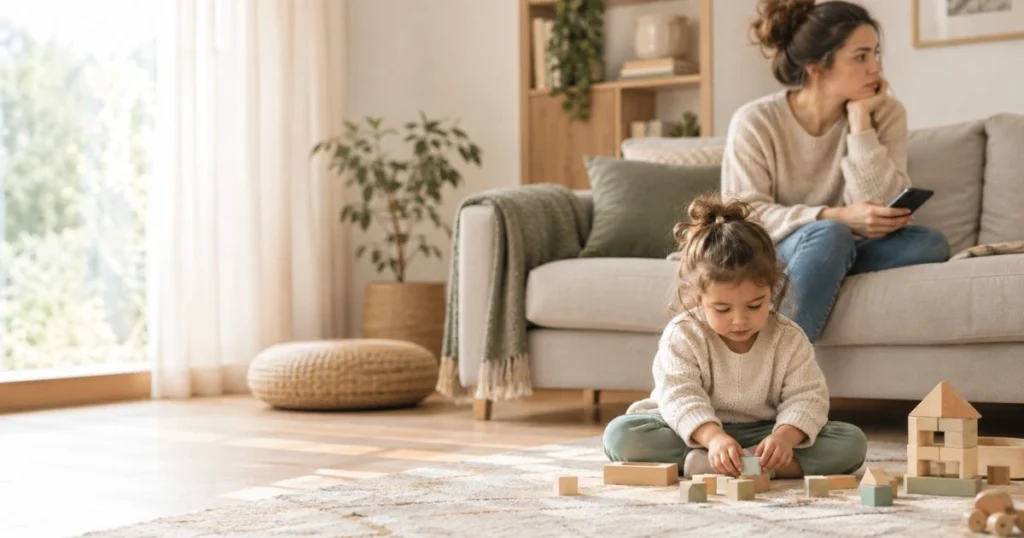
That distinction matters because uninvolved parenting is not simply the same thing as being permissive.
A permissive parent may be highly affectionate and emotionally available but have difficulty setting limits. An authoritarian parent, by contrast, may establish many rules and expectations while providing less warmth. An uninvolved parent tends to provide neither consistent emotional connection nor consistent guidance.
For example, an uninvolved parent might rarely ask a child how school went, show little interest in the child’s friendships, and leave the child to make decisions that require adult guidance.
Uninvolved Parenting vs. Child Neglect
These concepts are connected, but they are not necessarily interchangeable.
Child neglect has legal and professional definitions that differ depending on the jurisdiction. It may involve failing to meet a child’s essential physical, medical, educational, or emotional needs. The Centers for Disease Control and Prevention recognizes neglect as a form of child maltreatment that can affect a child’s physical and emotional well-being both in the short and long term.
By comparison, Uninvolved Parenting is generally used to describe a particular pattern of parenting behavior.
This means a child may experience emotional disconnection even when their basic physical needs are being met. A parent might provide meals, clothing, and shelter but rarely offer comfort, listen to concerns, celebrate accomplishments, or help the child work through difficult situations.
Physical care is only one part of what children need. They also benefit from dependable relationships where they feel noticed, supported, guided, and emotionally secure.
Why Does Uninvolved Parenting Happen?
There is usually no single reason why a parent becomes emotionally distant. Recognizing the factors behind Uninvolved Parenting can help families address the issue with understanding rather than blame.

1. Intergenerational Parenting Patterns
Some parents unknowingly repeat the patterns they experienced during childhood.
When affection and emotional support were uncommon at home, a parent may grow up without a strong example of how to build emotional closeness with a child. They may deeply love their child but find it difficult to express affection, discuss feelings, or provide reassurance.
A parent might think:
“My parents didn’t talk about emotions with me, and I turned out okay.”
Without realizing it, they may carry those same patterns into their own family, creating emotional distance that can contribute to Uninvolved Parenting.
However, childhood experiences do not determine how someone will parent. With awareness, support, and practice, parents can learn healthier ways to connect and create a more emotionally supportive home.
2. Chronic Stress and Overload
Financial worries, demanding jobs, relationship problems, limited childcare, unstable housing, and ongoing household demands can leave a parent with very little emotional energy.
A parent may be physically close to their child while their attention is somewhere else.
They might spend the evening responding to work messages, thinking about finances, managing relationship tensions, or simply trying to recover from exhaustion. When this happens repeatedly, a child may begin to experience that lack of attention as emotional distance.
Experiencing stress does not automatically mean a parent practices Uninvolved Parenting. However, ongoing stress can make it much more difficult to remain emotionally available and consistently responsive to a child’s needs.
3. Depression and Other Mental Health Challenges
Depression can affect motivation, energy, concentration, and social engagement. A parent who is struggling may find everyday activities such as playing, talking, comforting, or maintaining routines much more difficult than they may appear from the outside. When these challenges persist, they can sometimes contribute to Uninvolved Parenting.
Postpartum depression and other mental health difficulties after childbirth can also make bonding and daily caregiving more challenging.
For this reason, it is important not to view every sign of emotional distance as intentional rejection. In some situations, the parent may need support and professional help while also working to meet their child’s emotional needs.
4. Lack of Parenting Knowledge
Not every parent grows up learning how children develop emotionally, which can sometimes contribute to Uninvolved Parenting without the parent fully recognizing it.
A parent may genuinely believe that encouraging independence means leaving a child to solve most problems alone. Another may assume that children should be able to manage their emotions without much reassurance or support.
Learning about child development can help parents reconsider these assumptions and better understand what children need at different stages.
Children gradually develop independence through age-appropriate opportunities and support. Having a dependable adult to turn to can help build confidence and independence rather than expecting a child to manage everything alone.
5. Avoiding Conflict
Some parents distance themselves because they worry that getting involved could lead to anger or harsh reactions.
They may think:
“If I don’t get involved, I can avoid losing my temper.”
Avoiding a harsh response is important, but emotional withdrawal can sometimes contribute to Uninvolved Parenting and is not the only way to handle difficult moments. Parents can learn to pause, manage their own emotions, and set calm, consistent boundaries while remaining connected to their child.
Signs of Uninvolved Parenting
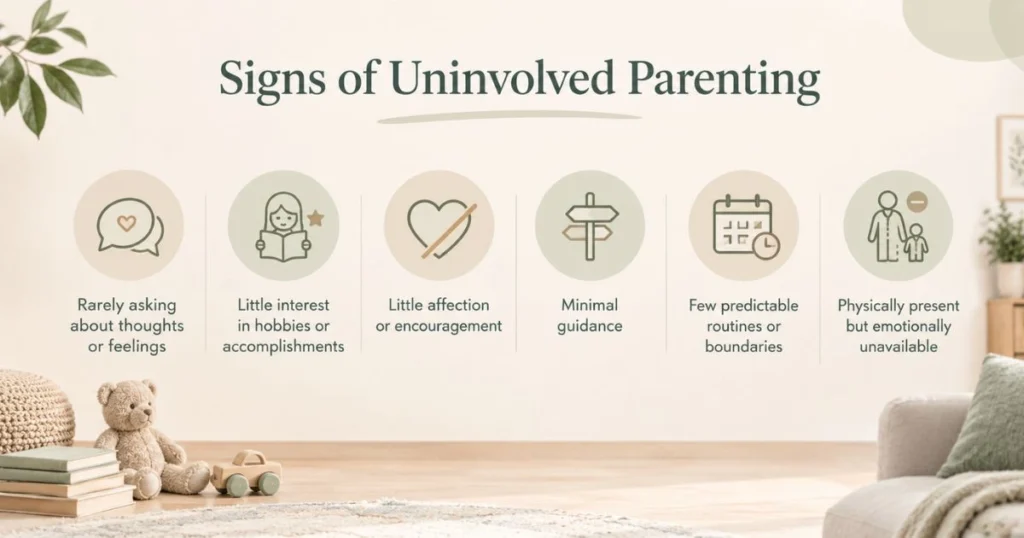
One isolated behavior does not necessarily mean a parent practices Uninvolved Parenting. Parents have difficult days, and family routines or communication can sometimes break down temporarily.
The greater concern is when these behaviors become a persistent pattern.
Possible signs include:
- Rarely asking about a child’s thoughts, feelings, or experiences
- Showing little interest in the child’s hobbies, activities, or accomplishments
- Frequently dismissing or overlooking emotional needs
- Offering little affection, encouragement, or reassurance
- Providing minimal guidance when a child faces a problem
- Rarely creating predictable routines or age-appropriate expectations
- Leaving children to make decisions they are not developmentally ready to handle
- Being physically present while remaining consistently emotionally unavailable
- Showing little awareness of a child’s friendships, school experiences, or everyday life
- Expecting an older child to take on responsibilities that should remain with adults
What matters most is whether these behaviors happen regularly rather than occasionally.
Instead of focusing on one difficult moment, ask:
“Is this a typical experience for the child in their relationship with the parent?”
How Uninvolved Parenting May Appear at Different Ages
The signs can change as children grow.
During Infancy
Babies rely on their caregivers for basic physical care and support as they learn to manage their emotions. In Uninvolved Parenting, a concerning pattern may involve consistently showing little interest in holding, soothing, talking to, or responding to a baby’s cues. The parent may regularly leave feeding, comforting, or everyday interaction to another caregiver without taking an active role themselves.
This is different from occasionally asking a trusted adult to help with caregiving. Sharing responsibilities can be healthy and beneficial for both the parent and child. The concern is a persistent pattern of withdrawal or limited emotional involvement in the relationship.
During the Toddler and Preschool Years
Young children naturally look to adults for attention, encouragement, and connection.
“Look at my picture!”
“Watch me jump!”
“Mommy, come see!”
With Uninvolved Parenting, a child’s attempts to share excitement or seek attention may often receive little response. Over time, the child may stop expecting the parent to notice or engage with these everyday moments.
A consistently uninvolved parent may also provide limited structure around meals, sleep, safety, or daily routines.
Young children still need clear, age-appropriate boundaries because they are developing self-control and are not yet ready to manage important decisions independently.
During School-Age Childhood
An Uninvolved Parenting pattern may become more noticeable as children become more independent and spend more time at school and with friends.
The parent may rarely ask about homework, friendships, worries, accomplishments, or conflicts. They may also have limited awareness of what their child enjoys, finds difficult, or needs help with.
When problems arise, the child may hear messages such as:
“Figure it out yourself.”
Encouraging children to solve age-appropriate problems can help them develop confidence and independence. However, consistently withholding guidance or support may leave a child feeling that there is little point in turning to their parent when they need help.
During Adolescence
Teenagers naturally need more freedom as they grow, but independence does not mean a parent becomes absent. Healthy adolescent independence still includes appropriate communication, supervision, expectations, and emotional support.
With Uninvolved Parenting, there may be few meaningful conversations about school, friendships, online activity, driving, dating, substances, safety, or future plans. The parent may also set few expectations or follow up on responsibilities and boundaries.
Some teenagers may even appear extremely independent because they have learned not to expect guidance, support, or help from their parent. What looks like confidence or self-sufficiency on the outside may sometimes reflect a long-standing pattern of having to handle challenges alone.
When Children Become the “Adult”
One particularly concerning pattern associated with Uninvolved Parenting is parentification.
Parentification happens when a child takes on adult-like emotional or practical responsibilities that go beyond what is appropriate for their age and development. This may include regularly caring for younger siblings, managing major household responsibilities, mediating conflict between parents, or becoming a primary source of emotional support for a parent.
Not every household chore or responsibility is parentification. Children can benefit from having age-appropriate tasks that help them develop confidence, independence, and practical skills.
The concern arises when these responsibilities become excessive, developmentally inappropriate, or begin to replace the parent’s role.
Research on parentification suggests that its effects can vary depending on the child’s circumstances, the type and duration of responsibility, and the support available to them. Some studies have linked parentification with emotional or behavioral difficulties and poorer well-being, while also highlighting the importance of context and social support.
That distinction matters. A teenager helping prepare dinner or watching a younger sibling occasionally is not automatically being parentified. A teenager who is routinely expected to function as the primary caregiver for younger children while receiving little adult support is a very different situation.
Possible Long-Term Effects of Uninvolved Parenting
Children respond differently to difficult family environments. Uninvolved parenting does not guarantee a particular outcome, and supportive adults outside the home can make an important difference.
However, persistent emotional neglect and lack of supervision can increase developmental risks.
The CDC notes that children exposed to neglect can experience emotional and psychological difficulties and, over time, increased risks involving learning, education, employment, substance use, and other areas of functioning.
Low Self-Worth
Children often look to caregivers for information about their importance.
When a child’s attempts to connect are repeatedly ignored, they may begin to wonder:
“Am I not interesting?”
“Does anyone care what I think?”
“Why doesn’t my parent want to know me?”
Over time, repeated emotional dismissal can contribute to self-doubt and difficulty recognizing their own needs as legitimate.
Difficulty With Emotional Regulation
Children develop emotional regulation partly through repeated interactions with responsive, supportive adults.
Young children do not automatically know how to handle fear, frustration, disappointment, or anger. Caregivers can help by naming emotions, setting appropriate limits, offering reassurance, and staying present while the child works through difficult feelings. Over time, these experiences help children build their own coping skills.
With Uninvolved Parenting, children may have fewer opportunities to receive this kind of emotional guidance at home. When support and connection are consistently limited, learning how to understand and manage strong emotions can become more challenging.
Relationship Difficulties
A child who experiences caregivers as consistently unreliable or emotionally unavailable may later find trust, vulnerability, or emotional closeness more difficult.
Some people may become highly self-reliant and feel uncomfortable asking others for help. Others may become more sensitive to rejection or seek frequent reassurance in close relationships.
These are possible patterns, not guaranteed outcomes of Uninvolved Parenting. Adult relationships are shaped by many experiences over time, including friendships, romantic relationships, therapy, community support, and personal growth.
Academic and Behavioral Difficulties
Children need more than academic ability to do well at school. They also benefit from predictable routines, encouragement, appropriate supervision, adequate sleep, emotional support, and adults who notice when they are struggling.
With Uninvolved Parenting, these forms of support may be consistently limited or missing. As a result, difficulties with school engagement, organization, or behavior may go unnoticed or become harder to address over time.
Stress and Coping Challenges
A child who repeatedly has to handle significant problems without dependable adult support may become used to carrying stress on their own.
Some children may develop strong self-reliance, while others may feel overwhelmed because they have had few opportunities to learn that asking for help is safe and appropriate. In Uninvolved Parenting, this lack of dependable support can make it harder for a child to know when and how to seek guidance.
Research on parentification also suggests that the effects of excessive responsibility can vary depending on the child’s circumstances, the type and intensity of the responsibilities, and the support available to them.
Can an Uninvolved Parent Change?
Yes.
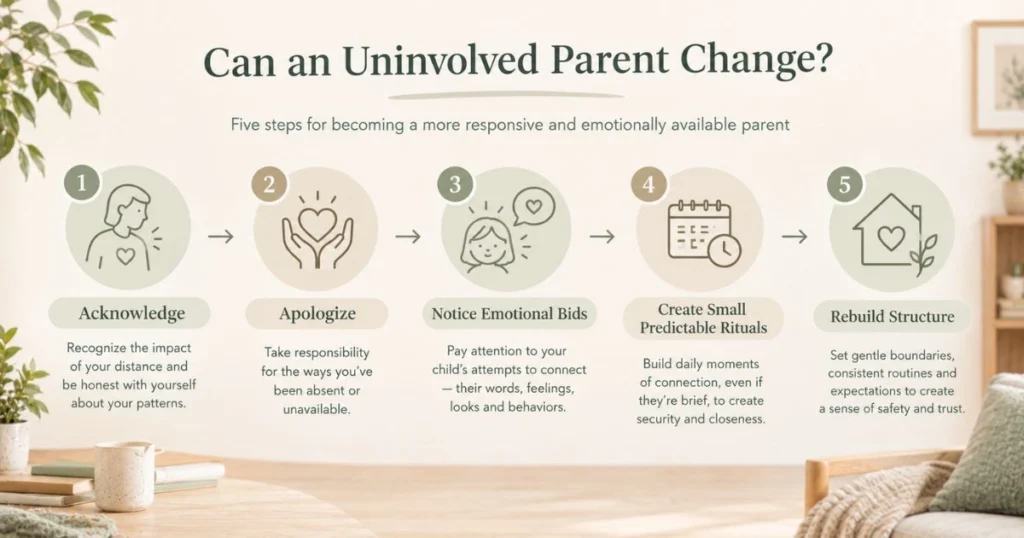
Recognizing an unhealthy parenting pattern does not mean a parent has failed forever. What matters most is how you respond once you recognize the pattern.
Change usually comes from consistent small behaviors, not one dramatic conversation.
Start With Acknowledgement
The first step is honest recognition.
Instead of saying:
“I tried my best to make sure you had everything you needed.”
a parent may need to consider:
“I provided many physical things, but I wasn’t emotionally available in the way you needed.”
Taking responsibility does not require drowning in guilt. It means recognizing the child’s experience and accepting that love is communicated through behavior as well as intention.
Apologize Without Making the Child Comfort You
A meaningful apology is specific.
Instead of:
“I’m sorry if you felt neglected.”
try:
“I’m sorry I didn’t give you the support and attention you needed. You deserved to have me there for you.”
The child should not have to respond with:
“It’s okay, Mom.”
The purpose of an apology is accountability, not obtaining immediate forgiveness.
Learn to Notice Emotional Bids
Children frequently invite connection through small moments.
“Look at this!”
“Can you help me?”
“Guess what happened at school.”
These are opportunities for connection.
The parent does not need to stop everything every time. Even a brief response can communicate:
“I see you. Tell me more.”
Create Small Predictable Rituals
Connection becomes easier when it is built into ordinary life.
Try:
- Ten minutes of uninterrupted conversation before bed
- A weekly walk together
- Eating one meal without phones
- Reading together
- Asking one meaningful question after school
- Cooking together
- A regular weekend activity
- Checking in before bedtime
The goal is not creating a perfect family schedule. It is creating repeated experiences of reliability.
Rebuild Structure Gradually
Children and teenagers generally benefit from knowing what is expected of them.
Start with a few clear expectations around:
- Sleep
- School responsibilities
- Household chores
- Screen use
- Safety
- Family communication
Rules work best when they are age-appropriate, understandable, and consistently enforced.
Structure and warmth can coexist.
A parent can say:
“I know you’re upset, but it’s time to get ready for bed.”
That communicates both connection and a boundary.
Work on Your Own Triggers
If emotional distance developed because the parent was overwhelmed, angry, or uncomfortable with closeness, self-awareness becomes important.
Journaling can help identify patterns:
What happened?
What did I feel?
What did I want to do?
What did my child need from me?
What could I try differently next time?
The purpose is not perfection. It is noticing the pattern early enough to choose a different response.
Get Professional Support When Needed
Sometimes parenting strategies alone are not enough.
A therapist, family counselor, parenting educator, or other qualified professional can help when emotional distance is connected to depression, trauma, severe stress, relationship conflict, or longstanding family patterns.
Seeking help is not an admission that someone is a terrible parent.
It can be an act of responsibility.
What If You Were Raised by an Uninvolved Parent?
If you recognize your childhood in this article, remember that understanding the pattern does not mean you are destined to repeat it.
You may notice that you:
- Feel uncomfortable receiving affection
- Find it difficult to ask for help
- Automatically suppress your emotions
- Believe you must solve everything alone
- Feel guilty when you need attention
- Struggle to know what emotionally supportive parenting looks like
- Become anxious when your child needs reassurance
- Fear repeating your parent’s mistakes
These reactions can make sense in the context of your experiences, but they do not have to define your future relationships.
You can learn new ways of communicating.
You can apologize.
You can listen.
You can become more emotionally available.
You can give your child experiences that were missing from your own childhood.
Breaking a family pattern does not require becoming a perfect parent. It requires becoming a more responsive one, one interaction at a time.
A Final Thought for Parents
Uninvolved parenting is not always easy to recognize because absence can be quiet.
There may be no shouting. No obvious conflict. No dramatic moment that tells everyone something is wrong.
Sometimes the pattern is simply a child who stops asking for help because they have learned that nobody comes.
If you recognize some of these signs in your own parenting, resist the urge to respond with shame. Shame can make people withdraw further. Awareness creates an opportunity to move closer.
Start small.
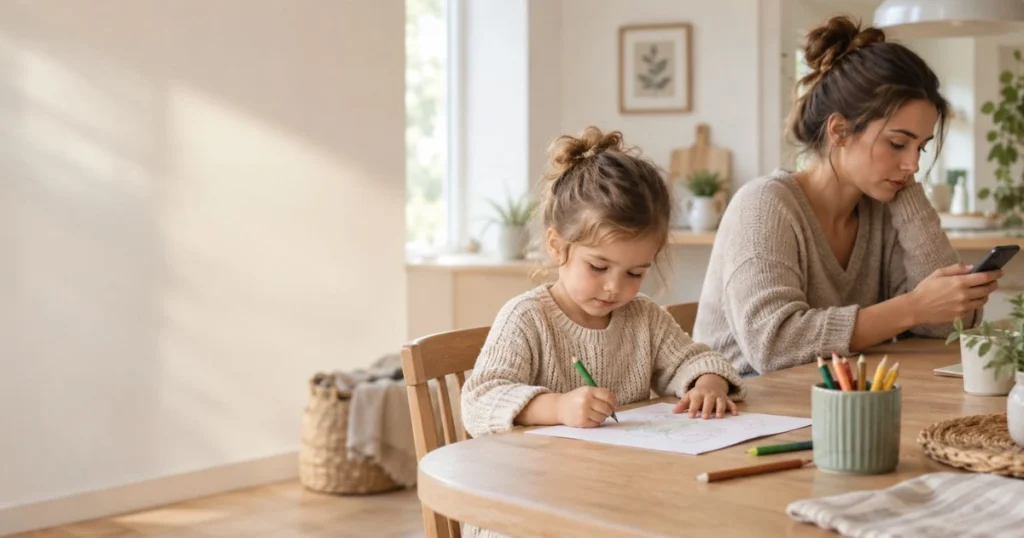
Set your phone aside and give your child your full attention as they share their story.
Ask about the drawing.
Sit beside your child at bedtime.
Follow up on the problem they mentioned yesterday.
Set a reasonable boundary and stay emotionally present while your child is upset.
Tell them, “I’m here.”
Then show them.
Children do not need parents who never struggle. They need relationships in which connection can be repaired, needs can be expressed, boundaries can be learned, and love is experienced through consistent actions.

And if you are trying to break a pattern that has existed in your family for generations, every small change matters.
Frequently Asked Questions
What is uninvolved parenting?
Uninvolved parenting is a pattern characterized by low emotional responsiveness and low parental involvement or guidance. A parent may provide basic physical care while remaining consistently distant from the child’s emotional, social, and developmental needs.
Is uninvolved parenting the same as neglect?
Not necessarily. Child neglect has legal and professional definitions that vary by jurisdiction. Uninvolved parenting is primarily a description of a parenting pattern involving low responsiveness and low demandingness. Persistent emotional or physical neglect can, however, be part of a broader pattern of child maltreatment.
What causes uninvolved parenting?
Possible contributors include intergenerational patterns, chronic stress, financial difficulties, depression or other mental health challenges, relationship problems, lack of parenting knowledge, and discomfort with emotional closeness. There is rarely one universal cause.
Can uninvolved parenting affect a child’s relationships?
It can. Persistent emotional unavailability may be associated with difficulties involving trust, emotional regulation, self-worth, and close relationships. However, children’s outcomes vary, and supportive relationships and later experiences can provide important protection.
What is parentification?
Parentification occurs when a child takes on adult-like emotional or practical responsibilities that are beyond what is developmentally appropriate. It can include excessive caregiving, household responsibilities, or becoming responsible for a parent’s emotional needs. Research indicates that its effects vary depending on the type of responsibility, family context, culture, duration, and available support.
Can you stop being an uninvolved parent?
Yes. Parents can become more responsive by increasing emotional connection, creating predictable routines, learning child-development skills, taking responsibility for past behavior, and seeking professional support when needed. Change is usually gradual and depends on consistent behavior over time.
What is the difference between independence and uninvolved parenting?
Healthy independence develops with appropriate support. Children gradually take responsibility for tasks they are ready to manage while knowing that a trusted adult is available when they need help. Uninvolved parenting can occur when children are expected to manage emotional or practical responsibilities without sufficient adult guidance or support.