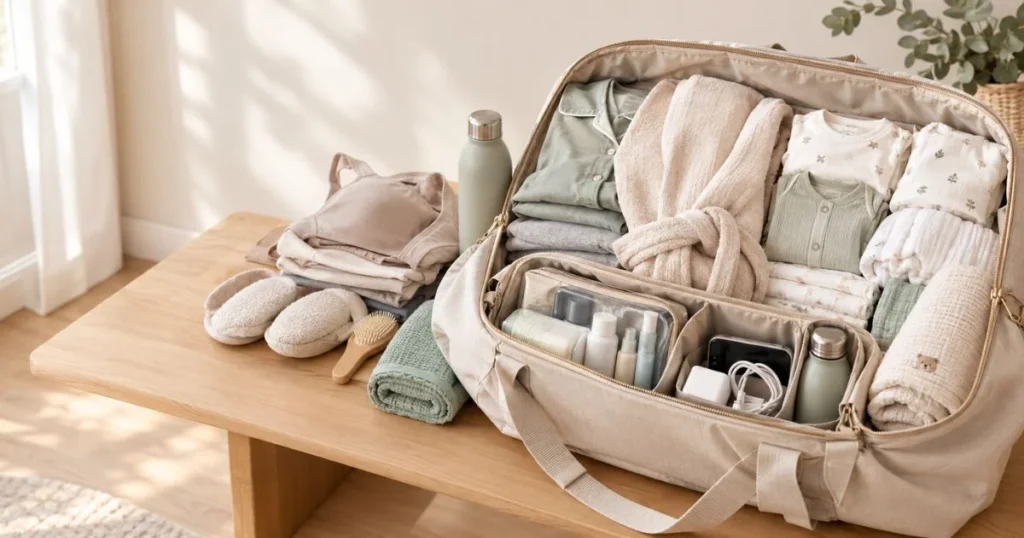

There is something about packing your hospital bag that makes everything feel suddenly real.
Your baby may not be here for a few more weeks, but once you see those tiny newborn outfits sitting beside your pajamas, the reality can suddenly sink in—you’re getting very close to meeting your little one.
And while you don’t need to pack your entire house into one suitcase, having the right hospital bag essentials ready can make those first hours and days much easier.
The goal isn’t to bring everything you own. It’s to have the things you’ll actually want when you’re tired, uncomfortable, excited, hungry, and meeting your baby for the first time.
This hospital bag checklist for mom and baby will walk you through what to pack, what is optional, what your birth partner may need, and what you can probably leave at home.
Parenting Whisper Reminder: You don’t need a perfect hospital bag. You just need a practical one that works for you, your baby, and your hospital’s policies.
When Should You Pack Your Hospital Bag?
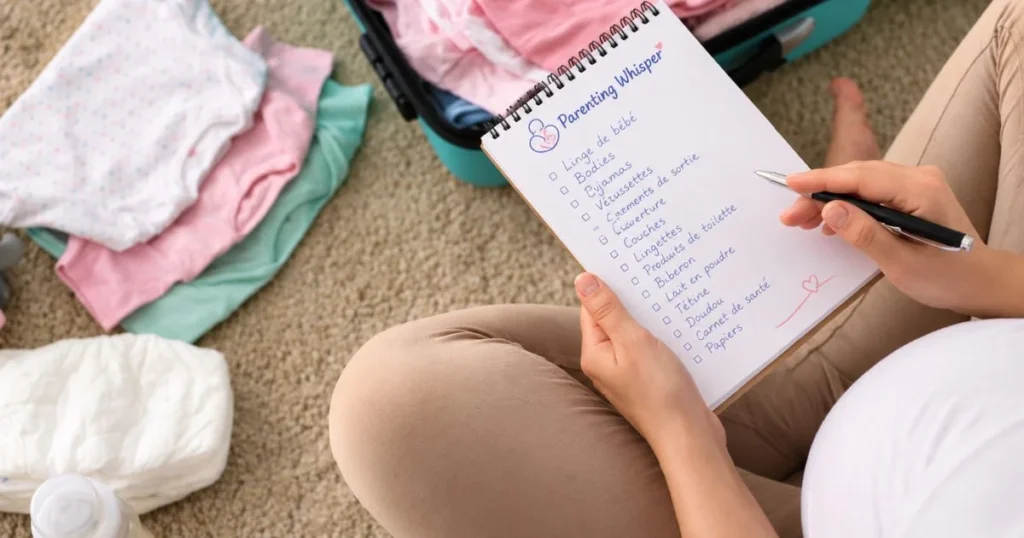
If you’re wondering when you should pack your hospital bag, don’t wait until labor starts. Having a Hospital Bag Checklist ready early can make the final weeks feel much more organized.
The NHS recommends having your hospital bag packed at least three weeks before your due date, since only a small proportion of babies arrive exactly on their due date. Some maternity units recommend having bags ready around 35–37 weeks.
A practical approach is:
- Around 32–34 weeks: Start making your list and gathering items.
- Around 35–36 weeks: Wash baby clothes and organize your supplies.
- By 36–37 weeks: Have your main hospital bag ready.
- Before your due date: Install and check the baby’s car seat.
- If you have a planned C-section or induction: Follow your maternity team’s instructions for when to have everything prepared.
You don’t have to zip the bag shut weeks in advance and never touch it again. Keep your Hospital Bag Checklist nearby with the things you use every day—such as your phone charger, toothbrush, glasses, and medications—so you can grab them quickly when the time comes.
If you’re still enjoying your pregnancy before the final weeks, you may also want to plan a relaxing babymoon with comfort and practical preparation in mind.
Check What Your Hospital Provides Before You Pack
One of the easiest ways to overpack is assuming that every hospital provides the same things.
They don’t.
Some hospitals may provide certain newborn supplies or postpartum items, while others expect you to bring almost everything yourself. Local policies can also change.
Before finishing your Hospital Bag Checklist, contact your maternity unit and ask what is provided. Knowing what your hospital supplies can help you avoid packing items you won’t actually need.
| Item | Hospital may provide it | What to do |
| Newborn diapers | Sometimes | Ask first |
| Baby wipes or cotton wool | Sometimes | Ask first |
| Maternity pads | Sometimes | Bring your own if recommended |
| Baby blankets | Sometimes | Check |
| Towels | Sometimes | Check |
| Breast pump | Varies | Don’t assume one is available |
| Formula | Varies | Ask about hospital policy if needed |
This simple step can save space in your bag and prevent last-minute shopping.
Hospital Bag Essentials for Mom
Your needs can change dramatically between labor, delivery, and the postpartum period.
Rather than throwing everything into one large bag, organize your Hospital Bag Checklist by when you’ll need each item.
What to Pack for Labor
The things you’ll reach for during labor should be easy to find. Keeping them together in your Hospital Bag Checklist can make it much easier to access what you need when labor begins.
Consider packing:
- Loose, comfortable clothing for labor
- A large T-shirt or labor-friendly nightdress
- A lightweight robe or dressing gown
- Socks
- Slippers or easy slip-on shoes
- Flip-flops for the shower, if permitted
- Hair ties or a headband
- Lip balm
- Water bottle
- Birth preferences or birth plan
- Hospital notes and required documents
- Phone and charger
- Headphones
- Snacks if your healthcare team allows them
- Any approved comfort or pain-relief items you plan to use
The NHS also suggests practical items such as a fan or water spray, an eye mask, personal pillows, entertainment, and a TENS machine if you have chosen to use one.
Keep Your Labor Items at the Top
This is one of the simplest packing tricks you can use when organizing your Hospital Bag Checklist.
Put your labor essentials in a separate small bag or in the easiest-to-reach section of your main bag.
You don’t want your partner digging through three layers of baby clothes to find your lip balm when you’re already uncomfortable.
Postpartum Hospital Bag Essentials
After your baby arrives, your priorities change. Your Hospital Bag Checklist should include a few items that can make those first postpartum hours more comfortable.
You may want clean clothes, comfortable underwear, toiletries, and a few personal items that help you settle in and feel more at ease.
Pack:
- 5–6 pairs of comfortable underwear
- Disposable underwear if you prefer it
- Super-absorbent maternity pads
- 2–3 comfortable bras
- Nursing bras if you plan to breastfeed
- Breast pads
- 2–3 changes of loose clothing
- Front-opening pajamas or nightwear
- Comfortable going-home clothes
- Robe or dressing gown
- Slippers
- Toiletries
- Toothbrush and toothpaste
- Deodorant
- Hairbrush
- Hair ties
- Face wash or cleansing wipes
- Body wash or soap
- Shampoo if needed
- Lip balm
- Hand sanitizer
- Glasses and contact-lens supplies if needed
- Any regular medications, according to your healthcare team’s instructions
NHS hospital guidance commonly recommends several changes of comfortable clothes, multiple pairs of underwear, nursing bras if appropriate, breast pads, maternity pads, toiletries, and any regular medications.
What About Postpartum Recovery Products?
You may see long hospital-bag lists filled with sprays, cooling pads, witch-hazel products, special underwear, and other postpartum products. Your Hospital Bag Checklist doesn’t need to include every product marketed for postpartum recovery.
Some parents find these helpful.
But you don’t necessarily need every product available.
Start with the basics:
- Comfortable underwear
- Maternity pads
- Easy-to-wear clothing
- Basic toiletries
- Anything your healthcare provider has specifically recommended
If you want additional perineal-care products, check with your maternity team about what is appropriate for you.
And if you’re having a C-section, prioritize loose, comfortable clothing that won’t rub against your incision. High-waisted underwear may be more comfortable for some people.
Breastfeeding Essentials for Your Hospital Bag
If you plan to breastfeed, you don’t need to bring an entire feeding station. Keep your Hospital Bag Checklist focused on a few simple items that can make feeding more comfortable.
A few useful options include:
- 2–3 supportive nursing bras
- Nursing-friendly pajamas or tops
- Breast pads
- Nipple cream or another nipple-care product you already prefer
- A nursing pillow, if you find one helpful
A breast pump is optional, not a universal hospital-bag essential.
Some hospitals have pumps available, and whether you need one depends on your situation and your baby’s feeding needs.
You also don’t need to buy several breastfeeding products before you know what will work for you.
Your first days with your baby are about learning together—not having every accessory ready.
Nice-to-Have Hospital Bag Comfort Items
Not everything in your bag needs to be an absolute necessity.
Some items simply make the environment feel more familiar.
Comfort items you may appreciate:
As you complete your Hospital Bag Checklist, consider adding a few comfort and entertainment items that can make your hospital stay feel more familiar and relaxing.
- Your own pillow
- Eye mask
- Small fan
- Water spray
- Comfortable socks
- Familiar robe
- Favorite playlist
- Headphones
- Small blanket, if permitted
- Long phone charging cable
- Power bank
- Book, tablet, or downloaded podcast
The NHS specifically includes comfort and entertainment items such as pillows, an eye mask, a fan or water spray, books, music, podcasts, and a longer charging cable among useful hospital-bag suggestions.
What About Essential Oils?
If you enjoy aromatherapy, don’t automatically assume you can use a diffuser or strongly scented products in the hospital. Before adding them to your Hospital Bag Checklist, check whether your maternity unit allows them.
Hospital rules vary, and some facilities may restrict fragrances or diffusers.
If aromatherapy is important to you, check your hospital’s policy before packing anything.
Snacks and Hydration: What Should You Bring?
Food can become surprisingly important once you’ve been in the hospital for several hours. Adding a few easy snacks and drinks to your Hospital Bag Checklist can help you feel more prepared.
Your support person should have their own snacks and drinks available, too, especially since hospital food and visitor provisions vary.
Depending on your medical situation and your maternity team’s instructions, you may be able to eat and drink during parts of labor. Current guidance supports eating a light diet and drinking when thirsty for many people, but restrictions may apply in certain circumstances.
There isn’t one rule that applies to every laboring person. Your healthcare team may give you specific instructions based on your circumstances, planned procedures, medications, or complications.
Easy Hospital Bag Snack Ideas
Pack foods that are:
- Easy to open
- Easy to eat
- Not too messy
- Familiar to you
- Easy for your partner to find
Try a mixture of:
| Type | Examples |
| Salty | Pretzels, crackers |
| Sweet | Hard candies, gummies |
| Protein | Protein bars, nuts if appropriate |
| Easy energy | Granola bars, dried fruit |
| Hydration | Water, approved electrolyte drinks |
A water bottle with a straw can be particularly convenient when you’re resting in bed. NHS guidance also recommends bringing drinks and a water bottle.
What Does Baby Need in a Hospital Bag?

Newborns don’t need a huge wardrobe for their hospital stay. Your Hospital Bag Checklist only needs a few practical outfits to keep your baby comfortable and clean.
The exact amount depends on how long you’ll stay, what your hospital provides, and whether you may need extra clothes for unexpected changes.
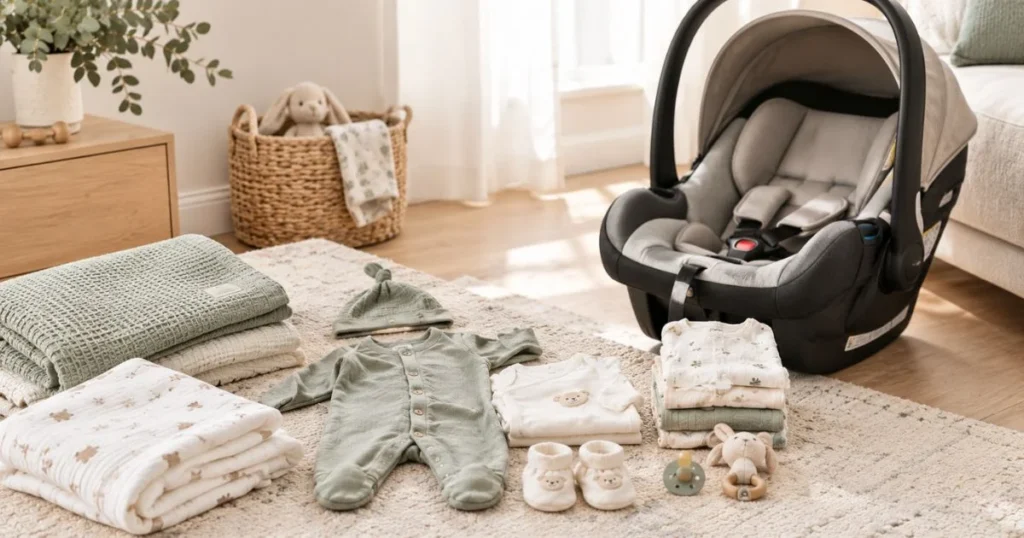
Newborn Hospital Bag Essentials
Pack:
- 2–4 bodysuits or vests
- 2–4 sleepsuits
- Socks or booties if needed
- A hat if recommended or appropriate for the weather
- A going-home outfit
- One slightly larger outfit
- Muslin cloths
- Diapers if your hospital requires them
- Wipes or cotton wool if required
- A blanket or shawl
- Car seat for the journey home
NHS hospital guidance similarly recommends bodysuits, vests, sleepsuits, a going-home outfit, a hat, socks or booties, diapers, muslin squares, and a blanket or shawl.
How Many Baby Outfits Should You Pack?
You don’t need ten newborn outfits. Keep your Hospital Bag Checklist practical and focused on what your baby is likely to need during the hospital stay.
A practical starting point is:
2–4 everyday outfits + 1 going-home outfit + 1 backup size.
Babies can surprise you with their size, so having both a newborn outfit and a slightly larger 0–3-month option can be useful.
If your hospital stay may be longer, pack a few extra clothes or ask your hospital how many outfits they recommend.
Remember that some hospitals may provide clothing or other newborn supplies, so check what is available before filling your bag.
Don’t Forget the Car Seat
Your baby’s car seat is one item that should be prepared before you go into labor. Add it to your Hospital Bag Checklist, but keep in mind that the car seat itself should already be installed in your vehicle rather than packed in your hospital bag.
The American Academy of Pediatrics recommends that infants travel rear-facing from their first ride home from the hospital and remain rear-facing for as long as possible, until they reach the height or weight limit set by the car seat manufacturer.
Before your due date:
- Choose an appropriate infant or convertible car seat.
- Read the manufacturer’s instructions.
- Install it correctly in the vehicle.
- Make sure you understand how the harness works.
- Check the fit according to the manufacturer’s instructions.
- If available in your area, consider having the installation checked by a certified child passenger safety technician.
Don’t wait until discharge day to figure out how the car seat works.
If you’re exhausted after delivery, you’ll want this part to feel familiar and routine.
What Should Your Birth Partner Pack?
Your partner or support person may spend many hours at the hospital too.
Give them their own small checklist.
Birth Partner Hospital Bag Checklist
- 1–2 changes of comfortable clothes
- Underwear and socks
- Comfortable shoes
- Toothbrush
- Toothpaste
- Deodorant
- Phone
- Phone charger
- Power bank
- Headphones
- Snacks
- Water bottle
- Any regular medications
- Glasses/contact lenses
- Pillow if desired
- Entertainment
- Parking payment or other required payment method
If your partner plans to enter a birth pool with you and the facility permits it, they may also want swimwear. NHS guidance includes this as an optional partner item.
Let Your Partner Know Where Everything Is
Don’t simply hand your partner the bag and expect them to know where everything is. Walk them through your Hospital Bag Checklist and show them:
- Where your documents are
- Where your labor clothes are
- Where the baby’s first outfit is
- Where your toiletries are
- Where your charger is
- Where the postpartum supplies are
Your partner may be the person searching for something while you’re focused on labor, so knowing where everything is can save time and make the experience a little less stressful.
Hospital Bag Essentials for a C-Section
If you’re planning a C-section, your basic hospital bag is still similar, but comfort and easy access become especially important. Your Hospital Bag Checklist may need a few adjustments to help you stay comfortable while recovering.
Consider packing:
- Loose, high-waisted underwear
- Soft, loose clothing
- Front-opening pajamas
- Nursing-friendly tops
- Slip-on shoes
- A robe
- Comfortable going-home clothes
- Toiletries
- Phone charger
- Maternity pads
- Any medications or medical items requested by your healthcare team
Avoid clothing that is tight around your abdomen or likely to rub against your incision.
Your hospital may also have specific instructions for a planned cesarean birth, so follow those recommendations rather than relying entirely on a generic checklist.
What Changes for a Vaginal Birth?
For a vaginal birth, your Hospital Bag Checklist may include a few items that you’ll want particularly easy to access, such as:
- Comfortable underwear
- Maternity pads
- Loose clothing
- Toiletries
- Breastfeeding-friendly clothing
- Recovery supplies recommended by your maternity team
You don’t need to pack completely different bags for a vaginal birth and a C-section.
Think of your main hospital bag as flexible, with a few additional comfort items based on the type of birth you anticipate and the recommendations from your maternity team.
Packing for Summer vs. Winter
The basics stay the same, but your baby’s going-home clothing should reflect the weather.
In warmer weather:
- Lightweight baby layers
- Breathable clothing
- A light blanket if needed
- Comfortable clothing for you
- Water bottle and cooling items
In colder weather:
If you’re preparing your Hospital Bag Checklist for colder weather, consider adding:
- Additional baby layers
- Warm socks or booties
- A hat if appropriate
- A weather-appropriate outer layer
- Warm clothing for you
Avoid assuming that more layers are always better.
For your baby’s car-seat journey, follow the car-seat manufacturer’s guidance about safe clothing and harness use rather than placing bulky clothing underneath the harness.
How to Organize Your Hospital Bag
A beautifully packed bag is helpful, but an organized bag is even better. A well-organized Hospital Bag Checklist can help you find what you need quickly, especially when you’re tired or focused on labor.
Consider dividing it into three sections:
Bag 1: Labor
Put these at the top:
- Hospital documents
- Birth preferences
- Phone charger
- Lip balm
- Hair ties
- Water bottle
- Labor clothes
- Socks
- Snacks if permitted
- Comfort items
Bag 2: Postpartum
Pack:
- Pajamas
- Underwear
- Maternity pads
- Nursing bras
- Breast pads
- Toiletries
- Going-home clothes
Bag 3: Baby
Pack:
- Baby outfits
- Diapers
- Muslin cloths
- Blanket
- Going-home outfit
Some hospitals specifically suggest separating labor and post-birth items because it makes finding what you need easier.
Complete Hospital Bag Checklist for Mom, Baby & Partner
Save or screenshot this section before you start packing.
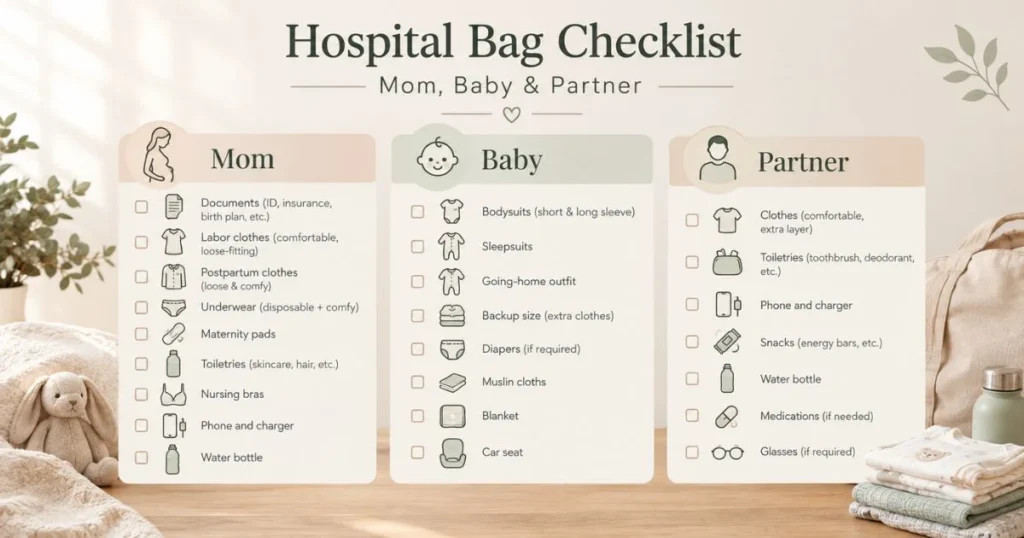
Mom’s Hospital Bag Checklist
| Category | What to Pack |
| Documents | Hospital notes, identification, birth preferences |
| Labor | Loose clothes, robe, socks, slippers |
| Postpartum | Underwear, maternity pads, pajamas |
| Feeding | Nursing bras, breast pads |
| Toiletries | Toothbrush, toothpaste, deodorant, hairbrush |
| Personal care | Lip balm, hair ties, glasses/contact lenses |
| Comfort | Pillow, eye mask, fan, headphones |
| Technology | Phone, charger, power bank |
| Food | Snacks and water |
| Medical | Regular medications as instructed |
Baby Hospital Bag Checklist
| Category | What to Pack |
| Clothing | Bodysuits, vests, sleepsuits |
| Going home | Outfit + backup size |
| Accessories | Socks/booties, hat if appropriate |
| Care | Diapers and wipes if required |
| Comfort | Muslin cloths, blanket/shawl |
| Travel | Rear-facing car seat |
Birth Partner Checklist
| Category | What to Pack |
| Clothing | 1–2 changes |
| Toiletries | Toothbrush, toothpaste, deodorant |
| Food | Snacks and drinks |
| Technology | Phone, charger, headphones |
| Comfort | Pillow, entertainment |
| Personal | Medication, glasses/contact lenses |
| Logistics | Parking/payment items |
What Not to Pack in Your Hospital Bag
MoMore isn’t always better when preparing your Hospital Bag Checklist.
You can probably leave these at home unless you have a specific reason to bring them:
- Your entire newborn wardrobe
- Large bottles of toiletries
- Expensive jewelry
- Valuable electronics
- Too many blankets
- Large decorative items
- Products your hospital already provides
- Multiple breastfeeding gadgets you haven’t used before
- Every postpartum product you saw online
Some hospitals have limited storage space and may not be able to safely store valuables. UCLH specifically advises against bringing valuable belongings.
The goal is useful, not excessive. A thoughtful Hospital Bag Checklist should help you feel prepared without filling your bag with things you may never use.
Your Night-Before Hospital Checklist
You can’t predict exactly when labor will begin, but you can make the last-minute scramble much easier. Keep your Hospital Bag Checklist somewhere easy to see so you can quickly check that everything is ready before your due date.
Before your due date, keep this short list somewhere visible:
Last-minute items
- Phone
- Phone charger
- Wallet/ID
- Glasses
- Daily medications
- Water bottle
- Keys
- Hospital documents
- Birth preferences
- Any regularly used personal item
At home
- Baby car seat installed
- Hospital bag by the door
- Partner’s bag ready
- Important phone numbers saved
- Childcare arranged if you have older children
- Transportation plan discussed
And remember: if you forget something, don’t panic.
Hospitals have supplies, and someone can often bring an item from home later. Healthier Together also emphasizes that forgetting something doesn’t mean you’re unprepared.
FAQ: Get Ready for Baby and Hospital Bag Essentials
When should you get ready for baby and pack your hospital bag?
A practical goal is to have your main Hospital Bag Checklist ready around 36–37 weeks, although some maternity units recommend preparing it earlier. The NHS recommends having your hospital bag packed at least three weeks before your due date, so you’re prepared if your baby arrives earlier than expected.
What are the most important hospital bag essentials for Mom?
Start with the basics on your Hospital Bag Checklist: hospital documents, comfortable labor clothing, postpartum clothes, underwear, maternity pads, toiletries, medications, a phone charger, a water bottle, and anything specifically recommended by your maternity team.
What does baby need in a hospital bag?
Most newborn Hospital Bag Checklist items are simple and practical: several bodysuits or sleepsuits, a going-home outfit, diapers if required, muslin cloths, and a blanket or shawl. You’ll also need an appropriate car seat for your baby’s journey home.
How many baby outfits should I pack?
Around 2–4 basic outfits plus a going-home outfit and one backup size is a practical starting point. Adjust this according to your hospital’s recommendations and expected length of stay.
Do I need a breast pump in my hospital bag?
Not necessarily. A breast pump is not a universal hospital-bag essential. Your hospital may have pumps available, and whether you need one depends on your individual circumstances and feeding plan.
Do I need to bring diapers to the hospital?
It depends on the hospital. Some provide newborn diapers while others ask parents to bring them. Check before you pack.
What should I pack for a C-section?
Prioritize loose clothing, high-waisted underwear, easy-access pajamas, comfortable shoes, toiletries, maternity pads, and clothing that won’t put pressure on your abdominal incision.
Do I need a car seat before my baby is born?
Yes. Have your baby’s car seat selected and properly installed before delivery. The AAP recommends rear-facing travel from the baby’s first ride home and continuing rear-facing until the seat’s maximum height or weight limit is reached.
What should I bring to the hospital for childbirth?
Start with your medical documents, comfortable clothing, toiletries, postpartum supplies, feeding essentials if desired, your phone and charger, baby clothes, and a properly installed car seat. Then add comfort items that will make your stay easier.
Get Ready for Baby Without Packing Everything
Preparing your hospital bag isn’t about predicting every possible situation.
It’s about making the first part of your baby’s arrival a little easier.
Pack the essentials. Check what your hospital provides. Keep your labor items easy to reach. Prepare your baby’s car seat ahead of time. Give your partner their own checklist. And leave room for flexibility, because birth doesn’t always follow the plan you imagined.
Your birth preferences can help communicate what matters to you, but they are not a promise that every detail will happen exactly as planned. The NHS recommends discussing your birth plan with your maternity team and remembering that circumstances can change during labor.
Most importantly, don’t measure your readiness by how perfectly your bag is packed.
You are getting ready for your baby one small step at a time.
Save this hospital bag checklist, check your own hospital’s requirements, and start gathering your essentials before the final weeks arrive. Then share it with your partner so you can both feel prepared when the big day comes.