
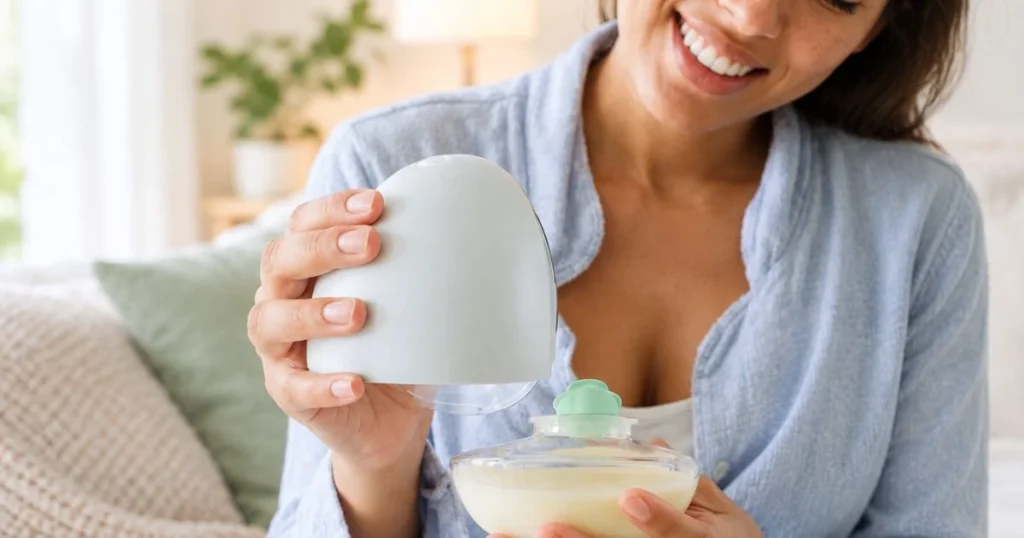
Breastfeeding hands free pump options can make expressing breast milk easier when you need more freedom during your day. Breastfeeding can be deeply rewarding, but pumping can sometimes make your day feel even more complicated.
You might be pumping while looking after your baby, making breakfast, getting ready for work, or simply trying to carve out a little time for yourself. Sitting in one place with a traditional pump may not always fit into real life.
That is where a breastfeeding hands-free pump can become useful.
A hands-free pump can give you more freedom during pumping, but choosing one is not simply about finding the smallest pump, the strongest suction, or the model with the longest list of features. Your needs are personal. A pump that works beautifully for one breastfeeding parent may be uncomfortable or less effective for another.
Before you choose a breastfeeding hands-free pump, it helps to understand how these pumps work, how often you plan to pump, what affects comfort and milk removal, and which features actually matter for your routine.

What Is a Breastfeeding Hands-Free Pump?
A breastfeeding hands free pump is designed to let you express breast milk without continuously holding the breast shield and milk container in place with your hands. This type of breastfeeding hands free pump can give you more freedom during pumping, especially when you need to use your hands for other tasks.
Some breastfeeding hands free pump models have collection cups that fit inside a bra. Others use a separate pump motor that connects to wearable milk-collection cups. A traditional electric breast pump can also become hands-free when used with a suitable pumping bra.
The term “hands-free” therefore does not always describe one specific type of breast pump.
The main idea is simple: the pump is designed so you can use your hands for something else while milk is being expressed.
How Does a Hands-Free Breast Pump Work?
Most breast pumps contain three basic components:
- A breast shield, also called a flange
- A pump that creates suction
- A container that collects expressed milk
A breastfeeding hands free pump may use the same basic components, although their design and placement can vary. Powered pumps use either a battery or an electrical connection to operate the motor. Depending on the design, the pump may sit directly on the breast or connect to the breast shield through tubing.
A breastfeeding hands free pump or wearable design changes how these components are positioned, allowing you to move more freely during a pumping session.
However, hands-free does not necessarily mean completely effortless. You still need to position the pump correctly, make sure the breast shield fits comfortably, monitor the session, and clean the milk-contacting parts afterward.
Why Might You Want a Hands-Free Breast Pump?
There is no single reason to choose a breastfeeding hands free pump. Your decision may depend on your work schedule, family responsibilities, travel plans, or simply how you want pumping to fit into your daily routine.
Pumping While Caring for Your Baby
If you are pumping while your baby is awake, using a breastfeeding hands free pump can give you more freedom to use your hands during the session.
You may be able to:
- Hold your baby
- Prepare a bottle
- Read a book
- Have a snack
- Complete a small household task
- Move around more easily
That added flexibility can make pumping feel less disruptive to your daily routine.
Breastfeeding and Returning to Work
Returning to work can significantly change your pumping routine.
You may need to express milk several times throughout the day while also managing meetings, work responsibilities, commuting, and childcare arrangements. A breastfeeding hands free pump may make it easier to fit pumping into your busy workday, especially when portability and convenience are important.
A portable hands-free pump can make pumping more manageable at work, although you still need an appropriate private space, enough time to pump, and a safe way to store your expressed milk.
The CDC recommends practicing pumping before returning to work or school so you can become familiar with the process before your daily routine changes.
Pumping While Traveling
Portability can also be important when you are traveling. A breastfeeding hands free pump may be a practical option if you want more flexibility while away from home.
Before choosing a pump for travel, consider:
- Battery life
- Charging options
- Pump size
- Cleaning requirements
- Milk storage
- Access to refrigeration
- Whether you will have a suitable place to pump
A compact pump can make traveling easier, but you still need a plan for cleaning the pump and handling and storing expressed milk safely.
Wanting More Freedom During Pumping
Sometimes, the reason for choosing a breastfeeding hands free pump is much simpler.
You may simply want to express milk without feeling stuck in one place.
That is a perfectly valid consideration. Convenience can make a difference, especially when you are balancing breastfeeding with the many demands of caring for your baby.
Before Choosing a Breastfeeding Hands-Free Pump, Understand Your Pumping Routine
Before comparing different pump features, consider how you plan to use your breastfeeding hands free pump in your everyday routine.
The right choice for occasional pumping may be very different from the option that makes sense if you pump several times each day.
Ask yourself:
- How often will I pump?
- Where will I usually pump?
- Will I mostly breastfeed directly?
- Will I pump occasionally?
- Am I returning to work?
- Will I be separated from my baby for long periods?
- Will this be my main pump?
- Am I exclusively pumping?
The CDC advises parents who are away from their baby or exclusively pumping to pump as often as their baby drinks breast milk to help maintain milk production. Your individual situation can vary, so professional breastfeeding support can be helpful if you have concerns.
If You Pump Occasionally
If you pump only occasionally, you may care most about simplicity, comfort, portability, and easy cleaning. A breastfeeding hands free pump that meets these basic needs may be all you need.
You may not need every feature included in a more complex pumping system.
If You Pump Frequently
Frequent pumping can change what matters most when choosing a breastfeeding hands free pump.
If you use your pump several times a day, even small inconveniences can become much more noticeable over time.
You may want to pay particular attention to:
- Flange comfort
- Ease of assembly
- Cleaning
- Battery performance
- Reliability
- Milk removal
- Availability of replacement parts
If You Exclusively Pump
If pumping is your primary way of expressing milk, choosing the right breastfeeding hands free pump deserves especially careful consideration.
You will likely use the pump frequently, so comfort and effective milk removal may matter more than simply having a compact design.
If you are unsure whether a particular pump is suitable for your situation, a qualified lactation professional can help you evaluate your pumping routine and needs.
How to Choose the Right Breastfeeding Hands-Free Pump
There is no single breastfeeding hands free pump that is ideal for everyone.
Instead of asking, “Which pump is the best?” ask yourself:
“Which pump best fits the way I need to pump?”
This shift in perspective can make choosing the right pump much easier.
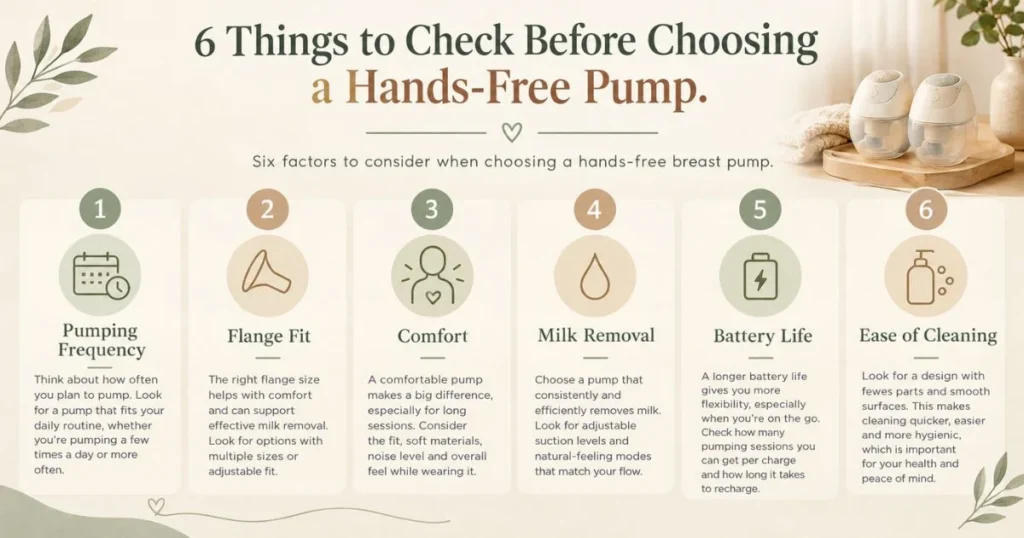
1. Consider How Often You Will Pump
Start by considering how often you plan to use your breastfeeding hands free pump.
Think about whether you expect to pump:
- Occasionally
- Once a day
- Several times a day
- For most or all milk feeds
If you plan to pump frequently, factors such as comfort, easy cleaning, reliability, and effective milk removal become increasingly important.
A feature that may seem insignificant when you pump once a week can become frustrating when you deal with it several times each day.
2. Think About Where You Will Pump
Your environment matters.
| Where you pump | What may matter most |
| At home | Comfort, cleaning, ease of use |
| At work | Portability, battery life, privacy, milk storage |
| While traveling | Size, battery, charging, storage |
| While caring for another child | Mobility and secure positioning |
| During frequent pumping | Comfort, reliability, milk removal |
When choosing a breastfeeding hands free pump, the FDA recommends considering your individual needs and circumstances. For example, a pump you mainly use at home may require different features from one you plan to take with you while traveling.
3. Check the Flange or Breast Shield Fit
A properly fitted flange can help make your breastfeeding hands free pump sessions more comfortable.
The breast shield surrounds your nipple and part of the areola while the pump creates suction.
Ideally, your nipple should sit comfortably within the opening without unnecessary rubbing, pinching, or pulling.

Why Does Flange Fit Matter?
A poor flange fit can make your breastfeeding hands free pump sessions uncomfortable and may make it more difficult to have an effective pumping session.
As you use your pump, pay attention to how your breast and nipple feel.
Ongoing discomfort is not something you simply need to tolerate while pumping.
If you are having trouble finding the right fit, a lactation professional may be able to help you assess your positioning and equipment.
The FDA advises placing the nipple comfortably in the center of the breast shield and adjusting the position so the shield does not pinch, pull, or irritate the nipple or surrounding tissue.
4. Look at Suction and Pumping Settings
Hands-free pumps can differ in how they control suction strength and pumping patterns. When choosing a breastfeeding hands free pump, it is worth checking which settings are available and how easily you can adjust them.
Depending on the model, you may find settings such as:
- Stimulation
- Let-down
- Expression
- Suction strength
- Pumping speed or rhythm
More suction is not necessarily better.
A comfortable setting that supports effective milk removal may be more useful than simply selecting the highest suction level.
The FDA recommends starting an electric or battery-powered pump at a low suction or speed setting and gradually adjusting it to a comfortable level.
5. Consider Comfort
A pump can offer excellent features and still not be the right choice if it feels uncomfortable against your body. When choosing a breastfeeding hands free pump, consider how the design feels during actual use.
Think about:
- The weight of the collection cups
- Pressure against your breasts
- The fit inside your bra
- Nipple comfort
- Whether the pump stays securely in place
- How it feels when you move
- Whether you could comfortably use it during repeated sessions
Comfort becomes even more important when pumping is part of your everyday routine.
6. Think About Milk Removal
Hands-free pumping is ultimately about expressing breast milk effectively. While convenience is important, it should not be the only factor when choosing a breastfeeding hands free pump.
People can respond differently to different pumps. Your experience may depend on factors such as your anatomy, flange fit, suction settings, pumping routine, and other individual needs.
If you rely heavily on pumping, pay attention to whether the pump remains comfortable and helps you express milk effectively over time.
The CDC notes that many breast pumps are available and that a lactation support provider can help you choose and use a pump that works well for your needs.
7. Check Battery Life and Charging
Battery life may not seem like a major consideration at first, but it can become frustrating if your breastfeeding hands free pump loses power during the day.
If you plan to use your pump away from home, consider:
- How long the battery lasts
- How long it takes to recharge
- What charging method it uses
- Whether you can recharge it at work
- Whether you have a backup option
- What you can do if the battery runs out
If you travel frequently, reliable battery performance becomes even more important.
8. Consider Milk Collection Capacity
The size of the milk collection container can affect your experience with a breastfeeding hands free pump.
A larger container may mean fewer interruptions to empty it during a session, but it can also increase the size and weight of the wearable unit.
Think about your typical pumping sessions rather than automatically choosing the largest capacity.
Ask yourself:
How much milk do I usually need to collect during one session?
Your answer can help you determine whether collection capacity is an important feature for your routine.
9. Look at Cleaning Requirements
Cleaning may not be the most appealing part of using a breastfeeding hands free pump, but it plays an important role in keeping your pumping routine safe and hygienic.
Breast milk residue left on pump parts can create an environment where germs may grow.
After each pumping session, milk-contacting parts should be cleaned according to current hygiene guidance and the manufacturer’s instructions.
The CDC recommends washing your hands before handling pump equipment, inspecting pump parts and tubing, and cleaning the appropriate components to help reduce contamination.
If you pump several times a day, choosing a model with fewer parts or simpler cleaning requirements can make your routine much easier to manage.
Hands-Free Pump vs. Traditional Breast Pump
Both a hands-free pump and a traditional breast pump can be useful depending on your breastfeeding and pumping routine.
| Feature | Hands-Free Pump | Traditional Electric Pump |
| Mobility | Usually greater | Often more limited |
| Portability | Often convenient | Depends on the design |
| Hands-free use | Built into the design or setup | May require a pumping bra |
| Size | Often compact | Can be larger |
| Suction settings | Varies | Varies |
| Milk removal | Individual response varies | Individual response varies |
| Cleaning | Depends on the design | Depends on the design |
| Best choice | Depends on your needs | Depends on your needs |
Neither type is automatically better.
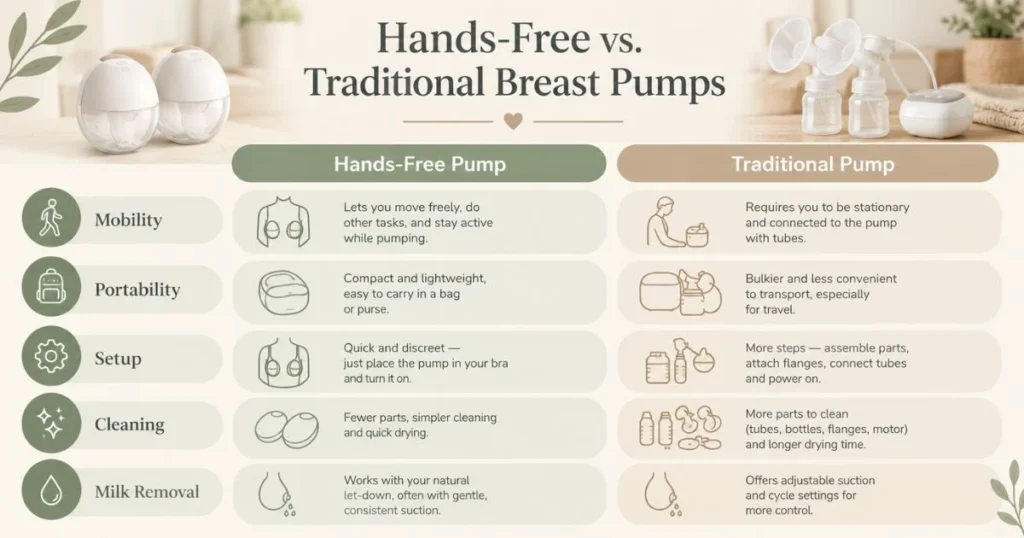
Your decision should depend on how often you pump, where you pump, how your body responds to the pump, and whether the equipment is comfortable and practical for you.
Can a Breastfeeding Hands-Free Pump Be Your Only Pump?
Sometimes, a breastfeeding hands free pump may fit your routine perfectly. For other parents, it may work better as one part of a more flexible pumping setup.
If You Pump Occasionally
A hands-free pump may provide the convenience you want without needing a more elaborate setup.
If You Pump Frequently
Look more closely at:
- Comfort
- Milk removal
- Battery life
- Cleaning
- Durability
- Replacement parts
- Ease of repeated use
If You Exclusively Pump
Your breastfeeding hands free pump can become an important part of your daily feeding routine.
You may want to pay particular attention to whether the pump is comfortable enough for regular use and whether it consistently allows you to express the amount of milk you need.
If you have concerns about milk supply, pain, or difficulty expressing milk, speak with a healthcare professional or lactation support provider rather than trying to address the problem simply by increasing suction.
Does a Hands-Free Pump Affect Milk Supply?
A common question is whether using a breastfeeding hands free pump will automatically increase or decrease milk supply.
The answer depends on more than the pump’s design.
Milk production is influenced by milk removal and your individual breastfeeding pattern. If you are separated from your baby or exclusively pumping, maintaining a regular pumping routine can help signal your body to continue producing milk.
The CDC recommends pumping as often as your baby drinks breast milk when you are away from your baby or exclusively pumping.
A hands-free design alone does not guarantee an increase in milk supply.
What matters most is whether the pump and your pumping routine allow you to remove milk effectively and comfortably.
When Should You Get Breastfeeding Support?
Consider speaking with a qualified lactation professional or healthcare provider if you experience any of the following while using a breastfeeding hands free pump:
- Persistent nipple or breast pain
- Difficulty expressing milk
- Ongoing concerns about milk supply
- Repeatedly poor milk removal
- Difficulty finding a comfortable flange fit
- Questions about how frequently you should pump
You do not have to work through these concerns on your own.
Breastfeeding Hands-Free Pump Safety and Hygiene
Convenience should never mean compromising on hygiene when using a breastfeeding hands free pump.
Clean the Pump Parts Properly
Milk-contacting components should be cleaned after each use, following the manufacturer’s instructions and current health guidance.
The CDC notes that germs can grow quickly in breast milk or milk residue left on pump parts.
A basic cleaning routine includes:
- Wash your hands before handling pump equipment.
- Take apart the milk-contacting components.
- Clean the parts according to the manufacturer’s instructions.
- Rinse thoroughly where appropriate.
- Allow the components to air-dry completely.
- Store clean, dry parts in a protected area.
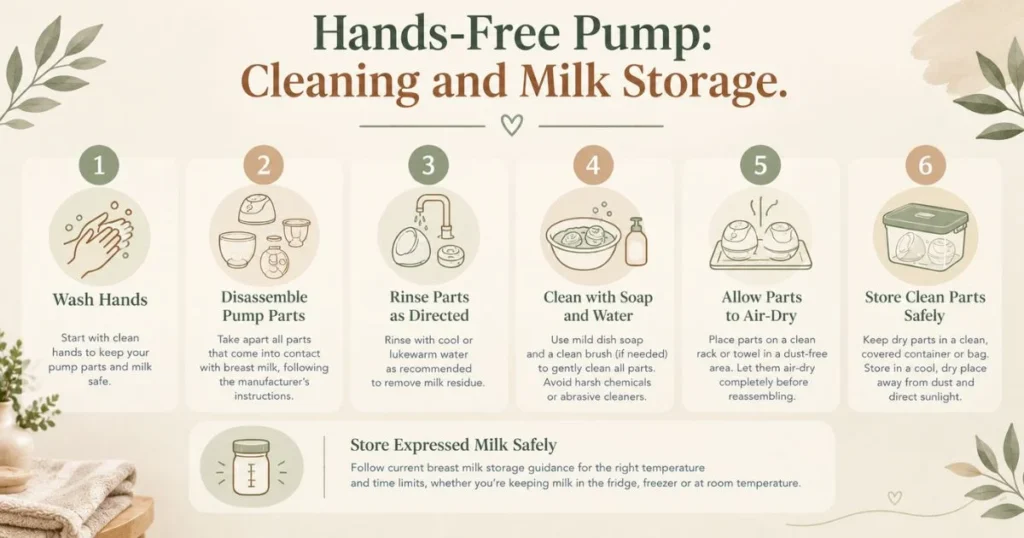
If tubing becomes moldy, replace it rather than simply rinsing it.
Do Not Assume Every Used Pump Is Safe to Share
The FDA considers most breast pumps to be intended for use by a single person and advises against sharing or buying used single-user pumps because of potential contamination risks.
If a pump is specifically designed for multiple users, follow the manufacturer’s instructions and use your own accessories as recommended.
Store Expressed Milk Safely
Choosing the right breastfeeding hands free pump is only one part of maintaining a safe pumping routine.
You also need a plan for safely storing the milk you express.
For healthy, full-term infants, current CDC guidance states that freshly expressed breast milk can generally be kept at room temperature of 77°F (25°C) or colder for up to 4 hours, refrigerated for up to 4 days, and frozen for about 6 months for best quality, with up to 12 months considered acceptable.
| Storage location | Freshly expressed breast milk |
| Room temperature, 77°F/25°C or colder | Up to 4 hours |
| Refrigerator, 40°F/4°C | Up to 4 days |
| Freezer, 0°F/-18°C or colder | About 6 months is best; up to 12 months acceptable |
These recommendations apply to healthy, full-term babies. If your baby was born prematurely or has specific health needs, your healthcare provider may recommend different storage guidelines.
When traveling with a breastfeeding hands free pump, the CDC says expressed breast milk can be kept in an insulated cooler with frozen ice packs for up to 24 hours.
Common Mistakes When Choosing a Breastfeeding Hands-Free Pump
Choosing a breastfeeding hands free pump can feel overwhelming when every model seems to offer different features and benefits.
Try not to base your decision on a single feature alone.
Choosing Only by Price
An expensive breastfeeding hands free pump is not automatically the right choice for you.
Price can reflect the pump’s design, accessories, technology, or brand positioning, but it does not necessarily tell you how comfortable the pump will feel on your body.
Choosing Only by Online Reviews
Reviews can help you understand other parents’ experiences, but pumping is highly individual.
A breastfeeding hands free pump that works well for another parent may not necessarily be the right fit for your body, routine, or pumping needs.
Assuming Stronger Suction Is Better
Stronger suction does not always mean better milk removal or greater comfort when using a breastfeeding hands free pump.
Start with a comfortable setting and follow your pump’s instructions for adjusting suction and pumping settings.
Ignoring Flange Fit
A breastfeeding hands free pump can be convenient and portable, but poor positioning or an uncomfortable breast shield can make your pumping experience frustrating.
Focusing Only on Portability
A tiny pump may sound perfect, but portability is only one consideration.
Ask whether it also fits your pumping frequency, comfort needs, milk collection needs, and cleaning routine.
Forgetting About Cleaning
When you pump regularly, cleaning the pump becomes a routine part of your day.
Consider how easily the parts come apart, how many pieces need to be washed, and whether you can realistically keep up with the cleaning instructions.
A Simple Checklist for Choosing a Breastfeeding Hands-Free Pump
Before choosing a pump, take a moment to think through these questions:
- How often will I pump?
- Will I use it occasionally or every day?
- Will it be my primary pump?
- Where will I usually pump?
- Do I need to carry it to work?
- Will I travel with it?
- Is the flange comfortable?
- Can I adjust the suction?
- Can I adjust the pumping rhythm?
- How long does the battery last?
- How much milk does the container hold?
- How easy is it to clean?
- Can I easily find replacement parts?
- Does it feel secure while I move?
- Does it consistently remove milk effectively for me?
- Can I realistically maintain this pumping routine?
If you can answer these questions, you are already much closer to making a thoughtful choice.
Frequently Asked Questions About Breastfeeding Hands-Free Pumps
What is a breastfeeding hands-free pump?
A breastfeeding hands-free pump allows you to express breast milk without having to hold the pump in place during the entire session. Some pumps are made to fit inside your bra, while others can be used with a traditional breast pump and compatible hands-free accessories.
How do I choose the right breastfeeding hands-free pump?
Start with your own routine. Consider how often you will pump, where you will use the pump, whether it will be your primary pump, how comfortable the flange feels, how effectively it removes milk for you, battery life, collection capacity, and cleaning requirements.
Is a breastfeeding hands-free pump suitable for regular daily use?
It can be suitable for some parents, but there is no universal answer. If you plan to pump every day, pay close attention to comfort, effective milk removal, reliability, cleaning, and whether the pump works well for your individual routine.
Can I use a breastfeeding hands-free pump exclusively?
Some parents may use a hands-free pump extensively, but whether it is appropriate as your only pump depends on your individual needs and how effectively and comfortably it works for you.
If you rely on exclusive pumping and are concerned about milk removal or your milk supply, consider seeking guidance from a lactation support professional.
Does a breastfeeding hands-free pump increase milk supply?
Not simply because it is hands-free. Milk production is influenced by milk removal and your overall feeding or pumping pattern. If you are separated from your baby or exclusively pumping, maintaining a regular pumping schedule can help signal your body to keep producing breast milk.
Are breastfeeding hands-free pumps comfortable?
Comfort varies from person to person. Flange fit, suction settings, pump weight, positioning, and breast anatomy can all influence how comfortable pumping feels.
Ongoing pain may indicate that your pump setup needs to be adjusted, and you may want to seek professional breastfeeding support if the discomfort continues.
How frequently should you clean a breastfeeding hands-free pump?
Follow the manufacturer’s cleaning instructions and current hygiene guidance. Milk-contacting pump parts should be cleaned after use. The CDC emphasizes proper cleaning because germs can grow in breast milk residue left on pump equipment.
Can you use a breastfeeding hands-free pump during your workday?
Yes, many parents use a breastfeeding hands free pump while working. You still need a suitable private place to pump, enough time for your sessions, a way to clean or manage pump parts, and appropriate storage for expressed milk.
Is a wearable breast pump the same as a hands-free pump?
Not always. “Hands-free” means you can express breast milk without needing to hold the pump in place throughout the session. A wearable pump is generally designed to fit inside or against your bra, whereas a traditional electric pump can also be used hands-free when combined with suitable accessories or a compatible setup.
Conclusion: Choose a Pump That Fits Your Real Life
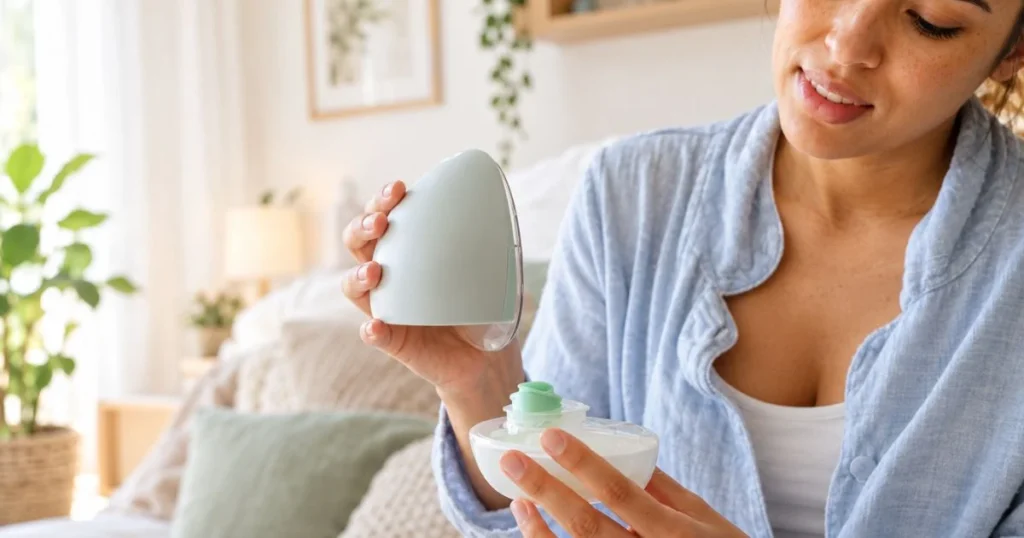
Choosing a breastfeeding hands free pump does not have to become a competition between brands, prices, or impressive feature lists.
The better question is:
Will this pump work for me?
Think about how often you pump, where you will use your breastfeeding hands free pump, how comfortable it feels, whether the flange fits appropriately, how effectively it removes milk for you, how long the battery can last, and how easy the pump is to clean.
If you pump occasionally, your priorities may be different from someone who pumps several times every day. If you are returning to work, portability and milk storage may matter more. If you exclusively pump, comfort and consistent milk removal may become much more important.
Most importantly, you do not have to choose the most expensive or technologically advanced pump to build a successful pumping routine. What matters is finding a setup that suits your body, supports your baby’s needs, and fits naturally into your everyday life.
Take your time, learn what works for your body, follow safe pumping and milk-storage practices, and reach out to a qualified lactation professional if you need individual support.
Your breastfeeding journey does not have to look like anyone else’s. Your pump should fit your life—not the other way around.