

Your child is crying because you said it was time to leave the park. You ask what happened, but instead of answering, they scream, “I don’t know!”
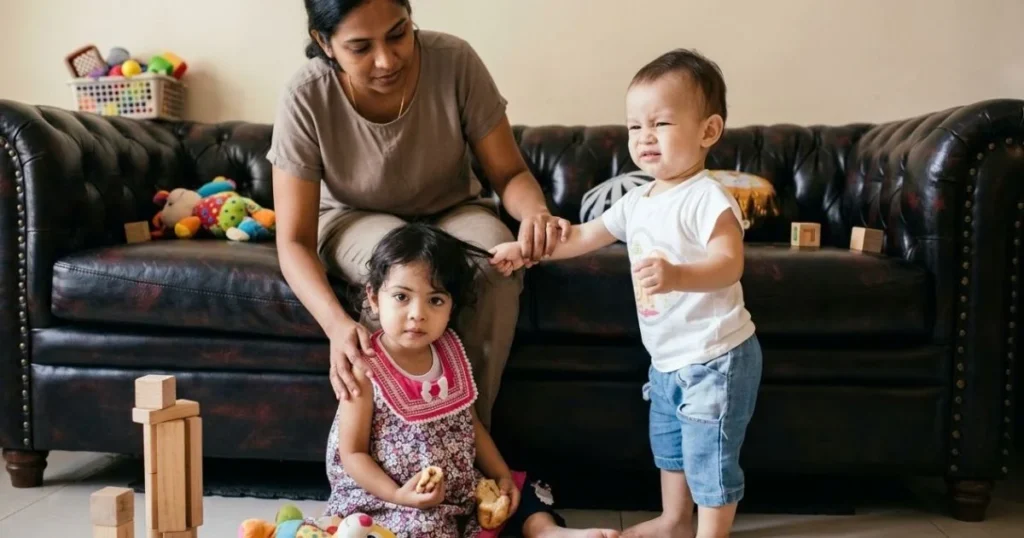
Maybe you’ve seen a similar moment at home. Your child becomes frustrated when a block tower falls, gets angry when a sibling takes a toy, or suddenly hides behind you before meeting someone new. You can see that something is happening emotionally, but your child doesn’t always have the words to explain it.
That gap between feeling something and being able to describe it is completely understandable. Children develop emotional language over time. They need opportunities to hear feeling words, connect those words with real experiences, and practice expressing what is happening inside them.
This is where Emotional Literacy can help. Emotional Literacy for kids begins with helping children recognize and understand the feelings they experience in everyday situations.
Emotional literacy is more than teaching your child words such as happy, sad, and angry. It involves helping them recognize emotions, understand what may be causing them, communicate those feelings, and gradually learn what they can do when emotions become intense.
You don’t need a formal lesson plan to teach these skills. Your child’s everyday life already gives you countless opportunities to build Emotional Literacy through simple conversations, observations, and everyday experiences.
What Is Emotional Literacy?
Emotional Literacy is the developing ability to recognize, understand, name, and communicate emotions.
For a young child, this might begin with something as simple as:
“I’m mad.”
As their emotional vocabulary grows, they may eventually be able to say:
“I’m upset because my brother knocked over the tower I built.”
That second statement contains much more information. Your child has identified the emotion, connected it with an event, and communicated what happened. These are important parts of developing Emotional Literacy.
You can think about emotional literacy as a gradual process:
Notice → Name → Understand → Express → Respond
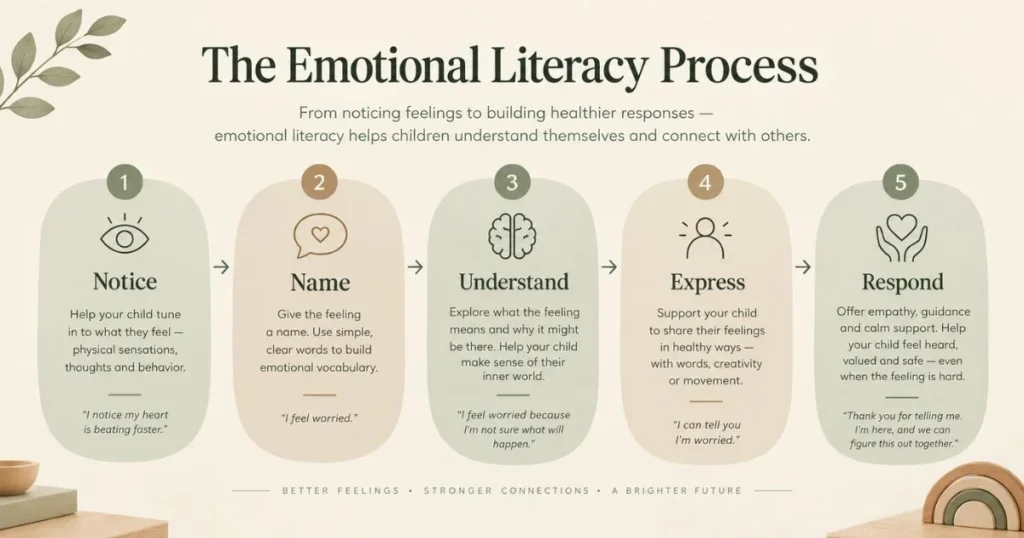
Children may move back and forth between these stages rather than progressing through them in a fixed order. A child may be able to name an emotion one day and struggle to do so when they are tired or overwhelmed. With time and practice, everyday experiences can help strengthen their emotional language and understanding.
Emotional Literacy Is More Than Knowing Emotion Words
A child can memorize dozens of feeling words without necessarily understanding their own emotional experiences.
The goal isn’t to make your child recite a list of emotions. Instead, you want to help them connect words with real life. This is an important part of building Emotional Literacy, because children learn emotional language best when they can relate words to what they are actually experiencing.
For example:
- “You seem disappointed because the playdate didn’t happen.”
- “You seem nervous about starting school.”
- “You were excited when Grandma arrived.”
- “You got frustrated when the puzzle pieces wouldn’t fit together.”
Over time, these repeated conversations help children build a more precise emotional vocabulary and strengthen their emotional literacy.
Emotional Literacy and Emotional Regulation Are Different Skills
These ideas are closely related, but they aren’t identical.
Emotional Literacy helps your child recognize, understand, and communicate what they are feeling.
Emotional regulation involves managing emotions, thoughts, and behaviors in different situations.
A child may be able to say, “I’m angry,” while still needing your help to avoid hitting, throwing, or screaming. That’s not a failure. Naming the emotion is one skill; learning what to do with that emotion is another. Developing Emotional Literacy can give your child a stronger foundation for recognizing and communicating those feelings.
This difference reflects the broader social-emotional learning framework from CASEL, which recognizes self-awareness and self-management as connected but separate skills.
Why Is Emotional Literacy Important for Kids?

Your child’s emotions affect how they communicate, play, learn, solve problems, and interact with other people. Giving them language for those emotions is an important part of Emotional Literacy and can help you understand each other more clearly.
CASEL’s framework describes social-emotional learning as including skills such as understanding emotions, managing emotions, showing empathy, maintaining relationships, and making responsible decisions. Developing Emotional Literacy can support the self-awareness and emotional communication skills children build as they grow. These skills develop across childhood and should be approached in ways that match your child’s developmental stage.
It Helps Children Communicate What They Need
A child who can say:
“I’m worried.”
It provides information that simply saying, “I don’t want to go,” does not reveal.
You can then explore what is behind the worry.
Maybe they are afraid of being separated from you. Perhaps something unfamiliar is happening. Or maybe they simply need more preparation.
The emotion word opens the door to a more useful conversation.
It Expands Your Child’s Emotional Vocabulary
Children don’t always experience emotions as simply “good” or “bad.”
They may be:
- excited and nervous
- happy and embarrassed
- angry and hurt
- disappointed and tired
- proud and worried
Learning more precise words gives children additional ways to describe these experiences.
Child Mind Institute resources specifically encourage children to label feelings, expand emotional vocabulary, recognize that more than one emotion can happen at once, and notice physical sensations associated with emotions.
It Supports Social-Emotional Development
As children become better at recognizing their own feelings, they can also begin noticing emotions in other people.
You might ask:
“What do you think your sister was feeling when someone took her toy?”
This doesn’t mean your child will suddenly become perfectly empathetic. Instead, you’re giving them practice considering another person’s emotional experience.
How Emotional Literacy Develops in Children
There isn’t one age when a child suddenly becomes emotionally literate. The vocabulary and complexity of emotional understanding generally grow as children develop.
Toddlers: Start With Basic Feelings
For toddlers, keep the language simple.
Start with words such as:
- Happy
- Sad
- Mad
- Scared
- Excited
You can connect the words to immediate experiences.
“You’re sad because Daddy left.”
“You’re excited to go outside.”
“You’re mad that the toy broke.”
Your toddler doesn’t need a lengthy explanation. Hearing the word repeatedly in a meaningful context is often more useful than a formal lesson.
Preschoolers: Expand Emotional Vocabulary
As your child’s language develops, introduce more specific words:
- Frustrated
- Worried
- Nervous
- Disappointed
- Proud
- Lonely
- Jealous
- Embarrassed
Instead of correcting your child when they say, “I’m mad,” you can gently add another possibility:
“You may be feeling frustrated after trying to zip up your coat.”
You’re not telling your child what they must feel. You’re giving them another word they can consider.
School-Age Children: Explore More Complex Feelings
Older children can begin exploring:
- Mixed emotions
- Emotional intensity
- Social emotions
- Perspective-taking
- Triggers
- Different ways people respond to the same situation
You might ask:
“Is it possible to feel both excited and nervous at the same time?”
Questions like this help children understand that emotions aren’t always neat or predictable.
CASEL recommends a developmental approach to social-emotional learning rather than treating competencies as identical at every age.
Build Your Child’s Emotional Vocabulary
One of the simplest ways to strengthen emotional literacy is to move beyond a small group of basic emotion words.
| Basic Feeling | More Specific Feeling Words |
| Happy | Excited, joyful, proud, content |
| Sad | Lonely, disappointed, hurt, discouraged |
| Angry | Annoyed, frustrated, irritated |
| Scared | Nervous, worried, frightened, uneasy |
| Calm | Relaxed, peaceful, comfortable |
You don’t need to teach this entire table in one sitting.
Instead, introduce words naturally.
If your child says:
“I’m mad!”
you might respond:
“You sound frustrated. You worked hard on that drawing and then it tore.”
The more children hear precise emotional language in context, the easier it can become to connect words with experiences.
10 Simple Ways to Build Emotional Literacy at Home
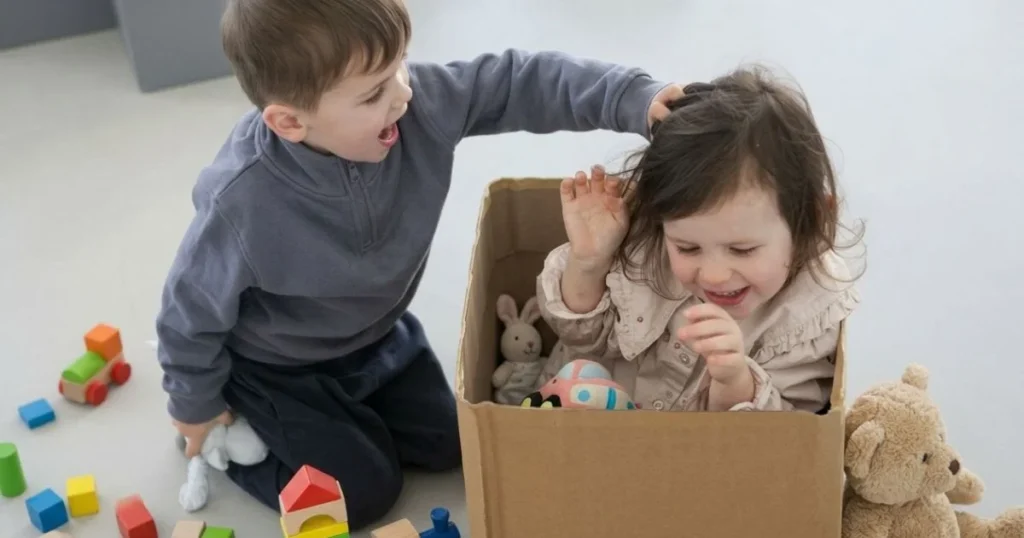
1. Name Feelings During Everyday Moments
You don’t need to wait for a difficult situation.
Name emotions during ordinary parts of your child’s day:
- “You’re excited about the birthday party.”
- “You look tired and a little grumpy.”
- “You look proud of the picture you created.”
- “That was disappointing.”
- “You looked nervous when everyone started watching.”
You’re giving your child emotional language without turning the moment into a lesson.
Child Mind Institute recommends helping children notice, label, and express feelings and incorporating emotional check-ins into everyday routines.
2. Expand Your Child’s Emotional Vocabulary
When your child uses a broad word such as “bad” or “mad,” offer more possibilities.
Try:
“Are you feeling frustrated, disappointed, or maybe angry?”
Giving a few choices can be easier than asking an open-ended question.
Avoid insisting that your interpretation is correct. Your child may choose a word you didn’t expect.
3. Model Emotional Language Yourself
Your own behavior gives your child a powerful example.
You might say:
“I’m feeling frustrated because I can’t seem to find my keys.”
Or:
“I’m disappointed that our plans changed.”
You can also model what happens next:
“I’m feeling frustrated, so I’m going to pause, take a deep breath, and slow down.”
Modeling doesn’t mean pretending you never become angry or overwhelmed. It means allowing your child to see that emotions can be noticed, expressed, and handled without hurting other people.
4. Validate Feelings Without Allowing Harmful Behavior
This is especially important when you’re using a gentle-parenting approach.
You can accept your child’s emotion while maintaining a clear boundary.
For example:
“It’s okay to be angry. I won’t let you hit.”
Or:
“You really wanted the toy. You’re disappointed. I won’t let you grab it from your brother.”
The message is:
Your feeling is allowed. The behavior still has a limit.
This helps separate the emotion itself from what your child chooses to do with it.
5. Use Books and Stories to Talk About Feelings
Stories give children a safe way to explore emotions without making every conversation about themselves.
While reading, pause occasionally and ask:
- “How do you think she feels?”
- “What makes you think that?”
- “Why do you think he became angry?”
- “Have you ever felt like that?”
- “What might help?”
You don’t need to ask a question on every page. Sometimes simply pointing out an emotion is enough.
6. Use a Feelings Chart or Emotion Wheel
Visual tools can be particularly useful when your child knows they feel something but can’t find the word.
You might have your child:
- Point to a feeling.
- Choose between two emotions.
- Show how strong the feeling is.
- Pick more than one feeling.
- Draw an emotion instead of naming it.
Child Mind Institute recommends emotional check-ins and intensity scales as ways to help children practice identifying both the type and intensity of emotions.
7. Help Your Child Notice Feelings in Their Body
Emotions aren’t only words. Children can also learn to notice physical clues.
For example:
| Feeling | Possible Body Clues |
| Anger | Tight fists, tense muscles, hot face |
| Nervousness | Butterflies in the stomach, tense body |
| Excitement | Energetic body, fast talking |
| Sadness | Tears, heavy or tired feeling |
| Calm | Relaxed muscles, slower breathing |
Be careful not to teach these sensations as rigid rules. A racing heart, for example, can happen with fear, excitement, exercise, or other experiences.
Instead, teach your child to think:
“My body is giving me a clue. What might I be feeling?”
8. Connect Feelings With What Happened
A simple framework can help:
What happened → What did you feel → What did your body notice → What did you need?
Imagine your child’s block tower collapses.
You might say:
“Your tower fell down. You looked frustrated. Your hands got tight, and you wanted help rebuilding it.”
This connects the event, emotion, physical sensation, and need.
9. Talk About Feelings After Difficult Moments
When your child is having a major meltdown, that usually isn’t the easiest time for a long emotional lesson.
Once your child has calmed down, you can revisit the situation.
“You were really upset when we had to leave. You wanted more time to play.”
Then help your child think about what they could communicate next time:
“You can say, ‘I’m disappointed. Can I have one more minute?’”
You aren’t expecting perfect emotional control. You’re giving your child another opportunity to practice.
10. Make Emotional Literacy Playful
Children don’t need every emotional-learning experience to feel serious.
Try:
- Emotion charades
- Puppet conversations
- Drawing feelings
- Guess-the-emotion games
- Matching emotion cards
- Pretend scenarios
- Storytelling
- “What would you feel if…?” questions
Play gives children a low-pressure way to experiment with emotional language.
Child Mind Institute educational materials similarly use feelings vocabulary, intensity scales, body awareness, and feelings charades to help children practice identifying emotions.
These repeated conversations help children build a more precise emotional vocabulary and strengthen their emotional literacy.” → “Learning how to respond to toddler emotions can also help parents support children through big feelings.
Emotional Literacy Activities for Kids
Once your child has some basic vocabulary, you can turn practice into simple games.
Feelings Detective
Choose a character from a book, television show, or pretend situation.
Ask your child to look for clues:
- What happened?
- What does the person’s face look like?
- What is their body doing?
- What might they be feeling?
- What might they need?
The goal isn’t necessarily to find one perfect answer. You’re teaching your child to look for emotional information.
Draw Your Feeling
Ask:
“Can you draw what frustrated looks like?”
Then let your child explain the picture.
You may learn something about their experience that you wouldn’t have discovered through direct questioning.
Emotion Charades
Take turns acting out feelings without saying the word.
After guessing, ask:
“What clues helped you figure that out?”
This helps children notice facial expressions, posture, movement, and behavior.
Feelings Sentence Starters
Use simple prompts:
- “I feel happy when…”
- “I feel worried when…”
- “I feel frustrated when…”
- “I feel proud when…”
- “I feel disappointed when…”
- “I feel calm when…”
Don’t worry about correcting every answer. The goal is communication and exploration.
How to Help Kids Name Feelings During Tantrums
A tantrum is not usually the moment to deliver a long explanation about emotional vocabulary.
When your child’s emotions are intense, focus first on safety, connection, and a clear boundary.
Keep Your Words Short
Try:
“You’re angry.”
“You wanted more time.”
“This is hard.”
“I’m here.”
You can talk more once your child is calmer.
Validate the Emotion and Hold the Boundary
For example:
“You really wanted the cookie. You’re disappointed. I’m not changing my answer.”
Or:
“You’re furious that your sister took the toy. I won’t let you hit.”
This communicates two things at once: I understand your feeling, and I’m still keeping the boundary.
Teach After the Storm
Once your child is calm, revisit what happened.
You might say:
“You were really angry when I said it was bedtime. Next time, you can tell me, ‘I’m disappointed. I want more playtime.’”
That conversation turns an emotionally difficult moment into another opportunity to practice emotional literacy.
What to Say When Your Child Can’t Name Their Feelings
Sometimes your child genuinely doesn’t know.
Instead of repeatedly asking:
“What are you feeling?”
try reducing the pressure.
If Your Child Says “I Don’t Know”
Say:
“That’s okay. We can figure it out together.”
If Your Child Is Crying
Try:
“Something feels really hard right now. I’m here.”
If Your Child Is Angry
Try:
“You’re really angry. Do you want me to help you figure out what happened?”
If Your Child Can’t Find the Right Word
Offer choices:
“Are you frustrated, sad, or worried?”
If Your Child Doesn’t Want to Talk
Respect that while staying available:
“You don’t have to talk right now. When you’re ready, I’ll listen.”
Listening and validation should come before rushing into problem-solving. Child Mind Institute specifically recommends acknowledging and validating children’s emotions before immediately trying to fix the problem.
Emotional Literacy and the Body
Helping your child notice physical sensations adds another layer to emotional awareness.
You might ask:
“What does your body feel like when you’re nervous?”
Or:
“Where do you feel anger in your body?”
Your child might say:
- “My tummy hurts.”
- “My hands feel tight.”
- “My heart is beating fast.”
- “I feel hot.”
These observations can become useful clues.
Over time, your child may begin to notice:
“My tummy feels funny. I think I’m nervous.”
That’s a meaningful step toward self-awareness.
CASEL describes self-awareness as including the ability to recognize one’s emotions and understand how emotions, thoughts, and behavior relate to one another.
How You Can Model Emotional Literacy Every Day

Your child doesn’t learn emotional language only from what you teach them directly. They also watch what you do.
During Frustration
“I’m frustrated because we’re running late. I’m going to slow down and focus on one thing at a time.”
During Disappointment
“I was hoping we could go to the park today. I’m disappointed that we can’t.”
During Conflict
“I’m angry, so I’m going to take a moment before I answer.”
After You Make a Mistake
“I was frustrated and I spoke too loudly. I’m sorry. Let me try that again.”
This last example is particularly valuable.
You’re showing your child that emotional literacy doesn’t require perfection. You can notice what happened, name it, take responsibility, and repair the relationship.
Emotional Literacy by Age: A Simple Guide
Use this as a general guide rather than a strict milestone chart.
| Age/Stage | Main Goal | Helpful Approach |
| Toddlers | Recognize basic emotions | Name feelings during everyday routines |
| Preschoolers | Expand emotional vocabulary | Books, pretend play, emotion games |
| Early school age | Connect emotions with situations | Ask what happened and how it felt |
| Older children | Explore complex emotions | Discuss mixed feelings and perspective |
Children develop at different rates, and their ability to talk about emotions can vary depending on their age, temperament, language skills, situation, and emotional state.
CASEL’s framework specifically recommends considering children’s developmental levels and age-appropriate needs when supporting social-emotional learning.
Common Mistakes That Can Get in the Way of Emotional Literacy
Even with the best intentions, some approaches can make emotional conversations harder.
Expecting a Child to Explain Feelings During a Meltdown
A highly distressed child may not have the capacity or willingness to explain everything happening inside them.
Connect first. Teach later.
Saying “Don’t Be Sad” or “Don’t Be Angry”
These phrases are usually meant to comfort, but they can unintentionally communicate that certain emotions aren’t acceptable.
Instead:
“You’re sad. I’m here.”
or:
“You’re angry. I won’t let you hurt anyone.”
Trying to Fix Every Emotion
Your child’s disappointment doesn’t always require a solution.
Sometimes they need you to acknowledge what happened:
“You really wanted that.”
That can be enough.
Teaching Too Many Words Too Quickly
You don’t need to introduce twenty new emotions in one week.
Start with a few useful words and expand gradually.
Confusing Feelings With Behavior
Your child isn’t “bad” because they feel angry.
At the same time, anger doesn’t make hitting acceptable.
Keep the distinction clear:
Feelings can be accepted. Harmful behavior needs boundaries.
Turning Emotional Literacy Into a Test
If your child says, “I don’t know,” don’t turn the moment into an examination.
Offer alternatives:
- Point to a picture.
- Choose between two words.
- Draw the feeling.
- Talk through what happened.
- Try again later.
When Your Child Struggles to Talk About Feelings
Some children naturally talk about emotions more than others.
Your child might prefer:
- Drawing
- Pretend play
- Pointing
- Facial expressions
- Movement
- Choosing between two options
- Talking at bedtime rather than immediately after an event
You can meet your child where they are.
The goal isn’t to force emotional disclosure. It’s to create enough safety and opportunity for your child to communicate when they are ready.
If difficulties with communication, emotional expression, or behavior are persistent and significantly interfere with your child’s everyday functioning, relationships, learning, or safety, talk with your pediatrician or an appropriately qualified child-development professional.
Frequently Asked Questions About Emotional Literacy
What Is Emotional Literacy for Kids?
Emotional literacy is a child’s developing ability to recognize, understand, name, and communicate emotions. It can include learning emotional vocabulary, noticing body sensations, understanding what triggers feelings, and communicating emotional needs.
Why Is Emotional Literacy Important for Children?
Emotional literacy gives children language for experiences that can otherwise be difficult to explain. It can support self-awareness, communication, empathy, and broader social-emotional development. CASEL identifies recognizing emotions as part of self-awareness and managing emotions as part of self-management within its broader SEL framework.
How Do You Teach Emotional Literacy to Kids?
Start with everyday moments. Name feelings, model emotional language, read stories, use emotion games, validate feelings, and help your child connect emotions with situations and body sensations.
How Can I Help My Child Name Their Feelings?
Start with simple words such as happy, sad, angry, scared, and excited. As your child’s vocabulary develops, introduce more precise words such as frustrated, disappointed, nervous, proud, and embarrassed.
You can also offer choices:
“Are you frustrated or disappointed?”
At What Age Can Children Learn Emotional Literacy?
Emotional learning begins early and develops gradually. Toddlers can begin learning basic emotion words, while preschoolers and school-age children can gradually develop more specific vocabulary and explore increasingly complex emotional experiences.
What Are Some Emotional Literacy Activities for Kids?
Useful activities include:
- Emotion charades
- Feelings drawings
- Emotion cards
- Story discussions
- Puppet play
- Feelings sentence starters
- Feelings detective games
- Body-awareness activities
Does Emotional Literacy Help With Tantrums?
Emotional Literacy can give children more language for communicating what they feel, but it won’t eliminate tantrums. Young children are still developing self-regulation skills and may become overwhelmed by strong emotions. During an intense episode, focus on safety, connection, and simple language. Once your child is calm, you can use the quieter moment afterward to teach, reflect, and build their emotional literacy.
What Should I Do If My Child Says “I Don’t Know” When I Ask How They Feel?
Don’t pressure them. Try:
“That’s okay. We can figure it out together.”
You can offer two or three possible feelings, use a visual chart, or talk about what happened instead of asking directly about the emotion.
Conclusion: Give Your Child the Words for What They Feel
Your child doesn’t need to identify every emotion perfectly.
They don’t need a huge vocabulary before they can communicate effectively. And they certainly don’t need to stay calm every time they experience frustration, disappointment, anger, or fear.
Emotional Literacy grows through repetition.
It grows when you say, “You look disappointed.”
It grows when you read a story and ask how a character feels.
It grows when you help your child notice that their stomach feels tight before a new experience.
It grows when you say, “It’s okay to be angry. I won’t let you hit.”
And it grows when you model your own emotions honestly and show your child that feelings can be named without being judged.
The goal isn’t to raise a child who never has difficult emotions. The goal is to help your child gradually understand those emotions well enough to communicate them, ask for support, and learn what to do next. Emotional Literacy develops through these small, everyday experiences rather than through one formal lesson.
You don’t have to teach emotional literacy perfectly. You can build it one ordinary conversation at a time.
Parenting Whisper Reminder
Your child doesn’t need you to fix every feeling. Sometimes, giving the feeling a name is the first step toward helping them understand it.
If this article helped you see your child’s big feelings differently, save it for the next difficult moment and share it with another parent who might need the reminder: feelings are something children learn to understand—not something they are expected to know how to manage perfectly from the beginning.