You probably notice your toddler’s hands more than you realize.
One day, your little one is struggling to turn a book page. A few weeks later, they are trying to feed themselves with a spoon, stack blocks, peel a sticker, or make their first scribbles with a crayon. These ordinary moments may look like simple play, but they are also opportunities to practice important hand and finger movements.
You don’t need a shelf full of expensive educational toys to support this development. Many of the best Fine Motor Activities for Toddlers use things you already have at home.
The key is to offer activities that match your child’s current abilities, allow plenty of repetition, and keep the experience playful. Your toddler doesn’t need to complete an activity perfectly. The reaching, grasping, squeezing, turning, stacking, and experimenting are what matter.
In this guide, you’ll find Fine Motor Activities by Age, from around 1 year through 3 years, along with simple ideas for hand strength, hand-eye coordination, pre-writing practice, and everyday play.
A quick developmental note: Children develop at different rates. The CDC describes developmental milestones as skills that most children—at least 75%—can do by a certain age. Milestone checklists are useful for monitoring development, but they are not a substitute for standardized developmental screening.
What Are Fine Motor Skills?
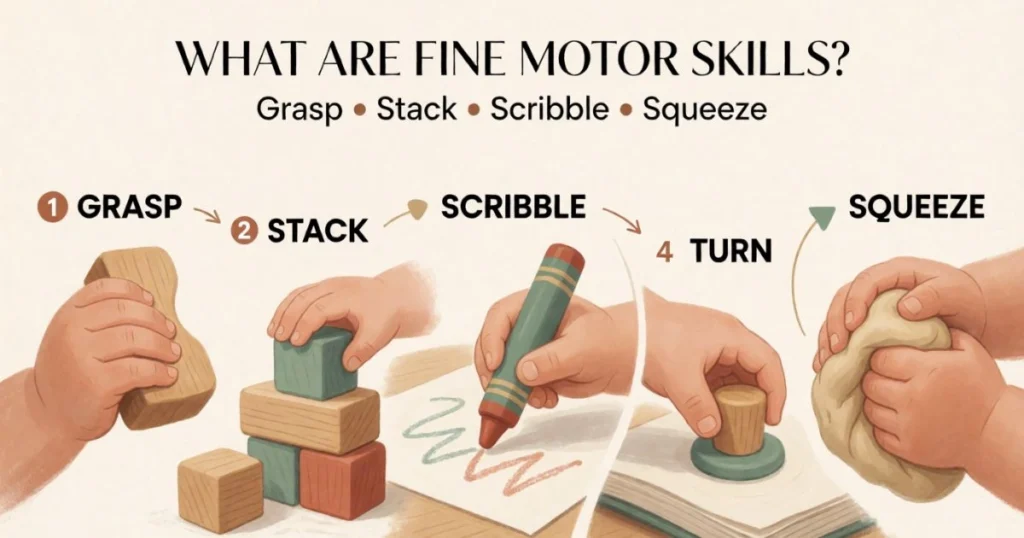
Fine Motor Activities help toddlers practice controlled movements using the smaller muscles in their hands, fingers, and wrists.
Your toddler uses these skills throughout the day, often without realizing they are practicing important abilities.
For example, your child may use fine motor control when they:
- Pick up a piece of food
- Hold a spoon
- Turn a book page
- Stack blocks
- Put a toy into a container
- Push a button on a toy
- Scribble with a crayon
- Manipulate play dough
- Complete a simple puzzle
- Peel a sticker
- Eventually use scissors, buttons, and pencils
Fine motor development is closely connected to independence. As your toddler gains better control of their hands and fingers, everyday tasks can become easier, more manageable, and more enjoyable.
Fine Motor Skills vs. Gross Motor Skills
Fine motor and gross motor skills are different, but both are important.
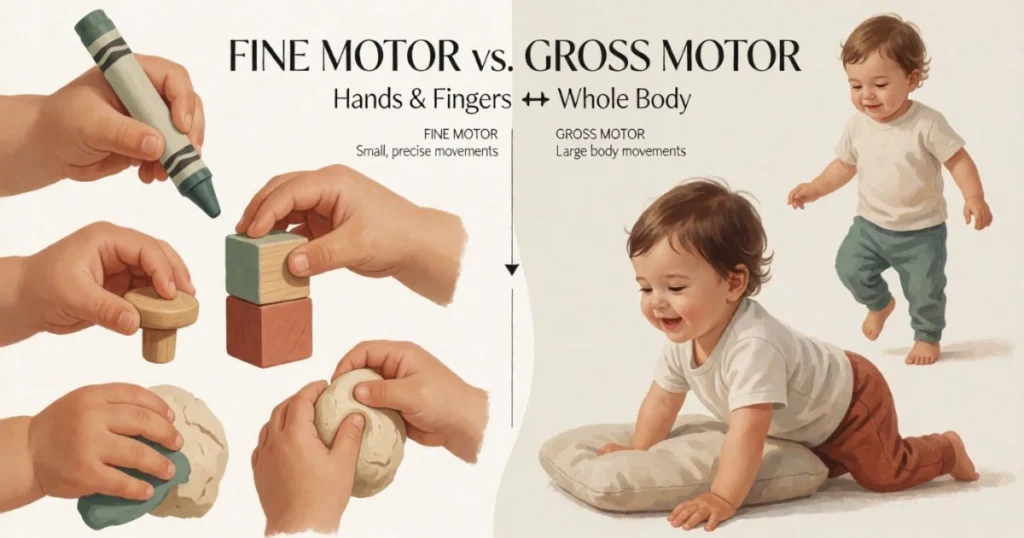
| Fine Motor Skills | Gross Motor Skills |
| Picking up objects | Running |
| Stacking blocks | Jumping |
| Scribbling | Climbing |
| Turning pages | Throwing |
| Using a spoon | Kicking |
| Threading objects | Balancing |
| Manipulating play dough | Walking |
Fine motor activities focus mainly on the smaller movements of the hands and fingers. Gross motor activities involve larger movements using the arms, legs, trunk, and whole body.
Your toddler needs opportunities for both.
“For more ideas that encourage whole-body movement, explore our guide to gross motor activities for toddlers and preschoolers.”
Why Are Fine Motor Activities Important for Toddlers?
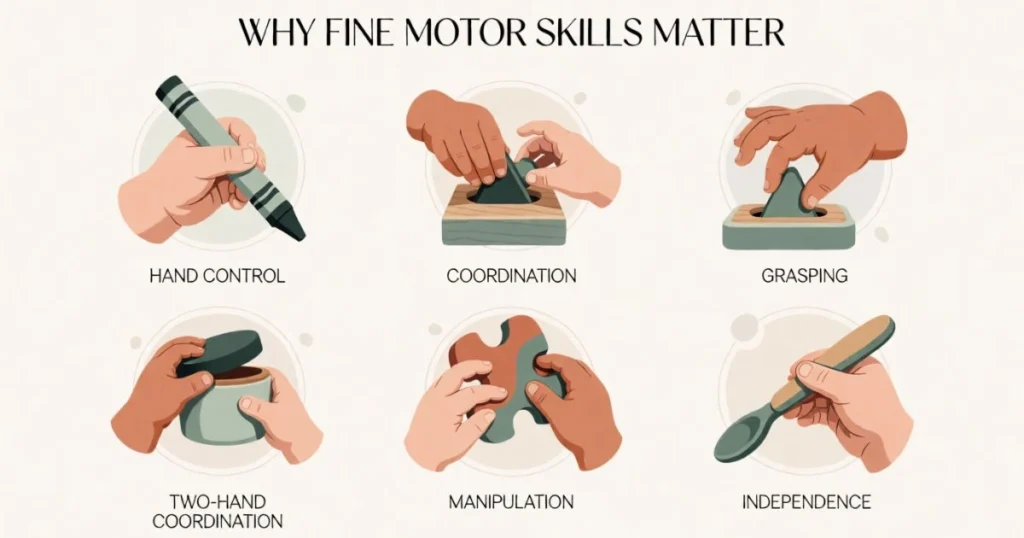
Your child’s hands are involved in much more than crafts.
Fine Motor Activities can help toddlers practice the hand and finger control they use during everyday routines, including eating, playing, getting dressed, turning pages, and eventually drawing and writing.
Regular opportunities to use their hands can support:
- Finger and hand control
- Hand-eye coordination
- Grasping and releasing
- Coordination between both hands
- Manipulating and handling objects
- Greater independence during daily routines
- Early drawing and pre-writing movements
The CDC’s milestone resources include everyday hand-related abilities, such as putting objects into containers at 1 year, stacking objects and using fingers to eat at 15 months, scribbling and trying to use a spoon at 18 months, and drawing a circle when shown how at age 2.
That doesn’t mean you need to drill these skills with your toddler.
Instead, give your child plenty of chances to practice through simple, everyday play.
Fine Motor Activities for Toddlers by Age
Before you start, remember that age ranges are guides rather than rigid deadlines.
Your 20-month-old may enjoy an activity listed for a 2-year-old, while another child of the same age may prefer something simpler. Start where your toddler is comfortable and make the activity easier or harder depending on their response.
A good activity should feel challenging enough to be interesting without becoming so difficult that your child immediately gives up.
Fine Motor Activities for 1-Year-Olds
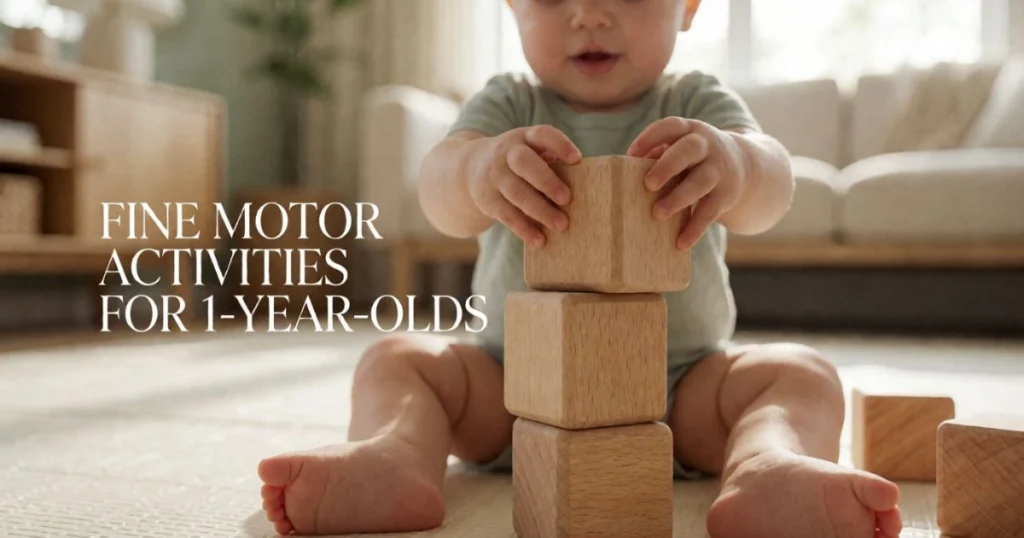
Around your child’s first birthday, they become more interested in exploring objects with their hands. Simple Fine Motor Activities that involve grasping, letting go, putting objects in containers, and taking them out again can give them valuable practice.
The CDC recommends offering blocks and other toys that encourage 1-year-olds to use their hands. Its 1-year milestone guidance also lists putting something into a container as an example of a skill many children can demonstrate around this age.
1. Stack Large Blocks
Give your toddler a few large blocks and show them how to place one on top of another.
Don’t worry if your child knocks the tower down immediately. Picking up the blocks, positioning them, and releasing them are all part of the activity.
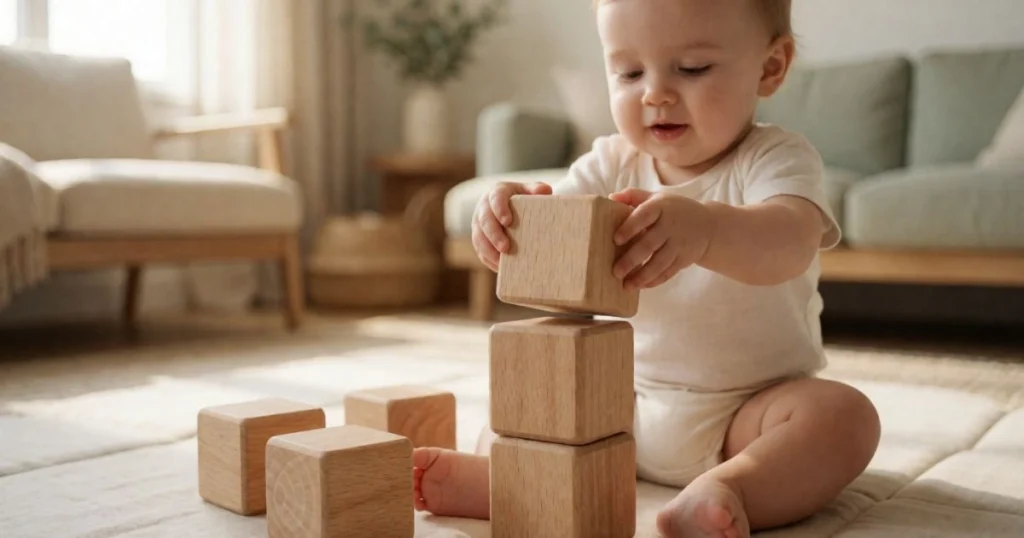
What it practices:
- Grasping
- Releasing
- Hand-eye coordination
- Object manipulation
2. Put Objects Into a Container
Take a large container and several large, safe objects.
Show your toddler how to drop one object inside. Then let them experiment.
You can say, “In!” each time they put something into the container.
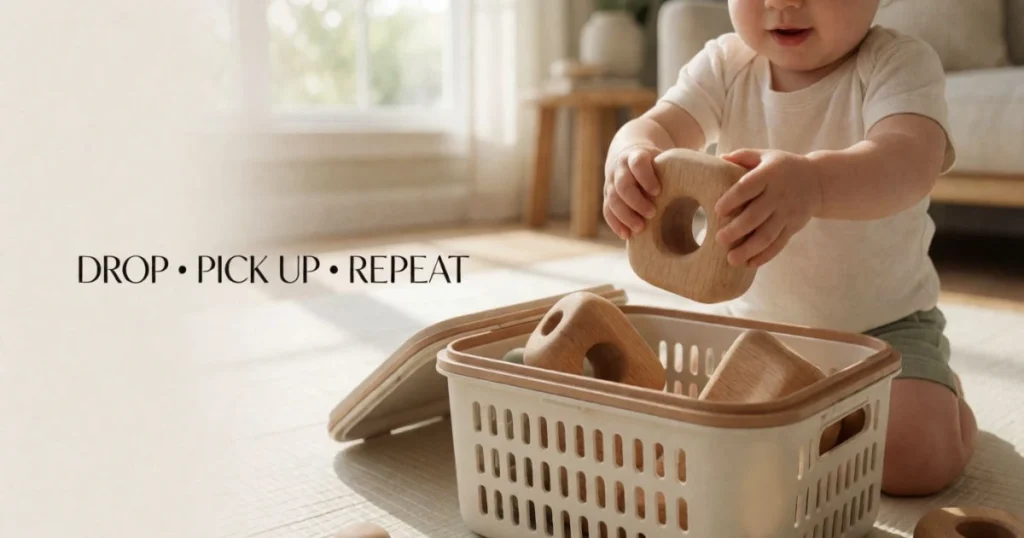
Once your child has finished, let them empty it and start again.
3. Turn Board-Book Pages

Give your toddler a sturdy board book and let them practice turning pages.
At first, they may turn several pages at once. That’s completely fine. With practice, their finger control will gradually become more precise.
You can make the activity more engaging by pointing at pictures and naming them.
4. Build With Large Blocks
Building isn’t only about making a tall tower.
Your toddler has to pick up each block, position it, release it, and adjust their hands when the blocks don’t line up.
Let your child build freely rather than correcting every movement.
5. Practice Safe Finger Feeding
Mealtimes can naturally provide fine motor practice.
When developmentally appropriate and prepared safely, allowing your toddler to pick up suitable finger foods encourages them to coordinate their hands and mouth.
Always follow age-appropriate feeding and choking-safety guidance.
6. Simple Shape Sorter Play
Offer a shape sorter with large pieces that are appropriate for your child’s age.
Don’t expect your toddler to understand the matching concept immediately. Let them pick up the shapes, rotate them, and experiment with the openings.

“If you’re also creating a routine for your 1-year-old, our guide to a 1-year-old sleep schedule can help you build a predictable daily rhythm.”
Fine Motor Activities for 15- to 18-Month-Olds
Your toddler’s movements may become more deliberate during this stage.
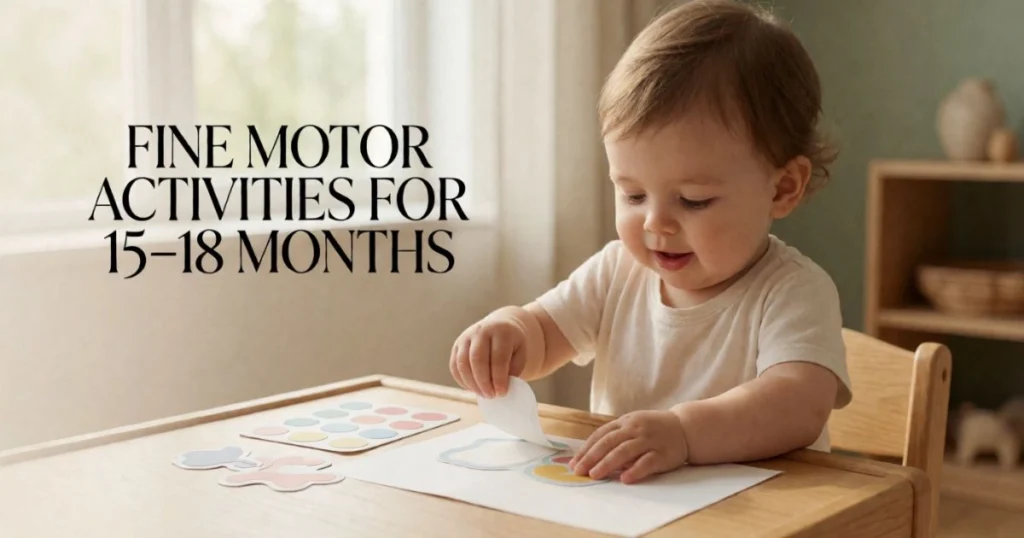
The CDC lists stacking at least two small objects and using fingers to feed among its 15-month milestones. At 18 months, scribbling and trying to use a spoon are included among the movement-related milestones.
1. Sticker Peeling and Placing
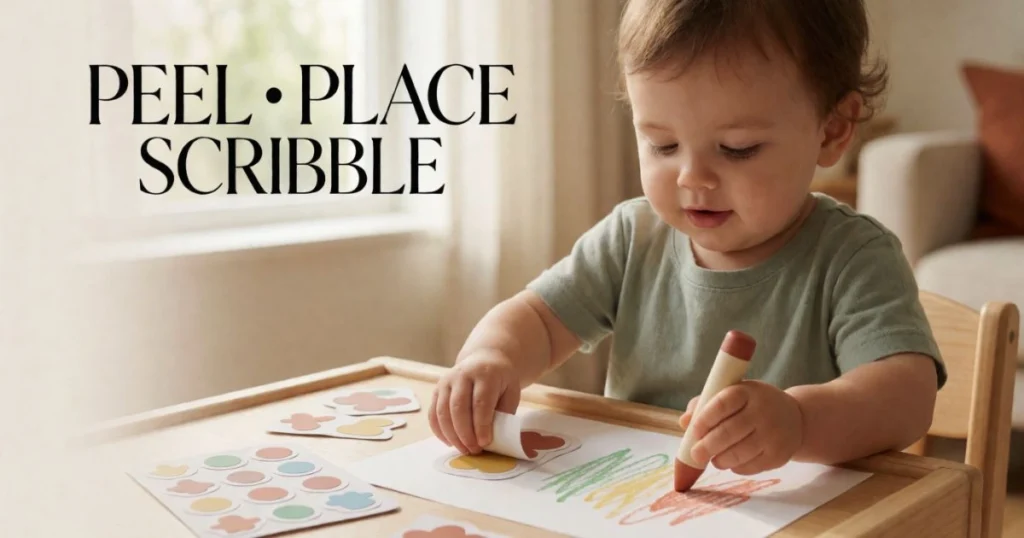
Use large toddler-appropriate stickers and a sheet of paper.
Peeling the sticker can be harder than it looks. Your child has to pinch the edge, pull it away, reposition it, and press it down.
If your toddler can’t peel the sticker independently, lift one corner first.
2. Scribbling With Chunky Crayons
Place a few chunky crayons on paper and allow your toddler to explore.
Don’t worry about recognizable pictures.
At this stage, scribbling is about experimenting with movement and learning that their hand can create marks.
3. Play Dough Squeezing
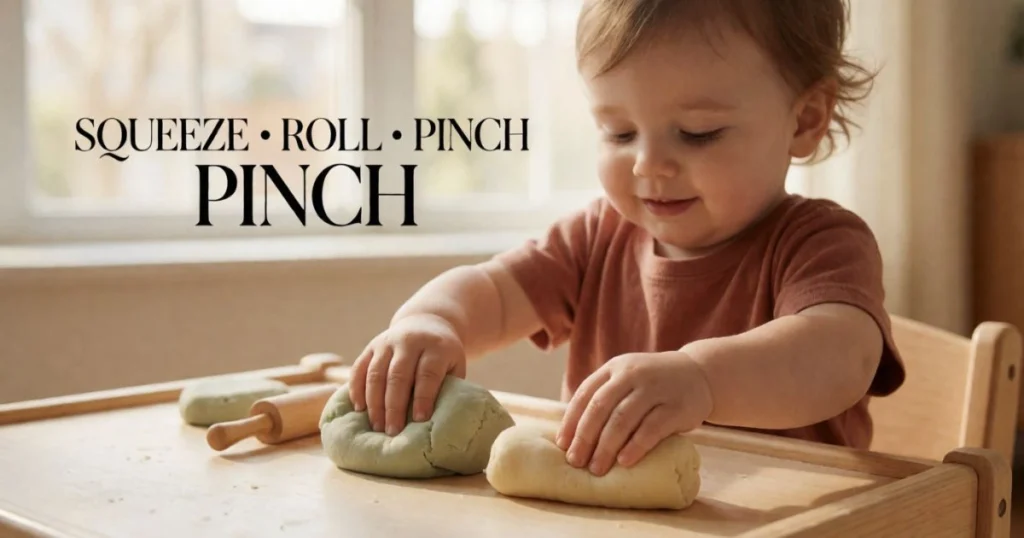
Give your toddler a small amount of age-appropriate play dough.
Try simple actions:
- Squeeze it
- Roll it
- Flatten it
- Pinch it
- Pull it apart
Stay close and follow the product’s age recommendations.
4. Scoop and Pour
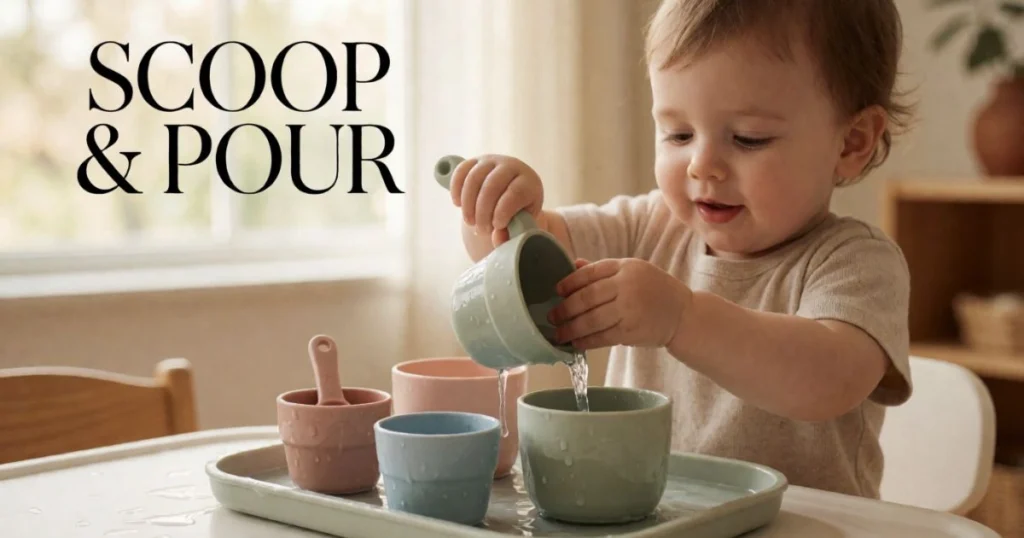
Use cups and larger safe objects or appropriate water-play materials.
Your toddler can scoop, transfer, empty, and repeat.
The repetition is valuable. Toddlers often want to do the same movement dozens of times—and that’s part of how they learn.
5. Open and Close Safe Containers
Choose containers that are specifically safe for your child’s age.
Let your toddler practice:
- Opening the container
- Taking something out
- Putting it back
- Closing the container
This combines hand control with problem-solving.
6. Simple Peg Activities
Large peg toys can give your toddler an opportunity to grasp, position, and release objects.
Start with just a few pieces so the activity doesn’t become overwhelming.
Fine Motor Activities for 2-Year-Olds
By age 2, your toddler may be ready to try Fine Motor Activities that require more precise and controlled hand movements.
The CDC’s 2-year milestone resources include using switches, knobs, and buttons on toys, as well as drawing a circle when shown how.
1. Play Dough Pinching and Rolling
Play dough is one of the easiest ways to turn hand practice into play.
Ask your toddler to:
- Make little balls
- Roll snakes
- Flatten dough
- Pinch the edges
- Push fingers into the dough
- Make pretend food
You don’t need a complicated activity. Simply handling the dough gives your child something interesting to manipulate.
2. Sticker Art
Give your toddler a piece of paper and several stickers.
You can create a simple theme:
- Stick flowers onto a garden
- Put stars in the sky
- Make a pretend road
- Decorate a paper plate
The creative result isn’t the important part. The peeling, positioning, and pressing are what make this a useful fine motor activity.
3. Transfer With Tongs
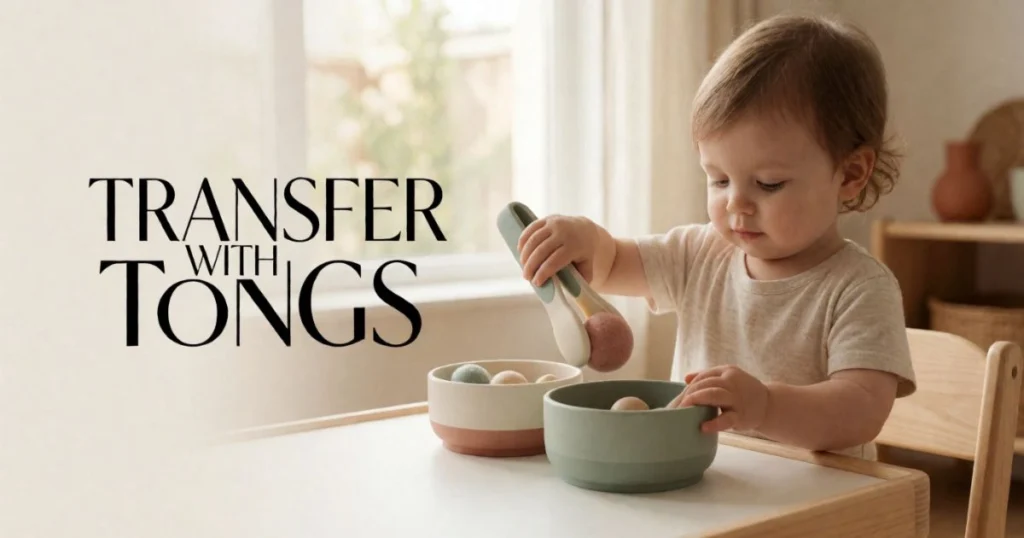
Use toddler-appropriate tongs and larger objects that cannot easily become choking hazards.
Your child can move objects from one container to another.
If tongs are too difficult, begin with hands and introduce the tool later.
4. Simple Puzzles
Start with puzzles that have large pieces and a small number of pieces.
Your toddler has to:
- Pick up the piece
- Turn it
- Compare its shape
- Position it
- Push it into place
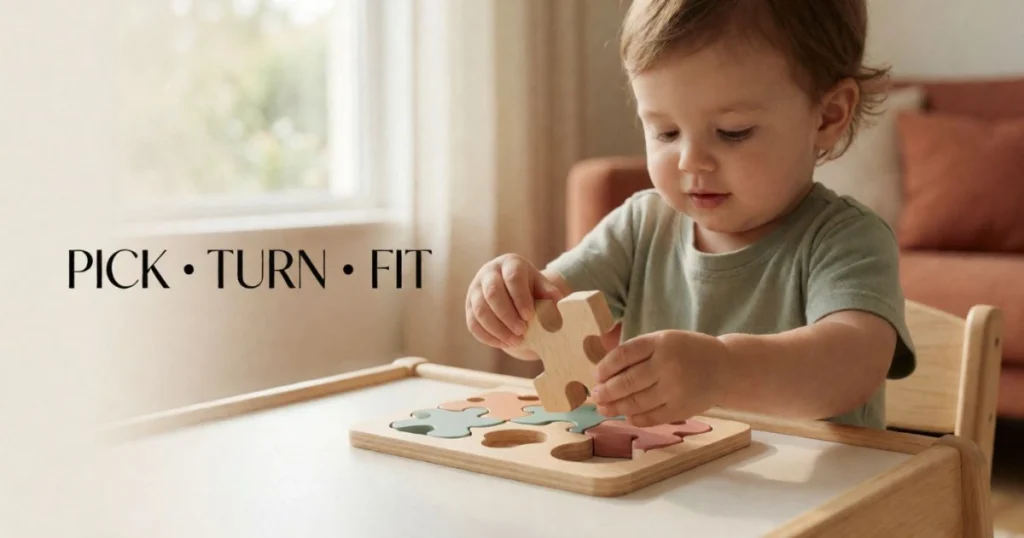
This combines fine motor control with visual problem-solving.
5. Block Building
Instead of simply stacking blocks, encourage your child to make a road, house, tower, or garage.
You can participate without taking over.
Try saying:
“Where should this block go?”

rather than immediately showing your child the answer.
6. Tear-and-Paste Art
Give your toddler pieces of paper to tear into smaller pieces.
Then help them place the pieces onto a larger sheet.
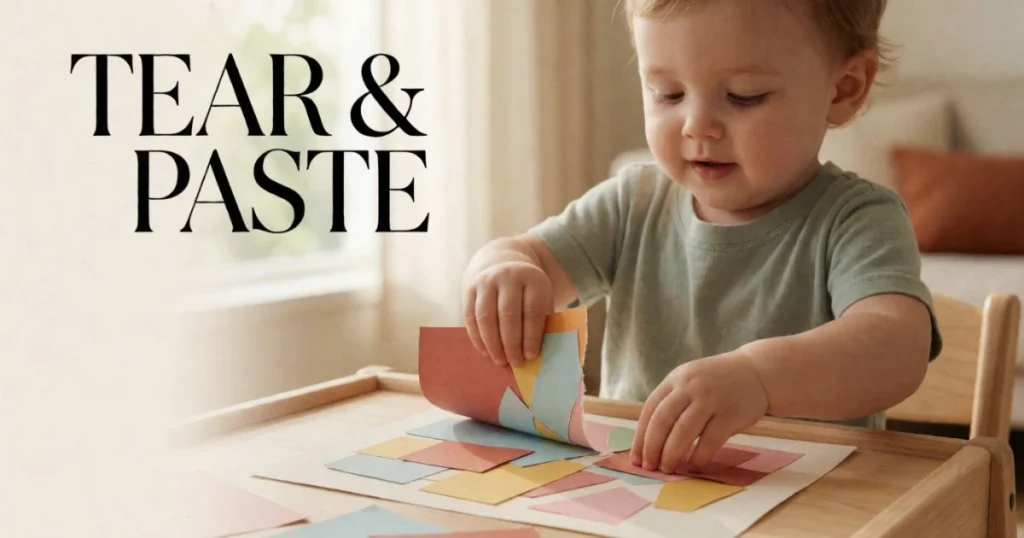
Use child-safe glue appropriate for their age and supervise closely.
7. Crayon Drawing
Offer paper and several chunky crayons.
You can draw simple lines and shapes and invite your toddler to copy you if they want.
Keep the experience relaxed. A toddler who spends five minutes making enthusiastic scribbles is still getting valuable practice.
8. Sponge Squeezing
During supervised water play, your toddler can squeeze a sponge and watch water come out.
This adds a sensory element while encouraging repeated hand movements.
Fine Motor Activities for 2½-Year-Olds
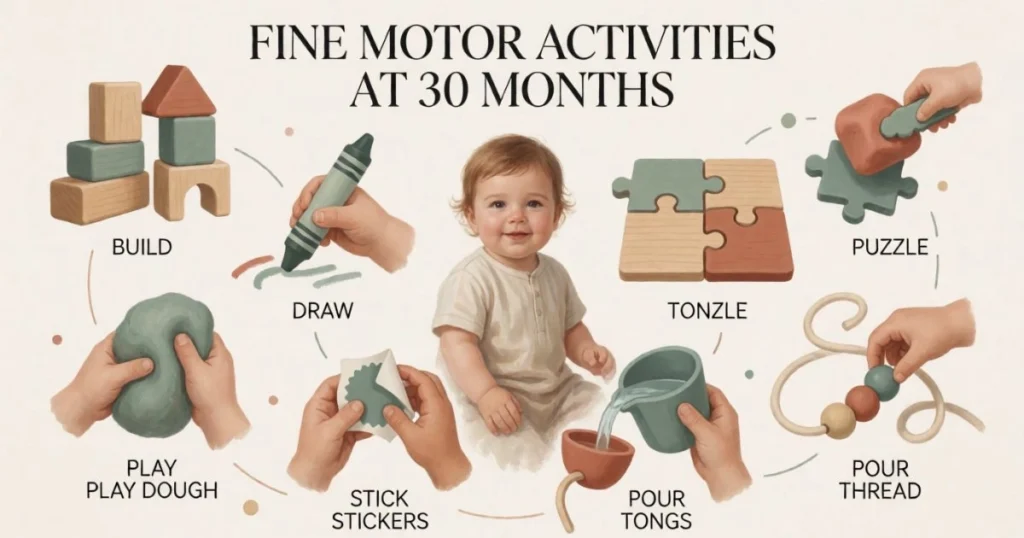
ThThe period around 30 months can be a helpful transition between simple toddler play and more structured preschool activities.
The CDC’s 30-month guidance includes skills and activities such as pretend play, looking at books, and turning pages.
Try these Fine Motor Activities:
- Play dough with simple tools
- Creating sticker patterns
- Threading large beads with close supervision
- Simple lacing activities
- Drawing lines and circles
- Sorting objects
- Building more detailed structures with blocks
- Pretend cooking with safe kitchen items
- Simple matching games
At this stage, you can also give your toddler more opportunities to make choices.
For example:
“Do you want the crayons or the play dough?”
Offering simple choices can help your child feel involved and make practice feel more like play than a task.
Fine Motor Activities for 3-Year-Olds
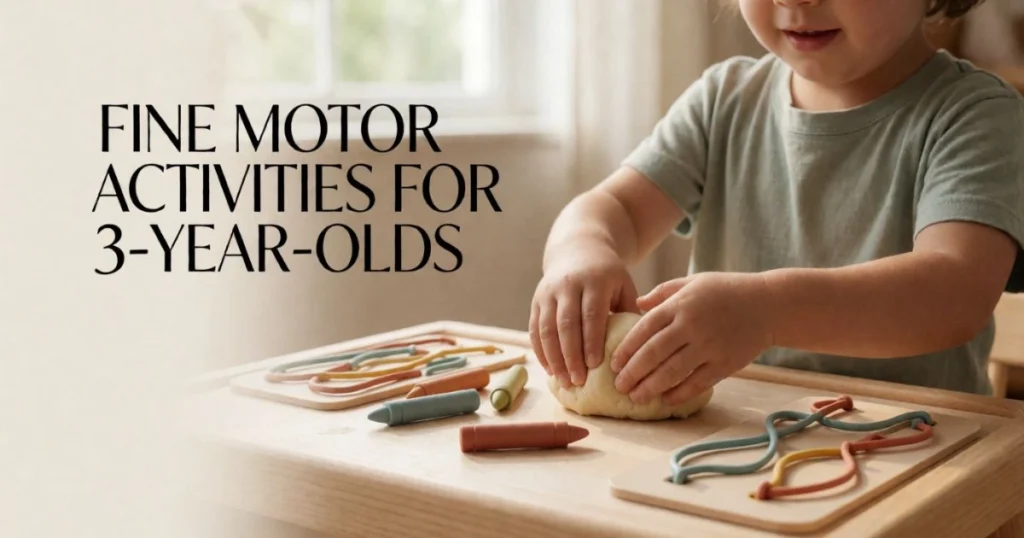
By age 3, your child may be ready for Fine Motor Activities that require greater precision and control.
The CDC lists drawing a circle when shown how and using a fork among its 3-year developmental milestones. Its milestone resources also recommend play dough activities such as squeezing, pressing, and pinching, which encourage children to use and strengthen their hands and fingers.
1. Play Dough Cutting
Give your child play dough and an age-appropriate tool.
Your toddler can flatten the dough and practice making cuts.
2. Simple Lacing
Use large lacing materials designed for young children.
Threading requires your child to coordinate both hands while visually tracking the opening.
3. Threading Large Beads
Choose materials specifically designed for your child’s age and supervise closely.
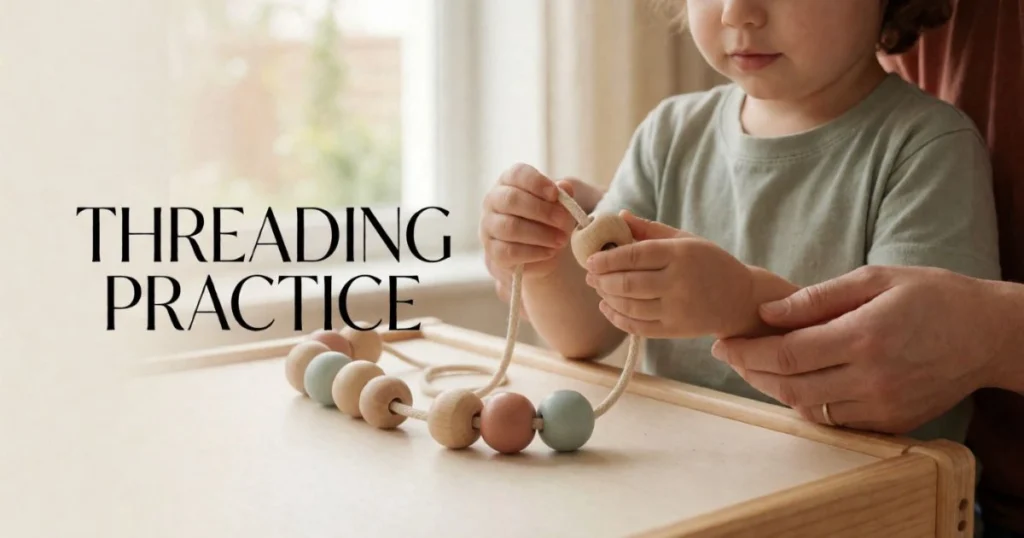
Your child can practice:
- Picking up the bead
- Finding the opening
- Holding the string
- Pushing the string through
- Pulling it out
4. Drawing Lines and Shapes
Move beyond random scribbling by introducing simple lines and shapes.
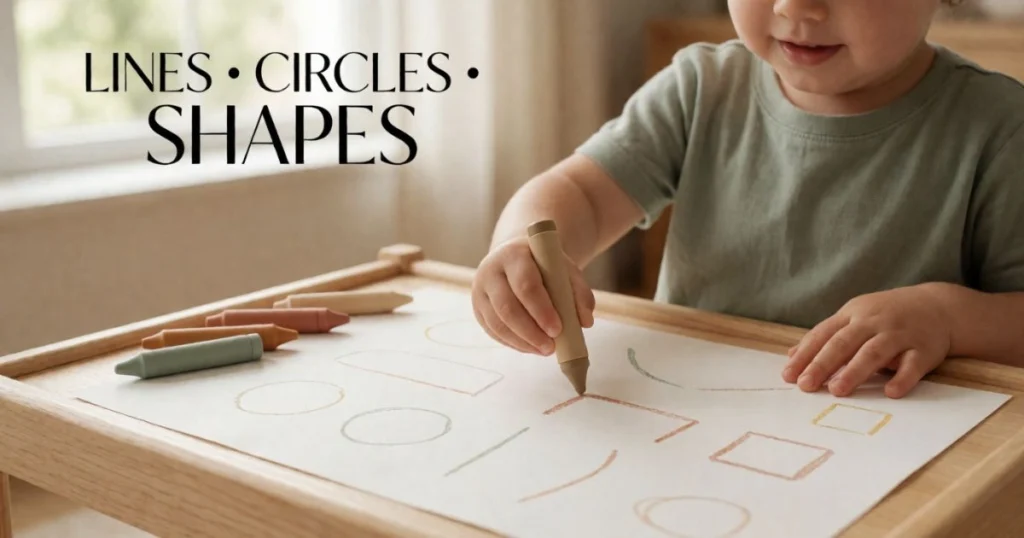
Try:
- Vertical lines
- Horizontal lines
- Circles
- Simple crosses
- Basic paths
Don’t turn this into handwriting practice. Let your child explore.
5. Child-Safe Scissor Practice
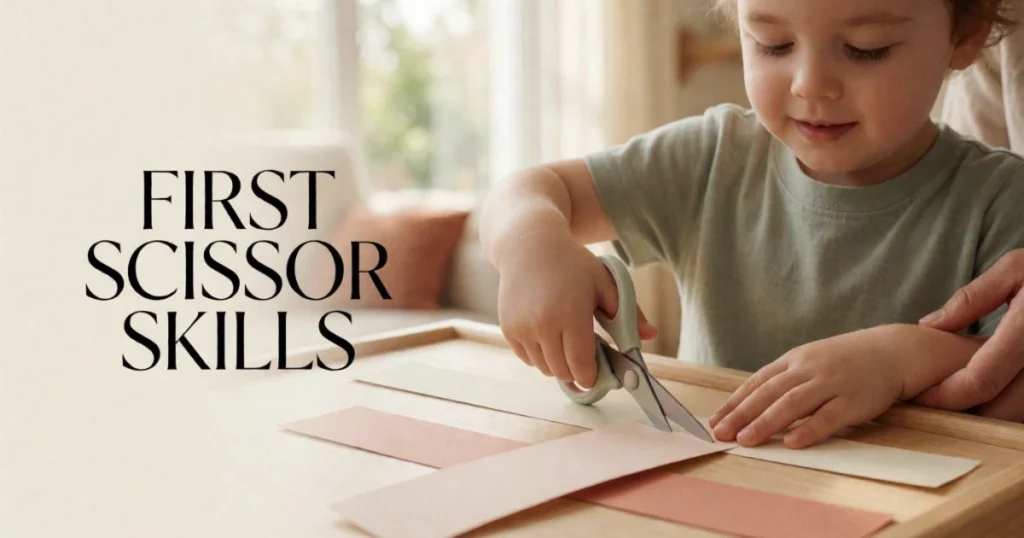
If your child is developmentally ready, introduce scissors designed for young children.
Begin with simple paper-snipping activities.
Always supervise closely.
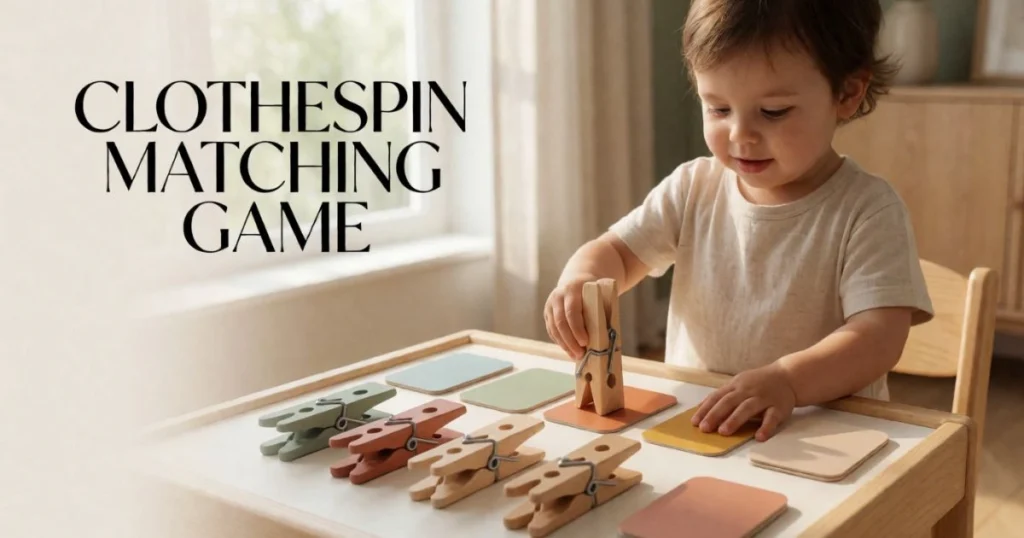
6. Clothespin Games
Clothespins can be used for simple matching or color activities.
For example, place colored cards on a table and invite your child to attach a matching clothespin.
7. Puzzles
Move gradually toward puzzles with more pieces as your child’s skills and interest develop.
8. Building Detailed Structures
Give your child blocks and let them create something from their imagination.
You can ask:
Can you make a cozy home for the teddy bear?
This combines hand control with imaginative play.
Easy Fine Motor Activities You Can Do at Home
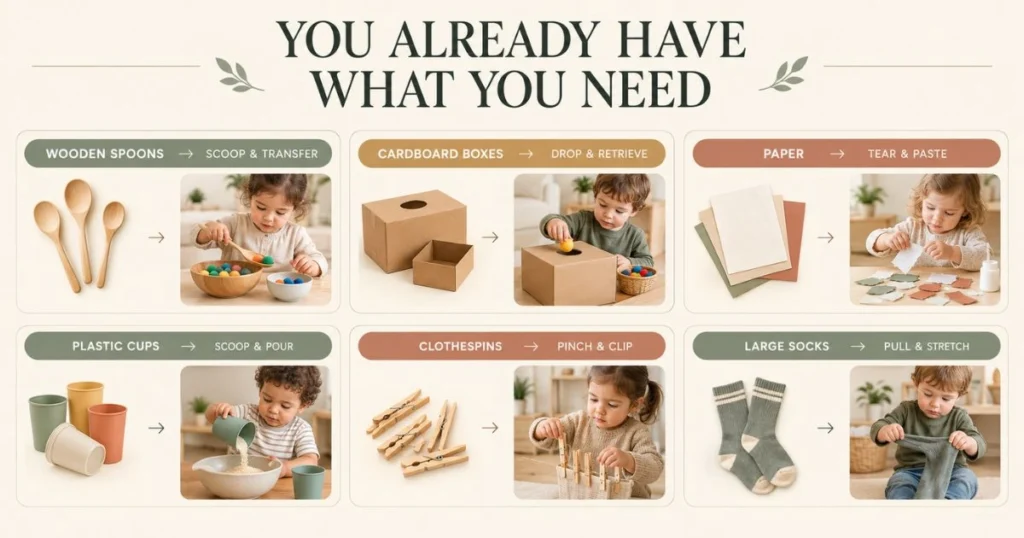
You don’t need to purchase a new toy every time you want to offer a developmental activity.
Look around your home.
Many everyday objects can become part of supervised play.
| Activity | Materials | Skill Focus |
| Container transfer | Large safe objects + container | Grasp and release |
| Sticker art | Stickers + paper | Finger control |
| Sponge squeezing | Sponge + water | Hand use |
| Block stacking | Large blocks | Coordination |
| Play dough | Age-appropriate dough | Pinching and squeezing |
| Sorting | Large household objects | Manipulation |
| Page turning | Board book | Finger control |
| Crayon drawing | Paper + chunky crayons | Controlled movement |
You don’t need to turn your home into a classroom.
Your toddler can practice while helping you with simple, safe routines.
“If you’re looking for even more ways to keep your toddler active indoors, see our guide to 30 easy indoor activities for toddlers.”
“Many of these simple activities can also work alongside healthy toddler meals and snack routines.”
Fine Motor Activities for Hand Strength
When you think about building hand strength, you don’t need to picture your toddler doing formal exercises.
For young children, Fine Motor Activities can naturally strengthen their hands and fingers through playful movement.
Try activities such as:
- Squeezing play dough
- Pinching and shaping play dough
- Building with blocks
- Using child-safe tongs
- Squeezing a sponge
- Exploring safe construction toys
- Opening suitable containers
- Pulling apart and reconnecting appropriate toys
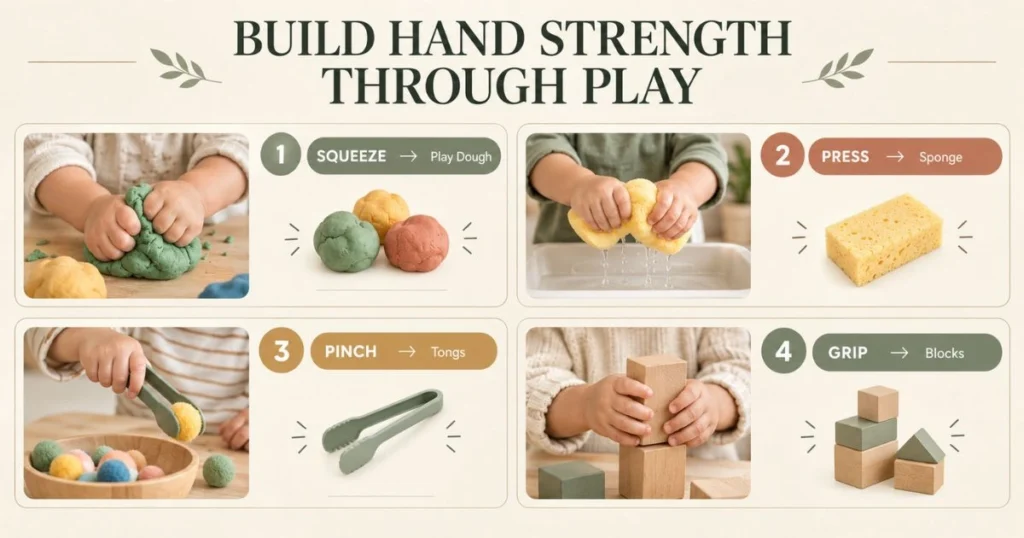
The CDC specifically recommends squeezing, pressing, and pinching play dough for 3-year-olds as activities that encourage children to use their hands and fingers.
Keep these activities fun and relaxed. There’s no need to count repetitions or make play feel like a workout.
Fine Motor Activities for Hand-Eye Coordination
Hand-eye cHand-eye coordination is the ability to connect what your child sees with how their hands move.
This skill comes into play when your toddler tries to fit a puzzle piece into the right spot or carefully place one block on top of another.
Fine Motor Activities that can support hand-eye coordination include:
- Shape sorters
- Simple puzzles
- Ring stacking
- Building with blocks
- Placing stickers
- Sorting games
- Posting activities
- Threading activities
- Drawing
- Simple object-transfer games
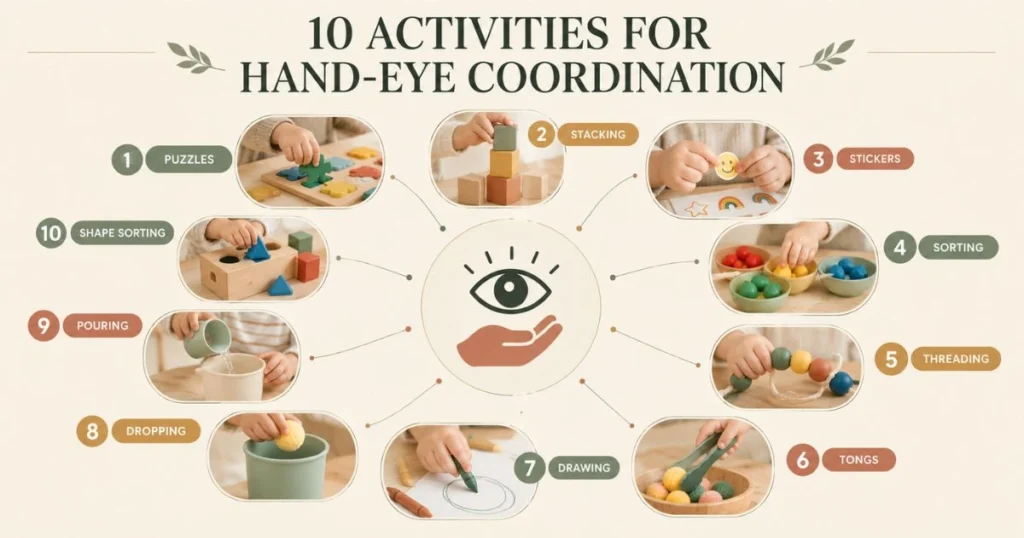
If an activity feels too challenging, simplify it to match your child’s current abilities.
For example, instead of offering a puzzle with lots of pieces, begin with just two or three pieces and gradually add more as your toddler becomes comfortable.
Fine Motor Activities That Support Pre-Writing Skills
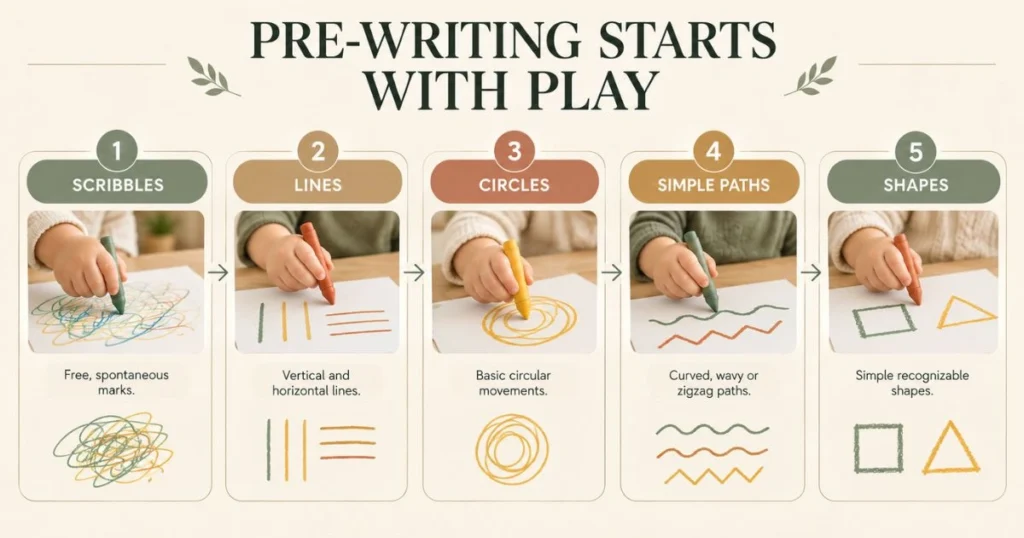
Your toddler doesn’t need to staYour toddler may not be ready to write letters yet.
Pre-writing skills develop through much simpler hand movements first.
You can encourage your child to:
- Scribble freely
- Draw straight or curved lines
- Make circles
- Color on paper
- Follow simple tracing paths
- Create different marks on paper
- Squeeze and shape play dough
- Draw on an appropriate vertical surface
These Fine Motor Activities should feel like playful exploration rather than formal handwriting practice.
When toddlers enjoy drawing and making marks, they may naturally spend more time developing controlled hand movements.
The CDC lists scribbling as an 18-month milestone and drawing a circle when shown how as a 2-year milestone.
How to Choose the Right Fine Motor Activity for Your Toddler
The best activity isn’t necessarily the one that looks most impressive on Pinterest.
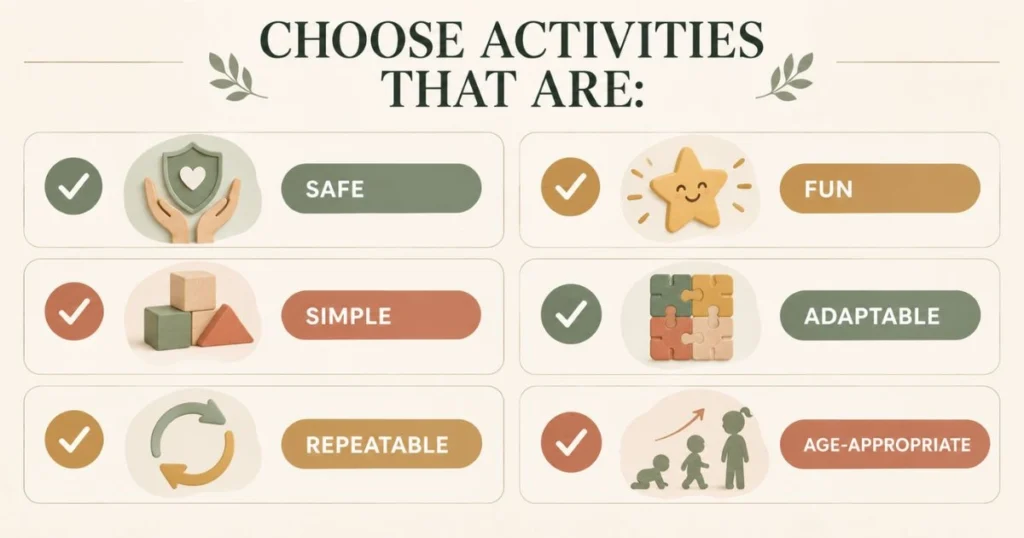
It’s the one your child can engage with successfully.
Choose activities that are:
- Safe for your child’s age
- Interesting to your toddler
- Simple enough to understand
- Challenging without being overwhelming
- Easy to repeat
- Adaptable
- Appropriate for your child’s current abilities
Follow Your Toddler’s Interests
Your child’s interests can tell you which activities are likely to work.
If your toddler loves food:
Try scooping, transferring, and pretend cooking.
If your toddler loves art:
Try stickers, crayons, and play dough.
If your toddler loves building:
Try blocks, stacking, and simple construction toys.
If your toddler loves sensory play:
Try supervised water play, play dough, or safe sensory activities.
You don’t need to force an activity simply because it is considered “educational.”
“You can also build simple activities into your child’s daily routine rather than setting aside a separate practice time.”
How Long Should Toddlers Do Fine Motor Activities?
There is no magic number of minutes that every toddler needs to spend doing fine motor activities.
Your child’s attention span, age, mood, and interest all matter.
One day your toddler might happily play with play dough for 15 minutes. Another day, they may throw it on the floor after two minutes.
That’s normal.
Instead of watching the clock:
- Offer short opportunities.
- Follow your child’s interest.
- Repeat activities they enjoy.
- Stop before frustration becomes overwhelming.
- Include fine motor practice in everyday routines.
- Allow plenty of free play.
“You can easily include short play sessions alongside your child’s regular sleep and nap routine.”
A Simple 7-Day Fine Motor Activity Plan
| Day | Activity | Materials |
| Monday | Play dough | Play dough |
| Tuesday | Sticker art | Stickers + paper |
| Wednesday | Block building | Blocks |
| Thursday | Sorting | Large safe objects |
| Friday | Simple puzzle | Age-appropriate puzzle |
| Saturday | Sponge squeezing | Sponge + water |
| Sunday | Crayon drawing | Paper + crayons |
You don’t have to follow this schedule exactly. Think of it as a menu of ideas.
Fine Motor Activities vs. Gross Motor Activities
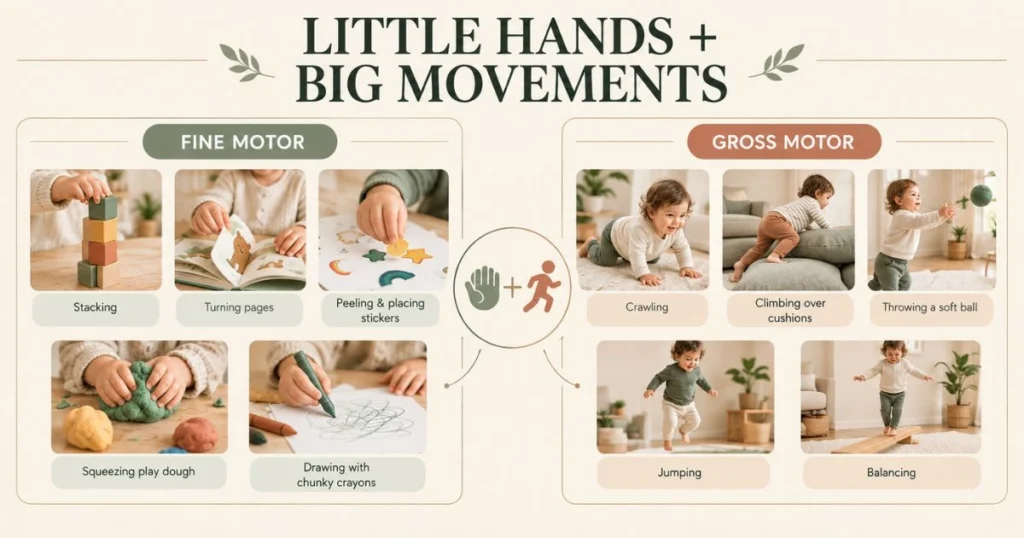
It’s easy to becoIt’s easy to focus on your toddler’s hand skills and forget that young children also need plenty of opportunities to move their whole bodies.
Fine Motor Activities involve small, controlled movements such as grasping, drawing, and manipulating objects.
Gross motor activities involve larger movements, including:
- Walking
- Running
- Jumping
- Climbing
- Kicking
- Throwing
- Balancing
A balanced play routine can include both types of movement.
For example, your toddler might spend 10 minutes building a block tower and then head outside to kick a ball.
There’s no need to choose between fine and gross motor play—both are important parts of your child’s development.
Safety Tips for Fine Motor Activities
Safety should always come before developmental goals.
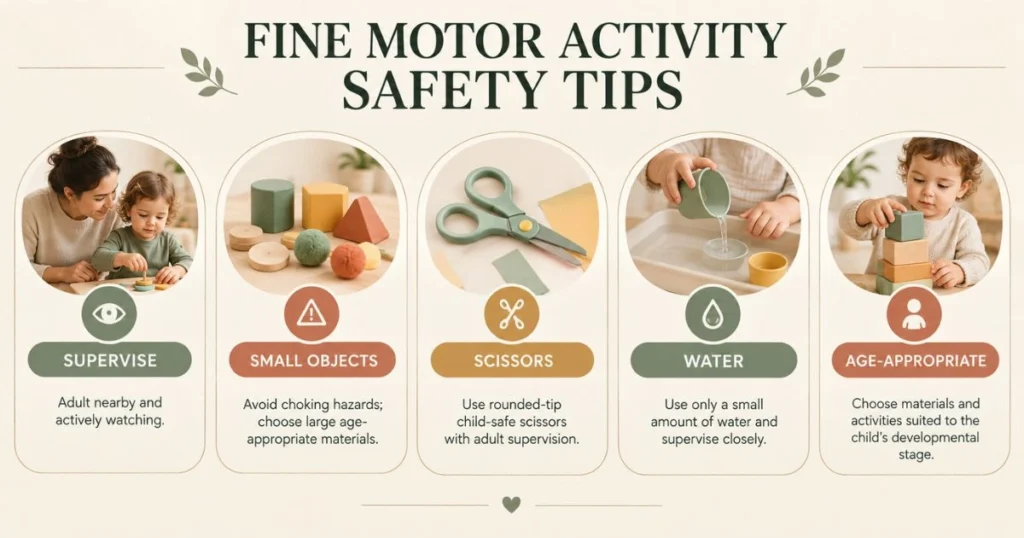
Many popular fine motor activities involve small materials, which can pose a choking risk for young children.
Be Careful With Small Objects
Examples include:
- Small beads
- Buttons
- Coins
- Tiny craft pieces
- Small pom-poms
- Small toy parts
- Certain types of pasta or food
Choose materials appropriate for your child’s age and supervise closely.
Additional Safety Tips
- Follow the manufacturer’s age recommendations.
- Stay nearby during activities.
- Use child-safe scissors when appropriate.
- Don’t leave toddlers alone with water-play materials.
- Keep small objects away from younger siblings.
- Stop an activity if your child puts materials in their mouth.
- Check toys regularly for broken pieces.
- Choose sturdy materials that won’t easily splinter or break.
An activity being popular online doesn’t automatically make it suitable for every toddler.
When you’re unsure, choose the larger, simpler, safer option.
When Should You Talk With Your Child’s Doctor About Fine Motor Skills?
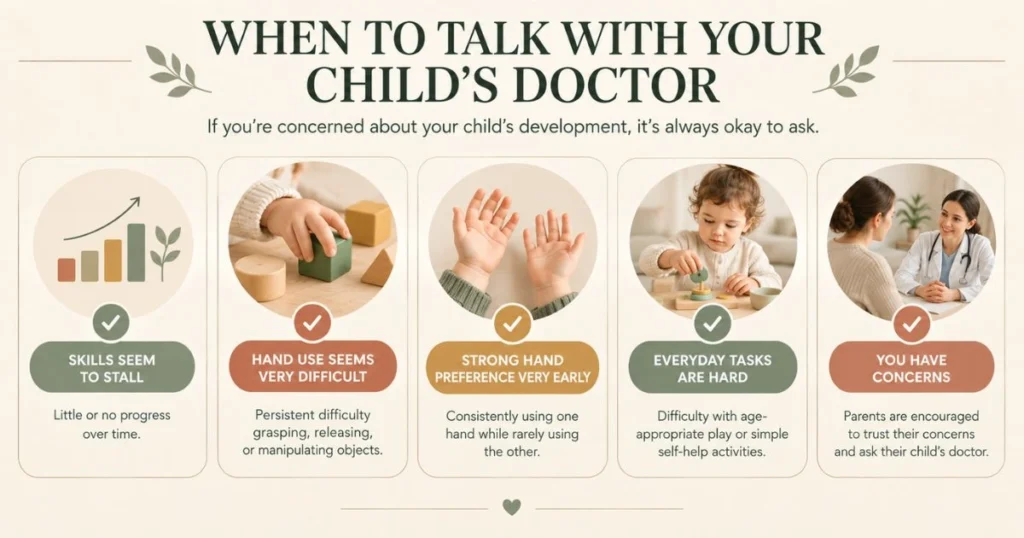
Every toddler develops at their own pace.
One child may love drawing early, while another would rather stack blocks. One toddler may confidently use a spoon while another needs more time.
A single activity isn’t enough to determine whether development is typical.
However, talk with your child’s healthcare professional if you have ongoing concerns about development, notice loss of a skill your child previously had, or see persistent difficulty with age-appropriate everyday tasks.
The CDC recommends monitoring developmental milestones and discussing concerns with your child’s doctor. It also emphasizes that milestone checklists are not a replacement for standardized, validated developmental screening.
If you’re concerned, you don’t have to wait until your child “catches up” before asking questions.
Bring your observations to the appointment. You can also use an age-appropriate CDC milestone checklist to organize what you’ve noticed. The CDC currently provides checklists for ages including 1 year, 15 months, 18 months, 2 years, 30 months, and 3 years.
Frequently Asked Questions About Fine Motor Activities
What Are Some of the Best Fine Motor Activities for Toddlers?
Some of the simplest Fine Motor Activities include stacking blocks, playing with play dough, placing stickers, completing simple puzzles, moving objects from one container to another, drawing with crayons, turning book pages, and sorting safe objects.
The best activity is one that suits your child’s current abilities while keeping them engaged and interested.
“For more practical ideas involving food and independent eating, see our guide to Best Finger Foods for Toddlers.”
What Are Fine Motor Activities for a 2-Year-Old?
Good fine motor activities for a 2-year-old include play dough, sticker art, simple puzzles, block building, crayon drawing, sponge squeezing, sorting, and supervised transfer activities.
You can adjust each activity to make it easier or more challenging based on your child’s abilities.
How Can I Improve My Toddler’s Fine Motor Skills?
Give your toddler plenty of opportunities to grasp, release, squeeze, stack, draw, turn, transfer, and manipulate objects during play.
Fine Motor Activities don’t need to involve formal exercises.
Everyday experiences, such as turning book pages, using utensils, building with blocks, and playing with play dough, can naturally help your child practice controlled hand movements.
What Are Some Simple Fine Motor Activities to Try at Home?
Try activities thaThese Fine Motor Activities require little preparation:
- Stacking blocks
- Creating sticker art
- Drawing with crayons
- Tearing paper
- Playing with play dough
- Sorting objects
- Playing with containers
- Squeezing a sponge
- Turning book pages
You can easily create an engaging activity using simple materials you already have at home.
Are Play Dough Activities Good for Fine Motor Skills?
Yes. Play dough offers a fun way for children to strengthen their hands and fingers by squeezing, pinching, rolling, pressing, flattening, and shaping the dough.
The CDC specifically recommends play dough actions such as squeezing, pressing, and pinching for 3-year-olds.
What Are Fine Motor Activities for a 1-Year-Old?
For a 1-year-old, simple Fine Motor Activities can include stacking large blocks, placing larger objects into containers, turning the pages of board books, using simple shape sorters, and practicing age-appropriate finger feeding.
Choose materials that are large enough to help reduce choking risks, and always supervise your child closely during play.
What Fine Motor Activities Are Appropriate for a 3-Year-Old?
At age 3, Fine Motor Activities can include playing with play dough, completing puzzles, drawing, lacing, threading age-appropriate materials, practicing with child-safe scissors, playing with clothespins, and building more detailed structures with blocks.
As your child develops, you can gradually offer activities that require more precise hand movements while keeping the experience fun and playful.
When Should I Worry About My Toddler’s Fine Motor Skills?
Talk with your child’s healthcare professional if you have persistent concerns, notice loss of previously acquired skills, or feel your child’s development isn’t progressing as expected.
Avoid judging your child’s development based on one activity alone. A healthcare professional can consider the bigger picture and determine whether additional developmental screening is appropriate.
Conclusion: Let Those Little Hands Learn Through Play
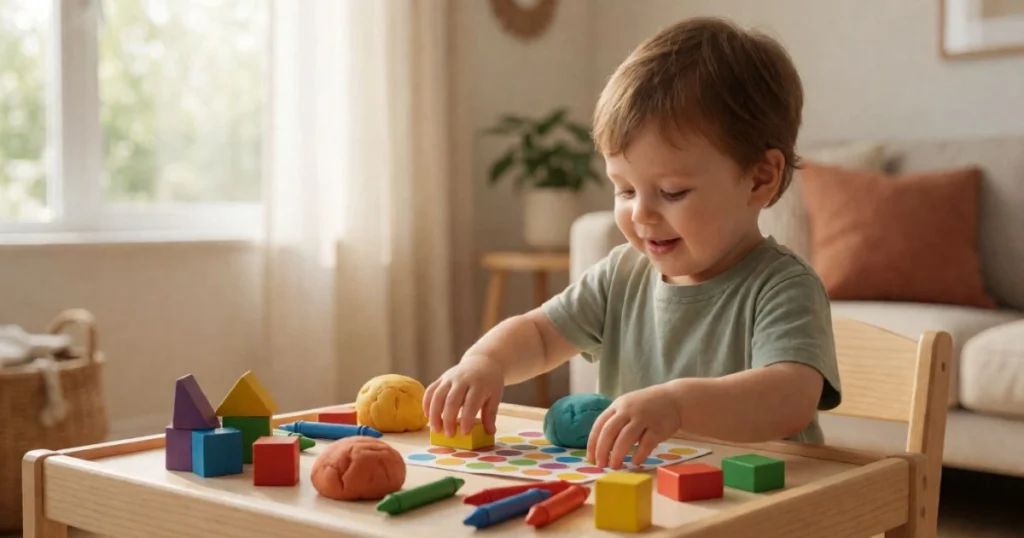
Your toddler doesn’t need a perfect activity schedule to develop fine motor skills.
A block tower that falls over five times still counts. So does the sticker that ends up on the table instead of the paper. The scribble that looks like nothing to you may be an exciting discovery for your child.
Every time your toddler picks something up, turns it around, squeezes it, stacks it, pulls it, presses it, or tries to put it in the right place, they’re exploring what their hands can do.
That’s why the best fine motor activities for toddlers are often the simplest ones.
Start with your child’s age and current abilities. Choose one activity that looks enjoyable. Give your toddler time to explore it without expecting perfection. Then try again another day.
And remember: development isn’t a race.
Your job isn’t to make your toddler master every skill as quickly as possible. Your job is to create a safe, encouraging environment where they can experiment, practice, make mistakes, and try again.
Choose one fine motor activity today, gather a few simple materials, and let your toddler take the lead. You may be surprised by how much learning can happen during a few minutes of ordinary play.
If you found these ideas helpful, save this guide for later and share it with another parent looking for simple ways to support their toddler’s development at home.
“If you’re looking for more simple ways to keep your toddler engaged at home, explore our indoor toddler activities guide.”