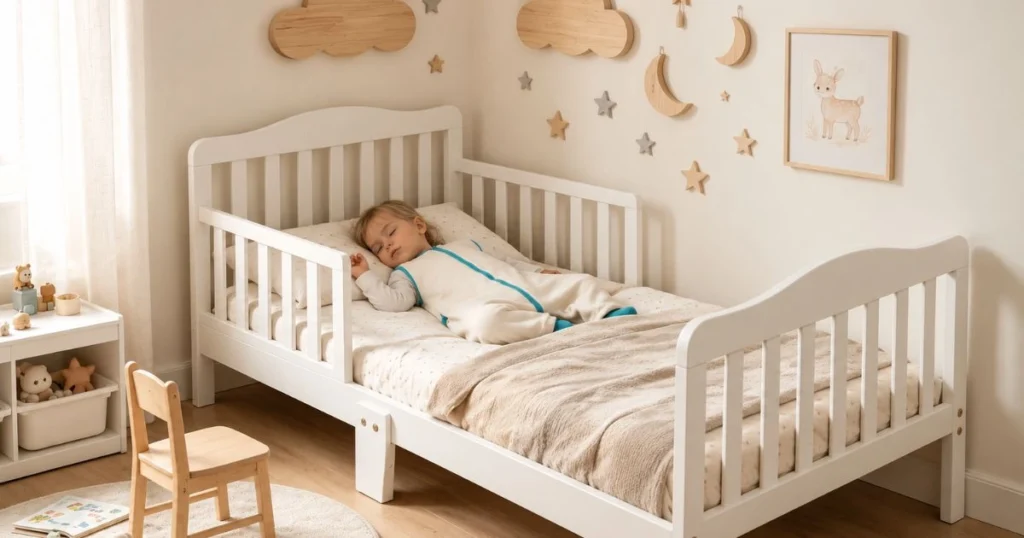
When your toddler finally settles into bed, you probably don’t want to spend the next few hours wondering whether they are cold, too warm, or tangled up in their bedding.
Maybe your little one kicks the blanket off five minutes after you leave the room. Maybe they wake during the night because they feel chilly. Or perhaps you’re simply looking at the rows of toddler sleep sacks online and wondering which size, fabric, and warmth rating actually make sense.
Picking the right Toddler Sleep Sack can be easier than you think.
The right one should fit your child properly, provide an appropriate amount of warmth, allow comfortable movement, and suit the environment where your toddler sleeps. You also need to consider your child’s age, mobility, and the manufacturer’s instructions.
In this guide, you’ll learn what to look for, how to understand TOG ratings, how a sleep sack compares with a blanket, what your toddler can wear underneath it, and which common mistakes are worth avoiding.
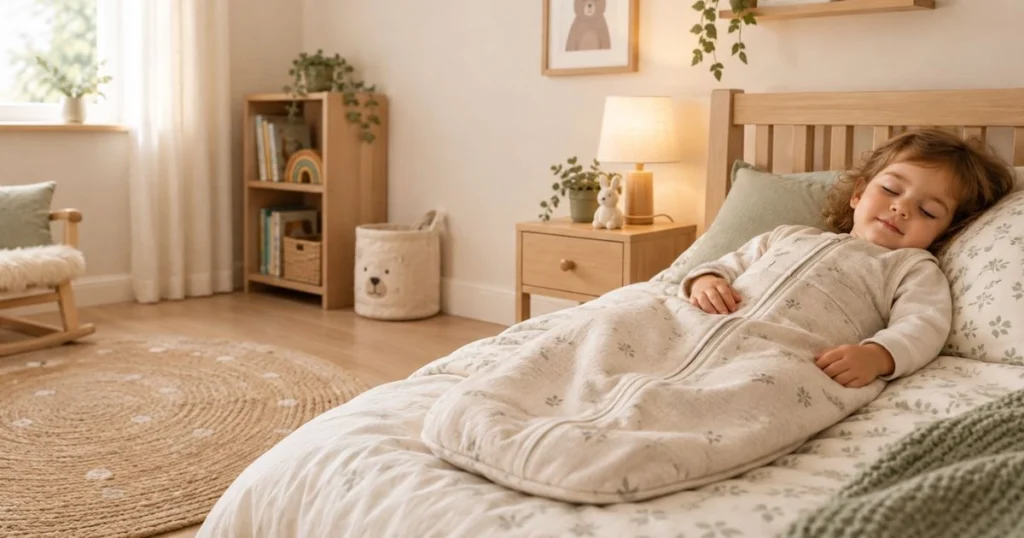
What Is a Toddler Sleep Sack?
A toddler sleep sack is a wearable blanket designed to be worn during sleep. Instead of lying over your child like a loose blanket, it is worn around the body, usually with openings for the head and arms.
You may also see similar products called:
- Toddler wearable blankets
- Toddler sleeping bags
- Wearable sleep sacks
- Sleep bags
- Wearable blankets for toddlers
The exact design varies from one product to another. Some have a traditional enclosed bottom, while others have foot openings or a design intended for children who are already walking.
For infants, the American Academy of Pediatrics (AAP) notes that wearable blankets or sleeping sacks can be used as an alternative to loose blankets, provided they are appropriately sized and do not cover the baby’s head.
For toddlers, your decision also needs to account for increasing mobility. A product that worked well when your child was less mobile may not be the best choice once they are standing, walking, or climbing.
How Does a Toddler Sleep Sack Work?
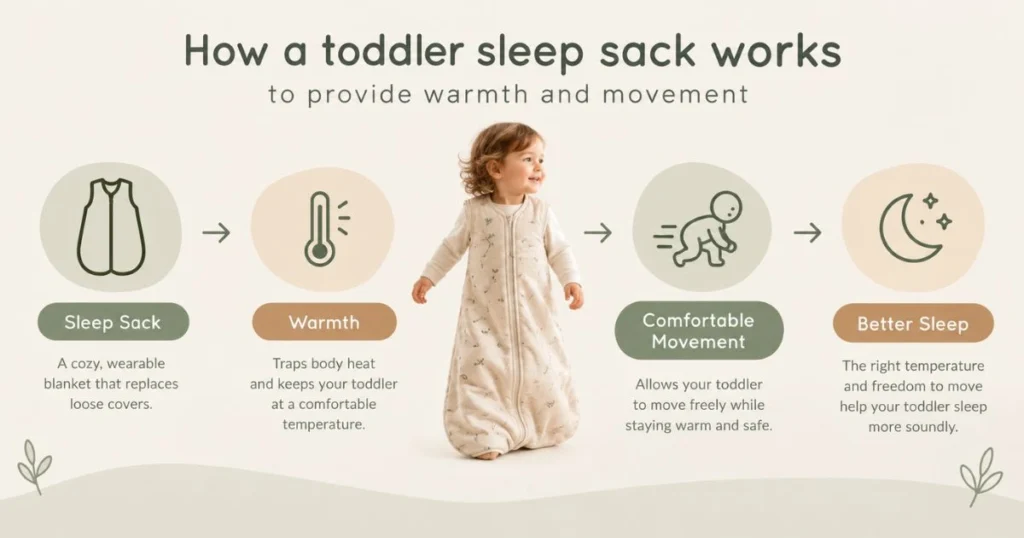
Think of a sleep sack as another layer of sleep clothing rather than bedding.
Depending on the design, it can:
- Keep a consistent layer around your child’s body.
- Reduce the need to repeatedly replace a kicked-off blanket.
- Become part of a familiar bedtime routine.
- Provide different levels of warmth for different seasons.
- Make sure your child has enough room to move their legs comfortably inside the sleep sack.
The goal isn’t to make your toddler as warm as possible. The goal is to provide appropriate warmth without overheating.
That distinction matters.
Does Your Toddler Need a Sleep Sack?
Not every toddler needs a sleep sack.
Some children sleep comfortably in pajamas with a blanket, while others regularly kick their covers away or seem more settled with a wearable layer.
A toddler sleep sack may be worth considering if:
- Your child frequently kicks blankets off.
- You want them to have a consistent layer during the night.
- Your toddler responds well to predictable bedtime routines.
- You live in an area where nights can get chilly.
- Your child prefers the comfort of a wearable blanket.
- You want an alternative to managing loose bedding.
A sleep sack doesn’t guarantee longer or better sleep. If your toddler is waking because of separation anxiety, illness, teething, a changing nap schedule, or another sleep concern, changing their sleepwear may not address the underlying cause.
Instead, think of the sleep sack as just one part of your child’s overall sleep environment.
When Can a Toddler Use a Sleep Sack?
There’s no single age that applies to every child when deciding when to begin or stop using a sleep sack.
Manufacturers may specify an age range, weight range, height range, or combination of these. You should always check the instructions for the particular product you’re considering.
Your child’s overall sleep pattern and daily routine can also change as they move through different stages of development.
Moving From an Infant Sleep Sack to a Toddler Sleep Sack
As As your child gets older, their abilities and movement needs change as well.
Your toddler may now:
- Stand without help.
- Walk independently.
- Climb on furniture or other surfaces.
- Move freely around their room.
- Get in and out of bed without assistance.
- Prefer sleepwear that doesn’t limit their movement.
Because of these developmental changes, the same toddler sleep sack that worked well before may eventually become less practical.
Choose a design that suits your child’s current stage of development instead of simply moving up to the largest size available.
As your child becomes more mobile, their sleep needs and daily schedule can change too.
When Is It Time for Your Toddler to Stop Using a Sleep Sack?
There is no single stopping age that applies to every toddler.
Some children are perfectly comfortable using a toddler sleep sack well into their toddler years. Others become more independent and eventually prefer a blanket or a different type of sleepwear.
You can consider making the transition when:
- Your child no longer enjoys wearing it.
- The sleep sack has become too small or no longer fits properly.
- Your toddler needs greater freedom to move.
- Your child seems ready to use a different type of sleepwear.
- The manufacturer’s recommended age or size range has been reached.
The key point is that reaching a particular birthday doesn’t automatically mean you have to stop using a sleep sack. If the product is designed appropriately, fits your child correctly, and matches their current developmental needs, it may still be a suitable option.
How to Choose the Right Toddler Sleep Sack
Once you know your child may benefit from one, choosing the right toddler sleep sack becomes much easier when you focus on five essentials:
- Size and fit
- Warmth and TOG
- Material
- Mobility
- Safety and practical features
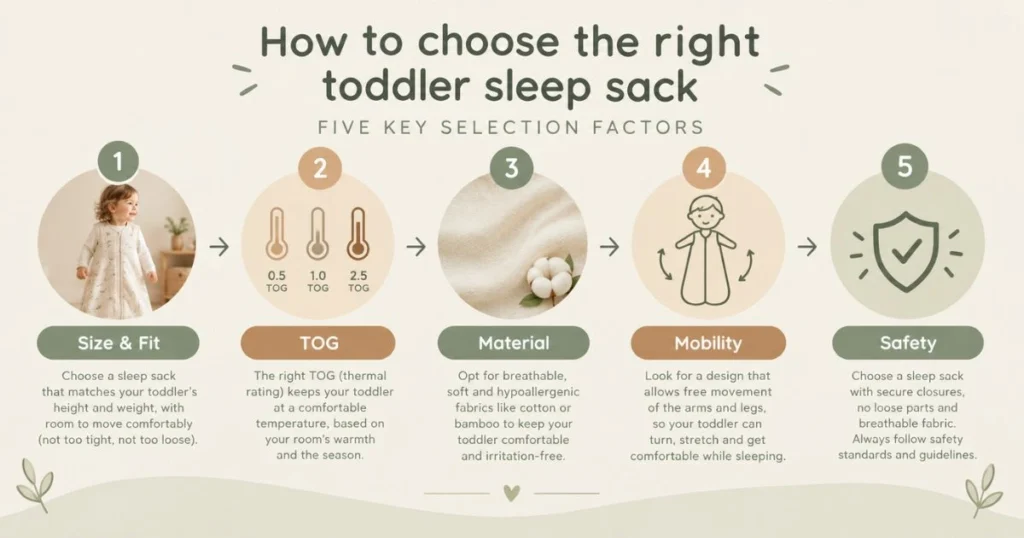
Let’s take a closer look at each one.
1. Choose the Right Toddler Sleep Sack Size
Size should be one of the first things you consider when choosing a toddler sleep sack.
It can be tempting to buy a larger option because your toddler is growing quickly. However, leaving extra room for growth shouldn’t mean choosing a product that is so oversized that it no longer fits as intended.
For infant wearable blankets, AAP guidance emphasizes choosing an appropriate size and keeping the child’s head uncovered.
What Should a Toddler Sleep Sack Fit Like?
Getting the fit right is essential when choosing a toddler sleep sack. The exact fit will vary by design, but you generally want to check that:
- The neck opening fits according to the manufacturer’s instructions.
- The arm openings aren’t excessively loose.
- Your toddler cannot slip down inside the sleep sack.
- The fabric doesn’t ride up over your child’s face.
- There is enough room for comfortable leg movement.
- The size matches the manufacturer’s height and/or weight recommendations.
Don’t rely only on your toddler’s usual clothing size.
For example, a child who typically wears 2T clothing may not necessarily need a sleep sack labeled 2T. Sizing can vary between manufacturers, so always check the product’s specific size chart before buying.
A Simple Toddler Sleep Sack Fit Checklist
Before using a new sleep sack, check:
- Size: Does it match your child’s measurements?
- Neck: Is the opening appropriately fitted?
- Arms: Are the arm openings secure without being restrictive?
- Body: Can your toddler move comfortably?
- Length: Is there sufficient leg room without excessive fabric?
- Condition: Are the seams, zipper, and closures intact?
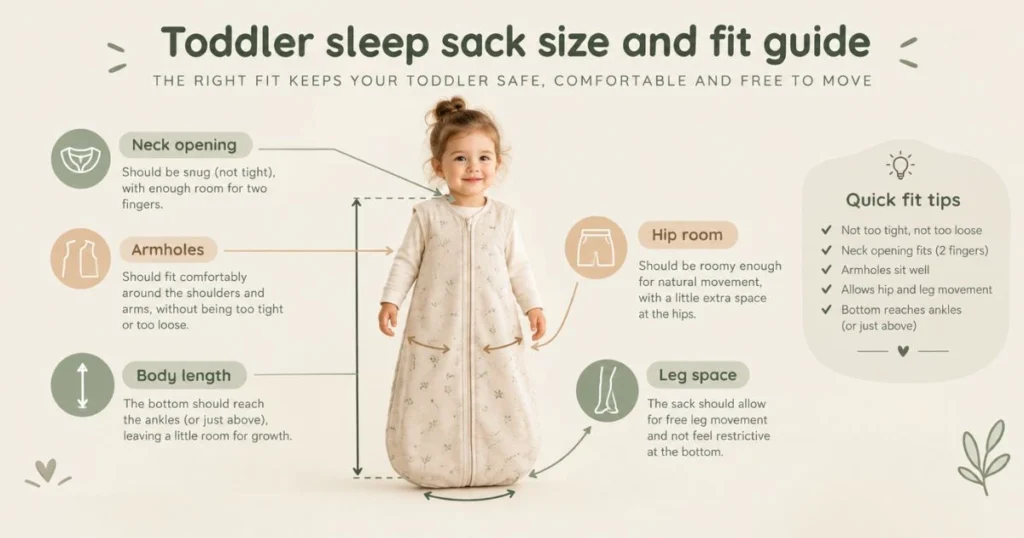
If you’re unsure about the fit, follow the manufacturer’s instructions or ask your child’s healthcare professional for guidance.
2. Choose the Right Toddler Sleep Sack TOG
You’ve probably seen the term TOG on sleep sacks.
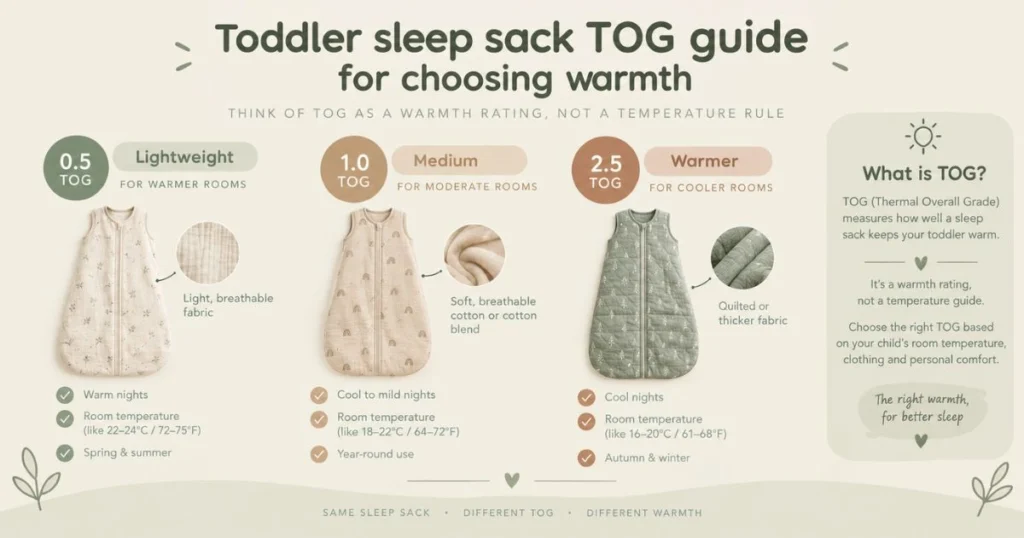
TOG stands for Thermal Overall Grade and is used to describe the thermal insulation of a product.
In simple terms:
- A lower TOG generally means a lighter sleep sack.
- A higher TOG generally means a warmer sleep sack.
But don’t choose a TOG rating in isolation.
Your child’s room temperature, pajamas, sleep sack material, and individual comfort all matter.
For a broader look at age-related sleep patterns, see our guide to baby sleep schedules.
What TOG Rating Does Your Toddler Need?
Rather than memorizing one universal temperature chart, start with the manufacturer’s instructions.
Different brands may provide different recommendations for the same TOG rating, and the clothing underneath the sleep sack can change the overall warmth.
A practical approach is:
| Sleep Environment | Sleep Sack Consideration | What to Check |
| Warmer room | Lightweight option | Avoid unnecessary layers |
| Moderate room | Medium warmth | Consider the clothing underneath |
| Cooler room | Warmer option | Follow the manufacturer’s layering guidance |
The table is a starting point, not a medical prescription.
Your toddler shouldn’t be bundled simply because the room feels cool to you.
How Can You Tell if Your Toddler Is Too Hot?
When choosing a toddler sleep sack, pay attention to your child’s overall comfort rather than assuming that cold hands or feet automatically mean another layer is needed.
For infants, the AAP and Safe to Sleep guidance specifically warns against overheating. Signs that a baby may be too hot can include sweating, flushed or hot skin, and a chest that feels hot.
For your toddler, pay attention to how they seem to feel and behave.
If your child appears unusually warm or sweaty, reassess their clothing layers, the room conditions, and the warmth level of the sleep sack.
For younger babies, safe-sleep guidance is more specific, including recommendations about appropriate sleepwear and avoiding overheating.
3. Pick the Right Toddler Sleep Sack Material
The material affects how the sleep sack feels and how much warmth it provides.
Common options include:
| Material | Why You May Choose It | Considerations |
| Cotton | Lightweight and familiar | May provide less insulation |
| Organic cotton | Soft, breathable option | Often more expensive |
| Bamboo/rayon blends | Soft and lightweight | Check the actual fiber content |
| Merino wool | Naturally insulating | Requires careful washing |
| Fleece | Warm and cozy | May be too warm in some environments |
There isn’t one material that’s automatically best for every toddler.
Instead, consider:
- Your room temperature
- The season
- Your child’s comfort
- The warmth rating
- How often you’ll wash it
- Your preferred care routine
Is Cotton a Good Choice for a Toddler Sleep Sack?
Cotton can be a practical choice when you want a familiar, relatively lightweight fabric.
However, don’t assume that a particular fabric is automatically cooler or safer simply because it sounds breathable. The construction, thickness, layers, and overall product design also matter.
Look at the entire sleep sack rather than judging it by the fabric name alone.
4. Consider Your Toddler’s Mobility
Your toddler isn’t going to stay perfectly still all night.
They may stand up in bed, walk around before falling asleep, or get up in the morning.
That’s why mobility should influence your choice.
Toddler Sleep Sacks With Feet
Some toddler sleep sacks have foot openings that make it easier for children to walk while wearing them.
This style can be useful for toddlers who are already mobile because it gives their legs and feet more freedom than a traditional enclosed design.
However, a sleep sack with feet isn’t automatically the better choice for every child.
Consider:
- Whether your toddler actually walks while wearing it.
- Whether the openings fit your child’s size appropriately.
- Whether the product is intended for your child’s age and developmental stage.
- Whether your child can move comfortably while wearing it.
- Whether the manufacturer provides specific instructions for use.
A traditional enclosed sleep sack may still be a practical option for a toddler who stays in bed and doesn’t need to walk around while wearing it.
Toddler Sleep Sack Safety: What Parents Should Know
Safety deserves more attention than color, pattern, or brand.
Although much of the major U.S. safe-sleep guidance is written specifically for babies, several principles are still useful when evaluating children’s sleep products.
Make Sure the Sleep Sack Fits Properly
An oversized sleep sack isn’t automatically better because your child will “grow into it.”
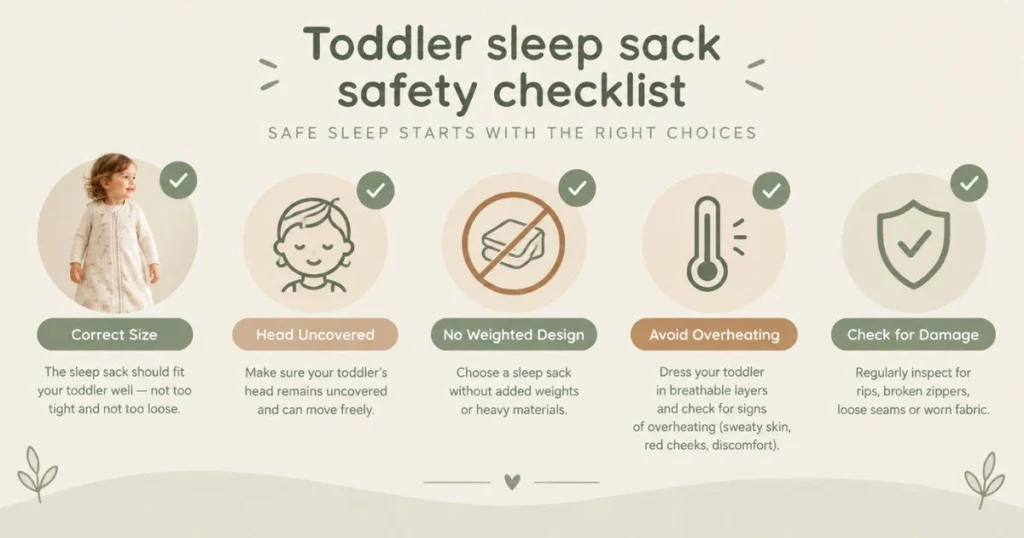
Check the manufacturer’s sizing instructions and make sure:
- The product is appropriate for your child’s measurements.
- Your child’s head cannot slip through the neck opening.
- The sleep sack doesn’t ride up over the face.
- The arm openings fit appropriately.
- Your child can move comfortably.
- There are no damaged fasteners or loose components.
The AAP specifically recommends appropriately sized wearable blankets for infants and says they should not cover the baby’s head.
Avoid Overheating
More warmth isn’t necessarily better.
Safe to Sleep advises dressing babies according to the room temperature and avoiding overbundling. It identifies sweating, flushing, hot skin, and a hot chest as signs of overheating in babies.
For a toddler, you can apply the same basic common-sense approach: consider the entire combination of room temperature, pajamas, and sleep sack rather than adding layers automatically.
If your child is already wearing a warm sleep sack, adding several heavy layers underneath may create unnecessary warmth.
What About Weighted Sleep Sacks?
This is an area where you should be especially careful with product claims.
The AAP, CPSC, and NIH advise against weighted blankets, weighted swaddles, and other weighted sleep products for babies/infants. Safe to Sleep notes that the claimed benefits of weighted products for babies are unproven, while excessive weight or warmth can create safety concerns.
So if you’re shopping for an infant or a product that may be used with a younger baby, don’t assume that added weight makes it safer or helps your child sleep better.
For older toddlers and children, product recommendations can differ by age and circumstance. If you’re considering a weighted sleep product for an older child, check the manufacturer’s age requirements and discuss concerns with your pediatrician rather than assuming infant and toddler guidance is identical.
Check the Product for Recalls
Before purchasing or continuing to use a children’s sleep product, it’s sensible to check for recalls.
The AAP advises parents to check that sleep products meet applicable safety standards and haven’t been recalled.
Pay particular attention to:
- Zippers
- Snaps
- Seams
- Small detachable components
- Damaged fabric
- Changes to the product after repeated washing
A sleep sack that was safe when new may need replacing if it becomes damaged.
Toddler Sleep Sack vs. Blanket: Which Is Better?
There isn’t one universal answer for every toddler.
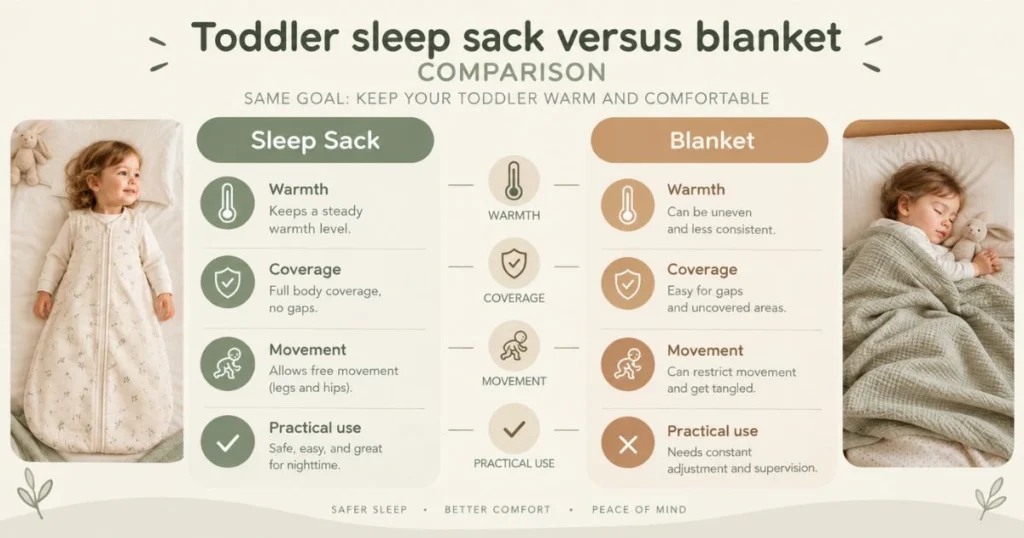
A sleep sack and a blanket work differently.
| Feature | Toddler Sleep Sack | Blanket |
| Stays with your child | Yes | No |
| Can be kicked away | Less likely | Yes |
| Provides a consistent layer | Usually | Depends on use |
| Allows unrestricted leg movement | Depends on design | Yes |
| Can be part of bedtime routine | Yes | Yes |
| Easy to remove independently | Depends on design | Usually |
A sleep sack can be useful for a toddler who constantly kicks off blankets. A blanket may be perfectly appropriate for an older toddler who can use it comfortably and safely.
Don’t turn the choice into a competition.
Your child’s developmental stage, sleep environment, comfort, and family routine all matter.
For infants, however, safe-sleep guidance is more specific. The AAP recommends keeping loose bedding and other soft objects out of the infant sleep area and identifies wearable blankets as an option for keeping babies warm.
How to Dress Your Toddler Under a Sleep Sack
The sleep sack isn’t the only thing determining how warm your toddler will be.
What your child wears underneath matters too.
Depending on the season and the sleep sack’s warmth, your toddler might wear:
- Lightweight pajamas
- A short-sleeved sleep top
- Long-sleeved pajamas
- Other age-appropriate sleep clothing
The key is to avoid automatically adding more layers because you’re worried your child might be cold.
The clothing your child wears at bedtime should also fit into the overall sleep environment and bedtime routine.
Should a Toddler Wear Pajamas Under a Sleep Sack?
Usually, yes, toddlers may wear appropriate sleep clothing underneath a sleep sack, but the exact combination depends on the product, room conditions, and TOG rating.
Always follow the manufacturer’s instructions.
Think in terms of the total amount of clothing and insulation, rather than treating each layer independently.
If your toddler wears a warm sleep sack, thick pajamas, socks, and several additional layers in a warm bedroom, you may be creating more warmth than necessary.
Choosing a Toddler Sleep Sack for Every Season
Your ideal sleep sack may change as the weather changes.
Toddler Sleep Sack for Summer
During warmer months, look for a lightweight option appropriate for the room conditions.
You may prefer:
- Lightweight fabrics
- Lower warmth ratings
- Fewer clothing layers underneath
- Designs that don’t add unnecessary insulation
Watch for signs that your child is too warm and adjust clothing as needed.
Toddler Sleep Sack for Winter
Cold weather may call for a warmer sleep sack, but winter doesn’t mean you should simply add as many layers as possible.
Consider:
- The room temperature
- The sleep sack’s TOG rating
- The clothing underneath
- Your child’s comfort
If the room is already comfortably heated, your toddler may need less clothing than you expect.
Spring and Fall
Transitional seasons can be the trickiest because temperatures may change considerably from one night to the next.
Instead of buying a large collection of sleep sacks, you may find it more useful to have options that cover the temperatures your home commonly experiences.
Your child’s sleep schedule can also change as they grow, so the amount of sleepwear and bedtime support they need may change with it.
What Features Should You Look for in a Toddler Sleep Sack?
Once you’ve considered safety, fit, warmth, and mobility, you can think about convenience.
Useful features may include:
- Two-way zipper
- Easy nighttime access
- Soft seams
- Breathable construction
- Machine-washable fabric
- Durable zipper
- Foot openings
- Comfortable arm openings
Essential Features vs. Nice-to-Have Features
Not every feature deserves equal weight.
Prioritize:
- Correct sizing
- Appropriate warmth
- Comfortable movement
- Suitable construction
- Manufacturer’s safety instructions
Nice-to-have features may include:
- Two-way zipper
- Foot openings
- Extra-soft fabric
- Easy-care material
- Seasonal designs
A cute pattern can make bedtime more fun, but it shouldn’t outweigh fit or function.
Common Toddler Sleep Sack Mistakes to Avoid
Even a good sleep sack can become a poor choice if it’s used incorrectly.
Mistake 1: Buying Too Large
You want your child to get plenty of use from the product, but buying far beyond the recommended size can affect how the product fits.
Choose according to the manufacturer’s measurements.
Mistake 2: Choosing TOG Without Considering the Room
A high TOG isn’t automatically better in winter, and a low TOG isn’t automatically better in summer.
Consider the entire sleep environment.
Mistake 3: Adding Too Many Layers
More clothing doesn’t always mean better sleep.
Overbundling can make a child uncomfortable and, for infants, overheating is a recognized safe-sleep concern.
Mistake 4: Ignoring Your Toddler’s Mobility
If your toddler is walking, a design with greater freedom of movement may be more practical than one that restricts their legs.
Mistake 5: Choosing Appearance Over Function
A beautiful sleep sack is great.
A beautiful sleep sack that doesn’t fit properly isn’t.
Prioritize fit, warmth, construction, and your child’s developmental stage.
Mistake 6: Forgetting to Inspect the Sleep Sack
Check the product regularly.
Look for:
- Broken zippers
- Loose stitching
- Torn fabric
- Damaged snaps
- Loose components
- Changes in fit as your child grows
If your toddler is also resisting bedtime, look at the bigger picture rather than assuming the sleep sack is the only issue.
How Many Toddler Sleep Sacks Do You Need?
You don’t necessarily need a drawer full of them.
For many families, one everyday sleep sack plus one backup can be practical, particularly when laundry is involved.
You might choose more if:
- Your toddler frequently spills or soils sleepwear.
- You wash laundry less frequently.
- You need different warmth levels for different seasons.
- Your child strongly prefers one particular type.
The right number depends on your household rather than a specific parenting rule.
How to Care for a Toddler Sleep Sack
A sleep sack can go through a lot of washing, especially if your toddler eats, drinks, or plays before bedtime.
Washing and Drying
Always start with the care label.
Depending on the fabric, you may need to:
- Machine wash on a specific cycle.
- Use a particular water temperature.
- Avoid bleach.
- Air dry or tumble dry at a specified temperature.
- Close zippers before washing.
Following the manufacturer’s instructions can help preserve the fabric and fasteners.
When Should You Replace a Toddler Sleep Sack?
Replace the sleep sack if:
- Your child has outgrown it.
- The zipper no longer works correctly.
- Seams are separating.
- The fabric has significant holes or damage.
- The neck or arm openings no longer fit properly.
- The product has been recalled.
You don’t need to wait until the item is completely worn out if its condition could affect how it functions.
Toddler Sleep Sack Buying Checklist
Before making your purchase, take a moment to check these essentials:
- ☐ Is it the correct size for your toddler?
- ☐ Does it fit securely around the neck and arms?
- ☐ Is there enough room for comfortable leg movement?
- ☐ Is the TOG appropriate for your child’s sleep environment?
- ☐ Is the material suitable for the season?
- ☐ Does the design suit your toddler’s mobility?
- ☐ Is it easy to wash?
- ☐ Have you read the manufacturer’s instructions?
- ☐ Have you checked the product for damage?
- ☐ Have you checked for recalls when appropriate?
- ☐ Does it avoid unnecessary weighted features?
If you can answer these questions confidently, you’ve already narrowed down your choices considerably.
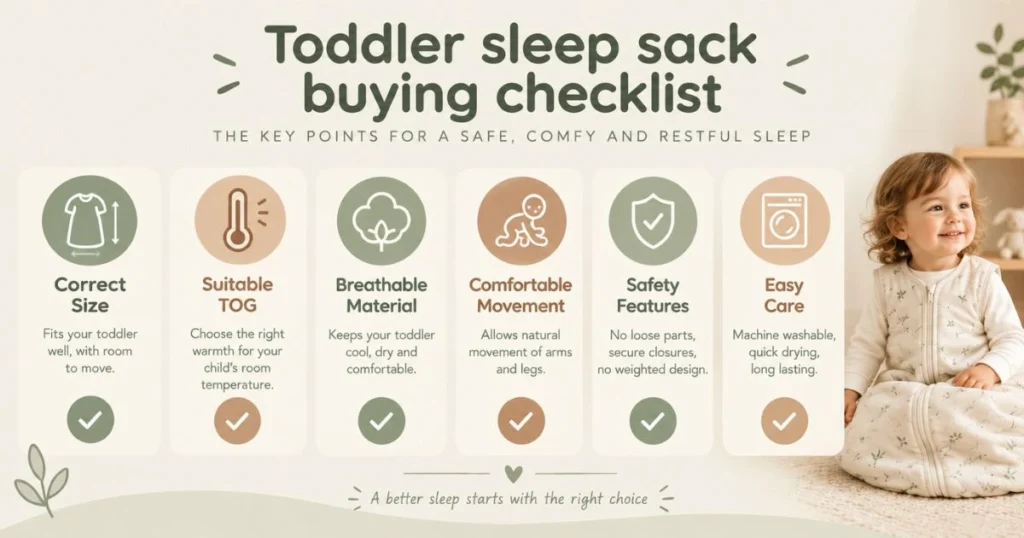
Use this checklist alongside your child’s usual bedtime routine to make the transition into sleep simpler.
Frequently Asked Questions About Toddler Sleep Sacks
What Is a Toddler Sleep Sack?
A toddler sleep sack is wearable sleep clothing designed to provide a layer of warmth around your child’s body. Depending on the design, it may have an enclosed bottom or openings for the feet. The correct size and warmth level depend on the child’s measurements, sleep environment, and manufacturer’s instructions.
Are Toddler Sleep Sacks Safe?
A properly fitted, age-appropriate sleep sack can be a practical form of sleep clothing. Safety depends on choosing the right size, using the product according to its instructions, and avoiding overheating.
For infants, the AAP recommends appropriately sized wearable blankets as an alternative to loose blankets and says the product should not cover the head.
What Age Can a Toddler Use a Sleep Sack?
There isn’t one universal starting age. Products have different age, height, and weight recommendations, so check the specific manufacturer’s instructions.
Your child’s developmental stage also matters, especially once they begin walking or climbing.
What Size Toddler Sleep Sack Should I Buy?
Use the manufacturer’s sizing chart rather than relying only on your toddler’s usual clothing size.
Check the recommended height and weight ranges, then make sure the neck and arm openings fit appropriately and your child has enough room to move comfortably.
What TOG Should a Toddler Sleep Sack Be?
TOG describes thermal insulation. A lower TOG generally provides less insulation, while a higher TOG generally provides more.
The appropriate choice depends on your child’s sleep environment, the clothing underneath, and the manufacturer’s guidance.
Can a Toddler Walk in a Sleep Sack?
Some toddler sleep sacks are specifically designed with foot openings or other features that make walking easier.
If your child regularly gets up while wearing the sleep sack, choose a product designed for their level of mobility and follow its instructions.
Should a Toddler Wear Pajamas Under a Sleep Sack?
Your toddler can generally wear appropriate sleep clothing underneath a sleep sack, but the exact combination depends on the sleep sack’s warmth, the room temperature, and the clothing itself.
Avoid automatically adding layers just because the weather outside is cold.
Is a Toddler Sleep Sack Better Than a Blanket?
Not necessarily.
A toddler sleep sack can be convenient if your child kicks off blankets or prefers wearable sleep clothing. An older toddler may be comfortable using a blanket instead.
For infants, safe-sleep recommendations are more restrictive and emphasize keeping loose bedding out of the sleep area.
When Is Your Toddler Ready to Stop Using a Sleep Sack?
There isn’t one universal stopping age.
You may want to make the switch when your child has outgrown the sleep sack, prefers not to wear it anymore, needs more room to move, or is ready for a different type of sleepwear.
Are Weighted Sleep Sacks Safe?
For infants, major U.S. health and safety authorities advise against weighted sleep products. The NIH notes that the benefits of weighted products for babies are unproven, while the AAP and CPSC advise against weighted blankets and weighted swaddles for babies.
If you’re considering a weighted product for an older child, check the product’s age requirements and discuss it with your child’s healthcare professional rather than assuming that infant and toddler guidance is identical.
Conclusion: Choosing the Right Toddler Sleep Sack
Choosing a toddler sleep sack doesn’t need to become another overwhelming parenting decision.
Start with the basics: fit, warmth, material, mobility, and safety.
Choose a size that matches your child’s current measurements rather than buying excessively large. Look at the TOG rating alongside the room temperature and clothing underneath. Choose a material that suits the season and your child’s comfort. And if your toddler is already walking, consider whether they need a design that gives their feet and legs more freedom.
Most importantly, don’t let marketing claims make the decision harder than it needs to be.
You don’t need the most expensive sleep sack or the one with the longest list of features. You need one that fits your toddler well, provides an appropriate amount of warmth, allows comfortable movement, and works for your family’s bedtime routine.
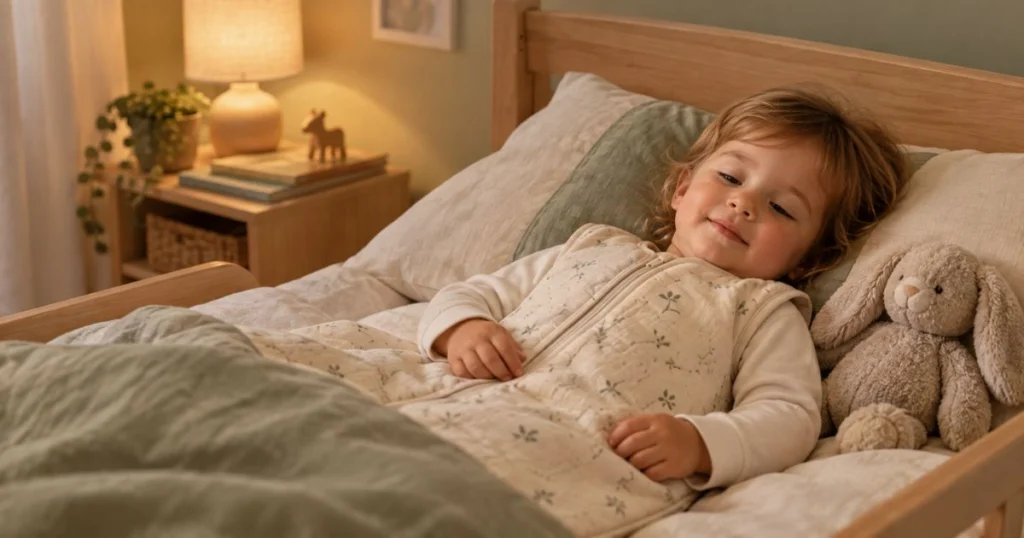
Parenting Whisper Reminder 🤍
You don’t have to find the “perfect” sleep sack. You just need one that fits your toddler, suits your sleep environment, and helps make bedtime a little simpler.
If you’re shopping for one now, save the checklist above and use it before you buy. And if your toddler already has a favorite sleep sack, take a moment to check the fit, condition, and warmth level as the seasons and your child’s size change.