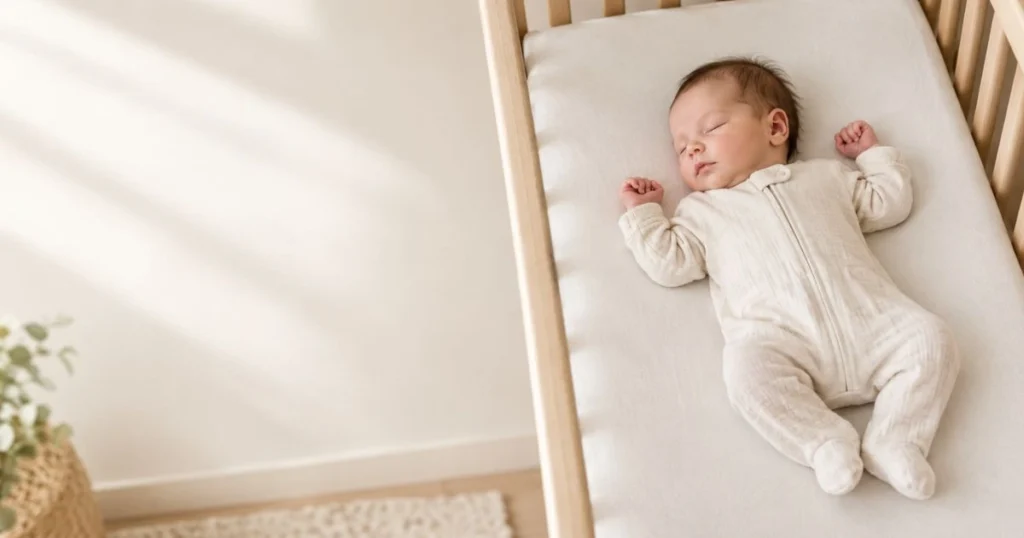
Choosing clothes for your newborn can feel surprisingly important.
You may find yourself standing in front of a drawer full of tiny pajamas, wondering which one will feel soft enough, whether your baby will get too warm, or if that zipper will make nighttime diaper changes easier. When your baby is only a few weeks old, even the simplest bedtime routine can come with plenty of questions.
And when it comes to newborn sleepers, softness is only part of the picture.
The right sleeper should feel comfortable against your baby’s delicate skin, fit appropriately, make diaper changes manageable, and provide the right amount of coverage for the environment. You also want to think about safe sleep practices, because what your baby wears is only one part of creating a safe sleep setting.
The good news? You don’t need a drawer overflowing with expensive baby clothes.
With a few thoughtful choices, you can build a small collection of comfortable, practical newborn sleepwear that works for everyday naps, nighttime sleep, and all those unexpected outfit changes that come with caring for a new baby.
What Are Newborn Sleepers?
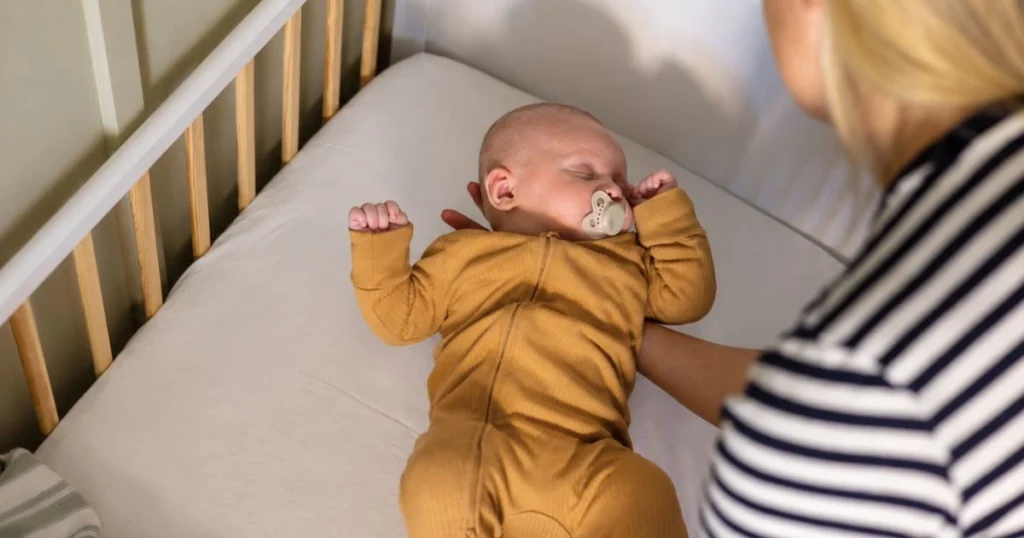
Newborn sleepers are one-piece garments designed to keep a baby dressed comfortably during sleep, rest, and often everyday activities.
You may also see terms such as:
- Baby sleepers
- Newborn pajamas
- Baby sleepwear
- Sleep-and-plays
- Footed pajamas
- One-piece pajamas
- Zip-up sleepers
Retailers don’t always use these terms consistently, so it helps to look beyond the name on the package.
A sleeper may have feet built into the garment or leave the feet uncovered. It may close with a zipper, snaps, or another fastening system. Some are lightweight for warmer environments, while others are made from thicker fabrics.
For newborns, one-piece clothing can be particularly convenient because it keeps the baby’s torso and legs covered without requiring several separate pieces.
Newborn Sleepers vs. Regular Baby Clothes
Not every cute baby outfit is practical for sleep.
A daytime outfit might contain decorative elements, stiff fabrics, multiple layers, or accessories that make nighttime changes unnecessarily difficult. A good newborn sleeper is generally simpler.
When you’re choosing sleepwear, look for:
- Comfortable fabric
- A suitable fit
- Easy diaper access
- Secure closures
- Minimal loose decorations
- Appropriate warmth for the environment
If you’re buying sleepwear in the United States, it’s also worth understanding that children’s sleepwear is subject to federal flammability requirements, with specific rules and exemptions for infant garments and tight-fitting garments. The U.S. Consumer Product Safety Commission explains these distinctions in its sleepwear guidance.
What Makes the Best Newborn Sleepers?
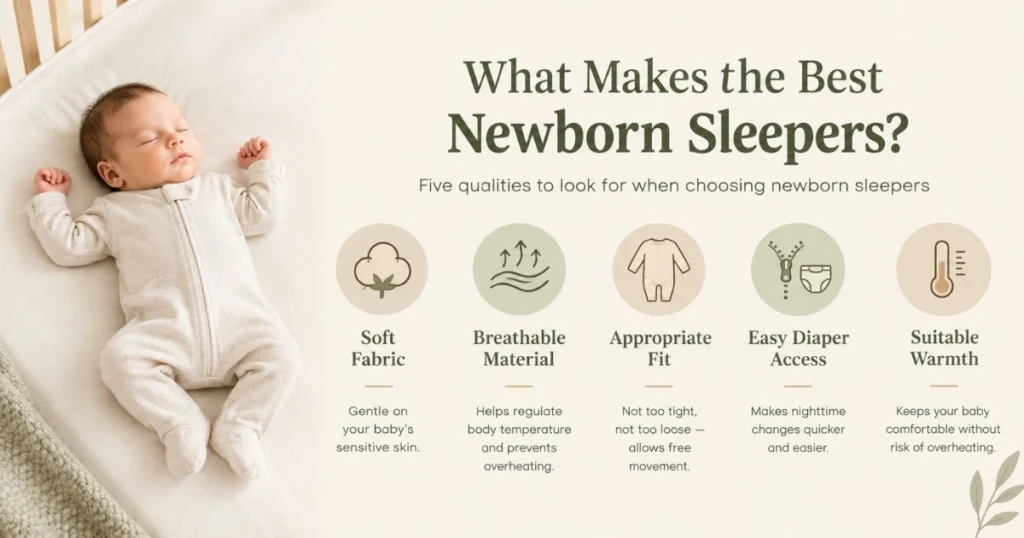
The “best” newborn sleeper isn’t necessarily the softest garment you can find or the one with the highest price tag.
Instead, look for a combination of qualities that makes the garment comfortable, practical, and appropriate for your baby’s circumstances.
Softness
Your baby’s skin is delicate, so fabric texture deserves attention.
A sleeper can feel soft in the package but become rougher after repeated washing. Seams, labels, zippers, and decorative details can also affect how comfortable the garment feels.
Run your fingers over the inside of the garment and pay attention to areas that may sit against your baby’s neck, arms, legs, and torso.
Breathability
A fabric can feel wonderfully cozy without being the right choice for every room or season.
When choosing newborn sleepwear, consider the overall weight and construction of the garment rather than simply asking whether the fabric feels warm.
Your goal is comfortable clothing without unnecessary layers.
The American Academy of Pediatrics advises parents to avoid overheating babies during sleep and notes that signs such as sweating, a hot chest, or flushed skin can indicate that a baby is too warm.
Appropriate Fit
A sleeper shouldn’t be chosen solely on the basis of how long you hope your baby will wear it.
Follow the manufacturer’s size guidance and pay attention to how the garment sits around the torso, neck, arms, and legs.
A garment that is too small can restrict movement or become uncomfortable. One that is excessively loose may create other concerns, depending on the garment and its intended use.
Practical Design
When you’re changing a diaper at 2 a.m., convenience suddenly becomes very important.
Features such as:
- Two-way zippers
- Easy-access snaps
- Covered zipper ends
- Stretchable openings
- Simple one-piece construction
can make a surprisingly large difference.
Best Fabrics for Newborn Sleepers
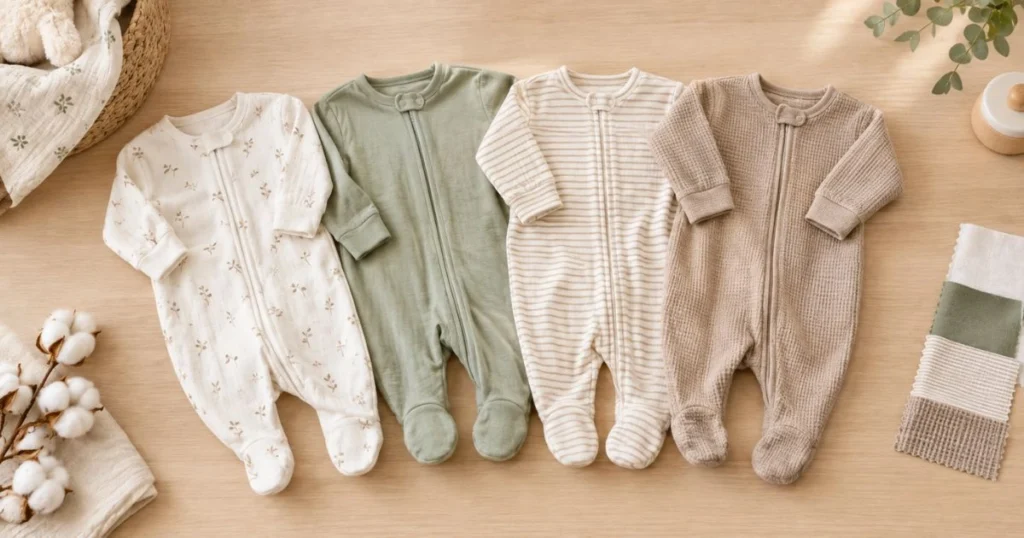
Fabric is one of the first things you’ll notice when shopping for newborn sleepers, but don’t assume that one material is automatically perfect for every baby.
The softness of a garment depends on more than its fiber label. Fabric weight, weave, finishing, seams, and construction all contribute to how the sleeper feels.
Cotton Newborn Sleepers
Cotton is a popular choice for baby clothing because it’s widely available in many different weights and constructions.
A lightweight cotton sleeper may work well in a warmer environment, while a heavier cotton garment can provide more coverage when conditions are cooler.
When shopping for cotton newborn sleepers, look beyond the word “cotton” and check:
- Fabric thickness
- Texture
- Stretch
- Seams
- Care instructions
- Overall fit
A soft cotton sleeper can be a simple everyday option without requiring complicated care.
Organic Cotton Newborn Sleepers
You may also come across organic cotton sleepers.
Organic cotton refers to how the cotton was produced and certified rather than guaranteeing that every garment will feel softer than conventional cotton.
If you prefer organic textiles, that’s a perfectly reasonable shopping preference. Just remember to evaluate the finished garment as well.
Check:
- The actual texture
- Construction quality
- Seams
- Closures
- Sizing
- Washing instructions
“Organic” shouldn’t be the only feature you use to decide whether a sleeper is comfortable.
Bamboo Newborn Sleepers
Bamboo-based baby clothing is often marketed around its soft, smooth feel.
Some parents like bamboo sleepers because they feel lightweight and silky against the skin. Others prefer cotton because of its familiarity, availability, or price.
If you’re comparing bamboo and cotton, focus on the finished product rather than assuming one is universally superior.
Ask:
- Does it feel comfortable?
- Is the fabric appropriate for the room?
- Does the sleeper fit correctly?
- Will it hold up to frequent washing?
- Are the seams comfortable?
Fleece and Heavier Newborn Sleepers
Fleece can feel appealing when the weather is cold, but thicker doesn’t automatically mean better for sleep.
A newborn can become too warm when dressed in excessive layers, and the AAP recommends avoiding overheating during sleep.
If you choose a heavier sleeper, consider the room environment and what your baby is already wearing underneath it.
How to Choose the Softest Newborn Sleepers
If softness is your top priority, don’t stop at the fabric label.
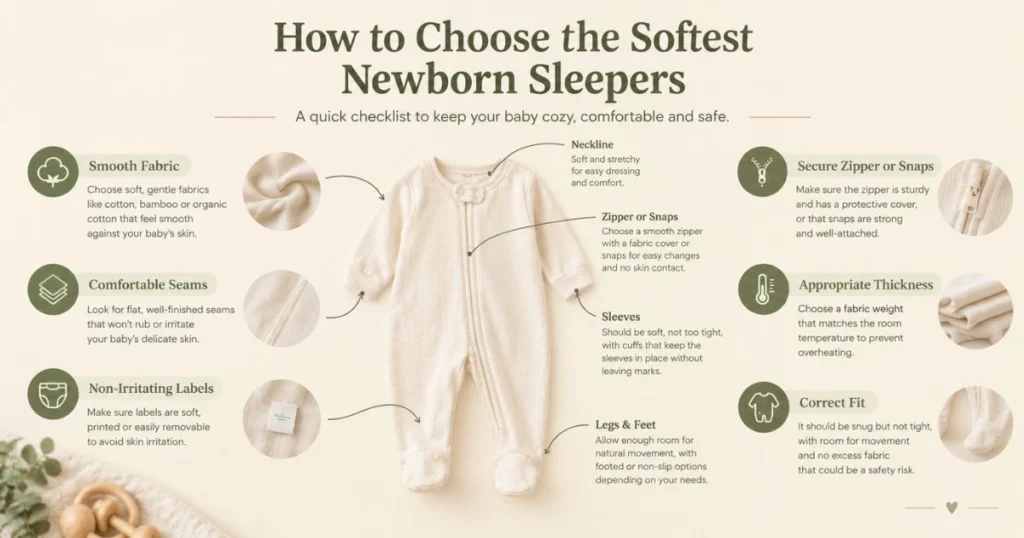
Instead, evaluate the entire garment.
Check the Fabric
Before buying, consider:
- Is the material smooth?
- Does it feel flexible?
- Is it excessively thick?
- Does it have a rough or scratchy surface?
- Will it likely remain comfortable after washing?
A soft, lightweight fabric can sometimes be more practical than a very plush one.
Examine the Seams
Turn the sleeper inside out if possible.
Look at the seams around:
- The neck
- Shoulders
- Underarms
- Waist
- Legs
- Ankles
You don’t want unnecessarily rough construction rubbing against your baby’s skin.
Check the Labels
Labels can sometimes feel irritating, particularly when they’re stiff or positioned where they constantly touch the skin.
If a garment has an irritating tag, check whether it can be removed safely without damaging the garment.
Inspect Zippers and Snaps
A zipper should move smoothly without catching.
Snaps should close securely and shouldn’t feel as though they’re about to separate.
Inspect these features regularly, especially after repeated washing.
Soft Doesn’t Always Mean Better
This is an important distinction.
Imagine two sleepers:
Sleeper A: extremely plush and thick.
Sleeper B: lightweight, smooth, and breathable.
Sleeper A might feel softer when you touch it, but Sleeper B may be the more practical choice in a warm bedroom.
The right question isn’t simply:
“Which sleeper is softest?”
Instead, ask:
“Which sleeper gives my baby a comfortable combination of softness, appropriate warmth, fit, and practicality?”
How Should Newborn Sleepers Fit?
Fit is one of the most important parts of choosing baby sleepwear.
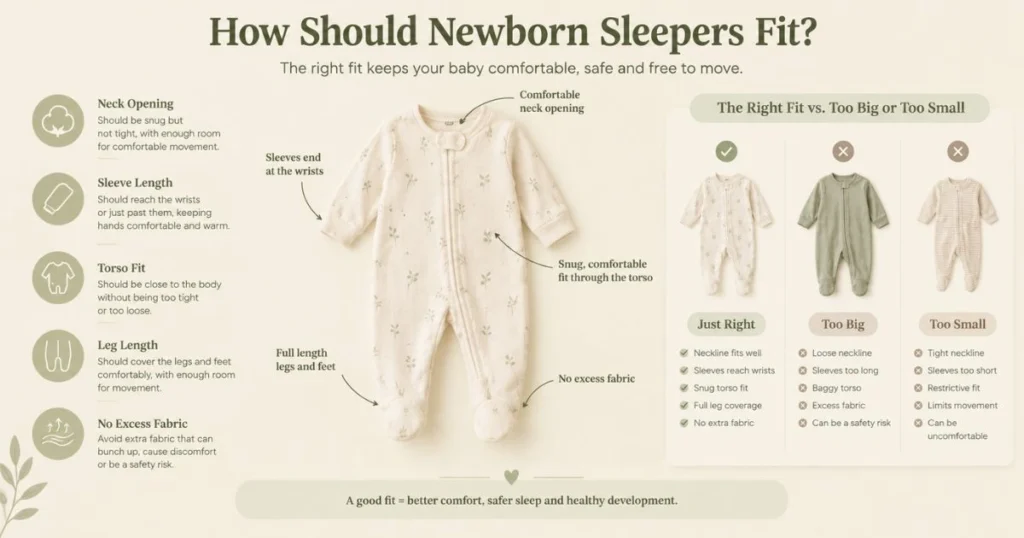
You might be tempted to buy a larger size because newborns grow quickly. That can save money on clothing, but you shouldn’t ignore the manufacturer’s intended sizing or the garment’s construction.
Should Newborn Sleepers Be Tight or Loose?
There isn’t one universal answer that applies to every garment.
Sleepwear regulations can vary according to the garment’s size, intended use, and design. In the United States, the CPSC distinguishes infant garments and tight-fitting children’s sleepwear from other children’s sleepwear under federal flammability rules.
For you as a parent, the practical takeaway is simple:
Choose sleepwear according to the manufacturer’s sizing and safety instructions rather than intentionally sizing far up or down.
Signs a Newborn Sleeper Is Too Small
Watch for:
- Snaps pulling apart
- Fabric stretching tightly across the torso
- Sleeves ending too high
- Legs becoming noticeably short
- Restricted movement
- Tight openings around the wrists or ankles
If your baby is clearly outgrowing a sleeper, it’s time to move to the next appropriate size.
Signs a Sleeper Is Too Large
An oversized sleeper may have:
- Excess fabric
- Very long sleeves
- Excessive bunching
- Poorly positioned openings
- A generally loose fit that doesn’t match the garment’s intended design
Don’t assume “room to grow” always makes a garment better for sleep.
Should You Buy Newborn Sleepers a Size Bigger?
A small amount of growing room can be practical, but you shouldn’t deliberately choose a substantially oversized garment.
Instead:
- Check the manufacturer’s size chart.
- Compare your baby’s current measurements where available.
- Consider how the garment is designed.
- Follow any safety instructions on the label.
- Replace the sleeper when your baby has clearly outgrown it.
Zippers vs. Snaps: Which Newborn Sleeper Is Easier?
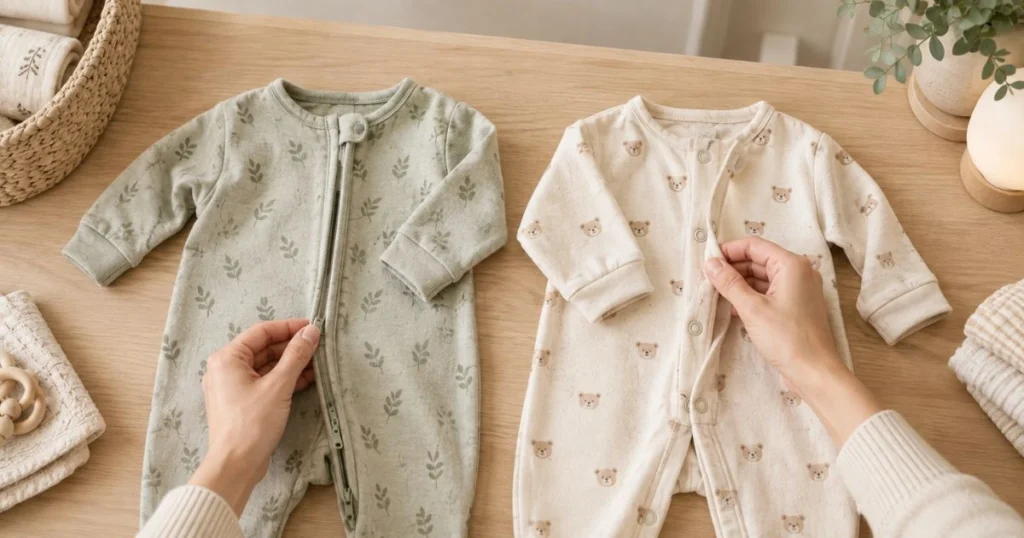
This is where personal preference becomes important.
Zip-Up Newborn Sleepers
Zippers are popular because they can make nighttime diaper changes much faster.
Advantages include:
- Quick opening
- Fewer individual closures
- Convenient nighttime changes
- Less handling when your baby is sleepy
Some sleepers have two-way zippers, allowing you to open the lower section without completely exposing your baby’s upper body.
Snap Newborn Sleepers
Snaps have their own advantages.
They allow you to open specific sections of the garment and can be convenient when you want more control over how much of the sleeper you remove.
The drawback is obvious when you’re tired: there may be several individual snaps to fasten.
Two-Way Zippers
For many parents, a two-way zipper is one of the most useful features in a newborn sleeper.
You can potentially access the diaper area without completely opening the garment.
Still, inspect the zipper regularly and make sure it functions properly.
Footed vs. Footless Newborn Sleepers
Both designs can be useful, and neither is automatically the right choice for every baby.
| Feature | Footed Sleepers | Footless Sleepers |
| Foot coverage | Built in | No |
| Convenience | No separate socks needed | Flexible |
| Cooler environments | Often useful | May require other coverage |
| Growth | Can become short sooner | Often offers more flexibility |
| Warm-weather use | Depends on fabric | Often versatile |
| Everyday use | Very convenient | Very convenient |
When Footed Sleepers May Work Well
Footed sleepers can be convenient when you want your baby’s feet covered without adding socks.
They can also reduce the problem of socks slipping off.
When Footless Sleepers May Be Better
Footless styles can provide more flexibility as your baby grows.
They can also work well when you don’t want as much coverage around the feet.
The best choice depends on your baby’s size, the garment’s fit, and your environment.
How to Choose Newborn Sleepers for Different Temperatures
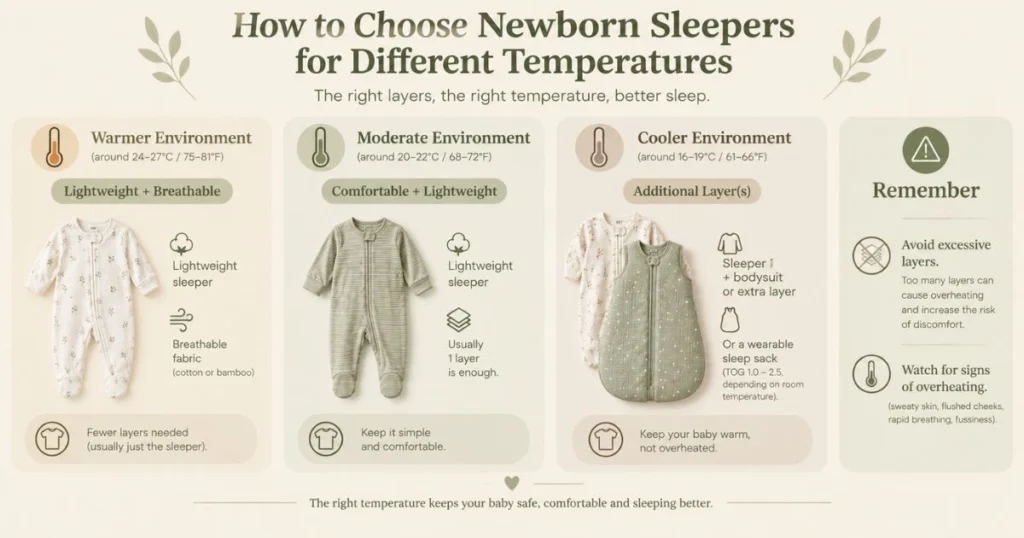
Your baby’s sleepwear should make sense for the environment.
You don’t need to dress your baby according to the outdoor temperature alone. The temperature inside the sleeping area and the clothing already being worn are also important.
Newborn Sleepers for Warm Weather
Consider:
- Lightweight fabrics
- Fewer layers
- Breathable construction
- Comfortable fit
Avoid automatically adding thick clothing because you worry your baby might be cold.
Instead, check your baby for signs of overheating.
Newborn Sleepers for Cooler Weather
When the environment is cooler, you may need to think about additional clothing layers or appropriate wearable sleepwear.
The key is to keep the sleep environment free of loose bedding.
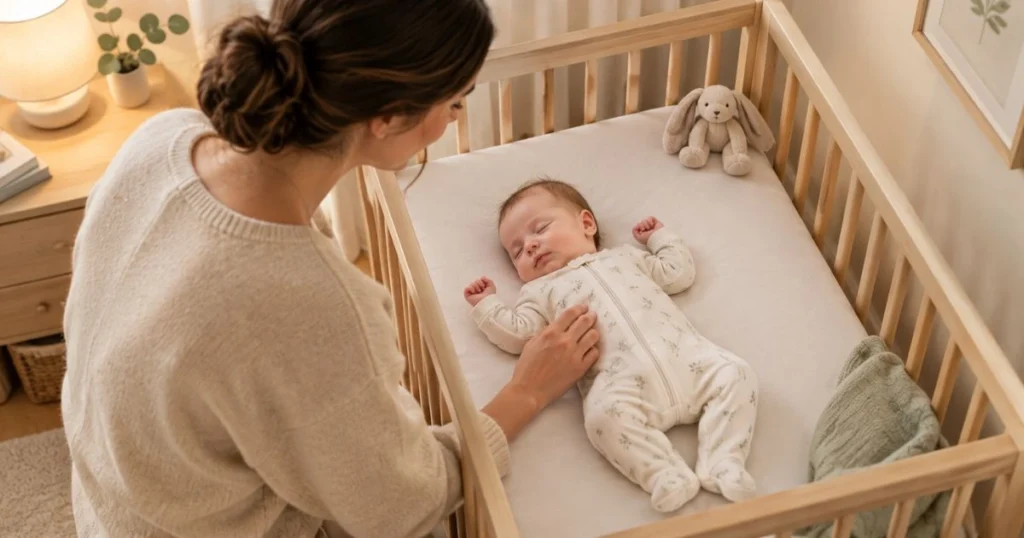
For safer sleep, place your baby on their back on a firm, flat mattress covered with a fitted sheet, and keep loose blankets, pillows, toys, and other soft items outside the sleep space.
How to Tell If Your Baby Is Too Hot
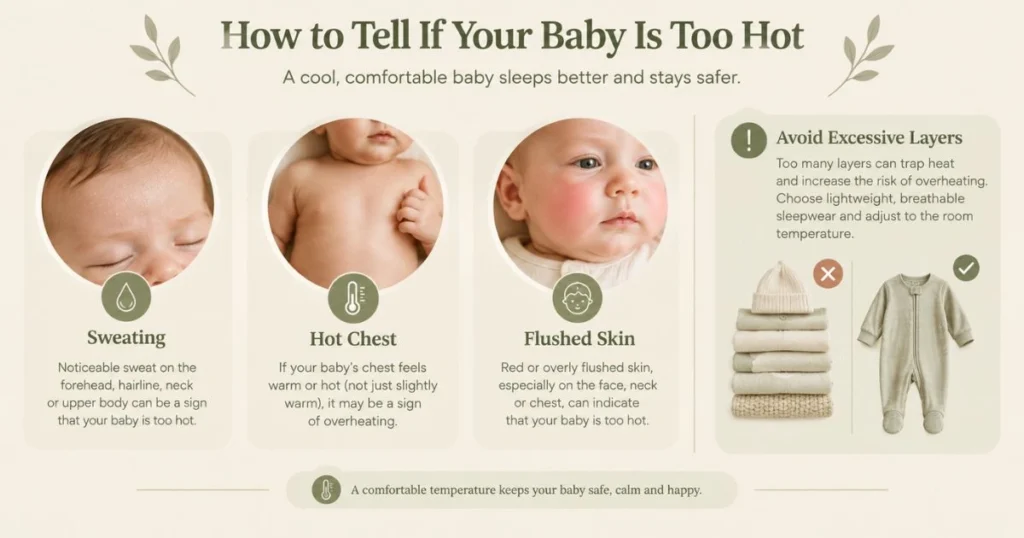
Possible signs include:
- Sweating
- A hot chest
- Flushed skin
These are among the signs of overheating identified by the AAP.
If your baby appears unwell, has unusual breathing, is difficult to wake, or you are concerned about their condition, seek medical advice promptly.
A Simple Layering Approach
The AAP notes that babies generally need only about one additional layer compared with an adult in the same environment.
Think of this as a starting point rather than a rigid formula.
Your baby’s clothing needs can vary depending on the room, the garment, and your baby’s individual circumstances.
Newborn Sleepers and Safe Sleep: What Parents Should Know
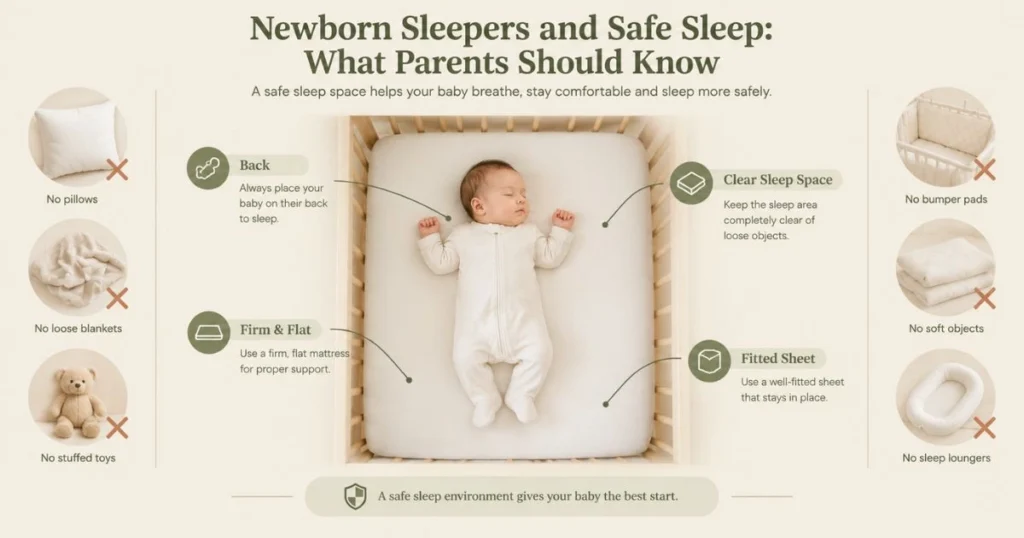
Choosing a soft sleeper is useful, but remember that safe sleep is about the entire sleep environment.
Keep the Sleep Surface Clear
For routine sleep, the CDC and AAP recommend:
- Placing your baby on their back.
- Using a firm, flat sleep surface.
- Using a fitted sheet designed for that sleep surface.
- Keep the baby’s sleep space free of pillows, loose blankets, bumper pads, toys, and other soft items.
A comfortable sleeper doesn’t replace these safe-sleep practices.
Can a Newborn Sleep in a Sleeper?
Choosing suitable sleepwear can be a helpful part of establishing a comfortable bedtime routine for your baby.
The key difference is between clothing your baby wears and loose items placed around them during sleep.
A sleeper is clothing.
A loose blanket is bedding.
Those aren’t interchangeable from a safe-sleep perspective.
Avoid Overheating
Overheating is another reason not to judge newborn sleepwear solely by how cozy it feels.
The AAP advises avoiding overheating and points to sweating, a hot chest, and flushed skin as signs your baby may be too warm.
Avoid Weighted Sleep Products
Don’t assume a weighted sleeper or weighted blanket is simply a warmer version of ordinary sleepwear.
The AAP advises against weighted blankets, weighted sleepers, weighted swaddles, and other weighted objects on or near babies.
Understand Sleepwear Regulations
If you’re purchasing products in the United States, pay attention to the manufacturer’s labeling and intended use.
CPSC regulations distinguish infant garments from other children’s sleepwear. Certain infant garments meeting specific size and measurement criteria are exempt from the children’s sleepwear flammability testing requirements but remain subject to general clothing flammability requirements.
This is one reason you shouldn’t make assumptions about a garment based only on its appearance.
How Many Newborn Sleepers Do You Need?
You don’t need twenty newborn sleepers.
In fact, buying too many can leave you with clothes your baby barely wears before moving to the next size.
A practical starting point might include:
- 4–6 everyday sleepers
- 2–3 additional backups
- A few lighter options
- A couple of seasonally appropriate choices
Your exact number depends on how frequently you do laundry and how often your baby spits up, has diaper leaks, or needs an outfit change.
Why You Don’t Need a Huge Newborn Wardrobe
Newborns can go through several clothing changes in a day.
But they can also outgrow newborn sizing quickly.
Instead of filling an entire dresser before your baby arrives, consider buying a manageable number of sleepers and adding more after you learn which styles work best for your family.
You may discover that you love zippered sleepers and barely use the snap-front ones.
That’s useful information.
Common Newborn Sleeper Mistakes to Avoid
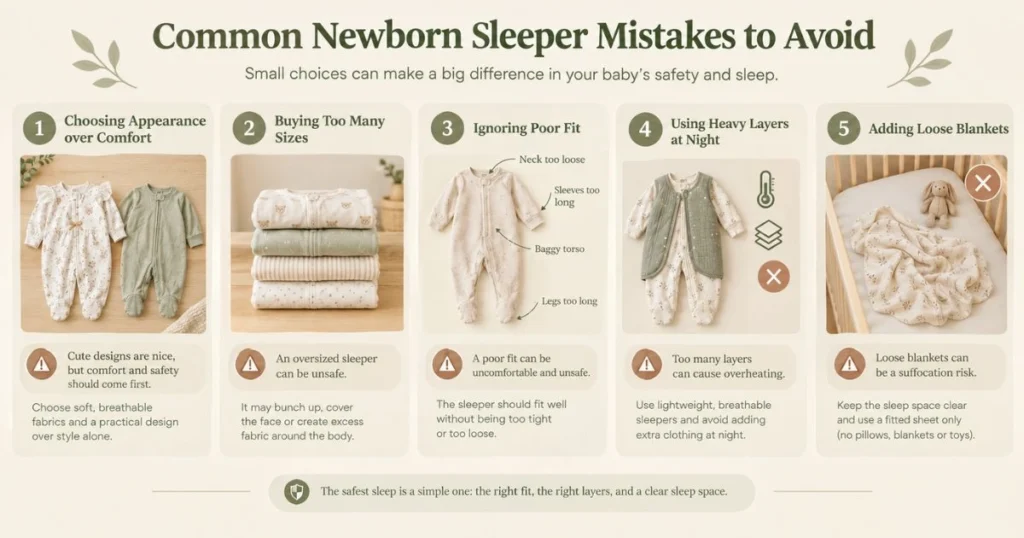
Even with the best intentions, it’s easy to make newborn clothing more complicated than it needs to be.
Choosing Appearance Over Comfort
A beautifully designed sleeper isn’t useful if the fabric feels rough or the garment is difficult to use.
Cute details can be fun, but comfort should come first.
Buying Too Many Sizes
It’s tempting to prepare for every stage at once.
But your newborn may grow differently from what you expect.
Buy enough to get through the early weeks without turning your baby’s wardrobe into a storage project.
Ignoring Fit
Don’t keep using a sleeper simply because it’s your favorite.
If it no longer fits properly, replace it.
Using Heavy Layers at Night
More layers aren’t automatically better.
A thick sleeper plus additional clothing can make your baby too warm.
Consider the room and your baby’s overall clothing rather than adding layers simply because the night feels chilly.
Adding Loose Blankets
If you’re worried your baby is cold, adding a loose blanket to the sleep space isn’t the answer.
The CDC advises keeping loose bedding, soft objects, and other unnecessary items out of your baby’s sleep space.
Keeping Damaged Sleepers in Rotation
Check your baby’s sleepers regularly.
Replace garments with:
- Broken snaps
- Damaged zippers
- Loose threads
- Significant fabric damage
- Stretched openings
- Other defects that affect how the garment fits or functions
How to Wash and Care for Newborn Sleepers
Newborn clothing gets washed frequently.
Spit-up, milk, diaper leaks, and everyday messes can quickly turn a clean sleeper into a laundry item.
Wash New Sleepers Before First Use
Washing new clothing before your baby wears it is a simple step that can remove residues from manufacturing, packaging, handling, and storage.
Follow the garment’s care instructions.
Follow the Care Label
Pay attention to:
- Recommended washing temperature
- Drying instructions
- Shrinkage warnings
- Fabric-specific care
- Fastener instructions
A sleeper that fits perfectly before washing may fit differently after repeated high-heat drying.
Inspect Sleepers After Washing
Every few washes, take a quick look at:
- Seams
- Snaps
- Zippers
- Cuffs
- Leg openings
- Fabric condition
This takes only a moment and helps you catch problems before they become frustrating.
Newborn Sleepers Buying Checklist
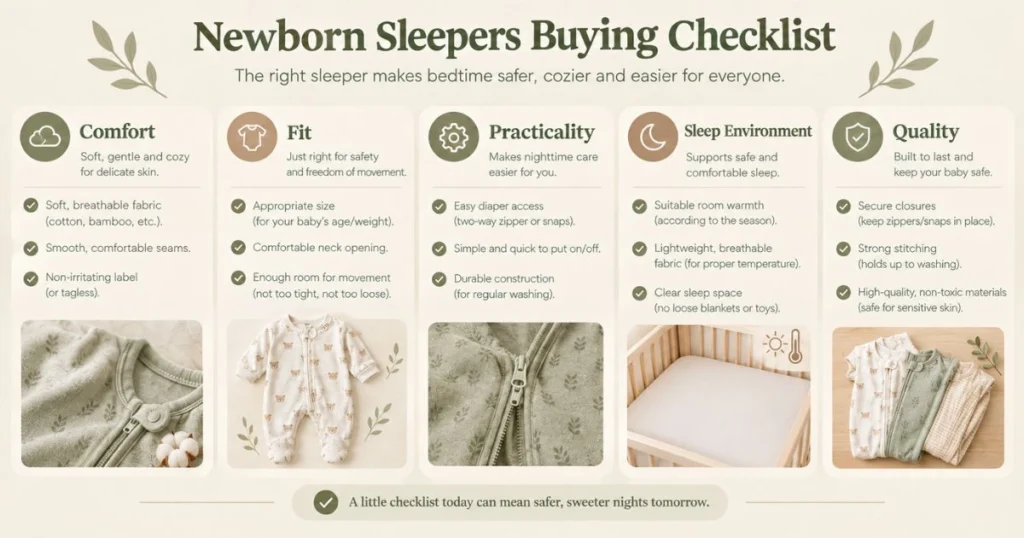
Before buying another sleeper, run through this quick checklist.
Comfort
- Is the fabric soft?
- Are the seams comfortable?
- Does the garment feel flexible?
- Are there irritating labels or decorations?
Fit
- Is the size appropriate?
- Does it allow comfortable movement?
- Are the sleeves and legs an appropriate length?
- Does it follow the manufacturer’s sizing guidance?
Practicality
- Is it easy to put on?
- Can you change a diaper without unnecessary undressing?
- Does the zipper or snap system work smoothly?
- Is it easy to wash?
Sleep Environment
- Is the clothing appropriate for the room?
- Are you avoiding unnecessary layers?
- Are you keeping loose bedding out of the sleep space?
- Does the product contain any unusual features, such as added weight?
Quality
- Are the closures secure?
- Are the seams intact?
- Does the fabric hold up after washing?
- Is the product clearly labeled for its intended use?
Newborn Sleepers: Quick Comparison
| Sleeper Type | Best For | Main Advantage | What to Consider |
| Cotton sleeper | Everyday use | Versatile and widely available | Fabric weight varies |
| Organic cotton | Parents who prefer organic textiles | Organic fiber option | Doesn’t automatically mean softer |
| Bamboo sleeper | Parents seeking a smooth, lightweight feel | Soft texture | Evaluate the finished garment |
| Footed sleeper | Convenient foot coverage | No separate socks | Can become short as baby grows |
| Footless sleeper | Flexible everyday wear | More room for growth | Feet remain uncovered |
| Zip-up sleeper | Nighttime diaper changes | Fast and convenient | Inspect zipper condition |
| Snap sleeper | Parents who prefer adjustable openings | Flexible access | More closures to manage |
There isn’t a single winner in this table.
Your ideal choice depends on your baby’s size, your home environment, how often you do laundry, and which design makes nighttime care easier for you.
Frequently Asked Questions About Newborn Sleepers
What Are the Best Newborn Sleepers for a Baby?
The best newborn sleepers combine comfortable fabric, an appropriate fit, practical construction, and suitable warmth for the environment. Look for soft materials, comfortable seams, secure closures, and a design that makes diaper changes easier.
What Is the Softest Material for Newborn Sleepers?
There isn’t one fabric that is objectively the softest for every baby. Cotton, organic cotton, bamboo-based fabrics, and other materials can all feel comfortable depending on their construction. Instead of choosing based only on the fabric name, examine the actual texture, seams, weight, and fit.
Are Cotton Newborn Sleepers Good for Babies?
Cotton can be a practical choice for newborn sleepwear because it is widely available in different weights and constructions. The most important considerations are the specific garment’s fit, fabric weight, construction, and the temperature of the environment.
Are Organic Cotton Newborn Sleepers Better?
Organic cotton can be a good choice if you prefer organically produced textiles, but “organic” doesn’t automatically mean a garment will be softer or more comfortable. Check the finished sleeper rather than relying on the label alone.
Are Bamboo Newborn Sleepers Better Than Cotton?
Not necessarily. Bamboo and cotton sleepers can both be comfortable. Compare the actual fabric, garment weight, fit, durability, and care requirements rather than assuming one material is universally better.
Should Newborn Sleepers Be Tight or Loose?
Choose the size and fit recommended by the manufacturer rather than deliberately buying an oversized sleeper. Sleepwear requirements can also depend on the garment’s size, design, intended use, and applicable regulations. In the United States, CPSC rules distinguish infant garments and tight-fitting sleepwear from other children’s sleepwear.
Can Newborns Sleep in Footed Sleepers?
Footed sleepers can be a convenient option when appropriately sized and suitable for the baby’s environment. They provide built-in foot coverage, which means you don’t have to rely on separate socks.
How Many Newborn Sleepers Do I Need?
A practical starting point is around 4–6 everyday sleepers plus a few backups. You may need more if you do laundry less frequently or your baby frequently needs clothing changes.
How Do I Know If My Baby Is Too Hot in a Newborn Sleeper?
Check for signs such as sweating, a hot chest, or flushed skin. These are signs of overheating identified by the AAP. If your baby seems unusually unwell or you have concerns about their condition, contact your healthcare professional.
Can My Newborn Sleep in a Fleece Sleeper?
A fleece sleeper may be appropriate in some cooler environments, but the important question is whether your baby is dressed appropriately overall. Avoid automatically adding thick layers, and watch for signs of overheating.
What Should a Newborn Wear to Sleep?
Your baby should wear clothing appropriate for the environment and their size, without unnecessary layers. A properly fitted sleeper or other appropriate sleepwear can be part of a safe sleep routine. Remember that safe sleep also requires a firm, flat sleep surface and a clear sleep area without loose blankets, pillows, toys, or other soft objects.
Conclusion: Choosing the Right Newborn Sleeper for Your Baby
Choosing the right newborn sleepers doesn’t have to become another overwhelming parenting decision.
Start with the basics.
Look for a sleeper that feels comfortable, fits appropriately, and suits the environment where your baby sleeps. Pay attention to the fabric, but don’t let a fabric label make the entire decision for you. A beautifully soft material isn’t helpful if the garment is too warm, doesn’t fit well, or makes every diaper change unnecessarily difficult.
Think about how you’ll actually use the sleeper.
Will you be changing diapers during the night? A zipper may save you time. Does your home tend to be warm? A lightweight option may make more sense. Do you prefer built-in foot coverage? A footed sleeper may be convenient. Are you trying to reduce unnecessary purchases? Start with a small collection and see which styles your baby actually wears.
Most importantly, remember that sleepwear is only one part of safe sleep. Follow current guidance about placing your baby on their back, using a firm and flat sleep surface, keeping the sleep area clear of loose bedding and soft objects, and avoiding overheating.
You don’t need the most expensive sleeper, the trendiest fabric, or a perfectly coordinated newborn wardrobe.
You simply need clothing that is comfortable, practical, appropriately fitted, and suited to your baby’s sleeping environment.
Parenting Whisper Reminder
The best newborn sleeper isn’t necessarily the fanciest one. Choose softness, comfort, an appropriate fit, and practical features—and give yourself permission to keep newborn care simple.
If you’re preparing your baby’s wardrobe now, start with a handful of comfortable sleepers rather than buying everything at once. After a few weeks, you’ll know which fabrics, closures, and styles make life easier for you and your baby.
And sometimes, that’s the best guide of all.