
Your child screams because you said no. They throw a toy across the room, stomp their feet, or shout, “I hate you!”3. You pause, take a deep breath, and try to stay calm, yet you may still be wondering, “Why does my child seem to get angry so easily?” What am I supposed to do right now? Should I be stricter?
If you’ve ever felt completely lost in the middle of an angry outburst, you’re not alone.
Anger can be intense for children, especially when they are still learning how to communicate, tolerate frustration, wait, compromise, and manage disappointment. Young children often need an adult’s help to understand what they are feeling and what to do with it. The CDC notes that toddlers and preschoolers commonly struggle to manage intense emotions and recommends calm support, emotion coaching, safety, and clear limits around harmful behavior.
The goal is not to raise a child who never experiences anger. Anger is a normal emotion. Your job is to help your child learn that anger can be expressed safely, boundaries can remain firm, and difficult moments can eventually be repaired.
Here’s how you can respond to angry kids without shaming their feelings or giving up the limits they need.
Why Are Kids So Angry?
Before you can help angry kids, it helps to understand what may be underneath the behavior.
Anger is often the emotion you can see, but it isn’t always the emotion that started everything. Angry kids may be frustrated, tired, overwhelmed, disappointed, scared, embarrassed, or unable to communicate what they need.
According to the NHS, anger is a natural emotion that can serve a useful purpose. It can signal that something feels unfair, wrong, threatening, or difficult. You pause, take a deep breath, and try to stay calm, but you may still find yourself wondering, “Why does my child seem to get angry so easily?”
Anger Is a Normal Emotion for Kids
Your child is allowed to feel angry. Angry kids still need to learn that having strong emotions does not make every behavior acceptable.
That doesn’t mean every behavior that happens during anger is acceptable.
Think about the difference:
- Feeling: “I’m frustrated because you turned off the TV.”
- Communication: “I don’t want it to end!”
- Behavior: Hitting, kicking, biting, or throwing something at another person.
The first two can be supported and coached. The third needs a clear boundary.
This distinction is important because you don’t have to make your child feel ashamed for being angry in order to stop unsafe behavior. With angry kids, you can validate the feeling while still setting firm, respectful limits around unsafe actions.
Why Kids Get Angry So Easily
Angry kids can become upset for many different reasons, including:
- Hunger or tiredness
- Frustration
- Being told “no”
- Having to stop a favorite activity
- Transitions between activities
- Difficulty communicating
- Sibling disagreements
- Feeling misunderstood
- Wanting more independence
- Too much noise or stimulation
- Changes in routine
- Problems with friends or school
- Stress, anxiety, or fear
For older children, anger may also be connected to friendship difficulties, bullying, school problems, stress, or anxiety. These experiences can help explain why some angry kids react strongly to situations that may seem minor to adults.
Sometimes the trigger seems tiny to you but enormous to your child.
You may see a child crying because their banana broke and think, It’s just a banana.
Your child may experience it as one more frustrating thing after a difficult morning.
Young Children Are Still Learning Emotional Regulation
A young child can understand a rule and still struggle to follow it when overwhelmed. This is especially common with angry kids, whose emotions can become stronger than their ability to pause and respond calmly.
Knowing that hitting isn’t allowed doesn’t automatically give your child the ability to control an impulse in the middle of intense frustration.
Emotional regulation develops gradually. Children learn through repeated experiences with adults who help them notice feelings, name them, set boundaries, and recover. Over time, these experiences can help angry kids build better ways to manage strong emotions.
That is why your response during difficult moments matters more than finding the perfect punishment.
Angry Kids and Big Feelings: Feelings Are Allowed, Harmful Behavior Is Not
One of the most useful principles you can carry into difficult moments with angry kids is simple:
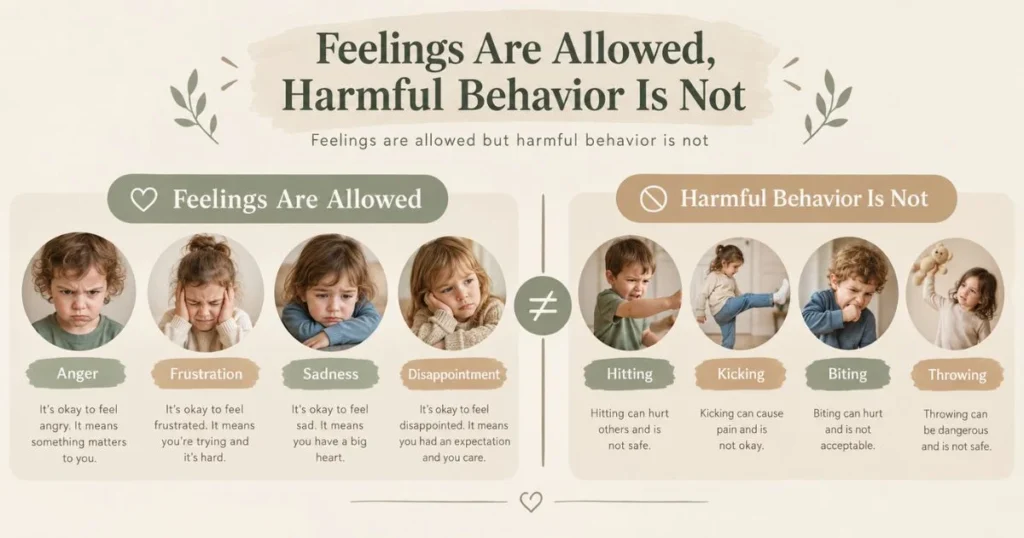
It’s okay to be angry. It’s not okay to hurt someone.
This gives your child two important messages at once.
First, their emotion is not bad.
Second, they are still responsible for learning safe ways to behave. For angry kids, this balance helps you validate the feeling while teaching clear boundaries around behavior.
Validation Does Not Mean Giving In
Some parents worry that acknowledging the feelings of angry kids will encourage more tantrums.
Validation isn’t the same as giving your child whatever they want.
For example:
Validation:
“You really wanted another cookie. You’re disappointed.”
Giving in:
“Okay, you can have one more cookie because you’re feeling upset.”
You can validate the feeling while keeping the limit:
“You’re really angry that the cookies are finished. It’s okay to be upset. We’re still done with cookies.”
For angry kids, this approach allows you to acknowledge their emotions without removing reasonable boundaries. The CDC recommends acknowledging and naming children’s emotions while also setting limits when behavior becomes hurtful or inappropriate.
Why You Don’t Need to Eliminate Anger
Anger is part of being human, and angry kids need opportunities to learn how to handle this emotion safely.
Your long-term goal isn’t to prevent your child from ever becoming frustrated. Instead, you’re helping them develop skills they can use when frustration inevitably appears.
Over time, you want your child to move from:
“I’m angry, so I hit.”
toward:
“I’m angry. I need help.”
That change takes practice, especially for angry kids who are still developing emotional regulation skills.
What to Do When Your Child Is Angry
When your child’s emotions are escalating, you don’t need a complicated script. A simple sequence can help.
1. Regulate Yourself First
Before correcting your child, pause if you can.
Take a breath. Lower your voice. Relax your shoulders. Slow down.
This doesn’t mean you have to feel perfectly calm. Parenting angry kids can be frustrating, especially when you’re already tired.
It simply means trying not to add another layer of anger to the situation.
For angry kids, having a calm adult nearby can make it easier to work through intense emotions and learn healthier ways to respond. The CDC recommends that parents notice and manage their own emotions as part of emotion coaching. It specifically suggests pausing and taking a breath when you become frustrated or stressed.
2. Make Sure Everyone Is Safe
IIf your child is hitting, kicking, biting, throwing dangerous objects, or moving toward danger, safety comes first. This is especially important when you’re supporting angry kids who may be overwhelmed by intense emotions.
You may need to:
- Move an object out of reach.
- Separate siblings.
- Block a hit.
- Move your child away from danger.
- Stay nearby until the situation becomes safer.
You don’t need to deliver a lecture while doing this.
A calm statement may be enough:
“I won’t let you hit.”
With angry kids, your immediate priority is to prevent anyone from getting hurt while keeping your response calm and clear. The American Academy of Pediatrics advises parents not to ignore dangerous behaviors such as hitting, kicking, biting, or throwing.
3. Name the Feeling
Once your child can engage with you, put simple words to what you see. This can be especially helpful for angry kids who are still learning how to identify and express strong emotions.
Try:
- “You’re really angry.”
- “You didn’t want playtime to end.”
- “You’re frustrated.”
- “That was disappointing.”
- “You really wanted to do it yourself.”
You don’t have to get the emotion exactly right.
If your child says, “I’m not sad! I’m mad!” you can simply respond:
“You’re right. You’re mad.”
For angry kids, naming the emotion can help them begin to understand what they’re feeling without making them feel ashamed of it. The CDC recommends noticing, connecting, listening, and naming emotions as part of emotion coaching.
4. Validate Without Removing the Boundary
This is where gentle parenting becomes practical, especially when you’re supporting angry kids through difficult moments.
Try:
“You wanted to stay at the playground. I know you’re angry. We’re still going home.”
Or:
“You really wanted the blue cup. You’re upset. I’m not going to let you throw the red one.”
You are not trying to convince your child that they shouldn’t feel angry.
Instead, you’re showing angry kids that you can understand the feeling while still keeping the limit. This helps your child learn that emotions are acceptable, but unsafe or inappropriate behavior still has boundaries.
5. Give Your Child Time and Space
When emotions are very high, more talking isn’t always better. Angry kids may need less conversation and more time to settle their bodies before they can process what you’re saying.
Your child may need you to:
- Sit nearby quietly
- Offer a hug if they want one
- Give them physical space
- Reduce noise and stimulation
- Wait before discussing the problem
For angry kids, giving them time and space can make it easier to regain control without adding more pressure. The CDC recommends staying close, ensuring safety, and allowing time and space for a distressed child to calm before trying more detailed emotion coaching.
How to Calm an Angry Child Without Punishment
You can’t always make an angry child calm down immediately.
Instead of demanding instant calm, focus on helping your child move through the emotion safely.
Use Fewer Words During a Meltdown
A long explanation rarely helps when your child is already overwhelmed.
Instead of:
“I’ve told you five times that you need to stop doing this, and every time you act this way you make things harder for everyone…”
Try:
“You’re angry. I’m here. I won’t let you hit.”
Short. Clear. Calm.
Offer Simple Calming Choices
Depending on your child’s age and what helps them feel comfortable, you might encourage angry kids to try:
- Sitting somewhere quiet
- Taking slow, steady breaths together
- Drinking some water
- Going for a short walk with you
- Moving their body through stretching, jumping, or another safe activity
- Asking a trusted adult for help
- Taking a little space to settle down
- Talking about what happened when they feel ready
The NHS recommends helping children notice the early signs of anger and practicing simple coping strategies, such as slow breathing, walking away, talking to someone they trust, or going somewhere private to calm down.
You don’t need to introduce every strategy at once. Angry kids may respond better to a small number of techniques that feel familiar and manageable.
Choose a few approaches that suit your child, then practice them during calm moments so they are easier to remember when strong emotions take over.
How to Handle Angry Kids Who Hit, Kick, Bite, or Throw Things
Anger deserves understanding. Aggression still needs a firm response.
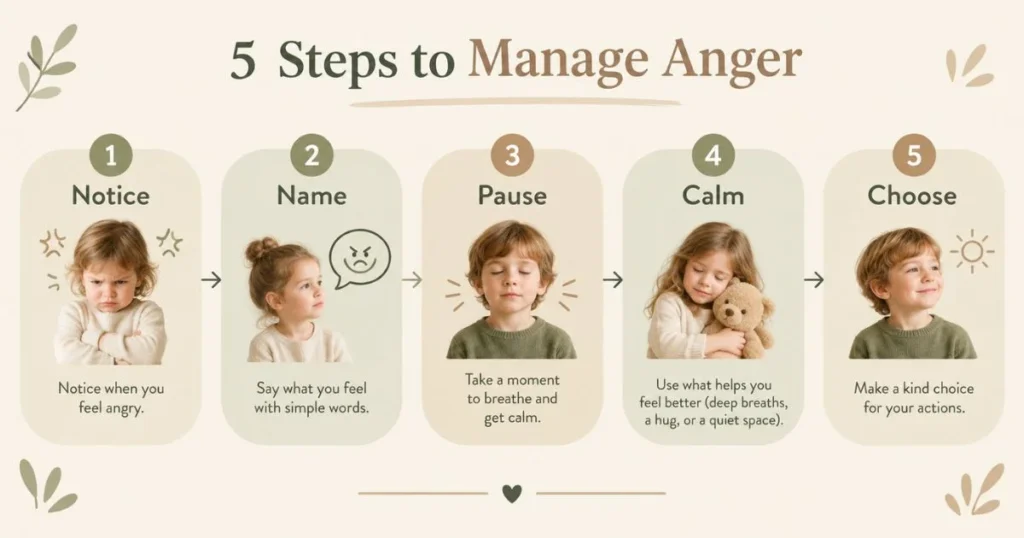
Stop the Harmful Behavior
You can say:
“I won’t let you hit.”
“Hitting hurts. I’m moving your hands.”
“You can be angry. You can’t throw that at your brother.”
Your tone can be firm without being frightening.
Protect Siblings
If another child has been hit or kicked, separate the children if necessary.
Then focus on safety rather than forcing an immediate apology.
You can later help your child understand:
- What happened
- Who was hurt
- What they can do differently next time
- How they can repair the situation
Avoid Responding With Physical Punishment
If you’re trying to teach your child that hitting isn’t acceptable, hitting them in response sends a conflicting message.
The AAP recommends modeling nonviolent behavior and teaching children not to hit, bite, or use other aggressive behaviors.
What Not to Do When Kids Are Angry
Even when you have the best intentions, certain responses can make an already difficult moment harder.
Don’t Shame the Emotion
Avoid statements such as:
- “You’re being ridiculous.”
- “Stop crying.”
- “Big kids don’t behave like this.”
- “There’s nothing to be angry about.”
- “You’re a bad kid.”
Your child can learn that a behavior isn’t acceptable without learning that they are unacceptable.
Don’t Yell Over Your Child
You don’t have to whisper. You can use a firm voice.
But if both of you are shouting, the situation can quickly become a battle of volume rather than an opportunity to learn.
Don’t Give a Long Lecture
Save the teaching for later.
During an intense outburst, your child’s ability to listen and problem-solve may be limited.
Don’t Force an Apology in the Heat of the Moment
Repair matters. But a rushed “sorry” doesn’t necessarily teach your child empathy.
Wait until your child is calm enough to participate meaningfully.
Don’t Give In Simply to End the Anger
Staying calm doesn’t mean removing every boundary.
You can be compassionate and consistent at the same time.
How to Set Limits With Angry Kids
Gentle parenting does not mean having no rules.
Children need boundaries that are understandable and predictable.
Use Short, Clear Statements
Try:
“I won’t let you hit.”
“The tablet is finished.”
“You can be angry. You can’t throw the cup.”
“It’s time to leave.”
Avoid turning every boundary into a debate.
Be Consistent Without Being Harsh
If the same behavior receives a completely different response every day, it can be difficult for your child to understand what to expect.
The AAP recommends consistent discipline and encourages parents to anticipate common tantrum triggers such as hunger and tiredness.
Separate Your Child From Their Behavior
Instead of:
“You’re mean.”
Try:
“Hitting isn’t okay.”
This distinction matters.
You’re correcting an action, not labeling your child’s character.
How to Teach Kids to Manage Anger
The best time to teach anger-management skills is often before your child is angry.
Teach More Than One Emotion Word
Instead of using “mad” for every difficult feeling, expand your child’s vocabulary.
| Basic Feeling | Words You Can Teach |
| Angry | Frustrated, annoyed, furious |
| Sad | Disappointed, hurt, lonely |
| Worried | Nervous, scared, uncertain |
| Happy | Excited, proud, joyful |
A richer emotional vocabulary gives your child more ways to explain what’s happening inside.
Help Your Child Notice Early Signs
Anger often shows up in the body before a child has a chance to describe it.
Your child may notice:
- A faster heartbeat
- Tight muscles
- Clenched fists
- Tight teeth or jaw
- Feeling hot
- A tense stomach
- A louder voice
The NHS recommends helping children recognize these physical signs so they can respond earlier.
Practice Coping Skills When Your Child Is Calm
Try practicing:
- Slow breathing
- Asking for help
- Walking away
- Taking a break
- Talking about the problem
- Drawing feelings
- Physical activity
Don’t expect your child to master these skills after one conversation.
Emotional regulation is learned through repetition.
How to Prevent Some Angry Outbursts
You won’t prevent every angry moment, and you don’t need to.
But you can sometimes reduce unnecessary triggers.
Watch for Hunger and Tiredness
A child who is exhausted or hungry may have much less patience.
AAP guidance specifically recommends anticipating triggers such as hunger and fatigue.
Before a difficult outing, ask yourself:
- Has my child eaten recently?
- Is my child tired?
- Have we had a busy day?
- Are we asking for too much patience right now?
Prepare for Transitions
Instead of suddenly saying:
“We’re leaving now!”
Try:
“Five more minutes, then we’re going home.”
Then give another reminder when the transition approaches.
Offer Small Choices
Choices can give your child a sense of control without changing the larger boundary.
For example:
“Do you want to put your shoes on first or your jacket?”
You’re still leaving.
Your child simply gets to choose part of the process.
Build Connection Into Everyday Life
A child doesn’t only need your attention when something goes wrong.
Make room for:
- Reading together
- Playing
- Talking
- Physical affection
- One-on-one time
- Noticing positive behavior
The CDC’s parenting resources emphasize responsive relationships, communication, play, routines, and helping young children understand emotions.
What to Do After Your Child Calms Down
Once the storm has passed, you have a better opportunity to teach.
Reconnect First
You might say:
“That was really hard.”
Or:
“You were very upset when we had to leave.”
You don’t need to pretend the behavior was okay.
You are simply reopening the connection.
Talk About What Happened
Ask simple questions:
- “What made you angry?”
- “What happened right before that?”
- “Were you frustrated?”
- “What were you trying to tell me?”
Listen more than you lecture.
Practice What to Do Next Time
If your child hit because a sibling took a toy, practice an alternative:
“Next time, you can say, ‘I was playing with that. Give it back, please.’”
If your child screamed because they needed help:
“Next time, you can say, ‘Help me, please.’”
Repair What Happened
Repair might mean:
- Helping clean up
- Checking on someone who was hurt
- Rebuilding something
- Returning an object
- Offering an apology when ready
- Practicing a better response
The purpose isn’t humiliation.
It’s responsibility.
Angry Kids and Tantrums: Are They the Same Thing?
Anger and tantrums overlap, but they aren’t exactly the same.
Anger is an emotion.
A tantrum is a behavioral episode that may include crying, screaming, refusing, kicking, throwing, or dropping to the floor.
Tantrums are particularly common in early childhood. The AAP notes that they occur most often between ages 1 and 3, although individual children vary considerably.
Your response doesn’t have to be:
“Ignore everything.”
Nor does it have to be:
“Punish everything.”
You can stay nearby, protect everyone, acknowledge the emotion, and hold the boundary.
If the behavior is dangerous or aggressive, it shouldn’t simply be ignored. The CDC likewise advises stopping dangerous or destructive behavior rather than ignoring it.
When Should You Worry About Your Child’s Anger?
Most children experience anger. An angry moment doesn’t automatically indicate a serious problem.
What matters is the bigger pattern.
Pay closer attention if your child’s anger is:
- Extremely intense or frequent
- Becoming increasingly difficult to manage
- Regularly causing injuries
- Directed repeatedly toward other people
- Interfering with school
- Interfering with friendships
- Seriously disrupting family life
- Accompanied by other concerning changes in behavior or development
The AAP notes that disruptive behavior concerns become particularly significant when they interfere with school performance or family and peer relationships.
If you’re worried that your child’s anger is harmful to themselves or others, talk with your pediatrician or another qualified child-development professional. The NHS also recommends seeking professional advice when anger becomes harmful or difficult to manage.
Seeking help isn’t an admission that you’ve failed.
Sometimes you simply need another perspective, more tools, or an evaluation of what’s contributing to the behavior.
Angry Kids: Frequently Asked Questions
Why is my child so angry all the time?
There isn’t one explanation. Your child may be dealing with frustration, tiredness, hunger, transitions, communication difficulties, stress, sibling conflict, school problems, or other emotional challenges. Look for patterns rather than assuming that anger itself is the problem.
How do you calm down angry kids?
Start with safety and your own regulation. Then stay close, use simple language, name the emotion, validate the feeling, and hold appropriate boundaries. Give your child time and space to settle before trying to solve the problem.
Should I ignore angry kids?
Not automatically. Some minor attention-seeking behavior can sometimes receive less attention, but distress, aggression, dangerous behavior, and destructive behavior should not simply be ignored.
Is it normal for kids to hit when they are angry?
Young children may hit, kick, bite, or throw when they become overwhelmed, but that doesn’t mean you should allow it. Stop the behavior, keep everyone safe, and teach your child safer ways to express anger.
How do you discipline angry kids without punishment?
Set clear boundaries around behavior while accepting the emotion. You can say, “You’re angry, and I’m here to help. I won’t let you hit.” After your child is calm, teach an alternative behavior and help repair any harm.
How can I teach my child to manage anger?
Start when your child is calm. Teach emotion words, help them notice physical signs of anger, practice calming strategies, model healthy emotional expression, and rehearse what they can do when frustration appears.
When should I seek help for an angry child?
Consider professional guidance when anger is severe, persistent, harmful, increasingly difficult to manage, or significantly affecting your child’s relationships, school, or family life. A pediatrician can help you decide whether further assessment or support is appropriate.
Parenting Whisper Reminder
Your child’s anger isn’t proof that you’re doing something wrong.
And your child’s difficult behavior doesn’t mean you have to choose between being loving and being firm.
You can say:
“I understand that you’re angry.”
And:
“I won’t let you hurt anyone.”
Both can be true.
Your child is learning how to handle feelings that can sometimes feel enormous. That learning happens through thousands of small moments: when you name an emotion, hold a boundary, wait through a difficult moment, model a calmer response, and help your child try again.
You don’t have to handle every angry moment perfectly.
You just have to keep showing your child what safe, respectful, and compassionate emotional regulation can look like.
Conclusion: You Don’t Have to Fear Your Child’s Big Feelings
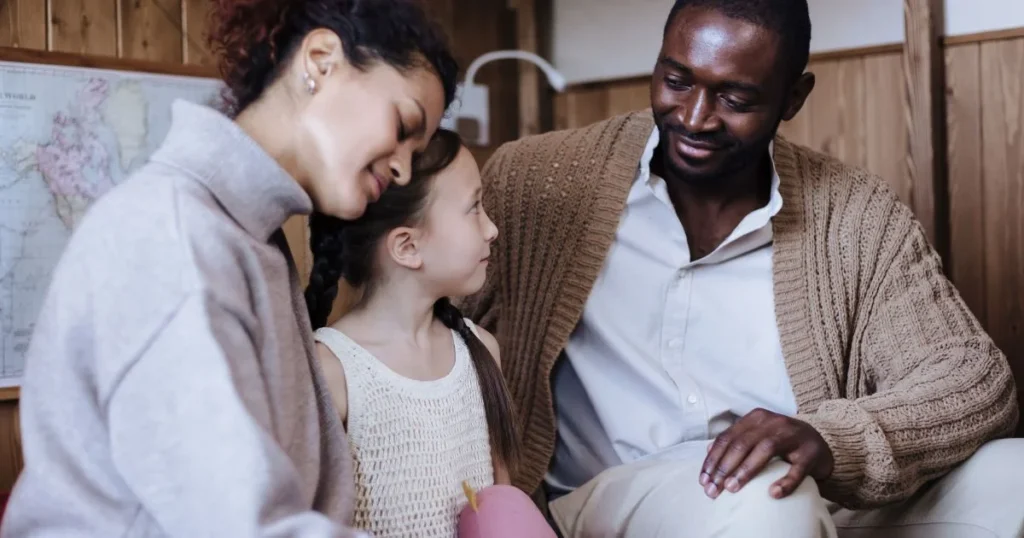
Angry kids don’t need parents who can prevent every difficult emotion. They need parents who can help them understand what is happening and guide them toward safer, more appropriate ways to respond.
When your child becomes angry, keep this simple sequence in mind:
- Stay as calm as you can.
- Make sure everyone is safe.
- Name the feeling and let your child know you understand it.
- Set a clear boundary around unsafe or hurtful behavior.
- Give your child time and space to settle down.
- Talk about what happened and problem-solve afterward.
- Practice healthier ways to respond when your child is calm.
Anger is a normal part of childhood, and learning how to handle it takes time. Angry kids are still developing the emotional skills they need to manage frustration, disappointment, and other strong feelings.
So, the next time your child explodes over something that seems small to you, try looking beyond the behavior. You may be seeing a tired child, a frustrated child, an overwhelmed child, or simply a child who hasn’t yet found the words to explain what they’re feeling.
You can be the calm, steady presence that helps your child learn.
If this article helped you see your child’s anger a little differently, save it for the next difficult moment and share it with another parent who may need the reminder: big feelings don’t have to become a battle.