

Becoming a mother can bring moments of deep love alongside exhaustion, worry, and emotions you never expected. When thinking about postpartum and depression, you may wonder why you sometimes feel overwhelmed, cry unexpectedly, or struggle to feel like yourself, even when you love your baby deeply.
If that sounds familiar, you are not a bad mother.
Postpartum depression is a medical condition that can develop after childbirth. It may affect your mood, sleep, energy, relationships, daily activities, and emotional connection with your baby. Most importantly, postpartum depression is treatable, and asking for help does not mean you have failed.
Understanding the difference between typical postpartum adjustment and depression can help you recognize when you may need additional support.
What Is Postpartum Depression?
Postpartum and depression are closely related topics when discussing maternal mental health after childbirth. Postpartum depression is a condition that can develop after having a baby, while perinatal depression also includes depression that begins during pregnancy. Symptoms can differ in severity and may affect your daily routine, emotional well-being, and ability to care for your baby.
According to the National Institute of Mental Health (NIMH), many episodes of perinatal depression begin within four to eight weeks after childbirth, although symptoms can also emerge during pregnancy or later in the postpartum period.
Postpartum depression involves more than feeling tired or overwhelmed while adjusting to life with a newborn. It can affect how you feel, think, and manage everyday responsibilities, making it important to recognize persistent symptoms and seek support when needed.

Common Symptoms of Postpartum Depression
Postpartum and depression can involve a range of emotional and behavioral changes. You might notice some of the following signs:
- Feeling down, empty, or discouraged for much of the day
- No longer enjoying activities that used to make you happy
- Struggling with constant tiredness or low motivation
- Feeling unusually worried, tense, or easily irritated
- Finding it difficult to sleep even when your baby is resting
- Sleeping longer than usual
- Noticing changes in your appetite or eating habits
- Having trouble concentrating or making decisions
- Blaming yourself or feeling that you are not good enough
- Finding it difficult to feel emotionally connected to your baby
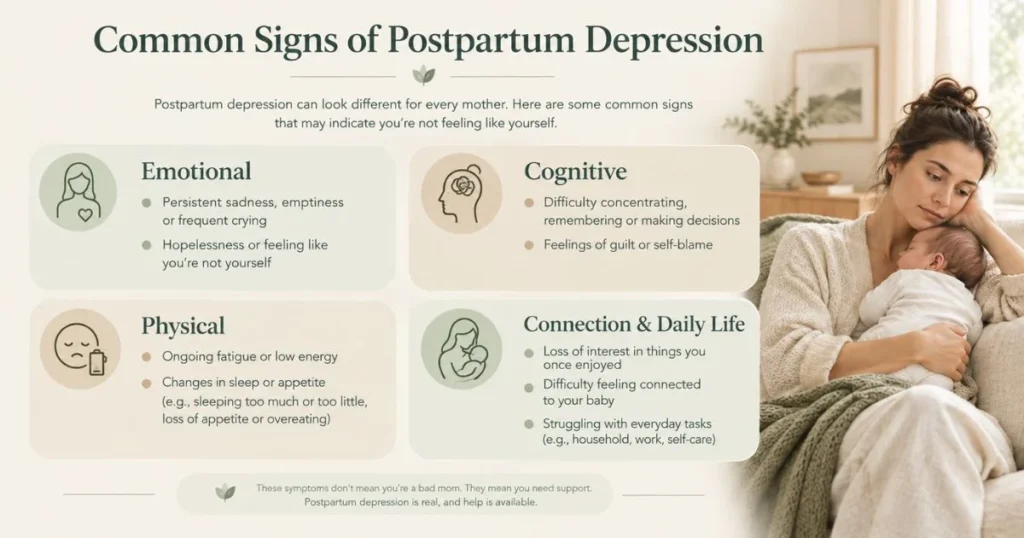
Postpartum depression does not affect every mother in the same way. You might have eagerly anticipated becoming a parent, had a healthy pregnancy, and received support from family and friends, yet still experience depression after giving birth. There is no single explanation you must identify to justify how you feel.
The National Institute of Mental Health (NIMH) describes perinatal depression as a medical condition rather than a reflection of someone’s parenting ability. Experiencing these symptoms is not your fault, and it does not mean you have failed as a mother.
How Common Is Postpartum Depression?
The reported rates of postpartum depression differ across studies because researchers examine different populations and use different methods to identify symptoms. However, it is a recognized concern in maternal mental health, which is why healthcare providers often screen for depression during pregnancy and after delivery.
If you are finding the emotional transition to parenthood difficult, remember that many other parents face similar challenges. You do not have to go through this experience alone.
Although discussions about postpartum and depression often focus on mothers, depression during the perinatal period can affect other parents, too. Fathers, partners, and adoptive parents may also experience emotional difficulties during this major life transition and may benefit from professional support.
Baby Blues vs. Postpartum Depression
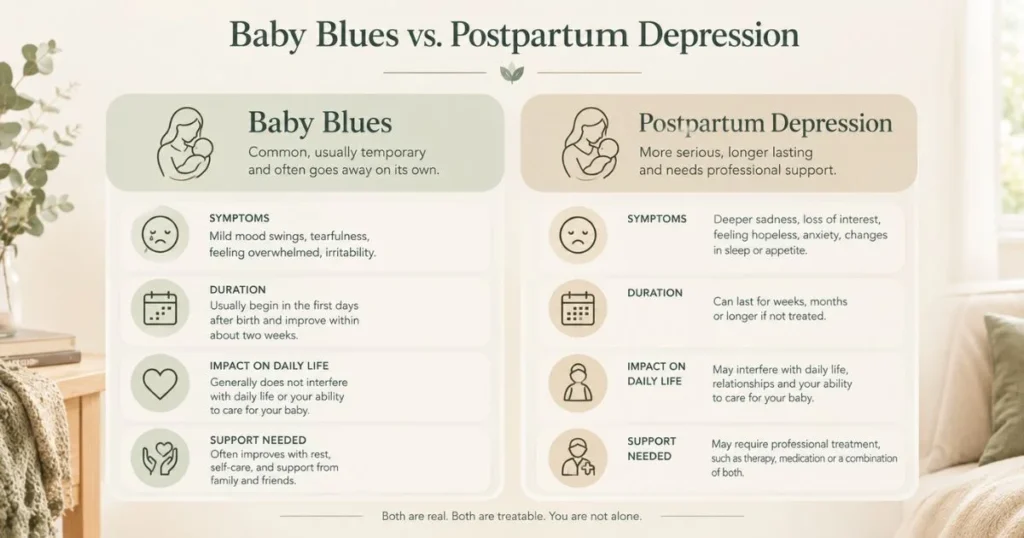
The baby blues and postpartum depression can look similar at first, as both may involve tearfulness, tiredness, anxiety, and emotional ups and downs after giving birth.
However, recognizing the difference between these two experiences is important because they may require different levels of care and support.
What Are the Baby Blues?
The The baby blues refer to short-lived emotional shifts that can occur in the first few days after welcoming a baby. These changes are common as you recover from childbirth and adjust to caring for your newborn.
During this time, you might notice that you:
- Cry more easily than usual
- Become frustrated or irritable
- Feel overwhelmed by everyday demands
- Worry more than you normally would
- React more strongly to emotions
- Feel physically and mentally drained
- Question your confidence as a new mother
For most mothers, these feelings gradually fade within around two weeks. The National Institute of Mental Health (NIMH) describes the baby blues as temporary, generally mild mood changes that may involve worry, sadness, and fatigue.
How Is Postpartum Depression Different?
Postpartum depression is generally more intense, lasts longer, and can interfere with your ability to function.
| Baby Blues | Postpartum Depression |
| Usually mild | Can be moderate or severe |
| Common during the first two weeks | Can begin during pregnancy or after childbirth |
| Usually improves on its own | May persist or worsen without treatment |
| Mood changes tend to be temporary | Symptoms can interfere with daily life |
| Support and rest may help | Professional evaluation and treatment may be needed |
If your emotional difficulties continue beyond two weeks, become more intense, or interfere with your everyday routine, do not dismiss them as something you simply have to endure. Understanding the connection between postpartum and depression can help you recognize when your symptoms may need professional attention.
Reach out to a healthcare professional to discuss what you are experiencing and explore the support available to you.
Signs and Symptoms of Postpartum Depression
The way postpartum and depression affect you can differ from another parent’s experience. You might notice several symptoms at once or experience only a few, and their intensity may change over time.
Emotional and Cognitive Symptoms
You may notice:
- Persistent sadness or emptiness
- Hopelessness
- Excessive guilt
- Feeling worthless or helpless
- Severe irritability
- Anger or frequent frustration
- Loss of interest or pleasure
- Difficulty concentrating
- Trouble making decisions
- Feeling mentally overwhelmed
You may even find yourself thinking, “I don’t feel like myself anymore.”
That feeling is worth taking seriously.
Physical and Behavioral Symptoms
Postpartum and depression can affect more than your emotions; they may also influence your physical health and everyday habits.
You might notice changes such as:
- Feeling exhausted even after resting
- Having trouble falling asleep or staying asleep
- Sleeping much longer than usual
- Experiencing changes in your appetite
- Gaining or losing weight unexpectedly
- Dealing with headaches or unexplained body aches
- Experiencing digestive discomfort
- Avoiding social contact with friends or relatives
- Finding routine tasks harder to complete
One symptom worth paying attention to is being unable to sleep even when your baby is resting. The National Institute of Mental Health (NIMH) identifies sleep difficulties of this kind as a possible symptom of perinatal depression.
Postpartum Depression and Bonding With Your Baby
You can love your baby deeply and still find it difficult to feel emotionally close to them. Postpartum depression may affect how you experience and respond to your baby, leading to feelings that you may not fully understand.
You might notice that you:
- Struggle to develop a sense of closeness with your baby
- Feel emotionally detached or numb when you are together
- Find it difficult to enjoy spending time with your little one
- Frequently question whether you can meet your baby’s needs
- Worry that you are not the mother your baby deserves
If you experience these feelings, try to approach yourself with compassion rather than blame. Difficulties with bonding can be associated with postpartum depression and do not mean your love for your baby is any less.
When Symptoms Become an Emergency
If you feel that you or your baby may be in danger, seek emergency assistance immediately rather than waiting for a scheduled appointment. Reach out to local emergency services or go to the nearest emergency department, and ask someone you trust to stay with you if possible.
Thoughts about death, suicide, or harming yourself or your baby should never be ignored. The National Institute of Mental Health (NIMH) recognizes these as serious warning signs of perinatal depression that need urgent professional assessment.
When Can Postpartum Depression Start?
When exploring postpartum and depression, remember that symptoms do not always appear immediately after childbirth.
Some mothers begin experiencing symptoms during the first few weeks, while others notice emotional changes later, once the initial excitement and support surrounding the baby’s arrival have eased.
The National Institute of Mental Health (NIMH) reports that many episodes of perinatal depression begin within four to eight weeks after birth. However, symptoms can also emerge during pregnancy or at other points in the postpartum period.
Can Postpartum Depression Start Months After Birth?
Yes. When it comes to postpartum and depression, symptoms can appear months after your baby is born. If you begin feeling persistently sad or depressed later in the postpartum period, speak with your healthcare provider to discuss what you are experiencing.
Your feelings deserve attention regardless of when they begin. You do not have to meet a specific timeline to seek support.
What Causes Postpartum Depression?
There is no single explanation for postpartum depression. The connection between postpartum and depression involves several factors that may work together, including hormonal and biological changes, emotional stress, a history of mental health challenges, and the demands of caring for a newborn.
Biological Changes After Pregnancy
Pregnancy and childbirth bring major physical and hormonal changes that can influence your emotional well-being. When discussing postpartum and depression, the rapid hormonal shifts after delivery may play a role in some people’s symptoms, particularly those who are more sensitive to these changes.
However, postpartum depression is not simply a “hormone problem.” Your emotional health can also be affected by sleep deprivation, stress, your personal history, physical recovery, and the support available to you.
Sleep, Stress, and the Demands of New Parenthood
Looking at the relationship between postpartum and depression also means recognizing how demanding life with a newborn can be, both physically and emotionally.
You may be coping with:
- Frequent nighttime waking
- Recovering physically after childbirth
- Breastfeeding or other feeding challenges
- The constant responsibility of caring for your baby
- Changes in your relationship with your partner
- Having little time for yourself
- Financial pressure or work-related concerns
- Feeling disconnected from friends and family
The National Institute of Mental Health (NIMH) identifies stressful life events, the physical and emotional demands of childbirth and newborn care, and hormonal changes as factors that may contribute to perinatal depression.
Previous Depression or Anxiety
When considering postpartum and depression, your mental health history is important. Your risk may be higher if you have experienced depression in the past, depression during pregnancy, a previous episode of postpartum depression, or certain other mental health conditions.
However, having a history of depression does not mean postpartum depression will happen again. Sharing your experiences with your healthcare provider can help you identify potential risks and plan for appropriate support before or after your baby arrives.
Who Is at Risk for Postpartum Depression?
Postpartum depression can affect anyone, regardless of their background or circumstances. When learning about postpartum and depression, remember that having a risk factor does not mean you will develop the condition, just as having no known risk factors does not guarantee you will avoid it.
Factors associated with an increased risk of postpartum depression include:
- A personal history of depression or anxiety
- Depression during pregnancy
- Previous postpartum depression
- A family history of depression or bipolar disorder
- Significant or ongoing life stress
- Limited emotional or practical support
- A difficult pregnancy or birth experience
- Challenges adjusting to newborn care
- Relationship difficulties or financial pressure
Instead of questioning whether you have a good enough reason to feel this way, pay attention to your emotional well-being and how your feelings affect your daily life. Recognizing changes early can help you seek the support you need.
How Postpartum Depression Can Affect You and Your Family
Postpartum depression can affect more than your mood. It may influence your daily well-being, relationships, and experience of caring for your baby.
Your Physical and Emotional Well-Being
When dealing with postpartum and depression, even simple everyday tasks can begin to feel overwhelming.
You may find it difficult to:
- Get dressed or take care of yourself
- Eat meals regularly
- Get enough sleep
- Leave the house
- Talk with friends or family
- Keep medical appointments
- Manage household responsibilities
- Enjoy activities that once brought you happiness
These challenges are not a sign of personal failure. Seeking support early can help you manage symptoms and make daily life feel more manageable.
Your Relationship With Your Baby
Postpartum and depression can affect how emotionally present and confident you feel as a parent. However, experiencing postpartum depression does not automatically mean your child will have long-term difficulties.
Seeking appropriate treatment can support your emotional well-being and help you feel better equipped to respond to your baby’s needs. With the right support, you can work toward feeling more like yourself again.
Getting help is not selfish. Taking care of your mental health is also a way of caring for your family.
Postpartum Depression and Anxiety
Postpartum and depression can also involve anxiety, as depression and anxiety may occur together during pregnancy or after childbirth. You may experience persistent sadness alongside excessive worry, fear, or feelings of unease.
Signs of Postpartum Anxiety
When postpartum and depression occur alongside anxiety, you may notice symptoms such as:
- Worrying constantly
- Having racing or intrusive thoughts
- Finding it difficult to relax
- Fearing that something bad will happen
- Checking on your baby repeatedly
- Experiencing physical tension
- Struggling to sleep because your thoughts keep racing
You might feel as though your mind is continually searching for possible dangers, making it difficult to feel calm or present.
If anxiety continues or begins interfering with your everyday activities, speak with your healthcare provider about what you are experiencing and the support available to you.
When Should You Seek Help for Postpartum Depression?
You do not need to reach a breaking point before asking for help with postpartum and depression.
Consider speaking with a healthcare professional if you notice that:
- Feelings of sadness or anxiety persist.
- Your symptoms are becoming more intense.
- You no longer enjoy activities you once loved.
- You frequently feel hopeless or worthless.
- Taking care of your own needs feels difficult.
- Caring for your baby has become overwhelming.
- You feel emotionally distant from your baby.
- Your symptoms interfere with your daily responsibilities.
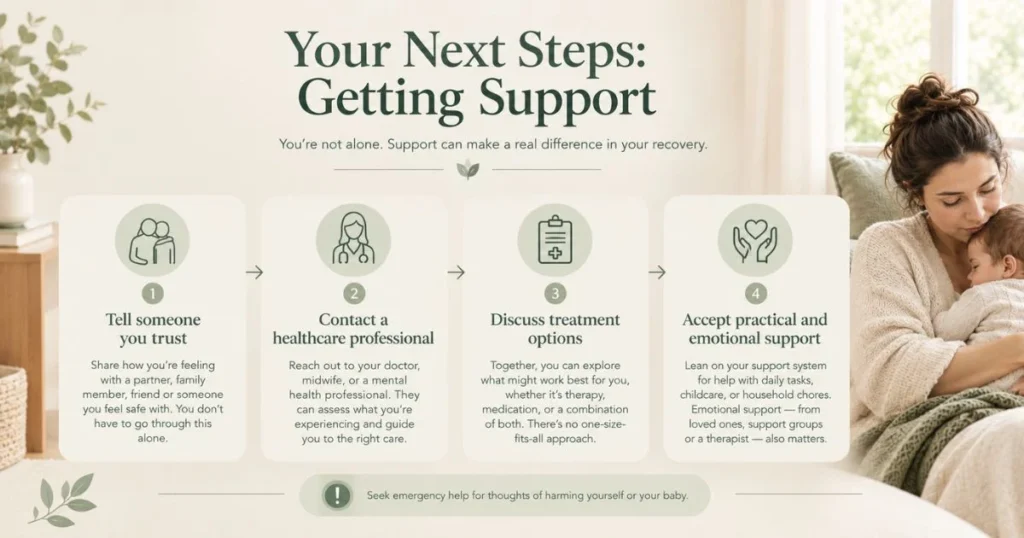
The Centers for Disease Control and Prevention (CDC) recommends contacting a healthcare provider if you think you may be experiencing depression, including postpartum depression. Reaching out early can help you understand what is happening and explore appropriate treatment options.
Who Can You Talk To?
If you are concerned about postpartum and depression, you can begin by reaching out to a healthcare professional you feel comfortable talking to. This might be:
- Your OB-GYN
- A midwife
- Your primary care provider
- A psychologist
- A psychiatrist
- A licensed therapist
- Another trusted healthcare professional
You do not need to know exactly what you are experiencing before scheduling an appointment. A healthcare professional can help you understand your symptoms and determine what kind of support may be appropriate.
You can start the conversation by saying:
“I haven’t felt like myself since having my baby, and I’m worried that I may have postpartum depression.”
That is enough to take the first step toward getting help.
How Is Postpartum Depression Diagnosed?
There is no single blood test that can confirm postpartum depression. When assessing postpartum and depression, your healthcare provider will usually discuss your symptoms, emotional well-being, and how you are managing daily life.
They may ask about your:
- Mood and emotional changes
- Sleep patterns
- Appetite and eating habits
- Energy levels
- Anxiety or persistent worries
- Thoughts and feelings
- Ability to manage everyday activities
- Emotional connection with your baby
- Personal mental health history
Your provider may also use a standardized questionnaire to screen for depression and better understand your symptoms. This information can help guide the next steps in your care.
The Edinburgh Postnatal Depression Scale
The Edinburgh Postnatal Depression Scale (EPDS) is a widely used questionnaire that helps healthcare professionals screen for postpartum depression. When assessing postpartum and depression, a provider may use this tool to learn more about your emotional well-being.
The questionnaire covers symptoms such as sadness, anxiety, feelings of guilt, sleep difficulties, and thoughts of self-harm.
An EPDS score is a screening result, not a diagnosis on its own. Your healthcare provider will consider your symptoms, medical history, and personal circumstances to determine whether you may have depression and which treatment options could help.
Other screening tools, such as the Patient Health Questionnaire-9 (PHQ-9), may also be used to assess depressive symptoms.
Treatment for Postpartum Depression
Postpartum depression is treatable, and getting help can make a meaningful difference in your recovery. When addressing postpartum and depression, your healthcare provider can help you choose an approach based on your symptoms, medical history, personal preferences, breastfeeding status, and individual circumstances.
The National Institute of Mental Health (NIMH) identifies psychotherapy, medication, or a combination of both as common treatment options for perinatal depression. Your provider can help you understand the available choices and find an approach that meets your needs.
Psychotherapy
When exploring treatment for postpartum and depression, therapy can provide a safe, supportive space to discuss your feelings, understand your experiences, and learn practical strategies for managing depressive symptoms.
Cognitive Behavioral Therapy
Cognitive behavioral therapy (CBT) is one approach used to treat postpartum and depression. It can help you recognize unhelpful thought patterns and develop healthier ways to respond to stressful situations and difficult emotions.
Interpersonal Therapy
Interpersonal therapy (IPT) focuses on relationships, communication, social support, and significant life transitions, including the adjustment to parenthood.
Both CBT and IPT are evidence-based approaches that may help people experiencing postpartum and depression during pregnancy or after childbirth.
Medication
When treating postpartum and depression, your healthcare provider may recommend antidepressants, especially if your symptoms are moderate to severe or therapy alone has not provided enough relief.
Work with your provider to find a medication that fits your individual needs. If you are breastfeeding, mention this before starting a new medication or changing your current treatment. Your provider can help weigh the potential benefits and risks while considering your mental health and your baby’s well-being.
Antidepressants often take several weeks to produce noticeable benefits. Your provider may also adjust your treatment based on your symptoms, progress, and any side effects you experience.
Treatment for Severe Postpartum Depression
Severe cases of postpartum depression may require more specialized treatment to support recovery. When exploring options for postpartum and depression, your healthcare provider may discuss treatments designed specifically for postpartum depression, including zuranolone and brexanolone, which work differently from traditional antidepressants.
For severe symptoms that do not improve sufficiently with other treatments, a healthcare team may also consider electroconvulsive therapy (ECT) in appropriate circumstances.
These treatments require careful assessment and medical supervision. They are not suitable for everyone, so your healthcare team can help determine which options may be appropriate for your needs.
Can You Treat Postpartum Depression While Breastfeeding?
A diagnosis of postpartum depression does not automatically mean you have to stop breastfeeding. When managing postpartum and depression, you can often continue breastfeeding while receiving appropriate treatment and support.
The Centers for Disease Control and Prevention (CDC) advises that mothers experiencing postpartum depression can generally continue breastfeeding while seeking care. However, medication safety varies, so discuss your options with a healthcare professional before starting or changing any medication.
To help your provider recommend suitable treatment, share:
- Whether you are currently breastfeeding
- Your baby’s age
- Any medications or supplements you take
- Your breastfeeding goals
- Any concerns you have about medication passing into breast milk
Your treatment plan should consider your mental health, your baby’s well-being, and your individual circumstances. You deserve support that takes all of these needs into account.
How You Can Support Your Recovery
Although professional care is essential when managing postpartum and depression, practical help from people around you can also make daily life after childbirth feel more manageable.
Accept Practical Help
RWhen coping with postpartum and depression, you do not have to handle every responsibility alone. Consider asking someone you trust to help with everyday tasks, such as:
- Preparing meals
- Washing dishes
- Doing laundry
- Picking up groceries
- Holding your baby while you shower
- Caring for older children
- Accompanying you to healthcare appointments
Accepting help is not a sign of weakness. You deserve care and support while you recover and adjust to life with your baby.
Stay Connected
Postpartum and depression can sometimes make you want to pull away from the people around you. Even when socializing feels difficult, try to stay connected with at least one person who makes you feel supported. A brief text message or a short conversation can be a manageable way to remind yourself that you are not alone.
Protect Opportunities for Rest
When managing postpartum and depression, you may not be able to control your baby’s sleep patterns, but sharing responsibilities and accepting help can make daily life less overwhelming.
If someone offers to help, consider using that time to rest or recharge instead of trying to finish every household chore. Your recovery matters, too, and you do not have to accomplish everything in one day.
Follow Your Treatment Plan
When receiving treatment for postpartum and depression, give yourself time to adjust and work through the recovery process. If your symptoms do not improve, become more severe, or you experience troubling side effects from medication, contact your healthcare provider to discuss your concerns and determine whether your treatment plan needs to change.
How Partners and Family Can Help
When dealing with postpartum and depression, you may not always notice changes in your mood or behavior right away. Sometimes, people close to you recognize these changes before you do and can encourage you to seek the support you need.
What Helps
When you’re experiencing postpartum and depression, support from your partner or family can make a meaningful difference. They can help by:
- Listening to your feelings without judgment
- Encouraging you to seek professional care
- Helping schedule healthcare appointments
- Sharing household responsibilities
- Assisting with your baby’s daily care
- Checking in with you regularly
- Reminding you that asking for help takes strength and does not mean you have failed
You deserve understanding, practical support, and compassionate care as you work toward feeling better.
What to Avoid Saying
When someone is struggling with postpartum and depression, certain comments can unintentionally make them feel misunderstood or ashamed. Avoid saying things like:
- “You should be happy.”
- “Every new mother feels this way.”
- “You just need more sleep.”
- “Try to think positively.”
- “Your baby is healthy, so you should feel grateful.”
Instead, offer compassion and reassurance. You might say:
“I can see that you’re going through a difficult time. You don’t have to handle this alone.”
The National Institute of Mental Health (NIMH) encourages family members and friends to support people experiencing perinatal depression by helping them access professional care and offering emotional and practical assistance.
Postpartum Psychosis: When You Need Emergency Help
Although postpartum and depression are important maternal mental health concerns, postpartum psychosis is a separate and much rarer condition. It is a psychiatric emergency that requires immediate medical assessment and treatment.
Signs of Postpartum Psychosis
While learning about postpartum and depression, it is also important to recognize the warning signs of postpartum psychosis. Possible symptoms include:
- Seeing or hearing things that others do not
- Having beliefs that are not based in reality
- Experiencing severe confusion
- Feeling unusually suspicious or paranoid
- Having an unusually elevated mood or symptoms of mania
- Becoming severely agitated
- Behaving in ways that suggest a loss of contact with reality
If you or someone close to you experiences these symptoms after childbirth, seek emergency medical care immediately instead of waiting for a routine mental health appointment.
The National Institute of Mental Health (NIMH) identifies postpartum psychosis as a psychiatric emergency that typically requires immediate treatment and hospitalization.
What to Do in an Emergency
When dealing with postpartum and depression, it is essential to take immediate safety concerns seriously. If you or someone you know is experiencing suicidal thoughts, thoughts of harming a baby, hallucinations, delusions, or another urgent safety concern, seek emergency assistance immediately.
- Stay with the person and do not leave them alone if it is safe to remain with them.
- Contact local emergency services.
- Go to the nearest emergency department.
- In the United States, call or text 988 to reach the Suicide & Crisis Lifeline for crisis support.
- In the United States, contact the National Maternal Mental Health Hotline at 1-833-9-TLC-MAMA (1-833-852-6262) for maternal mental health support.
If you are outside the United States, contact your local emergency services or an appropriate crisis support service. Do not delay emergency care when there is an immediate risk of harm.
How Long Does Postpartum Depression Last?
There is no fixed recovery timeline when it comes to postpartum and depression. Some people begin to feel better relatively soon after starting treatment, while others benefit from ongoing care and support.
The important thing to remember is that postpartum depression does not have to define your future. Without appropriate treatment, symptoms may persist and make everyday life more difficult. With effective care, many people experience improvement and gradually begin to feel more like themselves again.
If you are still struggling, it does not necessarily mean your treatment has failed. You may need more time, additional support, or adjustments to your treatment plan. Keep communicating with your healthcare provider so you can find an approach that works for you.
Postpartum and Depression: Common Questions Answered

What happens when you experience depression after childbirth?
Postpartum and depression are closely connected topics in maternal mental health. Postpartum depression is a condition that can develop in the weeks or months after childbirth, affecting your emotional well-being and daily life.
You may notice changes in your mood, experience persistent worry, or lose interest in activities you once enjoyed. You might also struggle to concentrate, criticize yourself harshly, or find it difficult to feel emotionally connected to your newborn. These experiences are not personal failures. They deserve understanding, attention, and appropriate support.
How might postpartum depression show up at first?
When exploring postpartum and depression, remember that early symptoms may be difficult to recognize. You might feel overwhelmed by routine responsibilities, become more emotional than usual, or find yourself worrying throughout the day. Even after resting, you may still feel exhausted, and activities you once enjoyed may no longer bring you happiness. You may also struggle to feel emotionally close to your baby.
If these changes continue or begin interfering with your everyday life, reach out to a healthcare professional to discuss your symptoms and explore the support available to you.
How do you know whether you have the baby blues or postpartum depression?
After childbirth, hormonal changes, physical recovery, and interrupted sleep can contribute to temporary mood changes known as the baby blues. These feelings usually improve within about two weeks. However, postpartum and depression are not the same as the baby blues: postpartum depression may involve more severe symptoms, last longer, or interfere with your ability to manage everyday tasks.
You do not have to determine what you are experiencing on your own. A qualified healthcare professional can evaluate your symptoms, help clarify what may be happening, and guide you toward appropriate care.
Can postpartum depression develop long after delivery?
Yes, postpartum and depression can become noticeable weeks or even months after childbirth. Symptoms do not always appear during your hospital stay or in the first few days at home. Some mothers begin to recognize emotional difficulties later in the postpartum period.
Regardless of how much time has passed since delivery, your concerns deserve attention. If you are struggling emotionally, contact a healthcare professional for an assessment and guidance on appropriate support.
Why might you feel disconnected from your baby?
Postpartum and depression can affect your emotions, energy levels, and relationships, sometimes making it harder to feel connected to your baby. Even when you want to feel close, you may experience emotional numbness or worry that your bond is not developing as you expected.
These feelings do not mean you are a bad mother or that you love your child any less. If connecting with your baby feels difficult, talk with your healthcare provider so you can receive compassionate guidance and appropriate support.
What if you feel anxious as well as depressed after birth?
Postpartum and depression do not always occur separately. Some mothers experience persistent worry, frightening thoughts, or a constant fear that something bad might happen. Because anxiety and depression can develop together during pregnancy or after childbirth, it is important to discuss both your emotional and physical symptoms with your healthcare provider.
Sharing the full picture can help your provider better understand what you are experiencing and recommend appropriate treatment options.
Do you have to stop breastfeeding to receive treatment?
A diagnosis of postpartum and depression does not automatically mean you need to stop breastfeeding. Many mothers can continue nursing while receiving appropriate mental health care. Depending on your symptoms and individual needs, treatment may include psychotherapy, medication, or a combination of both.
Before starting a new medication or changing your current treatment, discuss breastfeeding with your healthcare provider. Together, you can review the potential benefits and risks of different options and choose a treatment plan that supports your well-being while taking your baby’s needs into account.
How does recovery from postpartum depression vary?
Recovery from postpartum and depression looks different for every mother. Your progress may depend on the severity of your symptoms, the support available to you, and how well your treatment is working.
Some mothers begin to feel better relatively soon, while others need ongoing professional care. If your recovery takes longer than you expected, it does not mean you are failing.
Keep communicating openly with your healthcare team about your symptoms, your progress, and any concerns you have about your treatment. If you are not improving, your provider can help you explore whether adjustments or additional support may be needed.
Is waiting for postpartum depression to pass a good idea?
When it comes to postpartum and depression, persistent or severe symptoms that interfere with your daily life should not be ignored. The baby blues often improve on their own within about two weeks, but ongoing depressive symptoms deserve professional attention.
You do not need to wait until you feel completely overwhelmed before seeking help. A healthcare professional can assess your symptoms, help you understand what you are experiencing, and discuss whether treatment may benefit you.
How do you know when it is time to ask for help?
When dealing with postpartum and depression, consider contacting a healthcare professional if changes in your mood, sleep, anxiety, or daily functioning begin to concern you. You may struggle to manage everyday tasks, meet your own needs, or feel emotionally connected to your baby. These are valid reasons to seek support, even if you can still manage some aspects of your daily routine.
Thoughts of suicide or harming yourself or your baby require
What should you do if you fear you might hurt yourself or your baby?
If you are experiencing postpartum and depression symptoms and fear you may harm yourself or your baby, take these thoughts seriously and prioritize immediate safety. If you think you might act on them, contact emergency services or go to the nearest emergency department right away. If possible, ask a trusted adult to stay with you and help keep your baby safe while you receive professional assistance.
In the United States, you can call or text 988 to reach the Suicide & Crisis Lifeline for crisis support. If you or your baby are in immediate danger, contact emergency services without delay.
You Matter, Too: Finding Support After Birth
Motherhood can transform your daily routine, relationships, and sense of identity. When postpartum and depression occur during this transition, you may feel far from the experience you imagined. You might question why everything feels so difficult or blame yourself for struggling when you think you should feel happy.
Your mental health challenges do not make you any less loving or capable as a mother.
Postpartum depression is a medical condition, not a character flaw or a sign of failure. With appropriate care, many mothers experience improvement. Your recovery may involve therapy, medication, practical help with daily responsibilities, or a combination of different types of support.
You deserve help before you reach exhaustion. You do not have to minimize your feelings or prove that your situation is difficult enough to deserve attention. Start by sharing what you have been experiencing with someone you trust, then speak with a healthcare professional about your options.
Your baby needs care, and so do you. Prioritizing your well-being is not selfish; it is an important part of navigating this challenging time. You deserve to be heard, supported, and treated with compassion.