In the early weeks of your baby’s life, you may begin noticing new ways they interact with you. Perhaps they give you a small smile when they hear your voice, make gentle sounds instead of crying, or hold their gaze on your face a little longer. Although these changes may seem small, they can be meaningful moments as you discover more about your baby’s unique personality.
By the time your baby reaches two months, they may be showing greater awareness of the people and things around them. Their movements, sounds, and reactions to familiar voices may gradually change. As a parent, you might find yourself wondering whether these changes are typical for this age or whether there is more you could do to encourage healthy development.
It is natural to have questions as your baby grows. Learning about the developmental milestones 2 months old babies may reach can help you understand these early changes, find simple ways to encourage new skills, and recognize when it may be helpful to seek advice from your pediatrician.
Every baby develops at their own pace, and the developmental milestones 2 months old babies typically reach are useful guides rather than strict deadlines. Instead of comparing your baby’s progress with another child’s or worrying about every new skill, focus on getting to know your little one. This guide explores common developmental changes at two months and practical ways to encourage your baby’s learning and growth.
Understanding Developmental Milestones at Two Months
Developmental milestones are abilities children tend to acquire as they grow. These skills relate to their social interactions, communication, thinking, and physical movements.
The Centers for Disease Control and Prevention (CDC) explains that its developmental milestones represent abilities demonstrated by at least 75% of children by a specified age. For parents exploring developmental milestones 2 months old, these guidelines offer a helpful way to understand early development and recognize when further evaluation or support may be appropriate. Explore the CDC’s developmental milestone guide for two-month-olds.
At this stage, you can look for progress in four broad areas:
- Social and emotional skills: Your baby may study your face, smile when you interact with them, and settle when you offer comfort.
- Communication: You may hear sounds other than crying and notice reactions to loud noises.
- Thinking and learning: Your little one may follow your movements with their eyes or focus on a toy briefly.
- Physical abilities: Your baby may raise their head during tummy time, move both arms and legs, and open their hands for short periods.
These milestones offer useful guidance, not a strict timetable. If you are unsure how your baby is progressing, your pediatrician can help you interpret what you observe and determine whether any follow-up is needed.
If you are tracking your baby’s progress over time, you may also find it helpful to understand how sleep needs change as your little one grows.
Social and Emotional Development at Two Months
Your baby is beginning to engage more with the people around them. As part of the developmental milestones 2 months old babies may reach, they start communicating in simple ways through facial expressions, sounds, and reactions during everyday interactions, even before they can use words.
Your Baby May Smile During Face-to-Face Interaction
An emerging social smile is one of the developmental milestones 2 months old babies may begin to show, and it is a change many parents look forward to at this age.
You might see your baby smile when you speak to them warmly, return a smile, or come close enough for them to see your face. These responses can make ordinary moments, such as getting your baby dressed or cuddling together after waking, feel especially meaningful.
To create opportunities for social connection:
- Offer your baby a warm smile when they are calm and alert.
- Speak gently while allowing them to look at your face comfortably.
- Leave pauses so your baby has time to respond.
- Enjoy your interactions without expecting the same reaction every time.
Your baby will not necessarily smile during every encounter. Instead of focusing on individual moments, notice how they respond to you over time. Every baby develops at their own pace, so use these early social responses as general guidance rather than a strict deadline.
Your Baby May Pay More Attention to Your Face
You may notice your little one studying your face or seeming happy when you come near. Your expressions, familiar voice, and loving attention help your baby recognize the people who care for them. These early interactions are an important part of developmental milestones 2 months old babies may begin to show as they build social connections.
Your Baby May Settle When You Offer Comfort
When your baby is distressed, hearing your voice, feeling a gentle touch, or being held may help them relax. Responding to your baby’s needs is an important part of early caregiving and supports the developmental milestones 2 months old babies may begin to show as they build trust and feel secure. Comforting a two-month-old does not spoil them. Gentle rocking, cuddling, and soothing words can help your baby feel safe as they gradually develop ways to regulate their responses.
Responding to your baby’s cues and offering gentle comfort can also support a calmer bedtime routine as your little one grows.
Communication Skills in a Two-Month-Old Baby
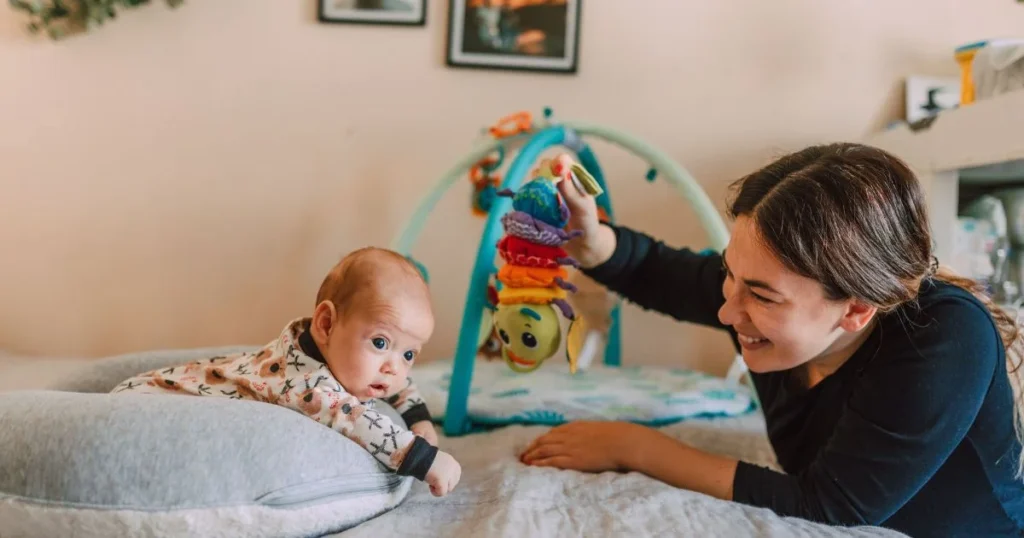
Babies begin communicating well before they can form words. As part of the developmental milestones 2 months old babies may reach, you may notice more sounds and reactions during the second month, even though crying remains one of their main ways to express their needs.
Your Baby May Begin Making New Sounds
You might hear quiet coos, soft vocal sounds, or gentle gurgles when your baby feels comfortable. These early sounds are part of the developmental milestones 2 months old babies may begin to show and may occur while your little one looks at you or enjoys a peaceful moment.
You can encourage early communication by treating these sounds as the beginning of a conversation:
- Speak to your baby in a calm, gentle voice.
- Pause when they make a sound.
- Answer with a smile or a few simple words.
- Wait to see whether they respond again.
These gentle back-and-forth exchanges give your baby opportunities to hear language, notice your responses, and begin experiencing the rhythm of communication.
Your Baby May Respond to Loud Noises
Reacting to loud sounds is one of the developmental milestones 2 months old babies may begin to demonstrate. A sudden noise may cause your baby to startle, pause what they are doing, or turn their attention toward the sound.
Responses can vary, so there is no need to create loud noises to test your baby’s hearing. If you are concerned that your little one does not respond to sounds, share your observations with your pediatrician.
Simple Ways to Encourage Communication
You can support the developmental milestones 2 months old babies may begin to show through ordinary activities. Special toys or complicated exercises are not necessary to encourage your baby’s early communication.
- Describe what you are doing while feeding or changing your baby.
- Share a short board book and look at the pictures together.
- Sing softly during quiet moments.
- Respond to your baby’s vocal sounds.
- Smile and talk when your baby looks toward you or makes a sound.
These everyday exchanges help strengthen your connection while giving your baby opportunities to listen, observe, and respond at their own pace.
Reading, talking, and singing together are simple activities you can include in your baby’s everyday routine.
Physical Development at Two Months
As your baby grows, you may gradually notice changes in their physical development. The developmental milestones 2 months old babies may reach include better head control during tummy time and more varied movements as they explore what their bodies can do with their arms and legs.
Your Baby May Raise Their Head During Tummy Time
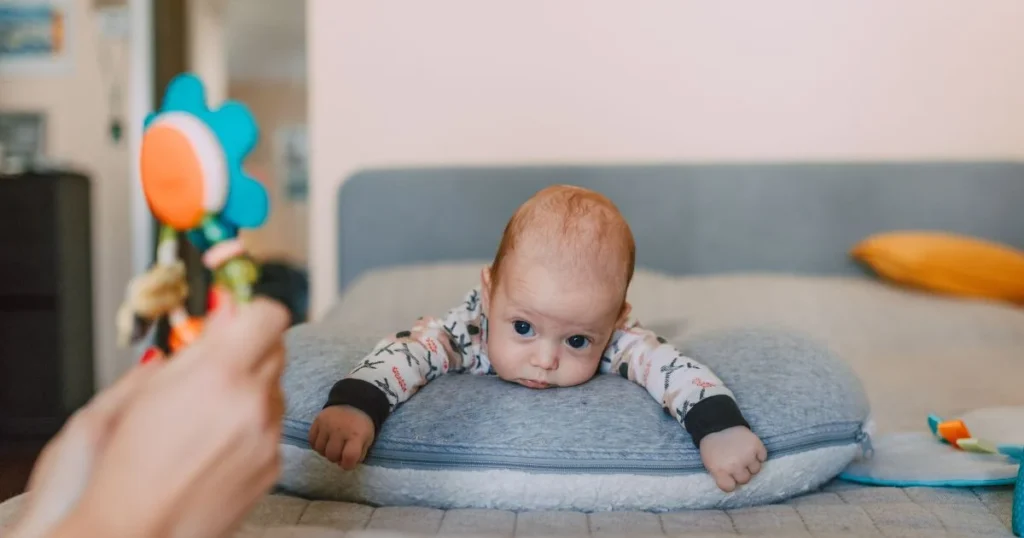
One of the developmental milestones 2 months old babies may begin to show is lifting their head briefly while lying on their stomach. This movement gives your baby an opportunity to practice using the muscles in their neck, shoulders, and upper body.
To make tummy time more interesting, lie on the floor facing your baby or position an age-appropriate toy where they can comfortably see it.
Begin with brief periods of tummy time while your baby is awake and you are watching them closely. If they become uncomfortable or fussy, pause the activity and try again when they are ready. Always place your baby on their back for sleep.
Moving Both Arms and Both Legs
As part of the developmental milestones 2 months old babies may begin to show, your little one may move their arms and legs more actively as they explore their body. You might notice kicking during diaper changes or arm movements when your baby hears your voice.
Observe how your baby moves both sides of their body. If you notice persistent differences in movement or your baby seems unable to move an arm or leg normally, contact your pediatrician.
Opening Hands Briefly
Babies often keep their hands curled during the early weeks. As part of the developmental milestones 2 months old babies may begin to show, your little one may briefly open their hands as their movement control develops.
Your baby may also bring their hands toward their mouth. Sucking on their fingers can be a way to explore their body and soothe themselves.
You do not need to teach your baby to grasp toys at this stage. Instead, give them safe opportunities to move their arms and hands freely while supervised.
As your baby becomes more active, continue offering safe opportunities to move and explore while following age-appropriate guidance.
Cognitive and Visual Development at 2 Months
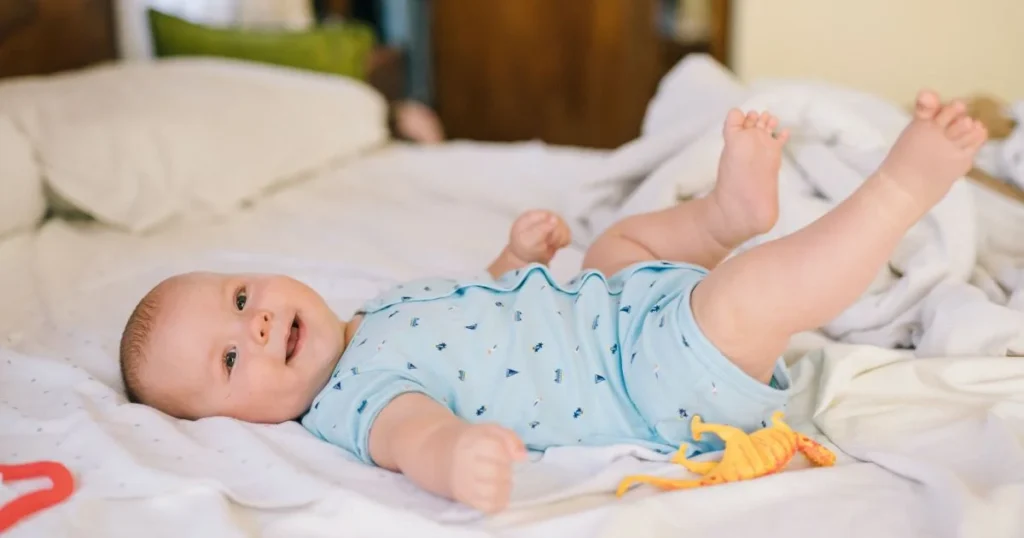
Cognitive development is an important part of the developmental milestones 2 months old babies may begin to show. It involves how your little one starts noticing, exploring, and learning about the world around them through everyday experiences.
Watching You as You Move
You may notice your baby watching you as you move nearby. Your face and voice provide familiar points of interest, helping your little one practice focusing and following movement as part of the developmental milestones 2 months old babies may begin to show.
Try moving slowly within your baby’s field of vision while talking gently. Give them time to watch you, and remember that their ability to follow movement is still developing.
Looking at a Toy for Several Seconds
A simple, age-appropriate toy may capture your baby’s attention for a short time. At this stage, developmental milestones 2 months old babies may begin to show can be encouraged through everyday experiences, so your little one does not need lots of toys to explore and learn.
You can try:
- Showing your baby a colorful picture or high-contrast book.
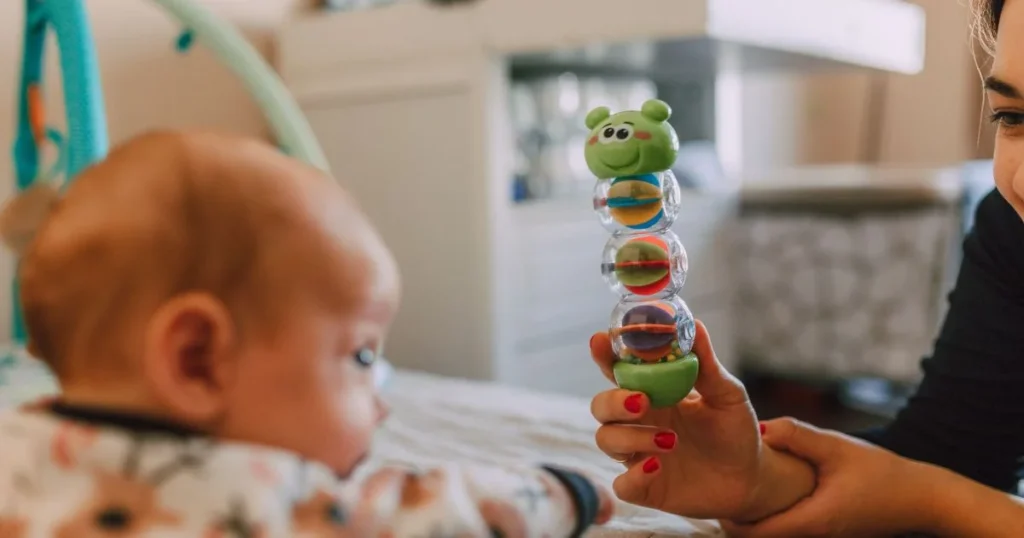
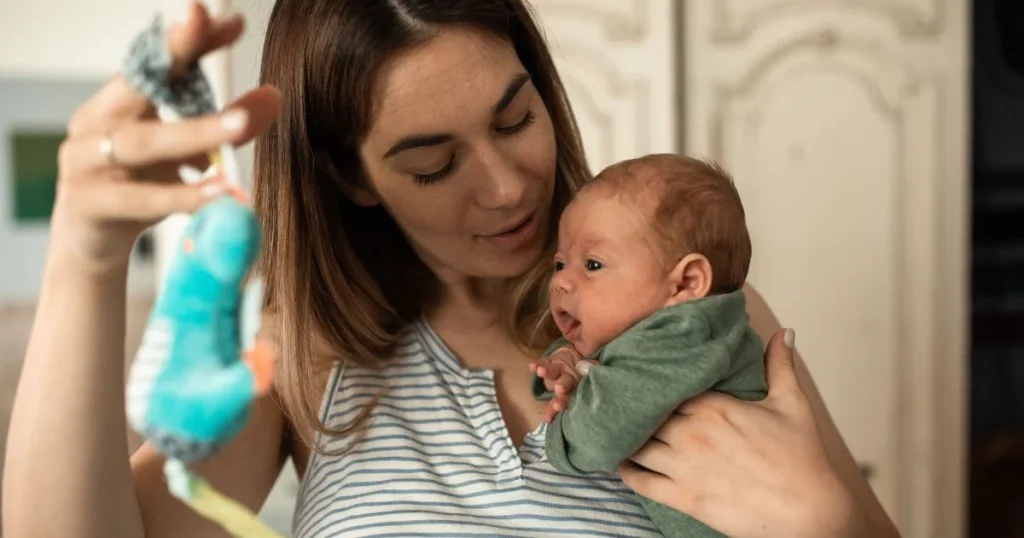
- Holding a baby-safe toy at a comfortable viewing distance.
- Placing a baby-safe mirror nearby during supervised play.
- Giving your baby time to look around a calm environment.
Keep activities brief and follow your baby’s cues. Looking away, yawning, or becoming fussy may mean your little one needs a break.
Your 2-Month-Old’s Growth: Weight, Length, and Physical Changes
Development involves more than new behaviors. As you explore developmental milestones 2 months old babies may begin to show, remember that your baby is also growing physically. Your pediatrician will monitor your little one’s growth and development over time.
Average Weight Gain and Length Growth
Many babies gain weight and length rapidly during the first few months, but growth varies from child to child. Factors such as birth size, feeding, genetics, and individual development can all influence your baby’s growth.
As you follow developmental milestones 2 months old babies may reach, remember that your pediatrician will track your baby’s growth over time using appropriate growth charts rather than relying on weight figures you find online.
Your baby’s feeding patterns, growth over time, and overall well-being provide a clearer picture of their health than a single measurement. Remember, development at two months looks different for every baby, and your pediatrician can help you understand your little one’s progress.
What to Know About Your Baby’s Soft Spots
You may notice a soft area on your baby’s head, known as a fontanelle. These spaces between the skull bones allow the head to grow as the brain develops during early infancy.
The smaller posterior fontanelle, located toward the back of the head, often closes during the first few months. Timing varies, so you do not need to check whether it has closed yourself.
Mention any concerns about your baby’s head shape or soft spots during a checkup. Seek prompt medical advice if the soft spot appears persistently bulging while your baby is calm and upright, especially if your baby seems unwell.
As you follow the developmental milestones 2 months old babies may reach, remember that your pediatrician can help assess physical growth and address any concerns about these changes.
Feeding and Sleep at 2 Months
Feeding and sleep take up much of your baby’s day. Although they are not developmental milestones themselves, understanding typical feeding and sleep patterns can help you respond to your baby’s needs as they grow and begin showing developmental milestones 2 months old babies may reach.
Feeding Patterns and Hunger Cues
At two months, your baby should receive breast milk or infant formula. Babies are generally not ready for solid foods, water, or other drinks at At this age, hunger cues may include:
- Bringing their hands toward their mouth.
- Turning toward the breast or bottle.
- Smacking or licking their lips.
- Becoming more alert and moving in search of a feed.
Follow your baby’s feeding cues rather than relying only on a strict schedule. Feeding frequency and amounts vary, particularly between breastfed and formula-fed babies. If you are unsure whether your baby is getting enough milk, discuss feeding and growth with your pediatrician.
Responsive feeding supports your baby’s well-being as they grow and continue reaching developmental milestones 2 months old babies may begin to show.
Signs Your Baby Is Full
Your baby may close their mouth, turn their head away, or stop actively feeding when they are full.
Responding to these cues helps you avoid pressuring your baby to finish a bottle. Paying attention to your little one’s signals also supports healthy growth and the developmental milestones 2 months old babies may begin to show. If feeding is consistently difficult or you have concerns about wet diapers or weight gain, ask your pediatrician for guidance.
Understanding your baby’s feeding cues can also help you recognize whether your little one is getting enough milk throughout the day.
How Much Sleep Does a 2-Month-Old Need?
According to the CDC, babies from birth through three months generally need around 14–17 hours of sleep over 24 hours, including naps. Individual babies vary, and sleep is often spread across several periods.
At two months, your baby may still wake frequently during the night to feed. Some babies begin sleeping for a longer stretch at night, while others continue waking more often.
You do not need to force your baby into a strict schedule. Gentle, consistent routines can help create a sense of predictability over time as your baby grows and begins showing developmental milestones 2 months old babies may reach.
If you are unsure how often your baby should feed, consult this guide to a typical feeding schedule for babies at different ages.
If you want to understand how your baby’s sleep changes with age, explore this guide to baby wake windows and age-appropriate sleep patterns.
Safe Sleep and Everyday Safety for a 2-Month-Old
Safe sleep is especially important during early infancy and supports your baby’s well-being as they grow and reach developmental milestones 2 months old babies may begin to show. Keep these safe sleep practices consistent for both naps and nighttime sleep.
Follow Safe Sleep Recommendations
As you support the developmental milestones 2 months old babies may begin to show, safe sleep remains essential for your little one’s health and well-being.
- Always put your baby down to sleep on their back, whether it’s nap time or bedtime.
- Choose a firm, level sleep surface made specifically for infants, without any incline.
- Keep pillows, loose blankets, stuffed toys, and bumper pads out of the sleep space.
- Keep your baby’s head and face uncovered.
- Avoid letting your baby routinely sleep in a swing, sitting device, or car seat outside travel.
The American Academy of Pediatrics (AAP) provides the guidance behind these safe-sleep recommendations. Read more about safe sleep and tummy time.
Choosing an appropriate sleep space is another important part of creating a safer environment for your baby.
Practice Tummy Time Only When Your Baby Is Awake
Tummy time helps your baby build strength and develop movement skills as part of the developmental milestones 2 months old babies may begin to show. However, tummy time is only for when your baby is awake and supervised, never for sleep.
Stay with your baby throughout tummy time. If your little one becomes sleepy, gently place them on their back in a safe sleep space.
Never Shake a Baby
Shaking can cause severe brain injury or death. Understanding the developmental milestones 2 months old babies may reach is important, but your baby’s safety and your well-being matter just as much. If your baby’s crying becomes overwhelming, place them safely in their crib, step away briefly to calm yourself, and check on them regularly. Ask someone you trust for help if you need a break.
Limit Screen Time
Babies learn through real-world interaction, which supports the developmental milestones 2 months old babies may begin to show. Avoid screen time for children younger than two years, except for video calls with loved ones, and stay engaged with your baby during those calls.
How to Support Your Baby’s Development at 2 Months
You do not need expensive toys or a perfect daily routine to support your baby’s development. Simple, everyday interactions can help your little one explore, connect with you, and practice new skills as part of the developmental milestones 2 months old babies may begin to show.
Try These Five Simple Activities
1. Talk and sing together. Describe what you are doing during everyday care, sing a gentle song, or read a short book.
2. Practice supervised tummy time. Begin with short sessions and gradually increase them as your baby becomes more comfortable.
3. Explore faces and simple toys. Let your baby look at your face, a baby-safe mirror, or a colorful toy while you supervise.
4. Respond to sounds. When your baby coos, answer with a smile or a few words. Pause to allow time for another response.
5. Follow your baby’s cues. If your baby looks away, yawns, or becomes fussy, slow down and offer a break.
The CDC recommends talking, reading, singing, cuddling, and responding to your baby’s signals as ways to support early learning. Explore the CDC’s milestone activities.
If you are also navigating frequent feeding sessions during early infancy, learn more about the signs and patterns of cluster feeding.
Developmental Milestones 2 Months Old: Parent Checklist
Use this table to review the skills included in the CDC’s official checklist for the end of two months and better understand the developmental milestones 2 months old babies may begin to show. It is a tool for observing development, not a test your baby must pass.
| Developmental area | Milestone to look for |
| Social and emotional | Calms down when spoken to or picked up |
| Social and emotional | Looks at your face |
| Social and emotional | Seems happy when you approach |
| Social and emotional | Smiles when you talk to or smile at them |
| Communication | Makes sounds other than crying |
| Communication | Reacts to loud sounds |
| Cognitive | Watches you as you move |
| Cognitive | Looks at a toy for several seconds |
| Physical | Holds head up during tummy time |
| Physical | Moves both arms and both legs |
| Physical | Opens hands briefly |
You can record each skill as Yes, Not sure, or Not yet. If you are unsure about a skill, observe your baby over the next week or two and discuss any ongoing concerns with your pediatrician.
You can also use the CDC’s online 2-month milestone checklist or its free Milestone Tracker app.
When to Talk to a Pediatrician About Your Baby’s Development
You know your baby better than anyone. As you observe the developmental milestones 2 months old babies may begin to show, remember that if something about your baby’s movement, hearing, vision, responsiveness, or overall development concerns you, it is reasonable to ask your pediatrician for professional advice.
Developmental Signs Worth Discussing
As you monitor the developmental milestones 2 months old babies may begin to show, talk with your pediatrician if your baby:
- Does not seem to react to loud sounds.
- Does not look at faces or watch you as you move.
- Does not move both arms and both legs.
- Has difficulty holding their head up briefly during tummy time.
- Is not showing one or more expected milestones.
- Loses a skill they previously demonstrated.
These observations do not automatically mean your baby has a developmental delay. They are reasons to discuss what you are seeing with your pediatrician and whether further assessment is appropriate.
If your baby loses a previously acquired skill, contact your healthcare professional promptly. Seek urgent medical care for sudden weakness, difficulty breathing, unusual unresponsiveness, or other acute symptoms.
What If Your Baby Was Born Prematurely?
If your baby was born more than three weeks before the due date, the CDC recommends using corrected age when reviewing its milestone checklists. This can help you better understand the developmental milestones 2 months old babies may be expected to show. Your pediatrician can explain how prematurity affects developmental expectations and monitoring.
How to Prepare for Your Baby’s Checkup
Before your appointment, consider writing down your observations about the developmental milestones 2 months old babies may begin to show, including:
- New sounds, movements, or social responses you have noticed.
- Any milestones you are unsure about.
- Feeding, sleep, or growth concerns.
- Questions about hearing, vision, or movement.
- Any changes or loss of previously acquired skills.
If concerns remain after screening, ask whether a specialist evaluation or early intervention services would be appropriate. You do not need to wait for your baby to be much older before discussing a concern.
Keeping track of feeding habits and growth can help you prepare useful questions for your baby’s next appointment.
Frequently Asked Questions About Developmental Milestones 2 Months Old
What can a 2-month-old baby typically do?
Many developmental milestones 2 months old babies may begin to show include recognizing familiar faces, smiling in response to your voice, making cooing sounds, reacting to loud noises, following your movements with their eyes, briefly focusing on a toy, lifting their head during tummy time, moving both arms and legs, and opening their hands for short periods.
These are the CDC’s milestones for the end of two months, not a guarantee that every baby will demonstrate every skill at exactly the same time.
Should my 2-month-old be smiling?
By around two months, babies may begin to smile in response to your voice or when you smile at them, according to the CDC’s developmental milestones 2 months old babies are expected to show by this age. If you have not noticed this response, consider discussing it with your pediatrician, especially if you have other developmental concerns.
Should a 2-month-old hold their head up?
During tummy time, your baby might raise their head for a short moment, one of the developmental milestones 2 months old babies may begin to show. Head control develops gradually, so do not expect steady, unsupported control at this age. Supervised tummy time while your baby is awake helps them practice and build strength.
How much tummy time does a 2-month-old need?
When supporting developmental milestones 2 months old babies are working toward, start with short, supervised tummy time sessions and gradually increase the total as your baby becomes more comfortable. Several brief sessions can work well. Make sure your baby stays awake and supervised during tummy time, and always position them on their back for sleep.
How much should a 2-month-old weigh?
There is no single weight that every two-month-old should reach, just as developmental milestones 2 months old babies reach can vary from one child to another. Weight depends on birth size, sex, and individual growth. Your pediatrician can assess your baby’s measurements over time using an appropriate growth chart.
How many hours should a 2-month-old sleep?
The CDC recommends around 14–17 hours of sleep per day for babies from birth through three months. Your baby may sleep in several shorter stretches, and frequent nighttime waking is common at this age.
What if my baby has not reached all the 2-month milestones?
Not every baby develops at exactly the same pace. If your baby has not reached a milestone, or you are worried about their development, talk with your pediatrician rather than waiting or comparing your baby with others. A checklist can help organize your observations, but it cannot diagnose a delay.
When should I worry about my 2-month-old’s development?
Discuss concerns with your pediatrician if your baby does not respond to loud sounds, does not watch you move, does not move both arms and legs, struggles to lift their head during tummy time, or loses a previously acquired skill. Seek urgent care for sudden or severe symptoms.
Conclusion: Celebrate Every Little Step
The developmental milestones 2 months old babies may reach include early social smiles, new sounds, growing interest in faces, and improving head movement. These changes offer exciting glimpses of your baby’s developing abilities, but they do not all appear on the same schedule.
You can support your baby by talking, reading, singing, offering supervised tummy time, responding to their cues, and following safe-sleep practices. Keep track of new skills and bring your questions to regular pediatric visits.
Most importantly, remember that you do not have to figure everything out alone. If something concerns you, asking for guidance is a positive step toward supporting your baby’s health and development.
Save this milestone checklist for your next pediatric visit, and explore more baby development and sleep guides at Parenting Whisper—where parents feel supported, not judged.