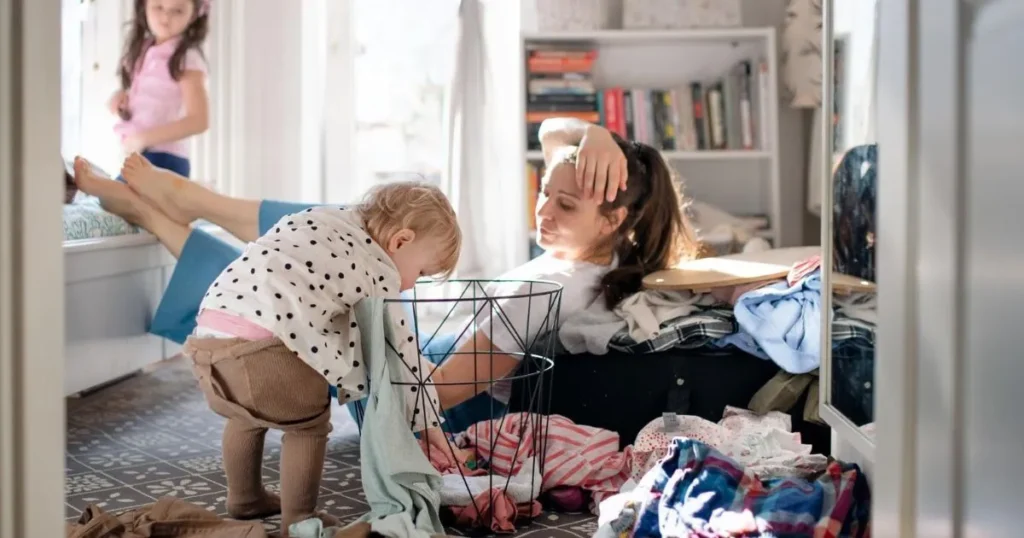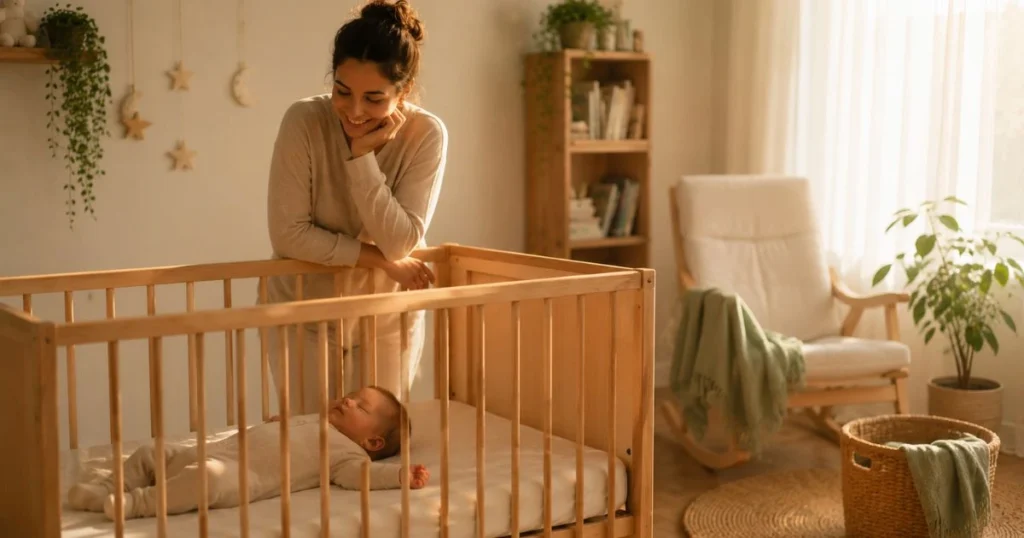

Developmental milestones of a 3 month old help you understand the new skills your baby may begin showing as they grow. You might notice your little one making different facial expressions, moving their arms and legs more actively, or showing greater interest in familiar faces. A smile during a conversation or an excited kick can be a lovely sign of your baby’s growing engagement with the world.
These changes may also bring questions. Is your baby developing head control as expected? When might they start making cooing sounds? And how can you encourage healthy development without planning activities for every waking moment?
Learning about the developmental milestones of a 3 month old can help you recognize your baby’s progress and support them in simple, natural ways. You don’t need special equipment, expensive toys, or a rigid daily schedule. Talking, smiling, enjoying supervised floor time, and allowing safe movement can all provide valuable opportunities for learning.
In this guide, you’ll discover which skills may emerge around three months, explore five easy activities to encourage development, and learn when it’s appropriate to discuss your concerns with your pediatrician.
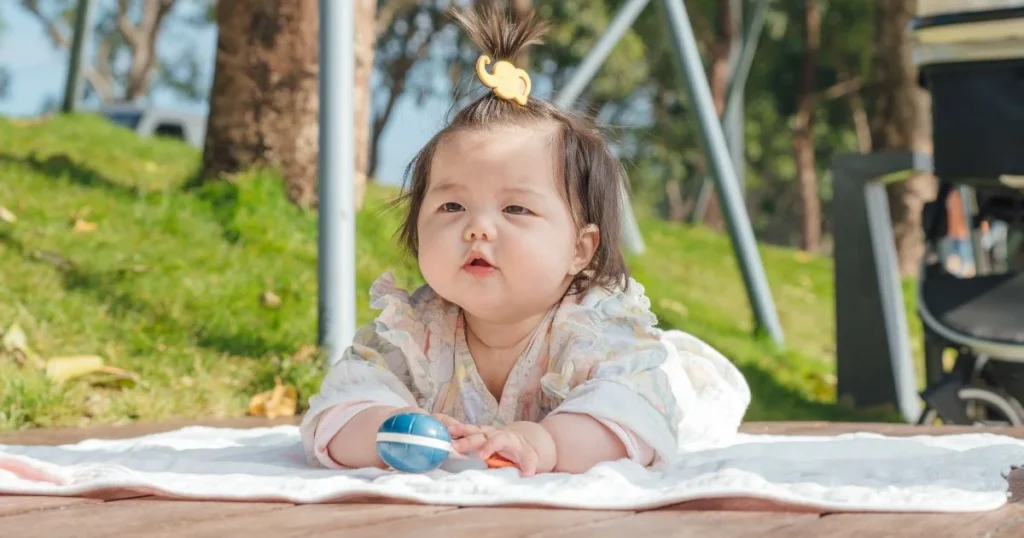
Which Skills May Emerge Around Three Months?
As babies mature, they gradually acquire abilities that help them move, communicate, interact with others, and understand their surroundings. These developmental changes are commonly grouped into physical, social, communication, and cognitive skills. Understanding the developmental milestones of a 3 month old can help you recognize these emerging abilities.
The Centers for Disease Control and Prevention (CDC) publishes milestone checklists for several ages, including two and four months. Because three months falls between these age groups, both checklists can provide useful context. The CDC identifies milestones that at least 75% of children are expected to achieve by the age specified. However, milestone lists are general reference tools, not replacements for professional developmental screening or an individualized medical evaluation.
At approximately three months, your baby may show increasing awareness of people and objects, respond more noticeably to familiar voices, and begin developing greater control over body movements. Development isn’t identical for every child, so you may see some abilities before others. Tracking the developmental milestones of a 3 month old can help you follow your baby’s progress over time.
Changes in Movement and Physical Control
Your baby is gradually learning to coordinate different parts of their body. Neck strength continues to develop, and during tummy time, you may see your little one briefly raise their head. Their arms and legs may also move more actively as they explore what their bodies can do. These changes are part of the developmental milestones of a 3 month old.
You might observe behaviors such as:
- Raising the head while positioned on the stomach.
- Moving the arms and legs during periods of wakefulness.
- Uncurling the fingers and opening the hands occasionally.
- Turning their gaze toward different things while you support them in your arms.
Hand movements may become more varied, too. Your baby might bring their hands toward their mouth or begin trying to reach for something close by. More precise reaching and the ability to hold toys typically develop further as the months pass.
What matters most: Your baby doesn’t have to acquire every skill at exactly three months. Children progress at different rates. If you notice concerns about your baby’s head control, muscle tone, or movements, ask your pediatrician for advice. Observing the developmental milestones of a 3 month old can help you notice changes, but your pediatrician can help assess any concerns.
Building Social and Emotional Connections
Your baby’s interactions with familiar people may gradually become more expressive. As you follow the developmental milestones of a 3 month old, you might begin to recognize how they respond to your presence through their smiles, facial expressions, and changes in behavior.
For example, your baby may:
- Smile while you interact with them.
- Focus on your face during close contact.
- Show interest when you come into view.
- Respond to soothing words or being held.
- Pay attention to your voice and facial expressions.
These early exchanges help babies experience comfort and connection. By noticing your child’s cues and responding gently, you provide opportunities for them to begin learning how social interactions work.
Early Sounds and Communication
Babies don’t need words to communicate. From an early age, they use sounds, expressions, and movements to engage with the people around them. These early behaviors are part of the developmental milestones of a 3 month old.
Around this stage, some babies begin making soft cooing noises and other vocal sounds in addition to crying. Your baby may also seem increasingly interested in listening to you speak.
Possible signs of emerging communication include:
- Producing quiet sounds while calm and awake.
- Becoming attentive when you talk.
- Looking toward you during an interaction.
- Smiling or moving in response to your voice.
- Experimenting with different vocal sounds.
The timing of these changes varies from baby to baby. When your little one makes a sound, try answering with a gentle voice or smile. These simple responses encourage early interaction and help you connect.
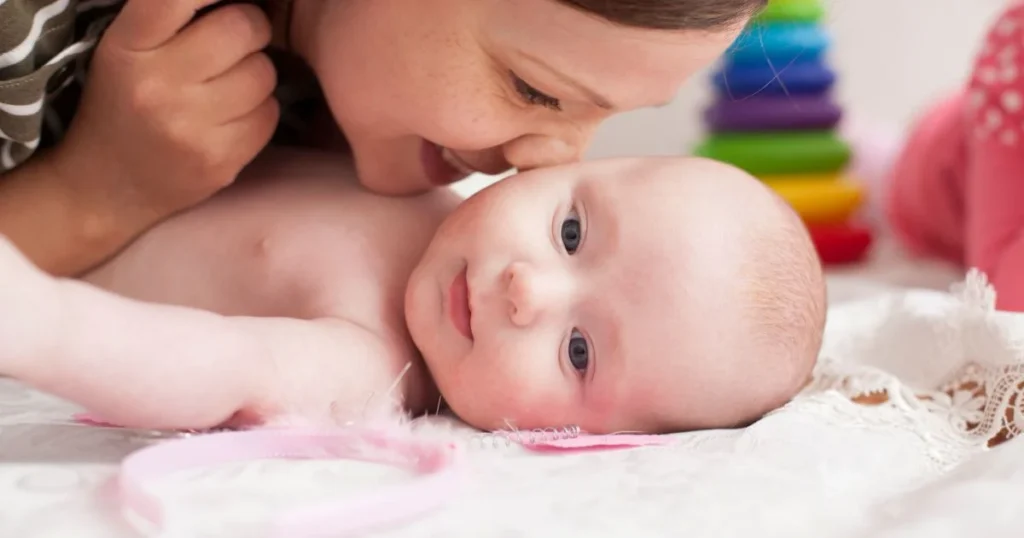
Exploring Through Sight and the Senses
Your baby is beginning to gather information about the world through their senses. Watching faces, listening to familiar voices, feeling safe objects, and moving their body all contribute to this early exploration. These experiences are part of the developmental milestones of a 3 month old.
You may notice your baby paying attention to:
- Your face as you speak.
- A picture or toy that catches their eye.
- An object moving slowly in front of them.
- Familiar voices and ordinary sounds at home.
You can support these experiences by spending time face-to-face, showing your baby a colorful toy or high-contrast image, and making room for safe, supervised floor play.
Constant stimulation isn’t necessary. Quiet time, rest, and opportunities to observe the surroundings are also valuable parts of your baby’s day.
Developmental Changes to Watch For at Around Three Months
Here is a brief overview of the developmental milestones of a 3 month old you might observe during this period.
| Skill area | Behaviors you may observe |
| Social development | Smiling during interactions and looking at people’s faces |
| Communication | Making gentle vocal sounds apart from crying |
| Gross motor development | Raising the head during tummy time and moving the limbs |
| Fine motor development | Opening the hands occasionally and gradually improving coordination |
| Visual development | Looking at faces and noticing objects that attract attention |
| Awareness of surroundings | Showing interest in familiar voices and everyday activity |
Use these examples to understand possible changes in the developmental milestones of a 3 month old rather than as a formal checklist for three-month-olds. According to the CDC, lifting the head during tummy time and briefly opening the hands are included in its two-month milestones. Its four-month milestones include maintaining steady head control when held and pushing up onto the forearms during tummy time.
For age-specific guidance, visit the CDC’s official pages:
5 Everyday Activities to Encourage Your Baby’s Development
Supporting your baby’s development doesn’t require complicated games or lengthy, scheduled play sessions. Simple activities can help support the developmental milestones of a 3 month old.
Instead, use ordinary moments as opportunities to interact. Talking while changing a diaper, spending a little time playing together, or smiling at your baby can encourage developing abilities while keeping your daily routine relaxed.
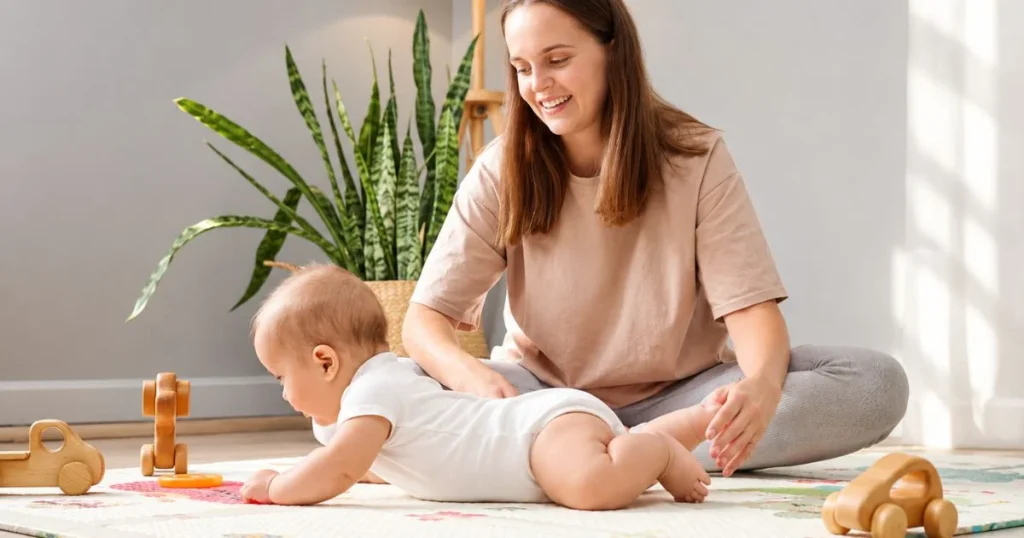
1. Practice Short, Supervised Tummy Time
Tummy time gives your baby opportunities to strengthen the muscles used for lifting the head and moving the upper body. These movements support the development of motor skills and are part of the developmental milestones of a 3 month old.
If your baby initially dislikes tummy time, you are not alone. Some babies need time to become comfortable in this position.
How to Make Tummy Time Easier
- Choose a time when your baby is awake, alert, and comfortable.
- Place your baby on their tummy on a firm, flat play surface.
- Lie down in front of them so they can see your face.
- Talk gently or use an age-appropriate toy to encourage them to look toward you.
- Keep the session short if your baby becomes uncomfortable, and try again during another awake period.
You can also try supervised tummy time across your lap while remaining attentive to your baby’s position and breathing.
Gradually build up the total time as your baby becomes more comfortable. Follow current pediatric guidance and your baby’s tolerance rather than forcing a particular duration.
Important safety reminder: Tummy time is only for awake, directly supervised periods. For every sleep, place your baby on their back on a firm, flat sleep surface without loose bedding or soft objects.
For more guidance, see the American Academy of Pediatrics’ Back to Sleep, Tummy to Play.
2. Talk, Sing, and Respond to Your Baby’s Sounds
Supporting your baby’s development doesn’t require complicated games or lengthy, scheduled play sessions. Simple activities can help you encourage the developmental milestones of a 3 month old.
Instead, use ordinary moments as opportunities to interact. Talking while changing a diaper, spending a little time playing together, or smiling at your baby can encourage developing abilities while keeping your daily routine relaxed.
Simple Ways to Encourage Communication
- Narrate your day: Talk while changing a diaper, getting dressed, or preparing for a walk.
- Sing familiar songs: Choose gentle songs or nursery rhymes your baby can listen to.
- Respond to coos: When your baby makes a sound, smile and respond as if you are having a conversation.
- Pause and listen: Give your baby time to make another sound or respond with a movement.
- Use a warm voice: Speak naturally and expressively without making every interaction loud or exaggerated. These simple activities can support the developmental milestones of a 3 month old.
Try a Little Back-and-Forth Conversation
Imagine your baby makes a soft coo while looking at you. You smile and answer with a few gentle words. Then you pause.
Your baby might make another sound, move their arms, or simply watch your face. Respond again if they seem interested. These early exchanges are part of the developmental milestones of a 3 month old.
This simple exchange introduces the rhythm of conversation: one person communicates, the other responds, and both have time to participate.
If your baby looks away or becomes fussy, take a break. Listening and communicating should be enjoyable, not something your baby must perform on demand.
3. Encourage Visual Tracking With Safe Toys
At around 3 months, your baby may become increasingly interested in faces and objects. Simple visual games give them opportunities to look, observe, and gradually follow movement, supporting the developmental milestones of a 3 month old.
You do not need a large collection of toys. A sturdy baby-safe rattle, a high-contrast picture, or your own face can provide an interesting focal point.
Try This One-Minute Visual Tracking Game
- Place your baby on their back on a safe, flat play surface.
- Hold an age-appropriate toy within comfortable viewing distance.
- Let your baby notice the toy before moving it.
- Move it slowly from one side to the other.
- Watch to see whether your baby follows it with their eyes or turns their head.
Keep the movement slow and give your baby plenty of time to respond. If they lose interest, stop and try another time.
Which Toys Are Suitable for a 3 Month Old?
Consider these simple options to support the developmental milestones of a 3 month old:
- High-contrast picture cards or cloth books.
- Sturdy, age-appropriate rattles.
- Colorful toys designed for young infants.
- Baby-safe mirrors made for supervised play.
Choose toys that are sturdy, free from detachable small parts, and appropriate for your baby’s age. Keep toys and cords away from the sleep space, and never hang objects within your baby’s reach where they could become a hazard.
Remember that the purpose is to invite your baby’s attention, not to test how quickly they can follow an object.
4. Make Time for Smiling and Face-to-Face Play
Your face is one of your baby’s most familiar and interesting features. Face-to-face interaction gives your little one opportunities to observe expressions, hear your voice, and respond to your attention. These simple interactions support the developmental milestones of a 3 month old.
You can incorporate these moments into activities you already do together.
Everyday Opportunities for Face-to-Face Interaction
- Smile and talk during diaper changes.
- Make gentle facial expressions while your baby is alert.
- Sing softly while holding your baby securely.
- Copy your baby’s sounds and expressions when appropriate.
- Pause during play to see whether your baby wants to continue.
You might notice your baby smiling in response, moving their arms, or becoming more attentive when you speak. These are some of the social and emotional developmental milestones of a 3 month old.
These responses may be subtle. Your baby does not need to smile every time you interact for the experience to be valuable.
Follow Your Baby’s Cues
Babies communicate comfort and discomfort through body movements, facial expressions, and changes in attention. Recognizing these cues is an important part of understanding the developmental milestones of a 3 month old.
Your baby may need a break if they:
- Turn their head away repeatedly.
- Become fussy or start crying.
- Seem less interested in interaction.
- Appear tired or have difficulty settling.
Responding to these cues helps you adjust the activity to your baby’s needs.
Parenting Whisper reminder: You do not have to entertain your baby every minute. Your calm presence, comforting touch, and everyday interactions are meaningful parts of early development.
5. Encourage Safe Reaching, Touching, and Movement
As your baby’s coordination develops, they will have more opportunities to explore their hands, arms, and surroundings. These changes are part of the developmental milestones of a 3 month old.
You can encourage this process by providing safe floor play and placing an interesting object nearby. At this age, your baby may simply look at the object or move an arm toward it. Reaching and grasping do not need to happen every time.
Create a Simple Baby Play Space
- Place a firm play mat on a clear area of the floor.
- Position your awake baby comfortably on their back.
- Place a lightweight, age-appropriate toy within comfortable reach.
- Give your baby time to look, move, and explore.
- Stay close and supervise throughout the activity.
You can also allow your baby to move their arms and legs freely without being restricted in a seat for long periods.
Choose toys that are easy to clean, sturdy, and free from small parts, loose strings, or other choking and strangulation hazards. Avoid placing small household objects within reach.
Let Your Baby Set the Pace
Some babies will look at a toy for several seconds before attempting to move toward it. Others may prefer watching your face or moving their hands. These behaviors can be part of the developmental milestones of a 3 month old.
Both responses can be part of exploration. Avoid pulling your baby’s arms toward a toy or forcing them to grasp an object.
The goal is to provide opportunities for movement and discovery while keeping your baby comfortable and safe.
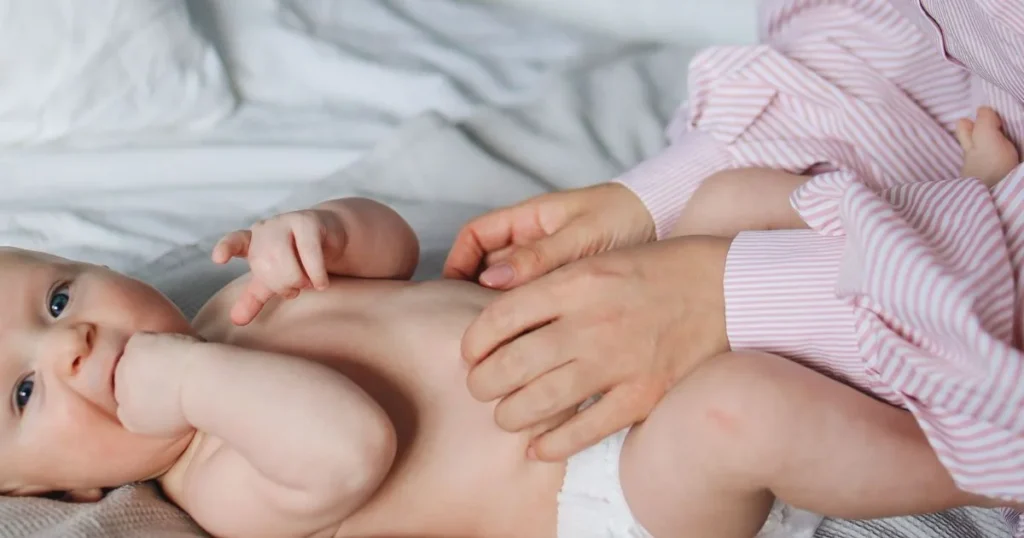
A Simple Daily Routine for Supporting Your 3 Month Old’s Development
You do not need a strict developmental schedule. Instead, look for small opportunities during your baby’s normal awake periods.
The following example shows how you might incorporate the five activities into an ordinary day.
| Everyday moment | Activity | Developmental opportunity |
| After waking | Smile and talk to your baby | Social interaction and listening |
| During an alert period | Short tummy-time session | Head and upper-body strength |
| During quiet play | Slowly move a safe toy | Visual attention |
| During a diaper change | Talk, sing, and pause for responses | Early communication |
| During floor play | Offer a safe toy within reach | Movement and exploration |
| Before a rest period | Enjoy calm cuddling and gentle conversation | Connection and comfort |
Treat this table as a flexible example, not a prescribed timetable. Understanding the developmental milestones of a 3 month old can help you choose activities that suit your baby’s changing needs.
Your baby’s feeding needs, sleep patterns, and periods of alertness will influence when activities work best. Some days you may have several enjoyable play sessions. On other days, feeding, soothing, and resting may take priority.
Both are normal parts of caring for a young baby.
Keep screens out of your baby’s routine except for appropriate video calls with loved ones. Babies learn through real-world interaction, movement, and responsive care rather than passive screen viewing.
How Your Baby’s Growth and Development Are Monitored
The developmental milestones of a 3 month old involve more than reaching milestones. Your pediatrician also monitors your baby’s physical growth and overall health.
Understanding Growth Charts
At routine health visits, your healthcare professional may measure your baby’s weight, length, and head circumference and plot the results on appropriate growth charts. These checkups also provide an opportunity to discuss the developmental milestones of a 3 month old and address any concerns about your baby’s progress.At routine health visits, your healthcare professional may measure your baby’s weight, length, and head circumference and plot the results on appropriate growth charts.
These measurements help show how your baby is growing over time. A single measurement does not tell the whole story, and a higher or lower percentile does not automatically indicate a problem.
Your pediatrician considers the pattern of growth alongside feeding, medical history, and other aspects of development.
What If Your Baby Was Born Prematurely?
If your baby was born prematurely, their developmental progress may be assessed using corrected age. This can help you better understand the developmental milestones of a 3 month old.
Corrected age accounts for how early your baby was born and can help healthcare professionals interpret milestones more appropriately. The relevance and duration of corrected-age assessments depend on your baby’s circumstances.
If you are unsure how to interpret a milestone checklist, ask your pediatrician which age to use.
For more information, visit the CDC’s developmental milestone resources.
When to Talk to Your Pediatrician About Your Baby’s Development
It is natural to wonder whether your baby is progressing as expected. Milestone lists can help you notice emerging skills, but they should neverThe developmental milestones of a 3 month old can vary from baby to baby, but certain observations may warrant a conversation with your pediatrician.
Consider contacting your pediatrician if your baby:
- Does not seem to react to loud sounds.
- Rarely looks at faces or shows interest in interaction.
- Moves one side of the body noticeably less than the other.
- Seems unusually stiff or floppy.
- Has difficulty with feeding or other concerns about overall well-being.
- Loses a skill they previously demonstrated.
These observations do not automatically mean your baby has a developmental condition. They are reasons to seek guidance and discuss whether further assessment is appropriate.
If your baby experiences a sudden loss of responsiveness or an acute change in movement, seek urgent medical assessment.
What If Your Baby Has Not Reached Every Milestone Yet?
TTry not to compare your baby with another child of the same age. Development varies, and babies may acquire skills at different times. Understanding the developmental milestones of a 3 month old can help you follow your baby’s progress without expecting every skill to appear at the same time.
The CDC’s milestone checklists provide age-based guidance, but they are not diagnostic tests. If you are concerned about a particular skill, share what you have noticed with your pediatrician rather than waiting for your baby to reach the next milestone.
You can prepare for the conversation by noting:
- Which skill concerns you.
- When you first noticed the concern.
- Whether your baby responds differently in different situations.
- Whether your baby has lost a previously acquired skill.
- Any questions about hearing, movement, feeding, or interaction.
Your observations can help your healthcare professional understand what is happening and determine whether additional support is needed.
Frequently Asked Questions About Developmental Milestones of a 3 Month Old
What are the main developmental milestones of a 3 month old?
Around 3 months, many babies are becoming more socially responsive, watching faces, moving both arms and legs, lifting their heads during tummy time, and making sounds other than crying. These are some of the developmental milestones of a 3 month old. Some skills are still emerging, so consider your baby’s overall development rather than expecting every milestone at once.
Should my 3 month old be holding their head up?
Your baby is gradually developing head control, including lifting their head during tummy time. These emerging skills are part of the developmental milestones of a 3 month old. However, holding the head steady without support while being held is listed by the CDC as a 4-month milestone. If you have concerns about your baby’s strength, head control, or movement, speak with your pediatrician.
How much tummy time does a 3 month old need?
Tummy time should take place during awake, supervised periods, with opportunities spread throughout the day. Start with manageable sessions and gradually build up as your baby becomes more comfortable. These activities support the developmental milestones of a 3 month old. Follow pediatric guidance and your baby’s tolerance rather than forcing a particular duration. Always place your baby on their back for sleep.
How can I help my 3 month old’s brain development?
Talk, sing, respond to your baby’s sounds, smile face-to-face, offer safe visual toys, and provide supervised floor play. These everyday activities support the developmental milestones of a 3 month old by giving your baby opportunities to listen, observe, move, and interact with you. Keep activities simple and allow plenty of time for rest.
What toys are best for a 3 month old’s development?
Supporting the developmental milestones of a 3 month old doesn’t require complicated games or lengthy, scheduled play sessions.
Instead, use ordinary moments as opportunities to interact. Talking while changing a diaper, spending a little time playing together, or smiling at your baby can encourage developing abilities while keeping your daily routine relaxed.
Is it normal if my 3 month old is not cooing yet?
Babies develop communication skills at different rates as part of the developmental milestones of a 3 month old. Many begin making sounds other than crying during the early months, and cooing becomes more noticeable as communication develops. If your baby does not seem to respond to sounds or you have concerns about their communication, discuss them with your pediatrician.
When should I worry about my 3 month old’s development?
As you follow the developmental milestones of a 3 month old, speak with your pediatrician if your baby does not respond to loud sounds, seems unusually stiff or floppy, moves one side much less than the other, or loses previously acquired skills. You do not need to wait for a specific milestone date if you have concerns.
Conclusion: Celebrate Every Little Step in Your Baby’s Development
The developmental milestones of a 3 month old are not a checklist you need to complete perfectly. They are helpful signs of how your baby is learning to move, communicate, observe, and connect with the people around them.
You can support your baby’s progress through the developmental milestones of a 3 month old with five simple activities: supervised tummy time, talking and singing, visual tracking, face-to-face play, and safe opportunities to reach and explore.
Start with whichever activity fits naturally into your day. Follow your baby’s cues, offer breaks when needed, and remember that some of the most meaningful interactions happen during ordinary moments.
Your baby does not need a perfect routine or expensive toys. They need safe opportunities to explore, responsive care, and time to develop at their own pace.
If you have questions about your baby’s progress, your pediatrician can help you understand what to expect and whether additional assessment is needed.
Want more practical support as your baby grows? Explore Parenting Whisper for evidence-informed baby development guides, age-appropriate sleep advice, and gentle parenting tips designed to help you feel supported—not judged.