
Uninvolved Parenting
Gentle Parenting

Uninvolved Parenting: Signs, Causes, Effects, and How to Break the Cycle

Parenting does not require being available every minute of the day. Every parent gets tired, distracted, overwhelmed, or simply needs time alone. There is an important difference, though, between occasionally being unavailable and consistently being emotionally or practically absent from a child’s life. Uninvolved parenting describes a pattern in which a parent provides little emotional

2 year old sleep regression
Toddler Sleep

2 year old sleep regression

If you’re reading this at 2 a.m. with a toddler screaming from the next room, here’s the short version: 2 year old sleep regression can be exhausting, but you’re not doing anything wrong, and this phase has an end date. Toddler sleep regression is the term parents use when a child who used to sleep

Sleep Regression
Toddler Sleep

The 18 Month Sleep Regression

If your once-great sleeper has suddenly turned into a bedtime negotiator, a 4 a.m. alarm clock, or a toddler who screams the second you leave the room, you’re not imagining things — and you’re definitely not doing anything wrong. Welcome to the 18 Month Sleep Regression, one of the more challenging stretches in early toddlerhood

The Dream Feed If you've ever tiptoed past your baby's nursery at 10 p.m., silently begging the universe to let them sleep past 2 a.m., you've probably already heard whispers about "dream feeding." It sounds almost too good to be true — sneak in a feeding while your baby is basically still asleep, and suddenly everyone gets a longer stretch of shut-eye. But like most parenting techniques that sound like magic, there's real strategy behind it, and getting it right makes all the difference between a dream feed that actually works and one that just leaves everyone more tired than before. Let's break down exactly what a dream feed is, when to start one, and how to execute it without turning your sleeping baby into a wide-awake, screaming baby. What Exactly Is a Dream Feed? A dream feed is a feeding you initiate on purpose, right before you head to bed, while your baby is still mostly asleep. You're not waiting for hunger cries. You're gently rousing your little one just enough to get a full feeding in, then tucking them right back into their crib. The easiest way to picture this is the "gas tank" analogy. Imagine your baby's stomach as a fuel tank that slowly empties overnight. If you top it off right before you turn in, there's a much smaller chance they'll run on empty and wake up hungry at 1 a.m. Hunger is one of the most common reasons babies stir in the middle of the night, so this one preemptive move can knock out a big variable. Here's the part that surprises a lot of parents, though: dream feeding usually doesn't add extra total sleep hours to your baby's night. What it actually does is shift the timing of their longest sleep stretch. Instead of your baby conking out at 8:30 p.m. and waking at 1:30 a.m., a well-timed dream feed nudges that same stretch to run from, say, 10:30 p.m. to 3:30 a.m. The total sleep length is similar — but now it overlaps with your sleep schedule instead of starting hours before you've even brushed your teeth. There's also a behavioral upside worth mentioning. When you feed your baby proactively, before hunger wakes them up screaming, you're not accidentally teaching them that crying is what summons food. Over time, this can support steadier daytime eating patterns too. Timing It Right: When and How Often Dream feeding isn't something to rush into during the newborn haze. Babies under four weeks old are still feeding every two to three hours around the clock — day and night — so their little systems simply aren't ready for a structured overnight strategy yet. Once your baby hits roughly the one-month mark, you've got a green light to experiment. The sweet spot for the actual feed tends to fall about two to three hours after your baby's bedtime feeding — think somewhere in the 9:00 to 10:30 p.m. range, though some parents push it as late as midnight, right before they themselves crash for the night. To set your baby up for a strong dream feed, it helps to load up on calories earlier in the evening. From around 4:00 p.m. onward, try offering more frequent feedings — sometimes called cluster feeding — every hour or two leading up to bedtime. Think of it as pre-filling that gas tank in stages rather than one giant top-off at the end. Some babies, even with a solid dream feed, still wake like clockwork around 3:30 a.m. If that's your situation, a second, quieter feed around 3:00 a.m. can bridge the gap. Once your baby seems ready to drop it, you can wean off gradually — trimming nursing time or bottle ounces every few days until it disappears naturally. The Actual Logistics: Doing It Without Fully Waking Your Baby This is a point that can easily confuse many parents. Dream feeding is a delicate dance, and there's a real technique to it. Set the mood first. Keep the room dark — a dim red night light is your friend here, since it's far less stimulating to a sleeping brain than white or blue light. Low, steady white noise should already be running, and you want to keep it going through the whole process. Watch for REM sleep before you move them. You're looking for those subtle signs — flickering eyelids, tiny squeaks, small twitches — that indicate your baby is in a lighter sleep phase. That's your window. Lift them gently, and always feed them cradled in your arms rather than in the crib itself; feeding a baby lying flat in their sleep space isn't safe. Trigger the reflex. Brush the bottle nipple or your breast lightly against your baby's cheek or lower lip. That contact usually kicks the natural rooting and sucking reflex into gear even while they're mostly dozing. If they're just not biting (literally), try stroking their cheek, murmuring softly, tickling a foot, or loosening the swaddle a bit to rouse them further. Don't mess with a good swaddle. If your baby is nursing or bottle-feeding just fine while still wrapped up snug, leave it alone. If you had to unswaddle to wake them enough to eat, re-wrap them near the end of the feed so the transition back to sleep feels seamless. Feed like it's a normal meal. Nurse for about five to ten minutes per side, or offer the same bottle volume they'd typically take during the day — often around three ounces. If fifteen or twenty minutes go by and they're clearly not interested, it's fine to call it there. Skip unnecessary diaper changes. A wet diaper on a peacefully sleeping baby is not worth the risk of jolting them fully awake. Save changes for dirty diapers, and handle those quietly, under dim light, either right before or midway through the feed. Burp if that's part of your baby's normal routine. For babies dealing with reflux, holding them upright anywhere from five to thirty minutes after the feed can make a real difference. A gentle pat while they're draped across your lap tends to keep them calm and drowsy rather than fully rousing them. Getting Them Back to Sleep If your baby stayed drowsy through the whole feed, the easiest move is simply laying them straight back down in the crib. Done. If they wake up more than you'd like during the process, lean on the classic 5 S's — swaddling, side or stomach positioning while you're holding them, shushing, gentle swinging motion, and offering a pacifier to suck on — paired with that ongoing white noise. One more trick worth knowing: the "wake-and-sleep" method. Right after you set your baby down, tickle their feet just enough that their eyes flutter open for a second. Then let them settle and drift off on their own. It sounds counterintuitive — waking them slightly to help them sleep better — but it can reinforce the skill of falling asleep independently rather than relying on being fed or rocked all the way down. Is It Actually Working? Give It a Fair Trial Don't judge a dream feed after one rough night. Commit to five to seven consecutive nights before deciding whether it's helping. Babies (and parents) need a little time to adjust to any new routine. Success looks like a shift in timing — that long sleep stretch moving later into the night so it lines up with your own bedtime. If your baby used to sleep hard from 8:30 p.m. to 1:30 a.m. and now sleeps from 10:30 p.m. to 3:30 a.m., that's two extra hours of sleep you get to keep for yourself. That's the win. On the flip side, it might be time to drop the dream feed if: Your baby already goes to bed relatively late (9:00–10:00 p.m.), meaning their natural long stretch already overlaps with yours. The feed seems to yank them out of deep sleep and leaves them cranky or wide awake instead of drowsy. They just won't rouse enough to actually eat a full feeding. They keep waking at the same time regardless — say, 1:30 a.m. or 4:00 a.m. — no matter what you do at 10 p.m. If you recognize any of these signs, a dream feed may not be providing much benefit for your baby, and that is completely okay. Not every strategy fits every kid. Knowing When (and How) to Stop Many families gradually stop using the dream feed between 4 and 9 months, often a few weeks after their baby begins consistently sleeping from the dream feed through the morning. There is no need to stop it all at once. Gradually shorten nursing sessions or reduce bottle volume, or swap the feed out for a pacifier if your baby just wants that comfort rather than actual nourishment. One last practical note: once teeth start coming in, it's smart to shift feedings back into waking hours and get into a habit of brushing before bed. Milk sitting on baby teeth overnight isn't great for enamel, so this is a good natural cue that dream feeding's days are numbered anyway. The Bottom Line Dream feeding isn't a guaranteed fix for every family, but for many parents, it's a genuinely useful tool — one that can buy back a couple of precious hours of uninterrupted sleep during an exhausting stage of life. The key is patience: give it a real trial run, pay attention to how your specific baby responds, and don't be afraid to adjust or drop it entirely if it's not pulling its weight. Every baby's sleep is a little different, and the "right" approach is always the one that actually works for the family living it.
Toddler Nutrition

The Dream Feed

If you’ve ever tiptoed past your baby’s nursery at 10 p.m., silently begging the universe to let them sleep past 2 a.m., you’ve probably already heard whispers about “dream feeding.” It sounds almost too good to be true — sneak in a feeding while your baby is basically still asleep, and suddenly everyone gets a

6 month old sleep schedule
Toddler Sleep

6 Month Sleep Regression

Understanding a 6 month old sleep schedule can help you set your baby up for better sleep and make nighttime changes easier to navigate. Learn how to create a 6 month old sleep schedule that supports better sleep — even when your baby’s sleep suddenly becomes unpredictable — without losing your mind in the process.

Newborn Pacifier
Toddler Sleep

Newborn Pacifier Safety: When and How to Use One

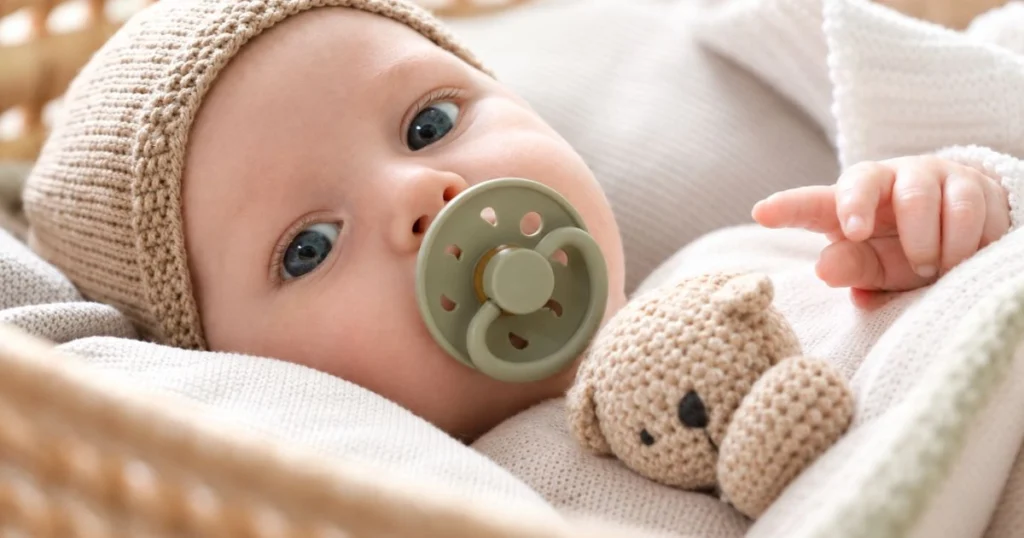
Your newborn has been fed, changed, cuddled, and rocked, yet those little lips are still searching for something to suck. You reach for a pacifier, hoping it will bring a little comfort. Then another thought appears: Is a newborn pacifier actually safe? If you’re breastfeeding, you may wonder whether a pacifier could interfere with feeding.

Scroll to Top