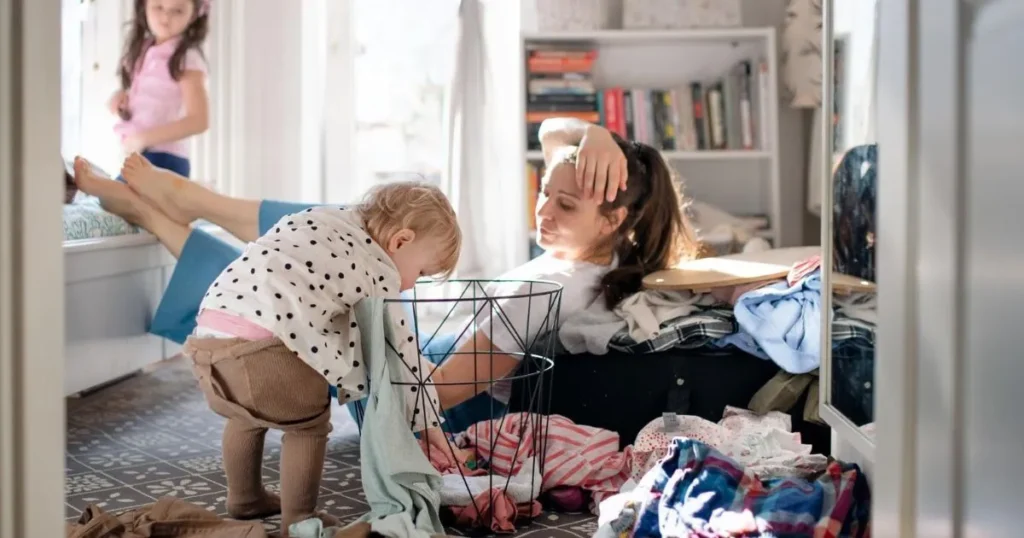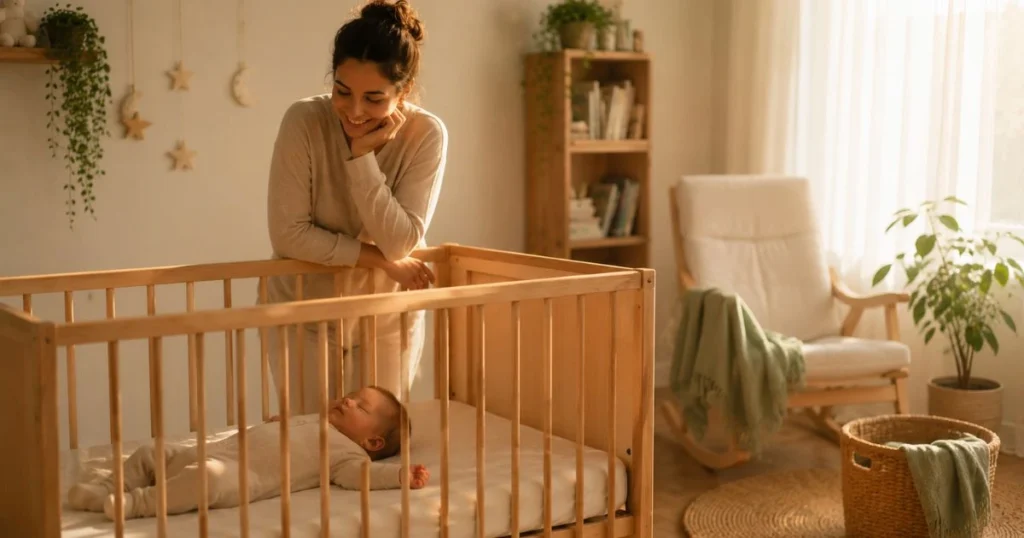
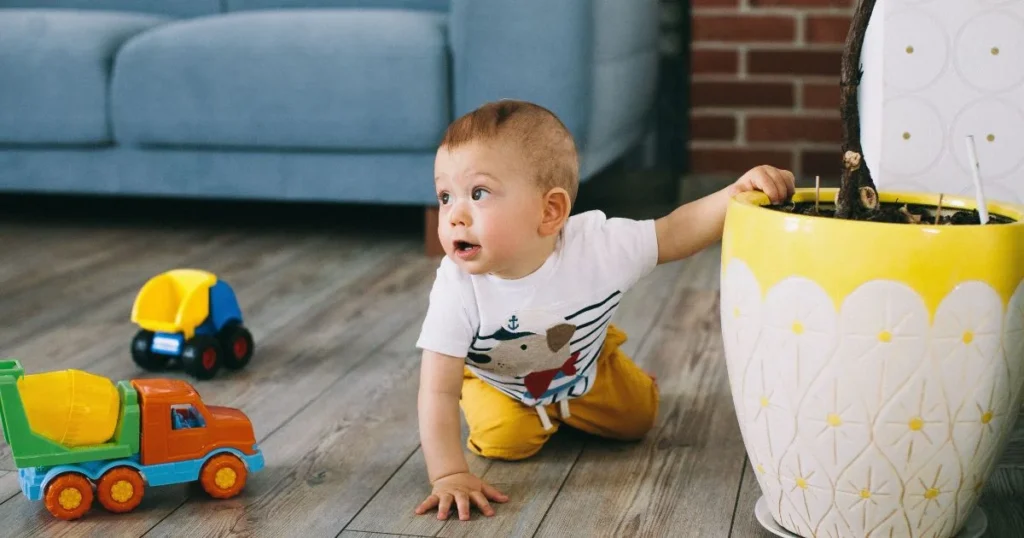
Your baby’s first year is filled with little moments that quickly become unforgettable memories. One day, you’re watching your newborn sleep peacefully in your arms; before you know it, your little one may be smiling, reaching for toys, sitting, crawling, or preparing to take those exciting first steps.
As a parent, you naturally want to understand what comes next. You may wonder whether your baby is growing as expected, when certain skills should appear, or how you can encourage healthy development.
Understanding baby milestones can help you recognize your child’s progress and provide opportunities for learning through everyday activities. However, remember that development is not a race. Babies acquire new skills at different times, and reaching a milestone a little earlier or later does not automatically indicate a problem.
This guide explores baby milestones by month, from newborn reflexes to the developmental changes you may notice around your child’s first birthday. You’ll also discover practical ways to support your baby’s growth and learn when it’s worth discussing a concern with your pediatrician.
What Are Baby Milestones and Why Do They Matter?
Developmental milestones are skills that most children develop by certain ages. They reflect how babies learn to move, communicate, think, interact, and respond to the world around them.
During the first year, your baby experiences significant changes. Simple movements gradually become more coordinated, early sounds develop into babbling, and familiar faces become an important part of your child’s social world. Understanding baby milestones helps you follow these changes and recognize how your little one is developing over time.
The Four Main Areas of Baby Development
Baby development is generally discussed across four important areas:
1. Physical and motor development
This includes large movements, such as lifting the head, rolling, sitting, crawling, and walking. Fine motor development involves smaller movements, including reaching, grasping toys, and picking up objects.
2. Cognitive development
Cognitive development describes how your baby learns, remembers, explores, and solves simple problems. Recognizing familiar objects and looking for something that disappears from view are examples of developing cognitive skills.
3. Communication and language development
Communication begins long before your baby says a recognizable word. Looking toward voices, making sounds, cooing, babbling, and eventually using gestures are all important parts of early communication.
4. Social and emotional development
Your baby gradually learns to recognize familiar caregivers, respond to interactions, express feelings, and enjoy simple social games.
Why Every Baby Develops at a Different Pace
You may notice that another baby of the same age can sit, crawl, or make different sounds. It’s easy to compare, especially when you’re surrounded by photographs and updates from other parents.
However, babies don’t follow identical developmental schedules. Some acquire certain skills earlier, while others need more time and practice.
The CDC developmental milestone checklists describe skills that at least 75% of children can do by the listed age. They are useful tools for monitoring baby milestones, but they are not a guarantee that every baby will achieve every skill on an exact date.
If your baby isn’t showing a particular skill, discuss your observations with your pediatrician rather than relying on comparisons.
Understanding Premature Baby Milestones and Corrected Age
If your baby was born prematurely, developmental progress and baby milestones are often considered using corrected age during the first two years.
Corrected age accounts for how early your baby was born.
For example, if your baby was born eight weeks before the due date and is now four months old chronologically, their corrected age is approximately two months.
Your pediatrician can help you understand how corrected age applies to your baby’s individual development.
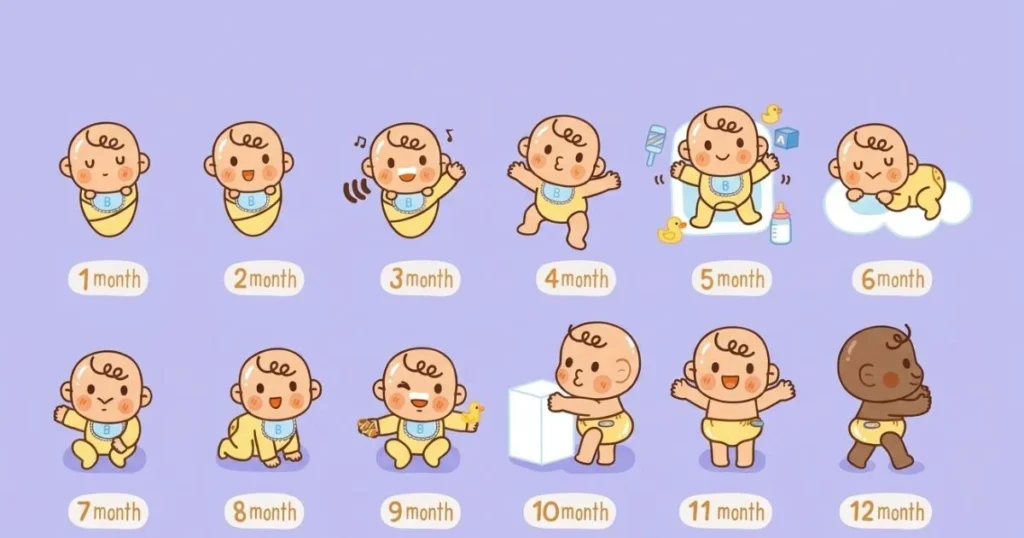
Baby Milestones Chart: Your Baby’s First Year at a Glance
The following chart offers a quick overview of developmental changes you may notice throughout the first year.
| Age | Developmental changes to look for |
| 1 month | Newborn reflexes, brief head movements, responses to sounds |
| 2 months | Social smiles, sounds other than crying, brief head lifting |
| 3 months | Improving head control, cooing, increased visual attention |
| 4 months | Steadier head control, reaching for toys, chuckling |
| 5 months | Better coordination, exploring objects, rolling attempts |
| 6 months | Rolling from tummy to back, laughing, reaching for toys |
| 7 months | Developing sitting balance, transferring objects, babbling |
| 8 months | More confident sitting, object exploration, social awareness |
| 9 months | Sitting independently, responding to name, varied babbling |
| 10 months | Exploring movement, pulling up attempts, developing gestures |
| 11 months | Cruising along furniture, improved coordination, communication |
| 12 months | Pulling to stand, walking with support, gestures, early words |
These are general developmental examples, not a list of skills your baby must master every month. The CDC provides official milestone checklists at 2, 4, 6, 9, and 12 months.
Newborn Development: What to Expect During the First Month
The first month is a period of adjustment for both you and your baby. Your newborn is becoming familiar with the outside world while developing basic feeding, sleeping, and sensory patterns. These early changes are the beginning of baby milestones that you’ll notice throughout the first year.
Newborn Reflexes and Early Motor Development
Newborn reflexes are automatic movements that help babies respond to their surroundings. Some are particularly important for feeding and early protection.
Common newborn reflexes include:
- Rooting reflex: When you gently touch your baby’s cheek, they may turn their head toward the touch and open their mouth.
- Sucking reflex: Your baby automatically begins sucking when something touches the roof of their mouth.
- Moro reflex: Also called the startle reflex, this causes your baby to extend their arms and legs in response to a sudden movement or sound.
- Grasp reflex: Your newborn may curl their fingers around an object placed in their palm.
You may also notice that your baby keeps their hands close to their face, makes jerky arm and leg movements, or briefly lifts their head during supervised tummy time.
These movements are part of early motor development and represent some of the first baby milestones you’ll observe.
Newborn Vision and Sensory Development
Your newborn’s vision is still developing. Babies can see nearby faces and objects more clearly than distant ones, and they often show interest in familiar faces.
During the first weeks, you may notice that your baby:
- Looks toward your face during close interactions.
- Responds to familiar voices.
- Startles at sudden loud sounds.
- Shows interest in contrasting patterns.
- Turns toward touch or familiar sounds.
Talking softly, holding your baby close, and making gentle eye contact provide opportunities for early sensory experiences and support the development of early baby milestones.
Early Communication and Social Interaction
Although your newborn cannot speak, communication begins immediately. These early interactions are the foundation of future baby milestones in language and social development.
Crying is one of the main ways your baby expresses needs. You may also hear occasional grunts and other early sounds.
Responding to your baby’s cries, speaking gently, and maintaining comfortable face-to-face interactions help build the foundations of communication and emotional connection.
Newborn Feeding Patterns, Weight, and Diaper Output
Feeding is one of the most important parts of newborn care and supports the healthy growth needed for early baby milestones.
If you’re breastfeeding, your newborn will generally need frequent feeds, often around 8–12 times in 24 hours. Formula-fed babies may follow different feeding patterns depending on their age and individual needs.
Your pediatrician will monitor weight gain and hydration during the early weeks.
Important newborn feeding indicators include:
- Many newborns lose some weight during the first few days.
- Most regain their birth weight by approximately 10–14 days.
- By around day five, six or more wet diapers in 24 hours is generally a reassuring sign of adequate intake.
- Stool changes from dark meconium to lighter yellow or greenish colors as feeding becomes established.
These are general guidelines, not substitutes for an individual feeding assessment. Contact your healthcare professional if your baby feeds poorly, has fewer wet diapers than expected, or continues losing weight.
Newborn Sleep Patterns and Safe Sleep
Newborns spend much of the day sleeping, but their sleep is usually divided into short periods rather than one long nighttime stretch. These changing patterns are part of the early baby milestones you may observe during the first month.
You may notice:
- Frequent waking for feeds.
- Irregular sleep and wake times.
- Small movements or facial expressions during sleep.
- Different sleep patterns from one day to another.
For safe sleep, always place your baby on their back on a firm, flat, non-inclined sleep surface. Keep pillows, loose blankets, stuffed toys, and other soft objects out of the sleep area.
Baby Milestones by Month: A Complete First-Year Guide
1-Month-Old Baby Milestones: Understanding Your Newborn
At one month, your baby is still adjusting to life outside the womb. Movements may appear uncoordinated, and your newborn will spend much of the day sleeping and feeding.
You may notice your baby:
- Moving both arms and legs.
- Turning their head from side to side.
- Briefly lifting their head during tummy time.
- Responding to familiar sounds.
- Looking at faces during close interactions.
- Showing newborn reflexes.
How to support development: Hold your baby, talk softly, offer short supervised tummy-time sessions while awake, and respond to feeding and comfort cues.
2-Month-Old Baby Milestones: Discovering Social Smiles
Around two months, many babies become more socially responsive.
According to the CDC, common milestones include:
- Smiling at people.
- Looking at your face.
- Making sounds other than crying.
- Reacting to loud sounds.
- Watching you move.
- Holding their head up briefly during tummy time.
You may also notice that your baby enjoys hearing your voice and becomes more interested in face-to-face interaction.
How to support development: Smile, talk, sing, and respond when your baby makes sounds. These simple interactions encourage early communication.
For a closer look at your baby’s early development, explore our guide to developmental milestones at 2 months.
3-Month-Old Baby Milestones: Growing Curiosity and Communication
During the third month, your baby may become more active and curious.
You may notice:
- Better head and neck control.
- More coordinated arm and leg movements.
- Increased interest in faces and toys.
- Longer periods of looking at moving objects.
- More frequent cooing and vocal sounds.
- Bringing hands toward the mouth.
How to support development: Offer supervised tummy time, talk during everyday activities, and place safe toys within your baby’s visual range.
If you want more ideas to encourage your baby’s progress, discover these developmental milestones of a 3-month-old.
4-Month-Old Baby Milestones: Better Head Control and New Sounds
By four months, your baby may show stronger physical control and increased interest in interaction.
The CDC identifies several important milestones at this age, including:
- Holding the head steady when supported upright.
- Pushing up onto elbows and forearms during tummy time.
- Holding a toy when placed in the hand.
- Swinging an arm toward toys.
- Bringing hands to the mouth.
- Chuckling and making sounds.
- Turning toward your voice.
How to support development: Encourage reaching for safe toys, respond to your baby’s sounds, and provide opportunities for supervised movement and play.
You can also learn more about 4-month-old developmental milestones and discover simple ways to support your baby’s growth.
5-Month-Old Baby Milestones: Exploring Movement and the Senses
At five months, your baby may become increasingly interested in exploring objects and interacting with the environment.
Possible developments include:
- Better hand-eye coordination.
- More purposeful reaching.
- Exploring toys with their hands and mouth.
- Improved head and upper-body control.
- More interest in different sounds.
- Rolling attempts.
How to support development: Offer age-appropriate toys with different textures and encourage reaching during supervised floor play. Talk and read to your baby regularly.
Remember that rolling and independent sitting are not requirements for every five-month-old.
For more age-specific activities, check out these developmental milestones for 5 months.
6-Month-Old Baby Milestones: Rolling, Reaching, and Exploring
Six months is an exciting stage because your baby may become more physically active and socially expressive.
According to the CDC, many six-month-old babies:
- Roll from tummy to back.
- Push up with straight arms during tummy time.
- Lean on their hands for support while sitting.
- Reach for toys.
- Laugh and squeal.
- Take turns making sounds with caregivers.
This is also an important period for introducing complementary foods when your baby shows developmental readiness, generally around six months.
Continue breast milk or infant formula as your baby’s main source of nutrition while gradually introducing suitable foods.
How to support development: Offer safe toys, encourage floor play, talk and sing together, and introduce appropriate foods with attention to texture and choking safety.
For a more detailed look at what to expect at this stage, read our guide to 6-month-old milestones.
7-Month-Old Baby Milestones: Developing Strength and Independence
At seven months, your baby may be developing stronger sitting balance and more coordinated hand movements.
You might notice:
- Reaching for toys with greater accuracy.
- Transferring objects between hands.
- Exploring toys in different ways.
- More frequent babbling.
- Greater interest in social games.
- Improved balance while sitting.
How to support development: Play peekaboo, offer safe objects to explore, and give your baby plenty of supervised opportunities to move and reach.
8-Month-Old Baby Milestones: More Movement and Social Interaction
Your baby may become increasingly aware of familiar people and the environment.
Possible developments include:
- Sitting more confidently.
- Exploring different ways to move.
- Looking for interesting objects.
- Repeating sounds during babbling.
- Showing greater awareness of unfamiliar people.
- Becoming upset when a familiar caregiver leaves.
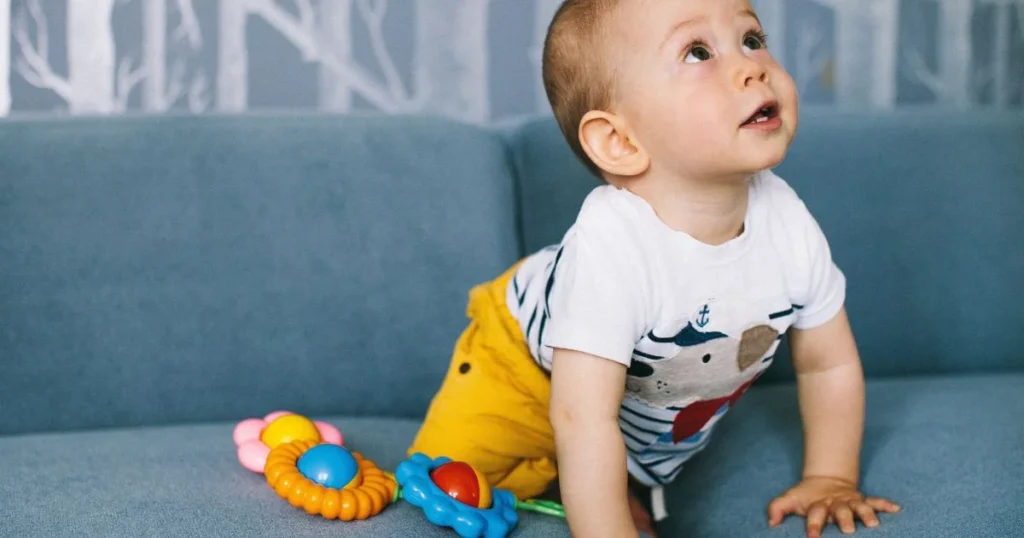
Some babies begin crawling during this period, while others use different movement patterns.
How to support development: Encourage safe exploration, read picture books, name familiar objects, and offer reassurance when your baby feels uncertain.
9-Month-Old Baby Milestones: Sitting, Babbling, and Exploring
Nine months brings important developments in movement, communication, and social interaction.
The CDC identifies milestones such as:
- Getting into a sitting position.
- Sitting without support.
- Moving objects between hands.
- Using fingers to rake food toward themselves.
- Looking when their name is called.
- Making repeated sounds such as “mamamama” and “babababa.”
- Lifting their arms to be picked up.
- Playing peekaboo.
Your baby may also become more interested in exploring objects and searching for things that disappear from view.
How to support development: Play interactive games, read together, encourage safe floor exploration, and offer appropriately prepared finger foods while supervising every meal.
Discover more about your baby’s progress with our complete guide to 9-month-old milestones.
10-Month-Old Baby Milestones: Pulling Up and Exploring
At ten months, some babies begin showing greater interest in standing and moving around furniture.
You may notice:
- More confident crawling or other movement.
- Attempts to pull up using furniture.
- Improved grasping.
- More gestures and babbling.
- Understanding familiar routines.
- Greater independence during play.
How to support development: Babyproof your home, provide stable furniture, and encourage communication through songs, gestures, and everyday conversations.
11-Month-Old Baby Milestones: Preparing for the First Steps
Your baby’s first birthday is approaching, and physical coordination may continue improving.
Possible developments include:
- Standing while holding furniture.
- Moving sideways along furniture.
- Exploring toys with greater coordination.
- Using gestures to communicate.
- Understanding familiar words.
- Showing preferences during play and daily routines.
How to support development: Give your baby safe opportunities to move, read together, and encourage gestures and communication. Avoid forcing independent walking.
12-Month-Old Baby Milestones: Celebrating the First Birthday
Your baby’s first birthday marks an important stage of growth, although development continues well beyond this age.
The CDC identifies one-year milestones that include:
- Pulling up to stand.
- Walking while holding furniture.
- Picking up small objects using the thumb and index finger.
- Waving goodbye.
- Calling a parent by a special name, such as mama or dada.
- Understanding the word “no.”
- Playing simple interactive games.
- Putting objects into containers.
Some babies take independent steps around their first birthday, while others need more time. Independent walking is not a requirement for every twelve-month-old.
How to support development: Read picture books, play simple games, encourage communication, and provide safe opportunities to explore movement.
To understand the developmental changes around your baby’s first birthday, explore these 12-month milestones.
How to Support Your Baby’s Development Every Month
You don’t need expensive toys or complicated activities to encourage healthy development. Everyday interactions can provide valuable learning opportunities.
Encourage Tummy Time and Physical Activity
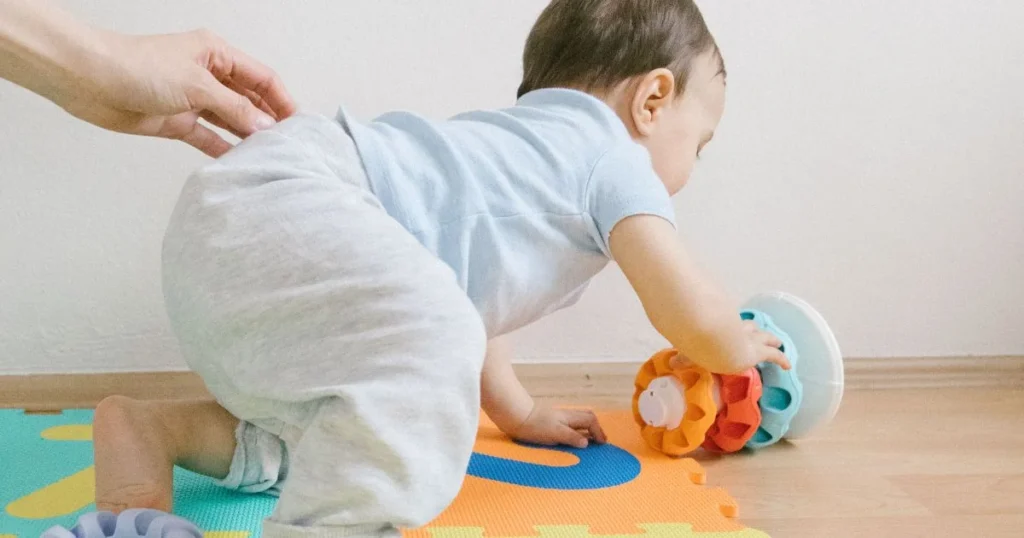
Tummy time helps your baby develop strength and coordination.
- Begin with short supervised sessions while your baby is awake.
- Gradually increase the time as your baby becomes comfortable.
- Place age-appropriate toys nearby to encourage reaching.
- Always supervise your baby.
Remember that tummy time is for awake periods only. Your baby should sleep on their back.
Talk, Sing, and Read to Your Baby
Communication develops through regular interaction.
Try to:
- Talk during feeding and changing.
- Read simple picture books.
- Respond to your baby’s sounds.
- Sing familiar songs.
- Name people and objects.
Even before your baby understands words, these experiences help build early communication skills.
Encourage Sensory Exploration Through Play
Offer safe, age-appropriate toys with different textures, colors, and sounds. Let your baby explore objects under supervision.
Simple games such as peekaboo can also encourage attention, interaction, and learning.
Support Healthy Feeding and Nutrition
Follow your baby’s hunger and fullness cues rather than relying on rigid feeding targets.
Around six months, complementary foods can generally be introduced when your baby is developmentally ready. Offer suitable textures, supervise meals, and avoid choking hazards.
Establish Healthy Sleep Habits
A predictable bedtime routine can help your baby become familiar with sleep times.
Try a calm sequence that includes changing clothes, dimming the lights, reading a short book, and offering a quiet cuddle.
Continue following safe sleep recommendations throughout infancy.
Create a Safe Environment for Exploration
As your baby becomes more mobile, safety becomes increasingly important.
- Secure heavy furniture.
- Cover electrical outlets.
- Keep medicines and cleaning products out of reach.
- Remove small objects that could cause choking.
- Supervise floor play.
- Use appropriate safety equipment.
When Should You Worry About Baby Milestones?
Although babies develop at different rates, some signs deserve professional attention.
Signs That May Indicate a Developmental Concern
Speak with your pediatrician if you notice:
- Your baby does not respond to sounds as expected.
- Your baby has significant difficulty with movement or muscle control.
- Your baby is not developing expected communication or social skills.
- You notice persistent feeding difficulties.
- Your baby loses a skill they previously acquired.
Losing previously acquired skills is particularly important and should always be discussed promptly with a healthcare professional.
What If Your Baby Is Not Meeting Milestones?
If you are concerned, consider taking these steps:
- Write down the skills your baby has developed.
- Note the changes or abilities that concern you.
- Discuss your observations with your pediatrician.
- Ask whether developmental screening is appropriate.
- Follow recommendations for further evaluation or early intervention.
What Is Developmental Screening?
Developmental monitoring involves observing your baby’s progress during everyday activities and healthcare visits. Tracking baby milestones can help you notice changes and discuss your observations with your pediatrician.
Developmental screening is different. It uses standardized, validated tools to identify children who may need further evaluation.
The American Academy of Pediatrics recommends general developmental screening at 9, 18, and 30 months. Screening can also be appropriate whenever a parent or healthcare professional has concerns.
Early evaluation can help your child receive support when needed.
Understanding Baby Growth and Development
Development and physical growth are related, but they are not the same thing.
Baby Growth vs. Development
Growth refers to physical measurements, including:
- Weight.
- Length.
- Head circumference.
Development refers to skills such as movement, communication, learning, and social interaction.
A baby may gain weight appropriately while still needing an assessment of a developmental concern. That’s why pediatricians monitor both growth and developmental progress.
How Pediatricians Monitor Baby Growth
During routine visits, your pediatrician may measure your baby’s weight, length, and head circumference and compare these measurements with appropriate growth charts.
Rather than focusing on a single measurement, healthcare professionals look at patterns over time and consider your baby’s overall health.
Regular checkups also provide an opportunity to discuss feeding, sleep, behavior, and baby milestones.
Frequently Asked Questions About Baby Milestones
What Are the Most Important Baby Milestones in the First Year?
Important baby milestones include social smiling, holding the head steady, reaching for toys, rolling, sitting independently, responding to their name, babbling, pulling to stand, and walking while holding furniture. These skills develop gradually, and babies do not all acquire them at the same time.
What Are Baby Milestones by Month?
Baby milestones by month describe the developmental skills that commonly emerge during the first year. They include physical abilities, communication, cognitive development, and social interaction. The CDC provides official milestone checklists at 2, 4, 6, 9, and 12 months.
When Do Babies Start Smiling?
Many babies begin smiling at people by around two months. Early smiles may appear during social interactions, especially when your baby sees a familiar face or hears your voice.
When Do Babies Start Rolling Over?
Rolling develops gradually. The CDC includes rolling from tummy to back among its six-month milestones. Some babies begin attempting this movement earlier, while others need more time.
When Do Babies Start Sitting Independently?
Sitting develops as your baby’s head, back, and core muscles become stronger. Sitting without support is included in the CDC nine-month milestone checklist.
When Do Babies Start Crawling?
Many babies begin crawling during the second half of their first year, but timing and movement styles vary. Some babies crawl on their hands and knees, shuffle, roll, or use other ways to move. Traditional crawling is not a required milestone.
When Do Babies Say Their First Words?
Babies usually develop communication gradually, beginning with sounds and babbling before using meaningful words. Around one year, the CDC identifies calling a parent by a special name, such as mama or dada, as a milestone.
When Do Babies Start Walking?
Some babies begin walking independently around their first birthday, while others take their first steps later. Pulling to stand and walking while holding furniture are included in the CDC one-year milestones.
Should I Worry If My Baby Is Not Meeting Milestones?
Not necessarily. Babies develop at different rates, but you should discuss concerns with your pediatrician. If your baby loses previously acquired skills, seek prompt professional assessment rather than waiting for the next routine visit.
Do Premature Babies Reach Baby Milestones Later?
Premature babies are often assessed using corrected age during the first two years. Corrected age accounts for how early they were born and helps healthcare professionals interpret developmental progress more appropriately.
How Can I Help My Baby Reach Developmental Milestones?
You can support development through supervised tummy time, talking, singing, reading, safe floor play, responsive feeding, and affectionate interactions. Give your baby opportunities to explore without forcing skills before they are ready.
Conclusion: Celebrate Every Baby Milestone, One Month at a Time
Your baby’s first year is a collection of little discoveries and unforgettable achievements. From the first smile to new sounds, independent sitting, and those exciting attempts to stand, every stage brings something different.
As you follow your baby’s baby milestones month by month, remember that development is not a competition. Your little one does not need to reach every skill on the same schedule as another baby.
Offer opportunities for safe exploration, talk and play together, and celebrate the progress your baby makes along the way. Most importantly, trust your observations and speak with your pediatrician whenever something concerns you.
Every baby has their own journey, and every little step deserves to be celebrated.
Save this guide so you can revisit it as your baby grows, and share it with another parent who wants to understand their little one’s first-year development.