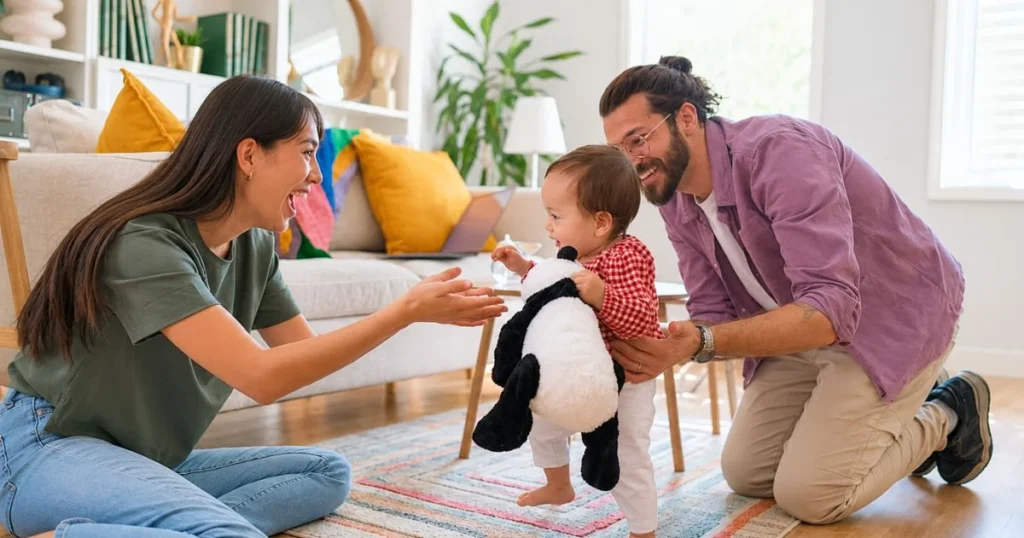
Can you believe your little one is already celebrating their first birthday? It probably feels like yesterday that you were holding your newborn, watching their tiny fingers curl around yours, and waiting for that first beautiful smile. Now, your baby may be crawling across the room, pulling up to stand, babbling familiar sounds, and reaching for everything that catches their attention.
The first year brings remarkable changes, and turning one opens the door to an exciting new stage of development. You may notice your baby becoming more curious, communicating through gestures, exploring different foods, and showing a stronger interest in the people around them.
Understanding 12 month milestones can help you recognize these changes and discover simple ways to encourage your baby’s growth. During this stage, development involves much more than learning to walk or saying a first word. Your little one is also building communication skills, developing relationships, improving coordination, and learning how the world works.
However, every baby follows an individual developmental timeline. Some babies may already be taking independent steps, while others are still crawling or cruising along furniture. Both experiences can be part of typical development.
In this guide, you’ll discover what to expect from your 1-year-old, how to encourage new skills through everyday activities, and when to discuss developmental concerns with your pediatrician as you follow your baby’s 12 month milestones.
Understanding 12 Month Milestones: What to Expect at One Year
Developmental milestones are skills that children gradually acquire as they grow. They provide helpful information about how your baby plays, learns, communicates, interacts, and moves. Understanding 12 month milestones can help you recognize these important changes.
According to the Centers for Disease Control and Prevention (CDC), developmental milestones describe skills that at least 75% of children can perform by a particular age. They help parents and healthcare professionals monitor development and identify when additional evaluation may be helpful.
At 12 months, your baby’s development can be understood through four main areas:
- Physical development: Pulling up to stand, cruising along furniture, and improving hand coordination.
- Language and communication: Waving goodbye, understanding familiar words, and using meaningful sounds.
- Cognitive development: Exploring objects, remembering familiar activities, and beginning to solve simple problems.
- Social and emotional development: Enjoying interactive games, recognizing familiar people, and expressing feelings.
Why Every Baby Develops at Their Own Pace
You may notice that another baby of the same age is already walking while your little one prefers crawling. Perhaps your friend’s baby says several recognizable words, while yours communicates mainly through babbling and gestures.
These differences do not automatically mean something is wrong. When following 12 month milestones, remember that babies can develop different skills at different rates.
Development depends on several factors, including individual maturation, opportunities to practice new skills, health, and temperament.
Keep these points in mind:
- Some babies develop certain physical skills earlier than communication skills.
- Others show stronger interest in social interaction before becoming confident movers.
- Premature babies may need developmental milestones considered using their corrected age.
- A baby who needs more time with a particular skill may benefit from additional observation and support.
The goal isn’t to compare your baby with another child. Instead, pay attention to their overall progress and discuss any concerns with your healthcare professional.
Physical Development and Motor Skills at 12 Months
One of the most noticeable changes around the first birthday is your baby’s growing ability to move independently. Stronger muscles, improved coordination, and increasing curiosity encourage little ones to explore their surroundings. These exciting changes are important parts of 12 month milestones, as your baby develops new physical skills and confidence.
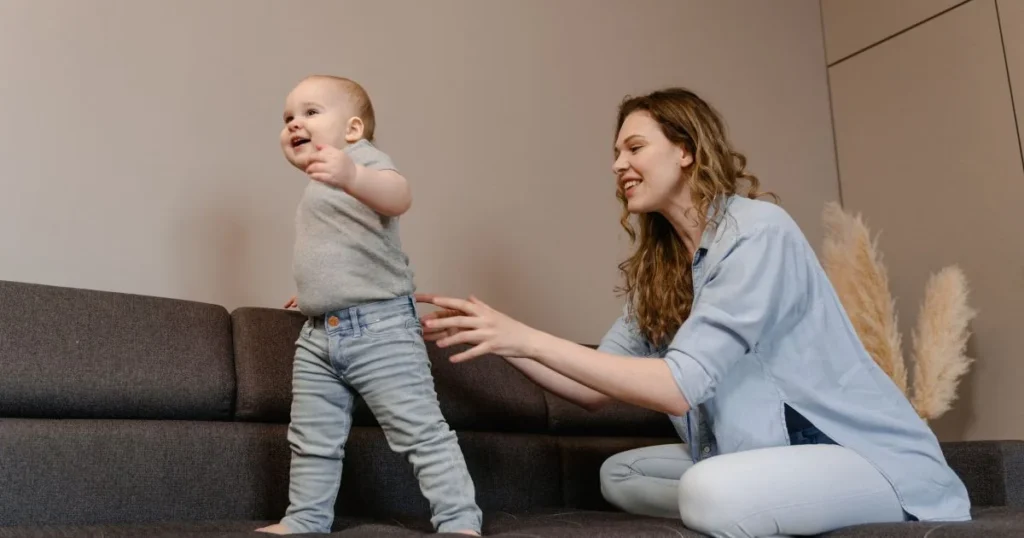
Gross Motor Skills: Crawling, Standing, and Walking
By 12 months, many babies are becoming more confident when changing positions and moving around. These physical changes are an important part of 12 month milestones.
You may notice your baby:
- Pulling up to stand while holding furniture.
- Walking sideways while holding onto a sofa or table.
- Crawling to reach favorite toys.
- Moving between sitting and other positions.
- Practicing standing with support.
- Attempting a few independent steps.
Does your baby need to walk independently at 12 months?
No. Independent walking is not a required CDC 1-year milestone. Walking while holding furniture is one of the official milestones.
Some babies begin taking their first independent steps around their first birthday, while others need additional time to develop balance and coordination.
Allow your baby to practice movement in a safe environment. Avoid forcing them to stand or walk before they are ready.
Fine Motor Skills: Picking Up and Holding Objects
YYour baby’s hands are becoming increasingly skillful as they reach new 12 month milestones. Activities that once required considerable effort may now become easier and more controlled.
An important skill at this age is the pincer grasp, which involves using the thumb and index finger to pick up small objects.
You may observe your baby:
- Picking up small pieces of appropriately prepared food.
- Holding toys with greater control.
- Transferring objects between hands.
- Putting toys into containers.
- Removing objects from boxes.
- Exploring books and turning thick pages.
These small movements help develop coordination and independence.
Hand-Eye Coordination and Self-Feeding
Your baby is also learning to coordinaYour baby is also learning to coordinate what they see with how they move their hands, an important part of 12 month milestones.
For example, they may reach for a favorite toy, place a block inside a container, or try to bring a piece of food to their mouth.
Other developing skills include:
- Holding a spoon, even if much of the food falls.
- Drinking from an open cup with your assistance.
- Picking up finger foods.
- Banging toys together.
- Exploring objects with different textures.
These activities may look messy, but they provide valuable opportunities to practice new movements.
Language and Communication Milestones at 12 Months
Your baby’s communication skills are developing rapidly, even if they cannot yet express everything they want to say. These communication changes are an important part of 12 month milestones.
<<<<<At this age, communication includes much more than spoken words. Facial expressions, gestures, sounds, and responses to familiar language all help your baby connect with others.
First Words and Early Speech Development
One of the exciting 12 month milestones is using a special name for a parent, such as mama or dada.
You may also hear your baby:
- Repeating sounds such as ba-ba or da-da.
- Experimenting with different combinations of sounds.
- Trying to imitate familiar words.
- Making sounds to attract your attention.
- Using vocalizations to express excitement or frustration.
Remember that babies do not need to say several recognizable words by their first birthday. Their communication abilities are still developing as they reach other 12 month milestones.
Understanding Words and Simple Instructions
Your baby may understand more than they can communicate verbally, which is an important part of 12 month milestones.
For example, they may:
- Respond to their name.
- Understand the meaning of no.
- Recognize familiar people.
- React to commonly used words.
- Respond to simple requests when gestures provide additional clues.
You can support understanding by using short, familiar phrases during everyday activities.
Instead of giving complicated instructions, try saying, “Give me the ball,” while extending your hand.
Gestures and Nonverbal Communication
Gestures areGestures are an important part of early communication because they allow babies to express needs and interact before they can speak fluently. These gestures are also valuable 12 month milestones to observe.
Some examples include:
- Waving goodbye.
- Reaching toward you when they want to be picked up.
- Pointing toward something interesting.
- Showing you a favorite toy.
- Giving an object to another person.
- Using facial expressions to communicate feelings.
Waving goodbye is included in the CDC’s 1-year milestone checklist. Other gestures, such as pointing and clapping, are useful behaviors to observe, but they should not all be treated as required 12 month milestones.
How to Encourage Language Development
You don’t need expensive learning pPrograms to support your baby’s communication. Everyday interactions provide wonderful opportunities to encourage 12 month milestones.
Try these simple activities:
- Talk throughout the day: Describe what you’re doing while preparing meals, getting dressed, or going outside.
- Read picture books: Point to familiar animals and objects and name them.
- Sing simple songs: Repetitive songs encourage listening and sound recognition.
- Respond to babbling: When your baby makes a sound, respond as if you’re having a conversation.
- Name familiar objects: Repeat words such as ball, cup, dog, and book.
- Give your baby time: Pause during interactions to allow your little one to respond with sounds or gestures.
The more meaningful communication opportunities your baby experiences, the more chances they have to practice these early communication skills.
Cognitive Development at 12 Months
Your baby’s curiosity is becoming more noticeable. Everyday objects, familiar toys, and simple games can hold their attention as they discover how things work. These changes are important 12 month milestones.
Cognitive development includes memory, attention, imitation, and early problem-solving abilities.
Problem-Solving and Cause-and-Effect Learning
Have you noticed your baby dropping a tDoes your baby drop a toy repeatedly and watch you pick it up? This behavior may seem like a game, but it also provides an opportunity to explore cause and effect, an important part of 12 month milestones.
Your baby may begin to:
- Drop objects and watch what happens.
- Try different ways to reach a toy.
- Put objects into containers.
- Remove toys from boxes.
- Repeat actions that produce interesting results.
- Explore buttons, lids, and other safe toy features.
These experiences help your baby understand how actions can produce different outcomes.
Object Permanence and Memory
Object permanence is the unUnderstanding that something continues to exist even when it is no longer visible is another part of 12 month milestones.
For example, if you hide a favorite toy under a blanket, your baby may lift the blanket to find it.
You may also notice that your baby:
- Recognizes familiar people.
- Remembers favorite toys.
- Anticipates familiar routines.
- Looks for objects that have disappeared from view.
- Recognizes familiar places and activities.
Games such as peekaboo and hiding toys under a cloth can encourage exploration of this developing skill.
Learning Through Imitation and Play
Babies learn a great deal by observing the people aYour baby is learning by watching the people around them. Imitation is an important part of 12 month milestones.
Your little one may try to copy your actions, repeat sounds, or imitate simple household activities.
Encourage this learning by:
- Clapping your hands during songs.
- Pretending to talk on a toy telephone.
- Rolling a soft ball back and forth.
- Demonstrating how to put blocks into a container.
- Letting your baby watch you perform simple everyday tasks.
Keep activities playful rather than turning them into lessons. Your baby learns through repetition and interaction.
Social and Emotional Milestones at 12 Months
Your baby is becoming more aware of relationships and emotional interactions. These social and emotional changes are important 12 month milestones. You may notice stronger preferences for familiar caregivers, more expressive reactions, and increasing enjoyment of shared activities.
Attachment and Separation Anxiety
Does your baby become upset when you leave the room or reach for you when someone unfamThese reactions can be part of developing attachment and separation anxiety, which are common aspects of 12 month milestones.
At this stage, your baby may:
- Prefer familiar caregivers.
- Become upset when you leave.
- Seek comfort when frightened.
- Show caution around unfamiliar people.
- Enjoy spending time with familiar family members.
You can help by maintaining predictable routines and allowing your baby time to become comfortable with new caregivers.
Expressing Feelings and Emotions
Your baby is learning to express different feelings, although they cannot always communiYour baby is learning to express emotions and communicate what they need, another aspect of 12 month milestones.
You may notice:
- Excitement when seeing a favorite person.
- Frustration when a toy is out of reach.
- Smiling and laughing during games.
- Crying when tired or overwhelmed.
- Seeking comfort after a surprising experience.
Responding calmly and acknowledging your baby’s feelings helps create a sense of security.
Social Interaction and Play
Interactive games help babies develop social connections and learn how to engage with othEncourage social interaction through simple, enjoyable activities that support 12 month milestones.
Try activities such as:
- Peekaboo.
- Pat-a-cake.
- Rolling a ball back and forth.
- Singing songs with gestures.
- Showing picture books together.
The CDC includes playing games such as pat-a-cake among its 1-year social-emotional milestones.
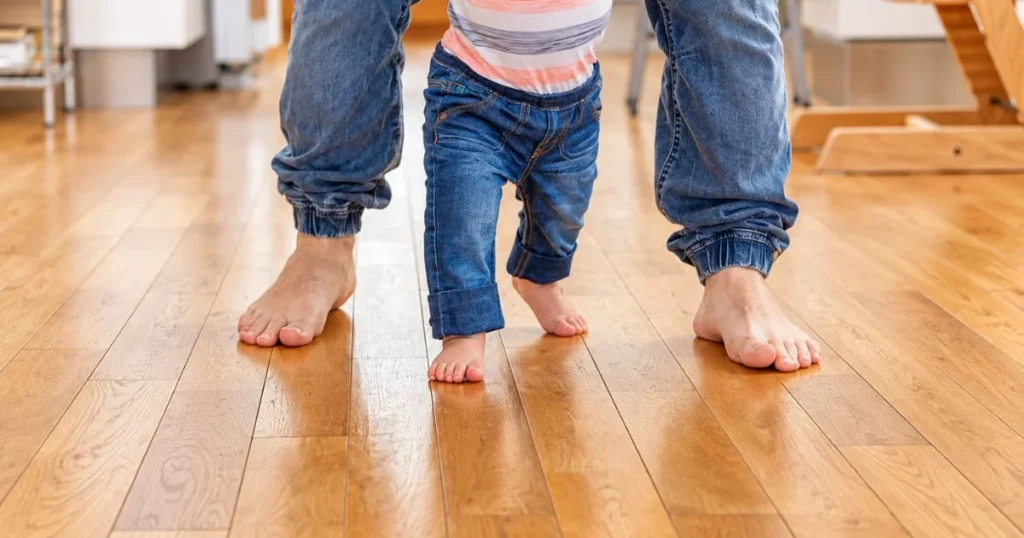
Why Is My 12-Month-Old Not Waving, Pointing, or Clapping?
One concern parents sometimes have when following 12 month milestones is noticing that their baby is physically active but does not use many gestures.
For example, your baby may crawl confidently, pull up to stand, and explore toys but rarely wave goodbye or point toward interesting objects.
Understanding the difference between gestures and other communication skills can help you decide what to observe and discuss with your pediatrician.
Understanding Gestures at 12 Months
Gestures allow babies to communicate without relying entirely on spoken language.
Some common examples include:
| Gesture | What it may communicate |
| Waving | Greeting or saying goodbye |
| Reaching arms upward | Wanting to be picked up |
| Pointing | Requesting something or sharing interest |
| Giving an object | Sharing or asking for help |
| Clapping | Responding to an enjoyable activity |
| Showing a toy | Drawing someone’s attention |
Not every gesture has the same developmental significance. The CDC specifically lists waving goodbye as a 1-year communication milestone.
Responding to Gestures Versus Using Them Independently
There is a difference between a baby who copies aA baby who imitates a gesture after seeing it and one who uses it spontaneously may show different communication skills. Both are useful observations when following 12 month milestones.
For example:
- Your baby claps when you clap.
- Your baby waves only after you ask them to.
- Your baby raises their arms when they want to be held.
- Your baby reaches toward a toy instead of pointing.
- Your baby points to pictures in a book but rarely points elsewhere.
These observations can provide useful information about how your child communicates.
However, one behavior alone cannot establish whether development is typical or delayed. Consider the broader picture, including social interaction, sounds, understanding, and attempts to communicate.
Understanding Different Communication Patterns
Babies do not all communicaNot every baby communicates in exactly the same way, and 12 month milestones can look different from one child to another.
One child may use gestures frequently, while another may rely more heavily on vocalizations, facial expressions, or reaching.
You can observe how your baby:
- Responds when you call their name.
- Looks toward familiar people during interactions.
- Uses sounds to attract your attention.
- Responds to familiar words.
- Shows interest in sharing activities.
- Communicates when they need something.
If you notice limited gestures or other communication concerns, discuss them with your pediatrician rather than assuming everything is fine or immediately worrying about a diagnosis.
When Limited Gestures May Need Attention
Consider arranging a developmentConsider discussing 12 month milestones with your pediatrician if your baby:
- Is not using expected communication behaviors, such as waving goodbye.
- Makes few attempts to communicate needs.
- Rarely engages in back-and-forth interactions.
- Does not consistently respond to familiar sounds.
- Has lost a previously acquired skill.
Your pediatrician can assess your baby’s development and determine whether further screening or evaluation is appropriate.
How to Support Your Baby’s Development at 12 Months
You can encourage 12 month milestones through simple activities that fit naturally into your daily routine. Your baby doesn’t need a packed schedule or expensive educational toys. What matters most is having safe opportunities to explore and interact with you.
1. Encourage Movement and Physical Activity
Create a safe space where your baby can praHelp your baby practice skills that support 12 month milestones and encourage moving independently.
Try:
- Placing favorite toys nearby during floor play.
- Allowing supervised crawling and exploration.
- Encouraging cruising along stable furniture.
- Offering opportunities to practice standing with support.
- Playing with age-appropriate push toys.
Avoid baby walkers with wheels, which the CDC does not recommend.
2. Encourage Gestures and Communication
Make gestures part of everyday interactiEncourage communication and practice skills that support 12 month milestones through everyday interactions.
For example:
- Wave goodbye when someone leaves.
- Point to animals in picture books.
- Show your baby how to clap during songs.
- Use simple words alongside gestures.
- Respond when your baby reaches or points.
Avoid repeatedly testing your baby. Model communication naturally and give them time to respond.
3. Support Language Through Talking and Reading
Reading together is an eaReading together is an easy way to introduce new words and support 12 month milestones.
Choose sturdy board books with colorful pictures and familiar objects.
During reading:
- Name what you see.
- Point to animals and objects.
- Make simple animal sounds.
- Repeat familiar words.
- Allow your baby to turn pages.
Even a few minutes of shared reading can become a valuable daily routine.
4. Develop Cognitive Skills Through Play
Choose toys that encourage exploration and problem-sChoose simple, age-appropriate toys that encourage exploration and support 12 month milestones related to problem-solving.
Good options include:
- Stacking cups.
- Large blocks.
- Nesting toys.
- Age-appropriate shape sorters.
- Soft balls.
- Simple board books.
Always check age recommendations and avoid small detachable pieces.
5. Encourage Social and Emotional Development
Your everyday interactions help your baby learn about relationshipsSupport social and emotional development as part of 12 month milestones through warm, consistent interactions.
Try:
- Playing peekaboo.
- Singing together.
- Taking turns rolling a ball.
- Responding to your baby’s emotions.
- Maintaining familiar bedtime and mealtime routines.
Remember that your attention and interaction are just as valuable as the toys you provide.
Feeding and Nutrition Milestones at 12 Months
Around the first birthday, your baby’s eating skills and nutritional needs continue changing. These feeding changes are also part of 12 month milestones. They may become more interested in family meals, explore different textures, and show greater independence during feeding.
How Feeding Changes After the First Birthday
By 12 months, many babies are ready to enjoy a wider variety of appropriately prepared family foods. Exploring new foods and textures is one of the exciting 12 month milestones.
Offer a balanced selection of:
- Fruits and vegetables.
- Whole grains.
- Eggs, meat, fish, and other protein foods.
- Beans and lentils.
- Iron-rich foods.
- Dairy foods appropriate for your child.
Allow your baby to explore different textures gradually. Some meals will be more successful than others, and appetite can vary from one day to another.
Milk After 12 Months: Breast Milk, Formula, and Cow’s Milk
The first birthday is often a time when parents reconsider their baby’At this age, your baby’s feeding routine may change as they reach new 12 month milestones.
For most healthy children who tolerate dairy, pasteurized whole cow’s milk can be introduced at 12 months as part of a balanced diet.
A few important points:
- Breastfeeding can continue beyond the first birthday.
- Whole milk can be offered alongside nutritious solid foods.
- Most healthy toddlers do not need toddler formula.
- Special medical or nutritional circumstances may require individualized advice.
- Encourage drinking from an open or straw cup with supervision.
Milk provides important nutrients, but it should not replace meals containing iron-rich foods and other essential nutrients.
Developing Independent Feeding Skills
Your baby may begin showing more interest in feeding themselveEncourage independent feeding as part of 12 month milestones by:
- Offering appropriately prepared finger foods.
- Providing a child-sized spoon.
- Practicing drinking from a cup.
- Allowing your baby to explore food textures.
- Offering opportunities to participate in family meals.
Stay close during meals and make sure your baby is sitting upright. Never leave a baby eating unattended.
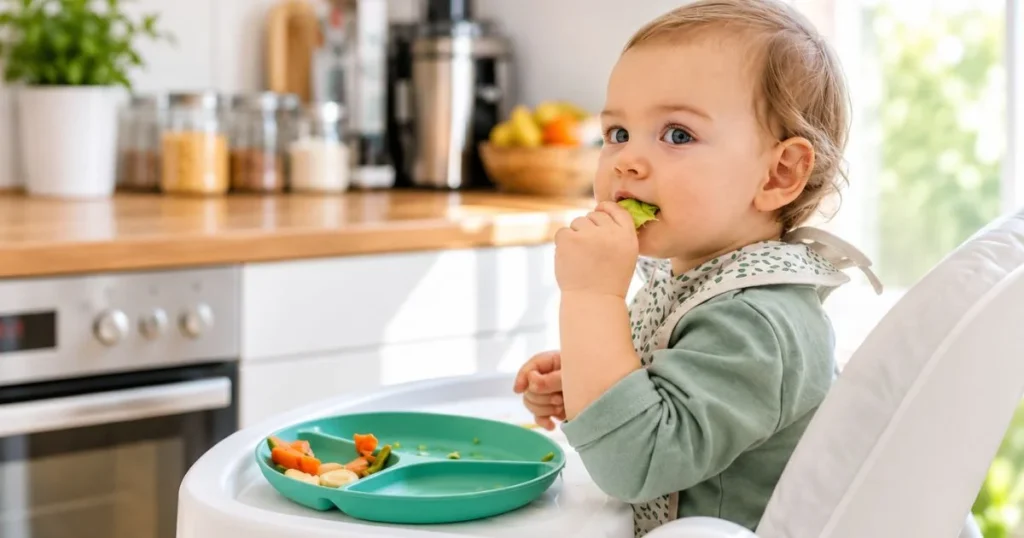
Easy and Nutritious Meal Ideas for a 1-Year-Old
Here are three simple meal ideas you can prepare at home.
Recipe 1 – Soft Banana and Oat Pancakes
| Ingredient | Amount |
| Ripe banana | ½ medium |
| Egg | 1 |
| Oats | ¼ cup |
| Milk or water | 1–2 tablespoons |
Preparation:
- Mash the banana in a bowl.
- Add the egg and oats.
- Mix until combined.
- Add a little milk or water if needed.
- Cook small pancakes thoroughly over low heat.
- Allow them to cool and cut into manageable pieces.
Recipe 2 – Vegetable and Lentil Mash
| Ingredient | Amount |
| Red lentils | 2 tablespoons |
| Carrot | ½ small |
| Sweet potato | ½ small |
| Water | As needed |
Preparation:
- Wash and prepare the vegetables.
- Add the lentils and vegetables to a saucepan.
- Cover with water and cook until everything is very soft.
- Mash or adjust the texture according to your baby’s feeding abilities.
- Allow to cool before serving.
Recipe 3 – Avocado and Egg Toast
| Ingredient | Amount |
| Ripe avocado | ¼ medium |
| Fully cooked egg | ½–1 |
| Soft whole-grain bread | 1 small slice |
Preparation:
- Mash the avocado until smooth.
- Prepare the egg until fully cooked.
- Spread the avocado over soft bread.
- Add finely chopped egg.
- Cut into age-appropriate pieces that your baby can manage safely.
Important food safety reminder: Avoid whole nuts, popcorn, whole grapes, hard raw vegetables, and other choking hazards. Prepare foods in safe shapes and textures, cook eggs and meats thoroughly, and supervise every meal. Avoid added salt and added sugars.
For more guidance, consult the CDC Infant and Toddler Nutrition resources.
Sleep Patterns and Routines for a 12-Month-Old Baby
Sleep continues to play an important role in your baby’s growth, learning, and emotional development. Changes in sleep patterns are also worth observing as part of 12 month milestones. Around the first birthday, you may notice changes in nighttime sleep, naps, or bedtime behavior.
How Much Sleep Does a 1-Year-Old Need?
Children aged 1–2 years generally need 11–14 hours of sleep over 24 hours, including naps, according to pediatric sleep recommendations. Meeting these sleep needs supports healthy growth and 12 month milestones.
Your baby’s exact sleep pattern may vary. Some children sleep longer at night, while others still need substantial daytime rest.
A consistent bedtime routine can help your little one settle more comfortably.
One Nap or Two? Understanding Nap Transitions
Some 12-month-olds continue taking two naps, while others gradually begin moving tAs your baby approaches new 12 month milestones, you may notice changes in daytime sleep patterns, including a gradual move toward one longer daytime nap.
Possible signs of changing sleep needs include:
- Regularly resisting one of their naps.
- Taking longer to fall asleep during the day.
- Having difficulty settling at bedtime.
- Staying comfortably awake for longer periods.
You don’t need to rush this transition. Follow your baby’s sleep cues and adjust routines gradually.
Common Sleep Challenges at 12 Months
You may experience:
- Separation anxiety at bedtime.
- Night waking.
- Difficulty settling down.
- Changes in daytime naps.
- Temporary sleep disruptions.
Maintain a predictable routine, offer comfort, and make sure your baby’s sleep environment remains safe.
For safe sleep guidance, follow current AAP recommendations, including placing your baby on their back at the beginning of every sleep on a firm, flat sleep surface.
12 Month Milestones Checklist: Is Your Baby on Track?
A 12 month milestones checklist can help you understand what your baby may be learning around their first birthday. It also gives you a useful way to organize observations before your next pediatric appointment.
The following table is based on the CDC’s official 1-year developmental milestone checklist.
| Developmental area | Milestone |
| Social and emotional | Plays games with you, such as pat-a-cake |
| Communication | Waves goodbye |
| Communication | Calls a parent mama, dada, or another special name |
| Communication | Understands no |
| Cognitive | Puts something into a container |
| Cognitive | Looks for something you hide |
| Physical | Pulls up to stand |
| Physical | Walks while holding furniture |
| Physical | Drinks from an open cup while you hold it |
| Fine motor | Picks up small objects using thumb and index finger |
Important: These milestones represent skills achieved by at least 75% of children by this age. They are not a complete assessment of development or a substitute for standardized developmental screening.

How to Use the 12 Month Milestones Checklist
You can make milestone tracking part of yUse this 12 month milestones checklist as part of your everyday routine.
- Observe your baby during play, meals, and interactions.
- Write down new skills as you notice them.
- Give your baby opportunities to practice different activities.
- Share your observations with your pediatrician.
- Ask questions if you are unsure about a particular milestone.
If you’re not seeing a skill yet, avoid immediately assuming something is wrong. Discuss your observations with your child’s healthcare professional and ask whether further screening is appropriate.
You can also use the free CDC 1-Year Online Milestone Checklist to track your baby’s progress.
When Should You Be Concerned About Your Baby’s Development?
Watching your baby grow and reach new 12 month milestones is exciting, but it can also bring questions. You might wonder whether your little one is developing as expected, especially when certain skills appear later than you anticipated.
Although individual differences are normal, developmental concerns deserve attention.
Developmental Signs Worth Discussing With Your Pediatrician
Consider discussing your observations if your baby:Watch for possible concerns as you follow your baby’s 12 month milestones. Discuss them with your pediatrician if your baby:
- Is not showing expected progress in communication.
- Rarely uses gestures to interact or communicate.
- Does not consistently respond to familiar sounds.
- Has difficulty with movement or coordination.
- Shows limited interest in interacting with familiar people.
- Loses a skill they previously acquired.
Remember that one behavior alone cannot diagnose a developmental condition. Your pediatrician will consider your baby’s overall development, medical history, hearing, vision, and other relevant observations.
What Happens During a 12-Month Pediatric Checkup?
Your baby’s first birthday is an excellent opportunYour baby’s 12-month checkup is a valuable opportunity to discuss developmental progress and ask questions about 12 month milestones.
During a typical 12-month visit, your pediatrician may:
- Measure weight, length, and head circumference.
- Review feeding habits and nutritional needs.
- Discuss sleeping patterns.
- Observe movement and communication.
- Review developmental progress.
- Discuss age-appropriate vaccinations.
- Recommend anemia screening and other tests when appropriate.
The American Academy of Pediatrics provides a helpful 12-month well-child checkup guide.
Why Early Developmental Screening Matters
Developmental screeninDevelopmental screening helps identify children who may benefit from further evaluation or additional support when monitoring 12 month milestones.
If your pediatrician notices a concern, they may recommend:
- A standardized developmental screening assessment.
- A hearing or vision evaluation.
- A referral to a developmental specialist.
- Early intervention services when appropriate.
You do not need to wait until your baby reaches a particular age if you have concerns. Early conversations can help you understand what support may be useful.
Frequently Asked Questions About 12 Month Milestones
Here are answers to common questions parents ask about their baby’s development around the first birthday.
What Are the Most Important 12 Month Milestones?
Important 12-month milestones include pulling up to stand, walking while holding furniture, picking up small objects with the thumb and index finger, waving goodbye, using a special name for a parent, and playing interactive games. Babies also begin showing more curiosity and developing their communication and problem-solving abilities.
Should My 12-Month-Old Be Walking Independently?
No. Walking independently is not a required CDC 12-month milestone. Many babies are still crawling, pulling themselves up, or cruising along furniture. Independent walking develops at different times, so avoid comparing your baby’s progress with other children.
Is It Normal for a 12-Month-Old Not to Wave Goodbye?
Waving goodbye is included in the CDC’s 1-year communication milestones. If your baby is not waving yet, mention it to your pediatrician, particularly if you have other communication concerns. Your doctor can consider the broader developmental picture and determine whether further assessment is needed.
Should a 12-Month-Old Be Pointing at Things?
Pointing is an important communication behavior, but it is not listed as a required CDC 1-year milestone. Observe how your baby communicates through gestures, sounds, facial expressions, and interactions. If you have concerns about communication, discuss them with your pediatrician.
How Many Words Should a 12-Month-Old Say?
The CDC includes calling a parent mama, dada, or another special name as a 1-year milestone. Babies may also babble and experiment with different sounds. They do not need to speak several recognizable words by their first birthday.
Is It Normal for a 12-Month-Old to Still Crawl?
Yes. Crawling is still a common way for babies to move around at this age. Some children are already walking independently, while others prefer crawling or cruising along furniture as they continue developing balance and coordination.
How Can I Encourage My 12-Month-Old to Talk?
Talk to your baby throughout the day, read picture books, sing familiar songs, name everyday objects, and respond to babbling. Give your little one time to communicate rather than expecting immediate responses. These simple interactions create opportunities to practice early communication skills.
How Much Sleep Does a 12-Month-Old Need?
Children aged 1–2 years generally need 11–14 hours of sleep over 24 hours, including naps. Some 12-month-olds still take two naps, while others gradually transition toward one. Follow your baby’s sleep cues and maintain a consistent bedtime routine.
What Foods Should a 12-Month-Old Eat?
A 1-year-old can generally enjoy a variety of appropriately prepared family foods, including fruits, vegetables, grains, eggs, meat, fish, beans, and dairy foods. Offer iron-rich foods regularly, avoid added sugars and excess salt, and prepare meals carefully to reduce choking risks.
What Should I Do If My Baby Is Not Meeting All 12 Month Milestones?
Start by discussing your observations with your pediatrician. Missing one milestone does not automatically indicate a developmental disorder, but it is important to address concerns rather than ignore them. If your baby loses previously acquired skills, seek prompt professional evaluation.
Conclusion: Celebrate Every Little Step in Your Baby’s First Year
Your baby’s first birthday is more than a celebration of turning one. It represents a year filled with new experiences, discoveries, and countless little achievements.
As you follow these 12 month milestones, remember that development doesn’t happen on an identical schedule for every child. Some babies may already be taking their first independent steps, while others are still confidently crawling. Some may use familiar words, while others communicate through sounds, gestures, and facial expressions.
What matters is giving your baby opportunities to explore, learn, communicate, and develop at their own pace.
Keep talking, reading, playing, and sharing everyday moments together. Celebrate the small achievements, pay attention to developmental changes, and never hesitate to ask your pediatrician questions when something concerns you.
Parenting Whisper Reminder: Your baby doesn’t need to follow someone else’s timeline. Celebrate their progress, embrace every little discovery, and remember that you are learning and growing together.
Enjoying this guide? Share it with another parent celebrating their baby’s first birthday, save it for your next developmental checkup, and explore more baby development guides at Parenting Whisper. Because every parent deserves support, encouragement, and reliable information along the way.