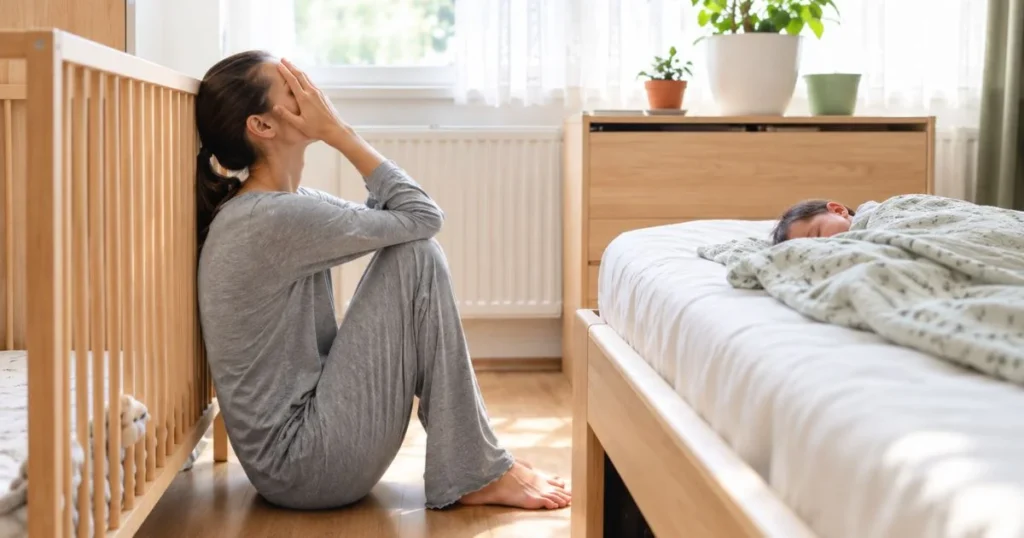
You may have expected the newborn stage to be exhausting, but you may not have expected to feel persistently sad, anxious, disconnected, or unlike yourself.
If you’re wondering how long does postpartum depression last, there isn’t one timeline that applies to everyone.
Postpartum depression may continue for several weeks, months, or even longer.
It may develop soon after giving birth or become noticeable later during the first year. How long an episode lasts may be influenced by factors such as the severity of symptoms, your mental health history, stress levels, sleep, available support, and access to treatment.
Above all, you do not need to wait a specific amount of time before reaching out for help. Postpartum depression is treatable, and getting support can make the recovery process easier.
How Long Does Postpartum Depression Last?
There is no universal answer to how long does postpartum depression last.
Some people begin feeling better within weeks of starting treatment, while others need months of treatment and support. Your recovery may also have ups and downs rather than following a perfectly straight line.
According to the National Institute of Mental Health (NIMH), most episodes of perinatal depression begin within 4–8 weeks after birth. However, depression may develop during pregnancy or at a later point after childbirth.
How Long Does Postpartum Depression Last Without Treatment?
There is no way to predict exactly how long does postpartum depression last without treatment.
You may hope that things will improve once your baby sleeps better, your routine becomes easier, or the newborn stage passes. Sometimes circumstances do improve, but persistent depression shouldn’t simply be left to chance.
Ongoing symptoms can interfere with your relationships, everyday responsibilities, self-care, and ability to feel connected to your baby.
You don’t need to wait until your symptoms become severe before talking with a healthcare professional.
Can Postpartum Depression Last for Years?
Postpartum depression can become long-lasting when symptoms aren’t adequately addressed, but that doesn’t mean you are destined to feel this way permanently.
If you’ve been struggling for several months or wondering how long does postpartum depression last when it becomes a regular part of your daily life, seeking professional support is still worthwhile. A prolonged episode may call for a treatment plan tailored to your individual needs, but recovery and improvement are still possible.
Can Postpartum Depression Start Later Than You Expect?
Yes.
You may feel well shortly after giving birth but begin experiencing depressive symptoms later.
A CDC study reported that 7.2% of women in its sample experienced postpartum depressive symptoms at 9–10 months after childbirth. More than half of those women, 57.4%, had not reported depressive symptoms at 2–6 months postpartum.
This is one reason you shouldn’t dismiss new symptoms simply because your baby is several months old or assume you already know how long does postpartum depression last.
Postpartum Depression vs. Baby Blues
The baby blues and postpartum depression are distinct condition
What Are the Baby Blues?
Experiencing the baby blues is common in the first few days following childbirth.
You may feel unusually emotional, irritable, worried, overwhelmed, or exhausted. You may cry more easily than usual or find yourself moving between different emotions throughout the day.
These changes are generally mild and short-lived. NIMH describes the baby blues as mood changes that commonly occur during the first two weeks after giving birth. Understanding this distinction can help you recognize how long does postpartum depression last compared with the temporary baby blues.
What Is Postpartum Depression?
Postpartum depression tends to be more persistent and may make it harder for you to manage your everyday life. Understanding the symptoms can help you recognize how long does postpartum depression last and when to seek support.
Symptoms may include:
• Persistent sadness or emptiness
• Loss of interest or enjoyment
• Intense guilt or feelings of worthlessness
• Anxiety or irritability
• Extreme fatigue
• Difficulty concentrating
• Changes in sleep or appetite
• Feeling disconnected from your baby
• Feeling overwhelmed by everyday responsibilities
• Thoughts of death, self-harm, or harming your baby
You do not need to have every symptom before reaching out for help.
Baby Blues vs. Postpartum Depression
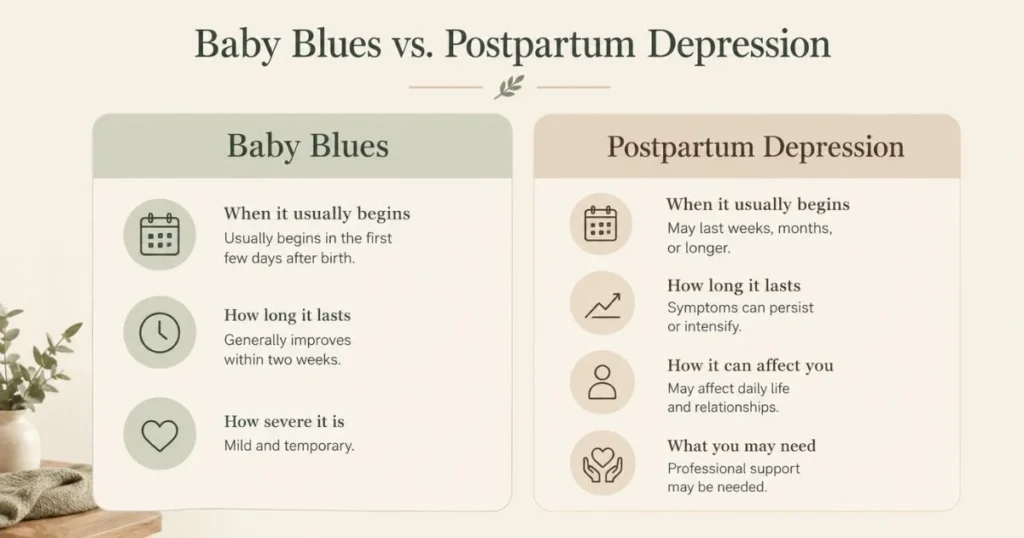
Baby blues:
• Usually begin in the first few days
• Usually improve within about two weeks
• Tend to be mild and temporary
• Usually don’t significantly interfere with daily functioning
Postpartum depression:
• Can begin during pregnancy or after birth
• Can last weeks, months, or longer, depending on individual circumstances
• May be persistent or increasingly intense
• Can interfere with daily life and relationships
• May require professional evaluation and treatment
If your symptoms are getting worse, lasting longer than expected, or making everyday life difficult, talk with a healthcare professional. Understanding how long does postpartum depression last can help you recognize why persistent symptoms deserve attention.
How Long After Birth Can Postpartum Depression Start?
Postpartum depression doesn’t have to begin immediately after delivery.
When Does Postpartum Depression Usually Begin?
NIMH reports that most episodes of perinatal depression begin within 4–8 weeks after birth. However, this is not a deadline. Depression can occur at different points during pregnancy and the postpartum period, which can influence how long postpartum depression lasts.
Can Postpartum Depression Start Months After Birth?
Yes.
You might feel okay during the first few months and then notice that something has changed.
Symptoms may become more noticeable around the time you:
• Return to work
• Experience prolonged sleep disruption
• Lose some of the practical support you had after birth
• Face relationship or financial stress
• Adjust to caring for an older child as well as your baby
• Feel increasingly isolated
• Become overwhelmed by ongoing responsibilities
A later onset doesn’t make the symptoms less real or less deserving of treatment. It can also affect how long does postpartum depression last, so it’s important to seek support whenever symptoms appear.
Does Postpartum Depression Have to Begin Within the First Six Weeks?
No.
Mental health conditions can occur throughout pregnancy and the postpartum period. ACOG recommends screening for depression and anxiety during pregnancy and postpartum, which helps identify symptoms that may appear later and provides guidance on how long does postpartum depression last for each individual.
A Simple Postpartum Timeline
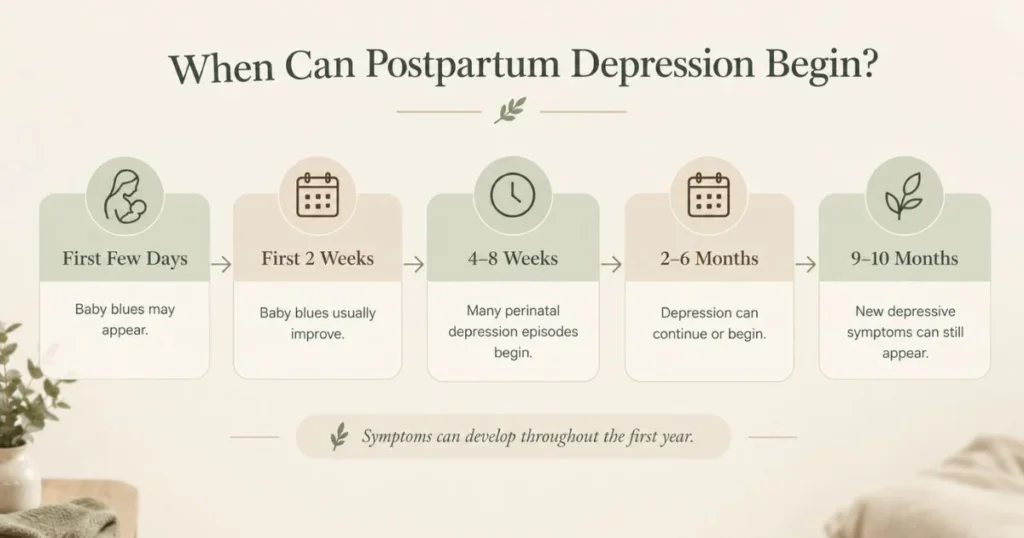
First few days: Baby blues may appear.
First 2 weeks: Baby blues usually improve.
Around 4–8 weeks: Many perinatal depression episodes begin.
2–6 months: Depression can continue or begin.
9–10 months: New depressive symptoms can still appear.
Throughout the first year: Mental health symptoms can develop or worsen.
Use this as a general guide rather than a checklist for diagnosing yourself. This timeline can help you understand how long does postpartum depression last, but it cannot predict your individual recovery.
If you’re struggling, your symptoms matter more than the calendar.
What Does Postpartum Depression Feel Like?
Postpartum depression doesn’t look exactly the same for everyone.
You may cry frequently and feel deeply sad. Or you may feel emotionally numb rather than tearful. You may still laugh with your baby or enjoy certain moments while feeling that something is wrong underneath.
Common emotional symptoms include:
• Sadness or emptiness
• Hopelessness
• Guilt or worthlessness
• Irritability or anger
• Anxiety
• Losing interest in activities or things you usually enjoy
• Emotional numbness
• Feeling overwhelmed
• Difficulty feeling connected to your baby
Physical and mental symptoms can include exhaustion, changes in sleep or appetite, difficulty concentrating, and struggling to complete everyday tasks.
You can love your baby deeply and experience postpartum depression at the same time.
Having depression does not mean you’re a bad parent. Recognizing these symptoms and understanding how long does postpartum depression last can help you know when to seek professional support.
What About Scary or Intrusive Thoughts?
Some parents experience unwanted, frightening thoughts after childbirth.
Experiencing an unwanted thought does not necessarily mean you intend to act on it. However, thoughts involving suicide, self-harm, or harming your baby should always be taken seriously.
If you feel you may act on these thoughts or someone is in immediate danger, seek emergency help. Getting timely support can also affect how long does postpartum depression last and help you move toward recovery.
What Can Affect How Long Postpartum Depression Lasts?
No single factor determines how long does postpartum depression last.
Your experience may be influenced by:
• Severity of symptoms
• Previous depression or other mental health conditions
• Sleep disruption and exhaustion
• Relationship, financial, work, or family stress
• The amount of practical and emotional support you have
• Access to appropriate treatment
None of this means you’re responsible for your depression.
Experiencing postpartum depression doesn’t mean you’re not strong enough to navigate motherhood.
What you can do is tell someone how you’re feeling, accept practical help when possible, speak with a healthcare professional, and follow the treatment plan you develop together.
Can Postpartum Depression Go Away on Its Own?

You may wonder whether you should simply wait and see if postpartum depression disappears.
That’s understandable, especially when you’re already exhausted.
But persistent depressive symptoms shouldn’t be treated as something you simply have to endure.
The baby blues typically fade within the first two weeks after childbirth. Postpartum depression is different and may require professional treatment. NIMH notes that perinatal depression is treatable and that most people improve with appropriate treatment.
Treatment doesn’t necessarily mean medication. Depending on your situation, it may involve therapy, medication, or a combination of approaches.
If you’re breastfeeding, tell your healthcare professional. Your feeding plans can be considered when discussing treatment options.
You also don’t need to know whether you have postpartum depression before asking for help.
You can simply say:
“Since giving birth, I haven’t felt like myself, and I’ve been having a hard time.”
That’s enough to start the conversation. Understanding how long does postpartum depression last shouldn’t mean waiting for your symptoms to disappear before seeking support.
How Is Postpartum Depression Treated?
Treatment depends on your symptoms, preferences, medical history, and individual circumstances.
Therapy
Psychotherapy can help treat postpartum depression, with research-supported options including cognitive behavioral therapy (CBT) and interpersonal therapy (IPT).
Therapy can help you work through difficult thoughts, emotional patterns, relationships, expectations, and the challenges of adjusting to parenthood. With appropriate support, you can better understand how long does postpartum depression last in your individual situation and take steps toward recovery.
Medication
Antidepressants may be recommended for some people, particularly when symptoms are moderate to severe or therapy alone isn’t enough.
NIMH notes that antidepressants often take around 4–8 weeks to work, although some symptoms, such as sleep or concentration problems, may improve earlier. This can influence how long does postpartum depression last and how soon you may begin to notice improvements.
Your healthcare professional can help you weigh the benefits and potential risks, including considerations related to breastfeeding.
Other Treatment Options
The FDA has also approved medications specifically for postpartum depression, including brexanolone and the oral medication zuranolone. These options aren’t appropriate for everyone and require discussion with a qualified healthcare professional.
Treatment can also include practical support, improved rest when possible, help with daily responsibilities, and ongoing follow-up. These forms of support may help influence how long does postpartum depression last and support your recovery.
Needing treatment does not mean you’ve failed.
It means you’re taking your health seriously.
How Long Does It Take to Recover From Postpartum Depression?
Recovery doesn’t happen on one fixed schedule.
If you’re taking an antidepressant, it may take several weeks before you notice the full effect. Therapy may also require time before you feel substantial changes. These factors can influence how long does postpartum depression last for you.
You may notice smaller improvements first:
• You’re crying less often.
• You have more energy.
• You can concentrate better.
• You start enjoying small things again.
• Getting through the day feels less overwhelming.
• You’re more comfortable asking for help.
• You feel more emotionally connected.
• Basic self-care becomes easier.
Recovery is rarely perfectly linear.
You may have a good week followed by a difficult day. That doesn’t necessarily mean you’re going backward.
If you don’t notice improvement, or your symptoms become worse, tell your healthcare professional. Your treatment may need to be adjusted.
And if you’ve been struggling for a long time, don’t assume it’s too late to get better.
Long-lasting symptoms are still treatable.
Can Postpartum Depression Come Back?
Yes, postpartum depression can recur.
Having experienced depression or postpartum depression before can increase the likelihood of experiencing it again, although a previous episode does not mean another one is inevitable.
It’s also possible to have difficult days without having a full recurrence.
Look for a persistent change in mood, increasing hopelessness, loss of interest, worsening anxiety, or difficulty functioning.
If you’re planning another pregnancy and have experienced postpartum depression before, consider discussing your history with your healthcare professional. Having a plan for monitoring your mental health can make it easier to recognize symptoms early and understand how long does postpartum depression last if symptoms return.
When Should You Seek Help for Postpartum Depression?
You can seek help before your symptoms make it difficult to manage daily life.
Consider talking with a healthcare professional if you:
• Feel persistently sad, empty, anxious, or hopeless
• Find little or no enjoyment in activities you once loved
• Feel increasingly overwhelmed
• Are struggling to care for yourself
• Find everyday responsibilities unusually difficult
• Feel disconnected from your baby
• Are experiencing frightening or intrusive thoughts
• Notice symptoms getting worse rather than better
ACOG recommends screening for depression and anxiety during pregnancy and postpartum using standardized, validated tools. Common screening tools include the Edinburgh Postnatal Depression Scale (EPDS) and Patient Health Questionnaire-9 (PHQ-9).
Your baby’s pediatric visits can also provide an opportunity for maternal mental health screening. The American Academy of Pediatrics recommends screening mothers during infant visits at 1, 2, 4, and 6 months.
You can also bring up your concerns yourself.
You don’t need to wait for someone to screen you or wonder how long does postpartum depression last before asking for help.
🚨 Emergency Warning: Get Help Right Away

Postpartum depression can include frightening or overwhelming thoughts, but some symptoms require immediate emergency help.
Get immediate medical help if you or someone who has recently given birth:
• Is thinking about suicide or self-harm
• Has thoughts of harming the baby or another person
• Is hearing or seeing things that aren’t there
• Believes things that clearly aren’t true
• Is severely confused or disconnected from reality
• Is extremely paranoid, agitated, or behaving dramatically differently from usual
These can be signs of postpartum psychosis, a rare but serious psychiatric emergency.
Do not wait to see whether these symptoms pass. If someone is in immediate danger, call local emergency services or seek care at the nearest emergency department.
If possible, stay with the person and tell medical staff that they recently gave birth.
Getting emergency help is not an overreaction. You and your baby deserve to be safe. Knowing how long does postpartum depression last is important, but emergency symptoms always require immediate attention rather than waiting for recovery.
Frequently Asked Questions About How Long Postpartum Depression Lasts
How long does postpartum depression last?
There is no fixed timeline for how long does postpartum depression last. Postpartum depression can last weeks, months, or longer. Treatment can help many people improve, but the recovery timeline varies from person to person.
How long does postpartum depression last without treatment?
There is no fixed timeline for how long does postpartum depression last. Postpartum depression can last weeks, months, or longer. Treatment can help many people improve, but the recovery timeline varies from person to person.
Can postpartum depression start months after birth?
Yes. Depression can begin later in the first postpartum year, even if you initially felt well. CDC research found that many women with depressive symptoms at 9–10 months had not reported symptoms earlier at 2–6 months, which is important to understand when considering how long does postpartum depression last.
How long does postpartum depression last after treatment starts?
It depends on the treatment and the individual. Antidepressants often take 4–8 weeks to work, while therapy and other forms of support may take time as well.
Can postpartum depression go away on its own?
Some temporary postpartum mood changes, such as the baby blues, usually improve on their own. Persistent depressive symptoms are different and deserve professional evaluation rather than simply waiting them out.
How Can You Tell If Postpartum Depression Is Improving?
You may notice less sadness or anxiety, more energy, improved concentration, greater enjoyment, better ability to manage daily tasks, and increased emotional connection. Recovery can happen gradually.
Is postpartum depression permanent?
No. Postpartum depression is treatable, and recovery is possible. Even if you’ve been experiencing symptoms for months, it is not too late to seek help.
Conclusion: You Don’t Have to Wait Until You Feel Like Yourself Again
So, how long does postpartum depression last?
There isn’t one answer that applies to every parent.
It can last weeks, months, or longer. It can begin shortly after birth or become noticeable later in the first year. What matters most is how you feel and how your symptoms affect your daily life, rather than how much time has passed. If you’re having a difficult time, you can reach out for help before things become overwhelming.
You can ask for help now.
You can be a loving parent and still need support.
Needing support doesn’t mean you’re falling short as a mother. It means you’re looking after your own well-being, which is just as important.
Medical Disclaimer
The information provided here is for general educational purposes and should not be used as a replacement for advice, diagnosis, or treatment from a qualified healthcare professional. If you are concerned about your mental health after childbirth, speak with a qualified healthcare professional. If you or someone else is in immediate danger, seek emergency medical help.