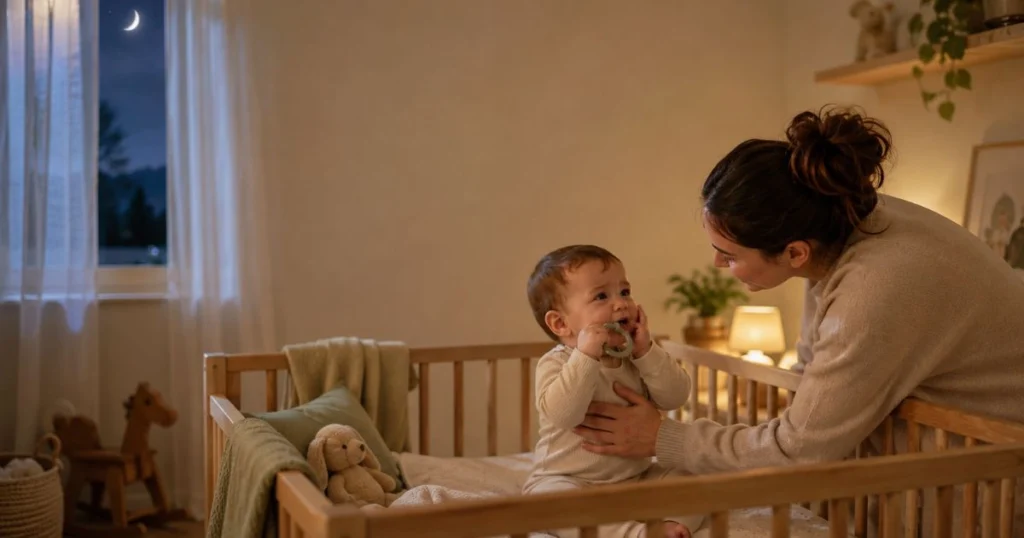
Sleep regression vs. teething is one of the biggest reasons babies suddenly start waking at night again. Just when your little one’s sleep seems to be improving, the night wakings return, bedtime becomes a struggle, and naps grow unpredictable.
One night your baby wakes crying. The next night they refuse to settle at bedtime. Naturally, you start asking yourself:
“Is my baby going through another sleep regression, or is teething causing the problem?”
This is one of the most common questions parents face during the first two years because sleep regression and teething share many of the same symptoms, including:
- More frequent night wakings
- Difficulty falling asleep
- Increased fussiness or irritability
- Shorter or disrupted naps
- A stronger need for comfort and cuddles
Although these signs can look almost identical, the causes are very different.
A sleep regression is triggered by rapid brain development and new developmental milestones that temporarily disrupt sleep patterns. Teething, on the other hand, is caused by the discomfort and pressure of new teeth pushing through the gums.
In this guide, you’ll learn 9 essential signs to tell the difference between sleep regression vs. teething, so you can better understand what’s keeping your baby awake and choose the most effective way to comfort them.
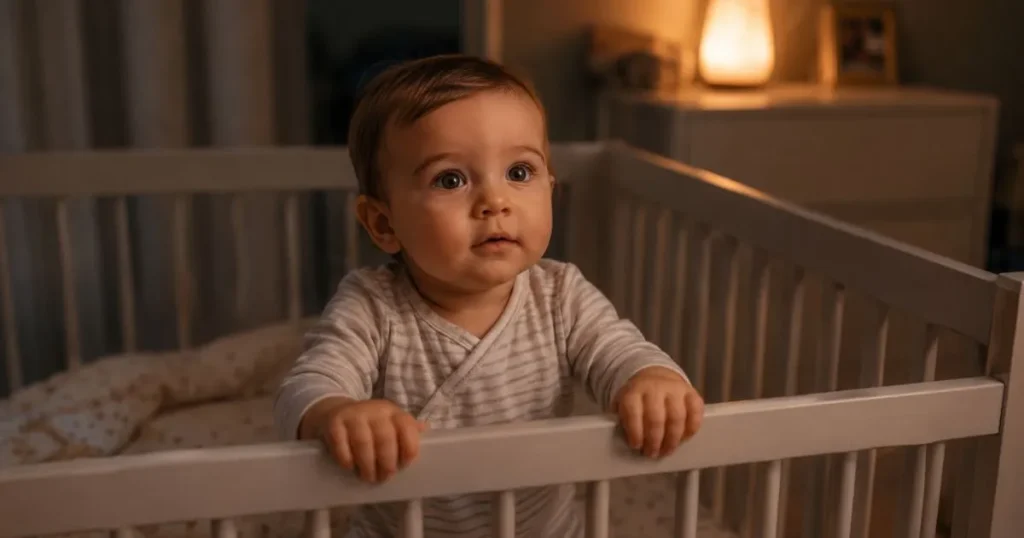
When Do Babies Start Teething?
Most babies begin teething around 6 months of age, although the timing can vary widely. Some babies may show signs earlier, while others may not get their first tooth until closer to their first birthday.
As teeth slowly move through the gums, they create pressure and sensitivity that can make babies uncomfortable. This discomfort may affect naps, bedtime, and nighttime sleep, which is one reason parents often compare sleep regression vs. teething.
Common early signs that a baby may be teething include:
- Increased drooling
- Chewing on fingers, toys, or other objects
- Wanting to bite more than usual
- Swollen or tender gums
- More fussiness during the day
- Changes in feeding or appetite
- Difficulty settling at bedtime
When comparing sleep regression vs. teething, it’s important to remember that teething is caused by physical discomfort, while sleep regression is linked to rapid brain development and new developmental milestones. Because both can lead to frequent night wakings, shorter naps, and a fussier baby, it’s easy to mistake one for the other. Looking for other teething signs, such as swollen gums and increased chewing, can help you determine whether sleep regression vs. teething is the more likely reason for your baby’s disrupted sleep.
While every baby experiences teething differently, most begin cutting their first teeth around 6 months of age. Typical symptoms include drooling, chewing on objects, tender gums, and temporary sleep disruption. For a pediatrician-reviewed overview of normal teething symptoms and safe ways to soothe sore gums, visit HealthyChildren.org’s guide to teething (4–7 months)
Signs Your Baby May Be Teething
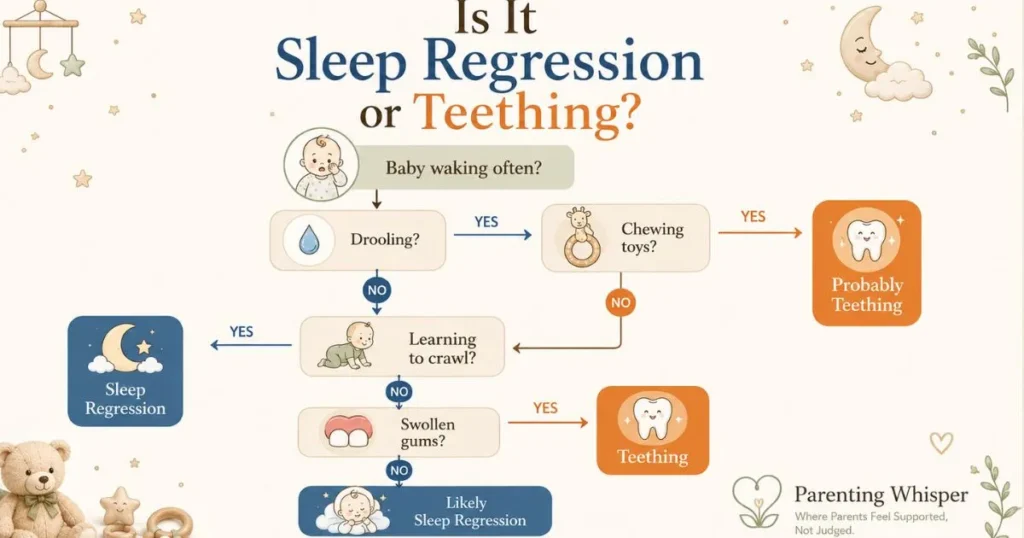
Knowing the common signs of teething can help you determine whether sleep regression vs. teething is causing your baby’s sleep changes. Recognizing these symptoms makes it easier to understand if your little one’s night wakings are linked to teething discomfort or a temporary sleep regression.
1. Increased Chewing and Biting
A teething baby often wants pressure on their gums.
You may notice your baby:
- Chewing toys constantly
- Putting fingers in their mouth
- Biting while feeding
- Seeking anything they can safely chew
2. More Drooling Than Usual
Excessive drooling is one of the most common signs of teething.
Some babies may develop:
- Wet clothes from excessive drool
- Mild skin irritation around the mouth
- A constant need for bib changes
3. Gum Changes
Before a tooth appears, you may notice:
- Red gums
- Swelling
- Sensitivity
- A small bump where the tooth is coming through
4. Increased Fussiness
Teething discomfort can make some babies more sensitive.
Your baby may:
- Want extra cuddles
- Become frustrated more easily
- Cry more often
- Need more reassurance
What Does Sleep Regression Look Like?

Unlike teething, which is caused by physical discomfort, sleep regression is typically linked to your baby’s rapid growth and development. Understanding sleep regression vs. teething starts with recognizing that one is driven by developmental milestones, while the other is caused by emerging teeth.
During the first two years, babies experience significant changes in their brains, emotions, and physical abilities. Learning new skills such as rolling, crawling, standing, walking, and becoming more aware of their surroundings can temporarily disrupt healthy sleep patterns.
A baby who was previously sleeping well may suddenly begin waking more often during the night, resisting naps, or needing extra help to fall asleep.
Common signs of sleep regression include:
- More frequent night wakings
- Shorter or skipped naps
- Difficulty falling asleep at bedtime
- An increased need for rocking, feeding, or physical contact
- Crying when placed in the crib
- Changes in sleep patterns without obvious signs of illness or teething discomfort
When comparing sleep regression vs. teething, remember that sleep regression is not a sign your baby has forgotten how to sleep. Instead, it is usually a temporary phase caused by rapid brain development and new milestones. Recognizing the differences between sleep regression vs. teething can help you choose the right soothing strategies and better understand why your baby’s sleep has suddenly changed.
Common Ages When Sleep Regression Happens
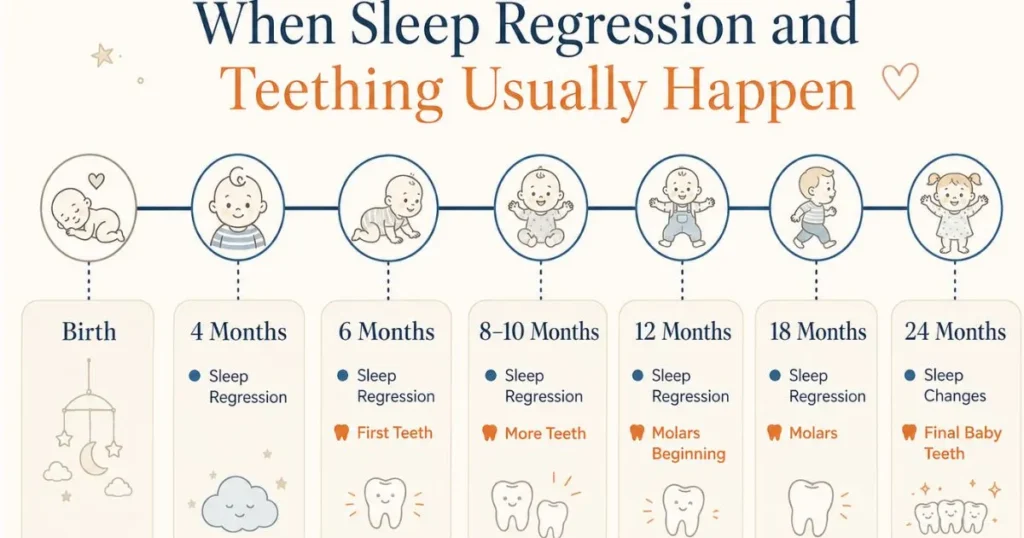
Sleep regressions can happen at different times because every baby develops at their own pace. When comparing sleep regression vs. teething, it’s helpful to know that sleep regressions are most common during key developmental stages rather than being caused by new teeth. Although every baby is different, certain ages are more frequently associated with temporary changes in sleep patterns.
4-Month Sleep Regression
The 4-month sleep regression is usually the first significant sleep disruption many parents experience. When comparing sleep regression vs. teething, this stage is especially important because most babies have not started teething yet, making developmental changes the more likely cause of frequent night wakings.
At around 4 months, your baby’s sleep cycles become more mature, transitioning from newborn sleep patterns to more developed stages of sleep. This change can temporarily affect how well your baby falls asleep and stays asleep.
You may notice:
- More frequent waking between sleep cycles
- Shorter naps
- Increased difficulty settling back to sleep
- Greater awareness of their surroundings
Recognizing these developmental changes can help you distinguish sleep regression vs. teething and better understand why your baby’s sleep has suddenly changed.
6-Month Sleep Regression
By around 6 months, many babies are developing new skills and going through changes such as:
- Rolling over
- Sitting independently
- Increased curiosity
- Changes in feeding patterns
These developmental milestones can temporarily affect sleep.
8–10 Month Sleep Regression
This stage is often marked by significant physical and emotional development.
Your baby may begin:
- Crawling
- Pulling up
- Exploring more actively
- Experiencing stronger attachment to caregivers
Separation anxiety may also appear, making bedtime and nighttime wakings more challenging.
12-Month Sleep Regression
Around the first birthday, many babies experience another period of disrupted sleep.
Possible reasons include:
- Learning to stand or walk
- Increased independence
- Changes in naps
- Stronger emotions and communication skills
18-Month and 2-Year Sleep Changes
Toddlers may experience sleep disruptions because of:
- Growing independence
- Language development
- Big emotions
- Testing boundaries
- Changes in daily routines
These periods are often temporary and improve with consistent, gentle support.
Sleep Regression vs Teething: The Main Difference
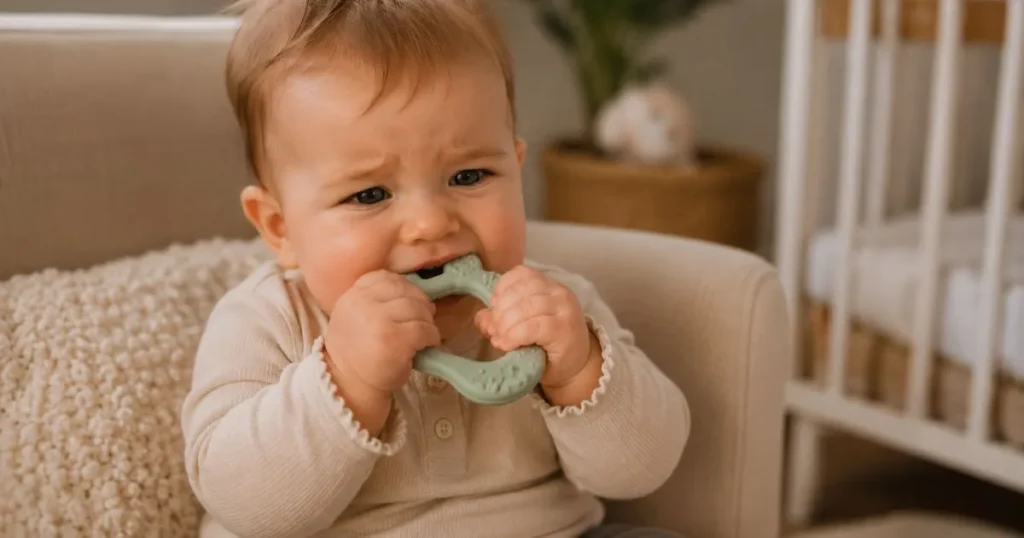
Although both can lead to night wakings, the signs are usually different.
The biggest difference is this:
Teething usually comes with signs of physical discomfort. Sleep regression usually comes with changes in behavior, development, and sleep habits.
| Sleep Regression | Teething |
| Often linked to developmental milestones | Caused by teeth moving through gums |
| Baby may wake happy or ready to practice skills | Baby may wake crying from discomfort |
| More difficulty settling | More chewing and gum discomfort |
| Can affect naps and bedtime routines | Often comes with drooling and biting |
| May last several weeks | Symptoms may come and go around tooth eruption |
Understanding these differences can help you choose the right response instead of treating every wake-up the same way.
1. Look at Your Baby’s Mood During Night Wakings
One of the biggest clues is how your baby behaves when they wake.
If It Is Sleep Regression:
Your baby may:
- Wake up and seem alert or ready to play
- Practice new skills in the crib, such as sitting or standing
- Need more help returning to sleep
- Cry when you leave the room but calm quickly with comfort
Sleep regression often feels like your baby’s sleep schedule has suddenly changed.
If It Is Teething:
Your baby may:
- Wake up crying or appearing uncomfortable
- Need more soothing than usual
- Rub their gums or put their hands in their mouth
- Have difficulty settling because of gum pressure
Teething-related waking is usually connected to physical discomfort.
2. Check for Physical Signs of Teething
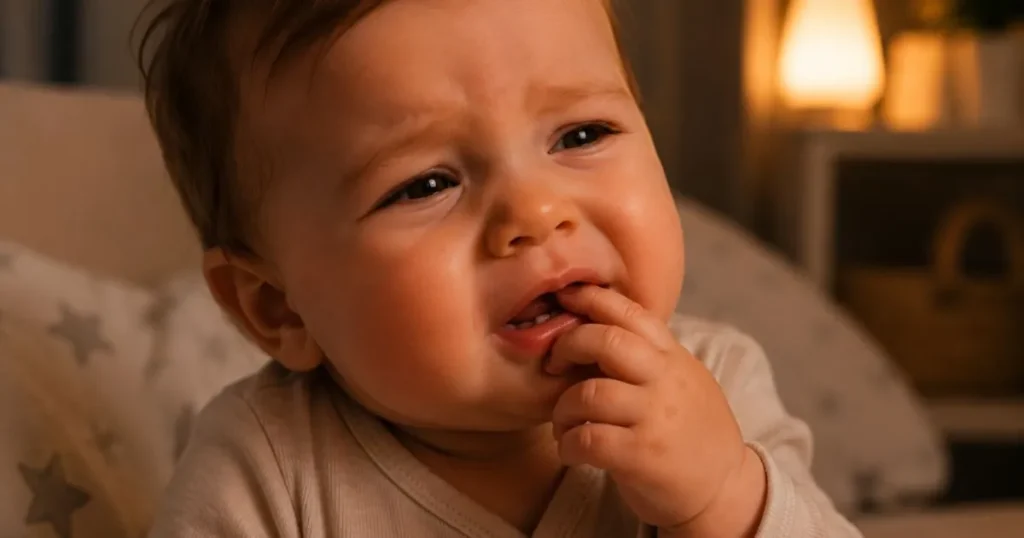
If your baby is teething, you will often notice signs during the day too.
Common signs include:
Excessive Drooling
Many babies drool more when teeth are moving through the gums.
You may notice:
- Wet bibs or clothes
- Drool rash around the mouth
- More frequent wiping
Chewing Everything
A teething baby often looks for pressure to relieve gum discomfort.
They may:
- Bite toys
- Chew fingers
- Gnaw on safe teething objects
- Bite while breastfeeding or bottle feeding
Gum Sensitivity
Look for:
- Swollen gums
- Red areas on the gums
- Tenderness when touching the mouth
- A visible tooth coming through
Changes in Feeding
Some babies temporarily change their eating habits because their gums feel sensitive.
You may notice:
- Refusing some foods
- Wanting softer foods
- Shorter feeding sessions
- Increased comfort nursing
3. Consider Your Baby’s Age and Development
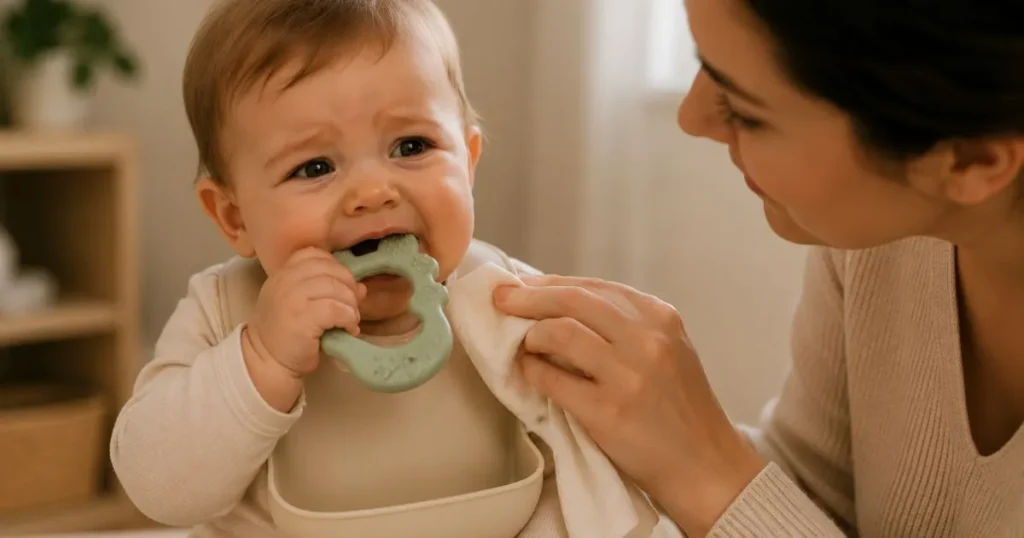
Age can provide helpful clues when you’re trying to tell the difference between sleep regression vs. teething.
For example:
- A 4-month-old waking frequently is more likely experiencing a sleep regression as sleep cycles mature.
- A 6–10-month-old waking while learning to crawl, sit, or stand may be going through a developmental sleep regression.
- A 6–12-month-old with increased chewing, drooling, swollen gums, and frequent night wakings may be teething.
Remember that sleep regression vs. teething isn’t always an either-or situation. These stages often overlap, especially during the second half of the first year.
A baby can experience sleep regression and teething at the same time, making nights even more challenging. Looking at your baby’s overall behavior—not just their sleep—can help you identify whether developmental changes, teething discomfort, or a combination of both is causing the night wakings..
Sleep regressions often occur when babies reach major developmental milestones, such as rolling, crawling, standing, or walking. Understanding what skills are expected at different ages can help explain sudden changes in sleep. The CDC developmental milestones guide offers age-by-age milestone checklists for infants and toddlers.
4. Look at How Long the Sleep Changes Last
The duration can also provide clues.
Sleep Regression:
Sleep regressions often last:
- A few days to several weeks
- Longer if new sleep habits develop during this period
They usually improve as your baby adjusts to their new developmental stage.
Teething:
Teething discomfort may:
- Come and go over several days
- Increase when a tooth is close to breaking through
- Improve once the tooth appears
However, every baby experiences teething differently.
Quick Comparison: Sleep Regression vs Teething
| Question | Sleep Regression | Teething |
| Is baby waking at night? | Yes | Yes |
| More crying? | Sometimes | Often |
| More chewing? | Not usually | Very common |
| More drooling? | Not usually | Very common |
| New skills appearing? | Common | Not related |
| Wants extra comfort? | Common | Common |
| Changes in naps? | Very common | Sometimes |
| Gum swelling? | No | Common |
| Usually temporary? | Yes | Yes |
Can Teething Cause Sleep Regression?
Many parents wonder whether teething causes sleep regression. When comparing sleep regression vs. teething, the answer is that teething can certainly disrupt sleep, but it does not usually cause a true sleep regression.
A baby who is teething may wake more often because of sore, swollen gums and the pressure of emerging teeth. These sleep disruptions are typically linked to physical discomfort and often improve once the discomfort eases.
A sleep regression, however, is usually triggered by rapid brain development, new developmental milestones, and changing sleep cycles rather than pain.
The confusion arises because sleep regression vs. teething often occurs during the same stages of infancy.
For example:
- Around 6 months, babies may experience developmental changes while also cutting their first teeth.
- Around 8–10 months, babies may be learning to crawl or stand while new teeth continue to emerge.
- Around 12 months, walking, language development, and teething may happen at the same time.
Because these milestones frequently overlap, sleep regression vs. teething can be difficult to tell apart. In many cases, babies experience both simultaneously, leading to more frequent night wakings, shorter naps, and increased fussiness. When this happens, offering extra patience, comfort, and consistent bedtime routines can help your baby through this temporary stage.
How to Help a Teething Baby Sleep Better at Night
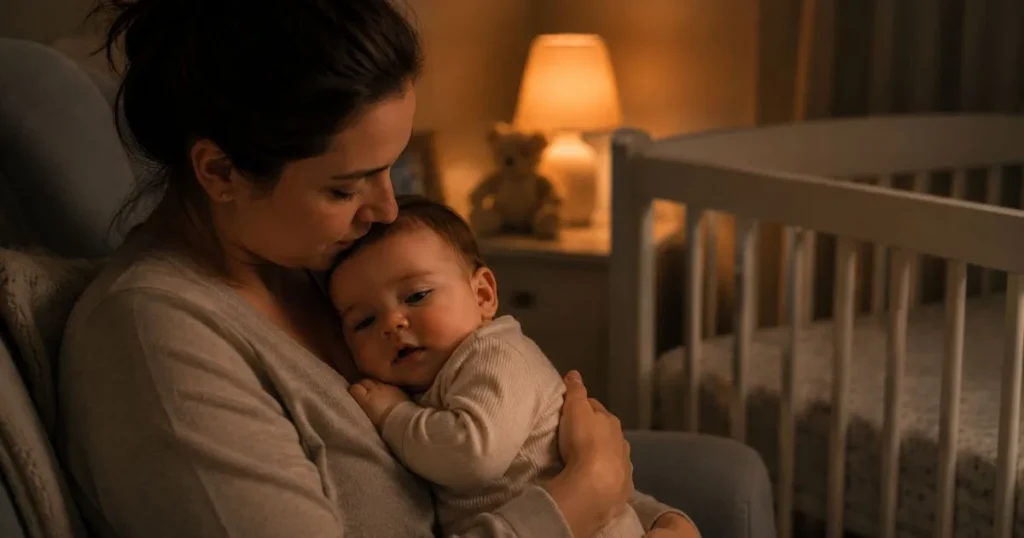
When comparing sleep regression vs. teething, it’s important to remember that if teething is affecting your baby’s sleep, your goal isn’t to create a perfect night’s sleep right away. Instead, focus on keeping your baby comfortable while maintaining a consistent bedtime routine and a strong sense of security.
Gentle, responsive care can make this temporary stage easier for both you and your baby. If your baby’s night wakings are caused by teething discomfort rather than a sleep regression, simple comfort measures may help them settle more easily.
Here are some ways to help with teething discomfort at bedtime:
1. Offer Safe Teething Relief Before Bed
Providing comfort before bedtime may help your baby relax.
You can try:
- Offering a clean, chilled teething toy
- Allowing your baby to chew on a safe teething ring
- Gently massaging your baby’s gums with a clean finger
- Providing extra cuddles and reassurance
Cold pressure can feel soothing on sore gums, but avoid freezing teething toys because extremely cold surfaces may hurt delicate gums.
2. Create a Calm Bedtime Routine
When your baby is uncomfortable, a predictable routine can provide extra reassurance.
A simple bedtime routine may include:
- A warm bath
- Quiet play
- Feeding
- Gentle cuddles
- A bedtime story or lullaby
- Dim lights before sleep
The routine does not remove teething discomfort, but it helps your baby understand that it is time to rest.
3. Offer Extra Comfort During Night Wakings
During teething periods, some babies need more support than usual.
You can respond with:
- A gentle voice
- A comforting touch
- Holding or cuddling when needed
- Helping your baby settle calmly
Extra comfort during a difficult period does not mean you are creating bad habits.
Many babies naturally return to their usual sleep patterns once the discomfort improves.
4. Protect Your Baby’s Skin From Drool Rash
Because teething can increase drooling, some babies develop irritation around their mouth and chin.
To help:
- Keep the area clean and dry
- Gently wipe drool instead of rubbing
- Use a baby-safe barrier cream if needed
- Change wet bibs regularly
Keeping your baby comfortable during the day can also improve nighttime sleep.
5. Check Other Possible Causes of Night Wakings
Not every night waking during teething is caused by teeth.
Your baby may also wake because of:
- Hunger
- A developmental milestone
- Separation anxiety
- A change in routine
- An uncomfortable sleep environment
- Illness
Looking at the full picture can help you understand what your baby truly needs.
Helping a Teething Baby Without Creating Sleep Problems
Many parents worry:
“Will comforting my baby more during teething create bad sleep habits?”
When thinking about sleep regression vs. teething, this is one of the most common concerns. The reassuring answer is no—providing extra comfort during a temporary stage of discomfort or developmental change is completely normal.
Whether your baby’s night wakings are caused by sleep regression vs. teething, they may need more connection, reassurance, and patience than usual. Responding to these needs won’t spoil your baby or create long-term sleep problems.
You can offer comfort while still encouraging healthy sleep habits by:
- Keeping nighttime interactions calm, quiet, and dimly lit
- Avoiding turning wake-ups into playtime
- Returning to your usual bedtime routine once your baby feels better
- Offering comfort without feeling pressured to fix every wake-up immediately
Understanding the difference between sleep regression vs. teething can help you respond with confidence instead of worry. Gentle consistency, predictable routines, and responsive care help your baby feel safe while moving through this temporary phase.
When Should You Call the Doctor?
Teething can cause discomfort, but some symptoms may suggest something else is happening.
Talk with your child’s healthcare provider if your baby has:
- A high fever
- Persistent diarrhea
- Severe difficulty feeding
- Unusual tiredness or weakness
- Signs of dehydration
- Symptoms that seem stronger than typical teething discomfort
It is always worth checking if something feels different from your baby’s normal behavior.
Final Thoughts: Sleep Regression vs Teething
When your baby suddenly starts waking at night, it can be difficult to tell the difference between sleep regression vs. teething. Because both can happen during the first year of life, it’s common for parents to wonder what’s really causing the sleep disruption.
Both sleep regression and teething can lead to:
- More frequent night wakings
- Increased fussiness or irritability
- A stronger need for comfort and reassurance
- Changes in naps and overall sleep patterns
The key difference is the underlying cause:
- Sleep regression is triggered by rapid brain development, new milestones, and changing sleep patterns.
- Teething is caused by the physical discomfort of teeth pushing through the gums.
When comparing sleep regression vs. teething, pay close attention to your baby’s age, behavior, and physical symptoms. Looking for clues such as swollen gums, increased drooling, new developmental skills, or changes in sleep patterns can help you identify what’s most likely happening.
Remember, sleep regression vs. teething is often temporary, and some babies experience both at the same time. With patience, responsive care, and a consistent bedtime routine, your baby will gradually return to more restful and peaceful nights.

Frequently Asked Questions About Sleep Regression vs Teething
How do I know if my baby is teething or having a sleep regression?
The easiest way to tell the difference is to look for the reason behind your baby’s sleep changes.
Teething is usually linked to physical signs such as:
- Increased drooling
- Chewing on objects
- Swollen or sensitive gums
- Wanting to bite more often
- Changes in feeding
Sleep regression is usually connected to development and may include:
- More frequent night wakings
- Fighting naps
- Difficulty falling asleep
- Increased need for comfort
- New skills such as crawling, standing, or walking
Sometimes babies experience both at the same time, which can make sleep changes harder to identify.
Can teething cause babies to wake up at night?
Yes. Teething discomfort can cause some babies to wake more often during the night.
As teeth begin to push through the gums, the resulting pressure and sensitivity can make it harder for babies to sleep comfortably. This is one reason parents often compare sleep regression vs. teething when their baby’s sleep suddenly changes.
However, frequent night wakings are not always caused by teething. When evaluating sleep regression vs. teething, remember that nighttime sleep can also be disrupted by developmental milestones, hunger, separation anxiety, illness, or a true sleep regression. Looking at your baby’s age, behavior, and physical signs can help you determine the most likely cause of their disrupted sleep.
How long does teething sleep disruption last?
Teething-related sleep changes are usually temporary. When comparing sleep regression vs. teething, teething discomfort often lasts only a few days before or during the eruption of a new tooth.
Some babies may have disrupted sleep for a short time before a tooth appears, while others experience occasional discomfort over several days. In most cases, sleep begins to improve once the tooth breaks through the gum and the pressure decreases.
Understanding sleep regression vs. teething can help you set realistic expectations. Unlike a sleep regression, which is driven by developmental changes and may last several weeks, teething-related sleep disruptions are typically shorter and improve as your baby’s gums become less sensitive.
What Are the Earliest Signs of Teething in Babies?
Early signs of teething may include:
- More drooling than usual
- Chewing on fingers or toys
- Increased fussiness
- Wanting extra comfort
- Tender or swollen gums
- Changes in feeding habits
Every baby is different, and some babies show very few signs before their first tooth appears.
Can sleep regression happen during teething?
Yes, sleep regression and teething can happen at the same time.
Many common teething ages overlap with developmental stages when babies naturally experience sleep changes.
For example:
- Around 6 months, babies may begin teething while developing new skills.
- Around 8–10 months, crawling and separation anxiety may occur alongside new teeth.
- Around 12 months, walking development and teething may overlap.
When both happen together, babies may need extra patience and comfort.
How Can I Help My Baby Sleep Better During Teething?
You can support your baby by:
- Offering safe teething relief before bedtime
- Keeping a consistent bedtime routine
- Providing extra comfort during difficult nights
- Keeping nighttime interactions calm
- Creating a comfortable sleep environment
The goal is to support your baby while maintaining healthy sleep habits.
When do babies usually start teething?
Most babies begin teething around 6 months old, but the timing varies.
Some babies may get their first tooth earlier, while others may not start teething until closer to 12 months.
The order and timing of teeth coming in can be different for every child.
Does teething cause fever or illness?
Mild discomfort and increased fussiness can happen during teething.
However, a high fever, significant diarrhea, or signs of illness are not considered typical teething symptoms and may indicate another cause.
If your baby seems unwell or symptoms feel unusual, it is best to contact a healthcare professional.
Key Takeaway
When your baby wakes at night, remember:
A tooth may be causing discomfort, but a developing brain may also be changing sleep patterns.
By learning the difference between sleep regression vs teething, you can respond to your baby’s needs with more confidence and create calmer nights for your family.
Related Articles From the Sleep Regression Series
- How Long Do Sleep Regressions Last? A Complete Guide by Age
- Sleep Regression Ages: Complete Guide from 4 Months to 2 Years
- 4 Month Sleep Regression: Signs, Causes, and Gentle Solutions
- 6 Month Sleep Regression: What Parents Need to Know
- 8–10 Month Sleep Regression: Why Your Baby Suddenly Wakes More
- 12-Month Sleep Regression : Signs, Causes, How Long It Lasts & How to Help Your Toddler Sleep Better
- 18-Month Sleep Regression : Signs, Causes, How Long It Lasts & Gentle Ways to Help Your Toddler Sleep Better
- 2-Year Sleep Regression : Signs, Causes, How Long It Lasts & How to End Bedtime Battles