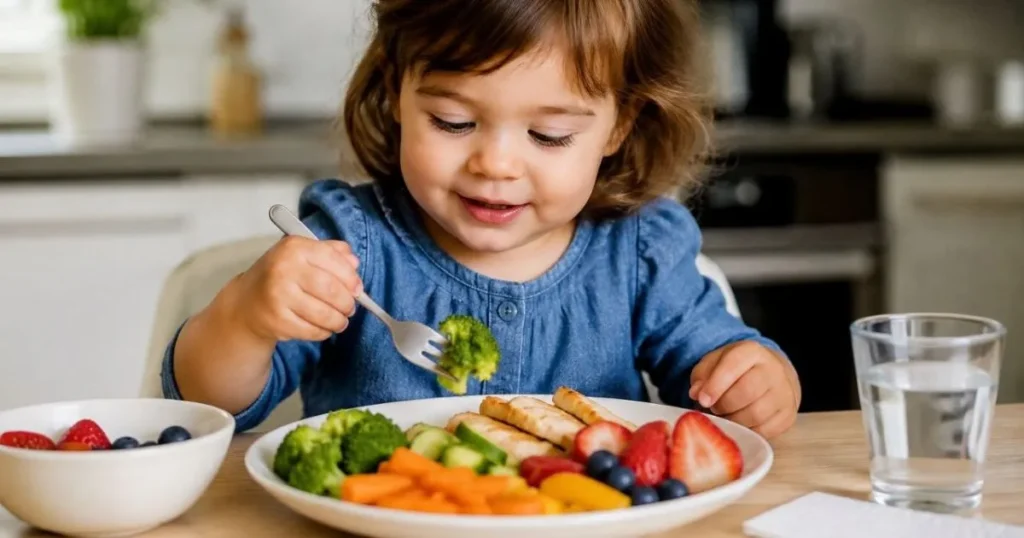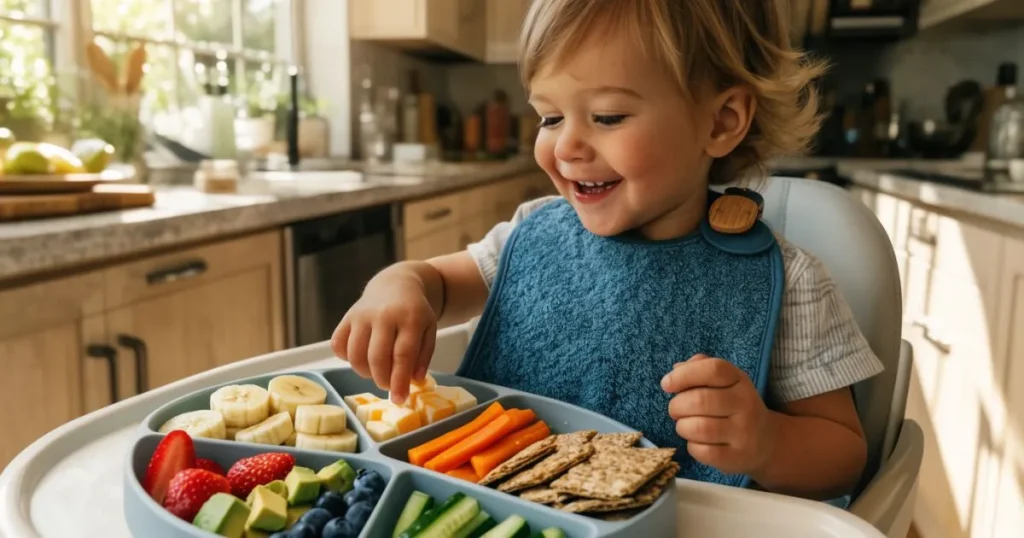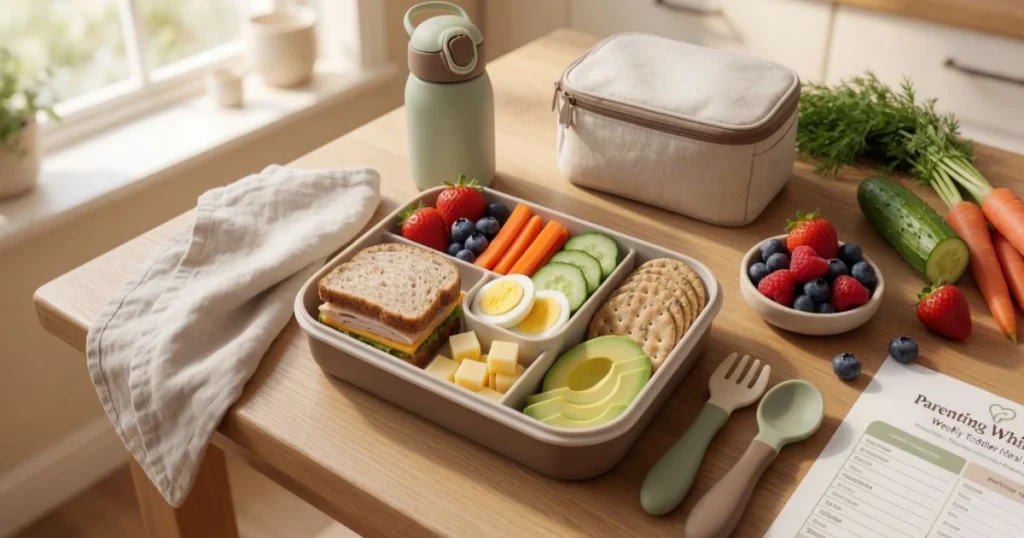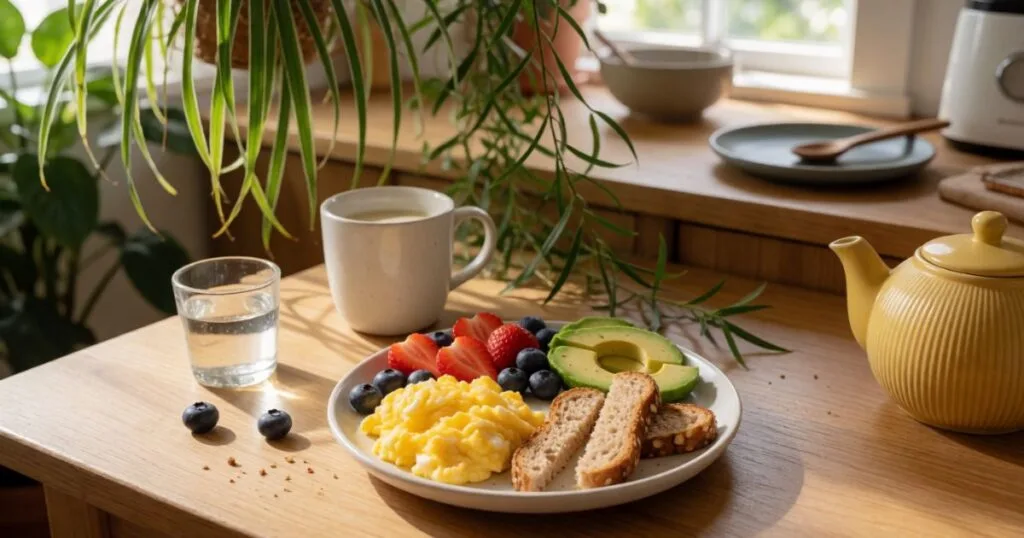
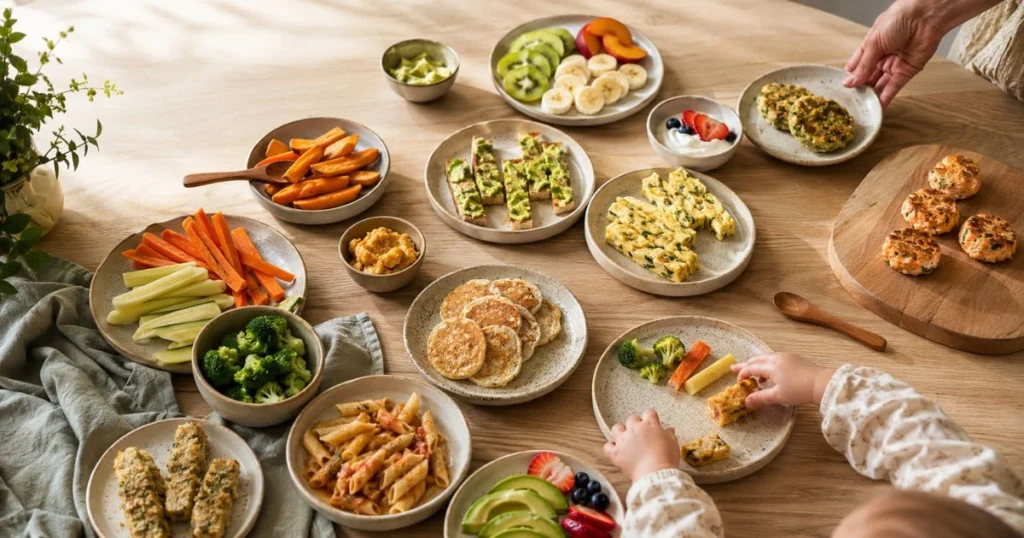
Starting solids can feel exciting right up until you look at your baby’s high chair and wonder, “What am I actually going to serve?”
If you’re trying baby-led weaning, you may have plenty of questions. How soft should the food be? What can you make besides avocado and banana? Can your baby eat the same meals as the rest of the family?
The good news is that you don’t need complicated recipes or a refrigerator full of special baby foods. With a few everyday ingredients, you can make simple meals that give your baby opportunities to explore different flavors, textures, and foods.
These 25 baby led weaning recipes give you ideas for breakfast, lunch, dinner, and easy finger foods. You’ll also find practical tips for preparing meals safely and adapting them to your baby’s developmental stage.
Safety note: Every baby develops feeding skills at a different pace. Always prepare food according to your baby’s developmental abilities, keep your baby seated upright while eating, and supervise meals closely.
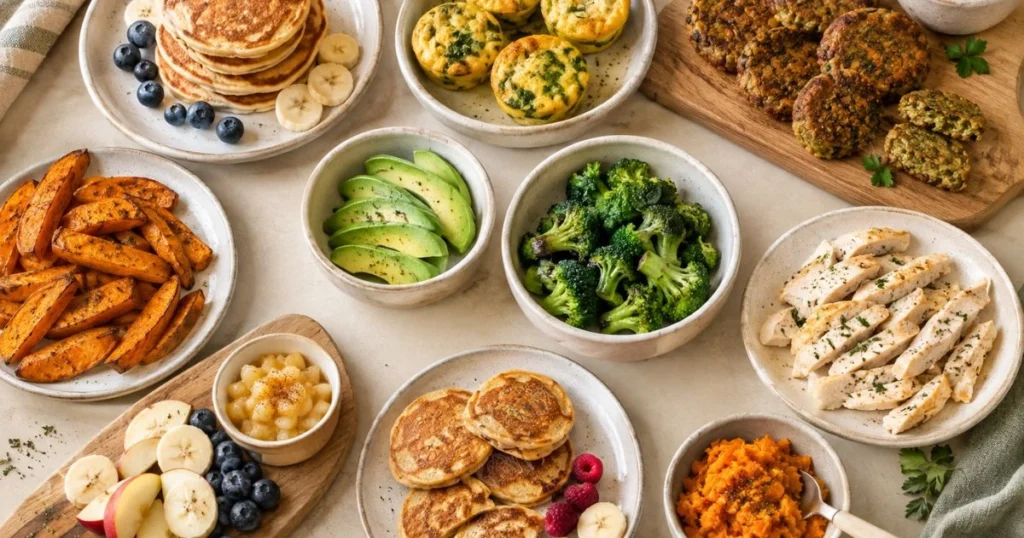
What Is Baby-Led Weaning?
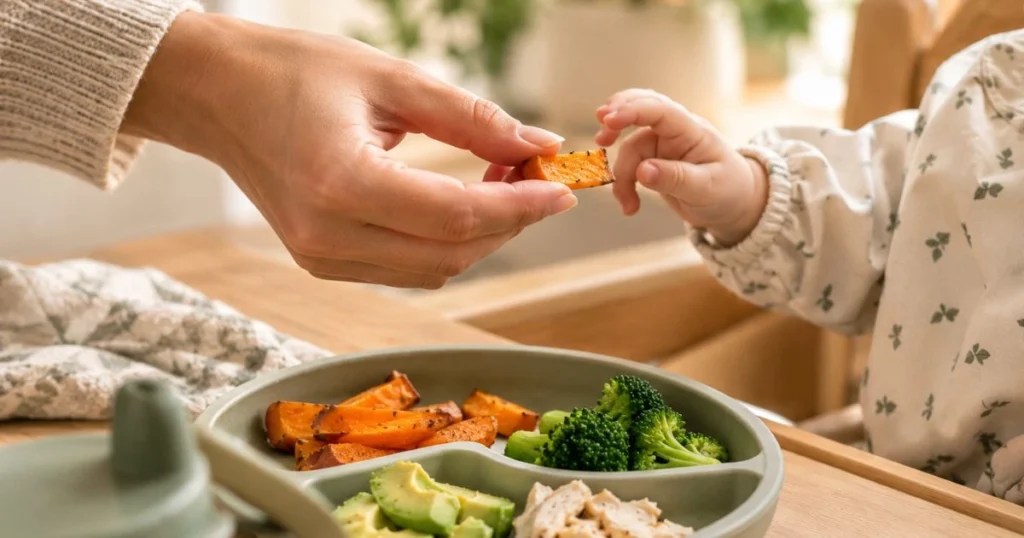
Baby-led weaning is one way to introduce complementary foods that allows your baby to explore appropriately prepared foods and take part in family mealtimes.
Rather than offering only spoon-fed purées, you can serve soft, manageable pieces that your baby can pick up, bring to their mouth, taste, and investigate at their own pace.
Keep in mind that baby-led weaning doesn’t need to be an all-or-nothing approach. You can combine finger foods with a preloaded spoon or soft mashed foods, depending on what works best for your baby and their developing feeding skills.
The goal is to help your baby gradually become familiar with a wide range of flavors, textures, and foods. Many of the Baby Led Weaning Recipes in this guide can be adapted to suit your baby’s abilities as those skills develop.
The World Health Organization recommends introducing complementary foods at around 6 months and gradually increasing the variety and texture of foods as your baby grows and develops.
If you’re looking for more ideas beyond these recipes, see our guide to Baby Finger Foods for additional age-appropriate inspiration.
When Can You Start Baby-Led Weaning?
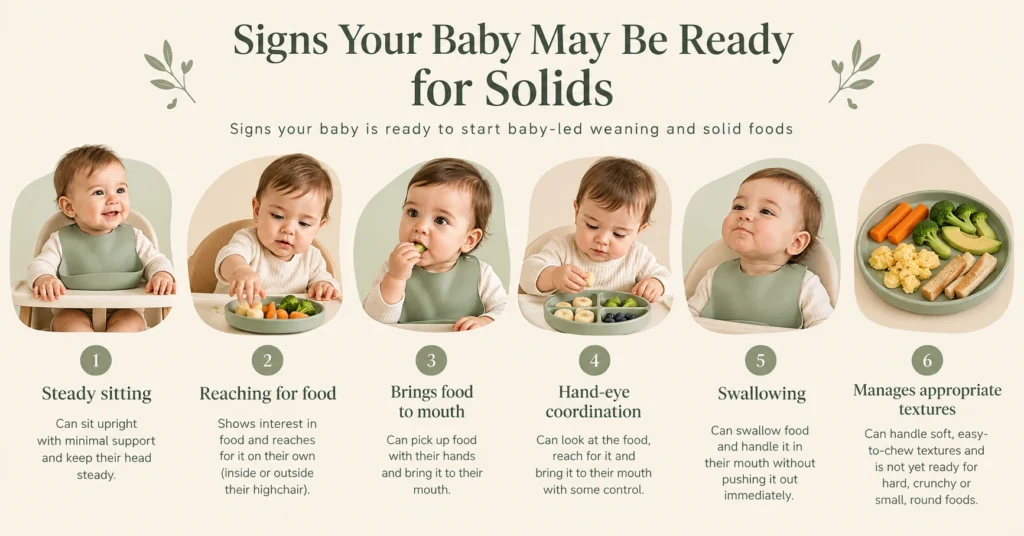
Around 6 months is a common time to begin introducing complementary foods, but your baby’s individual developmental readiness is just as important. Before trying Baby Led Weaning Recipes, look for signs that your baby is ready to start exploring solid foods, such as:
- Sitting upright with steady head and neck control
- Reaching for objects and bringing them toward the mouth
- Showing curiosity when others are eating
- Coordinating the hands, eyes, and mouth
- Moving food into the mouth and swallowing it
- Having the developmental skills needed to manage different food textures
If you’re uncertain whether your baby is ready for solids or baby-led weaning, speak with your pediatrician or another qualified healthcare professional for personalized guidance.
How to Build a Balanced Baby-Led Weaning Meal
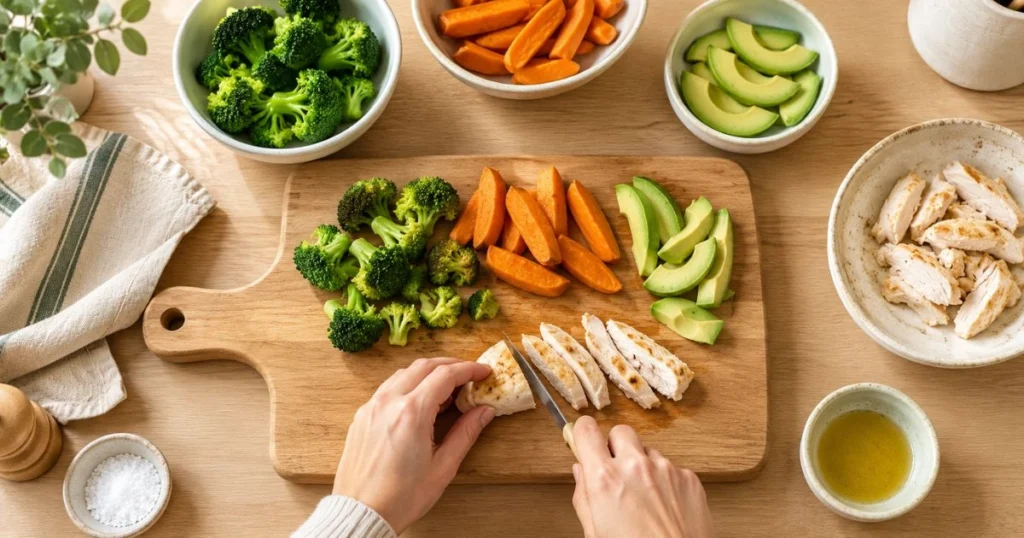
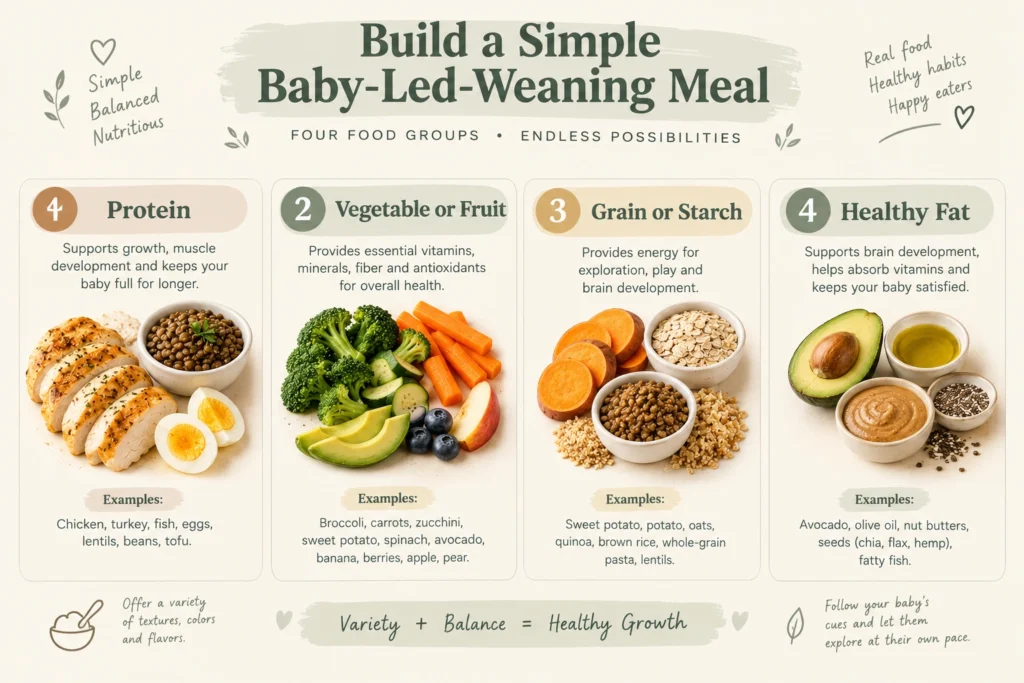
You don’t have to make every plate perfect. Instead, think about offering different food groups throughout the day.
A simple meal can include:
| Food Group | Examples |
| Protein | Egg, chicken, beef, fish, lentils, beans, yogurt |
| Grains/starches | Oats, bread, pasta, rice, potato, sweet potato |
| Vegetables | Broccoli, carrot, zucchini, peas |
| Fruit | Banana, avocado, pear, apple, melon |
| Healthy fats | Avocado, olive oil, full-fat plain yogurt, appropriately prepared nut or seed butter |
CDC recommends offering infants a variety of vegetables, fruits, protein foods, dairy without added sugars, healthy fats, and whole grains in forms appropriate for their eating skills. (CDC)
With that foundation in mind, let’s get to the recipes.
25 Baby Led Weaning Recipes for Easy Mealtimes
Baby Led Weaning Breakfast Recipes
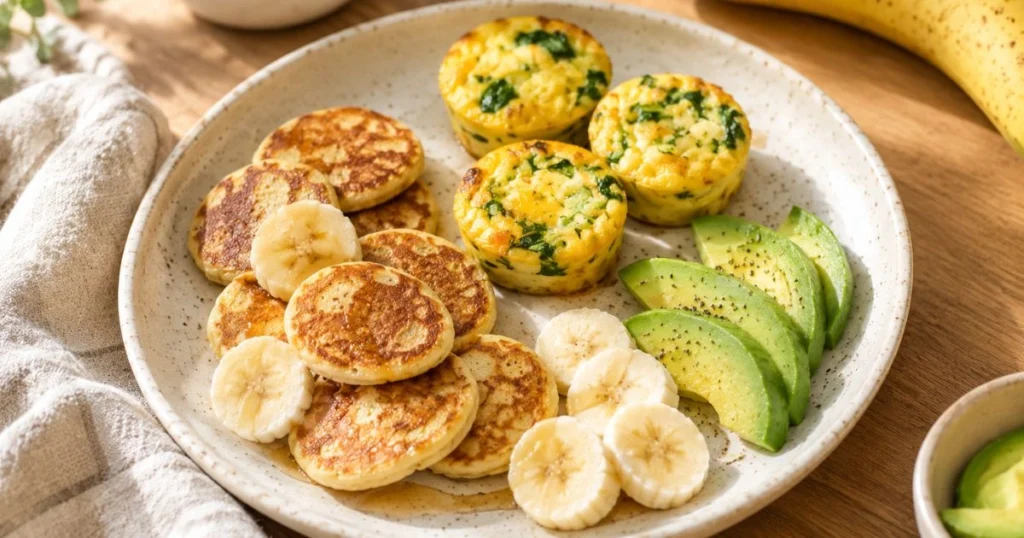
1. Banana & Oat Baby Pancakes
These soft pancakes are an easy way to combine familiar ingredients into a breakfast your baby can pick up and explore.
| Ingredient | Amount | Preparation |
| Ripe banana | 1 | Mash |
| Egg | 1 | Beat |
| Oats | ½ cup | Mix in |
| Water | 1–2 tbsp | Adjust consistency |
| Cinnamon | Optional | Small amount |
How to make them:
- Mash the banana.
- Mix in the egg and oats.
- Add a little water if the mixture is too thick.
- Cook small pancakes until completely cooked through.
- Allow them to cool before serving.
Cut or tear the pancake into an appropriate shape for your baby’s developmental abilities.
Avoid adding honey or sugar. Honey should not be given to babies younger than 12 months. (CDC)
2. Avocado Toast Fingers
| Ingredient | Amount |
| Soft bread | 1 slice |
| Ripe avocado | ½ |
| Olive oil | Optional |
Toast the bread lightly, spread with mashed avocado, and cut into manageable strips.
This is one of the simplest baby led weaning recipes when you’re short on time.
3. Banana & Plain Yogurt Bowl
| Ingredient | Amount |
| Ripe banana | ½ |
| Plain full-fat yogurt | 2–3 tbsp |
| Soft fruit | Optional |
Mash the banana and mix it with plain, unsweetened yogurt.
You can offer the mixture on a preloaded spoon so your baby can practice bringing it to their mouth independently.
4. Soft Egg & Vegetable Omelet Strips
| Ingredient | Amount |
| Egg | 1–2 |
| Zucchini | 1–2 tbsp |
| Spinach | 1 tbsp |
| Olive oil | Small amount |
Finely grate or chop the vegetables, mix them with beaten egg, and cook thoroughly.
Let the omelet cool before cutting it into strips.
5. Sweet Potato Breakfast Bites
| Ingredient | Amount |
| Cooked sweet potato | ½ cup |
| Egg | 1 |
| Oats | ¼ cup |
| Cinnamon | Optional |
Mash everything together, form small soft bites, and bake until cooked.
The finished bites should remain soft rather than crunchy.
Baby Led Weaning Lunch Recipes
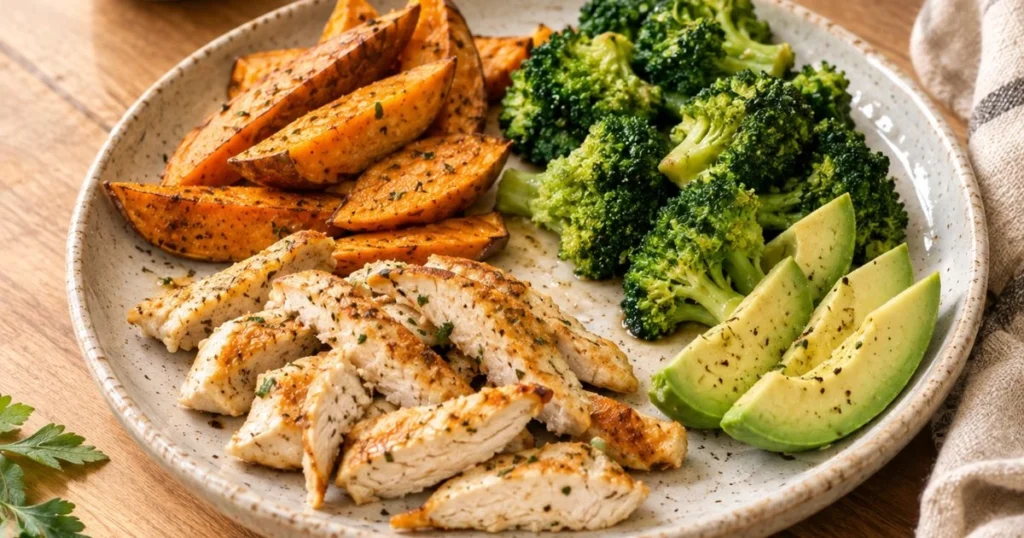
6. Sweet Potato & Chicken Patties
| Ingredient | Amount |
| Cooked sweet potato | ½ cup |
| Cooked chicken | ½ cup |
| Egg | 1 |
| Oats | 2 tbsp |
Mix the ingredients, shape into small patties, and cook thoroughly.
Allow them to cool before serving.
These patties are particularly useful when you want to prepare several portions at once.
7. Avocado & Egg Toast
| Ingredient | Amount |
| Toast | 1 slice |
| Ripe avocado | ½ |
| Fully cooked egg | 1 |
Mash the egg and avocado together and spread a thin layer onto lightly toasted bread.
Cut the toast according to your baby’s feeding skills.
8. Vegetable Omelet Strips
| Ingredient | Amount |
| Eggs | 2 |
| Cooked carrot | 2 tbsp |
| Zucchini | 2 tbsp |
| Olive oil | Small amount |
Finely chop or grate the vegetables, combine with beaten egg, and cook completely.
Cut the finished omelet into strips once cooled.
9. Lentil & Vegetable Patties
| Ingredient | Amount |
| Cooked lentils | ½ cup |
| Cooked carrot | ¼ cup |
| Cooked sweet potato | ¼ cup |
| Oats | 2 tbsp |
Mash the ingredients together and form soft patties.
Cook until firm enough to hold but soft enough to break apart easily.
10. Baby-Friendly Pasta With Vegetable Sauce
| Ingredient | Amount |
| Soft-cooked pasta | ½ cup |
| Cooked carrot | ¼ cup |
| Cooked zucchini | ¼ cup |
| Olive oil | 1 tsp |
Cook the pasta until appropriately tender. Blend or mash the vegetables into a soft sauce and stir through the pasta.
Avoid adding salt to your baby’s portion.
Baby Led Weaning Dinner Recipes
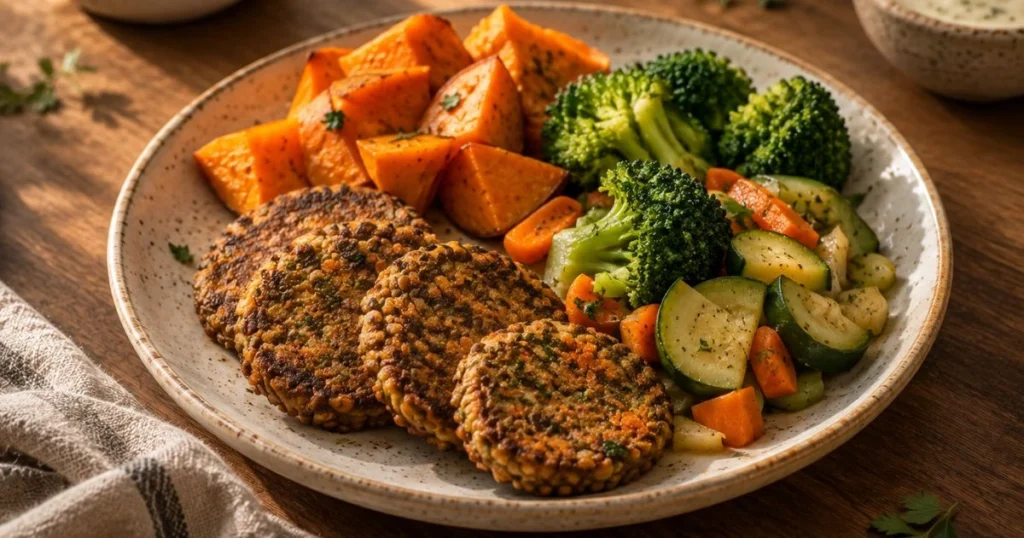
11. Soft Chicken & Vegetable Meatballs
| Ingredient | Amount |
| Ground chicken | ½ cup |
| Cooked zucchini | ¼ cup |
| Egg | 1 |
| Oats | 2 tbsp |
Mix everything together, form small meatballs, and cook thoroughly.
Because meat can be a choking hazard when tough or served in large chunks, make sure the final texture is soft and appropriate for your baby’s abilities. (CDC)
12. Sweet Potato & Beef Patties
| Ingredient | Amount |
| Ground beef | ½ cup |
| Cooked sweet potato | ½ cup |
| Egg | 1 |
Combine the ingredients and form soft patties.
Cook the beef thoroughly before serving.
13. Salmon & Potato Cakes
| Ingredient | Amount |
| Cooked salmon | ½ cup |
| Cooked potato | ½ cup |
| Egg | 1 |
| Parsley | Optional |
Flake the salmon carefully and check for bones. Mix with mashed potato and egg, shape into small cakes, and cook thoroughly.
Fish can be part of a varied infant diet, but avoid fish varieties that are high in mercury. CDC lists shark, swordfish, king mackerel, marlin, orange roughy, tilefish from the Gulf of Mexico, and bigeye tuna among fish to avoid for young children. (CDC)
14. Vegetable & Lentil Fritters
| Ingredient | Amount |
| Cooked lentils | ½ cup |
| Cooked zucchini | ¼ cup |
| Cooked carrot | ¼ cup |
| Egg | 1 |
Mash the lentils and vegetables, mix with egg, form soft fritters, and cook thoroughly.
15. Chicken, Rice & Vegetable Bowl
| Ingredient | Amount |
| Soft-cooked rice | ½ cup |
| Shredded chicken | ¼ cup |
| Cooked carrot | ¼ cup |
| Cooked peas | 2 tbsp |
| Olive oil | 1 tsp |
Combine the soft ingredients and serve in a texture and form your baby can manage.
When your baby becomes a toddler, you can adapt many of these ideas into family-friendly meals. For more inspiration, see our guide to Toddler Friendly Dinner Ideas.
Easy Baby Led Weaning Finger Food Recipes
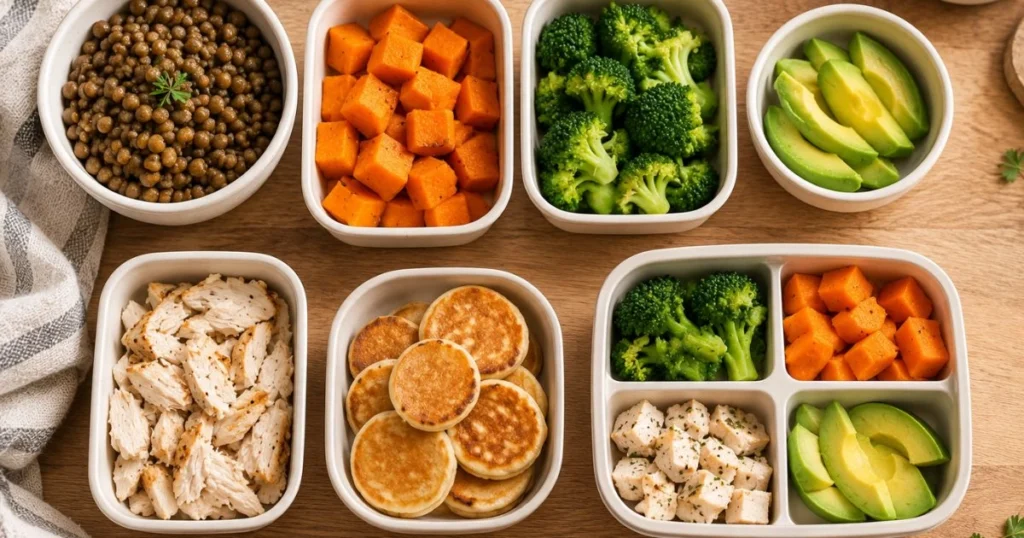
16. Soft Roasted Sweet Potato Wedges
| Ingredient | Amount |
| Sweet potato | 1 |
| Olive oil | Small amount |
Cut the sweet potato into thick wedges and roast until very soft.
Let them cool before serving.
17. Steamed Broccoli Florets
| Ingredient | Amount |
| Broccoli | Several florets |
| Olive oil | Optional |
Steam the broccoli until very soft.
A larger piece with a stem can be easier for a younger baby to grasp, provided it is prepared appropriately for their developmental stage.
18. Soft Banana Toast
| Ingredient | Amount |
| Bread | 1 slice |
| Banana | ½ |
Mash the banana and spread it thinly over lightly toasted bread.
Cut into appropriate strips.
19. Soft Cooked Apple Wedges
| Ingredient | Amount |
| Apple | 1 |
| Water | As needed |
Peel and core the apple, cut it into suitable pieces, and steam or cook until very soft.
Raw, hard apple pieces can be a choking hazard, so cooking is important for young babies. CDC recommends preparing foods according to a child’s developmental abilities and avoiding hard foods that are difficult to chew and swallow. (CDC)
20. Avocado & Banana Toast
| Ingredient | Amount |
| Toast | 1 slice |
| Avocado | ¼ |
| Banana | ¼ |
Mash the avocado and banana together, spread thinly over toast, and cut appropriately.
It’s quick enough for breakfast, lunch, or a simple snack.
More Easy Baby Led Weaning Recipes
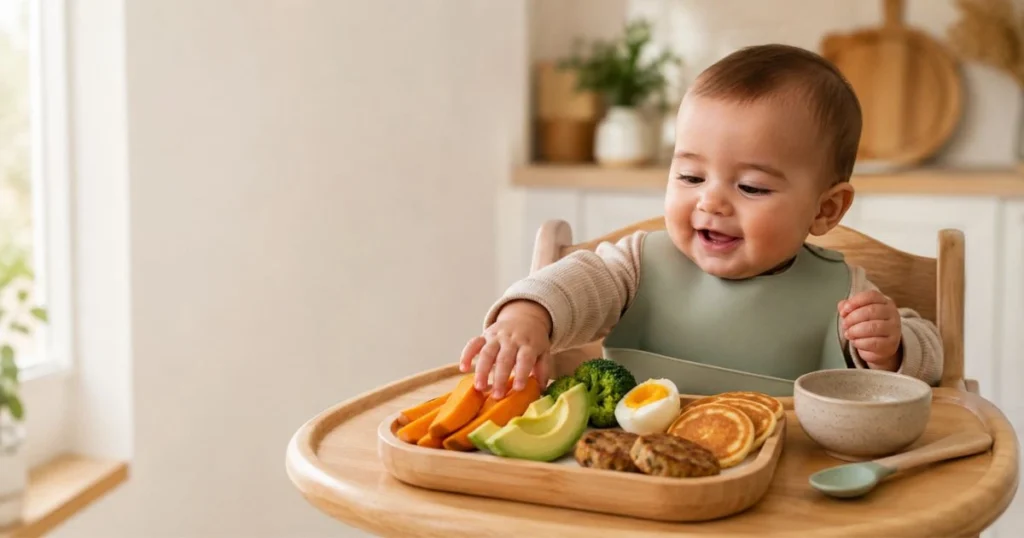
21. Egg & Sweet Potato Strips
| Ingredient | Amount |
| Egg | 1 |
| Cooked sweet potato | ½ cup |
| Oats | 1–2 tbsp |
Mash the sweet potato, mix with egg and oats, cook thoroughly, and cut into soft strips.
22. Soft Vegetable Quesadilla
| Ingredient | Amount |
| Soft tortilla | 1 |
| Cooked zucchini | 2 tbsp |
| Avocado | 2 tbsp |
| Grated cheese | Small amount |
Fill the tortilla with the soft ingredients, heat until cooked, and cut into manageable strips.
Choose ingredients without unnecessary added salt.
23. Homemade Chicken & Vegetable Nuggets
| Ingredient | Amount |
| Ground chicken | ½ cup |
| Cooked carrot | ¼ cup |
| Egg | 1 |
| Oats | 2 tbsp |
Combine, shape into small nuggets, and bake until the chicken is completely cooked.
Keep the texture soft rather than crisp.
24. Soft Oat & Banana Bites
| Ingredient | Amount |
| Banana | 1 |
| Oats | ½ cup |
| Plain yogurt | 2 tbsp |
| Cinnamon | Optional |
Mix, shape into small bites, and bake until cooked while keeping the inside soft.
25. Baby-Friendly Vegetable Pasta
| Ingredient | Amount |
| Pasta | ½ cup |
| Sweet potato | ¼ cup |
| Zucchini | ¼ cup |
| Olive oil | 1 tsp |
Cook the pasta until tender and combine it with mashed sweet potato and zucchini.
This is another easy option when you want your baby’s meal to resemble what everyone else is eating.
How to Serve Baby Led Weaning Recipes Safely
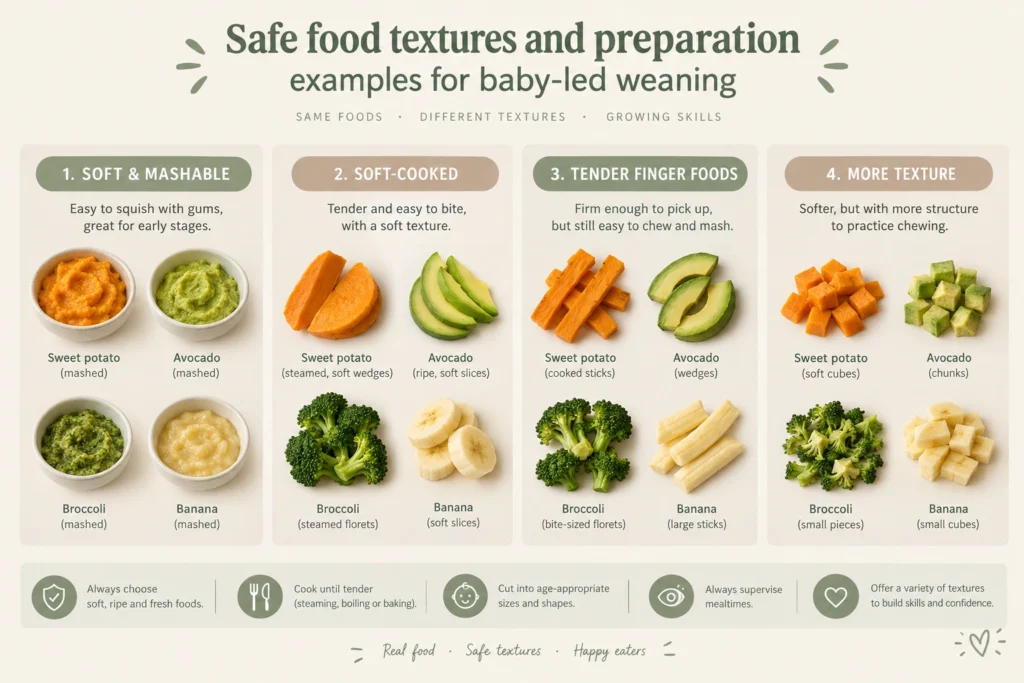
The recipe itself is only part of the equation. How you prepare and serve the food matters just as much.
Make Food Soft Enough
For many of the first foods you offer, proper cooking can make the difference between a food that is difficult to manage and one that is soft and easier for your baby to handle.
When preparing Baby Led Weaning Recipes, you can:
- Steam carrots until they are soft enough to mash easily.
- Cook apples until tender rather than offering hard raw pieces.
- Steam or cook broccoli until it becomes soft.
- Cook potatoes until they can be easily pressed or mashed.
- Prepare meat until tender and remove tough or chewy pieces.
- Cut or shape foods according to your baby’s developmental feeding skills.
Always consider your baby’s ability to handle the food when choosing its texture, size, and shape. Avoid foods that are hard, sticky, or difficult to chew and swallow, and supervise your baby closely during meals.
Avoid Common Choking Hazards
Some foods require extra care when preparing Baby Led Weaning Recipes because their size, shape, or texture can increase the risk of choking. Examples include:
- Whole grapes, berries, or cherries
- Whole nuts and seeds
- Thick spoonfuls or chunks of nut butter
- Popcorn
- Hot dogs and sausages
- Tough or large pieces of meat
- Large chunks of cheese
- Whole beans
- Hard raw vegetables
- Hard raw fruits
- Meat or fish containing bones
Many of these foods don’t need to be avoided permanently. Instead, they should be prepared in a way that makes them easier and safer for your baby to manage. For example, rather than serving a grape whole, cut and prepare it according to your baby’s developmental stage and current feeding skills. The CDC recommends choosing food sizes, shapes, and textures that are appropriate for your child’s development and avoiding foods that are hard, sticky, or difficult to chew and swallow.
Always Supervise Your Baby While Eating
When serving Baby Led Weaning Recipes, make sure your baby is seated upright in a secure high chair or another appropriate feeding seat. Stay nearby and supervise throughout the entire meal. Your baby should not eat while lying down, crawling, or walking, and should never be left alone with food.
Choking can happen even after a baby becomes comfortable with self-feeding, so close supervision and age- and developmentally appropriate food preparation remain important at every meal.
Foods to Avoid or Limit in Baby Led Weaning Recipes
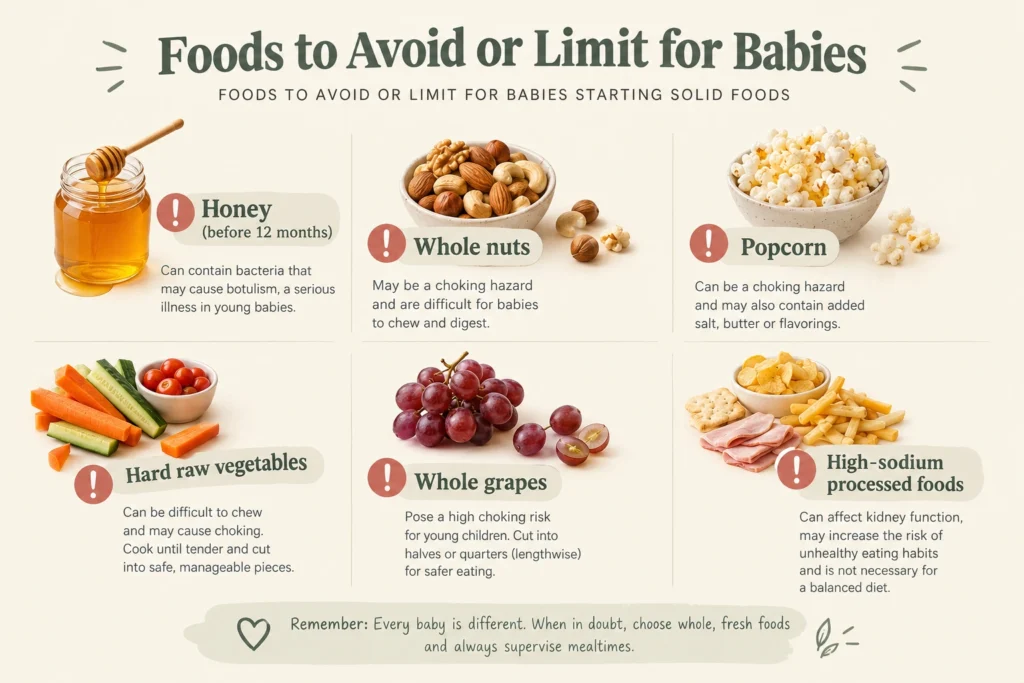
Some ingredients commonly found in adult recipes aren’t suitable for babies.
Honey Before 12 Months
Do not give honey to a baby younger than 12 months because it can cause infant botulism. This includes honey added to homemade recipes. (CDC)
Added Sugar
Infants and young children should not routinely receive foods or drinks with added sugars. That means you don’t need sugar in pancakes, muffins, yogurt, or other baby recipes. (CDC)
Use naturally sweet foods such as ripe banana or cooked fruit instead.
Foods High in Salt
Avoid heavily salted foods and highly processed foods such as some processed meats.
When cooking for the whole family, an easy approach is to remove your baby’s portion before adding salt or heavily seasoned sauces.
How Many Baby Led Weaning Meals Should Your Baby Eat?
You don’t need to force your baby to finish a specific amount.
WHO recommends gradually increasing complementary feeding frequency as babies grow:
| Age | General WHO guidance |
| 6–8 months | 2–3 meals per day |
| 9–23 months | 3–4 meals per day |
| 12–24 months | Nutritious snacks can also be offered 1–2 times daily as desired |
These are general recommendations, not a requirement for every individual baby. Appetite can vary considerably from one meal to the next. Responsive feeding means paying attention to hunger and fullness cues rather than pressuring your baby to eat. (Organisation mondiale de la santé)
If you’re trying to create a flexible routine for milk feeds and solids, our Baby Feeding Schedule by Age guide can help you understand how feeding patterns may change during the first year.
How to Make Baby Led Weaning Recipes Easier for Busy Parents
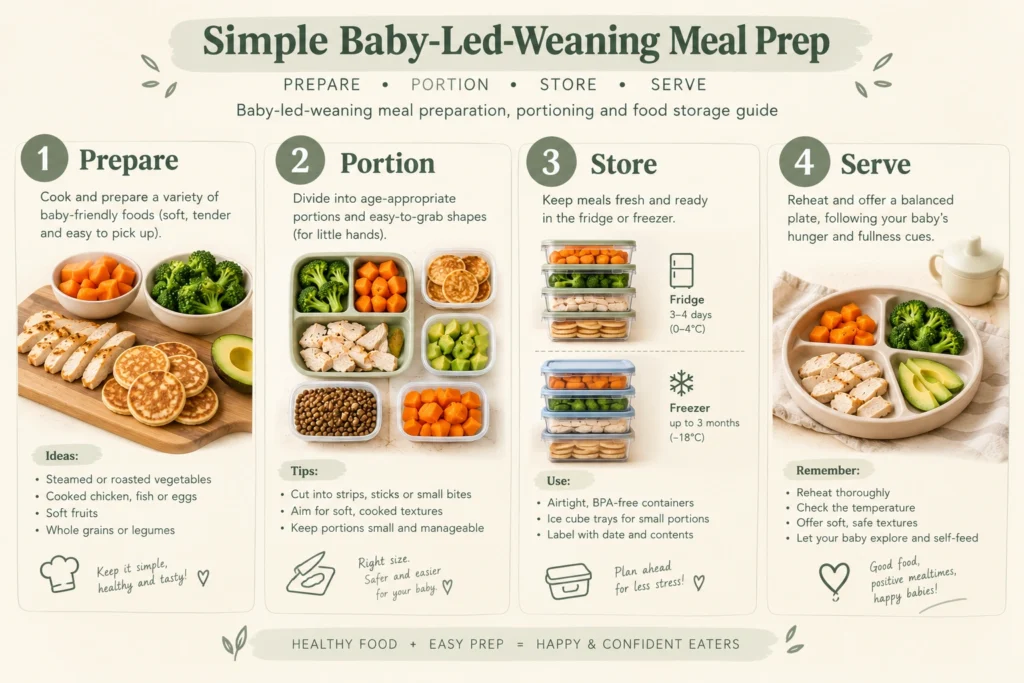
Baby-led weaning can feel much easier when you stop thinking of every meal as a separate cooking project. With a little planning, everyday family foods can be adapted into simple Baby Led Weaning Recipes that work for your baby’s stage and feeding skills.
Batch-Cook a Few Basics
You can prepare a few versatile foods in advance, such as:
- Sweet potato
- Lentils
- Chicken
- Cooked vegetables
- Soft pancakes
- Egg muffins
- Tender vegetable or meat patties
Once these foods are ready, mix and match them in different combinations throughout the week to create simple Baby Led Weaning Recipes without starting each meal from scratch.
As your baby grows into toddlerhood, you can continue using the same mix-and-match approach with our Toddler Lunch Ideas for more family-friendly meal inspiration.
Modify Family Meals
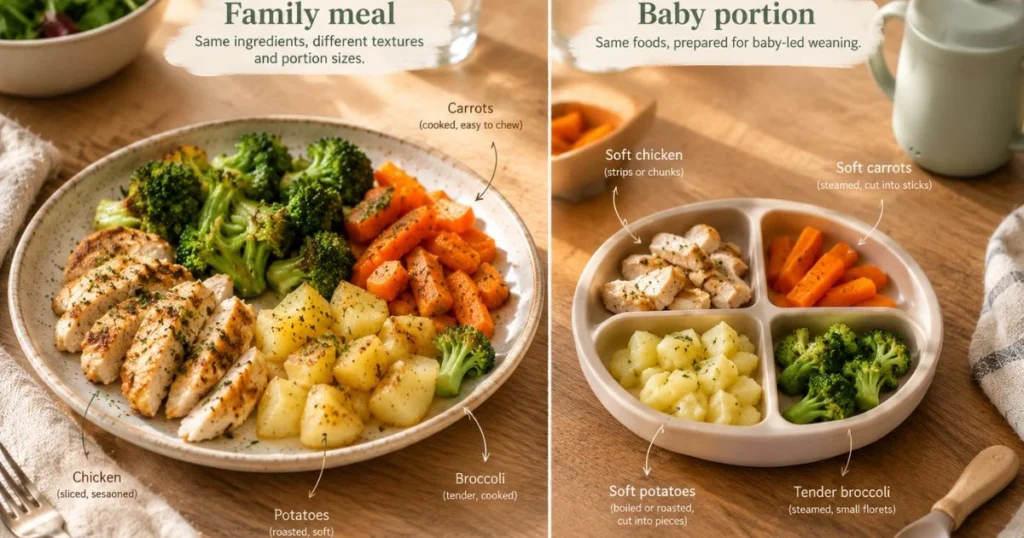
You don’t need to prepare a completely separate dinner for your baby every night. Many Baby Led Weaning Recipes can be created by adapting the same ingredients you’re already cooking for the rest of the family.
Family meal: Chicken served with vegetables and potatoes.
Baby’s portion: Offer tender chicken, thoroughly cooked vegetables, and soft potato without added salt. Cut or prepare each food in a shape and texture that matches your baby’s current feeding abilities.
This simple approach can save you time in the kitchen while allowing your baby to enjoy a suitable version of the family meal and become part of shared mealtimes.
Keep Simple Ingredients Available
Having a few basic ingredients in your kitchen can make Baby Led Weaning Recipes much easier to prepare. Some useful staples to keep available include:
- Eggs
- Bananas
- Avocado
- Plain yogurt
- Sweet potatoes
- Frozen vegetables
- Lentils
- Oats
- Pasta
- Rice
You can combine these everyday ingredients in different ways to create simple baby-led weaning meals without having to cook an entirely new dish from scratch each day.
Baby Led Weaning Recipes by Age
Age can help you understand general feeding stages, but it shouldn’t be the only factor you use when deciding how to prepare food.
| Stage | Recipe Ideas |
| Around 6 months | Soft avocado, sweet potato, banana, egg, very soft vegetables |
| 7–8 months | Omelet strips, soft patties, mashed lentils, soft pasta |
| 9–11 months | Meatballs, salmon cakes, vegetable fritters, more textured meals |
| 12+ months | Appropriately modified family meals |
WHO recommends gradually increasing food consistency and variety as your child develops. By around 12 months, most children can eat the same types of foods as the family, while still needing nutrient-dense choices and appropriate preparation. (Organisation mondiale de la santé)
Baby Led Weaning Recipes FAQs
What Are the Best Easy Baby-Led Weaning Recipes for Beginners?
Begin with simple foods that are soft, easy to prepare, and simple to adapt to your baby’s feeding skills. Good options include tender sweet potato wedges, avocado toast, banana pancakes, well-cooked broccoli, soft strips of egg, and mashed lentils.
The purpose of Baby Led Weaning Recipes isn’t to create complicated meals. Instead, focus on offering your baby a variety of foods in safe, manageable forms so they can gradually explore new flavors, textures, and tastes.
What Can I Make for My 6-Month-Old Using Baby Led Weaning Recipes?
Once your baby is developmentally ready for complementary foods, you can begin with soft, easy-to-manage options such as cooked sweet potato, ripe avocado, banana, soft egg, and appropriately prepared vegetables. These simple foods can also become the foundation for Baby Led Weaning Recipes as your baby gains more feeding skills.
Begin with small portions and gradually offer a wider variety of foods and textures as your baby develops. WHO recommends introducing complementary foods at around 6 months while continuing breast milk or infant formula as appropriate.
What Are Easy Baby Led Weaning Recipes for Breakfast?
Some easy options include:
- Banana and oat pancakes
- Avocado toast fingers
- Egg and vegetable omelet strips
- Banana with plain yogurt
- Sweet potato breakfast bites
What Are Good Baby Led Weaning Recipes for Lunch?
Try:
- Chicken and sweet potato patties
- Lentil and vegetable patties
- Vegetable pasta
- Avocado and egg toast
- Chicken, rice, and vegetables
What Are Good Baby Led Weaning Recipes for Dinner?
Easy dinner ideas include:
- Soft chicken meatballs
- Beef and sweet potato patties
- Salmon and potato cakes
- Lentil fritters
- Chicken, rice, and vegetable bowls
Can You Use Family Meals as Baby Led Weaning Recipes?
Yes. You can adapt many family meals into simple Baby Led Weaning Recipes that are suitable for your baby’s stage of development.
Set aside your baby’s portion before adding extra salt, heavily seasoned sauces, or other strong flavors. Then modify the food’s texture, size, and shape so it is soft and manageable for your baby’s current feeding skills.
Once your child is eating more family foods, you’ll find even more inspiration in our guide to Easy Toddler Meals.
What Foods Should You Avoid When Making Baby Led Weaning Recipes?
When preparing Baby Led Weaning Recipes, pay close attention to foods that may be unsafe for babies because of choking risks or ingredients that should be limited or avoided. In particular, be careful with:
- Honey before 12 months
- Foods and drinks with added sugar
- Foods high in sodium
- Whole nuts and seeds
- Whole grapes
- Hard raw vegetables
- Hard pieces of raw fruit
- Tough or large pieces of meat
- Popcorn
- Hot dogs, sausages, and similar processed meats
- Meat or fish containing bones
The way a food is prepared can make a significant difference. Foods that may be difficult or unsafe in their whole form can sometimes be modified into softer, smaller, or otherwise more appropriate shapes and textures for your baby’s developmental stage.
The CDC recommends choosing food sizes, shapes, and textures that match your baby’s feeding abilities and avoiding foods that are hard, sticky, or difficult to chew and swallow.
How Soft Should Food Be for Baby-Led Weaning?
There is no single texture that is suitable for every food or every baby. When preparing Baby Led Weaning Recipes, consider your baby’s developmental stage and feeding skills. Hard foods may need to be cooked until they are soft and easy to manage, while sticky, tough, or difficult-to-chew foods may require a different preparation method.
The CDC recommends choosing food sizes, shapes, and textures that match your baby’s development to help reduce choking risks.
How Many Baby Led Weaning Meals Should I Offer Each Day?
WHO recommends 2–3 complementary meals daily for babies 6–8 months old and 3–4 meals daily from 9–23 months, with nutritious snacks as appropriate for older babies and toddlers. (Organisation mondiale de la santé)
Think of these as general feeding guidance rather than a reason to pressure your baby to eat.
Conclusion: Keep Your Baby Led Weaning Recipes Simple
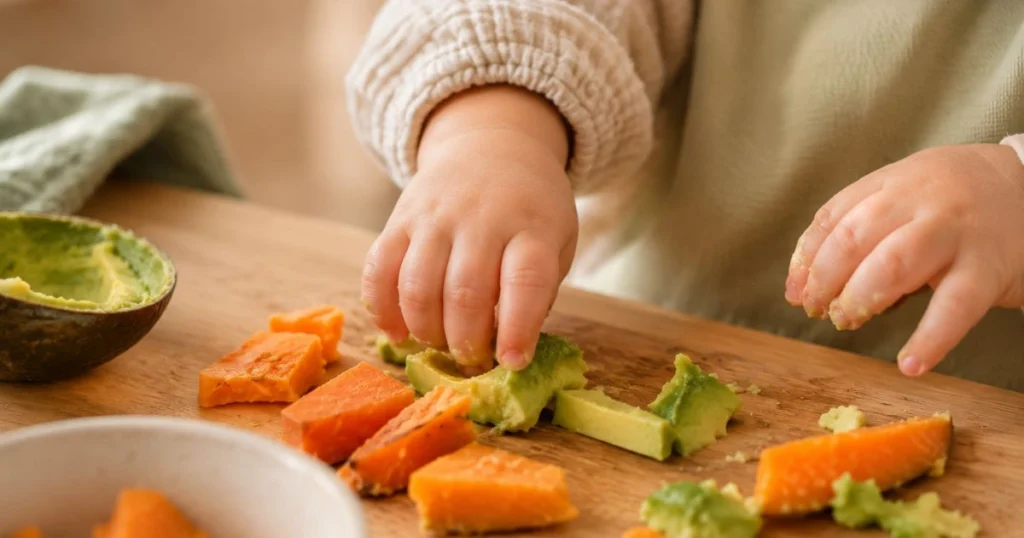
Starting baby-led weaning doesn’t mean you have to prepare a separate meal for every occasion. You can create plenty of nutritious Baby Led Weaning Recipes using simple ingredients you already have at home. Turn a ripe banana into soft pancakes, serve sweet potato as wedges or patties, shape cooked lentils into fritters, or use leftover vegetables in a soft omelet.
The most important things to focus on are safe food preparation, variety, suitable textures, and responsive feeding.
Think of these 25 recipes as inspiration rather than a menu you need to follow every day. Some days your baby may happily taste several foods, while on other days, very little may make it into their mouth. That’s completely normal when they’re learning to eat.
As you continue offering different foods, you’ll learn which flavors, textures, and combinations your baby seems to enjoy. Keep mealtimes relaxed, give your baby plenty of opportunities to explore, and allow their feeding skills to develop at their own pace.
Save this list for your next grocery trip, try one recipe this week, and return whenever you need a fresh, simple meal idea for your baby.
WHO: Infant and young child feeding guidance