Six months is a special stage in your baby’s first year. Your little one may now be rolling over, reaching for favorite toys, laughing during playtime, and making exciting new sounds. Everyday moments that once seemed ordinary can suddenly become little discoveries worth celebrating.
But as your baby grows, you may also have questions. Should your 6-month-old be sitting independently? Is crawling expected already? What sounds should your baby make, and when is it time to introduce solid foods?
Understanding 6 month old milestones can help you recognize your baby’s developing abilities and find simple ways to encourage healthy growth. Every baby follows an individual timeline, so there is no need to turn development into a race. Learning about 6 month old milestones can also help you understand which new skills may appear during this exciting stage.
In this guide, you’ll explore physical, cognitive, communication, and social milestones, discover feeding and sleep changes, and learn seven enjoyable activities to support your baby’s development. These 6 month old milestones will give you a helpful starting point as you follow your baby’s progress.
If you’re curious about how your baby’s development progresses before this stage, explore these developmental milestones at 5 months to understand the skills your little one may have started developing.
1. Understanding 6 Month Old Milestones and Your Baby’s Growth
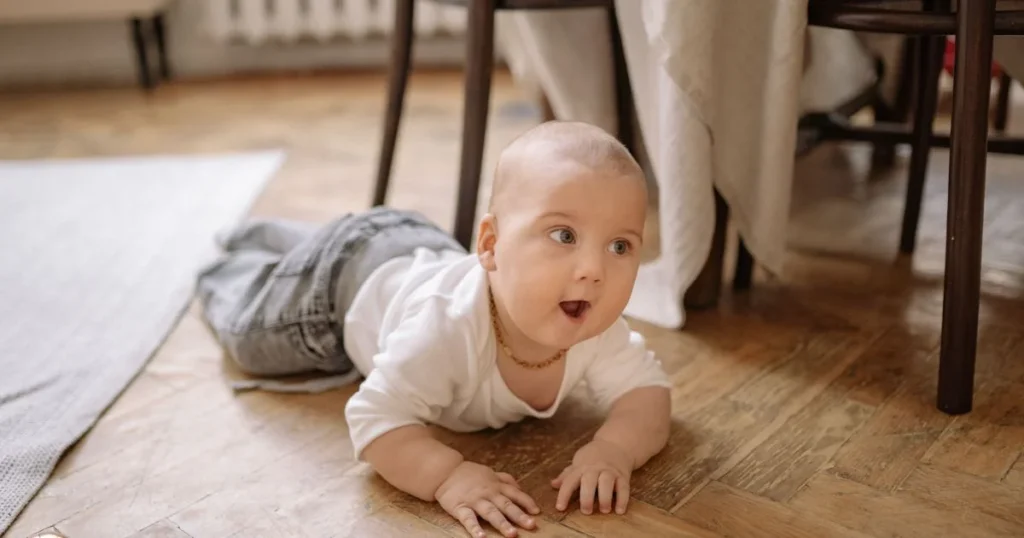
At six months, your baby is becoming more active, curious, and interested in the people and objects around them. Their movements are becoming more coordinated, and their communication is gradually developing through sounds, facial expressions, and gestures. These changes are important parts of 6 month old milestones, showing how your baby is gradually developing new physical, social, and communication skills.
What Are Developmental Milestones?
Developmental milestones are skills that children typically acquire as they grow. They help you understand how your baby is progressing in Several areas of 6 month old milestones include:
- Physical development: Rolling, pushing up, and developing sitting balance.
- Fine motor development: Reaching for, holding, and exploring objects.
- Cognitive development: Learning through observation, repetition, and exploration.
- Communication development: Making sounds, laughing, and responding during interactions.
- Social and emotional development: Recognizing familiar people and expressing feelings.
The Centers for Disease Control and Prevention (CDC) uses milestones that at least 75% of children can achieve by a particular age. These milestones help parents and healthcare professionals monitor development, but they are not a substitute for developmental screening. Understanding 6 month old milestones alongside CDC guidance can help you follow your baby’s progress and know when to discuss concerns with your pediatrician.
You can also explore developmental milestones at 3 months to see how your baby’s early abilities develop over time.
How Babies Grow at 6 Months
Around this age, you may notice several physical changes as part of 6 month old milestones:
- Your baby may have approximately doubled their birth weight.
- Their length continues to increase steadily.
- Their head circumference grows as their brain develops.
- Their neck and upper-body control become stronger.
- Their movements become more coordinated.
These are general growth patterns, not requirements every baby must meet at exactly six months. Your pediatrician uses growth charts to follow your baby’s individual weight, length, and head circumference over time. Tracking these changes alongside 6 month old milestones can help you better understand your baby’s overall growth and development.
Looking back at developmental milestones at 2 months can help you appreciate how much your baby has learned during the first months of life.
Why Every Baby Develops at a Different Pace
Your baby may master rolling before sitting, while another baby may show stronger sitting skills first. Both patterns can be part of normal development.
If your baby was born prematurely, their healthcare provider may use corrected age when assessing developmental progress, particularly during the first two years.
Remember, 6 month old milestones are useful guides, not deadlines. Every baby develops at their own pace, so focus on your little one’s progress rather than comparing their skills with those of other babies.
Understanding earlier stages can also help you recognize your baby’s progress, so take a look at these developmental milestones at 4 months.
2. Physical Milestones at 6 Months: Gross and Fine Motor Skills
One of the most exciting parts of watching your baby grow is seeing how much more control they gain over their body. At six months, many babies become more active during floor play and increasingly interested in reaching for nearby objects. These new abilities are important 6 month old milestones, reflecting your baby’s growing strength, coordination, and curiosity about the world around them.
Rolling Over
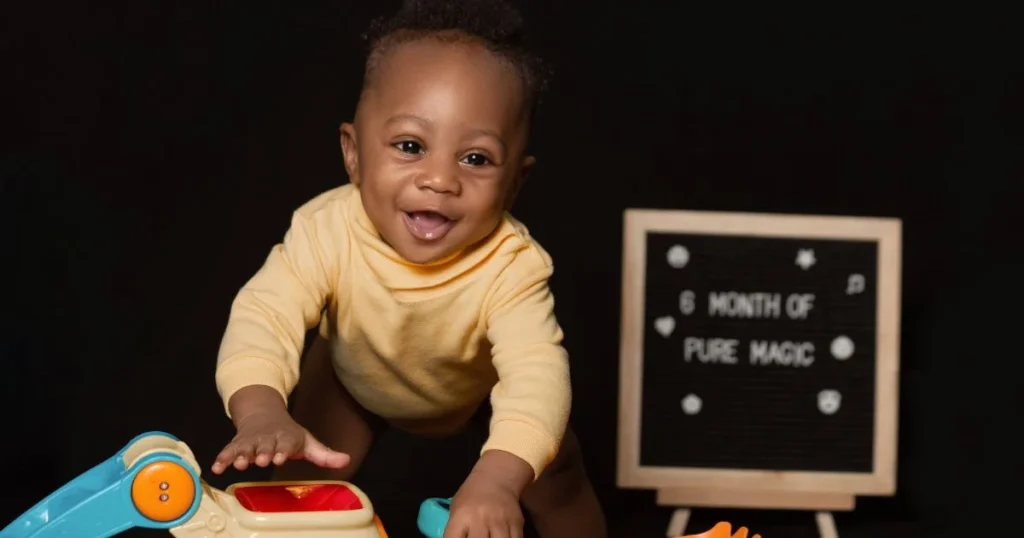
Rolling is an important movement skill during this stage and one of the noticeable 6 month old milestones.
By six months, most babies can roll from their tummy to their back. Some are also beginning to roll from their back to their tummy.
You may notice your baby:
- Turning their body to follow an interesting toy.
- Moving their legs and arms to change position.
- Rolling during supervised floor play.
- Becoming more interested in exploring different positions.
Parenting Whisper Reminder: Once your baby shows signs of rolling, stop swaddling with their arms restrained. Always place your baby on their back when starting sleep, even if they can roll independently. These 6 month old milestones show why it’s important to provide safe opportunities for movement while following recommended sleep practices.
Pushing Up With Straight Arms
During tummy time, your baby may begin pushing their upper body off the floor using straight arms. This is one of the important 6 month old milestones that shows growing upper-body strength and muscle control.
This movement helps strengthen the shoulders, arms, and upper body.
You can encourage this skill by placing a safe toy nearby while your baby is awake and supervised.
Sitting With Support
You may notice your baby beginning to sit with their hands on the floor for balance. This is one of the emerging 6 month old milestones as your baby gradually develops better balance and trunk control.
This position is sometimes called tripod sitting because your baby leans forward and uses their hands for support.
At this age, independent sitting is not required. Give your baby opportunities to practice on a safe floor surface while you stay close.
Reaching, Grabbing, and Exploring Toys
Your baby’s hand movements are becoming more purposeful, marking another exciting part of 6 month old milestones.
They may:
- Reach for a toy that catches their attention.
- Hold objects with increasing control.
- Bring toys toward their mouth.
- Explore different shapes and textures.
Some babies also begin transferring objects between their hands around this stage, although this is not a required CDC six-month milestone. These developing hand skills help your baby explore their surroundings and build coordination through everyday play.
Developing Hand Coordination
Your baby is learning to coordinate what they see with how they move their hands. This growing ability is another part of 6 month old milestones, helping your little one develop hand-eye coordination through everyday play.
Offering lightweight, baby-safe toys gives them opportunities to practice grasping, reaching, and exploring.
Avoid toys with small detachable parts or anything that could become a choking hazard.
3. Cognitive Milestones at 6 Months: How Your Baby Learns
Your baby’s brain is constantly processing new information. Every sound, movement, facial expression, and object provides another opportunity to learn. These discoveries are an important part of 6 month old milestones, as your baby begins understanding and responding to the world around them.
Exploring Objects With Their Mouth
Have you noticed your baby putting almost everything within reach into their mouth?
This is a normal way babies explore their surroundings and an important part of 6 month old milestones.
Through mouthing, your baby experiences different textures, shapes, and sensations.
Offer clean, age-appropriate toys that are too large to become choking hazards. Never leave your baby alone with objects that could break or detach.
Learning Cause and Effect
Your baby may begin discovering that their actions create reactions. This is an exciting part of 6 month old milestones, as your little one starts exploring simple cause-and-effect relationships.
For example:
- Shaking a rattle makes a sound.
- Kicking a toy causes it to move.
- Dropping an object makes it fall.
- Pressing a soft toy may produce a noise.
These repeated experiences help your baby explore simple cause-and-effect relationships.
Recognizing Familiar People and Objects
Your baby is becoming increasingly familiar with everyday faces, voices, and surroundings. Recognizing familiar people is one of the meaningful 6 month old milestones that reflects your baby’s growing memory and awareness.
They may look toward you when you enter the room or show excitement when they recognize a familiar caregiver.
Repeated experiences help your baby build familiarity and confidence.
Developing Curiosity Through Play
Your baby may spend longer looking at interesting objects, watching movement, or exploring toys. This growing curiosity is another part of 6 month old milestones, helping your little one learn through observation and exploration.
You can encourage this curiosity by:
- Offering colorful board books.
- Introducing safe toys with different textures.
- Talking about objects during everyday activities.
- Allowing supervised floor play.
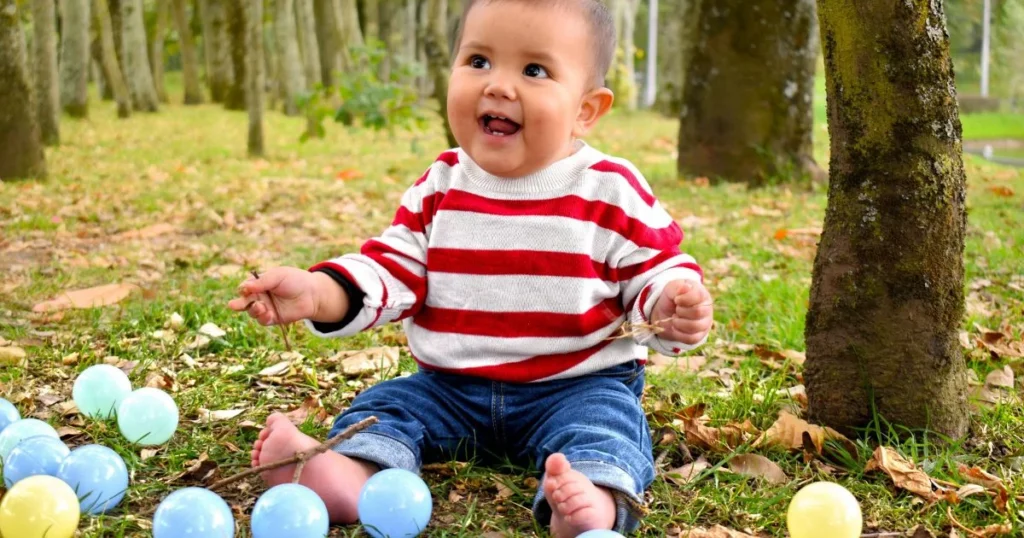
4. Communication Milestones at 6 Months
Your baby may not be saying recognizable words yet, but communication is already developing. These early communication skills are important 6 month old milestones, helping your baby gradually learn how to interact and express themselves.
At six months, sounds, facial expressions, laughter, and back-and-forth interactions are important parts of language development.
Making Squealing Sounds
Your baby may experiment with different vocal sounds, including high-pitched squeals. These emerging sounds are important 6 month old milestones, showing how your little one is beginning to explore their voice and develop early communication skills.
Sometimes these sounds appear during exciting play. Other times, your baby may simply be exploring what their voice can do.
Respond with a smile or a gentle sound of your own.
Blowing Raspberries
You may notice your baby sticking out their tongue and blowing air to create playful sounds. This is one of the fun 6 month old milestones related to early communication.
This is known as blowing raspberries and is one of the CDC’s six-month communication milestones.
You can respond by copying the sound and giving your baby time to respond.
Taking Turns Making Sounds
One of the most enjoyable 6 month old milestones is early sound turn-taking.
Your baby may make a sound, pause, and then vocalize again after hearing your response.
Try this simple activity:
- Sit face-to-face with your baby.
- Make a gentle sound.
- Pause and give your baby time to respond.
- Repeat their sounds with a smile.
These little conversations help build early communication skills and encourage your baby to interact with you through sounds and expressions.
Responding to Voices and Sounds
Your baby is becoming increasingly interested in voices and sounds around them. These reactions are important 6 month old milestones, showing your baby’s growing awareness of familiar voices and sounds.
They may pause, look toward a familiar voice, or become excited when you sing.
Talk to your baby throughout the day. Describe what you’re doing, name familiar objects, and read short stories together.
5. Social and Emotional Milestones at 6 Months
Your baby’s personality may become more noticeable during this stage. They may laugh during playful moments, enjoy familiar faces, and express excitement through sounds and movements. These social and emotional changes are meaningful 6 month old milestones that help you understand how your baby is beginning to express feelings and connect with others.
Recognizing Familiar Faces
Your baby may show excitement when seeing people they know well. This growing recognition is one of the meaningful 6 month old milestones, reflecting your baby’s developing social awareness.
You might notice:
- Smiling when you approach.
- Watching your face during conversations.
- Becoming animated when a familiar caregiver speaks.
- Enjoying familiar games and routines.
Laughing and Enjoying Interaction
Laughter becomes an increasingly enjoyable part of everyday interaction. This is one of the delightful 6 month old milestones as your baby begins responding more actively to playful interactions.
Your baby may laugh when you make funny expressions, sing a playful song, or play peekaboo.
These moments also help strengthen your connection.
Showing Different Emotions
Your baby may communicate happiness, excitement, frustration, or discomfort through facial expressions, sounds, and movements. Recognizing these expressions is an important part of 6 month old milestones as your baby begins expressing emotions in different ways.
Pay attention to these signals. Responding to your baby’s needs helps them feel safe and understood.
Enjoying Mirror Play
Your baby may become fascinated by their reflection. Exploring reflections is another fun part of 6 month old milestones as your little one becomes more curious about faces and familiar images.
Place a baby-safe mirror nearby during supervised floor play. Talk about the reflection, smile, and point out familiar facial features.
This creates another enjoyable opportunity for interaction.
6. Feeding Milestones at 6 Months: Starting Solid Foods
Around six months, your baby may be ready to explore foods alongside breast milk or infant formula. Starting complementary feeding is an important part of 6 month old milestones as your baby develops new feeding skills.
This is an exciting transition, but you do not need to rush. Readiness and safe feeding practices are more important than introducing a large variety of foods immediately.
Signs Your Baby Is Ready for Solid Foods
Look for several developmental signs together. These feeding-related 6 month old milestones can help you recognize whether your baby is showing signs of readiness:
- Your baby can hold their head steady.
- They can sit upright with support.
- They show interest in food.
- They can coordinate bringing objects toward their mouth.
- They can swallow food rather than consistently pushing it out with their tongue.
Your baby’s age and developmental readiness should both guide the introduction of complementary foods.
Before introducing complementary foods, you can review this guide to first foods for baby for nutritious options and helpful tips for getting started.
For more ideas about age-appropriate foods and how feeding needs change as your baby grows, explore this baby feeding chart by age.
Best First Foods for a 6-Month-Old
Start with a variety of nutritious, age-appropriate foods.
| Food group | Examples | Nutritional benefits |
| Vegetables | Sweet potato, pumpkin, broccoli, carrots | Vitamins, minerals, and fiber |
| Fruits | Banana, avocado, pear, cooked apple | Fiber and other nutrients |
| Iron-rich foods | Pureed meat, iron-fortified infant cereal, lentils | Iron for healthy development |
| Protein foods | Well-cooked egg, fish without bones, soft beans | Protein and other essential nutrients |
Iron-rich foods deserve particular attention because your baby’s iron needs increase during this stage.
Easy Homemade Baby Food Recipes for 6 Months
Homemade baby food can be simple. You do not need complicated ingredients or elaborate preparation.
Here are four easy ideas to introduce different flavors and textures.
Sweet Potato Puree
Ingredients:
| Ingredient | Amount |
| Sweet potato | 1 small |
| Water | As needed |
| Breast milk or prepared formula | Optional |
Preparation:
- Peel and cut the sweet potato into small pieces.
- Steam until completely tender.
- Blend until smooth.
- Add a little water, breast milk, or prepared formula to adjust the texture.
Banana and Avocado Mash
Ingredients:
| Ingredient | Amount |
| Ripe banana | ½ small |
| Ripe avocado | ¼ small |
Preparation:
- Remove the avocado skin and pit.
- Mash the banana and avocado together.
- Mix until soft and smooth.
- Serve immediately.
Carrot Puree
Ingredients:
| Ingredient | Amount |
| Carrot | 1 small |
| Water | As needed |
Preparation:
- Peel and cut the carrot.
- Steam until very soft.
- Blend until smooth.
- Adjust the consistency with a little water.
Pumpkin and Lentil Puree
Ingredients:
| Ingredient | Amount |
| Pumpkin | A small piece |
| Red lentils | 1 tablespoon |
| Water | As needed |
Preparation:
- Wash the lentils and prepare the pumpkin.
- Cook both thoroughly until very soft.
- Blend until smooth.
- Adjust the consistency as needed.
These recipes are starting ideas, not prescribed portions. Offer small amounts and follow your baby’s hunger and fullness cues.
Once your baby becomes comfortable exploring different textures, you can discover more baby-led weaning recipes for additional meal inspiration.

Breast Milk and Formula Are Still Important
Even after introducing solids, breast milk or infant formula remains your baby’s main source of nutrition throughout the first year.
Solid foods gradually complement milk feeds rather than replacing them immediately.
You can also offer small amounts of plain water with meals in an open or straw cup.
If you have questions about how milk intake changes as your baby grows, this baby feeding schedule by age can help you understand feeding patterns throughout the first year.
Important Feeding and Allergy Safety Tips
Keep these recommendations in mind:
- Never give honey before 12 months.
- Avoid added salt and sugar.
- Avoid whole nuts, whole grapes, popcorn, and hard raw vegetables.
- Always supervise your baby while eating.
- Prepare foods in textures and shapes appropriate for your baby’s feeding abilities.
- Introduce common allergens, including well-cooked egg and age-appropriate peanut products, without unnecessary delay once your baby is ready for solids.
If your baby has severe eczema or an existing food allergy, ask your pediatrician about the safest way to introduce peanut and other allergens.
For additional guidance, consult the CDC’s solid food recommendations and the AAP’s feeding guidance.
As your baby becomes more confident with eating, explore these baby finger foods for ideas on offering suitable foods and textures safely.
7. Sleep Milestones at 6 Months
Sleep patterns may change as your baby becomes more active and interested in their surroundings. These changes can happen alongside 6 month old milestones as your baby grows and develops new skills.
Some babies begin sleeping for longer stretches at night, while others continue waking for feeds and comfort.
How Much Sleep Does a 6-Month-Old Need?
According to the American Academy of Sleep Medicine, infants aged 4–12 months generally need 12–16 hours of sleep per 24 hours, including naps. Understanding this recommendation can help you support your baby’s sleep needs as they reach important 6 month old milestones.
This is a general recommendation rather than a strict daily target.
You can also follow this 6-month sleep schedule to learn more about age-appropriate sleep patterns and daily routines.
How Many Naps Does a 6-Month-Old Need?
Many six-month-olds take two or three daytime naps. As your baby reaches new 6 month old milestones, their sleep patterns and daytime routines may gradually change.
However, nap length and timing vary depending on your baby’s sleep needs.
Look for signs of tiredness, such as:
- Rubbing their eyes.
- Yawning.
- Becoming less interested in play.
- Fussiness.
- Looking away from stimulation.
To understand how daytime sleep changes as babies grow, take a look at this baby nap schedule by age.
Why Your Baby’s Sleep Patterns May Change
Many six-month-olds take two or three daytime naps. As your baby reaches new 6 month old milestones, their sleep patterns and daytime routines may gradually change.
However, nap length and timing vary depending on your baby’s sleep needs.
Look for signs of tiredness, such as:
Looking away from stimulation.
Rubbing their eyes.
Yawning.
Becoming less interested in play.
Fussiness.
Some babies also experience temporary sleep disruptions during this stage, so learning about the 6-month sleep regression may help you understand these changes.
Creating a Safe and Consistent Bedtime Routine
A simple routine can help your baby recognize when bedtime is approaching. Establishing consistent sleep habits can support your baby’s changing needs as they reach new 6 month old milestones.
Try this sequence:
- Give your baby a calm bath or gentle wash.
- Offer their usual milk feed.
- Read a short story or sing a quiet song.
- Dim the lights and reduce stimulation.
- Place your baby in their safe sleep space.
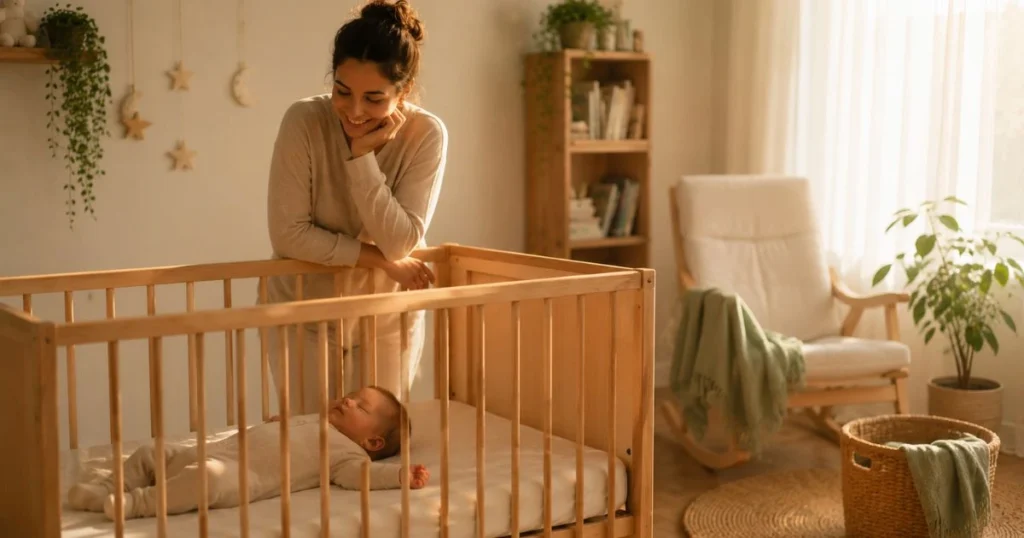
Safe sleep reminder: Always place your baby on their back at the beginning of every sleep. Use a firm, flat, noninclined mattress with a fitted sheet, and keep pillows, loose blankets, toys, and other soft objects out of the crib.
If your baby rolls independently in both directions, continue placing them on their back initially, but you do not need to repeatedly reposition them throughout the night.
A predictable evening routine can make bedtime feel more familiar, and this guide explains how to create a baby bedtime routine.
8. Seven Activities to Support Your 6-Month-Old’s Development
You do not need expensive toys or complicated learning programs to support your baby’s development. Simple everyday activities can help your baby practice important 6 month old milestones while encouraging curiosity, movement, and learning.
1. Practice Supervised Tummy Time
Place your baby on their tummy while awake and supervised.
Put an interesting toy nearby to encourage your baby to lift their head, push up, and reach.
2. Encourage Reaching for Toys
Offer lightweight, baby-safe toys within your baby’s reach.
Allow them to practice grasping, holding, and exploring objects.
3. Talk, Sing, and Respond to Sounds
Describe everyday activities, sing familiar songs, and respond when your baby makes noises.
These simple conversations encourage early communication.
4. Play Peekaboo
Cover your face with your hands, then reveal it with a smile.
Your baby may respond with laughter, excitement, or repeated attempts to interact.
5. Read Colorful Board Books
Choose books with large pictures and simple illustrations.
Point to objects, name them, and allow your baby to touch the pages.
6. Encourage Supported Sitting
Sit with your baby on a safe floor surface and provide support around their body.
Place a toy in front of them to encourage looking, reaching, and balance.
Never leave your baby sitting unsupported on a raised surface.
7. Introduce Safe Sensory Play
Offer different baby-safe textures, such as soft fabrics and textured toys.
Let your baby explore while you supervise closely.
Avoid small objects, loose sensory materials, and anything that could become a choking hazard.
9. Home Safety Tips for Your Growing 6-Month-Old
As your baby becomes more mobile, their surroundings need extra attention.
Even if your baby is not crawling yet, rolling and reaching can bring them closer to objects you may not have considered dangerous.
Preventing Falls and Injuries
- Never leave your baby unattended on a changing table, bed, or sofa.
- Use the safety straps on high chairs.
- Install appropriate safety gates near stairs.
- Keep furniture and unstable objects secure.
- Keep window blind cords out of reach.
Preventing Burns and Choking
- Keep hot drinks and foods away from your baby.
- Test bathwater before placing your baby in the tub.
- Keep small objects off the floor.
- Choose toys designed for your baby’s age.
- Never leave your baby alone while eating.
Creating a Safer Play Environment
Look around your home from your baby’s level.
Check for accessible electrical cords, cleaning products, medications, sharp objects, and unstable furniture.
Avoid infant walkers, which can increase the risk of falls and injuries.
A safer environment gives your baby more opportunities to explore while you remain close.
10. When to Talk to Your Pediatrician About 6 Month Old Milestones
Watching your baby develop is exciting, but you may sometimes wonder whether a particular skill should have appeared already. Understanding 6 month old milestones can help you recognize typical developmental changes and know when to seek guidance.
Some differences are part of normal development. However, certain observations deserve professional attention.
Developmental Signs Worth Discussing
Talk to your baby’s healthcare provider if you notice:
- Difficulty holding their head steady.
- Not reaching for objects.
- Not bringing objects toward their mouth.
- Not making sounds or responding to sounds.
- Not laughing or showing expected social responses.
- Noticeable differences in movement between the two sides of the body.
- Unusual stiffness or floppiness.
These observations do not automatically mean your baby has a developmental delay. A healthcare professional can assess your baby’s development and determine whether further evaluation is needed.
What If Your Baby Is Not Meeting Every Milestone?
Try not to compare your baby with another child.
Some babies develop certain skills earlier than others, and one missed milestone does not automatically indicate a problem.
However, do not ignore concerns simply because someone tells you that your baby will eventually catch up.
Share your observations with your pediatrician, especially if you notice a persistent difficulty or a loss of previously acquired skills.
Important: Losing a skill your baby previously had warrants prompt medical assessment. Seek urgent care if the change is sudden or accompanied by other concerning symptoms.
Why Early Developmental Screening Matters
Developmental screening helps healthcare professionals identify children who may benefit from additional evaluation or support.
Regular well-child visits give you an opportunity to discuss your baby’s progress, ask questions, and share any concerns.
You can also use the CDC’s developmental milestone resources to monitor progress between appointments.
11. 6 Month Old Milestones Checklist
Looking for a simple way to remember what your baby may be doing at this stage?
The following checklist summarizes the CDC’s six-month developmental milestones.
| Developmental area | Milestone |
| Social and emotional | Recognizes familiar people |
| Social and emotional | Enjoys looking at themselves in a mirror |
| Social and emotional | Laughs |
| Communication | Takes turns making sounds |
| Communication | Blows raspberries |
| Communication | Makes squealing noises |
| Cognitive | Puts objects in their mouth to explore |
| Cognitive | Reaches for a toy they want |
| Cognitive | Closes lips to show they do not want more food |
| Physical | Rolls from tummy to back |
| Physical | Pushes up with straight arms during tummy time |
| Physical | Leans on hands for support while sitting |
How to Use This Checklist
- Observe your baby during everyday activities.
- Celebrate new skills as they appear.
- Write down questions before pediatric appointments.
- Share any developmental concerns with your healthcare provider.
Remember, this checklist is a developmental monitoring tool, not a diagnostic test.
12. Frequently Asked Questions About 6 Month Old Milestones
What should a 6-month-old baby be doing?
By six months, many babies achieve important 6 month old milestones, including recognizing familiar people, laughing, making squealing noises, blowing raspberries, reaching for desired toys, and rolling from tummy to back. They may also push up with straight arms during tummy time and lean on their hands while sitting.
Should a 6-month-old be sitting independently?
No. Independent sitting is not a required CDC milestone at six months. As part of 6 month old milestones, many babies are still developing their balance and may lean forward on their hands or need support while sitting.
Should my 6-month-old be crawling?
No. Crawling is not expected at six months. Some babies begin exploring different ways to move around this age, while others do not crawl until later. Some children use alternative movement patterns.
How many words should a 6-month-old say?
A six-month-old does not need to say recognizable words. Babies typically communicate through squealing, laughing, blowing raspberries, and experimenting with different sounds.
Can a 6-month-old recognize their name?
Some babies may respond to their names around this stage, but consistently responding to their name is not a CDC six-month milestone. Continue talking to your baby and using their name during everyday interactions.
How much should a 6-month-old eat?
Around six months, developmentally ready babies can begin complementary foods alongside breast milk or infant formula. Start with small amounts, introduce a variety of nutritious foods, and follow your baby’s hunger and fullness cues.
How much sleep does a 6-month-old need?
Babies aged 4–12 months generally need 12–16 hours of sleep over 24 hours, including naps. Individual sleep patterns vary, and some babies continue waking during the night.
What if my baby is not meeting 6 month old milestones?
Discuss your concerns with your pediatrician. They can assess your baby’s development and determine whether further screening or evaluation is appropriate. Seek prompt medical advice if your baby loses a previously acquired skill.
Conclusion: Celebrate Every Little Step in Your Baby’s Development
Six months is a wonderful stage filled with new discoveries, little laughs, and exciting changes. From rolling over and reaching for toys to making new sounds and enjoying your company, every small achievement is part of your baby’s growing journey. These 6 month old milestones are worth celebrating, even when progress happens one little step at a time.
Remember, your baby does not need to master every skill at once. Give them time, provide opportunities to explore, and enjoy the everyday moments that make this stage special.
Your attention, responsive care, and loving interactions create a meaningful foundation for learning and development. And whenever you have concerns, your pediatrician is there to help guide you.
What new skill has your baby surprised you with at six months? Share your experience in the comments. Your story might reassure another parent going through the same stage!
Medical and editorial references
- CDC: Important Milestones: Your Baby By Six Months — primary developmental reference.
- CDC: When, What, and How to Introduce Solid Foods — feeding readiness and safety.
- American Academy of Pediatrics: Starting Solid Foods — complementary feeding.
- WHO: Complementary Feeding Guideline — infant nutrition.
- American Academy of Sleep Medicine: Recommended Amount of Sleep for Pediatric Populations — sleep recommendations.
- American Academy of Pediatrics: Safe Sleep Recommendations — infant sleep safety.