
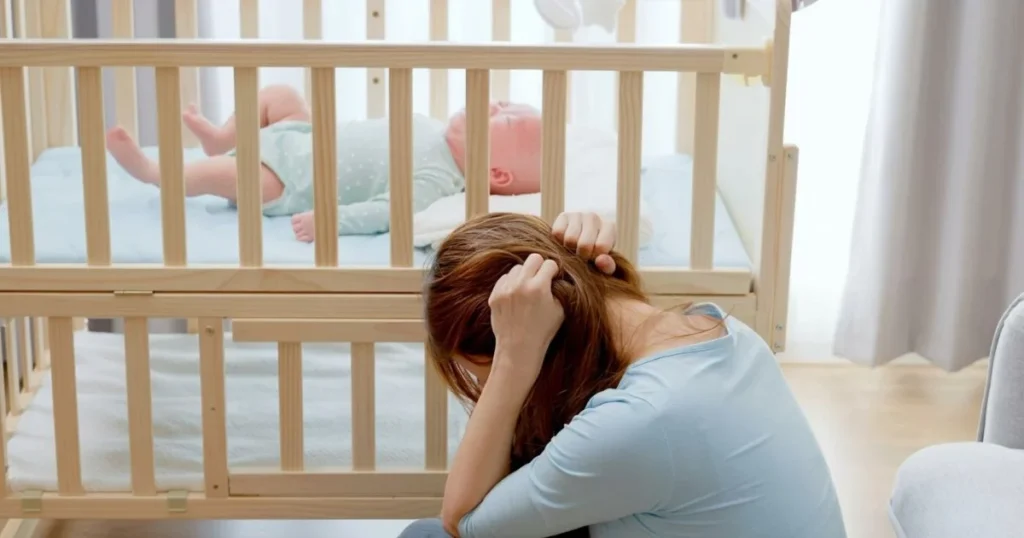
Having a baby can bring moments you never expected.
You might feel an overwhelming love for your baby one moment, only to feel exhausted and overwhelmed the next. You may cry more easily, worry about things you never used to worry about, or wonder why everyone else seems to be adjusting while you are struggling to get through the day.
Experiencing a range of emotions after giving birth is normal. But sometimes sadness, anxiety, exhaustion, anger, or emotional numbness becomes more persistent and starts to affect how you think, function, or connect with your baby.
Recognizing the signs of postpartum depression can help you understand when these feelings may be more than the usual emotional changes that follow childbirth.
Postpartum depression is a treatable medical condition. It is not a sign that you are weak, ungrateful, or a bad mother. It can affect you even if your pregnancy and birth went well, you love your baby deeply, and you have a supportive family around you.
If some of these signs of postpartum depression sound familiar, you do not have to wait until things become unbearable before asking for help. You deserve support, and reaching out to a healthcare professional is an important first step.

What Is Postpartum Depression?
Postpartum depression is a type of depression that develops after having a baby. It belongs to the broader category of perinatal depression, which can begin during pregnancy or after childbirth.
The signs of postpartum depression can affect your mood, thoughts, sleep, appetite, energy levels, relationships, and ability to manage daily activities. Some mothers experience many symptoms, while others notice only a few.
The key thing to understand is that postpartum depression involves more than having an occasional difficult day.
You may experience:
- Persistent feelings of sadness or emptiness
- Anxiety or constant worry
- Irritability or unusual anger
- Feelings of guilt or worthlessness
- Exhaustion, even when you have opportunities to rest
- Losing interest in activities you once enjoyed
- Feeling emotionally distant from your baby
- Difficulty concentrating or making everyday decisions
According to NIMH, perinatal depression can range from mild to severe and may make everyday tasks, including caring for yourself or others, more difficult. Recognizing these changes can help you identify the signs of postpartum depression and understand when it may be time to seek professional support.
When Can Postpartum Depression Begin?
Postpartum depression does not always begin right after childbirth. The signs of postpartum depression may appear gradually, so you might not recognize them immediately.
NIMH explains that perinatal depression often begins within four to eight weeks after birth, although it can develop at other points during pregnancy or the postpartum period. ACOG also recognizes mental health conditions that emerge during pregnancy or within the first year after childbirth.
If you are several months postpartum and still feel that something is wrong, do not assume it is too late to ask for help. Recognizing the signs of postpartum depression and speaking with a healthcare professional can help you find the support you need.
Baby Blues vs. Postpartum Depression vs. Postpartum Psychosis
The early postpartum period can be emotionally intense, which makes it difficult to know what is normal and what deserves professional attention.
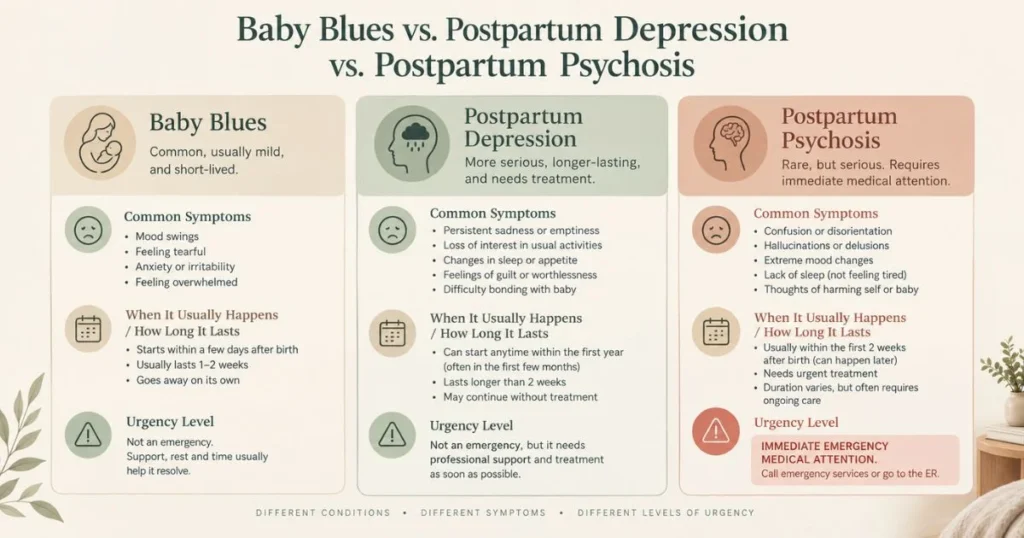
A quick comparison can help.
| Feature | Baby Blues | Postpartum Depression | Postpartum Psychosis |
| Typical experience | Tearfulness, mood changes, worry, irritability | Persistent sadness, anxiety, guilt, loss of interest, exhaustion, or other depressive symptoms | Confusion, hallucinations, delusions, paranoia, or mania |
| Timing | Commonly begins in the first days after birth | Can begin during pregnancy or after childbirth | Usually develops suddenly after childbirth |
| Duration | Usually improves within about two weeks | May persist or worsen and interfere with daily life | Requires immediate medical attention |
| Effect on daily life | Usually manageable | Can make everyday functioning difficult | Can seriously affect safety |
| Treatment | Often improves with time and support | Professional assessment and treatment may be needed | Psychiatric emergency |
The baby blues are common after childbirth and typically involve mild emotional changes that resolve within the first two weeks. In contrast, the signs of postpartum depression may be more intense, persist beyond this period, or interfere with your ability to manage everyday activities.
Postpartum psychosis is a separate and much more serious condition that requires emergency medical care. Symptoms may include hallucinations, delusions, paranoia, mania, or severe confusion. If you or someone who has recently given birth experiences these symptoms, seek immediate medical attention.
10 Signs of Postpartum Depression to Know
The signs of postpartum depression can vary from one mother to another. You might experience persistent sadness, or you may notice anxiety, anger, emotional numbness, exhaustion, or difficulty feeling connected to your baby.
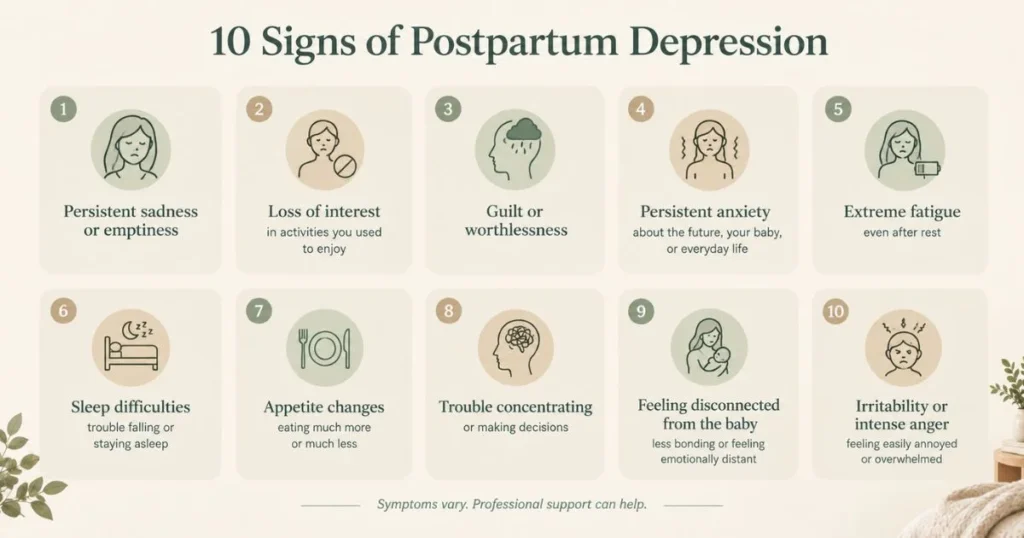
Understanding these ten common signs of postpartum depression can help you recognize changes in your emotional well-being and know when to seek support.
1. Persistent Sadness or Feeling Empty
One of the common signs of postpartum depression is feeling persistently sad, low, or emotionally empty.
You may find yourself crying more often, feeling unusually down, or waking up with a heavy feeling that stays with you throughout the day. You might also believe you should feel happier because you have a healthy baby, which can make the sadness even harder to cope with.
You may catch yourself thinking:
- “I don’t feel like myself anymore.”
- “I should be happier.”
- “I feel hollow inside, even when things seem to be going well.”
- “I just want this feeling to stop.”
Having a difficult afternoon does not necessarily mean you have postpartum depression. What matters is whether these feelings persist, fail to improve, or begin to interfere with your daily life.
Persistent sadness and feelings of emptiness are among the signs of postpartum depression recognized by NIMH and the CDC. If these feelings sound familiar, consider speaking with a healthcare professional about what you are experiencing.
2. Losing Interest in Things You Usually Enjoy
You may continue caring for your baby and handling your daily responsibilities while feeling as though nothing brings you joy anymore. This loss of enjoyment can be one of the signs of postpartum depression.
You may have once enjoyed seeing friends, watching your favorite shows, cooking, spending time outdoors, reading, exercising, or being with your partner. Now, these activities might feel exhausting, uninteresting, or no longer worth the effort.
Losing interest in things you once enjoyed or no longer feeling pleasure from them can be an important symptom of depression.
This goes beyond simply feeling too tired to socialize after a difficult night. With depression, you may notice that activities that once made you feel happy or connected to yourself no longer bring you the same sense of enjoyment.
3.Struggling With Feelings of Guilt, Worthlessness, or Being a Bad Mother
Postpartum depression can affect how you view yourself and your abilities as a mother. Feelings of guilt, worthlessness, or self-doubt can be important signs of postpartum depression.
You may find yourself questioning your parenting and thinking:
- “I’m not doing enough.”
- “I’m failing my baby.”
- “Everyone else knows what they’re doing except me.”
- “My baby deserves a better mother.”
You might repeatedly think about small mistakes and use them as evidence that you are not capable of caring for your child.
Excessive guilt, feelings of worthlessness, and helplessness are recognized symptoms of perinatal depression.
Remember that having these thoughts does not make them true. Struggling emotionally does not mean you are a bad mother, and asking for help or accepting support is a positive step toward caring for yourself and your baby.
4. Persistent Anxiety, Worry, or Feeling on Edge
Postpartum depression does not always show up as sadness. For some mothers, persistent anxiety and excessive worry are among the most noticeable signs of postpartum depression.
You may worry constantly about your baby’s health, sleep, feeding, breathing, development, or safety. You might find it difficult to relax and repeatedly check on your baby or other things because you feel unable to ease your worries.
You may also feel physically restless, tense, or as though you need to stay alert all the time.
Anxiety can occur alongside postpartum depression, although some mothers develop postpartum anxiety without depression. In either case, anxiety that feels overwhelming or continues to interfere with your daily life deserves attention.
NIMH identifies anxiety, irritability, frustration, and restlessness as possible symptoms of perinatal depression. Recognizing these signs of postpartum depression can help you understand when it may be time to seek professional support.
5. Extreme Fatigue or Loss of Energy
Feeling exhausted after having a baby is common.
You may be waking several times during the night, feeding your baby, recovering from childbirth, and trying to keep up with everyday responsibilities.
But when can tiredness be one of the signs of postpartum depression?
The key is to consider how you’re feeling overall.
If you feel constantly drained, emotionally numb, unable to begin simple tasks, or as though even small responsibilities take enormous effort, especially when you notice other symptoms, consider speaking with a healthcare professional.
Persistent fatigue and low energy are recognized symptoms of perinatal depression. If your exhaustion feels different from ordinary new-parent tiredness, paying attention to these changes can help you recognize the signs of postpartum depression and seek appropriate support.
6. Trouble Sleeping Even When Your Baby Is Sleeping
Sleep can become challenging after having a baby, but changes in your sleep may also be among the signs of postpartum depression.
Sometimes your baby is sleeping, yet you still cannot fall asleep. Your thoughts may race, you may feel constantly tense, or you might wake up too early and find it difficult to get back to sleep.
Other mothers may find themselves sleeping more than usual whenever they have the chance.
This goes beyond simply being awakened throughout the night by your baby.
If you have a chance to rest but regularly struggle to fall asleep, or your sleep patterns change significantly alongside other symptoms of depression, talk with your healthcare provider.
NIMH identifies difficulty sleeping even when your baby is asleep, waking too early, and sleeping excessively as possible symptoms of perinatal depression. Paying attention to these changes can help you recognize the signs of postpartum depression and determine whether you need professional support.
7. Changes in Appetite or Eating
Your appetite may change after childbirth for several everyday reasons.
You might be busy caring for your baby, feeling exhausted, breastfeeding, recovering from delivery, or forgetting to eat because you have so much on your mind.
However, persistent or noticeable changes in appetite can also be among the signs of postpartum depression.
You may notice that you:
- Have little interest in food
- Eat significantly more than usual
- Skip meals because you rarely feel hungry
- Experience unexpected changes in your weight
An appetite change alone does not mean you have postpartum depression. However, when it occurs alongside other emotional, cognitive, or behavioral symptoms, it may be worth discussing with a healthcare professional.
8. Trouble Concentrating or Making Decisions
You may feel as though your mind is not working as clearly as it usually does, and this can be one of the signs of postpartum depression.
Even a simple decision, such as choosing what to prepare for dinner, might suddenly feel overwhelming.
You may forget appointments, lose track of your thoughts, struggle to follow conversations, or find it difficult to focus on a task for more than a few minutes.
Sleep deprivation can also cause forgetfulness and brain fog, so it is important to consider these difficulties alongside any other symptoms you may be experiencing.
Ongoing problems with concentration, memory, or decision-making are recognized symptoms of perinatal depression. If these changes persist or interfere with your daily life, consider discussing them with your healthcare provider.
9. Feeling Disconnected From Your Baby
You may have imagined feeling an immediate, powerful connection with your baby. Instead, you might find yourself feeling emotionally numb, which can be one of the signs of postpartum depression.
You may feed your baby, change their diapers, and meet their daily needs while struggling to develop the emotional closeness you expected.
You might also feel guilty for not being as happy or enjoying motherhood as much as you believe you should.
Try not to interpret these feelings as a reflection of who you are as a mother.
Developing an emotional bond with your baby can take time, and postpartum depression may make this connection more difficult to establish. NIMH recognizes difficulty forming an emotional attachment to your baby as a possible symptom of postpartum depression.
You can love your baby deeply and still need support for your emotional well-being. Recognizing these signs of postpartum depression can help you understand that you deserve care and support, too.
10. Irritability, Postpartum Rage, or Thoughts of Self-Harm
Postpartum depression does not always appear as sadness. For some mothers, irritability and intense anger can be important signs of postpartum depression.
You may find yourself becoming upset over things that would not normally bother you, snapping at your partner, or experiencing anger that feels stronger than usual. These reactions may leave you feeling guilty or wondering why you seem so easily frustrated.
According to the CDC, possible signs of postpartum depression include crying more often, increased frustration, feeling emotionally distant from your baby, and doubting your ability to care for them. If you notice these changes, especially alongside other symptoms, consider reaching out to a healthcare professional for support.
When Irritability Feels Like Rage
Postpartum rage is not a formal medical diagnosis, but intense anger and irritability can occur alongside postpartum depression, anxiety, and other mental health conditions after childbirth. These feelings may be among the less obvious signs of postpartum depression.
If your anger feels overwhelming, difficult to manage, or is affecting your relationships and everyday life, speak with your healthcare provider. You do not have to dismiss your feelings or tell yourself to be more patient. Getting support can help you understand what you are experiencing and find appropriate ways to cope.
When Thoughts Become an Emergency
Thoughts of death, suicide, self-harm, or harming your baby are serious warning signs of postpartum depression that require immediate professional attention.
If you feel you might hurt yourself or your baby, do not try to manage these thoughts alone.
Seek emergency medical help immediately. Call your local emergency number or go to the nearest emergency department. If possible, ask someone you trust to stay with you while you get help.
NIMH identifies thoughts of death, suicide, self-harm, or harming your baby as serious symptoms that require urgent professional support. These signs of postpartum depression should never be ignored.
Other Signs of Postpartum Depression You May Not Expect
The signs of postpartum depression can extend beyond the ten symptoms discussed above. Some mothers experience less obvious emotional or behavioral changes that can be just as important to recognize.
Intrusive Thoughts and Postpartum OCD
Some new mothers experience unwanted, frightening thoughts or mental images about something terrible happening to their baby. These intrusive thoughts can be deeply upsetting because they are unwanted and often go against what you want or believe.
Having an unwanted thought does not automatically mean you want to act on it. However, if these thoughts keep returning, cause significant distress, or feel difficult to manage, speak with a healthcare professional. Postpartum anxiety and obsessive-compulsive symptoms can also develop after childbirth and may require treatment. Understanding these experiences can help you recognize the less obvious signs of postpartum depression and other postpartum mental health conditions.
If you experience hallucinations, delusions, severe confusion, or beliefs that seem disconnected from reality, seek emergency medical care immediately. These symptoms may indicate postpartum psychosis, a serious medical emergency.
When You Look Fine but Don’t Feel Fine
You may be experiencing signs of postpartum depression even if you do not look depressed to other people.
You might still:
- Get dressed and ready each morning
- Care for your baby
- Reply to messages
- Go to work
- Keep your home reasonably tidy
- Smile and appear happy when visitors arrive
Yet, beneath the surface, you may feel emotionally numb, exhausted, or overwhelmed.
Being able to manage your daily responsibilities does not mean your emotional struggles are any less important. You can appear to be coping well on the outside while experiencing significant distress inside. Recognizing the signs of postpartum depression is not always easy, especially when you continue to meet everyone’s expectations while struggling yourself.
With drawing From Family and Friends
You may begin pulling away from others by leaving messages unanswered, turning down visitors, or feeling less motivated to connect with people you usually trust.
Sometimes, being alone may seem easier than trying to explain what you are going through.
However, withdrawing from others can make an already challenging emotional experience feel even more difficult to handle alone. Social withdrawal can also be one of the signs of postpartum depression, particularly when it occurs alongside other changes in your mood or behavior.
What Can Contribute to Postpartum Depression?
There is no single cause of postpartum depression. It can develop through a combination of different factors rather than one specific event or experience.
According to NIMH, contributing factors may include hormonal changes, stressful life circumstances, the physical and emotional demands of childbirth, and a personal or family history of depression or bipolar disorder. Understanding these factors can help you recognize the signs of postpartum depression without blaming yourself for what you are experiencing.
Biological and Physical Changes
Pregnancy and childbirth bring significant physical changes that can affect your emotional well-being. Hormonal shifts may play a role in postpartum depression, but they are only one of several contributing factors.
At the same time, your body is recovering from pregnancy and delivery while you adjust to a new daily routine and the demands of caring for your baby. These changes can make it important to recognize the signs of postpartum depression and seek support when you need it.
Sleep Deprivation and Recovery After Birth
Frequent sleep interruptions can make the transition to motherhood even more challenging.
You may be recovering physically from childbirth while caring for your newborn day and night. When you are also getting very little practical help, the added pressure can become overwhelming. If persistent exhaustion and emotional changes begin to affect your daily life, they may be worth discussing with a healthcare professional as you look for signs of postpartum depression.
Emotional and Environmental Stress
Your personal circumstances can also influence your emotional well-being after childbirth and may contribute to the risk of postpartum depression.
Some potential stressors include:
- Relationship problems
- Financial difficulties
- Past traumatic experiences
- Limited social or practical support
- A difficult delivery
- Pregnancy complications
- Your baby’s medical needs or time in the NICU
- Feelings of isolation
Experiencing any of these challenges does not mean you will develop postpartum depression. Likewise, you can experience signs of postpartum depression even when you cannot identify an obvious risk factor. Postpartum depression can affect mothers in many different circumstances, and it is not a personal failure.
When Should You Talk to a Healthcare Professional?
You do not have to wait until your symptoms become overwhelming before reaching out for help.
If you notice ongoing or significant changes in your mood, thoughts, behavior, sleep, appetite, energy, or ability to manage everyday activities, consider speaking with a healthcare professional. Recognizing the signs of postpartum depression early can help you get the support you need.
You can begin by contacting:
- Your OB-GYN
- Your midwife
- Your primary care provider
- A mental health professional
- Another healthcare professional you trust
The CDC recommends contacting a healthcare professional if you think you may be experiencing depression, including postpartum depression.
If you have thoughts of suicide, self-harm, or harming your baby, seek immediate medical help. These symptoms require urgent professional attention.
How Is Postpartum Depression Diagnosed?
There is no single blood test that can confirm whether you have postpartum depression.
Instead, a healthcare professional will assess your symptoms, ask how long you have been experiencing them, and discuss how they affect your everyday life. If you notice signs of postpartum depression, sharing your experiences openly can help your provider determine the next steps and identify the support or treatment that may be appropriate for you.
What Your Healthcare Provider May Ask
When assessing possible signs of postpartum depression, your healthcare provider may ask about:
- Your emotional state and mood
- Feelings of anxiety or excessive worry
- Sleep patterns
- Changes in appetite
- Energy levels
- Concentration and memory
- Your ability to manage everyday activities
- Your emotional connection with your baby
- Any thoughts of self-harm
- Your personal history of mental health conditions
The Edinburgh Postnatal Depression Scale
The Edinburgh Postnatal Depression Scale (EPDS) is a screening questionnaire with 10 questions designed to identify people who may need a more thorough assessment for depression.
ACOG recommends using standardized, validated screening tools to assess depression and anxiety during pregnancy and after childbirth. Common options include the EPDS and the Patient Health Questionnaire-9 (PHQ-9).
Although these tools can help identify possible signs of postpartum depression, a screening result alone does not establish a diagnosis.
Your healthcare provider will consider your screening results alongside your symptoms, medical history, and personal circumstances to determine what support or further evaluation may be appropriate.
How Is Postpartum Depression Treated?
The reassuring news is that postpartum depression can be treated.
If you recognize the signs of postpartum depression, a healthcare professional can help you explore treatment options suited to your symptoms and personal needs. Treatment may involve therapy, medication, or a combination of both, depending on your individual circumstances.
Psychotherapy
Evidence-based treatments, including cognitive behavioral therapy (CBT) and interpersonal therapy (IPT), can help people experiencing postpartum depression.
Therapy can support you in learning how to:
- Recognize and challenge unhelpful thought patterns
- Manage difficult emotions
- Strengthen your coping skills
- Address stress in your relationships
- Build a reliable support system
- Find practical ways to manage anxiety
NIMH identifies CBT and IPT as research-supported treatments for depression during pregnancy and after childbirth. If you recognize the signs of postpartum depression, a mental health professional can help you determine whether one of these therapies may be suitable for you.
Medication
For some people, antidepressant medication may be an appropriate part of postpartum depression treatment.
Your healthcare provider can help you understand the potential benefits and risks of different medications, taking into account your symptoms, medical history, and whether you are pregnant or breastfeeding.
Certain medications have also been specifically approved to treat postpartum depression, including oral zuranolone. If you recognize the signs of postpartum depression, discuss your treatment options with a qualified healthcare professional rather than relying on information from an online article alone.
Treatment While Breastfeeding
If you are breastfeeding, tell your healthcare provider before starting, stopping, or changing any medication.
You do not have to choose between caring for your mental health and caring for your baby. Your provider can help you explore treatment options that take breastfeeding into account. If you notice signs of postpartum depression, be open about your symptoms and breastfeeding status so your provider can help you make an informed decision. The CDC also recommends telling your healthcare provider that you are breastfeeding when discussing medications.
Practical Support Matters Too
Treatment does not have to mean doing everything alone.
You can ask someone to:
- Prepare meals
- Handle errands
- Watch the baby while you rest
- Help with older children
- Attend an appointment with you
- Take over household tasks temporarily
Accepting practical help is part of taking care of yourself.
Can Postpartum Depression Affect Partners and Fathers?
Yes.
New fathers and partners may also face emotional and psychological difficulties after a baby is born. A partner may not describe the experience as sadness.
Instead, you might notice:
- Irritability
- Anger
- Withdrawal
- Anxiety
- Loss of interest
- Changes in sleep
- Increased stress
- Difficulty connecting with the baby
If your partner seems different from usual, do not assume they simply need to “tough it out.”
Encouraging them to talk with a healthcare professional can help the whole family.
Postpartum Depression vs. Postpartum Psychosis: When It’s an Emergency
Postpartum psychosis is rare, but recognizing it matters because it can become dangerous quickly.
Possible symptoms include:
- Hallucinations
- Delusions
- Severe confusion
- Paranoia
- Mania or unusually elevated mood
- Losing touch with reality
This is not something to monitor at home while waiting for a routine appointment.
NIMH describes postpartum psychosis as a psychiatric emergency requiring immediate help and hospitalization. ACOG likewise recommends immediate medical attention for postpartum psychosis.
Emergency Warning
If you or someone who has recently given birth experiences hallucinations, false beliefs, extreme confusion, or paranoia, or seems disconnected from reality, get emergency medical assistance without delay.
If you experience suicidal thoughts or thoughts of hurting your baby, seek emergency medical assistance immediately.
What to Do If You Recognize the Signs of Postpartum Depression
You don’t have to find all the answers or solve everything right now.
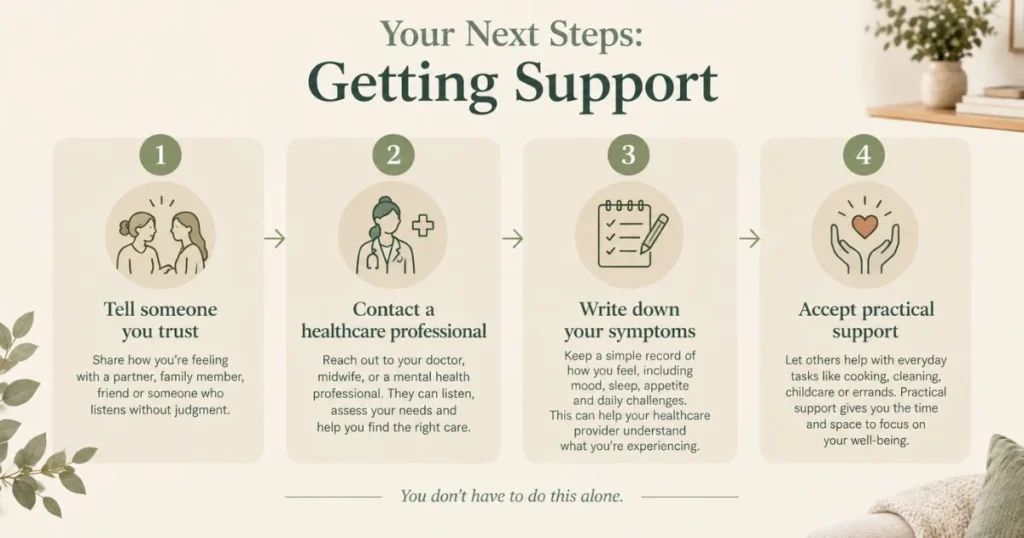
Start with one step.
1. Tell Someone You Trust
You could tell your partner, sister, friend, parent, or another person who makes you feel safe.
You do not need to explain everything perfectly.
You can simply say:
“I haven’t felt like myself lately, and I believe I could use some help and support.”
2. Contact a Healthcare Professional
Make an appointment and describe what has been happening honestly.
Tell them about symptoms that may feel embarrassing, including anger, intrusive thoughts, numbness, or difficulty bonding.
3. Write Down Your Symptoms
Before your appointment, make a short list of:
- When your symptoms began
- How often they occur
- Whether they are getting worse
- How you’re sleeping
- Changes in appetite
- How you are functioning during the day
- Any thoughts that concern you
This can make the conversation easier.
4. Accept Practical Support
You don’t need to prove that you can handle every challenge without help.
Let someone bring dinner.
Let someone fold the laundry.
Ask someone you trust to care for your baby while you take a shower or get some rest.
Small forms of support can make a difficult period more manageable while you receive appropriate care.
Frequently Asked Questions About Signs of Postpartum Depression
What symptoms are commonly linked to postpartum depression?
Frequent symptoms may include ongoing sadness, feeling emotionally numb, losing interest in activities, excessive guilt, low self-esteem, anxiety, irritability, exhaustion, changes in sleep or appetite, difficulty focusing, challenges bonding with your baby, and thoughts of death or self-harm. Symptoms can vary from one person to another.
How can you distinguish postpartum depression from the baby blues?
The baby blues are generally mild and short-lasting, often improving within about two weeks. Postpartum depression tends to be more persistent, severe, or disruptive to daily life. If you are unsure, talking with a healthcare professional is the safest way to determine what is happening.
Can you have postpartum depression without feeling sad?
Yes. Depression can involve anxiety, irritability, anger, emotional numbness, loss of interest, exhaustion, difficulty concentrating, or feeling disconnected from your baby. Sadness is only one possible symptom.
Can postpartum depression affect bonding with your baby?
Yes. Difficulty bonding or feeling emotionally connected to your baby can occur with postpartum depression. It does not mean that you do not love your baby or that you are a bad mother.
Can postpartum depression start months after birth?
Mental health challenges can emerge at different times during pregnancy or in the period following birth. If you develop concerning symptoms months after giving birth, it is still appropriate to speak with a healthcare professional. ACOG recognizes perinatal mental health conditions that may begin during pregnancy or the first year postpartum.
Does postpartum depression go away on its own?
Some short-lived emotional changes after birth, such as the baby blues, often improve on their own. Ongoing or severe symptoms of depression deserve attention rather than being brushed aside. Postpartum depression is treatable, and support from a qualified healthcare professional can help you move toward recovery.
Can postpartum depression be treated?
Yes. Treatment may include psychotherapy, medication, or a combination of approaches. Your healthcare professional can help determine which options are appropriate for you.
What should I do if I recognize the signs of postpartum depression?
Begin by opening up to someone you trust and reaching out to a healthcare provider. You don’t have to wait for your symptoms to become overwhelming before seeking support.
What should I do if I have thoughts of harming myself or my baby?
Treat these thoughts as an urgent safety concern. Seek urgent medical assistance by contacting your local emergency services or going to the nearest emergency department. If possible, have someone you trust stay with you while you receive help.

Conclusion: Recognizing the Signs Is the First Step
Identifying the signs of postpartum depression can be difficult when you’re exhausted, adjusting to life with a newborn, and trying to take care of everyone around you.
You might assume that you’re just tired. You may compare yourself with other mothers and wonder why they seem to be coping more easily. You might even feel guilty for struggling despite how much you love your baby.
However, postpartum depression does not reflect the depth of your love for your child.
If you notice several possible signs of postpartum depression, you don’t have to figure out what’s happening alone or wait for your symptoms to become worse. Contact a healthcare professional and explain what you’ve been experiencing as honestly as possible.
If someone you care about may be struggling, offer a listening ear without judgment, help with everyday responsibilities, and encourage them to seek professional support.
You deserve care and understanding, too. Asking for help is not a sign of failure as a mother. It’s an important step toward protecting your well-being and caring for your baby.