

At 3 months, you may feel like you finally understand your baby’s breastfeeding pattern—until you start wondering how much breastmilk at 3 months your baby is actually drinking.
With a bottle, you can see the ounces disappear. Breastfeeding is different. Your baby may nurse for 10 minutes one time and 25 minutes the next. Your baby may want to feed every few hours on one day, while on another day, they may go longer between feeds.
So, how much breastmilk at 3 months is enough?
The short answer is that there is no single amount that every 3-month-old needs. Once breastfeeding is established, exclusively breastfed babies between 1 and 6 months generally take in about 19–30 ounces (560–890 mL) of breastmilk per day. Still, every baby is different, and their feeding needs and routines can vary.
When thinking about how much breastmilk at 3 months your baby needs, it helps to look beyond the amount alone. You also want to consider how often your baby feeds, whether you can hear swallowing, diaper output, contentment after feeds, and steady growth.
This guide to how much breastmilk at 3 months will help you understand what is typical, what can vary from baby to baby, and when it is worth asking your baby’s healthcare provider for help.
How Much Breastmilk Does a 3-Month-Old Need?
There is no exact daily amount that every 3-month-old should drink. When considering how much breastmilk at 3 months your baby needs, remember that individual intake can vary.
For exclusively breastfed babies between 1 and 6 months, a commonly cited general range is approximately 19–30 ounces (560–890 mL) of breastmilk per day.
Think of this as a reference range rather than a target you need to make your baby reach. How much breastmilk at 3 months your baby takes may differ from another baby’s intake, even when both babies are healthy.
Your baby’s actual intake can vary depending on:
- Your baby’s size and growth pattern
- How efficiently your baby transfers milk
- How often your baby breastfeeds
- Whether your baby feeds more frequently at certain times of day
- Whether your baby also receives expressed breastmilk or formula
- Your baby’s individual appetite
Some babies may take smaller amounts more frequently. Others may nurse less often but take more milk during each feeding.
The CDC provides guidance on breastfeeding frequency and infant feeding patterns during the first months of life.

How Many Ounces of Breastmilk Does a 3-Month-Old Drink Per Feeding?
If you breastfeed directly, you usually cannot know the exact number of ounces your baby drinks during a particular session. This can make it difficult to determine how much breastmilk at 3 months your baby is taking at each feeding.
For expressed breastmilk offered in a bottle, approximately 2–3 ounces per feeding is a useful general reference for breastfed babies in this age range. But this does not mean every 3-month-old needs exactly 2 or 3 ounces at every feeding.
The amount in one bottle may be less, while the next bottle may contain more. This is why how much breastmilk at 3 months your baby needs should be considered as part of their overall feeding pattern rather than based on one bottle.
The better question is whether your baby is showing signs of being hungry or satisfied and whether your baby’s overall growth and hydration are appropriate.
Why There Is No Exact Breastmilk Amount for Every Baby
Breastfeeding does not work like filling a measuring cup.
Your baby controls how much milk they take from the breast, and feeding patterns naturally change. One feeding session might be brief, while another may take more time. Your baby may also breastfeed for comfort, not only to get nourishment.
When considering how much breastmilk at 3 months, it is important to remember that one feeding does not necessarily reflect your baby’s total intake or your overall milk supply. This is why you should avoid judging your milk supply or your baby’s intake based on one feeding alone.
3-Month-Old Breastmilk Intake at a Glance
| Question | General guidance |
| Breastmilk per day | About 19–30 oz (560–890 mL) for many exclusively breastfed babies |
| Breastfeeding frequency | Often around 8–12 times in 24 hours |
| Expressed milk per bottle | Often around 2–3 oz, but varies |
| Exact amount from the breast | Usually cannot be measured during a normal feed |
| Best signs baby is getting enough | Swallowing, wet diapers, contentment, and appropriate growth |
These figures are general references, not strict targets. Your baby may naturally fall outside an average range and still be feeding well.
How Often Should a 3-Month-Old Breastfeed?
By about 3 months of age, many babies still breastfeed often throughout the day and night. The CDC reports that exclusively breastfed infants typically nurse about 8–12 times over a 24-hour period, though feeding frequency can differ from one baby to another.
As babies grow, some begin to go longer between feeds because they can take more milk during each feeding. This can make how much breastmilk at 3 months your baby needs seem different from their earlier feeding pattern.
You may find that your baby’s feeding routine has changed from what it was during the first few weeks after birth.
That is normal.
For a broader look at age-based feeding patterns, see our Baby Feeding Schedule by Age guide.
How Many Times a Day Should a 3-Month-Old Breastfeed?
Babies do not all need to breastfeed the same number of times each day. When considering how much breastmilk at 3 months, it is also important to consider your baby’s individual feeding pattern rather than focusing on a specific number of feeds.
Your baby may:
- Breastfeed about 8–12 times in 24 hours
- Nurse more often at certain times of the day
- Have several shorter feeds
- Have some longer feeding sessions
- Occasionally cluster feed
- Begin having somewhat longer stretches between feeds
The overall pattern is more useful than counting every individual session.
Can a 3-Month-Old Breastfeed Every 2 Hours?
Yes.
Breastfeeding every 2 hours can be completely normal for a 3-month-old. When thinking about how much breastmilk at 3 months your baby needs, feeding frequency alone does not tell you exactly how much milk your baby is taking.
Some babies naturally have smaller, more frequent feeds. Others may consume more milk during each feeding and go longer between sessions before they need to eat again.
If your baby is feeding frequently but is otherwise gaining weight, producing adequate wet diapers, swallowing during feeds, and appearing well, frequent nursing by itself does not mean something is wrong.
Is It Normal for a 3-Month-Old to Go 3–4 Hours Between Feedings?
It can be.
As your baby gets older, the time between feedings may slowly increase. The CDC notes that exclusively breastfed babies may feed every 2–4 hours on average during the first weeks and months, although some babies feed more frequently and others may have longer sleep intervals.
When considering how much breastmilk at 3 months your baby needs, remember that feeding intervals can vary from one baby to another. Rather than assuming that a specific interval is either “good” or “bad,” look at the complete picture.
How Do You Know Your 3-Month-Old Is Getting Enough Breastmilk?
This is often more important than knowing the exact number of ounces when considering how much breastmilk at 3 months your baby is getting.
When you breastfeed directly, you cannot look at a bottle and see how much milk your baby consumed. Instead, you can look for several signs that your baby is feeding well.
Signs Your 3-Month-Old Is Getting Enough Breastmilk
When thinking about how much breastmilk at 3 months your baby is getting, several signs can help you determine whether feeding is going well.
Your baby may be getting enough milk if:
- You can see or hear swallowing during feeds.
- Your baby breastfeeds regularly.
- Your baby appears satisfied after many feeds.
- Your baby has regular wet diapers.
- Your baby is growing appropriately.
- Your baby is alert during normal awake periods.
- Your baby generally appears well.
No single sign should be considered on its own.
For example, a baby who wants to breastfeed again shortly after a feed is not automatically a baby who did not get enough milk.
Why Weight Gain Matters
Your baby’s growth is one of the most useful ways to assess whether milk intake is adequate. When evaluating how much breastmilk at 3 months your baby is getting, healthcare professionals consider growth alongside other signs of adequate feeding.
Your pediatrician or other healthcare professional can look at your baby’s weight and length over time rather than relying on one measurement.
This is important because babies do not all grow at exactly the same rate.
A baby can be perfectly healthy without matching another baby’s weight or feeding pattern.
Why Wet Diapers Matter
Wet diapers provide another useful clue about hydration and can help you assess how much breastmilk at 3 months your baby may be receiving.
Rather than focusing on one diaper or one day, pay attention to your baby’s usual pattern.
If you notice a significant change in wet diapers, especially together with poor feeding, unusual sleepiness, vomiting, or concerns about weight gain, contact your baby’s healthcare provider.
How Much Breastmilk Should a 3-Month-Old Drink From a Bottle?
If you pump breastmilk and your baby drinks it from a bottle, you have one advantage: you can see how much milk is offered. This can give you a clearer idea of how much breastmilk at 3 months your baby is taking during a bottle feeding.
That can be reassuring—but it can also make you focus too heavily on the number.
For many breastfed babies between 1 and 6 months, 2–3 ounces of expressed breastmilk per feeding is a useful general reference.
Your baby may need more or less depending on their individual needs and feeding pattern.
How Many Ounces Should Go in Each Bottle?
When considering how much breastmilk at 3 months to offer in a bottle, you can start with an amount that fits your baby’s usual feeding pattern and then watch your baby rather than expecting the bottle to be completely empty.
For example, your baby may:
- Drink most of the bottle
- Stop partway through
- Take a break and continue later
- Turn away before finishing
- Seem hungry for more
If your baby continues to show clear hunger cues, more milk may be appropriate.
If your baby shows signs of fullness, you do not need to encourage your baby to finish the bottle.
Why Bottle Feeding Can Look Different From Breastfeeding
A bottle gives you a visible number.
That can create an easy trap: you may start comparing the number of ounces in a bottle with how long your baby breastfeeds. However, how much breastmilk at 3 months your baby receives cannot be determined simply by measuring the length of a breastfeeding session.
Feeding time does not translate directly into ounces.
A baby who feeds efficiently may transfer a significant amount of milk in a shorter session, while another baby may take longer.
Use Responsive Bottle Feeding
When you give pumped breastmilk by bottle, pay attention to your baby’s cues rather than focusing only on how much breastmilk at 3 months is left in the bottle.
Your baby may be full when they:
- Close their mouth
- Turn their head away
- Relax their hands
- Slow down or stop sucking
- Lose interest in the bottle
You do not need to make your baby finish every bottle.
How Much Breastmilk Should I Pump for a 3-Month-Old?
If you are pumping because you are returning to work, spending time away from your baby, or exclusively pumping, it is understandable to wonder how much breastmilk at 3 months you should express.
There is no universal pumping amount that every parent needs to produce during every session. Your output can vary depending on when you pump, how often you pump, and your baby’s individual feeding needs.
How Often Should You Pump?
If you are away from your baby, pumping around the times your baby normally drinks breastmilk can help your body continue receiving the stimulation needed to maintain milk production. This can also help you manage how much breastmilk at 3 months you need to express while you are separated from your baby.
If you exclusively pump, your pumping pattern will depend on your baby’s needs and your individual situation.
What If I Pump Less Than Expected?
Seeing a smaller amount in the bottle does not automatically mean your baby is not getting enough milk. When considering how much breastmilk at 3 months your baby is receiving, remember that pump output does not always reflect the amount your baby can obtain directly from the breast.
Pump output can vary depending on:
- When you last fed your baby
- How recently you pumped
- Your pumping equipment
- Your baby’s usual feeding pattern
- Stress or discomfort
- Individual milk storage capacity
Your baby may also remove milk from your breast more effectively than a pump.
Should You Pump Until You Reach a Certain Number?
You do not need to chase an arbitrary ounce number at every pumping session.
Instead, when thinking about how much breastmilk at 3 months your baby needs, consider your baby’s overall needs and your pumping routine.
If you consistently struggle to produce enough expressed milk for your baby’s needs, a lactation professional can help you review your pumping technique and feeding pattern.
Why Does My 3-Month-Old Want to Breastfeed So Often?
Sometimes your baby may suddenly seem much more interested in breastfeeding.
You might feel as though your baby has just finished feeding and is already asking to nurse again. This can make you wonder how much breastmilk at 3 months your baby is actually getting.
That does not automatically mean your milk supply is too low.
Growth and Changing Feeding Patterns
Babies do not follow perfectly predictable feeding patterns.
You may notice periods when your baby wants to nurse more often. Your baby’s appetite and behavior can change as they grow, so how much breastmilk at 3 months your baby needs may vary from day to day.
Instead of looking only at feeding frequency, check for the other signs of adequate intake.
Is Cluster Feeding Normal at 3 Months?
Cluster feeding means several feeding sessions happen close together.
It can occur at different ages and may happen during certain parts of the day.
Your baby might breastfeed several times within a short period, particularly in the evening. This can make you wonder how much breastmilk at 3 months your baby needs or whether frequent nursing means your baby is not getting enough milk.
If your baby is otherwise feeding effectively and growing appropriately, occasional frequent nursing does not automatically indicate a problem.
Does Frequent Breastfeeding Mean I Have Low Milk Supply?
Not necessarily.
Frequent breastfeeding can happen for many reasons and does not automatically mean your baby is not getting enough milk. When considering how much breastmilk at 3 months your baby is receiving, look at the overall signs of effective feeding.
Before assuming that you have low milk supply, look at:
- Whether you can hear swallowing.
- Whether your baby appears satisfied after feeds.
- Whether wet diapers are occurring regularly.
- Whether your baby is gaining weight appropriately.
- Whether your baby has a good latch.
If you remain concerned, your baby’s healthcare provider or a lactation professional can assess feeding directly.
Hunger and Fullness Cues at 3 Months
Responsive feeding means paying attention to your baby’s signals instead of relying only on the clock.
At 3 months, your baby can communicate hunger and fullness through movements and behaviors.
Early Hunger Cues
Your baby may be hungry when they:
- Bring their hands toward their mouth
- Turn their head toward your breast
- Open or move their mouth
- Smack or lick their lips
- Clench their hands
Crying is often a later hunger cue, so responding when you notice earlier signals may make feeding easier.
Signs Your Baby Is Full
Your baby may show fullness by:
- Closing their mouth
- Turning their head away
- Relaxing their hands
- Slowing down
- Stopping sucking
- Losing interest in feeding
You do not need to persuade your baby to continue eating after they show clear signs of fullness.
Why You Should Not Wait Until Crying
Once a baby becomes very upset, feeding can sometimes be more difficult.
When you notice early hunger cues, offering the breast while your baby is still relatively calm can make it easier for both of you.
Can You Overfeed a 3-Month-Old With Breastmilk?
When breastfeeding directly, your baby generally controls how much milk they take by responding to their own hunger and fullness cues.
The situation can look different with a bottle.
Because milk is visible and readily available, it can be tempting to encourage your baby to finish what remains.
You do not need to do this.
Responsive Feeding vs. Finishing the Bottle
When giving expressed breastmilk:
- Let your baby take breaks.
- Watch for fullness cues.
- Stop when your baby appears satisfied.
- Do not pressure your baby to finish the bottle.
- Offer more only if your baby continues to show hunger cues.
A bottle does not have to be empty just because there is milk left inside.
How Much Breastmilk Does a 3-Month-Old Need at Night?
Night feeding can still be part of normal breastfeeding at 3 months.
Some babies wake several times to breastfeed, while others begin sleeping for longer stretches.
There is no universal nighttime pattern that applies to every baby.
Should a 3-Month-Old Still Breastfeed at Night?
Yes, many 3-month-olds still breastfeed during the night.
Your baby’s nighttime feeding needs can depend on:
- Overall growth
- Daytime milk intake
- Individual sleep pattern
- Feeding efficiency
- Health and medical circumstances
If your baby’s healthcare provider has advised you to wake your baby for feeds, follow that individualized guidance.
What If My Baby Suddenly Wants More Night Feeds?
A change in nighttime feeding does not automatically mean something is wrong.
Look at your baby’s overall pattern rather than one unusual night.
If the change is persistent or occurs alongside poor feeding, reduced wet diapers, unusual sleepiness, vomiting, or concerns about growth, talk with your baby’s healthcare provider.
Does Breastmilk Change at 3 Months?
Breastmilk does not suddenly become inadequate when your baby reaches 3 months.
Your milk continues to provide important nutrition as your baby grows, and breastmilk changes over the course of lactation.
Your baby also becomes more efficient at breastfeeding over time.
Does Breastmilk Become Less Nutritious After 3 Months?
No.
Reaching the 3-month mark does not mean your breastmilk has suddenly lost its nutritional value.
You do not need to change your breastmilk or add another food simply because your baby has reached this age.
Does a 3-Month-Old Need Solid Food?
A 3-month-old generally does not need solid food.
Current guidance recommends exclusive breastfeeding for about the first 6 months when appropriate, with complementary foods generally introduced around 6 months.
At 3 months, breastmilk remains an important source of nutrition.
When your baby is ready around 6 months, our guide to First Foods for Baby can help you understand how to begin complementary foods.
Breastmilk Intake for a 3-Month-Old: Breastfeeding vs. Pumping
| Feeding situation | What you can measure | What matters most |
| Direct breastfeeding | Usually no exact ounces | Swallowing, diapers, feeding behavior, growth |
| Pumped breastmilk | Ounces or mL in the bottle | Baby’s cues and overall intake |
| Breastfeeding + expressed milk | Some intake is measurable | Total feeding pattern and growth |
| Breastfeeding + formula | Formula amount is measurable | Overall nutrition and growth |
The biggest difference is visibility.
When your baby breastfeeds directly, you cannot see the milk volume. When you pump, the bottle gives you a number—but that number still needs to be interpreted in context.
Signs Your 3-Month-Old May Not Be Getting Enough Breastmilk
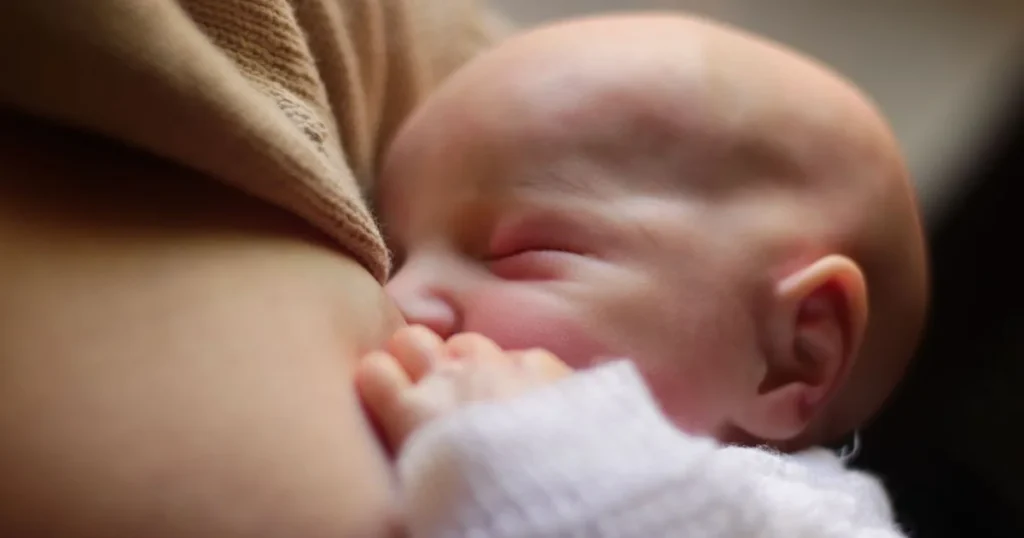
Sometimes a feeding concern deserves professional attention.
Possible warning signs include:
- Persistent difficulty latching
- Little or no swallowing during feeds
- Repeatedly falling asleep before feeding effectively
- Frequent feeding with ongoing concerns about satisfaction
- A noticeable reduction in wet diapers
- Poor weight gain
- Persistent vomiting
- A significant change in your baby’s normal feeding behavior
- Unusual sleepiness or difficulty waking for feeds
One sign by itself does not necessarily tell you what is happening.
However, several concerns together deserve attention.
When to Contact Your Baby’s Healthcare Provider
Contact your baby’s healthcare provider if you are worried that your baby is not getting enough milk, particularly if you notice changes in feeding, hydration, or growth.
A healthcare professional can assess your baby’s weight, feeding, hydration, and overall health.
A lactation consultant can also help evaluate latch, milk transfer, positioning, and feeding technique.
Common Mistakes Parents Make When Measuring Breastmilk Intake
1. Treating Every Feed Like It Must Be the Same Size
Your baby’s appetite can change throughout the day. When considering How Much Breastmilk at 3 Months, remember that one smaller feed does not automatically mean your baby needs more milk. Look at your baby’s overall feeding pattern and hunger and fullness cues.
2. Comparing Breastfeeding With Bottle Amounts
A 15-minute breastfeeding session cannot be reliably converted into a specific number of ounces. When considering How Much Breastmilk at 3 Months, remember that feeding duration alone does not tell you exactly how much milk your baby consumed.
Do not assume that a longer breastfeeding session always means your baby received more milk.
3. Assuming Frequent Feeding Means Low Milk Supply
Frequent breastfeeding can be normal. When considering How Much Breastmilk at 3 Months, look at signs such as swallowing during feeds, regular wet diapers, contentment after feeding, and appropriate growth before drawing conclusions about your milk supply.
4. Watching the Clock Instead of Your Baby
A schedule can be useful for understanding your baby’s general routine, but hunger cues still matter when considering How Much Breastmilk at 3 Months.
If your baby shows signs of hunger earlier than expected, you do not have to wait for the clock. Follow your baby’s cues and offer a feeding when they are ready.
5. Focusing Only on Pump Output
The amount you pump is not necessarily an exact measurement of how much milk your baby can get directly from your breast. When considering How Much Breastmilk at 3 Months, remember that pump output and your baby’s actual milk intake are not always the same.
6. Making Your Baby Finish Every Bottle
If your baby turns away or shows other signs of fullness, you can stop the feeding. When considering How Much Breastmilk at 3 Months, responsive feeding allows your baby to play an active role in deciding when they have had enough.
How Much Breastmilk at 3 Months? Quick Reference
| Question | General answer |
| How much breastmilk at 3 months per day? | About 19–30 oz (560–890 mL) for many exclusively breastfed babies |
| How much per feeding? | Often around 2–3 oz when expressed milk is offered by bottle |
| How often should a 3-month-old breastfeed? | Often around 8–12 times in 24 hours |
| Can a baby breastfeed more frequently? | Yes |
| Can feeding intervals become longer? | Yes |
| How do you know baby is getting enough? | Look at swallowing, wet diapers, contentment, and growth |
| Does a 3-month-old need solid food? | No; complementary foods are generally introduced around 6 months |
Remember that these are general references, not strict targets.
Frequently Asked Questions About How Much Breastmilk at 3 Months
How much breastmilk at 3 months does a baby need per day?
Many exclusively breastfed babies between 1 and 6 months take approximately 19–30 ounces (560–890 mL) of breastmilk per day. When considering How Much Breastmilk at 3 Months, remember that individual needs can vary, so this range should be viewed as a general reference rather than a required daily amount.
How many ounces of breastmilk should a 3-month-old drink per feeding?
When expressed breastmilk is given by bottle, around 2–3 ounces per feeding can serve as a useful general reference. However, a baby may naturally drink more or less depending on hunger, feeding frequency, and individual needs.
When breastfeeding directly, you usually cannot know the exact number of ounces your baby consumes. This is why How Much Breastmilk at 3 Months should be considered in the context of your baby’s overall feeding pattern, rather than by measuring each individual breastfeed.
If you are comparing your baby’s intake with other ages, our Baby Feeding Chart by Age provides a broader reference.
How often should a 3-month-old breastfeed?
Many exclusively breastfed babies feed around 8–12 times in 24 hours, but individual feeding patterns can vary considerably. When considering How Much Breastmilk at 3 Months, remember that some babies may breastfeed more frequently, while others gradually develop longer intervals between feeds.
Is 4 ounces of breastmilk too much for a 3-month-old?
Not necessarily. One bottle should not be judged in isolation. When considering How Much Breastmilk at 3 Months, pay attention to your baby’s hunger and fullness cues and consider their overall feeding pattern rather than focusing on the amount in a single bottle.
Is 2 ounces of breastmilk enough for a 3-month-old?
That amount can be enough for an individual feeding, particularly if your baby breastfeeds again relatively soon. When considering How Much Breastmilk at 3 Months, remember that the amount taken during one feed does not determine whether your baby is getting enough milk over the entire day.
Why does my 3-month-old want to breastfeed every hour?
Some babies occasionally cluster feed and may want to breastfeed several times within a short period. Frequent feeding by itself does not mean that your milk supply is low, and it does not necessarily indicate that your baby is not getting enough milk.
When considering How Much Breastmilk at 3 Months, pay attention to the overall signs of effective feeding rather than feeding frequency alone.
If your baby is consistently feeding extremely often and you are concerned about swallowing, wet diapers, satisfaction after feeds, or growth, speak with your baby’s healthcare professional.
If your baby suddenly wants to feed repeatedly, you may also want to read When Do Babies Cluster Feed?
How do I know if my 3-month-old is getting enough breastmilk?
Look at the bigger picture when considering How Much Breastmilk at 3 Months your baby is getting. Helpful signs include hearing or seeing swallowing during feeds, regular wet diapers, satisfaction after feeding, and appropriate weight gain.
How much pumped breastmilk should I give my 3-month-old?
A general reference for expressed breastmilk is around 2–3 ounces per feeding, but your baby’s needs may vary. When considering How Much Breastmilk at 3 Months, offer milk responsively and stop when your baby shows signs of fullness rather than encouraging them to finish a specific amount.
Does a 3-month-old need water or solid food?
A healthy 3-month-old typically does not need water or solid foods as part of their regular feeding routine. When considering How Much Breastmilk at 3 Months, remember that breastmilk or infant formula should continue to provide their primary nutrition at this age. Complementary foods are generally introduced at around 6 months of age.
Conclusion: Focus on Your Baby, Not Just the Ounces

If you have been wondering how much breastmilk at 3 months is enough, remember that there is no single amount that every baby needs.
Many exclusively breastfed babies between 1 and 6 months take around 19–30 ounces of breastmilk per day, and many breastfeed about 8–12 times in 24 hours. However, these figures describe common feeding patterns—not strict rules your baby must follow.
Your baby may take smaller, more frequent feeds, while another baby may breastfeed less often. Both patterns can be normal.
Rather than trying to measure every breastfeeding session, look at the signs that provide a more complete picture of whether feeding is going well:
- Your baby is swallowing during feeds.
- Your baby is having regular wet diapers.
- Your baby generally appears satisfied after feeding.
- Your baby is growing appropriately.
- Your baby appears alert and well during normal awake periods.
If something does not seem right, you do not have to figure it out on your own. Your baby’s healthcare provider or a qualified lactation professional can help assess feeding, milk intake, and growth.
Your goal is not to make every feeding fit a specific number. Your goal is to understand your baby’s cues, support effective feeding, and make sure your baby is growing and thriving.
If this guide helped you understand how much breastmilk at 3 months your baby may need, save it for those days when you find yourself wondering whether a shorter feed, a longer gap between feedings, or an unusually hungry afternoon is normal. If you still have concerns, bring your questions—and your baby’s feeding pattern—to your next healthcare appointment.