Discover how parenting styles influence your child’s confidence, behavior, emotional well-being, and future relationships—and learn practical ways to build a stronger parent-child connection.

Every Parent Wonders If They’re Getting It Right
Your toddler has just tossed their spoon across the kitchen—for the second time today.
Your preschooler refuses to put on their shoes.
Your teenager rolls their eyes after you remind them about homework.
In moments like these, every parent faces the same question:
“What’s the right way to respond?”
You may worry that you’re being too strict. Other days, you might wonder if you’re giving your child too much freedom. Sometimes, you’re simply doing your best after a long, exhausting day.
If you’ve ever questioned your parenting decisions, you’re in good company.
The truth is, there isn’t a perfect script for raising children. Every family is different, every child has a unique personality, and every parent is learning along the way. Still, decades of child development research show that your parenting style—the overall way you communicate, set expectations, respond to emotions, and guide behavior—can have a lasting influence on how your child grows, learns, and builds relationships.
That doesn’t mean one difficult day will define your child’s future. Children benefit most from the overall pattern of love, guidance, communication, and consistency they experience over time.
Whether you’re raising a curious toddler, an energetic preschooler, or an independent teenager, understanding the four main parenting styles can help you make thoughtful decisions that support your child’s emotional, social, and cognitive development.
In this guide, you’ll learn:
- What parenting styles are and why they shape your child’s development.
- The key characteristics of the four main parenting styles.
- How each parenting style can influence child development.
- Practical ways to strengthen your parenting style and parent-child relationship.
- How to identify your own parenting style with a simple self-assessment.
Our goal isn’t to tell you that you must become a “perfect parent.” Instead, it’s to help you better understand your strengths, recognize opportunities to grow, and build a home where your child feels both loved and guided.
What Are Parenting Styles?
What Is a Parenting Style?
A parenting style is the overall approach you take when raising your child. Your parenting style reflects the emotional climate of your relationship—the way you communicate, set boundaries, respond to emotions, and guide behavior over time.
Rather than focusing on a single discipline method or household rule, parenting styles describe the broader patterns that shape your child’s daily experiences and influence their emotional and social development.
For example, think about how your parenting style influences the way you respond when your child:
- Breaks a family rule.
- Has a tantrum.
- Makes a mistake.
- Accomplishes something they’re proud of.
- Asks for more independence.
The answers to these everyday situations help define your parenting style and reveal the habits, values, and expectations that guide your family life.
Your responses in these everyday moments gradually create your parenting style.
Parenting Style vs. Parenting Technique
Although people often use these terms as though they mean the same thing, they actually describe distinct concepts. Understanding the distinction can help you make more informed decisions and avoid common misconceptions.
| Parenting Style | Parenting Technique |
| Your overall philosophy of raising your child | A specific strategy used in one situation |
| Shapes your long-term relationship | Addresses a short-term behavior |
| Includes communication, warmth, and expectations | Includes tools like time-outs, praise, reward charts, or natural consequences |
| Reflects your everyday interactions | Parents with a variety of parenting styles can use the same discipline strategies. |
For instance, two parents might both ask their child to put their toys away, but the way they communicate that expectation can be very different.
One calmly explains why cleaning up is important and helps the child learn responsibility.
Another parent may respond with a simple, “Clean it up now because I said so.”
The technique is similar.
The parenting style is very different.
What Research Says About the 4 Parenting Styles
The idea of parenting styles didn’t appear overnight.
In the 1960s, developmental psychologist Psychologist Dr. Diana Baumrind studied how different approaches to parenting affected children’s behavior and development. Her work identified three parenting styles based on two important qualities:
- Responsiveness (warmth, emotional support, and involvement)
- Demandingness (rules, expectations, and guidance)
A few years later, developmental psychologists Eleanor Maccoby and John Martin expanded Baumrind’s research by introducing a fourth parenting style: uninvolved parenting.
Today, these four parenting styles continue to serve as one of the most widely used frameworks in developmental psychology. While every family is unique and no model can capture every parenting experience, this framework helps explain why children often respond differently to different parenting approaches.
📘 Expert Insight
Dr. Diana Baumrind’s work transformed how psychologists understand parenting. Rather than focusing only on discipline, her research highlighted the importance of balancing warmth with clear expectations. Decades of research have continued to build on this foundation, making it one of the most influential models in child development.
Why Parenting Styles Matter: How They Shape Your Child’s Development
It’s easy to think of parenting styles as a collection of individual moments—helping with homework, comforting your child after a nightmare, setting a bedtime, or saying “no” to another cookie.
But children experience these moments as part of a much bigger picture. Your parenting style is reflected in these everyday interactions, not in a single decision or one difficult day.
Over time, they begin to form beliefs about themselves and the world around them.
They learn:
- Whether it’s safe to express emotions.
- Whether mistakes are opportunities to learn or reasons to feel ashamed.
- Whether adults can be trusted.
- Whether rules are fair and consistent.
- Whether their opinions matter.
These lessons don’t come from one conversation.
Instead, they develop through thousands of everyday interactions that gradually shape your child’s confidence, relationships, and emotional well-being.
What Research Says
Research over several decades suggests that parenting styles are associated with many aspects of child development, including emotional well-being, behavior, academic achievement, and social relationships.
Children generally benefit from parenting that combines:
- Warmth and affection
- Predictable routines
- Age-appropriate expectations
- Open communication
- Consistent guidance
It’s equally important to recognize that parenting style is only one factor that influences development. A child’s temperament, genetics, community, school environment, culture, and life experiences also play important roles.
In other words, parenting matters—but it doesn’t determine every outcome.
This balanced perspective reflects the current understanding of child development among psychologists and pediatric experts.
👩⚕️ Expert Insight
The American Academy of Pediatrics (AAP) encourages parents to combine nurturing relationships with consistent boundaries. Children thrive when they feel emotionally secure while also understanding clear expectations for behavior.
How Parenting Styles Influence Your Child’s Development
Although every child is different, studies have found that parenting styles are associated with several important areas of development.
Emotional Development
Children learn emotional regulation by watching how trusted adults respond to stress, frustration, and conflict.
Supportive parenting can help children:
- Recognize emotions
- Develop empathy
- Build resilience
- Recover from setbacks
Behavior and Self-Control
Consistent guidance helps children understand the connection between choices and consequences.
Over time, they develop:
- Responsibility
- Self-discipline
- Problem-solving skills
- Respect for others
Confidence and Self-Esteem
Children who feel supported while being encouraged to solve age-appropriate problems often become more confident in their abilities.
Rather than fearing mistakes, they begin to see them as part of learning.
Academic Success
Parenting style doesn’t determine intelligence.
However, it can influence habits that contribute to success in school, including:
- Persistence
- Curiosity
- Time management
- Motivation
- Organization
Social Relationships
The parent-child relationship often becomes a child’s first model for future relationships.
Daily interactions teach children how to:
- Listen respectfully
- Resolve disagreements
- Cooperate with others
- Build trust
- Communicate effectively
💡 Did You Know?
Researchers generally agree that children benefit from at least one stable, supportive relationship with a caring adult. That relationship helps build resilience and supports healthy emotional development, even when families face challenges.
Parenting Styles at a Glance: The 4 Main Approaches
Before exploring each parenting style in detail, here’s a quick comparison.
| Parenting Style | Warmth | Structure | Communication | Typical Child Outcomes* |
| Authoritative | High | High | Open and respectful | Confidence, responsibility, emotional resilience |
| Authoritarian | Low | High | Mostly one-way | Obedience, anxiety, lower independence |
| Permissive | High | Low | Friendly and relaxed | Creativity, weaker self-control |
| Uninvolved | Low | Low | Limited | Greater risk of emotional and behavioral difficulties |
*These outcomes reflect general research trends, not guaranteed results. Every child develops differently based on many factors, including temperament, culture, life experiences, and support systems.
📝 Parenting Style Self-Assessment
Before reading about each parenting style, answer these questions honestly.
Choose the answer that sounds most like you.
- When your child breaks a rule, you usually:
- A. Explain why the rule matters before giving a consequence.
- B. Expect immediate obedience and enforce a punishment.
- C. Let it go because it’s not worth the argument.
- D. Rarely address it.
- When your child is upset, you usually:
- A. Listen and help them understand their feelings.
- B. Encourage them to stop crying and move on.
- C. Try to make them happy right away.
- D. Hope they work it out on their own.
- Your family rules are:
- A. Clear and consistent.
- B. Strict and rarely questioned.
- C. Flexible and often negotiable.
- D. Minimal or inconsistent.
👉 Keep track of your answers. At the end of this article, you’ll score your results to discover which parenting style you most closely resemble.
The Four Main Parenting Styles
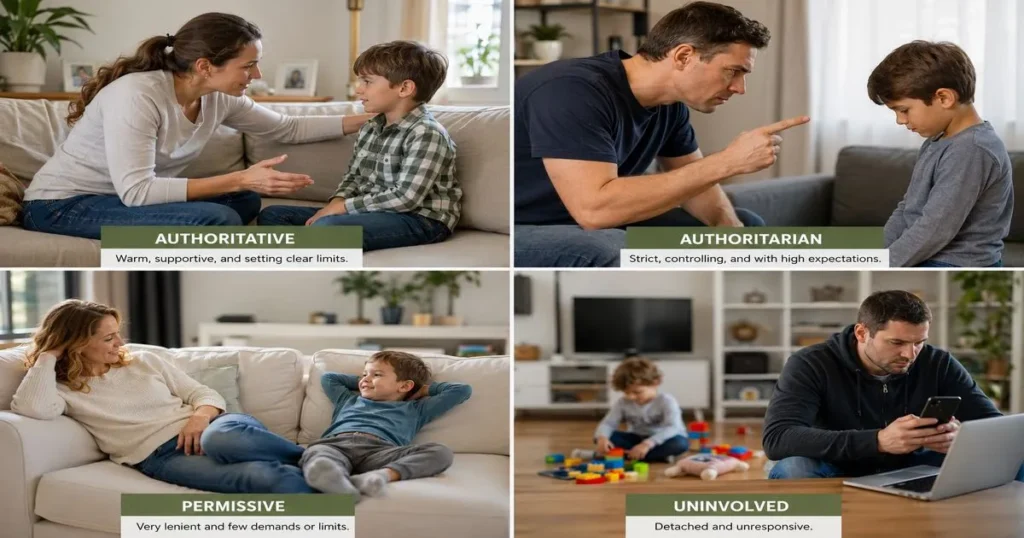
Although every family is unique, developmental psychologists generally describe four main parenting styles based on two key factors.
Responsiveness – how warm, supportive, and emotionally available you are.
Demandingness – how consistently you set expectations, rules, and boundaries.
These two dimensions form the foundation of the four parenting styles and help explain why different parenting approaches can lead to different experiences for children.
Think of these as two sliders rather than simple on/off switches. Some parents provide plenty of warmth but few boundaries. Others focus heavily on rules but struggle to express affection. Many parents naturally fall somewhere between these extremes, combining elements of different parenting styles depending on the situation.
The goal isn’t to fit perfectly into one category. Instead, understanding parenting styles can help you recognize habits that support your child’s healthy development while identifying small changes that strengthen your relationship and encourage positive growth over time.
Authoritative Parenting: Balancing Warmth, Support, and Healthy Limits

Among the four parenting styles, child development experts generally consider authoritative parenting the approach most consistently associated with positive long-term outcomes for children.
This parenting style combines high warmth with high expectations.
In other words, authoritative parents build loving relationships while also providing clear boundaries, consistent guidance, and age-appropriate responsibilities. This balanced parenting style helps children feel both supported and accountable.
Children raised with this parenting style usually grow up knowing two important things:
“My parents love me no matter what.”
“My parents trust me to make responsible decisions.”
Together, these messages create a strong foundation for security, confidence, independence, and healthy emotional development.ence.
What Is Authoritative Parenting?
Authoritative parenting is often described as firm but kind.
Instead of controlling children through fear, authoritative parents teach, guide, and coach them through everyday challenges.
They understand that discipline is not about punishment.
It’s about helping children learn.
For example, if a child refuses to do homework, an authoritative parent might discuss why homework matters, explore what made it difficult that day, and apply a reasonable consequence if needed—all while remaining calm and respectful.
The goal isn’t simply obedience.
The goal is raising children who eventually make good decisions even when no one is watching.
Characteristics of Authoritative Parents
Parents who use an authoritative approach often:
- Set clear family expectations.
- Explain the reasons behind rules.
- Listen to their child’s perspective.
- Encourage questions and respectful conversations.
- Praise effort as much as results.
- Use logical consequences instead of harsh punishments.
- Encourage independence while offering support.
- Stay emotionally available during difficult moments.
- Adjust expectations as their child matures.
These habits create an environment where children feel safe enough to learn from mistakes instead of fearing them.
👩⚕️ Expert Insight
According to the American Academy of Pediatrics (AAP), children benefit from parenting that combines warmth, responsiveness, and consistent limits. This balance helps children develop emotional security while learning responsibility and self-control.
What Research Says About Authoritative Parenting: Benefits and Outcomes
Years of child development research have consistently linked authoritative parenting with a broad range of positive outcomes for children.
Research suggests that children raised in an authoritative parenting environment are more likely to:
- Develop healthy self-esteem.
- Build strong emotional regulation skills.
- Perform well in school.
- Form healthy friendships.
- Show empathy toward others.
- Become independent problem-solvers.
- Experience fewer behavioral difficulties.
Keep in mind that these findings describe overall patterns rather than guaranteed outcomes for every child.
A child’s growth and development are also shaped by factors such as their temperament, genetic makeup, cultural background, life experiences, and the support they receive from those around them.
Still, the evidence consistently points toward the benefits of balancing warmth with structure.
Why Does Authoritative Parenting Work? Understanding the Benefits
Children don’t simply need rules.
They also need relationships.
Children who consistently receive emotional support, understanding, and a strong sense of security are more likely to:
- Accept guidance.
- Learn from mistakes.
- Ask for help.
- Share difficult emotions.
- Cooperate instead of resisting.
At the same time, consistent boundaries provide the structure children need to develop responsibility and self-discipline.
This balanced approach is one of the main reasons authoritative parenting is so effective.
How Authoritative Parenting Shapes Your Child’s Development
Emotional Intelligence
Authoritative parents acknowledge emotions instead of dismissing them.
If a child says,
“I’m really angry.”
An authoritative parent might respond,
“I understand you’re upset. Let’s talk about what happened.”
This teaches children that emotions themselves are not “good” or “bad.”
What matters is how we respond to them.
Over time, children become better at recognizing, expressing, and managing their feelings.
Confidence Without Arrogance
Confidence develops when children are trusted with responsibilities they can realistically handle.
Authoritative parents gradually allow children to:
- Make age-appropriate decisions.
- Solve everyday problems.
- Learn from natural consequences.
- Try again after making mistakes.
Instead of constantly rescuing children, they provide guidance while encouraging independence.
Better Decision-Making
Children who participate in respectful conversations about rules often understand why those rules exist.
As a result, they’re more likely to make thoughtful choices because they believe in the value of the rule—not simply because they’re afraid of punishment.
Stronger Relationships
Respect begins at home.
Children who experience respectful communication with parents often carry those skills into friendships, classrooms, workplaces, and future relationships.
They learn how to:
- Listen actively.
- Express disagreement respectfully.
- Solve conflicts.
- Consider other perspectives.
A Day in the Life of an Authoritative Parent
Imagine your nine-year-old forgets to feed the family dog.
Instead of immediately yelling, you might say:
“The dog depends on us every day. What do you think we should do now to make things right?”
Your child takes responsibility by feeding the dog and works with you to create a reminder chart to help remember next time.
The consequence teaches responsibility without damaging trust.
Benefits of Authoritative Parenting
Research has repeatedly linked authoritative parenting to numerous positive outcomes in children’s development.
Some of the most common include:
✔ Higher Self-Esteem
Children feel valued because their opinions are respected.
✔ Better Emotional Regulation
Children learn healthy ways to cope with disappointment, frustration, and stress.
✔ Greater Independence
Over time, children build greater confidence in their own abilities.
✔ Improved Academic Motivation
Parents encourage effort, persistence, and curiosity rather than demanding perfection.
✔ Strong Parent-Child Relationships
Open communication often continues into adolescence and adulthood.
📊 Did You Know?
Evidence suggests that children who grow up in emotionally supportive homes are more likely to seek guidance from trusted adults during difficult times, an important habit that can strengthen resilience and support long-term mental well-being.
Challenges of Authoritative Parenting
Although highly effective, authoritative parenting isn’t always easy.
It requires:
- Patience on difficult days.
- Consistency when you’re tired.
- Calm communication during conflict.
- Flexibility as children grow.
- Willingness to admit mistakes.
Even experienced parents occasionally lose patience.
What matters most is returning to a pattern of warmth, respect, and consistency over time.
Myth vs. Fact
❌ Myth
Authoritative parents let children negotiate every rule.
✅ Fact
Authoritative parents welcome respectful discussion, but they still maintain appropriate boundaries. Listening to a child’s perspective doesn’t mean giving up parental authority.
Practical Ways to Practice Authoritative Parenting
You don’t have to change everything overnight.
Simple habits practiced every day can have a lasting impact over time.
Try these strategies:
Explain Your Expectations
Instead of saying,
“Because I said so.”
Try,
“Let’s hold hands while we walk through the parking lot to help keep each other safe.”
Understanding encourages cooperation.
Notice Good Behavior
Children naturally repeat behaviors that receive positive attention.
Look for opportunities to recognize:
- Kindness
- Responsibility
- Persistence
- Honesty
- Problem-solving
Specific praise is usually more meaningful than general compliments.
Stay Curious
Before assuming the worst, ask questions.
Instead of,
“Why did you do that?”
Try,
“Can you help me understand what happened?”
This simple shift encourages honest conversations.
Let Children Solve Small Problems
Resist the urge to fix everything immediately.
Giving children opportunities to think through solutions helps build resilience and confidence.
Key Takeaways
✔ Authoritative parenting combines warmth with consistent boundaries.
✔ Children benefit from feeling both loved and guided.
✔ Research consistently associates this parenting style with positive developmental outcomes.
✔ The aim isn’t to be a perfect parent—it’s to build a relationship grounded in trust, open communication, and mutual respect.
4. When your child makes a mistake, you usually:
- A. Help them understand what they can learn from it.
- B. Focus on the consequence.
- C. Let it go because everyone makes mistakes.
- D. Don’t usually get involved.
5. Your child would probably describe you as:
- A. Loving and fair.
- B. Strict.
- C. Easygoing.
- D. Busy or distant.
Authoritarian Parenting: High Expectations with Less Flexibility

The words authoritative and authoritarian sound almost identical, but they describe two very different parenting approaches.
Both styles value rules, responsibility, and good behavior. The key difference is how parents communicate those expectations.
Authoritarian parents generally expect children to follow rules without questioning them. They place a strong emphasis on respect for authority, discipline, and obedience.
Children are expected to listen.
Parents are expected to lead.
Discussion is usually limited.
Many parents who use this approach genuinely believe they are helping their children succeed by teaching discipline and respect. In many cases, they are continuing the parenting style they experienced during their own childhood.
Like all parenting styles, authoritarian parenting exists on a spectrum. Setting firm limits during dangerous situations—such as crossing a busy road—is very different from maintaining a consistently authoritarian home environment.
What Is Authoritarian Parenting?
Authoritarian parenting is characterized by high expectations, strict rules, and limited emotional warmth or responsiveness.
Parents establish clear rules and typically expect immediate compliance. They often enforce those rules without explaining the reasons behind them.
Discipline usually focuses on correcting behavior rather than helping children understand what led to the behavior or how to make better choices in the future.
Children may hear phrases such as:
Why this version will paste better
- Removed hidden formatting (including the non-breaking space after “responsiveness.”)
- Standardized paragraph breaks.
- Eliminated formatting that often changes font size in WordPress.
- Preserved your SEO keywords and readability.
- “Because I said so.”
- “Don’t argue with me.”
- “You’ll understand when you’re older.”
- “Do as you’re told.”
While these responses can encourage short-term obedience, they don’t always help children develop strong decision-making and problem-solving skills.
Characteristics of Authoritarian Parents
Parents with an authoritarian parenting style often:
- Expect immediate obedience.
- Set strict household rules.
- Use punishment more often than discussion.
- Place a strong focus on teaching children to respect rules and authority.
- Make most family decisions without involving children.
- Have high academic or behavioral expectations.
- Show affection less openly than other parenting styles.
- Believe discipline builds character.
It’s important to remember that parenting behaviors can vary from family to family. A parent who is occasionally strict or sets firm boundaries does not necessarily fit neatly into the authoritarian parenting style.
👩⚕️ Expert Insight
Developmental psychologists emphasize that structure plays an important role in healthy child development, but children also benefit from understanding the reasons behind rules. Research suggests that children tend to experience better long-term outcomes when parents combine clear expectations with emotional support rather than relying solely on strict control.
What Research Says About Authoritarian Parenting
Research conducted over several decades suggests that children raised in highly authoritarian households may experience a combination of positive and challenging outcomes.
Some children become:
- Responsible
- Respectful of authority
- Well-behaved in structured environments
However, studies have also associated highly controlling parenting with an increased likelihood of:
- Lower self-esteem
- Anxiety
- Fear of making mistakes
- Difficulty expressing emotions
- Reduced confidence when making independent decisions
It’s important to remember that these outcomes do not apply equally to every child.
A child’s development is influenced by many factors, including:
- Personality
- Culture
- School environment
- Relationships with other supportive adults
- Life experiences
For example, researchers have found that cultural context can influence how children interpret parental strictness. In some families and communities, strict parenting is viewed as a strong expression of care, protection, and responsibility rather than emotional distance.
This is one reason experts encourage parents to avoid viewing parenting styles as rigid labels.
Why Some Parents Choose This Parenting Style
Most parents do not wake up and decide to be authoritarian.
Instead, this parenting style often develops because of experiences, beliefs, or circumstances such as:
- “Strict parents raise successful children.”
- “Children should never question adults.”
- “Discipline prevents future problems.”
- Growing up in a highly disciplined household.
- Concerns about safety or risky behavior.
- Cultural or family traditions.
Understanding these influences can help parents reflect on their own approach and consider whether it aligns with the long-term relationship they hope to build with their child.
How Authoritarian Parenting Shapes Your Child
Children Often Learn to Follow Rules
One of the defining characteristics of authoritarian parenting is that children usually understand family expectations very clearly.
Because rules are consistent and closely enforced, many children learn to:
- Stay organized
- Take responsibility for their tasks
- Respect routines and authority
- Feel comfortable in structured environments
These qualities can be valuable in school and other environments where expectations are clear and routines are well established.
Fear of Making Mistakes
When mistakes are consistently met with criticism or punishment, children may begin to avoid challenges rather than embrace them as learning opportunities.
Instead of asking,
“What can I learn from this?”
they may start wondering,
“What if I fail?”
Over time, this fear can reduce confidence, limit curiosity, and make children less willing to try new experiences.
Lower Confidence in Decision-Making
Children develop confidence by making choices, solving problems, and learning from the outcomes.
When parents make every decision for them, children may have fewer opportunities to build important life skills, including:
- Critical thinking
- Problem-solving
- Personal responsibility
As children grow older, they may rely heavily on others for reassurance before making decisions.
Difficulty Expressing Feelings
Children naturally experience emotions such as frustration, sadness, disappointment, and anger.
If these emotions are regularly dismissed or discouraged, children may learn to hide them rather than express them in healthy ways.
Over time, this can make open communication within the family more difficult.
A Day in the Life of an Authoritarian Parent
Imagine your eleven-year-old forgets to finish a school project.
An authoritarian response might be:
“You’re grounded for two weeks. I don’t want excuses.”
The consequence is immediate, but there is little discussion about why the assignment wasn’t completed or how to prevent the problem in the future.
A calm, collaborative conversation can help uncover underlying reasons, such as poor time management, confusion about the assignment, or feeling overwhelmed.
Teaching these skills often provides greater long-term benefits than punishment alone.
Potential Benefits of Authoritarian Parenting
Although this parenting style has limitations, it also includes strengths that many families value.
Clear Expectations
Children usually know exactly what behavior is expected of them.
There is little uncertainty about family rules.
Predictable Routines
Consistent routines can help children stay organized and understand what is expected each day.
Respect for Safety Rules
In dangerous situations, immediate cooperation can be extremely important.
For example:
- Crossing busy roads
- Following emergency instructions
- Staying close in crowded places
In these moments, parents may need children to respond quickly without lengthy discussions.
Potential Challenges
Research suggests that consistently emphasizing control while providing little emotional support may create challenges as children grow.
Some children may:
- Hide mistakes instead of asking for help.
- Become overly dependent on authority figures.
- Rebel during adolescence.
- Feel less confident expressing their opinions.
- Struggle with self-esteem.
Again, these are possibilities—not guarantees.
Every child responds differently.
📊 Did You Know?
Researchers increasingly emphasize that the quality of the parent-child relationship is just as important as discipline itself. Children are generally more receptive to guidance when they feel respected, understood, and emotionally supported.
Myth vs. Fact
❌ Myth
Strict parents always raise the most successful children.
✅ Fact
A child’s success is influenced by many factors, including emotional support, opportunities to build independence, education, health, personality, and life experiences. Clear expectations are valuable, but children also benefit from warmth, encouragement, and open communication.
How to Add More Balance Without Losing Structure
If you naturally lean toward being strict, you don’t have to give up structure.
Instead, focus on balancing firmness with connection.
Explain the “Why”
Children are often more willing to cooperate when they understand the reason behind a rule.
Instead of saying:
“Go to bed because I said so.”
Try saying:
“Getting enough sleep helps your body and brain grow, gives you energy to learn and play, and helps you feel your best tomorrow.”
Praise Good Decisions
Parents with a highly structured approach often spend much of their time correcting behavior.
Make an effort to notice what your child does well, too.
For example:
- Helping a sibling
- Finishing homework independently
- Showing kindness
- Being honest after making a mistake
Positive attention encourages children to repeat those behaviors.
Invite Conversation
Listening to your child doesn’t mean giving up your authority.
You can keep the final decision while still saying:
“I’d like to hear what you think.”
Feeling heard helps children build communication skills and strengthens trust.
Teach Instead of Only Punish
When mistakes happen, ask questions such as:
“What happened?”
“What could you do differently next time?”
“How can I help you succeed?”
These conversations encourage learning instead of fear.
Key Takeaways
- ✔ Authoritarian parenting emphasizes discipline, obedience, and clear expectations.
- ✔ Children often benefit from structure, routines, and predictable rules.
- ✔ Research suggests that combining structure with warmth and open communication is generally associated with healthier long-term developmental outcomes.
- ✔ You don’t have to choose between being kind and being firm—you can be both.
📝 Parenting Style Self-Assessment (Part 3)
Add your answers to the following questions.
6. When your child disagrees with you, you usually:
- A. Listen first, then explain your decision.
- B. Expect them to accept your decision immediately.
- C. Change your mind to avoid conflict.
- D. End the conversation quickly.
7. What matters most to you as a parent?
- A. Raising a confident and responsible child.
- B. Teaching obedience and respect.
- C. Keeping my child happy.
- D. Giving my child space to figure things out.
Permissive Parenting Style: Lots of Love, Very Few Limits

Imagine your child asks for one more cookie before dinner.
You know the answer should probably be “no.”
But after a long day—and not wanting to deal with tears—you decide to say, “Okay, just this once.”
A few minutes later, bedtime becomes another negotiation.
Then screen time stretches another half hour.
Before long, you realize that many of your family rules have become suggestions rather than expectations.
This doesn’t happen because you don’t care.
In fact, it often happens because you care deeply.
Many permissive parents are incredibly loving, affectionate, and emotionally available. They want their children to feel heard, valued, and happy. They often work hard to avoid conflict and may worry that being too strict could damage their relationship with their child.
The challenge is that children need both connection and boundaries. Love helps children feel secure, while healthy limits teach responsibility, patience, and self-control.
What Is Permissive Parenting?
Permissive parenting is characterized by high warmth and low structure.
Parents are nurturing and accepting, but they set relatively few rules or struggle to enforce them consistently.
Rather than acting as authority figures, they may see themselves primarily as friends or companions.
Discipline is often relaxed, and consequences may be inconsistent—or disappear altogether.
Children usually enjoy a great deal of freedom, sometimes before they are developmentally ready to manage it.
Characteristics of Permissive Parents
Parents with a permissive parenting style often:
- Show plenty of affection and encouragement.
- Listen carefully to their child’s thoughts and feelings.
- Avoid frequent conflict.
- Set flexible household rules.
- Rarely use punishment.
- Give children significant freedom to make decisions.
- Struggle to follow through with consequences.
- Prefer negotiation over firm boundaries.
These parents are often deeply committed to building a close emotional bond with their children.
👩⚕️ Expert Insight
Child development experts generally agree that warmth alone is not enough. Children also benefit from predictable routines, consistent expectations, and age-appropriate limits that help them develop self-control and confidence.
What Research Says About Permissive Parenting
Research suggests that children raised in highly permissive homes often feel emotionally supported and accepted by their parents.
However, studies have found that when children experience very few boundaries, they may have fewer opportunities to practice important life skills, including:
- Delaying gratification
- Managing frustration
- Respecting limits
- Following routines
- Regulating impulses
This does not mean every child raised by permissive parents will struggle.
Many children thrive because of their temperament, supportive schools, extended family, or other positive influences.
Still, developmental research consistently highlights the importance of balancing affection with clear expectations.
Why Some Parents Become Permissive
Most permissive parents aren’t trying to avoid parenting.
They’re often trying to avoid repeating painful experiences from their own childhood.
You might lean toward a permissive parenting style if you:
- Grew up with very strict parents.
- Want your child to feel emotionally safe.
- Dislike conflict.
- Feel guilty because you work long hours.
- Believe children should have maximum freedom.
- Find it difficult to say “no.”
These intentions are often rooted in love and care. However, without clear and consistent boundaries, children may find it harder to develop the self-discipline they need as they grow.
How Permissive Parenting Shapes Your Child
Strong Emotional Connection
Children often feel comfortable talking openly with permissive parents.
Because they feel accepted, they may be more willing to share their thoughts, worries, and daily experiences.
This close relationship can become a valuable source of emotional support.
Difficulty Accepting Limits
Life is full of boundaries.
- School rules
- Workplace expectations
- Team sports
- Friendships
Children who rarely experience limits at home may feel frustrated when other environments require patience, cooperation, or delayed gratification.
Lower Self-Discipline
Self-control isn’t something children simply develop with age.
It grows through practice.
Every time children wait their turn, complete chores, or follow a routine, they strengthen important self-regulation skills.
Without those opportunities, managing impulses may become more challenging.
Greater Creativity and Independence
On the positive side, children with permissive parents often have opportunities to:
- Explore their interests.
- Express creativity.
- Share opinions freely.
- Develop confidence in expressing themselves.
These positive qualities are most likely to flourish when paired with clear guidance and consistent expectations.
A Day in the Life of a Permissive Parent
Your eight-year-old says:
“I don’t feel like cleaning my room today.”
Instead of insisting, you reply:
“That’s okay. Maybe tomorrow.”
Tomorrow comes.
The room still isn’t cleaned.
After several similar situations, your child may begin to believe that responsibilities are optional rather than expected.
A more balanced response might sound like this:
“I understand you don’t feel like doing it today. We all have days like that. But taking care of our space is one of your responsibilities. Let’s decide whether you’d rather clean now or after your snack.”
Notice the difference.
The parent shows empathy without removing the expectation.
Potential Benefits of Permissive Parenting
Although this parenting style has limitations, it also offers valuable strengths.
A Warm Parent-Child Relationship
Children often feel deeply loved and accepted.
They may be comfortable discussing difficult topics because they don’t fear harsh judgment.
Encourages Self-Expression
Children are often encouraged to:
- Share ideas.
- Ask questions.
- Explore their interests.
- Develop creativity.
Flexible Thinking
Permissive parents may be more open to trying different solutions rather than insisting on one “right” way.
This flexibility can encourage curiosity and innovation.
Potential Challenges
Without consistent boundaries, children may find it harder to develop:
- Patience
- Responsibility
- Time management
- Respect for rules
- Emotional self-control
As children grow older, these skills become increasingly important at school, at work, and in relationships.
📊 Did You Know?
Self-regulation—the ability to manage emotions, attention, and behavior—is one of the strongest predictors of long-term success. Children develop this skill gradually through supportive relationships, practice, and consistent routines.
Myth vs. Fact
❌ Myth
Setting rules makes children feel unloved.
✅ Fact
Healthy boundaries are one of the ways children experience safety and security. When expectations are clear and consistently enforced with kindness, children learn that love and limits can exist together.
How to Add More Structure Without Losing Warmth
If you recognize yourself in this parenting style, you don’t need to become strict overnight.
Instead, focus on making small, consistent changes.
Set a Few Non-Negotiable Rules
Start with two or three family expectations that truly matter.
For example:
- We speak respectfully to each other.
- Homework comes before screen time.
- Bedtime stays consistent on school nights.
Children often respond better to a few clear rules than to many inconsistent ones.
Follow Through Calmly
Children quickly learn whether boundaries are consistent.
When you establish a consequence, apply it calmly and consistently without raising your voice or giving long lectures.
Calm consistency is usually more effective than unpredictable discipline.
Offer Choices Within Limits
Giving children choices helps them feel independent while keeping you in charge.
Instead of asking:
“Do you want to brush your teeth?”
Try saying:
“Would you rather brush your teeth before changing into your pajamas or afterward?”
The child can decide how to do it, but brushing their teeth is still a required part of the routine.
Remember That Frustration Is Part of Learning
Wanting to shield your child from disappointment is a natural part of parenting.
However, learning to cope with frustration is an important life skill.
Allowing children to experience manageable challenges helps them build resilience and confidence.
Key Takeaways
- ✔ Permissive parenting is warm, nurturing, and emotionally supportive.
- ✔ Children benefit from feeling loved, but they also need consistent boundaries.
- ✔ Research suggests that balancing affection with structure helps children develop responsibility and self-control.
- ✔ You can maintain a close relationship with your child while still setting healthy limits.
📝 Parenting Style Self-Assessment (Part 4)
Keep adding your answers.
8. When your child asks for something you’ve already said “no” to, you usually:
- A. Stay calm and explain why your answer hasn’t changed.
- B. Repeat the rule without discussion.
- C. Often give in if they keep asking.
- D. Ignore the situation and let it work itself out.
9. Which statement sounds most like you?
- A. I try to balance kindness with clear expectations.
- B. Children need firm discipline above all else.
- C. I don’t want my child to be upset with me.
- D. I prefer my child to manage things independently.
🌱 Parenting Whisper Reminder
Every parent has moments of being more strict, more flexible, or more tired than they’d like. Parenting styles are patterns—not permanent labels. Recognizing your habits isn’t about judging yourself; it’s about identifying small changes that can strengthen your relationship with your child over time.
Uninvolved Parenting Style: When Children Receive Too Little Guidance and Connection
Not every parent who seems emotionally distant is uncaring.
Sometimes a parent is juggling two jobs just to pay the bills.
Sometimes they’re coping with depression, chronic illness, grief, burnout, or overwhelming stress.
Sometimes they’re raising children with very little support of their own.
These realities matter because parenting does not happen in isolation.
Whatever the reason, children benefit most when caring adults provide both warm emotional support and consistent guidance.
When those needs are repeatedly unmet, children may face additional challenges as they grow.
This parenting approach is known as uninvolved parenting, sometimes called neglectful parenting.
What Is Uninvolved Parenting?
Uninvolved parenting is characterized by low warmth and low structure.
Parents usually provide for their child’s basic physical needs—including food, clothing, and a safe place to live—but tend to have limited involvement in their child’s emotional well-being, daily activities, and important decisions.
Communication may be brief or infrequent.
Rules are often unclear or inconsistently enforced.
Children are expected to solve many problems on their own, even when they still need adult guidance.
Unlike authoritative parents, who combine support with structure, uninvolved parents may provide very little of either.
Characteristics of Uninvolved Parents
Parents with an uninvolved parenting style may:
- Spend little quality time with their child.
- Offer limited emotional support.
- Be unaware of their child’s interests or friendships.
- Set few household expectations.
- Rarely monitor schoolwork or daily activities.
- Respond inconsistently to behavior.
- Encourage children to manage problems independently, even when they are too young.
It’s important to remember that having a busy week or needing personal time does not make you an uninvolved parent.
Parenting styles describe long-term patterns—not occasional difficult periods.
👩⚕️ Expert Insight
The Centers for Disease Control and Prevention (CDC) emphasizes that responsive, nurturing relationships help children build resilience and support healthy development. Even short, consistent moments of positive interaction—such as reading together, talking during meals, or playing for a few minutes—can strengthen a child’s sense of security.
What Research Says About Uninvolved Parenting
Research has generally linked uninvolved parenting with a greater risk of challenges across several areas of child development.
Compared with children who receive consistent emotional support and guidance, children experiencing prolonged parental disengagement may be more likely to experience difficulties with:
- Emotional regulation
- Self-esteem
- Academic achievement
- Behavioral difficulties
- Social relationships
However, it’s important to avoid assuming that every child will experience these outcomes.
Protective factors—such as a supportive grandparent, teacher, coach, or another trusted adult—can make a meaningful difference in a child’s life.
Researchers often describe these caring connections as protective relationships because they help children build resilience, even during difficult circumstances.
Why Some Parents Become Uninvolved
Most uninvolved parents are not choosing to disconnect from their children.
Instead, they may be facing challenges that reduce the emotional energy available for parenting.
Some examples include:
- Chronic stress
- Financial hardship
- Depression or anxiety
- Physical illness
- Substance use disorders
- Long working hours
- Lack of family or community support
- Past trauma
Recognizing these challenges does not excuse harmful behavior, but it does encourage compassion and highlights the importance of supporting families rather than judging them.
How Uninvolved Parenting Shapes Your Child
Emotional Insecurity
Children naturally look to their caregivers for comfort, reassurance, and emotional support.
When that support is consistently limited, children may begin to question whether their thoughts and feelings matter.
Over time, they may:
- Struggle to trust others.
- Hide difficult emotions.
- Feel lonely or misunderstood.
- Develop lower self-confidence.
Difficulty Managing Behavior
Children develop self-control through guidance, practice, and consistent feedback.
Without clear expectations and supportive involvement, they may find it more difficult to:
- Follow routines.
- Accept responsibility.
- Manage frustration.
- Understand appropriate boundaries.
Academic Challenges
Parental involvement is only one factor in a child’s academic success, but it can make a meaningful difference.
Children often benefit when parents:
- Ask about their school day.
- Read together.
- Communicate with teachers.
- Encourage effort.
- Celebrate progress.
When these interactions are limited, some children may find it harder to stay engaged or motivated at school.
Challenges Building Relationships
Children often learn relationship skills by observing how trusted adults communicate and interact with others.
If emotional connection is limited at home, children may have fewer opportunities to practice:
- Trust
- Empathy
- Healthy communication
- Conflict resolution
These skills continue to develop throughout childhood and adolescence.
Growing Up Too Quickly
Some children become highly independent because they have little choice.
While independence is a valuable life skill, being expected to manage adult responsibilities too early can create stress and emotional pressure.
Healthy independence develops gradually, with caring adults available to provide guidance and support along the way.
A Day in the Life of an Uninvolved Parent
Imagine a child excitedly runs into the house after school and says:
“I got the best grade on my science test!”
An uninvolved response might be:
“That’s nice.”
The conversation ends there.
Now imagine the same moment with greater engagement:
“That’s wonderful! Tell me how you prepared. What part of the test made you feel most proud?”
The second conversation lasts only a minute or two, but it communicates interest, encouragement, and genuine connection.
Those everyday moments help children feel seen, heard, and valued.
Potential Challenges of Uninvolved Parenting
Research has associated prolonged parental disengagement with an increased risk of:
- Lower self-esteem
- Behavioral concerns
- Emotional difficulties
- Weaker academic performance
- Difficulty forming close relationships
Again, these are possible outcomes—not guarantees.
Many children demonstrate remarkable resilience, especially when they have strong relationships with other supportive adults.
📊 Did You Know?
Developmental researchers often describe one stable, caring relationship with a supportive adult as one of the strongest protective factors in a child’s life. Positive relationships can help buffer the effects of stress and support healthy emotional development.
Myth vs. Fact
❌ Myth
Uninvolved parents simply don’t love their children.
✅ Fact
Emotional distance can result from many factors, including mental health challenges, financial stress, trauma, illness, or a lack of support. Understanding these challenges does not remove responsibility, but it reminds us that many families need compassion and practical support—not criticism.
How to Become More Engaged
If parts of this parenting style feel familiar, remember that meaningful change often begins with small, consistent actions.
You don’t have to transform your parenting overnight.
Spend 10 Minutes of Undivided Attention
Even a short period of focused connection each day can strengthen your relationship with your child.
Ideas include:
- Reading together
- Playing a board game
- Going for a walk
- Talking before bedtime
- Cooking a simple meal together
The key is giving your child your full attention—even if it’s only for a few minutes.
Ask Better Questions
Instead of asking:
“How was school?”
Try asking:
“What made you smile today?”
“Did anything surprise you?”
“What was your favorite part of today?”
“Is there anything you’re worried about?”
Open-ended questions encourage richer conversations and help children feel heard.
Create Predictable Family Routines
Children tend to feel more confident and secure when daily routines and expectations are predictable.
Simple routines—such as eating dinner together or reading before bed—create regular opportunities for connection.
Celebrate Small Wins
Notice your child’s effort, not just major achievements.
Simple comments such as:
“I noticed how caring you were toward your sister.”
“You worked really hard on that puzzle.”
“Thank you for helping without being asked.”
help children feel valued, appreciated, and encouraged.
Ask for Help When You Need It
Parenting can feel overwhelming, especially when you’re carrying significant responsibilities.
Reaching out for support—whether from family members, trusted friends, parenting groups, or qualified mental health professionals—is a sign of strength and commitment, not failure.
Taking care of yourself also makes it easier to be emotionally available for your child.
Key Takeaways
- ✔ Small, intentional moments of connection can strengthen the parent-child relationship over time.
- ✔ Uninvolved parenting is characterized by low emotional responsiveness and limited guidance.
- ✔ Many parents become emotionally unavailable because of overwhelming life circumstances—not because they don’t care.
- ✔ Research indicates that children generally thrive when they experience warm relationships, predictable routines, and supportive guidance.
📝 Parenting Style Self-Assessment (Final Question)
Answer the final question before scoring your results.
10. Which statement best describes your parenting approach?
- A. I try to balance love, guidance, and consistent boundaries.
- B. I expect obedience first and discussion second.
- C. I value happiness over rules and often avoid conflict.
- D. I usually give my child plenty of independence and stay minimally involved in their day-to-day life.
📋 Parenting Style Self-Assessment Results
Count how many times you selected each letter. The letter you chose most often suggests the parenting style that most closely reflects your current approach. Remember, this is a reflection tool—not a diagnosis. Most parents use different parenting styles depending on the situation.
| Mostly… | Your Parenting Style | What It May Mean |
|---|---|---|
| A | Authoritative | You likely balance warmth with structure. Your child probably experiences both emotional support and clear expectations. Continue adapting your approach as your child grows. |
| B | Authoritarian | You value discipline and responsibility. Consider adding more opportunities for open communication while maintaining clear expectations and family values. |
| C | Permissive | Your warmth is a wonderful strength. Adding clearer, more consistent boundaries can help your child develop greater responsibility and stronger self-control. |
| D | Uninvolved | Life’s demands may make it difficult to stay consistently involved. Even small moments of connection each day can strengthen your relationship with your child over time. |
❤️ Parenting Whisper Reminder
This self-assessment is not a clinical or psychological test. Most parents use different approaches depending on the situation, their child’s personality, and their own stress levels.
The goal isn’t to earn a “perfect score.” It’s to become more aware of your parenting habits so you can make thoughtful choices that strengthen your relationship with your child.
How Parenting Styles Shape Your Child’s Development
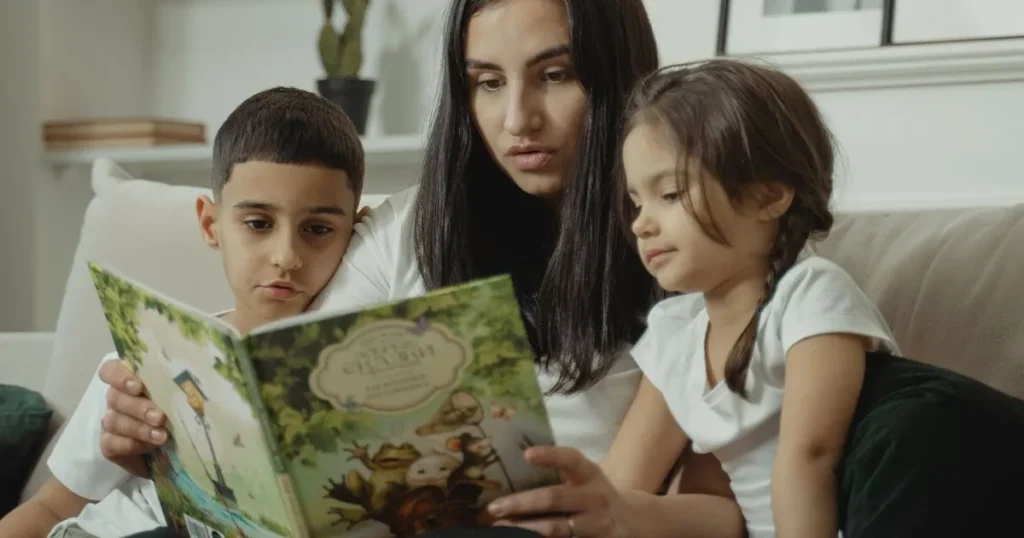
By now, you’ve seen that parenting styles are about much more than discipline. They influence the emotional climate of your home and shape how your child learns to think, communicate, solve problems, and build relationships.
That doesn’t mean every parenting decision determines your child’s future.
In reality, a child’s development is influenced by many factors, including genetics, personality, school experiences, friendships, cultural background, and relationships with other trusted adults.
However, research consistently suggests that the relationship you build with your child is one of the most powerful influences on their development.
Let’s explore the areas where parenting style can make the biggest difference.
Emotional Development
Children aren’t born knowing how to manage disappointment, frustration, or fear.
They learn these skills by watching the adults who care for them.
When you stay calm during difficult moments, acknowledge your child’s feelings, and help them work through challenges, you’re teaching emotional regulation.
Children raised in emotionally supportive environments are generally more likely to:
- Recognize and name their emotions.
- Express their feelings in healthy ways.
- Show empathy toward others.
- Recover from setbacks.
- Develop resilience.
According to the National Institute of Child Health and Human Development (NICHD), responsive caregiving during childhood supports healthy emotional and social development.
Brain Development
The early years of life are a period of remarkable brain growth.
Positive interactions—such as talking, reading, playing, comforting, and responding to your child’s needs—help strengthen the neural connections involved in learning, language, and emotional regulation.
Researchers describe these responsive interactions as “serve and return” communication.
For example:
- Your baby smiles.
- You smile back.
- Your toddler points to a bird.
- You respond by talking about it.
These simple daily interactions lay the foundation for lifelong learning.
🧠 Expert Insight
According to the Center on the Developing Child at Harvard University, responsive “serve and return” interactions between caregivers and young children play an essential role in building healthy brain architecture during early childhood.
Self-Esteem and Confidence
Every conversation sends your child a message about who they are.
When you encourage effort, celebrate progress, and allow age-appropriate independence, your child begins to believe:
“I can solve problems.”
“Mistakes help me learn.”
“My opinions matter.”
“I’m capable.”
Confidence grows through experience—not perfection.
Children become more self-assured when they have opportunities to practice new skills while knowing someone supportive is nearby.
Behavior and Self-Discipline
Children aren’t born with self-control.
They develop it gradually through guidance, routines, and practice.
Consistent parenting helps children develop:
- Responsibility
- Patience
- Delayed gratification
- Problem-solving
- Respect for others
Rather than asking:
“How do I stop this behavior?”
it can be more helpful to ask:
“What skill does my child still need to learn?”
That simple shift changes discipline from punishment into teaching.
Academic Success
No parenting style guarantees straight A’s.
However, supportive parenting often encourages habits linked to academic success.
Children benefit when parents:
- Read together regularly.
- Show interest in school.
- Encourage curiosity.
- Celebrate effort instead of perfection.
- Maintain predictable homework routines.
Research has consistently found that parental involvement in education is associated with improved academic engagement and motivation.
Social Skills
Your home is your child’s first classroom for learning how relationships work.
Through everyday interactions, children gradually learn important social skills, including how to:
- Listen respectfully.
- Share and cooperate with others.
- Resolve disagreements calmly.
- Respect different opinions and perspectives.
Children who experience respectful communication at home often carry these skills into their friendships, school life, and future relationships.
Mental Health
No parenting style can protect children from every emotional challenge they may face.
Children can still experience anxiety, depression, stress, or other mental health concerns for many different reasons.
However, having a warm, supportive relationship with caring adults can serve as an important protective factor.
Children who feel emotionally safe are often more likely to:
- Ask for support when they need it.
- Express difficult emotions openly.
- Develop healthy coping strategies.
- Build resilience when facing stressful situations.
📊 Evidence at a Glance
Decades of child development research suggest that parenting approaches built on warmth, responsiveness, and consistent expectations are generally linked with positive outcomes, including:
- Higher self-esteem.
- Better emotional regulation.
- Stronger social skills.
- Greater academic motivation.
- Increased resilience.
- Fewer behavioral challenges.
These findings reflect general patterns, not guarantees. Every child develops differently based on their unique personality, family environment, culture, and community.
Can You Change Your Parenting Style?
Absolutely.
One of the most hopeful discoveries in child development research is that parenting is not fixed. Parents can learn, adapt, and grow over time.
You are not permanently defined by one parenting style.
Many parents naturally adjust their approach as:
- Their child grows and develops.
- Family circumstances change.
- They discover new parenting strategies.
- They become more confident in their decisions.
- They reflect on their own childhood experiences.
Small, consistent improvements often have a greater impact than trying to completely transform your parenting overnight.
Remember:
Your child does not need a perfect parent.
They need a connected parent.
Signs You’re Moving Toward a More Balanced Parenting Style
You may notice positive changes when you begin to:
- Explain rules instead of depending only on punishment.
- Listen before responding.
- Maintain consistent expectations.
- Encourage age-appropriate independence.
- Praise effort rather than focusing only on results.
- Admit mistakes and apologize when needed.
- Create intentional moments of connection each day.
These habits strengthen trust while helping children develop confidence, responsibility, and emotional security.
Practical Tips to Build a Healthy Parenting Style
No matter where you are starting from, small daily habits can help you create a more balanced and supportive parenting approach.
1. Focus on Connection Before Correction
Children are often more willing to cooperate when they feel understood and respected.
Before correcting behavior, take a moment to connect with your child and acknowledge their feelings.
2. Create Clear Family Expectations
Keep rules simple, consistent, and appropriate for your child’s age.
Knowing what to expect helps children feel secure, confident, and supported.
3. Encourage Problem-Solving
Instead of immediately solving every challenge for your child, encourage them to think through possible solutions.
Try asking:
- “What ideas do you have?”
- “What could you try next?”
- “How can we solve this together?”
4. Praise the Process, Not Just the Result
Instead of saying:
“You’re so smart.”
Try:
“You worked really hard on that.”
Focusing on effort helps children develop a growth mindset and understand that abilities can improve with practice.
5. Make Time for Everyday Moments
Strong relationships are built through small, consistent interactions.
Simple activities can create meaningful connections, such as:
- Reading together.
- Sharing meals.
- Taking walks outside.
- Playing games.
- Talking before bedtime.
6. Remember That Repair Matters
Every parent loses patience sometimes.
Healthy families are not defined by never making mistakes. They are defined by the ability to repair and reconnect afterward.
A sincere apology teaches children humility, accountability, and respect while showing them that relationships can recover after difficult moments.
❤️ Parenting Whisper Reminder
Your child probably will not remember every rule you created or every correction you gave.
They are far more likely to remember how safe, loved, respected, and understood they felt in your home.

Frequently Asked Questions About Parenting Styles
What are the four parenting styles?
Parenting approaches are commonly grouped into four main styles:
- Authoritative parenting
- Authoritarian parenting
- Permissive parenting
- Uninvolved parenting
These styles differ in how parents balance warmth, communication, responsiveness, and expectations.
Which parenting style is generally considered the most effective?
Research has consistently associated authoritative parenting with many positive outcomes because it combines emotional support, clear expectations, consistent guidance, and open communication.
However, every child and family is unique. Parenting approaches should also consider factors such as a child’s temperament, developmental stage, culture, and individual needs.
Can parenting styles change over time?
Yes.
Parenting styles can evolve as children grow, family circumstances change, and parents gain experience and confidence.
Becoming aware of your parenting habits is the first step toward making intentional improvements that strengthen your connection with your child.
What is the difference between authoritative and authoritarian parenting?
Although the names are similar, these parenting styles are different.
Authoritative parents combine warmth with clear boundaries. They listen to their children, explain expectations, and guide behavior through communication and support.
Authoritarian parents also value rules and discipline, but they are more likely to rely on strict control, punishment, and obedience with less discussion.
Does gentle parenting mean permissive parenting?
No.
Gentle parenting does not mean allowing children to do whatever they want.
Gentle parenting still includes boundaries, expectations, and accountability. The difference is that discipline focuses on teaching, understanding emotions, and guiding behavior rather than relying mainly on punishment.
Can two parents have different parenting styles?
Absolutely.
Many families include caregivers with different personalities, backgrounds, and parenting approaches.
The goal is not for both parents to be identical. The most important thing is working together to create consistent expectations and a supportive environment where children feel secure and understood.
Which parenting style is considered the most harmful?
Research generally associates prolonged uninvolved parenting with a higher risk of emotional, social, and academic difficulties because children may receive limited guidance, attention, and emotional support.
However, children’s development is influenced by many factors. Supportive relationships with other trusted adults can help children build resilience and emotional strength.
Key Takeaways
Before you go, remember these important ideas:
✅ Parenting styles describe overall patterns, not individual moments.
✅ Children need both unconditional love and consistent guidance.
✅ Warmth without boundaries can create challenges, just as boundaries without warmth can.
✅ You do not need to become a perfect parent to raise a healthy, confident child.
✅ Small, intentional changes repeated consistently often create the biggest impact.

Conclusion
Every parent has difficult days.
There will be moments when you respond with patience and moments when you feel overwhelmed. Some days you will handle situations calmly, while other days you may wish you had reacted differently.
That is part of being human.
The good news is that your parenting style is not defined by one difficult moment or one parenting mistake. It is shaped by the overall relationship you build with your child over time.
Understanding the four parenting styles—authoritative, authoritarian, permissive, and uninvolved—can help you recognize your strengths and identify small changes that strengthen your family connection.
The goal is not to become a perfect parent.
The goal is to become a parent who continues learning, adapting, and growing.
When children experience both deep love and consistent guidance, they are more likely to develop resilience, empathy, confidence, and responsibility—qualities that can support them throughout life.
So instead of asking yourself:
“Am I a perfect parent?”
Try asking:
“What is one small thing I can do today to strengthen my relationship with my child?”
That simple question may shape your parenting journey far more than the pursuit of perfection ever could.
References
To help ensure this guide reflects current understanding of child development, the information in this article is informed by research and guidance from:
- Baumrind, D. (1966). Effects of Authoritative Parental Control on Child Behavior.
- Baumrind, D. (1967). Child Care Practices Anteceding Three Patterns of Preschool Behavior.
- Maccoby, E. E., & Martin, J. A. (1983). Socialization in the Context of the Family: Parent–Child Interaction.
- American Academy of Pediatrics (AAP) — Parenting guidance and healthy child development.
- American Psychological Association (APA) — Parenting resources and child development research.
- Centers for Disease Control and Prevention (CDC) — Positive Parenting Tips.
- National Institute of Child Health and Human Development (NICHD) — Child development resources.
- Center on the Developing Child at Harvard University — Early childhood development and “serve and return” interactions.