
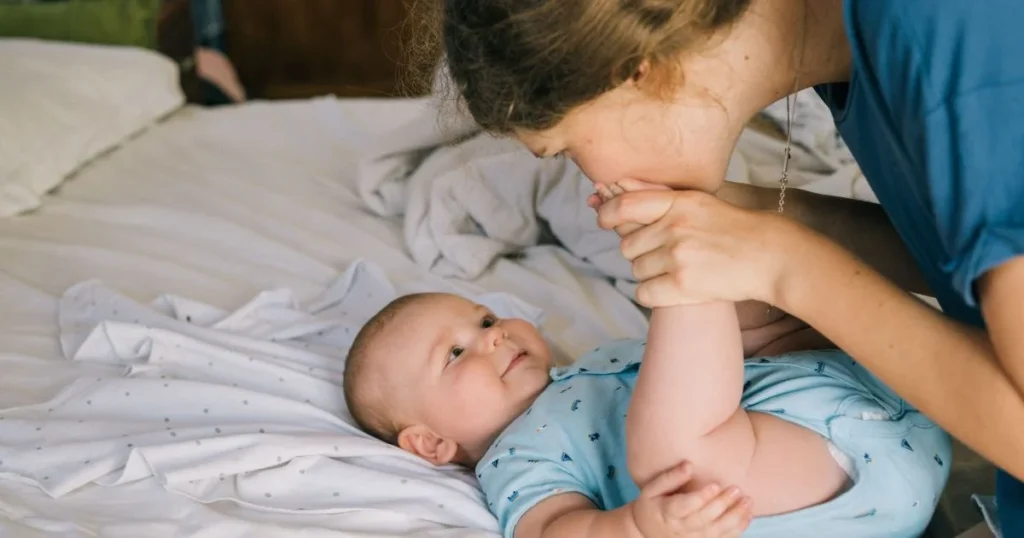
Five months old already! It probably feels like only yesterday you were holding your newborn, getting to know their little cries, and watching their tiny hands curl around your finger. Now, your baby may be reaching for toys, smiling when they see your face, making adorable sounds, and becoming more curious about everything around them.
This stage brings exciting changes. Your baby’s movements may become more coordinated, their personality may shine through, and their interest in the world around them may grow. You might notice new attempts to roll, more playful sounds, or longer moments of interaction during everyday activities.
Understanding the developmental milestones for 5 months can help you recognize these changes and find simple ways to support your baby’s growth. Exploring the developmental milestones for 5 months also gives you a clearer idea of the new skills your baby may begin practicing at this age.
Remember, babies don’t all develop at the same pace. Some skills appear earlier, while others take a little longer. Rather than worrying about every milestone, focus on enjoying your baby’s progress and providing a safe, loving environment where they can explore, learn, and thrive.
If you’re following your baby’s progress month by month, explore our guide to developmental milestones at 4 months to see which skills may come next.
What Are the Developmental Milestones for 5 Months?
Developmental milestones are skills babies gradually develop as they grow. They include physical movements, communication, learning, and social interactions. These skills offer helpful clues about how your baby is developing during everyday activities and help you understand the developmental milestones for 5 months.
At five months, your baby is between the Centers for Disease Control and Prevention (CDC) four-month and six-month milestone checklists. There isn’t a separate official CDC checklist for five-month-old babies, so it’s helpful to look at the skills associated with both ages.
The CDC uses a 75% benchmark: its milestones describe skills that at least 75% of children can do by a particular age. This doesn’t mean every baby must achieve every skill at exactly the same time.
The main areas of development include:
- Physical development: Head control, rolling attempts, reaching, and grasping.
- Cognitive development: Exploring objects, noticing changes, and learning through the senses.
- Social and emotional development: Smiling, laughing, recognizing familiar caregivers, and enjoying interaction.
- Communication development: Cooing, squealing, responding to voices, and experimenting with sounds.
If your baby was born prematurely by more than three weeks, the CDC recommends using corrected age when checking developmental milestones. This accounts for the difference between your baby’s birth date and their expected due date.
You can discuss your baby’s individual development with your pediatrician during regular checkups, especially if you have questions about the developmental milestones for 5 months.
You can also explore developmental milestones of a 3-month-old to understand how your baby’s skills develop over time.
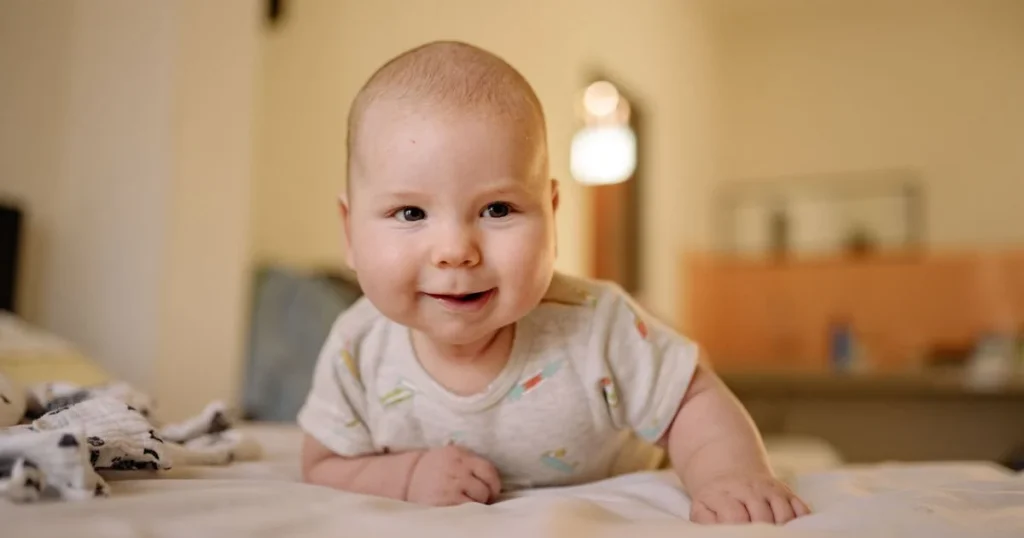
Physical Developmental Milestones for a 5-Month-Old Baby
One of the most exciting parts of five-month development is watching your baby become stronger and more active. Movements that once seemed difficult may now happen with greater control as your baby begins showing new developmental milestones for 5 months.
Here are some physical changes you may notice.
1. Better Head and Neck Control
By this age, many babies can hold their heads more steadily when supported. Their neck and upper-body muscles are becoming stronger, making it easier to look around during play. These changes are an important part of the developmental milestones for 5 months.
You may notice your baby:
- Holding their head steady while being carried.
- Lifting their head and chest during tummy time.
- Looking toward familiar people and interesting objects.
- Showing better control when changing positions.
These skills develop gradually and help prepare your baby for more advanced movements.
2. Rolling and Exploring Movement
Your baby may start becoming more interested in changing positions. Some babies begin rolling from their tummy to their back around this period, while others need more time. These movements are part of the developmental milestones for 5 months as your baby gradually builds strength and coordination.
You might notice your baby:
- Kicking their legs enthusiastically.
- Moving their arms while lying on their back.
- Turning their body from side to side.
- Attempting to roll during floor play.
The CDC includes rolling from tummy to back among its six-month milestones. Not rolling independently at five months does not automatically indicate a developmental problem.
As your baby becomes more active, understanding baby wake windows by age can help you plan opportunities for play and rest.
3. Reaching, Grabbing, and Holding Toys
Your baby’s hands are becoming important tools for exploring the world, marking another exciting part of the developmental milestones for 5 months.
They may start reaching toward toys, holding objects when offered, and bringing their hands or safe toys toward their mouth.
Encourage this natural curiosity by offering lightweight, age-appropriate toys that are easy to hold.
For more ideas that encourage your baby’s movement and coordination, try these fine motor activities for toddlers, adapting activities to your child’s age and abilities.
4. Improving Hand-Eye Coordination
Your baby is gradually learning to coordinate what they see with how they move their hands. This growing ability is another important part of the developmental milestones for 5 months.
For example, they may watch a toy moving across their field of vision and attempt to reach for it.
This developing coordination supports future skills such as grasping, transferring objects, and exploring toys more independently.
Cognitive and Sensory Development at 5 Months
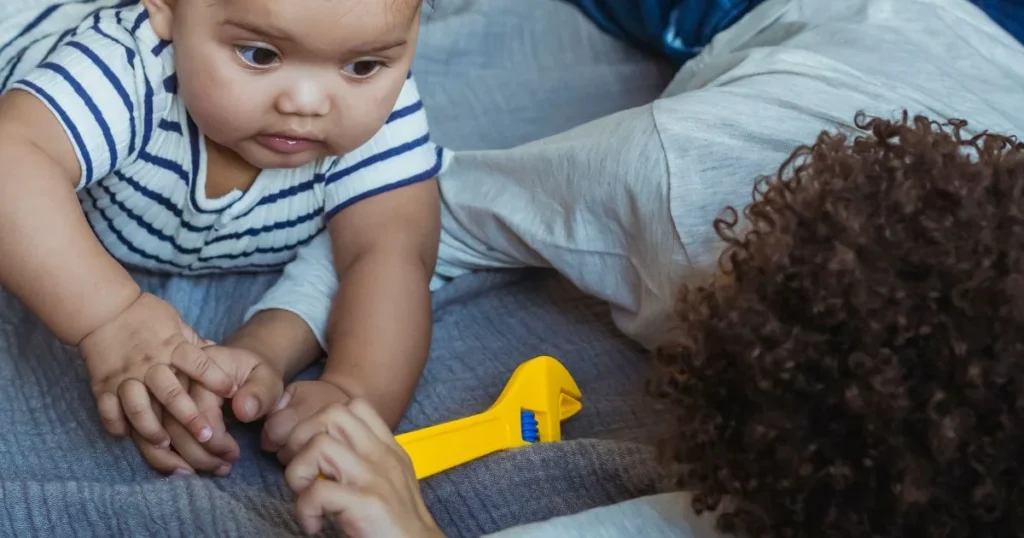
Your baby’s brain is constantly learning from everyday experiences. Looking at your face, listening to your voice, and touching different objects all provide opportunities to explore and understand the surrounding world. These experiences play an important role in the developmental milestones for 5 months.
1. Exploring Cause and Effect
Your baby may begin noticing that certain actions produce interesting results. This growing curiosity is an important part of the developmental milestones for 5 months.
For example, shaking a toy might create a sound, or kicking a soft object might make it move.
These repeated experiences help your baby discover simple relationships between their actions and what happens next.
2. Recognizing Familiar Faces and Objects
Your baby may show excitement when seeing familiar caregivers. They might smile, move their arms, or make sounds when you approach.
You may also notice that they pay attention to familiar toys and household objects.
Recognizing familiar people and responding to their presence are important parts of early social and cognitive development.
3. Following Moving Objects With Their Eyes
Visual attention continues to develop during this stage, adding another exciting aspect to the developmental milestones for 5 months.
Your baby may:
- Watch toys as they move.
- Follow you with their eyes when you walk across the room.
- Look toward interesting objects.
- Show curiosity about reflections and colorful pictures.
4. Exploring the World Through Their Senses
Babies learn by seeing, touching, listening, and exploring safe objects with their mouths. These sensory experiences are an important part of the developmental milestones for 5 months.
You may notice your baby bringing their hands to their mouth or attempting to explore a toy by touching and mouthing it.
Always choose baby-safe objects without small detachable parts, sharp edges, or choking hazards.
Social and Emotional Milestones for a 5-Month-Old
Your baby’s personality may become easier to recognize around this age. Their smiles, expressions, and reactions can make everyday interactions especially enjoyable and are lovely examples of the developmental milestones for 5 months.
1. Smiling and Laughing More Often
Your baby may smile when you approach, laugh during playful moments, or become excited when hearing a familiar voice. These joyful reactions are lovely examples of the developmental milestones for 5 months.
These expressions help them communicate enjoyment before they can use words.
2. Enjoying Face-to-Face Interaction
Your baby may become increasingly interested in watching your expressions. This growing social awareness is an important part of the developmental milestones for 5 months.
Try smiling, talking, and responding to their sounds. You might notice your baby becoming more animated when you interact together.
3. Recognizing Familiar Caregivers
Familiar faces and voices can bring comfort and reassurance. These social responses are part of the developmental milestones for 5 months.
Your baby may respond differently to people they see regularly compared with unfamiliar visitors. However, stronger stranger awareness and separation-related reactions vary considerably between babies.
4. Expressing Different Emotions
Your baby may show happiness, frustration, excitement, or discomfort through facial expressions, movements, and sounds. These emotional expressions are part of the developmental milestones for 5 months.
Responding calmly to these signals helps your baby feel secure and understood.
Communication and Language Milestones at 5 Months

Your baby doesn’t need to say their first word to communicate. Long before talking, babies use sounds, facial expressions, and body movements to interact with the people around them. These early communication skills are an important part of the developmental milestones for 5 months.
1. Making New Sounds and Squealing
You may hear more cooing, squealing, giggling, and playful vocal sounds. These emerging sounds are an exciting part of the developmental milestones for 5 months.
Your baby might experiment with different pitches and volumes simply because they enjoy discovering what their voice can do.
2. Responding to Familiar Voices
Your baby may turn toward your voice or pause when you begin speaking. These listening responses are part of the developmental milestones for 5 months.
They may also show interest when hearing familiar songs or gentle conversations.
3. Enjoying Back-and-Forth Conversations
Try speaking to your baby and then waiting for a response.
When your baby makes a sound, smile and respond as though you’re having a conversation.
These simple exchanges introduce the rhythm of communication and encourage early language development, supporting the developmental milestones for 5 months.
4. Exploring Different Vocal Sounds
Some babies begin experimenting with squeals, raspberries, and early consonant-like sounds. These early vocal experiments are part of the developmental milestones for 5 months.
These are part of a gradual process. Clear words such as “mama” or “dada” are not expected at five months.
7 Simple Activities to Encourage Your 5-Month-Old Baby’s Development
You don’t need expensive toys or complicated activities to support your baby’s development. Everyday moments can become wonderful learning opportunities and help encourage the developmental milestones for 5 months.
Here are seven simple activities to try at home.
1. Make Tummy Time Part of Your Daily Routine
Tummy time gives your baby opportunities to strengthen the muscles needed for head control and movement, supporting the developmental milestones for 5 months.
How to do it:
- Place your baby on their tummy while they are awake and alert.
- Stay close and supervise throughout the activity.
- Put a safe toy nearby to encourage looking and reaching.
- Get down at your baby’s eye level and talk to them.
Why it helps: Tummy time supports upper-body strength, head control, and developing motor skills.
Start with manageable sessions and gradually increase them according to your baby’s comfort. Always place your baby on their back for sleep.
2. Talk, Sing, and Respond to Your Baby
Your voice is one of your baby’s favorite learning tools and can help encourage the developmental milestones for 5 months.
How to do it:
- Talk about what you’re doing during everyday routines.
- Sing familiar nursery rhymes.
- Respond when your baby coos or squeals.
- Pause occasionally to give your baby time to respond.
Why it helps: These interactions encourage early communication, listening skills, and emotional connection.
3. Offer Safe Toys to Reach and Grab
Your baby is learning how to coordinate their hands and eyes. These growing abilities are an important part of the developmental milestones for 5 months.
How to do it:
- Choose lightweight rattles or soft baby toys.
- Hold a toy within comfortable reach.
- Encourage your baby to reach with either hand.
- Let them explore the toy while you supervise.
Why it helps: Reaching and grasping encourage hand-eye coordination and developing motor control.
Avoid small objects, loose parts, and toys that could become choking hazards.
4. Play Peekaboo Together
Peekaboo is a simple game that can bring plenty of smiles while encouraging the developmental milestones for 5 months.
How to do it:
- Cover your face briefly with your hands.
- Ask, “Where did Mommy go?”
- Reveal your face with a smile.
- Repeat if your baby enjoys the interaction.
Why it helps: Peekaboo encourages social interaction, attention, and anticipation while creating enjoyable bonding moments.
5. Encourage Visual Tracking
Peekaboo is a simple game that can bring plenty of smiles while encouraging the developmental milestones for 5 months.
How to do it:
- Cover your face briefly with your hands.
- Ask, “Where did Mommy go?”
- Reveal your face with a smile.
- Repeat if your baby enjoys the interaction.
Why it helps: Peekaboo encourages social interaction, attention, and anticipation while creating enjoyable bonding moments.
6. Read Simple Baby Books
It’s never too early to introduce your baby to books. Reading together can support the developmental milestones for 5 months.
How to do it:
- Choose sturdy board books or baby-safe cloth books.
- Point to pictures and name familiar objects.
- Use different expressions and gentle sounds.
- Let your baby look at the pictures and explore the book safely.
Why it helps: Reading introduces language, sounds, pictures, and enjoyable moments of connection.
7. Enjoy Supervised Floor Play
Give your baby opportunities to move freely in a safe space. This kind of active play supports the developmental milestones for 5 months.
How to do it:
- Place a firm play mat on a clear floor.
- Offer a few age-appropriate toys nearby.
- Allow your baby to kick, stretch, reach, and explore.
- Stay close and supervise.
Why it helps: Floor play supports movement, coordination, and natural exploration.
Remember, your baby doesn’t need to complete every activity every day. Follow their interest, allow breaks, and stop when they become tired or uncomfortable.
You can also find inspiration in these sensory play activities and adapt safe experiences to your baby’s developmental stage.
Feeding Your 5-Month-Old Baby: What Parents Should Know
Feeding is an important part of your baby’s growth, and you may start wondering whether it’s time to introduce solid foods. Understanding nutrition is another important aspect of the developmental milestones for 5 months.
At five months, breast milk or infant formula should remain your baby’s main source of nutrition.
1. Why Breast Milk or Formula Remains Essential
Breast milk provides nutrients and antibodies that support your baby’s growth and development. If you use formula, choose an age-appropriate infant formula and prepare it according to the manufacturer’s instructions.
Feed responsively by watching your baby’s hunger and fullness cues rather than relying on a rigid feeding schedule. Responsive feeding supports healthy growth and the developmental milestones for 5 months.
If you want to understand how feeding needs change as your baby grows, read our baby feeding schedule by age guide.
2. Is Your 5-Month-Old Ready for Solid Foods?
Most babies are ready to begin complementary foods around six months.
According to the World Health Organization (WHO), exclusive breastfeeding is recommended for the first six months, followed by complementary foods alongside continued breastfeeding.
Before introducing solids, look for signs of developmental readiness, including:
- Good head and neck control.
- The ability to sit upright with support.
- Coordinated movements to bring objects toward the mouth.
- The ability to swallow food rather than automatically pushing it out with the tongue.
These signs of readiness develop alongside the developmental milestones for 5 months, but they do not necessarily mean your baby is ready for solid foods.
If you’re unsure whether your baby is ready, discuss it with your pediatrician.
When your baby approaches six months and shows signs of readiness, our guide to first foods for baby can help you explore the next stage of feeding.
3. What Foods and Drinks Should You Avoid?
Here are some important feeding reminders:
| Food or drink | Recommendation |
| Breast milk | Continue as the main nutrition source |
| Infant formula | Use age-appropriate formula |
| Solid foods | Generally introduce around six months when ready |
| Water | Usually unnecessary before six months |
| Honey | Avoid before 12 months |
| Cow’s milk | Do not use as the main drink before 12 months |
| Fruit juice | Not recommended for infants under 12 months |
When your baby is ready for complementary feeding, introduce appropriate foods gradually and follow safe preparation and choking-prevention guidance.
Sleep at 5 Months: Patterns, Naps, and Safe Sleep
Sleep may look different now compared with the newborn stage. Your baby might have more predictable periods of rest, but night waking and changing naps can still be completely normal. These changes can happen alongside the developmental milestones for 5 months.
1. How Much Sleep Does a 5-Month-Old Need?
The American Academy of Sleep Medicine recommends 12–16 hours of sleep per 24 hours, including naps, for infants aged four to twelve months.
However, individual babies have different sleep patterns. Your baby may take several naps throughout the day and still wake during the night. These changing sleep patterns can occur alongside the developmental milestones for 5 months.
For a broader look at changing sleep needs, explore our baby sleep schedule by age guide.
2. Understanding Night Wakings and Changing Nap Patterns
You may notice shorter naps, changing bedtime preferences, or more frequent night wakings.
Developmental changes, feeding needs, and differences in sleep patterns can all influence your baby’s rest. Some of these changes may happen as your baby reaches new developmental milestones for 5 months.
Rather than expecting uninterrupted nights, focus on creating a comfortable and consistent sleep routine.
3. Creating a Gentle Bedtime Routine
A predictable routine can help your baby recognize when it’s time to settle down.
You might include:
- A calm feeding session.
- A clean diaper and comfortable sleepwear.
- A gentle song or short story.
- Quiet cuddles before bedtime.
A consistent bedtime routine can support healthy sleep habits as part of your baby’s developmental milestones for 5 months.
A calming routine can also help, so take a look at our guide on how to create a baby bedtime routine.
4. Following Safe Sleep Guidelines
Safe sleep remains essential at five months, especially as your baby develops new movement skills as part of the developmental milestones for 5 months.
Follow these recommendations from the American Academy of Pediatrics (AAP):
- Place your baby on their back for every sleep.
- Use a firm, flat, safety-approved sleep surface.
- Keep pillows, loose blankets, stuffed toys, and other soft objects out of the crib.
- Share your room, but not your bed, ideally for at least the first six months.
- Stop swaddling as soon as your baby shows signs of attempting to roll.
If your baby can roll independently in both directions, continue placing them on their back initially, but you generally don’t need to keep turning them back if they change positions themselves.
For more information about when soft bedding becomes appropriate, read our guide on when a baby can sleep with a blanket.
Baby Safety at 5 Months: What Parents Should Prepare For
Your baby’s increasing movement is an exciting part of the developmental milestones for 5 months and means it’s a good time to review your home environment.
Even if your baby isn’t rolling consistently yet, new movements can appear unexpectedly.
1. Prepare for Rolling and Increased Movement
Never leave your baby unattended on a bed, sofa, changing table, or elevated surface. Use a safe floor area for supervised play as your baby explores the developmental milestones for 5 months.
2. Prevent Choking and Small-Object Hazards
Keep coins, batteries, small toys, and other dangerous objects away from your baby. Remember that babies naturally explore many objects by bringing them toward their mouths as they develop skills associated with the developmental milestones for 5 months.
3. Keep the Sleep Environment Safe
Check that the crib has a firm mattress and fitted sheet. Remove soft objects and accessories that could create entanglement or suffocation risks.
A safe environment gives your baby more opportunities to explore the developmental milestones for 5 months while reducing preventable hazards.
If you’re preparing your baby’s sleep space, our bassinet vs crib guide explains the differences between these sleep options.
Signs Your 5-Month-Old Baby Is Developing Well
Every baby has an individual developmental journey, but you may notice several encouraging signs during everyday interactions.
Use this checklist as a simple observation guide:
- Holds their head more steadily.
- Shows interest in faces and surroundings.
- Reaches toward nearby toys.
- Brings hands to their mouth.
- Makes different sounds.
- Smiles during familiar interactions.
- Watches moving objects.
- Enjoys talking and playing with caregivers.
These observations are not a formal developmental assessment. Your pediatrician can help evaluate your baby’s overall progress during regular checkups.
When Should You Be Concerned About Your 5-Month-Old’s Development?
It’s natural to wonder whether your baby is developing as expected, especially when you compare their progress with other babies.
Some differences are perfectly normal. However, certain signs deserve attention and should be discussed with your pediatrician.
Developmental Signs Worth Discussing With Your Pediatrician
Consider asking for professional advice if you notice:
- Difficulty holding their head steady.
- Unusual stiffness or floppiness in their muscles.
- Not responding to loud sounds.
- Not watching or following moving objects.
- Not showing interest in interacting with familiar people.
- Losing a skill they previously had.
These signs do not automatically mean your baby has a developmental delay. They simply deserve further discussion and, when appropriate, an assessment.
What Should You Do If Your Baby Is Not Meeting Certain Milestones?
If something concerns you:
- Observe your baby’s behavior during everyday activities.
- Write down the skills you’ve noticed and any difficulties.
- Share your observations with your pediatrician.
- Ask whether developmental screening or further evaluation is appropriate.
- Follow the professional guidance you receive.
You don’t need to wait until your baby reaches six months to discuss a concern.
Early conversations can help identify whether additional support would be useful.
If you’re interested in the next stage of development, read our guide to developmental milestones 2 months old.
Frequently Asked Questions About Developmental Milestones for 5 Months
What Are the Most Important Developmental Milestones for 5 Months?
Important areas include improving head control, reaching for toys, exploring objects, smiling, responding to familiar voices, and making different sounds. Your baby may also begin attempting to roll during this period.
What Should a 5-Month-Old Baby Be Able to Do?
Many babies can hold their heads steadily, reach for objects, bring their hands to their mouths, smile, and enjoy interacting with caregivers. However, abilities vary, and not every baby develops at the same pace.
Should My 5-Month-Old Baby Be Rolling Over?
Some babies begin rolling around five months, while others take longer. The CDC lists rolling from tummy to back as a six-month milestone, so not rolling at five months does not automatically indicate a problem.
Can a 5-Month-Old Baby Sit Independently?
Most five-month-old babies still need support when sitting. They may be developing better head and upper-body control, but independent sitting generally comes later. Always supervise supported sitting and avoid forcing the position.
How Much Tummy Time Does a 5-Month-Old Need?
Offer regular, supervised tummy time while your baby is awake. Spread sessions throughout the day and increase them according to your baby’s comfort and ability. Always place your baby on their back for sleep.
What Activities Help a 5-Month-Old Baby Develop?
Talking, singing, tummy time, peekaboo, reading, reaching for toys, and supervised floor play are wonderful activities. They encourage movement, communication, sensory exploration, and social interaction.
Should My 5-Month-Old Baby Start Eating Solid Foods?
Most babies are ready for complementary foods around six months. Look for good head control, supported sitting, and other readiness signs. Discuss feeding readiness with your pediatrician rather than introducing solids too early.
What If My 5-Month-Old Is Not Meeting Developmental Milestones?
Babies develop at different rates, so one skill appearing later doesn’t necessarily indicate a problem. If you have concerns about movement, communication, hearing, vision, or social interaction, discuss them with your pediatrician.
Conclusion: Helping Your 5-Month-Old Baby Thrive, One Day at a Time
Watching your baby grow and discover the world is one of the most beautiful parts of parenthood. The developmental milestones for 5 months offer helpful clues about how your little one is learning, moving, communicating, and connecting with you.
Remember, your baby doesn’t need to master every new skill at exactly five months. Enjoy the little smiles, curious sounds, playful movements, and everyday discoveries. Simple activities such as talking, singing, reading, and supervised floor play can provide meaningful opportunities for learning.
And if something concerns you, don’t hesitate to speak with your pediatrician. You know your baby better than anyone, and asking questions is an important part of supporting their development.
At Parenting Whisper, we believe every little milestone deserves to be celebrated. Keep enjoying the journey, one beautiful day at a time.
Explore more Parenting Whisper guides for practical advice on baby development, sleep, and everyday parenting.