

If you have ever watched the clock and wondered whether your baby is eating enough, you are not alone. One day your newborn may want to feed constantly, and a few months later, you may be trying to figure out how milk feeds, solids, naps, and meals can all fit into the same day.
The good news? You do not need a perfect timetable.
A Baby Feeding Schedule can give you a helpful rhythm without becoming another parenting rule to worry about. Your baby’s appetite, growth, developmental stage, and feeding method all influence how often they eat.
During the first year, your Baby Feeding Schedule will gradually change from frequent breast milk or formula feeds to a combination of milk and complementary foods. By about 6 months, many babies are ready to start eating solid foods alongside breast milk or infant formula when they show signs of developmental readiness.
This month-by-month guide will help you understand what a Baby Feeding Schedule may look like from the newborn stage through 12 months, including sample schedules, solid-food ideas, hunger cues, and practical feeding tips.
Baby Feeding Schedule by Age at a Glance
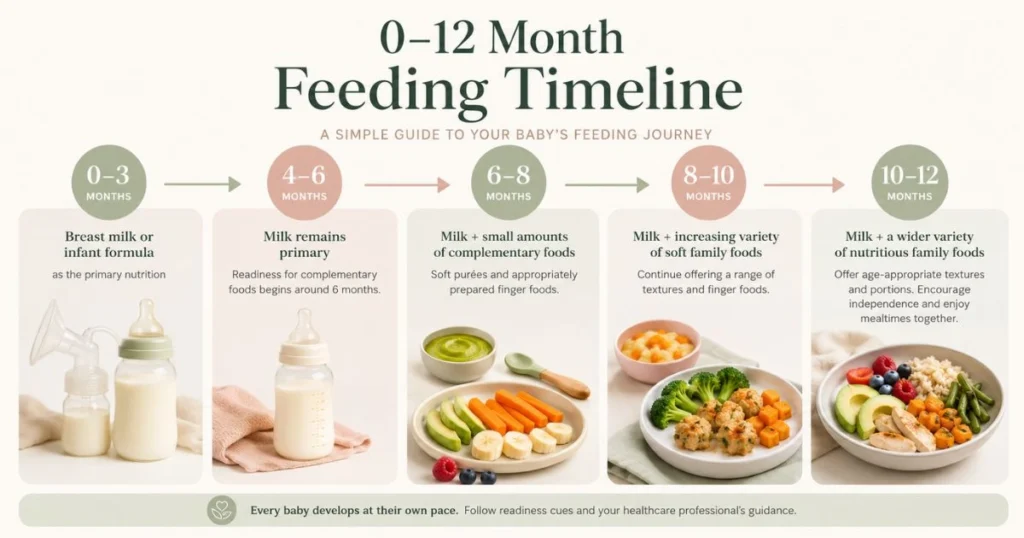
Use this chart as a starting point rather than a strict schedule.
| Age | Main Nutrition | Typical Pattern | Solids |
| 0–1 month | Breast milk or formula | Frequent feeds | No |
| 1–2 months | Breast milk or formula | Frequent milk feeds | No |
| 2–3 months | Breast milk or formula | Gradually more predictable | No |
| 3–4 months | Breast milk or formula | Milk remains primary | Usually no |
| 4–5 months | Breast milk or formula | Milk remains primary | Usually wait for readiness |
| 5–6 months | Breast milk or formula | Prepare for complementary foods | When developmentally ready |
| 6–7 months | Milk + complementary foods | Milk plus 1–2 food opportunities | Yes |
| 7–8 months | Milk + complementary foods | Milk plus 2–3 meals | Yes |
| 8–9 months | Milk + complementary foods | Regular meals and milk | Yes |
| 9–10 months | Milk + complementary foods | Often 3 meals | Yes |
| 10–11 months | Milk + complementary foods | 3 meals + milk | Yes |
| 11–12 months | Milk + family foods | 3 meals + milk | Yes |
| 12 months | Varied foods + appropriate milk | 3 meals + snacks as appropriate | Yes |
Your baby may eat more or less often than these general patterns. The goal is to respond to your baby’s needs while gradually establishing a predictable routine.
How Your Baby Feeding Schedule Changes During the First Year
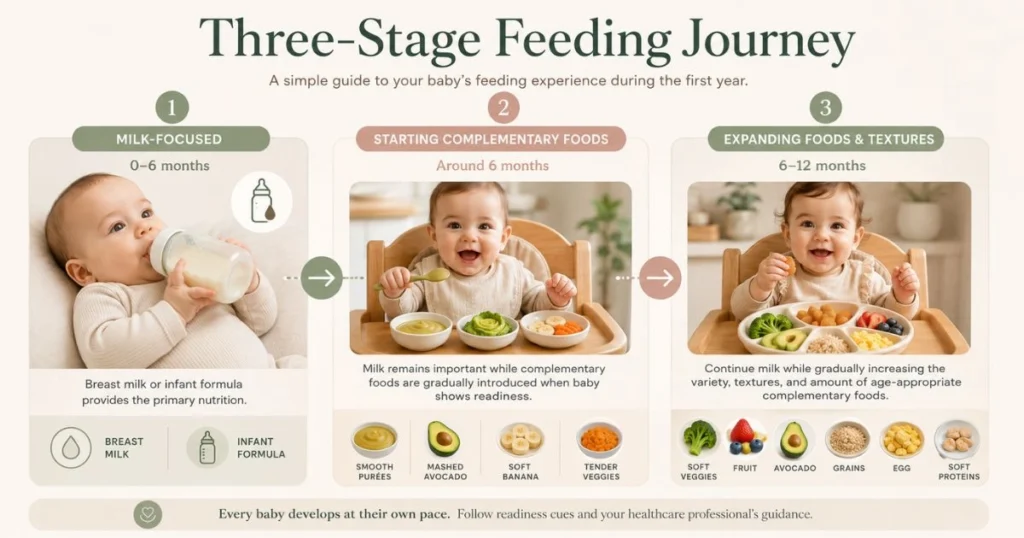
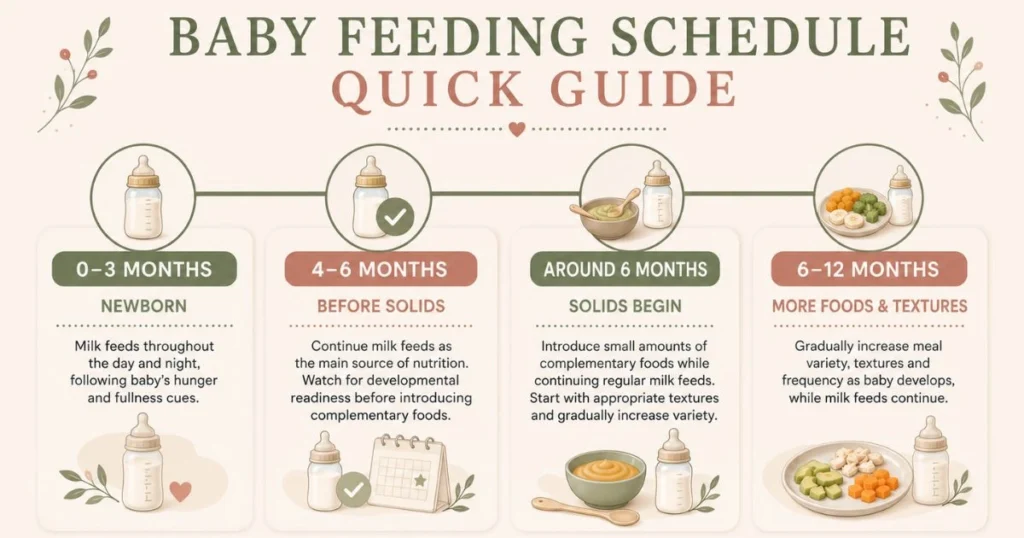
The first year can be divided into three broad feeding stages.
Birth to 3 Months: Milk-Focused Feeding
For SEO, I’d add the exact Baby Feeding Schedule naturally once and avoid forcing it into every sentence:
During the first months, breast milk or infant formula provides the nutrition your baby needs, and feeding can be frequent and unpredictable. Your Baby Feeding Schedule may change from day to day as your newborn responds to hunger and fullness cues.

Exclusively breastfed babies commonly feed about 8–12 times in 24 hours, although some may nurse more often, especially during periods of cluster feeding. (CDC)
For formula-fed newborns, the CDC notes that many babies feed 8–12 times in 24 hours during the first days. If your baby is exclusively formula-fed, you may initially offer about 1–2 ounces every 2–3 hours, with amounts and timing changing as your baby grows. (CDC)
As your baby gets older, their feeding pattern will usually become more predictable, so your Baby Feeding Schedule can gradually develop a more noticeable rhythm.
4 to 5 Months: Milk Still Comes First
At this stage, breast milk or infant formula should still provide most of your baby’s nutrition. Your Baby Feeding Schedule may also seem unpredictable as your baby’s appetite and daily routine continue to change.
You may notice your baby becoming more interested in food, watching you eat, or sleeping differently at night. However, these changes alone do not necessarily mean your baby is ready for solid foods.
Instead, focus on developmental readiness. Around 6 months, look for signs such as sitting with support, having good head and neck control, opening their mouth when food is offered, and being able to swallow food rather than pushing it back out. (cdc.gov)
Around 6 Months: Complementary Foods Begin
The CDC and American Academy of Pediatrics recommend introducing complementary foods at around 6 months, while continuing to offer breast milk or infant formula. Starting solids before 4 months is not recommended. (CDC)
Milk does not suddenly become less important once solids begin. From 6 to 12 months, breast milk and/or infant formula should continue to provide much of your baby’s nutrition as solid foods are gradually added to the Baby Feeding Schedule and become a larger part of their daily diet. (CDC)
7 to 12 Months: More Variety and Texture
Your baby gradually moves from tiny tastes toward more regular meals.
You can introduce a variety of:
- Vegetables
- Fruits
- Meat, fish, eggs, beans, and other proteins
- Whole grains
- Plain yogurt and appropriate dairy foods
- Healthy fats
By 7–8 months, many babies can eat foods from several food groups and begin handling thicker, lumpier, and appropriately prepared textures.
Newborn Baby Feeding Schedule: 0–1 Month
How Often Should a Newborn Eat?
Newborns have tiny stomachs and usually need frequent feeds.
If you are breastfeeding, your baby may want to eat every 1–3 hours during the early days. CDC guidance notes that exclusively breastfed babies commonly feed around 8–12 times in 24 hours.
If you are formula feeding, many newborns feed approximately every 2–3 hours at first.
Sample 0–1 Month Feeding Routine
There is no need to force your newborn into exact times. A day might look roughly like:
- Morning: Breast milk or formula
- Mid-morning: Breast milk or formula
- Afternoon: Breast milk or formula
- Evening: Frequent milk feeds
- Night: Breast milk or formula as needed
Some feeds will be close together. Others may be farther apart.
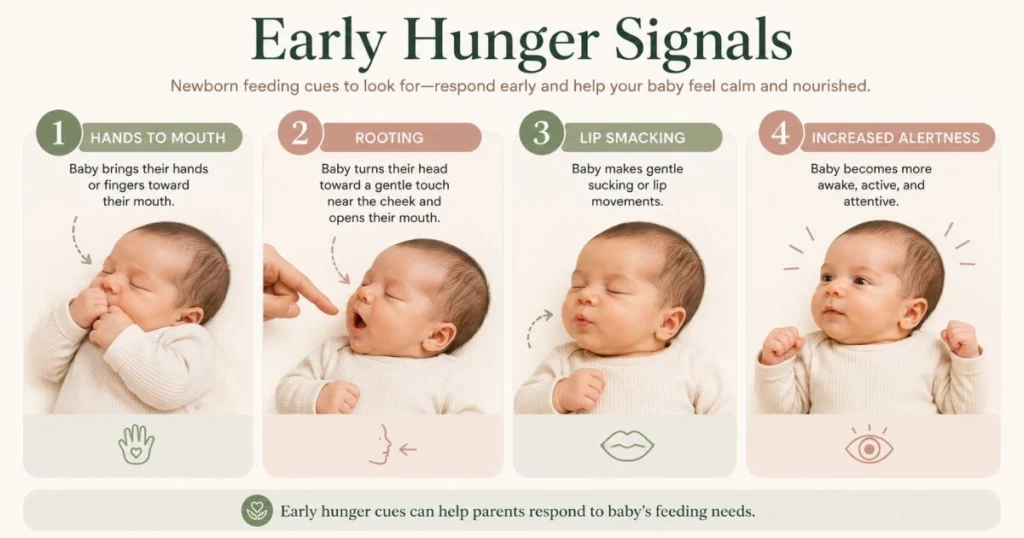
Newborn Hunger Cues
Watch for early signs such as:
- Bringing hands toward the mouth
- Turning toward the breast or bottle
- Smacking or licking the lips
- Becoming more alert
- Rooting
Crying is often a later hunger signal, so responding to earlier cues can make feeding calmer.
1–2 Month Baby Feeding Schedule
How Often Should a 1-Month-Old Eat?
Your baby may still feed frequently, but you may begin noticing a slightly more predictable pattern.
Breastfed babies commonly continue feeding around 8–12 times per day, while formula-fed babies may gradually move toward feeds about every 3–4 hours.
Sample 1-Month Feeding Schedule
Think in terms of a flexible rhythm:
- Morning milk feed
- Mid-morning milk feed
- Early afternoon milk feed
- Late afternoon milk feed
- Evening milk feeds
- Overnight feeds
Your baby may need additional feeds, particularly during growth spurts.
2–3 Month Baby Feeding Schedule
At 2–3 months, milk remains the foundation of your baby’s diet.
What Your Baby Feeding Schedule May Look Like
You may notice:
- Longer periods between some feeds
- More predictable daytime feeding
- Continued night feeds
- Occasional cluster feeding
- Different feeding lengths from one session to another
Don’t worry if one feeding is short and the next is longer. Babies do not necessarily consume exactly the same amount at every feeding.
3–4 Month Baby Feeding Schedule

How Often Should a 3-Month-Old Eat?
Continue offering breast milk or formula according to your baby’s hunger cues.
At this age, it is tempting to interpret every change in sleep or appetite as a need for solids. However, night waking alone does not mean your baby is ready for solid food.
Does Your Baby Need Solids at 4 Months?
Usually, you should not rush.
Readiness involves more than showing interest in your food. Your baby should have appropriate head and neck control, be able to sit with support, open their mouth when food is offered, and demonstrate the ability to move food toward the back of the mouth and swallow.
4–5 Month Baby Feeding Schedule

How Often Should a 4-Month-Old Eat?
Breast milk or infant formula remains the main nutrition.
Continue watching your baby’s cues instead of trying to make every feeding happen at exactly the same time.
Is Your Baby Ready for Solids?
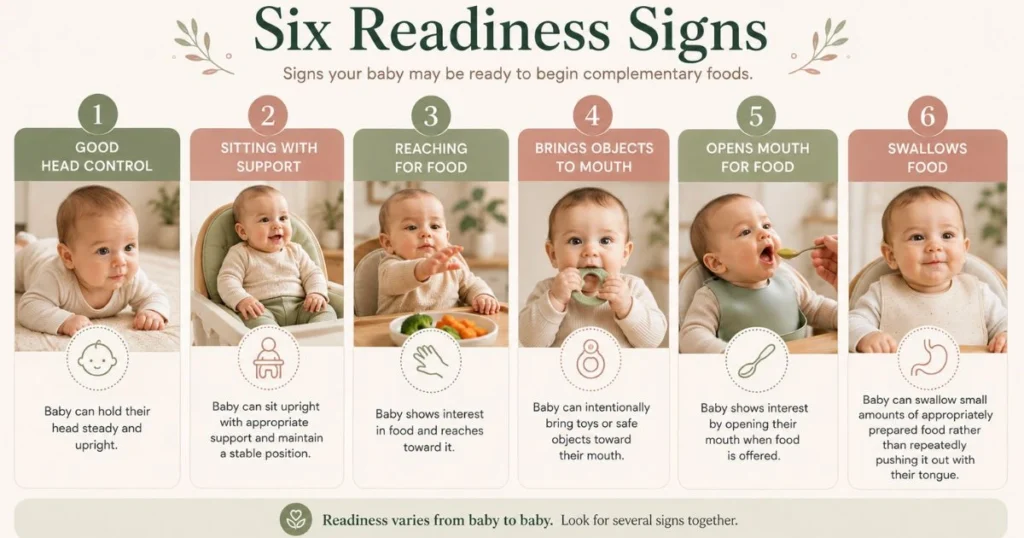
Look for several developmental signs together:
- Good head and neck control
- Sitting alone or with support
- Opening the mouth when food is offered
- Bringing objects toward the mouth
- Trying to grasp objects
- Swallowing food rather than repeatedly pushing it out
These signs are more useful than simply counting your baby’s age in weeks.
5–6 Month Baby Feeding Schedule
This is often a preparation stage.
Your baby may become fascinated by your meals, but breast milk or formula should still remain central.
If your baby is approaching 6 months and showing readiness signs, you can begin planning for complementary foods.
Talk with your baby’s healthcare professional if you are unsure whether your baby is ready, particularly if there are developmental, growth, swallowing, or allergy concerns.
6-Month Baby Feeding Schedule With Solids
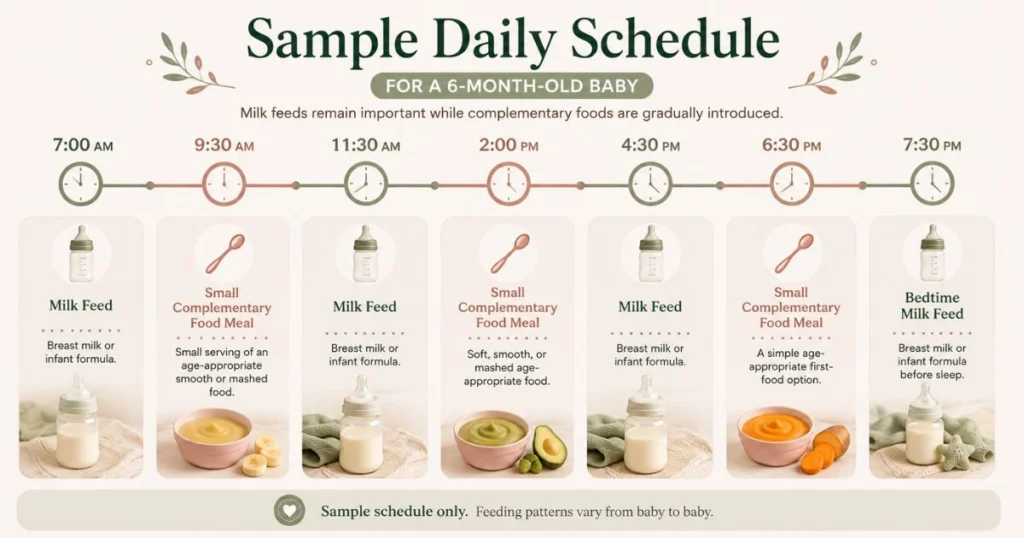
Six months is an important turning point in your baby feeding schedule.
How Often Should a 6-Month-Old Eat?
At this stage, your baby may continue having several milk feeds throughout the day while beginning small amounts of solid food.
The CDC recommends starting small—around 1–2 tablespoons—and watching your baby’s hunger and fullness cues.
Sample 6-Month Feeding Schedule
| Time | Example |
| 7:00 AM | Breast milk or formula |
| 9:00 AM | Small solid-food meal |
| 11:30 AM | Breast milk or formula |
| 2:30 PM | Breast milk or formula |
| 5:00 PM | Small solid-food meal |
| 7:00 PM | Breast milk or formula |
| Overnight | Milk as needed |
This is an example, not a prescription. Your baby may need a different rhythm.
What Foods Can You Give a 6-Month-Old?
Offer nutrient-dense foods with textures your baby can safely manage.
| Food | Ingredients | Texture | Nutritional Focus |
| Avocado mash | Ripe avocado | Smooth/soft | Healthy fats |
| Sweet potato mash | Cooked sweet potato | Soft mash | Carbohydrates, vitamin A |
| Egg mash | Fully cooked egg | Soft mash | Protein, choline |
| Lentil puree | Well-cooked lentils + vegetables | Smooth/thick | Protein, iron |
| Infant oatmeal | Iron-fortified infant oatmeal + appropriate liquid | Soft | Iron, whole grains |
There is no requirement to introduce foods in one particular order. By 7–8 months, babies can gradually eat foods from different food groups.
For more age-appropriate finger-food ideas, you can also explore your Baby Finger Foods guide.
7-Month Baby Feeding Schedule

How Often Should a 7-Month-Old Eat?
Your baby may now have more regular opportunities for solid food while continuing breast milk or formula.
A flexible day might include:
- Morning milk
- Breakfast
- Milk
- Lunch
- Milk
- Dinner or another solid-food opportunity
- Bedtime milk
7-Month Baby Food Ideas
| Meal | Ingredients | Preparation |
| Breakfast | Oatmeal + mashed banana | Cook and mash |
| Lunch | Sweet potato + chicken | Cook until very soft and shred/mash |
| Dinner | Avocado + fully cooked egg | Mash or prepare into safe soft pieces |
Prioritize iron-rich foods, protein, vegetables, fruits, and varied textures.
8-Month Baby Feeding Schedule
By 8 months, many babies are becoming more comfortable with different textures.
Sample 8-Month Feeding Schedule
| Part of Day | Example |
| Morning | Breast milk/formula |
| Breakfast | Soft oatmeal + fruit |
| Midday | Breast milk/formula |
| Lunch | Vegetables + chicken or lentils |
| Afternoon | Breast milk/formula |
| Dinner | Egg + avocado + soft vegetables |
| Bedtime | Breast milk/formula |
Your baby may not eat the same quantity at every meal. Appetite can change from day to day.
9-Month Baby Feeding Schedule

How Often Should a 9-Month-Old Eat?
Many babies are now moving toward three daily meal opportunities alongside continued milk feeds.
Focus on variety rather than forcing large portions.
9-Month Meal Ideas
| Meal | Ingredients | Nutritional Focus |
| Breakfast | Oatmeal + soft fruit | Whole grains + fruit |
| Lunch | Chicken + potato + vegetables | Protein + iron + vegetables |
| Dinner | Egg + avocado + soft vegetables | Protein + healthy fats |
Allow your baby to decide how much they want to eat while you decide what foods to offer.
10-Month Baby Feeding Schedule
What Does a 10-Month-Old Feeding Schedule Look Like?
Your baby’s meals can increasingly resemble family meals, provided foods are prepared safely.
A typical rhythm may include:
- Breakfast
- Milk feed
- Lunch
- Milk feed
- Dinner
- Bedtime milk
Depending on your baby’s needs, snacks may also become appropriate.
Easy 10-Month Meal Combination
| Ingredients | Preparation |
| Potato + chicken + carrots | Cook until soft, then mash or shred |
| Egg + avocado + toast | Fully cook egg; serve foods in safe textures |
| Lentils + vegetables + rice | Cook until very soft |
11-Month Baby Feeding Schedule
At 11 months, your baby may be increasingly interested in eating what the rest of the family eats.
How to Adapt Family Meals
You can:
- Cook foods until appropriately soft
- Separate your baby’s portion before adding excess salt or spicy ingredients
- Cut food into developmentally appropriate pieces
- Include a protein source
- Add vegetables or fruit
- Offer a suitable grain or starchy food
Continue breast milk or infant formula while your baby is under 12 months.
12-Month Baby Feeding Schedule
What Does a 12-Month-Old Feeding Schedule Look Like?
Around 12 months, your child’s eating pattern may begin to resemble a toddler’s routine.
A sample day might look like:
| Time | Example |
| 7:30 AM | Breakfast |
| 10:00 AM | Snack, if appropriate |
| 12:30 PM | Lunch |
| 3:30 PM | Snack, if appropriate |
| 6:00 PM | Dinner |
| Bedtime | Appropriate milk |
After 12 months, pasteurized whole cow’s milk or an appropriate fortified unsweetened dairy alternative can be introduced. Cow’s milk should not replace a varied diet.
This is also a natural point to transition into toddler-friendly meals such as Toddler Breakfast Ideas, Toddler Lunch Ideas, Toddler Dinner Ideas, and Healthy Toddler Snacks.
Breastfed Baby Feeding Schedule by Age
If you breastfeed, your baby’s schedule may be less predictable than a bottle-feeding schedule.
CDC recommends continuing to follow your baby’s hunger cues. From 6–12 months, breast milk remains an important source of nutrition while complementary foods are introduced.
You may notice your baby:
- Nurses frequently some days
- Nurses less often as solid-food intake increases
- Cluster feeds
- Wants to breastfeed before sleep
- Continues to wake for feeds at night
There is no need to force breastfeeding into exact clock times.
Formula-Fed Baby Feeding Schedule by Age

Formula-fed babies often settle into a more predictable feeding pattern as they grow, although every baby has different needs. As you build a Baby Feeding Schedule, use your baby’s hunger and fullness cues rather than following the clock alone.
During the first few days, the CDC recommends offering about 1–2 ounces of formula every 2–3 hours for babies who are exclusively formula-fed. Many formula-fed newborns feed 8–12 times within 24 hours. (CDC)
Over the following weeks and months, the gaps between feeds usually become longer. Many formula-fed babies eventually feed about every 3–4 hours, but the exact pattern can vary from one baby to another. (CDC)
From 6 to 12 months, formula continues to be an important part of your baby’s diet while solid foods are gradually introduced and become a bigger part of their Baby Feeding Schedule. (CDC)
If your baby has special nutritional needs, feeding difficulties, or concerns about growth, follow the guidance of your pediatrician or other healthcare professional.
Baby Feeding Schedule With Solids
Introducing solids doesn’t mean replacing milk immediately.
How to Progress From One Meal to Three
A simple progression can be:
Beginning solids: small amounts once a day
↓
As your baby becomes comfortable: increase to two food opportunities
↓
Later in infancy: offer three meals with continued milk feeds
Your baby may progress faster or slower. Follow developmental readiness and your baby’s cues.
What Should You Feed Your Baby?
Aim for variety across:
- Protein foods
- Iron-rich foods
- Vegetables
- Fruits
- Whole grains
- Healthy fats
- Plain dairy foods without added sugars
CDC recommends offering a variety of foods from these groups during 6–12 months.
Baby Hunger and Fullness Cues
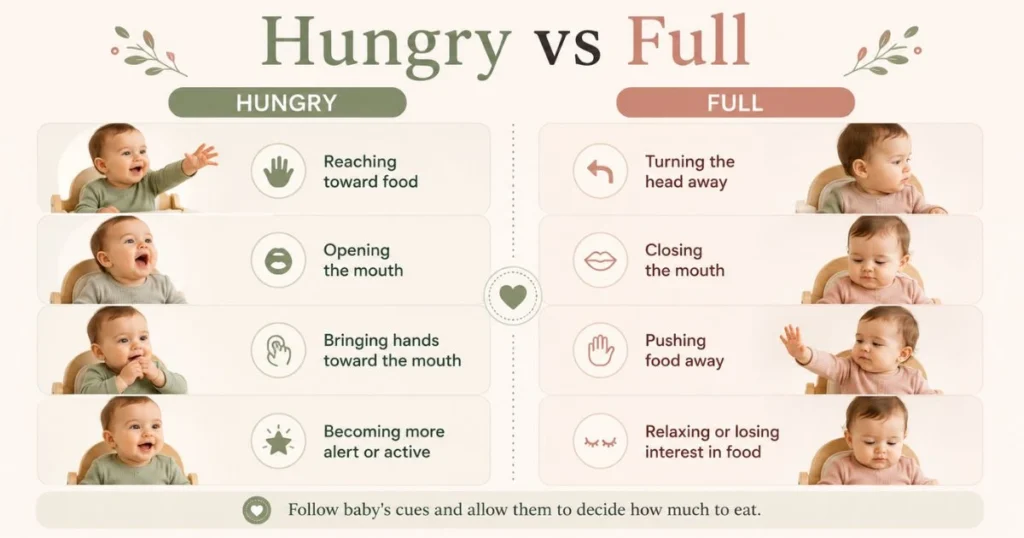
A good feeding schedule leaves room for your baby’s appetite.
Signs Your Baby May Be Hungry
Depending on age, your baby may:
- Put hands toward the mouth
- Root toward the breast or bottle
- Smack or lick their lips
- Open their mouth
- Reach for food
- Become excited when food appears
Signs Your Baby May Be Full
Your baby may:
- Turn their head away
- Close their mouth
- Slow down
- Stop sucking
- Push food away
- Lose interest
CDC recommends learning these cues and responding to them rather than relying only on the clock.
Feeding on Demand vs. a Baby Feeding Schedule
You don’t have to choose between a set routine and responsive feeding. You can combine both approaches and adjust your Baby Feeding Schedule according to what works best for you and your baby.
A flexible routine can add structure to your day, while responsive feeding lets you respond when your baby shows signs of hunger or fullness.
Think of your Baby Feeding Schedule as a rhythm rather than a rule.
For example, instead of thinking:
“My baby must eat at exactly 10:00.”
Try thinking:
“Breakfast can happen around this time, but I can adjust it based on my baby’s hunger cues.”
This flexible approach can make mealtimes feel more relaxed and less stressful for both you and your baby.
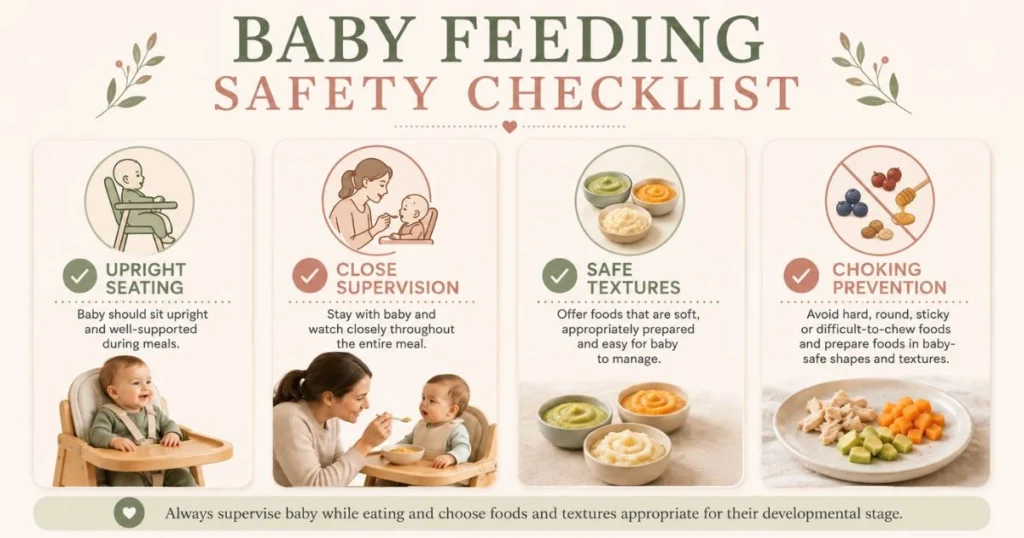
Baby Feeding Safety: What You Need to Know

As your baby begins eating solids, food preparation becomes just as important as food selection.
Follow These Basic Safety Rules
- Always supervise your baby while eating.
- Seat your baby safely and upright.
- Prepare food according to your baby’s developmental abilities.
- Gradually introduce different textures.
- Avoid foods that pose choking risks.
- Never leave your baby alone while eating.
- Avoid adding food or cereal to a bottle unless specifically instructed by a healthcare professional.
CDC recommends matching food texture and preparation to your child’s eating skills and providing appropriately prepared foods.
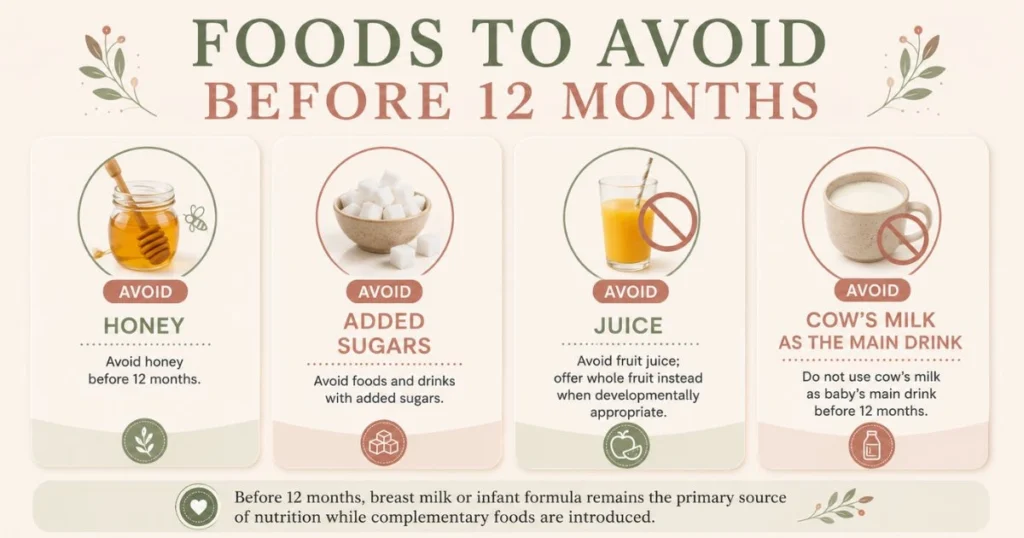
Foods to Avoid Before 12 Months
Avoid giving honey to babies under 12 months because it can cause infant botulism. Foods with added sugars should also be avoided.
Whole cow’s milk should not be used as your baby’s main milk drink before 12 months.
Water and Other Drinks for Babies
From 6–12 months, you can offer water alongside breast milk or infant formula. CDC guidance lists approximately 4–8 ounces of water per day for this age range.
Before 12 months:
- Breast milk or infant formula remains the primary milk source.
- Water can be offered with meals.
- Avoid juice.
- Do not replace breast milk or formula with water.

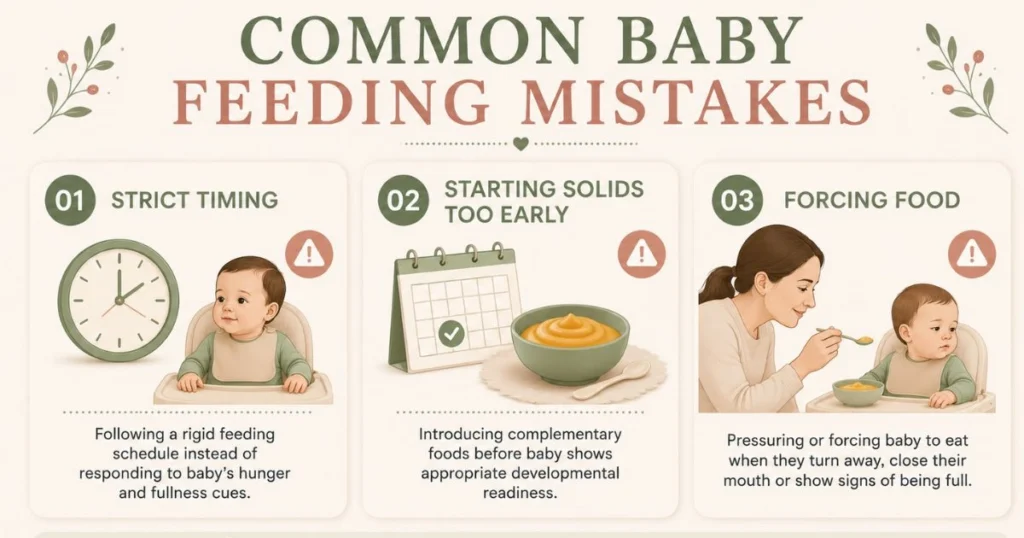
Common Baby Feeding Schedule Mistakes to Avoid
A few simple mistakes can make feeding feel harder than it needs to be.
- Following the clock too strictly
Your baby’s appetite will not be identical every day. - Comparing your baby’s intake with another baby’s
Babies have different nutritional needs and growth patterns. - Starting solids too early
Wait for developmental readiness and appropriate timing. - Replacing milk too quickly
Breast milk and/or formula remain important throughout the first year. - Ignoring hunger and fullness cues
Your baby can tell you a lot through movements and behavior. - Forcing your baby to finish food
Mealtimes should allow your baby to respond to their own appetite. - Offering unsafe textures
Prepare food according to your baby’s developmental skills. - Assuming solids will automatically improve sleep
Starting solids should be based on feeding readiness and nutritional needs—not simply the hope of longer nighttime sleep.
Frequently Asked Questions About Baby Feeding Schedule
What is a good baby feeding schedule?
A good baby feeding schedule is a flexible routine that provides regular opportunities for breast milk, formula, and age-appropriate complementary foods. The exact timing varies by age, feeding method, appetite, development, and individual needs. Use your baby’s hunger and fullness cues alongside a predictable daily rhythm.
How often does a baby need to eat at different ages?
Newborns generally eat frequently throughout the day and night. As your baby grows, feeding intervals may gradually become longer. Around 6 months, complementary foods are introduced while breast milk or formula remains the primary nutrition, with solid-food opportunities increasing gradually through the first year.
How often should a newborn feed?
Breastfed newborns commonly feed around 8–12 times in 24 hours, while exclusively formula-fed newborns may also feed 8–12 times daily during the first days. Individual feeding patterns vary, so follow your baby’s hunger cues and your healthcare professional’s advice.
What is a baby feeding schedule for a 6-month-old?
A 6-month-old may continue several breast milk or formula feeds while beginning small amounts of solid food. You might offer one or two small solid-food opportunities initially and gradually increase them as your baby becomes comfortable.
How many meals should a 7-month-old eat?
Many 7-month-olds are working toward two or three solid-food opportunities each day while continuing breast milk or formula. There is no need to force a particular number of meals if your baby is still developing their eating skills.
When should a baby start having three meals a day?
Babies gradually move toward three meals as they become comfortable with complementary foods. There is no single date when every baby must begin three meals. Your baby’s developmental readiness, appetite, and ability to handle different textures should guide the progression.
Should I feed my baby before or after solids?
There is no universal rule that works for every baby. During early complementary feeding, milk remains especially important. If your baby is breastfeeding and seems less interested after solids, CDC recommends considering breastfeeding before offering other foods.
How much food should a baby have at each meal?
Early solid meals can be very small. CDC suggests beginning with around 1–2 tablespoons and watching your baby’s hunger and fullness cues. As your baby grows, appetite and portion sizes can gradually increase.
Do babies need a strict feeding schedule?
No. A strict clock-based schedule is not necessary. A predictable routine can help organize your day, but responsive feeding allows you to adjust to your baby’s hunger, fullness, sleep, and developmental needs.
When can babies drink water?
Around 6 months, when complementary foods are introduced, you can begin offering small amounts of water. Breast milk or infant formula should remain the primary milk source during the first year.
When can babies eat finger foods?
Finger foods can be introduced when your baby is developmentally ready and can safely manage appropriately prepared textures. Start with soft foods prepared in shapes and sizes suitable for your baby’s eating abilities.
Does starting solids help a baby sleep longer?
Not necessarily. Starting solid foods should be based on developmental readiness and nutritional needs rather than using solids as a strategy to improve sleep. If sleep is your main concern, look at your baby’s overall sleep routine and feeding pattern rather than assuming hunger is the cause.
Conclusion: Your Baby Feeding Schedule Does Not Have to Be Perfect
Creating a Baby Feeding Schedule is less about watching the clock and more about understanding your baby’s changing needs.
During the early months, breast milk or infant formula provides the foundation of your baby’s nutrition. Around 6 months, complementary foods can gradually become part of the routine when your baby shows the appropriate developmental signs of readiness. As your baby grows, you can introduce a wider variety of foods, textures, and family meals while continuing appropriate milk feeds.
Some days, your baby may eat enthusiastically. On other days, they may barely touch their meal. This kind of variation can be completely normal.
Use the Baby Feeding Schedule examples in this guide as a flexible framework. Pay attention to your baby’s hunger and fullness cues, and adjust the routine as your little one grows and their needs change.
You don’t need a perfect feeding schedule—you need a feeding rhythm that works for your baby and your family.
If you’re concerned about your baby’s growth, feeding amounts, swallowing, allergies, or overall nutrition, talk with your pediatrician or another qualified healthcare professional.
Ready to make mealtimes easier? Explore our age-appropriate baby and toddler feeding guides for practical food ideas, finger foods, breakfasts, lunches, dinners, and healthy snacks you can use in your everyday routine.