
Introduction
Sleep Regression vs Separation Anxiety is one of the most common questions parents ask when a baby suddenly starts waking at night and becoming extra clingy. Your baby was finally sleeping better. Bedtime became predictable, night wakings decreased, and you started feeling like you had your evenings back.
Then suddenly, everything changed.
Your baby starts waking multiple times at night. They may become upset when you leave the room. They only settle when held. They seem to need you more than ever.
Many parents wonder:
“Is this another sleep regression, or is my baby experiencing separation anxiety?”
Although these two phases can look very similar, they happen for different reasons.
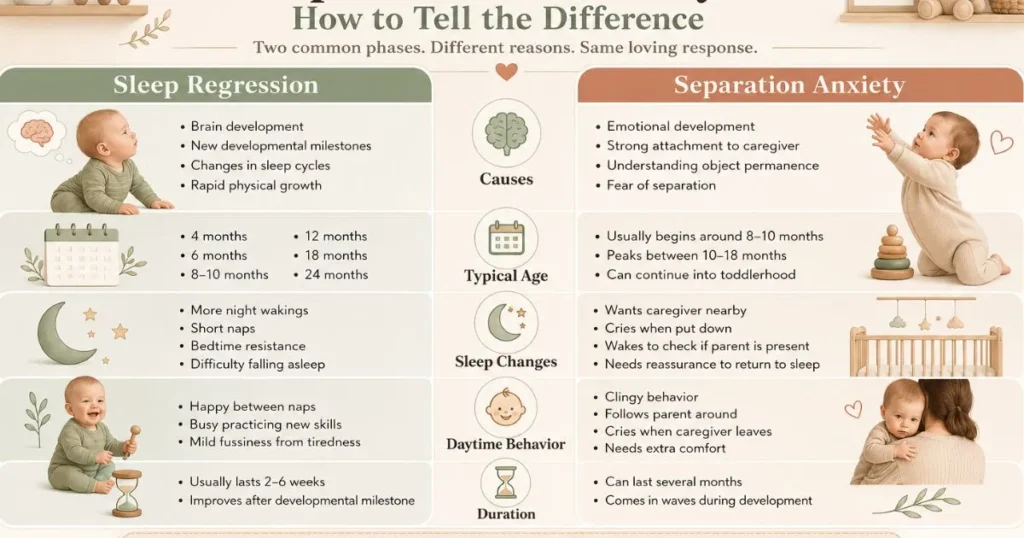
A sleep regression is usually connected to brain development and changing sleep patterns, while separation anxiety is connected to your baby’s growing understanding of attachment, object permanence, and your absence.
In this guide, you’ll learn the key differences between sleep regression vs separation anxiety, how to recognize the signs of each, and what you can do to help your baby sleep more peacefully.
What Is Sleep Regression?
Sleep Regression vs Separation Anxiety often begins with understanding what a sleep regression actually is. A sleep regression is a temporary period when a baby’s sleep suddenly becomes more difficult after a period of better sleep.
During a regression, your baby may:
- Wake more frequently at night
- Fight naps or bedtime
- Take longer to fall asleep
- Become restless during sleep
- Need more help settling back down
Sleep regressions often happen around developmental milestones because your baby’s brain is learning new skills.
For example:
- Rolling
- Sitting
- Crawling
- Pulling up
- Walking
- Language development
Their brain is busy practicing new abilities, even during sleep. Understanding this is an important first step in distinguishing Sleep Regression vs Separation Anxiety, as the causes and solutions are different.
What Is Separation Anxiety?
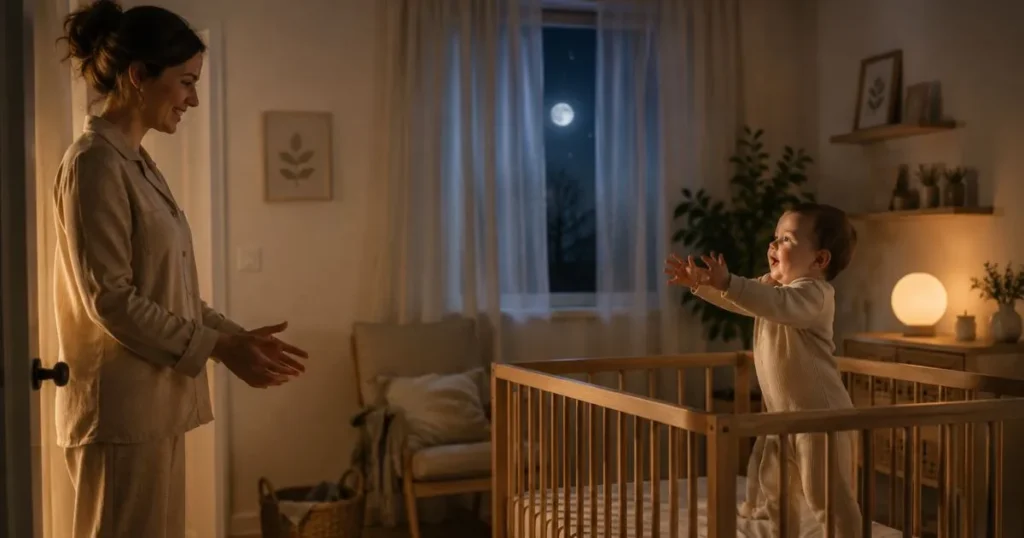
Sleep Regression vs Separation Anxiety can be confusing because both may cause frequent night wakings and bedtime struggles. However, separation anxiety is a normal emotional stage when babies become more aware that their parents can leave.
Your baby begins to understand:
“Mom or Dad is still there, even when they’re out of sight.”
But they may not fully understand:
“They will always come back.”
This new awareness can lead to anxiety and stronger emotional reactions when you leave.
A baby experiencing separation anxiety may:
- Cry when you leave the room
- Refuse to sleep without you nearby
- Wake and call for you
- Become upset with unfamiliar people
- Want constant holding and reassurance
Separation anxiety is actually a sign of healthy attachment and emotional development. Recognizing these behaviors makes it easier to tell the difference between Sleep Regression vs Separation Anxiety and respond in a way that supports both your baby’s sleep and emotional needs.
Separation anxiety is a normal part of emotional development. The American Academy of Pediatrics explains that it reflects a healthy attachment between babies and their caregivers.
Sleep Regression vs Separation Anxiety: Key Differences
| Sleep Regression | Separation Anxiety |
| Caused by developmental changes | Caused by attachment development |
| Baby may wake but not always need you | Baby specifically wants your presence |
| Often appears with new skills | Often appears when baby understands separation |
| Usually temporary | Can come and go for months |
| Comfort may help briefly | Baby seeks reassurance and connection |
Signs Your Baby Is Experiencing Sleep Regression
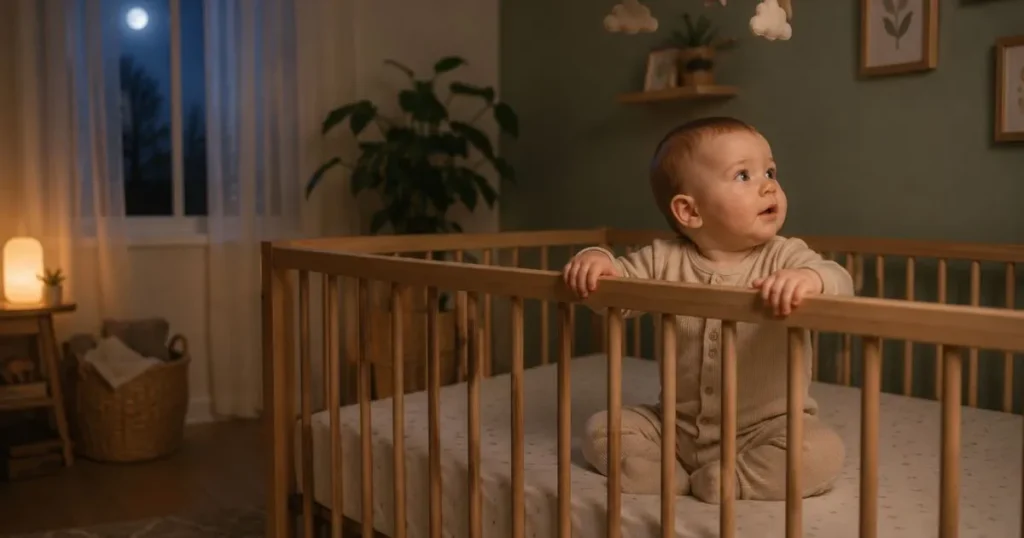
Your baby may be going through a sleep regression if:
1. Sleep Changes Started Suddenly
Your baby was sleeping well, then suddenly:
- More night wakings appear
- Naps become shorter
- Bedtime becomes harder
This often happens around developmental stages.
2. Your Baby Practices New Skills
Many parents notice sleep disruption when their baby learns:
- Crawling
- Standing
- Walking
- New sounds or words
Your baby’s brain is processing these new abilities.
3. Your Baby Settles Without Needing You Every Time
A baby experiencing regression may wake, move around, or fuss but sometimes returns to sleep with minimal help.
Signs Your Baby Is Experiencing Separation Anxiety
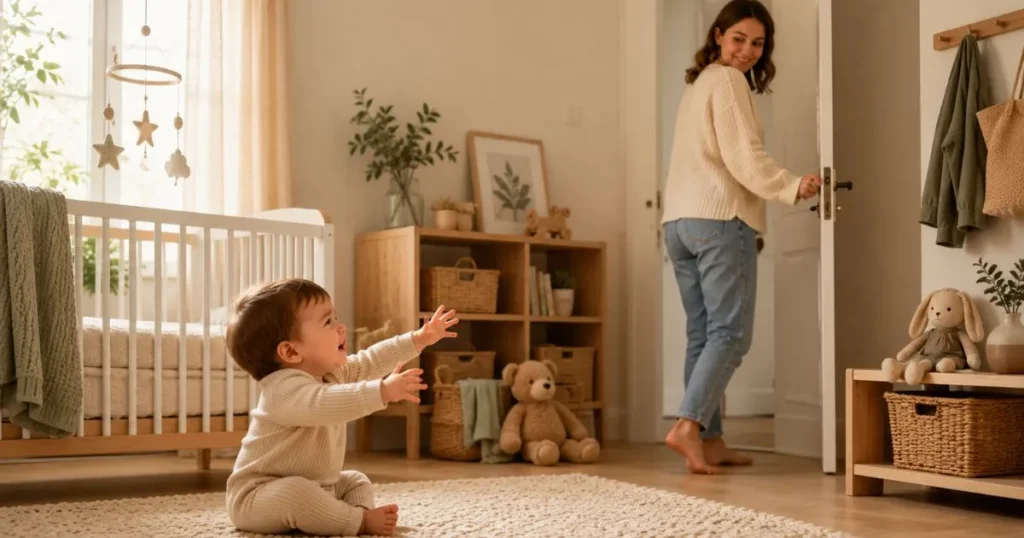
Your baby may be dealing with separation anxiety if:
1. They Cry When You Leave
Your baby may become upset when:
- You walk out of the room
- You put them into the crib
- Someone else tries to comfort them
2. They Calm Immediately When You Return
A common sign:
Your baby wakes crying → you enter the room → they immediately relax.
The issue is not necessarily sleep itself.
They’re seeking reassurance that you’re still nearby.
3. They Want More Contact During the Day
Separation anxiety often appears beyond bedtime.
You may notice:
- More clinginess
- Wanting to be carried
- Crying when you move away
- Needing more reassurance
When Does Separation Anxiety Start?
Separation anxiety commonly appears between:
6 months and 3 years old
It often becomes stronger around:
because babies become more aware of their surroundings and relationships.
Can Sleep Regression and Separation Anxiety Happen Together?
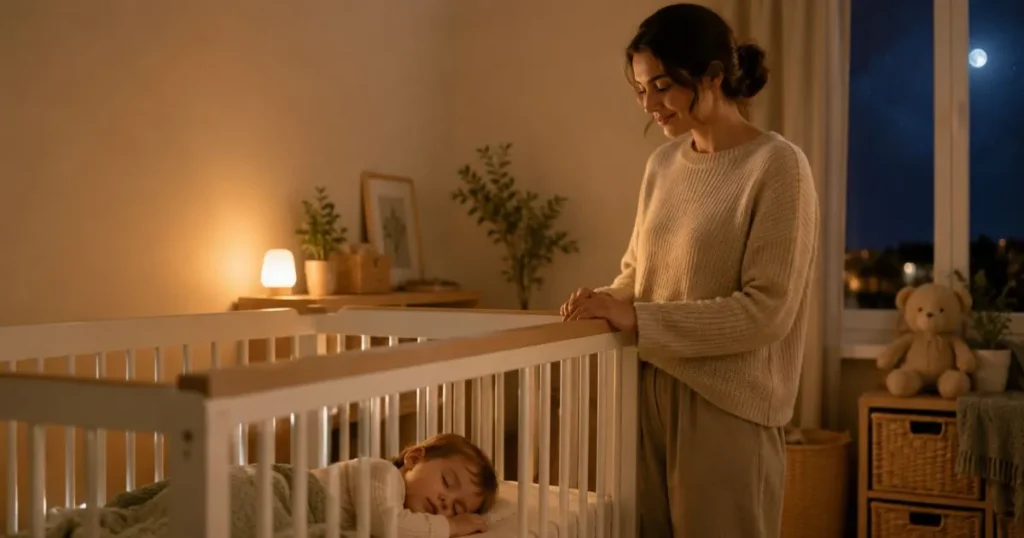
Yes.
In fact, they often overlap.
For example:
A 10-month-old baby may be learning to crawl (sleep regression) while also becoming more aware that mom can leave (separation anxiety).
The result?
- More night wakings
- Crying when placed in the crib
- Increased need for comfort
- Difficulty falling asleep alone
This combination can feel exhausting for parents, but it is usually a normal developmental phase.
How to Help Your Baby Through Separation Anxiety at Night
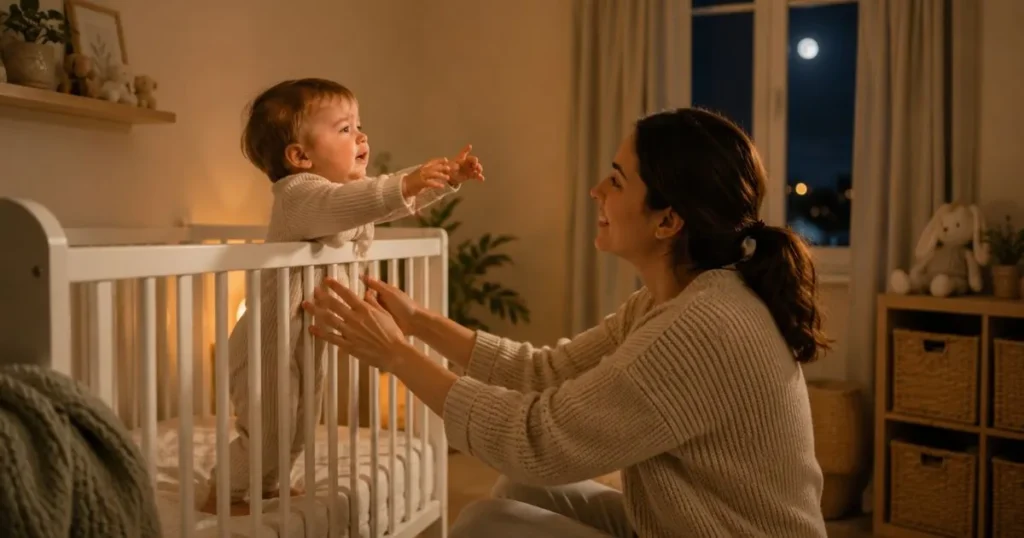
1. Create Predictable Goodbye Routines
A predictable bedtime routine helps your baby feel safe and secure.
Try:
- Bath
- Pajamas
- Feeding
- Story
- Cuddle
- Same goodnight phrase
Predictability creates confidence.
2. Practice Short Separations During the Day
Help your baby learn:
“Mom leaves, and Mom comes back.”
Examples:
- Step into another room briefly
- Say “I’ll be back”
- Return calmly
This builds trust.
3. Offer Comfort Without Creating New Sleep Associations
During difficult nights:
- Reassure your baby
- Use your voice
- Offer gentle touch
But try not to introduce habits you do not want to maintain long term.
4. Give Extra Connection Before Bed
Many babies need emotional reassurance before sleep.
Try:
- Extra cuddles
- Quiet play
- Reading together
- Calm conversation
A connected baby often feels safer separating.
What Parents Should Avoid
When dealing with Sleep Regression vs Separation Anxiety, it’s important to remember that the strategies for each are different. During separation anxiety phases, avoid:
❌ Disappearing without saying goodbye
❌ Changing routines constantly
❌ Assuming your baby is misbehaving on purpose
❌ Expecting independence before your baby is ready
Your baby is not manipulating you.
They are learning how relationships work. Understanding Sleep Regression vs Separation Anxiety helps you respond with patience, consistency, and reassurance while supporting your baby’s emotional development.
When Should You Be Concerned?
While Sleep Regression vs Separation Anxiety is a common concern for parents, most sleep disruptions are a normal part of your baby’s development.
However, consider speaking with your pediatrician if:
- Your baby seems uncomfortable or in pain.
- Sleep suddenly changes along with illness symptoms.
- Your baby has extreme distress during separations.
- Night waking is affecting feeding, growth, or daytime behavior.
Although Sleep Regression vs Separation Anxiety usually resolves with time and supportive care, persistent or severe symptoms should always be evaluated by a healthcare professional to rule out underlying medical concerns.
Final Thoughts
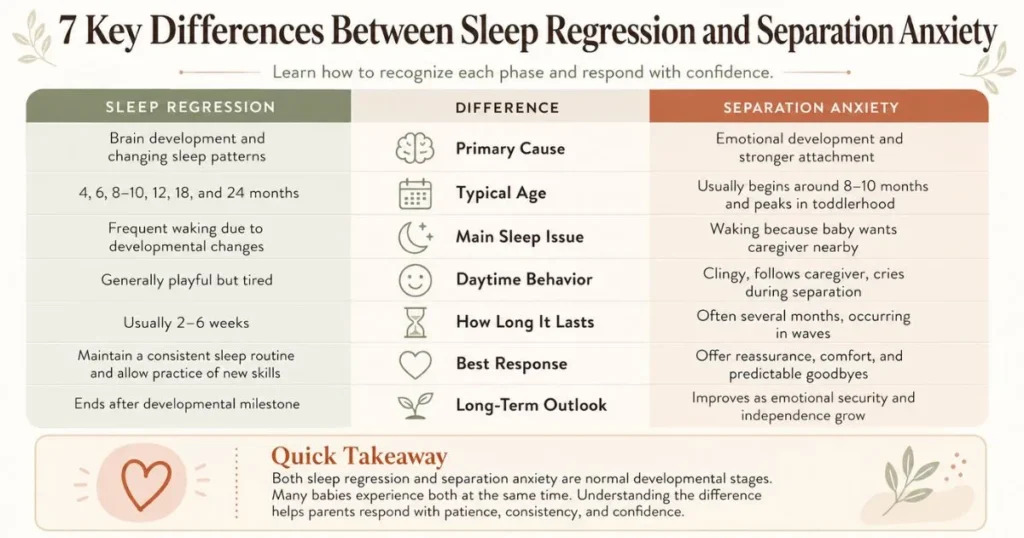
Sleep Regression vs Separation Anxiety can look almost identical, but the reason behind them is different.
A sleep regression is about developmental changes that temporarily disrupt your baby’s sleep patterns.
Separation anxiety is about your baby learning how important you are and developing a strong sense of emotional security.
Sometimes these two phases happen at the same time, especially during major developmental milestones, which can make bedtime even more challenging.
Understanding Sleep Regression vs Separation Anxiety helps you respond with the right balance of comfort, consistency, and patience. The goal is not to eliminate your baby’s need for reassurance but to help them feel safe enough to develop healthy, independent sleep habits over time.