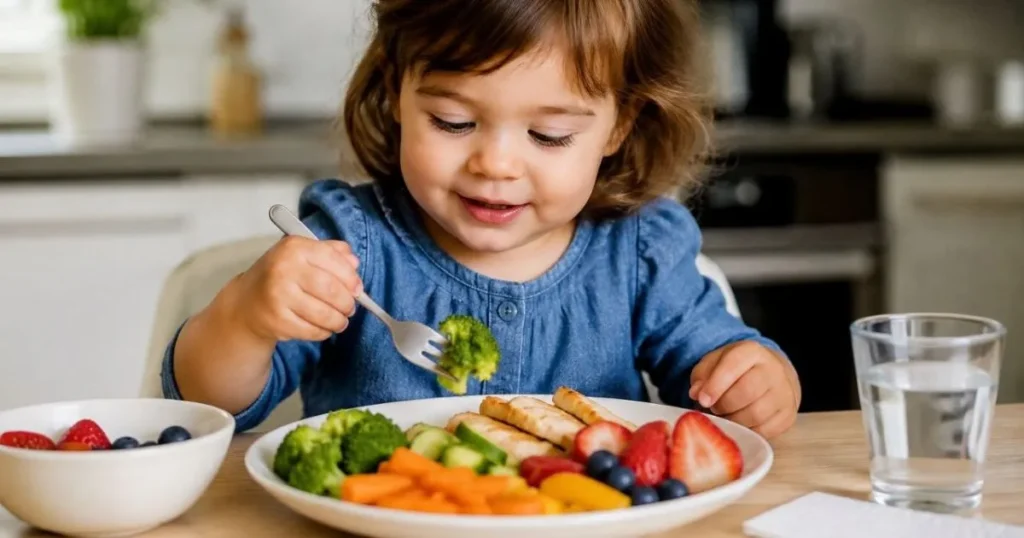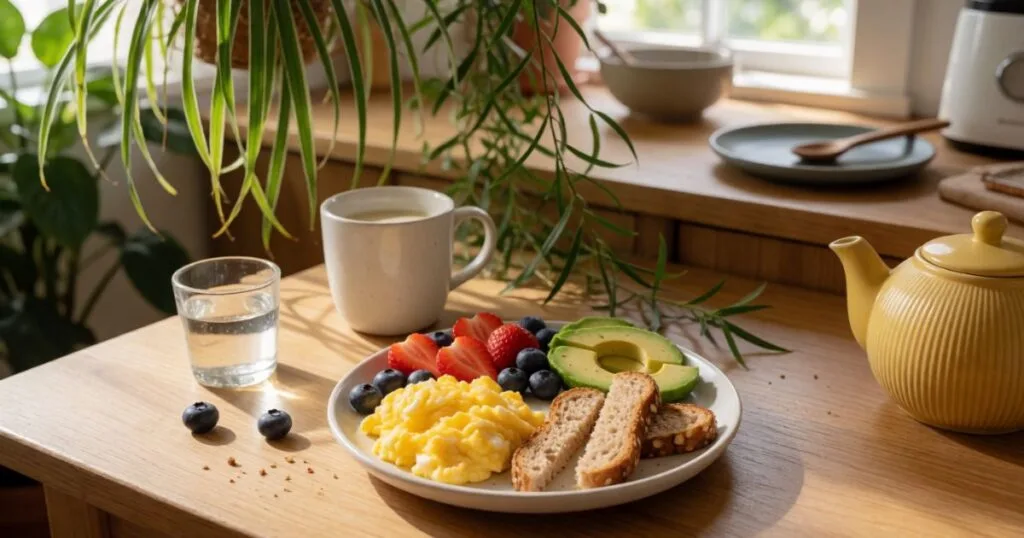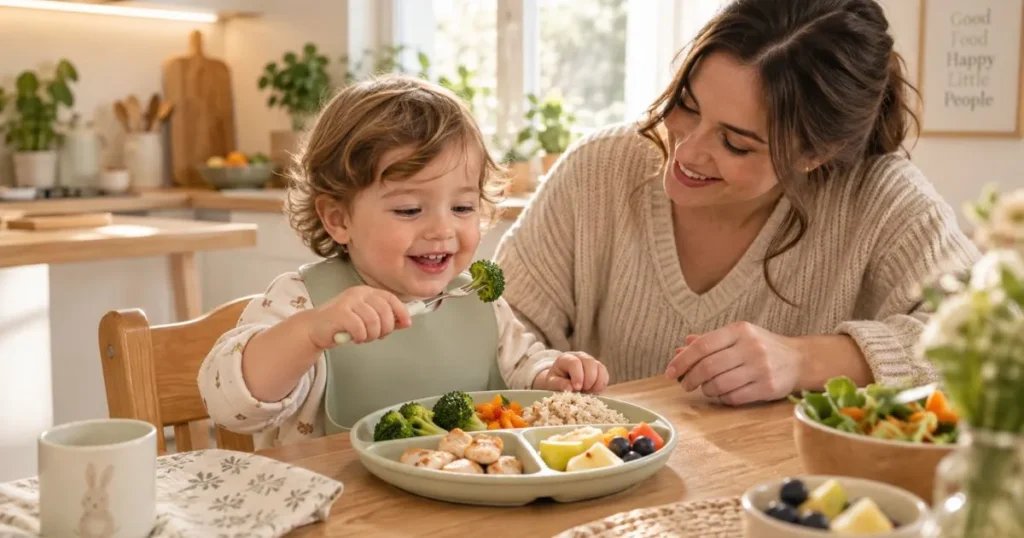
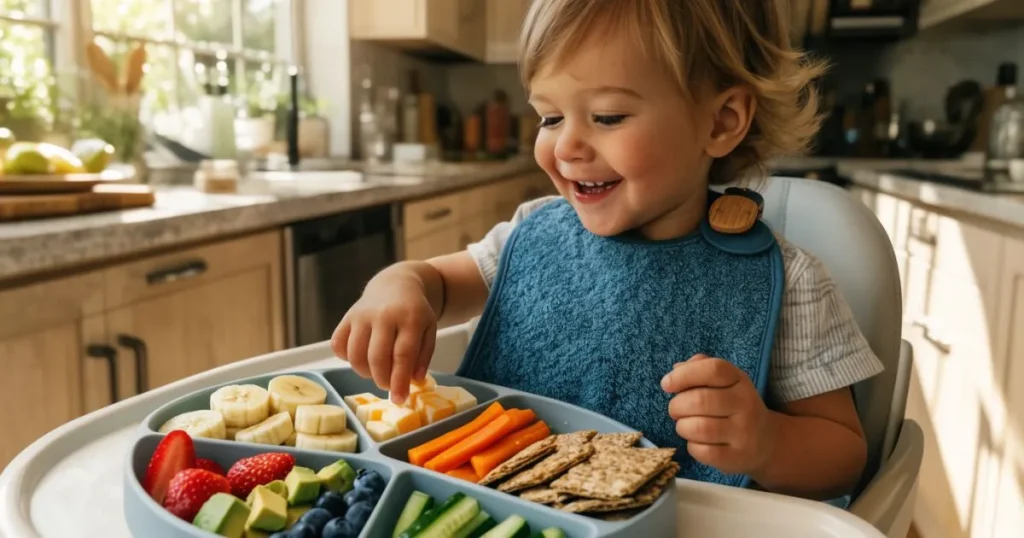
Every Snack Is an Opportunity to Help Your Toddler Grow
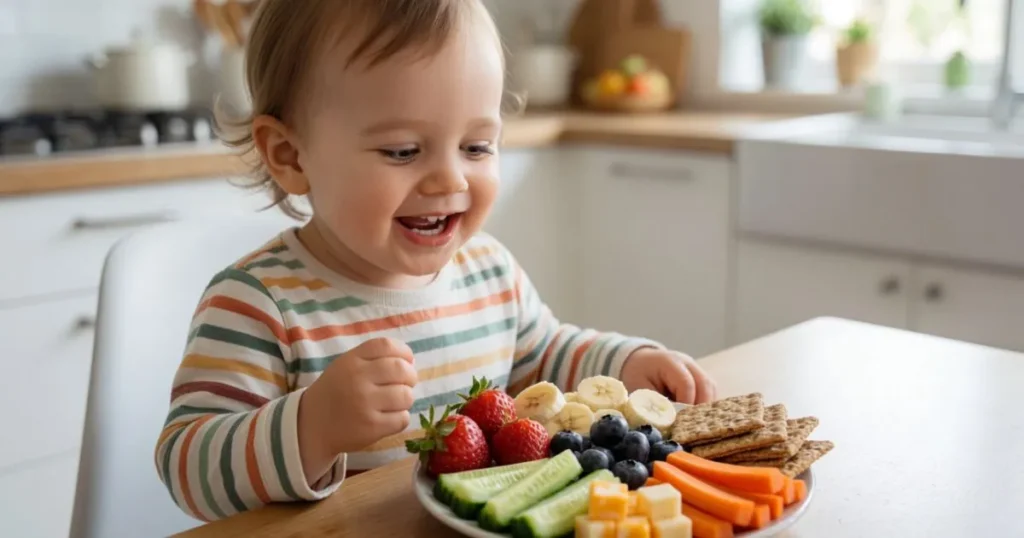
If your toddler seems hungry all day, you’re not imagining it. One minute they’re happily eating breakfast, and before you know it, they’re asking for another snack. Then, just as quickly, they refuse the apple slices or yogurt they loved yesterday.
This stage can feel unpredictable, but it’s completely normal.
Toddlers grow rapidly, stay constantly on the move, and have small stomachs that often can’t hold enough food during three meals alone. That’s why healthy toddler snacks play such an important role in your child’s daily nutrition. The right snacks provide steady energy, support healthy development, and help bridge the gap between meals without relying on foods high in added sugar or empty calories.
The good news is that healthy toddler snacks don’t have to be complicated or time-consuming. Many of the best options can be made with simple, wholesome ingredients you probably already have in your kitchen.
In this guide, you’ll learn what makes a snack nutritious, how much your toddler should eat, and discover plenty of easy healthy toddler snacks for home, daycare, road trips, and busy days when you need quick, nourishing options.
What Are Healthy Toddler Snacks?
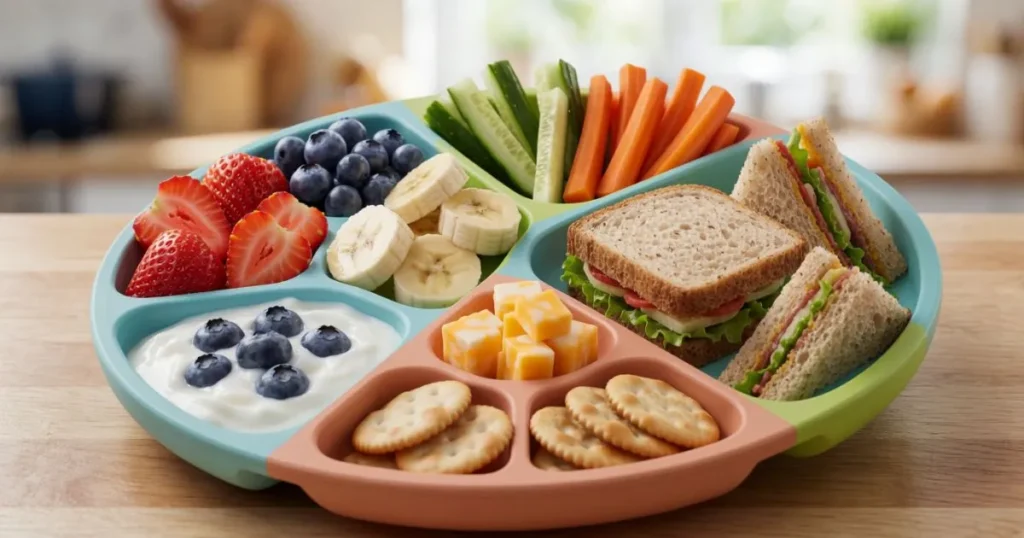
Healthy toddler snacks are small meals served between breakfast, lunch, and dinner that do more than simply satisfy hunger. They provide essential nutrients that help support your child’s growth, development, and daily energy needs. Instead of relying on foods high in added sugar or salt, healthy toddler snacks include wholesome ingredients that supply protein, healthy fats, fiber, vitamins, and minerals to nourish your growing child.
For toddlers between 1 and 3 years old, snacks are often just as important as meals because their stomachs are still small. Rather than eating large portions at once, toddlers usually meet their nutritional needs through several smaller eating occasions throughout the day.
A healthy snack should help your child:
- Stay energized between meals
- Support healthy brain development
- Build strong bones and muscles
- Encourage healthy eating habits
- Feel satisfied without overeating
Think of each snack as another chance to nourish your toddler—not simply something to keep them busy until the next meal.
What Does a Healthy Toddler Snack Look Like?
The healthiest snacks usually combine at least two food groups. This creates a balance of nutrients that keeps your toddler full longer while providing a variety of vitamins and minerals.
For example:
- Apple slices with peanut butter
- Greek yogurt with berries
- Whole-grain crackers with cheese
- Banana and plain yogurt
- Hummus with cucumber sticks
Compared with cookies or chips, these balanced snacks provide lasting energy instead of a quick sugar rush followed by another hunger spell.
Why Healthy Toddler Snacks Are Important
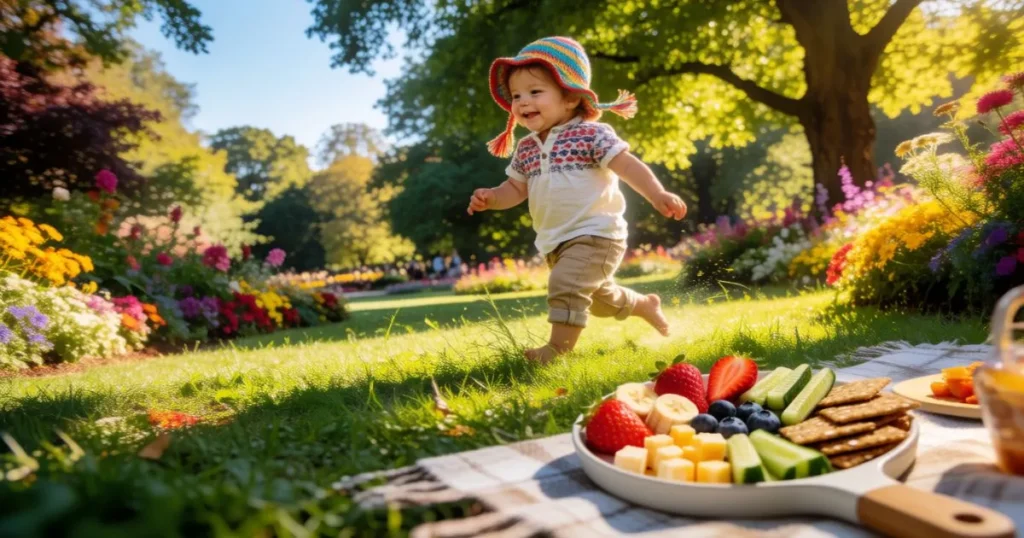
Toddlers rarely stay still for long. Whether they’re climbing, running, dancing, or exploring every corner of your home, they’re constantly using energy and need regular opportunities to refuel.
That’s why healthy toddler snacks are an important part of your child’s daily routine. Because toddlers burn calories quickly, healthy toddler snacks help restore their energy while providing the protein, healthy fats, fiber, vitamins, and minerals they need to support healthy growth and development.
How Healthy Toddler Snacks Support Healthy Growth and Development
During the toddler years, your child’s body is developing rapidly.
Protein helps build muscles and tissues.
Calcium strengthens growing bones and teeth.
Healthy fats support brain development.
Iron helps carry oxygen throughout the body.
Without regular nutritious snacks, it can be difficult for toddlers to consume enough of these nutrients during meals alone.
How Healthy Toddler Snacks Help Maintain Energy Levels
Have you ever noticed your toddler becoming cranky shortly before lunch or dinner?
Often, it’s because they’re genuinely hungry.
Offering a balanced snack between meals helps maintain more consistent energy levels throughout the day.
Instead of experiencing dramatic spikes and crashes caused by sugary foods, your child receives steady fuel for learning, playing, and growing.
How Healthy Toddler Snacks Encourage Healthy Eating Habits
Children begin developing their food preferences at an early age, and those experiences can influence their eating habits for years to come. By regularly offering healthy toddler snacks that include fruits, vegetables, whole grains, and protein-rich foods, you help your child become more familiar with a wide variety of flavors and textures.
Don’t be discouraged if a new food is rejected the first few times. It’s common for toddlers to need repeated exposure before they’re willing to taste something unfamiliar. In many cases, offering the same healthy toddler snacks on different occasions—without pressure—can gradually build confidence and acceptance. With consistency and patience, even hesitant eaters often become more adventurous over time.
How Healthy Toddler Snacks Can Reduce Mealtime Battles
When your toddler goes too long without eating, they may become irritable, restless, or frustrated by the time a meal is served. At the same time, offering too many healthy toddler snacks or large portions right before lunch or dinner can reduce their appetite for a balanced meal.
Creating a consistent snack routine helps avoid both situations. Serving healthy toddler snacks at regular times between meals allows your child to stay energized while giving them the opportunity to recognize and respond to their natural hunger and fullness cues.
What Makes a Healthy Toddler Snack?
Not every snack labeled “healthy” actually provides balanced nutrition.
Many packaged snacks marketed toward children contain surprising amounts of added sugar, refined flour, and sodium.
Instead, look for snacks that include one or more of these important nutrients.
Protein Helps Build Growing Bodies
Protein supports muscle growth, tissue repair, and overall development.
Good protein choices include:
- Greek yogurt
- Cottage cheese
- Eggs
- Turkey slices
- Chicken
- Beans
- Lentils
- Hummus
Adding protein also helps toddlers stay full longer.
Healthy Fats Fuel Brain Development
Young children need more healthy fat than many adults because their brains continue developing rapidly during the first few years of life.
Healthy fat sources include:
- Avocados
- Nut butters (when age-appropriate and spread thinly)
- Seed butters
- Olive oil
- Full-fat yogurt
- Cheese
Healthy fats also improve the absorption of certain vitamins.
Whole Grains Provide Lasting Energy
Whole grains break down more gradually during digestion, providing a steadier release of energy than refined grains.
That means your toddler receives a steadier supply of energy instead of a quick spike in blood sugar.
Examples include:
- Oatmeal
- Whole wheat toast
- Brown rice
- Whole grain crackers
- Whole wheat muffins
Fruits and Vegetables Deliver Important Vitamins
Colorful produce provides fiber, antioxidants, and vitamins that support immunity and digestion.
Aim to rotate fruits and vegetables throughout the week.
Examples include:
- Bananas
- Apples
- Pears
- Strawberries
- Blueberries
- Mango
- Kiwi
- Cucumbers
- Carrots
- Bell peppers
- Avocados
The more variety you offer, the broader your toddler’s nutrient intake becomes.
Fiber Supports Healthy Digestion
Fiber helps prevent constipation—a common concern during toddlerhood.
Excellent sources include:
- Oats
- Apples
- Pears
- Berries
- Beans
- Sweet potatoes
- Whole grains
Remember to encourage water throughout the day as fiber intake increases.
Nutrient Guide for Healthy Toddler Snacks
| Nutrient | Why It Matters | Healthy Food Sources |
| Protein | Builds muscles and tissues | Eggs, yogurt, beans |
| Healthy fats | Supports brain development | Avocado, cheese, nut butter |
| Fiber | Supports digestion | Oats, berries, apples |
| Calcium | Strengthens bones and teeth | Milk, yogurt, cheese |
| Iron | Supports healthy blood cells | Beans, eggs, lentils |
| Vitamin C | Supports immunity | Strawberries, oranges, kiwi |
Healthy Toddler Snack Portion Sizes
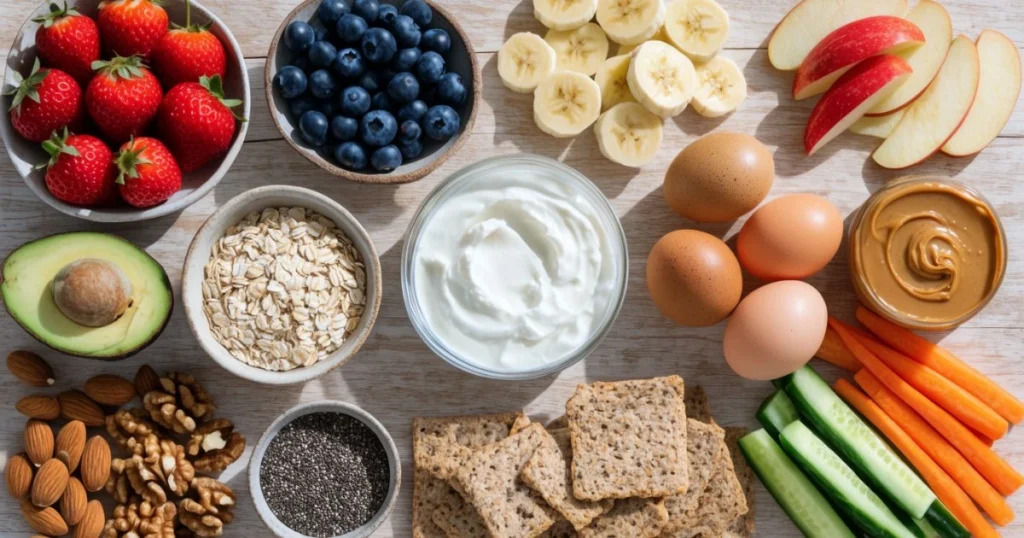
One of the biggest misconceptions parents have is believing toddlers should eat adult-sized snacks.
In reality, toddlers have tiny stomachs.
Offering smaller portions helps prevent waste while allowing your child to ask for more if they’re still hungry.
Recommended Portion Guide
| Food | Suggested Portion |
| Greek yogurt | ½ cup |
| Banana | ½ medium |
| Cheese | 1 ounce |
| Whole-grain crackers | 4–6 crackers |
| Berries | ¼–½ cup |
| Apple slices | ½ small apple |
| Peanut butter | 1 tablespoon |
| Cottage cheese | ¼–½ cup |
Remember that these are general guidelines. Your toddler’s appetite will naturally vary from one day to the next.
25 Healthy Toddler Snacks Your Child Will Love
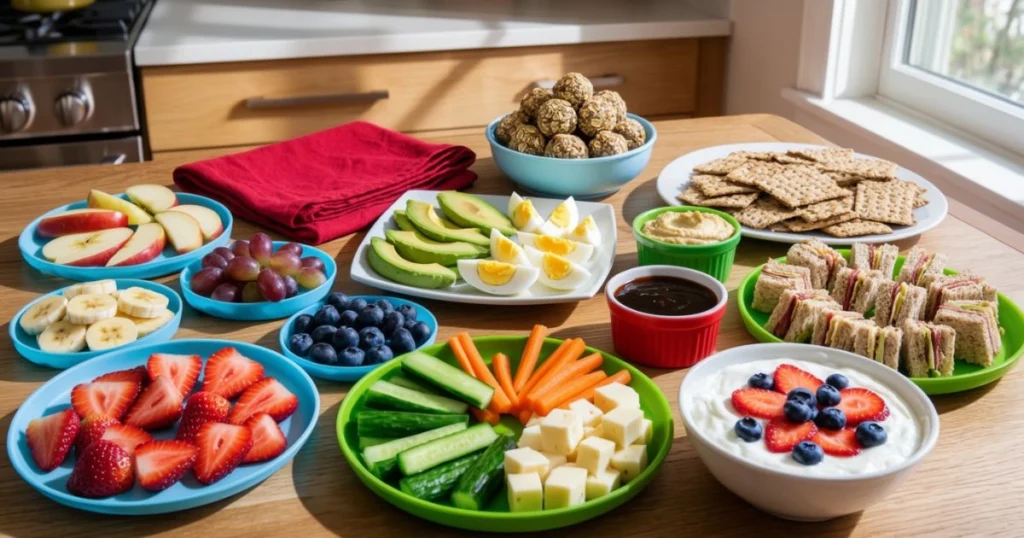
Finding snacks your toddler actually enjoys doesn’t have to be difficult. These ideas combine nutrition with flavors and textures that many young children already love.
Fruit-Based Healthy Toddler Snacks
Fresh fruit is naturally sweet, making it one of the easiest ways to satisfy your toddler while providing vitamins and fiber.
Try these ideas:
- Banana slices with peanut butter
- Apple slices with Greek yogurt
- Mixed berry parfait
- Mango cubes
- Pear slices
- Kiwi pieces
- Watermelon cubes
- Peach slices
- Cottage cheese with pineapple
- Homemade fruit smoothie
Vegetable Toddler Snacks
Vegetables become more appealing when served with dips or paired with familiar foods.
Ideas include:
- Steamed carrot sticks
- Cucumber slices with hummus
- Bell pepper strips
- Avocado slices
- Roasted sweet potato cubes
- Cherry tomatoes (quartered)
- Steamed broccoli florets
- Zucchini sticks
Dairy Snack Ideas
Dairy foods provide calcium, protein, and healthy fats.
Popular options include:
- Plain Greek yogurt
- Cottage cheese
- Cheese cubes
- Mozzarella sticks
- Yogurt smoothies
Choose plain or low-added-sugar varieties whenever possible.
Whole Grain Snack Ideas
Whole grains help toddlers stay satisfied longer.
Easy options include:
- Whole wheat toast with avocado
- Oatmeal topped with fruit
- Whole grain crackers with cheese
- Mini oat muffins
- Brown rice cakes
- Homemade banana oatmeal bites
Protein-Rich Healthy Toddler Snacks
Protein-rich snacks are especially helpful before active playtime.
Some favorites include:
- Hard-boiled eggs
- Turkey roll-ups
- Hummus with crackers
- Black bean patties
- Chickpea salad
- Edamame (for older toddlers who can chew safely)
Top 10 Filling Healthy Toddler Snacks
If your toddler seems hungry shortly after eating, these balanced snacks may help keep them satisfied longer:
- Greek yogurt with blueberries
- Banana with peanut butter
- Cheese and whole-grain crackers
- Cottage cheese with peaches
- Oatmeal with strawberries
- Avocado toast
- Hard-boiled egg with fruit
- Hummus and cucumber slices
- Apple slices with sunflower seed butter
- Homemade banana oat muffins
These snacks combine protein, healthy fats, and fiber to provide longer-lasting energy compared with sugary treats.
Healthy Homemade Toddler Snack Recipes: Easy Ideas for Growing Kids
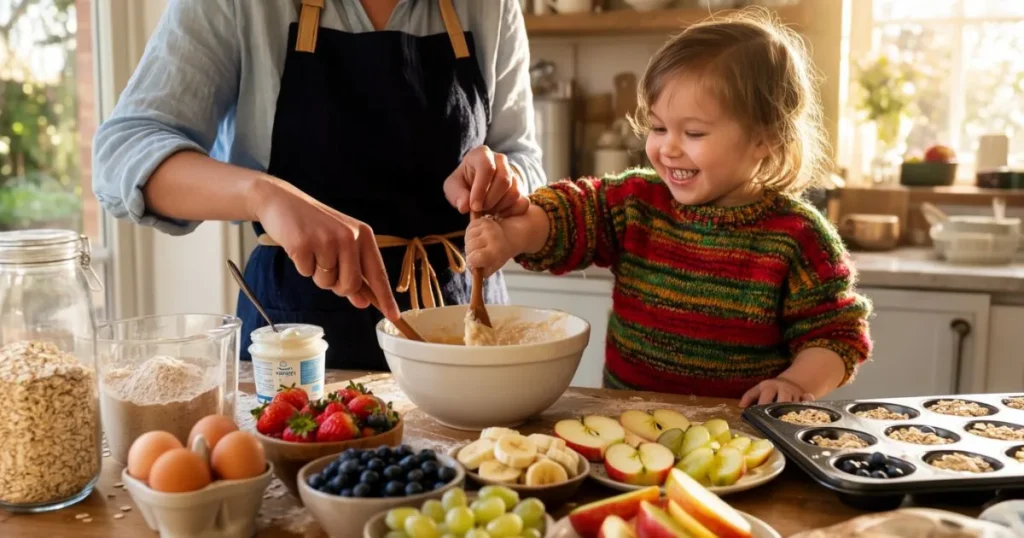
Making snacks at home gives you complete control over the ingredients your toddler eats. Homemade snacks are often lower in added sugar and sodium than packaged alternatives, and many can be prepared in batches for the week ahead.
The recipes below are simple, nutritious, and toddler-friendly. Most require only a few ingredients and can be customized based on your child’s preferences.
H3: Banana Oat Energy Bites
These soft, naturally sweet bites are perfect for breakfast, snack time, or packing in a lunchbox.
Ingredients
| Ingredient | Amount |
| Ripe banana | 1 medium |
| Rolled oats | 1 cup |
| Ground cinnamon | ½ teaspoon |
| Chia seeds (optional) | 1 tablespoon |
| Vanilla extract | ½ teaspoon |
Instructions
- Mash the banana in a mixing bowl.
- Stir in the oats, cinnamon, vanilla, and chia seeds.
- Mix until well combined.
- Roll into small bite-sized balls or scoop into mini muffin cups.
- Bake at 350°F (175°C) for about 12–15 minutes or until lightly golden.
- Let cool completely before serving.
Why You’ll Love It
- Naturally sweetened with fruit
- Rich in fiber
- Easy to freeze
- Great for busy mornings
H3: Spinach Egg Muffins
These mini egg muffins are packed with protein and vegetables, making them an excellent make-ahead snack.
Ingredients
| Ingredient | Amount |
| Eggs | 4 |
| Fresh spinach (finely chopped) | 1 cup |
| Shredded cheddar cheese | ½ cup |
| Milk | 2 tablespoons |
| Black pepper (optional) | Pinch |
Instructions
- Preheat the oven to 350°F (175°C).
- Whisk together the eggs and milk.
- Stir in spinach and cheese.
- Pour into a greased mini muffin pan.
- Bake for 15–18 minutes until set.
- Cool before serving.
Nutrition Highlights
- High in protein
- Excellent source of calcium
- Easy to store in the refrigerator for several days
H3: Yogurt Berry Popsicles
These refreshing treats are perfect for warm afternoons and contain far less sugar than many store-bought frozen desserts.
Ingredients
| Ingredient | Amount |
| Plain Greek yogurt | 1 cup |
| Mixed berries | ½ cup |
| Vanilla extract | ½ teaspoon |
| Honey (optional, only for children over 12 months) | 1 teaspoon |
Instructions
- Blend all ingredients until smooth.
- Pour into popsicle molds.
- Freeze for at least four hours.
- Serve slightly softened.
Why They’re Healthy
- Rich in calcium
- High in protein
- Naturally sweet from fruit
H3: Apple Cinnamon Oat Muffins
These soft muffins are perfect for little hands and freeze well for future snacks.
Ingredients
| Ingredient | Amount |
| Whole wheat flour | 1 cup |
| Rolled oats | 1 cup |
| Grated apple | 1 large |
| Egg | 1 |
| Unsweetened applesauce | ½ cup |
| Baking powder | 1 teaspoon |
| Cinnamon | 1 teaspoon |
Instructions
- Mix dry ingredients.
- Add wet ingredients.
- Fold in grated apple.
- Spoon into muffin cups.
- Bake for 18–20 minutes.
H3: Sweet Potato Bites
Soft, naturally sweet, and loaded with vitamins.
Ingredients
| Ingredient | Amount |
| Sweet potato | 1 medium |
| Olive oil | 1 tablespoon |
| Paprika (optional) | Small pinch |
Instructions
- Peel and cube the sweet potato.
- Toss with olive oil.
- Roast at 400°F (200°C) for 20–25 minutes until tender.
- Cool before serving.
No-Cook Healthy Toddler Snacks
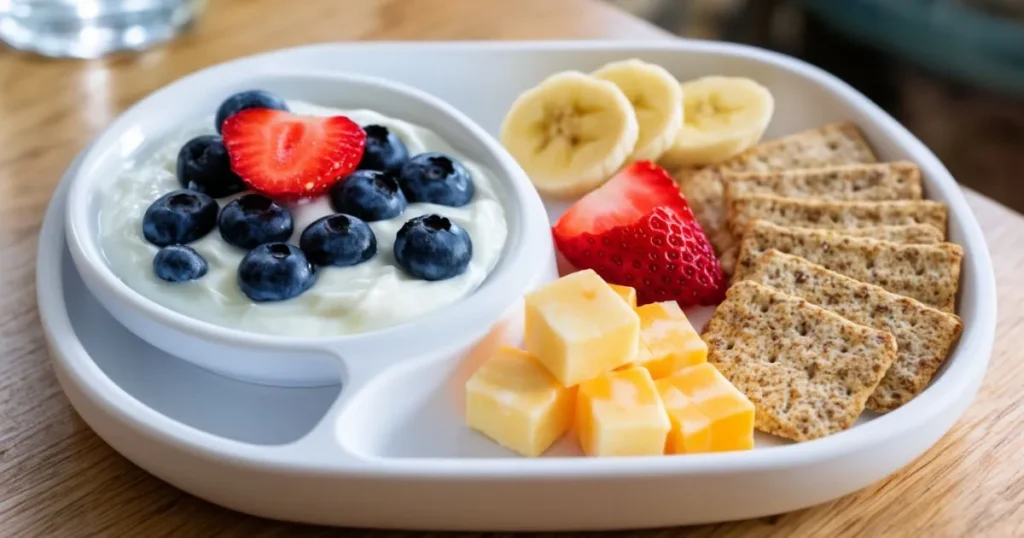
Some days you simply don’t have time to cook. Fortunately, many nutritious snacks require little to no preparation.
Quick No-Cook Snack Ideas
- Banana with peanut butter
- Apple slices with cheese
- Plain Greek yogurt topped with blueberries
- Cottage cheese and peaches
- Whole-grain crackers with hummus
- Avocado on whole wheat toast
- Cucumber slices with cream cheese
- Hard-boiled egg and strawberries
- Pear slices with sunflower seed butter
- Cheese cubes and grapes (quartered)
Why No-Cook Snacks Work
- Save time
- Require minimal cleanup
- Easy for travel
- Ideal for busy weekdays
Healthy Toddler Snacks for Daycare, Preschool, and On-the-Go
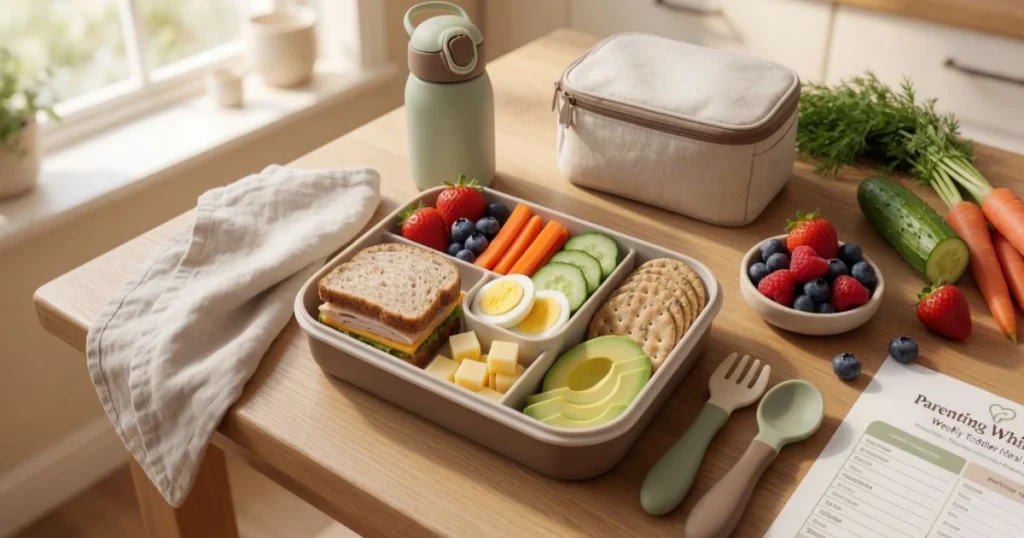
Whether you’re heading to daycare, the playground, or running errands, portable snacks can help keep your toddler satisfied without relying on convenience foods high in sugar.
When packing snacks, choose foods that are easy to eat, travel well, and stay fresh for several hours.
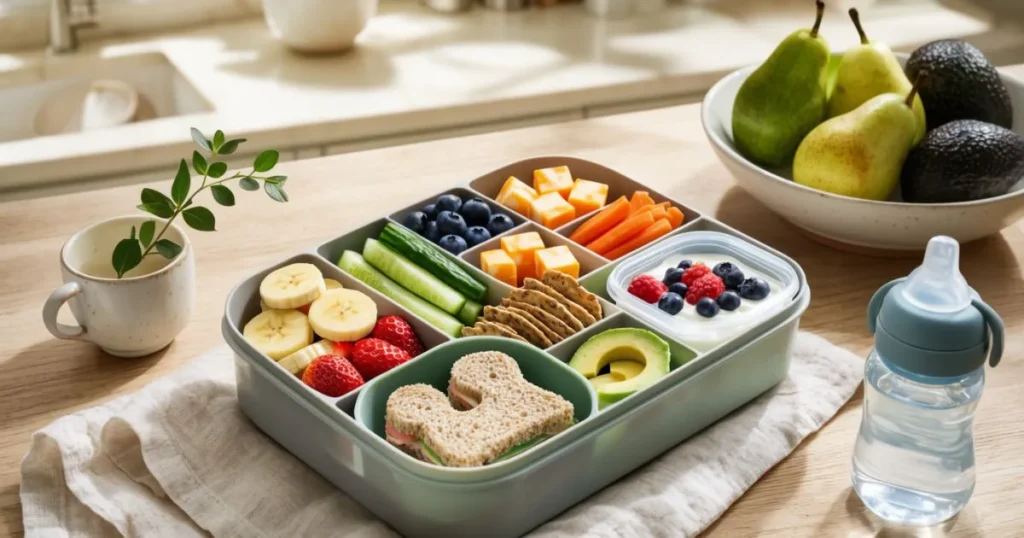
Best Portable Healthy Toddler Snacks
- Banana
- Clementine
- Cheese stick
- Whole-grain crackers
- Homemade oat muffins
- Unsweetened applesauce pouch
- Mini sandwiches
- Yogurt pouch (kept cold)
- Roasted chickpeas (for older toddlers who chew well)
- Homemade trail mix (age-appropriate and avoiding choking hazards)
Easy Packable Snack Comparison
| Snack | Portable | Needs Refrigeration |
| Banana | ✔ | No |
| Applesauce pouch | ✔ | No |
| Cheese stick | ✔ | Yes |
| Yogurt pouch | ✔ | Yes |
| Homemade oat muffins | ✔ | No |
| Whole-grain crackers | ✔ | No |
| Apple slices | ✔ | Optional |
| Cottage cheese | ✔ | Yes |
Packing Tips
- Use insulated lunch bags for dairy products.
- Slice larger fruits into toddler-sized pieces.
- Include a small ice pack when necessary.
- Pack water instead of sugary drinks.
Healthy Toddler Snacks for Picky Eaters
Picky eating is one of the most common challenges during toddlerhood. It can be discouraging when your child suddenly refuses foods they once enjoyed, but this stage is often a normal part of development.
The key is to stay patient and continue offering a variety of healthy foods without pressure.
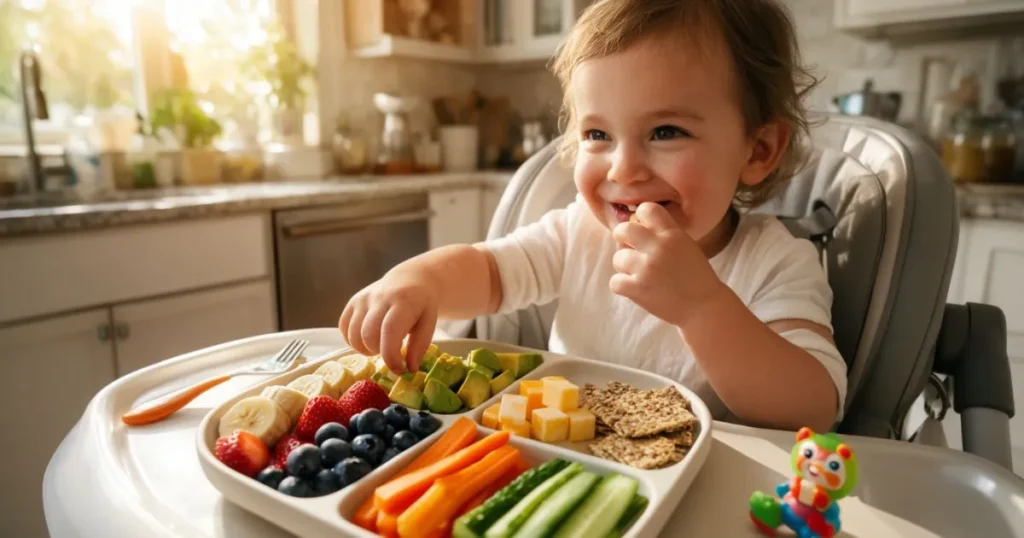
Why Toddlers Become Picky
Several factors contribute to picky eating:
- Slower growth compared with infancy
- Desire for independence
- Sensitivity to new textures
- Preference for familiar foods
- Natural caution toward unfamiliar foods
Remember that refusing a food today doesn’t mean your toddler will reject it forever.
Strategies That Encourage Healthy Eating
Instead of forcing bites or negotiating over food, try these approaches:
- Offer small portions.
- Introduce one new food alongside familiar favorites.
- Allow your toddler to decide when they’ve had enough to eat.
- Eat together whenever possible.
- Keep mealtimes relaxed.
- Avoid using desserts as rewards.
- Continue offering previously rejected foods on different occasions.
Consistency often works better than pressure.
Fun Healthy Toddler Snacks for Picky Eaters
Sometimes presentation makes all the difference.
Try:
- Rainbow fruit skewers (using toddler-safe pieces)
- Mini yogurt parfaits
- Apple “sandwiches” with nut butter
- Fruit smoothies
- Mini cheese and vegetable kabobs
- Homemade yogurt bark
- Whole wheat mini pizzas topped with vegetables
Making food colorful and interactive can encourage curiosity without creating pressure.
Best Store-Bought Healthy Toddler Snacks
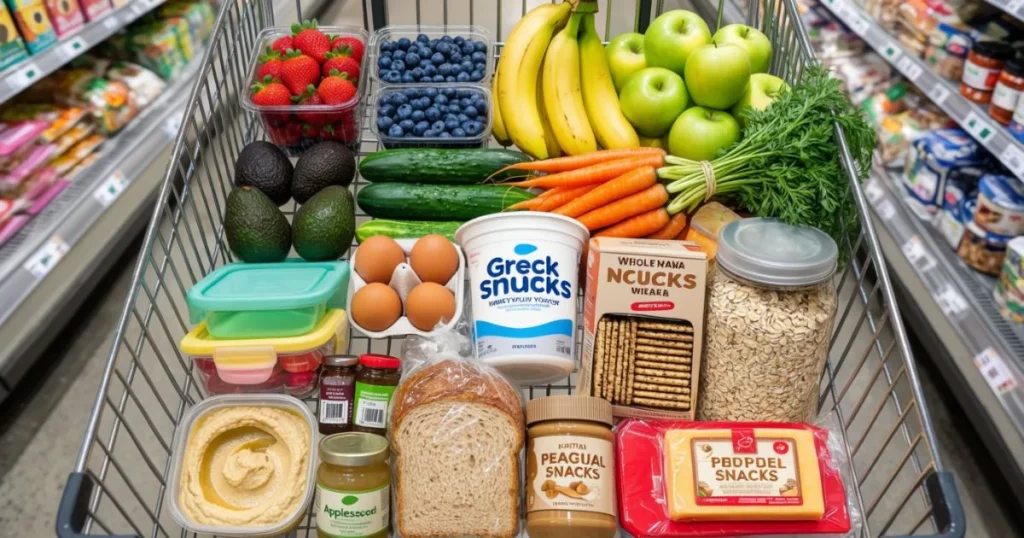
Packaged snacks can be convenient, but not all products marketed toward toddlers are nutritious. Learning to read labels helps you make better choices.
What to Look For
Choose products that:
- Contain recognizable ingredients
- Are made with whole grains
- Are low in added sugar
- Contain moderate sodium
- Include protein or fiber
What to Limit
Avoid snacks that contain:
- High-fructose corn syrup
- Artificial colors
- Artificial flavors
- Excessive sodium
- Large amounts of added sugar
Store-Bought Snack Comparison
| Snack | Protein | Added Sugar | Recommended |
| Plain Greek yogurt | High | Low | ✔ Excellent |
| Whole-grain crackers | Moderate | Low | ✔ Great |
| Unsweetened applesauce | Low | None | ✔ Good |
| Freeze-dried fruit | Low | None | ✔ Good |
| Cheese sticks | High | None | ✔ Excellent |
| Fruit gummies | Very Low | High | ✘ Limit |
| Sugary cookies | Very Low | High | ✘ Limit |
Shopping Tips
When grocery shopping:
- Compare nutrition labels instead of relying on front-package claims.
- Check the ingredient list—shorter is often better.
- Choose snacks with whole foods listed near the top.
- Keep a variety of healthy options available at home so nutritious choices become the easiest choices.
Foods to Avoid or Limit During Snack Time
Not every product advertised for young children is a nutritious choice. While it’s perfectly okay to enjoy an occasional treat, relying on highly processed snacks too often can replace healthy toddler snacks that provide the nutrients your child needs for growth and development.
The goal isn’t to ban favorite treats altogether. Instead, aim to make healthy toddler snacks the everyday choice, while saving sugary or heavily processed foods for special occasions. This balanced approach helps your toddler build healthier eating habits without making any food feel off-limits.
Snacks to Limit
These foods are often high in added sugar, unhealthy fats, or sodium while providing little nutritional value:
- Candy
- Chocolate bars
- Sugary breakfast pastries
- Frosted cookies
- Potato chips
- Sugary cereals
- Fruit-flavored gummies
- Soda
- Sweetened fruit drinks
- Energy drinks (never appropriate for toddlers)
Choosing these foods too often can lead to energy crashes, reduced appetite for balanced meals, and excessive sugar intake.
Choking Hazards to Avoid
Safety is just as important as nutrition when preparing healthy toddler snacks.
Young children are still learning how to chew and swallow efficiently, making certain foods risky.
Avoid serving:
- Whole grapes (slice into quarters)
- Whole cherry tomatoes (quarter them)
- Whole nuts
- Popcorn
- Hard candy
- Large spoonfuls of peanut butter
- Marshmallows
- Chewing gum
- Large chunks of raw vegetables
- Hot dogs cut into rounds (slice lengthwise and into small pieces)
Always supervise your toddler while eating, especially when introducing new foods.
Healthy Toddler Snack Schedule
A predictable eating routine helps toddlers recognize their natural hunger and fullness cues.
Instead of allowing constant grazing throughout the day, try offering snacks at regular intervals between meals.
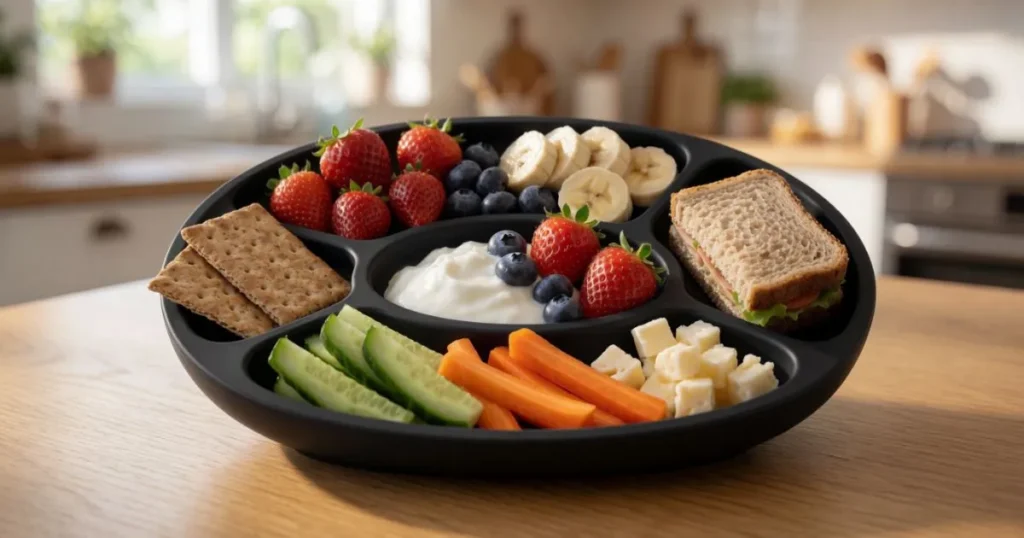
Sample Daily Eating Schedule
| Time | Meal or Snack |
| 7:30 AM | Breakfast |
| 10:00 AM | Morning healthy toddler snack |
| 12:30 PM | Lunch |
| 3:00 PM | Afternoon healthy toddler snack |
| 6:00 PM | Dinner |
| 7:30 PM (if needed) | Light evening snack |
This schedule may vary depending on your toddler’s age, activity level, and daily routine.
Signs Your Toddler Is Hungry
Rather than watching the clock alone, pay attention to your child’s cues.
Common hunger signs include:
- Asking for food
- Looking toward the kitchen
- Becoming less focused during play
- Mild irritability
- Saying they’re hungry
Offering a balanced snack at this point can help prevent meltdowns before meals.
Signs Your Toddler Is Full
Learning to recognize fullness helps build healthy eating habits.
Your toddler may:
- Turn their head away
- Push food aside
- Close their mouth
- Slow down while eating
- Become interested in playing
Avoid encouraging “just one more bite.” Respecting these signals supports a positive relationship with food.
Simple Tips for Making Healthy Toddler Snacks Easier Every Day
Healthy eating doesn’t require complicated recipes or hours in the kitchen. A few simple habits can make snack time easier and less stressful.
Prepare Snacks Ahead of Time
Wash and cut fruits and vegetables as soon as you return from the grocery store.
Store them in clear containers so they’re ready whenever hunger strikes.
Pair Two Food Groups Together
Balanced snacks keep toddlers satisfied longer.
Good combinations include:
- Apple slices with cheese
- Banana with peanut butter
- Greek yogurt with berries
- Whole-grain crackers with hummus
- Cottage cheese with peaches
Rotate Snack Choices
Offering different foods throughout the week helps expose your toddler to a wider range of nutrients and flavors.
Try creating a simple rotation such as:
Monday: Fruit and yogurt
Tuesday: Cheese and crackers
Wednesday: Vegetable sticks with hummus
Thursday: Homemade muffins
Friday: Smoothie
Let Your Toddler Help
Children are often more interested in foods they help prepare.
Simple age-appropriate tasks include:
- Washing fruit
- Stirring ingredients
- Placing berries into yogurt
- Choosing between two healthy snack options
- Arranging food on a plate
These small activities encourage independence while making snack time more enjoyable.
Keep Healthy Foods Visible
What your toddler sees first often becomes what they ask for.
Keep a bowl of fresh fruit on the counter and place prepared vegetables at eye level in the refrigerator.
When nutritious options are easy to reach, they’re more likely to be chosen.
Offer Water with Snacks
Water is usually the best drink to serve with snacks.
Milk is another nutritious option at appropriate meal or snack times, but sugary drinks, flavored milks, and fruit juices should be limited.
Frequently Asked Questions About Healthy Toddler Snacks
What are the healthiest healthy toddler snacks?
The healthiest healthy toddler snacks combine protein, healthy fats, fiber, and whole-food carbohydrates. Great examples include Greek yogurt with berries, apple slices with peanut butter, cottage cheese with fruit, whole-grain crackers with cheese, and hummus with cucumber slices.
How many healthy toddler snacks should toddlers eat each day?
Most toddlers benefit from two to three healthy toddler snacks each day in addition to breakfast, lunch, and dinner. Exact needs vary depending on age, appetite, and activity level.
What healthy toddler snacks keep children full longer?
Snacks that include protein and healthy fats tend to be the most filling.
Examples include:
- Hard-boiled eggs
- Cheese with whole-grain crackers
- Greek yogurt
- Banana with peanut butter
- Avocado toast
What are the best healthy toddler snacks for picky eaters?
If your child is selective, start with familiar foods and introduce small changes over time.
Good options include:
- Fruit smoothies
- Yogurt parfaits
- Mini muffins with hidden vegetables
- Apple slices with sunflower seed butter
- Cheese cubes with fruit
Remember that repeated exposure often works better than pressure.
Are homemade healthy toddler snacks better than packaged snacks?
Homemade snacks usually allow you to control the amount of sugar, sodium, and ingredients. However, some store-bought options—such as plain yogurt, unsweetened applesauce, and whole-grain crackers—can also be nutritious choices when you’re short on time.
What healthy toddler snacks are safe for a 2-year-old?
Soft foods that are easy to chew are ideal.
Examples include:
- Banana slices
- Steamed vegetables
- Cottage cheese
- Yogurt
- Scrambled eggs
- Oatmeal
- Soft berries
- Avocado
Always cut foods into appropriate sizes and supervise your child while eating.
Can healthy toddler snacks replace meals?
Healthy snacks should complement meals rather than replace them. If your toddler regularly skips meals because they’re filling up on snacks, consider adjusting snack timing or portion sizes.
What healthy toddler snacks are best for daycare?
Portable snacks work well for daycare and preschool.
Popular choices include:
- Banana
- Applesauce pouch
- Cheese stick
- Whole-grain crackers
- Homemade oat muffins
- Yogurt pouch (kept cold)
Always follow your childcare provider’s food policies, especially regarding common allergens.
Which fruits make the best healthy toddler snacks?
Many fruits are naturally sweet, easy to prepare, and packed with nutrients.
Great choices include:
- Bananas
- Apples
- Pears
- Strawberries
- Blueberries
- Mango
- Kiwi
- Peaches
- Watermelon
- Oranges (peeled and cut into small pieces)
How can you prepare healthy toddler snacks ahead of time?
A little planning can save time during busy weekdays.
Try these meal prep ideas:
- Wash and portion fruit into small containers.
- Bake a batch of homemade muffins and freeze them.
- Prepare hard-boiled eggs in advance.
- Slice vegetables and store them in airtight containers.
- Portion yogurt into reusable cups.
- Make energy bites and refrigerate them for quick grab-and-go snacks.
Conclusion
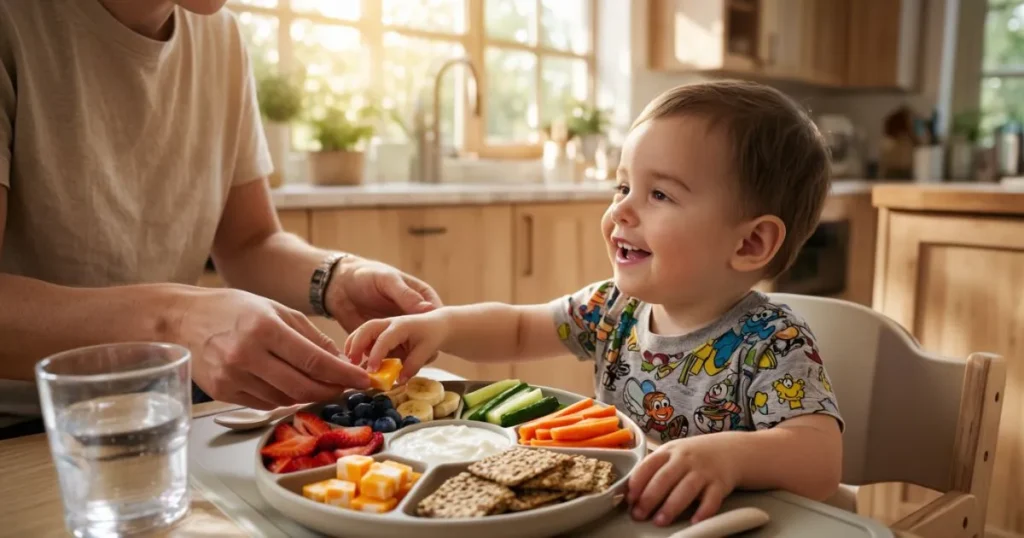
Choosing healthy toddler snacks doesn’t have to be complicated. Small, thoughtful choices made throughout the day can have a meaningful impact on your child’s growth, energy, and lifelong eating habits.
The most nutritious snacks are often the simplest ones. Fresh fruit, vegetables, whole grains, dairy, and protein-rich foods provide the building blocks your toddler needs to learn, play, and grow. By offering a variety of wholesome foods in age-appropriate portions and following your child’s hunger and fullness cues, you’ll create a positive snack routine that supports both nutrition and enjoyment.
Remember that toddlers are naturally curious and sometimes unpredictable eaters. It’s perfectly normal if they reject a food one day and happily eat it the next. Stay patient, continue offering a wide variety of healthy options, and celebrate small victories instead of aiming for perfection. Over time, these consistent habits can help your child develop a healthy relationship with food that lasts well beyond the toddler years.
Start Building Healthier Snack Habits Today
You don’t need to overhaul your pantry overnight. Begin with one or two simple changes, such as pairing fruit with a source of protein, preparing homemade snacks in advance, or replacing sugary treats with whole-food alternatives. Small improvements made consistently can add up to big benefits for your growing child.
Have a favorite healthy toddler snack that your little one loves? Share it in the comments below or pass this guide along to another parent looking for fresh, nutritious snack ideas. Together, we can make snack time healthier, easier, and more enjoyable for every family.